Protein Powder Market Overview
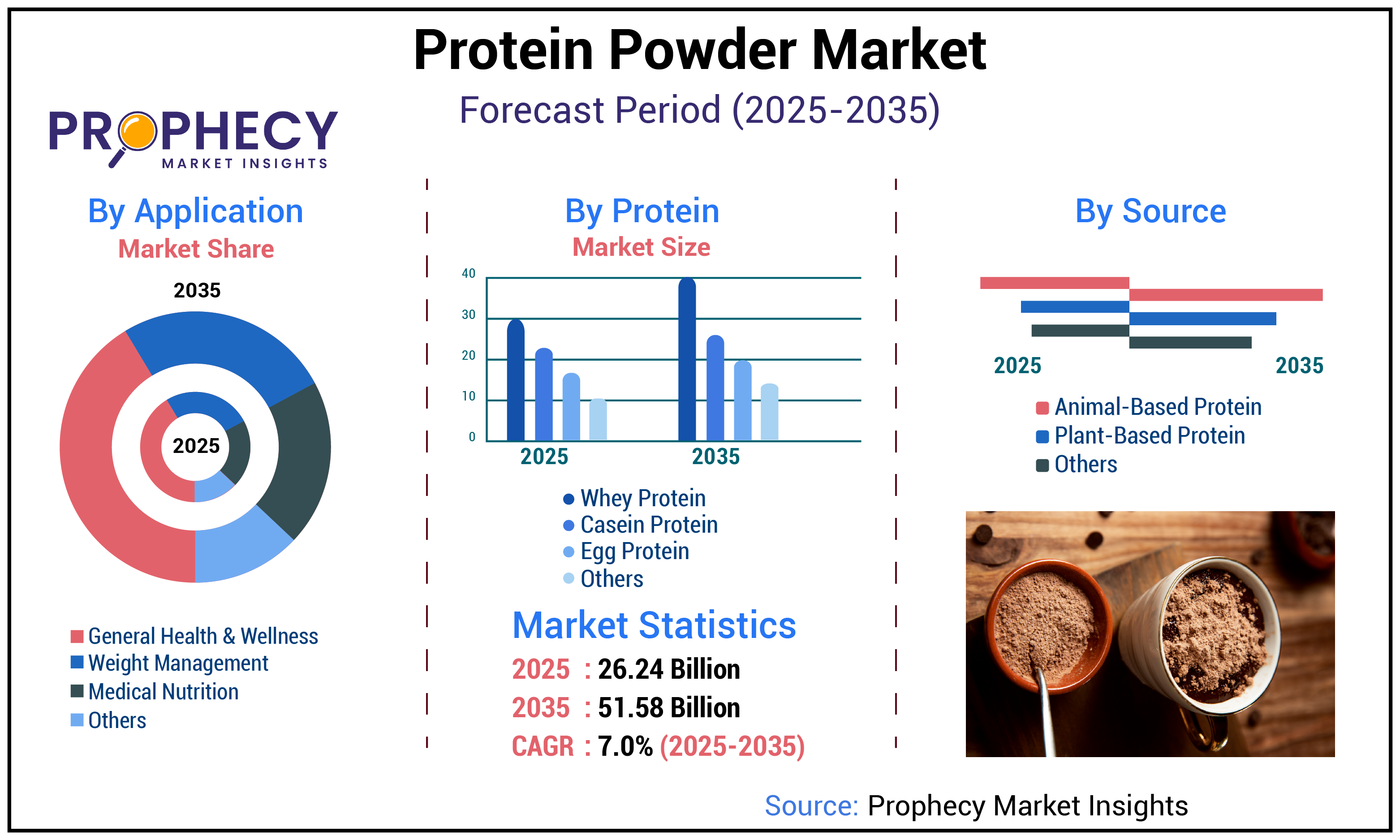
- 2024 Market Size: USD 24.7 Billion
- 2035 Projected Market Size: USD 51.58 Billion
- CAGR (2025-2035): 7.0%
- North America: Largest Market in 2024
Protein powder is essentially a purified protein which could be from an animal or a plant source as whey, soy, pea, or rice and is specially made to help people meet their protein intake in a very easy way. Besides that, it is a very important tool in the development and repair of the muscle tissue, it can help in weight management through satiety, and it increases post-workout recovery and overall body strength as well as metabolism improvement. To name a few, athletes, gym goers, and people who are conscious about their health are the main users of protein powder, thus it acts as an effective energetic source to sustain a balanced diet.
Several factors including increased health awareness, more people participating in fitness and sports activities, and the demand for easily accessible nutritional supplements are primarily responsible for the expansion of the protein powder market. The rise in lifestyle diseases, the availability of more disposable income, and the popularity of plant-based and clean-label protein products are the factors that significantly influence the market growth. Besides that, the weight management, veganism, and functional foods trends have resulted in consumers incorporating protein powders into their daily diets, thereby increasing the global market demand.
Future Protein Powder Supply and Demand:
- Protein powder will be a highly sought-after commodity globally over the next decade driven by the consumer trend towards healthy lifestyle and fitness, the progressive e-commerce channels, and the consumers' preference for plant-based and functional protein sources.
- To satisfy this demand, manufacturers are ramping up their production levels and sourcing more diverse raw materials (such as plant-based proteins and dairy alternatives), but they still have to endure the ingredient costs that are volatile, suffer from supply chain inefficiencies and experience difficulties due to the regulatory framework conformities that may cause product shortages in certain areas.
- Therefore, the scenario can be described as follows: the product demand will be much higher than at present, the supply will also be higher although there are still risks, thus, the market constitutes a substantial growth potential for companies that are strategically in a good position.
Current Industry Dynamics & Insights:
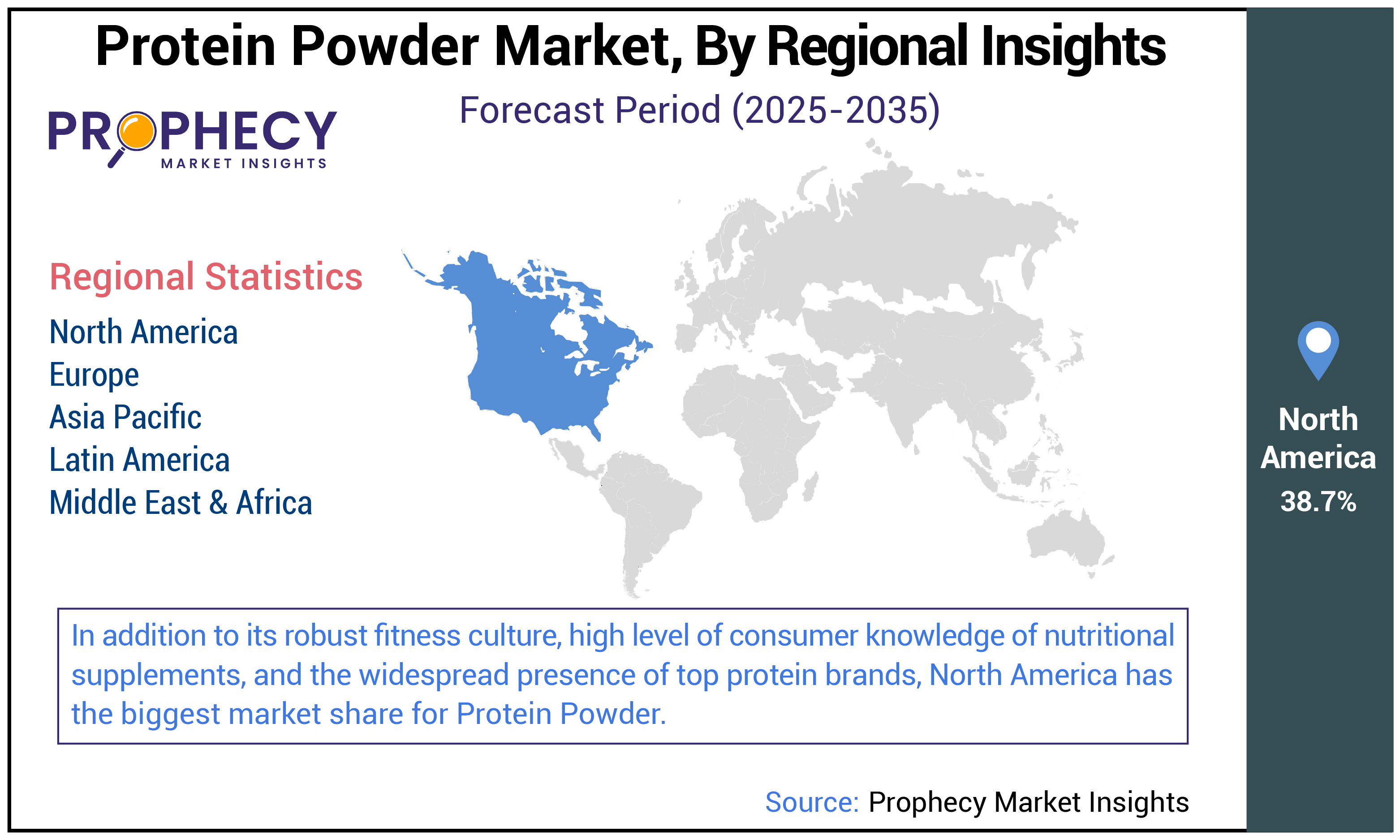
- North America has the largest regional share in the market, with almost 38.7%.
- Europe second dominating region in the market.
- By protein type, whey protein dominate the protein powder market.
Protein Powder Market Drivers & Restraints
Drivers and Restraints:
|
Drivers |
Restraints |
Opportunities & Trends |
|
|
|
Key Drivers:
Rising Disposable Income
Higher disposable income, which in turn has led consumers to spend more on health, fitness, and premium nutrition products, has been one of the most significant reasons contributing to the surge in demand for protein powders. When people get more economic security, they put more focus on their health and decide to live healthier lifestyles which, thus, bring about the increase in demand for dietary supplements and functional foods. Such an increase in buying power is the main reason behind the global expansion of the protein powder market as consumers are ready to pay for convenient and high-quality nutritional products for their daily consumption and fitness goals, especially in developing regions.
- For Instance, according to article published by Euromonitor, global disposable income rise by 8.8% in 2023, driven by growth in Asia Pacific and North America. By 2040, disposable income growth is projected by 2.6% with emerging and developing regions leading the expansion. In Asia Pacific, real growth of 49.8% in consumer spending over 2023-2040, which is higher than North America. In 2023, the global wealthy population expanded by 6.4%, driven by an addition of 2.4 billion individuals, mainly from the U.S., Germany, the U.K. and France.
Restraints:
Risk of Adulteration and Low-Quality Products
One of the elements that may limit the market development is the risk of protein powders being adulterated with inferior materials or having low-quality proteins. In such a case, it can result in a drop of consumer trust, as well as cause various health issues if the products are contaminated or are falsely represented. Consequently, these problems have the effect of discouraging consumers from making repeat purchases and, thus, also damaging the reputations of brands.
- Counterbalance Statements: To avert such a condition, enterprises ought to implement the following measures: they should maintain very rigorous quality control standards, ensure that products receive third-party certification, and be transparent by producing accurate labels and giving information about the ingredient source. The implementation of government regulations and consumer education on reliable brands can also be two excellent means of regaining consumer trust and making safe market growth possible.
Opportunities & Trends:
Surge in Vegan and Clean-Label Protein Powders
The clean-label and vegan protein powders have been the main factor that has led to the next trend that has a huge impact on the market that is predominately influenced by the consumer's awareness of sustainability, animal welfare, and natural nutrition. As the number of individuals following a plant-based diet and looking for products without artificial additives, preservatives, and allergens keeps increasing, the need for transparent, ethically sourced, and eco-friendly protein solutions is getting higher. Companies are reacting to this trend by introducing new products with plant-derived ingredients such as pea, hemp, and rice proteins, thus clean-label and vegan formulations being the future protein powder market's growth plan.
Protein Powder Market Segmentations & Regional Insights
Protein type, source, application, target consumers, and region are the divisions of the Protein Powder Market.
By Protein Type:
Based on the protein type, the protein powder market is divided into whey protein, casein protein, egg protein, and others. Due to its high biological value, quick digestion, rich amino acid profile, and potent efficacy in muscle building and recovery, whey protein has the biggest market share in the protein powder market and is especially favored by athletes and fitness enthusiasts.
The second most popular form of protein is casein, which appeals to customers looking for long-term nutritional benefits since it provides delayed digestion and continuous amino acid release, making it perfect for nighttime muscle regeneration and long-term protein supplementation.
By Source:
The protein powder market is categorized into animal-based protein, plant-based protein, and others on the account of source. Although it provides complete amino acid profiles, greater digestibility, and superior muscle repair benefits, animal-based protein has the biggest market share in the protein powder market. As a result, athletes and gym-goers choose it.
Due to concerns about lactose intolerance, growing desire for sustainable and clean-label products, and the growing popularity of veganism, plant-based protein is the second most popular source. This has led to tremendous growth and inOrgain, Inc.ation in pea, soy, and hemp protein formulations.
By Application:
General health & wellness, weight management, medical nutrition, and others are applications of the protein powder market. Due to rising consumer awareness of immunity support, balanced nutrition, and the value of protein in daily diets, general health & wellness has the most market share in the protein powder market. Protein powders are popular among a wide spectrum of consumers outside of sports due to their ease as daily nutritional supplements.
Since more people are using protein powders for meal replacement, appetite control, and fat loss, weight management is the second most popular application. The demand for protein-based products that support healthy weight goals has increased due to changes in lifestyle and the growth in obesity rates worldwide.
By Target Consumers:
The protein powder market on the account of target consumers is categorized into athletes & sports enthusiasts, bodybuilders, fitness-conscious individuals, health-conscious / wellness consumers, and others. Due to their heavy reliance on protein supplementation for muscle repair, strength enhancement, and performance improvement, athletes and sports enthusiasts have the greatest market share in the protein powder market. Sales in this market are strong due to the steady demand from both professional and leisure sportsmen.
Due to the global fitness culture, gym memberships, and the growing usage of protein powders in regular exercise regimens to maintain body composition and general health, fitness-conscious people make up the second-largest consumer group.
Regional Insights:
Geographically, the Protein Powder Market is studied across North America, Europe, Asia Pacific, Latin America, and the Middle East & Africa.
North America:
In addition to its robust fitness culture, high level of consumer knowledge of nutritional supplements, and the widespread presence of top protein brands, North America has the biggest market share for protein powder. The well-established sports nutrition sector in the area and the rising need for quick, high-protein meals both contribute to market expansion.
- United States Protein Powder Market Insights:
Due to its sizable population of fitness-conscious people, high disposable income, and the existence of significant supplement producers and retail chains, the United States leads the North American protein powder market. Demand is further fueled by the nation's robust gym culture and expanding meal replacement product trend.
Europe:
Due to growing plant-based diet adoption, an older population requiring nutrition high in protein, and robust legislative support for sustainable and clean-label food items, Europe is the second-dominant region.
- U.K. Protein Powder Market Insights:
With a growing number of vegan and health-conscious consumers, a growing market for plant-based protein products, and a sophisticated e-commerce infrastructure that facilitates simple access to nutritional supplements, the UK leads the European market.
Asia Pacific:
The Asia-Pacific (APAC) protein powder market is expanding quickly as a result of growing health consciousness, rising disposable incomes, increased participation in sports and fitness, and the growing acceptance of plant-based diets. Convenient, high-protein nutritional products are in greater demand due to urbanization and the influence of Western dietary practices.
- China Protein Powder Market Insights:
Due to its vast population, growing emphasis on preventative health, and the quick growth of e-commerce platforms that increase the accessibility of protein supplements for customers nationwide, China leads the APAC market.
Protein Powder Market Report Scope:
|
Attribute |
Details |
|
Market Size 2025 |
USD 26.24 Billion |
|
Projected Market Size 2035 |
USD 51.58 Billion |
|
CAGR Growth Rate |
7.0% (2025-2035) |
|
Base year for estimation |
2024 |
|
Forecast period |
2025 – 2035 |
|
Market representation |
Revenue in USD Billion & CAGR from 2025 to 2035 |
|
Regional scope |
North America - U.S. and Canada Europe – Germany, U.K., France, Russia, Italy, Spain, Netherlands, and Rest of Europe Asia Pacific – China, India, Japan, Australia, Indonesia, Malaysia, South Korea, and Rest of Asia-Pacific Latin America - Brazil, Mexico, Argentina, and Rest of Latin America Middle East & Africa – GCC, Israel, South Africa, and Rest of Middle East & Africa |
|
Company Landscape |
Market Share Analysis of Companies Heat Map Analysis Company Overview, Products Overview Financial Information, Key Highlights Business Strategies Overview SWOT Analysis |
|
Report coverage |
Revenue forecast, company share, competitive landscape, growth factors, and trends |
|
Value Added Data Infosets |
Besides fundamental market insights such as the size of the market, growth rate, segmentation, regional study, and key players, our reports carry value-added data sets such as trade flow (import-export) analysis, production and consumption overview, price trend evaluation, supply and value chain mapping, and raw material availability. Moreover, we provide strategic tools as PESTLE and Porter’s Five Forces analysis, examination of the regulatory landscape, as well as monitoring of technology and thereby providing a comprehensive overview which facilitates sensible and anticipatory decision-making. |
Segmentation:
By Protein Type:
- Whey Protein
- Casein Protein
- Egg Protein
- Others
By Source:
- Animal-Based Protein
- Plant-Based Protein
- Others
By Application:
- General Health & Wellness
- Weight Management
- Medical Nutrition
- Others
By Target Consumers:
- Athletes & Sports Enthusiasts
- Bodybuilders
- Fitness-Conscious Individuals
- Health-Conscious / Wellness Consumers
- Others
By Region:
- North America
- U.S.
- Canada
- Europe
- Germany
- U.K.
- France
- Russia
- Italy
- Spain
- Netherlands
- Rest of Europe
- Asia Pacific
- China
- India
- Japan
- Australia
- Indonesia
- Malaysia
- South Korea
- Rest of Asia Pacific
- Latin America
- Brazil
- Mexico
- Argentina
- Rest of Latin America
- Middle East & Africa
- GCC
- Israel
- South Africa
- Rest of Middle East & Africa
Protein Powder Market Competitive Landscape & Key Players
Expanding product portfolios with plant-based and clean-label choices, funding research for formulations, and utilizing digital marketing and e-commerce platforms to reach larger audiences are all important growth tactics for protein powder firms. To increase brand value and appeal to consumers who are concerned about their health and the environment, businesses also concentrate on strategic alliances, celebrity endorsements, and sustainable packaging.
Protein Powder Market Companies:
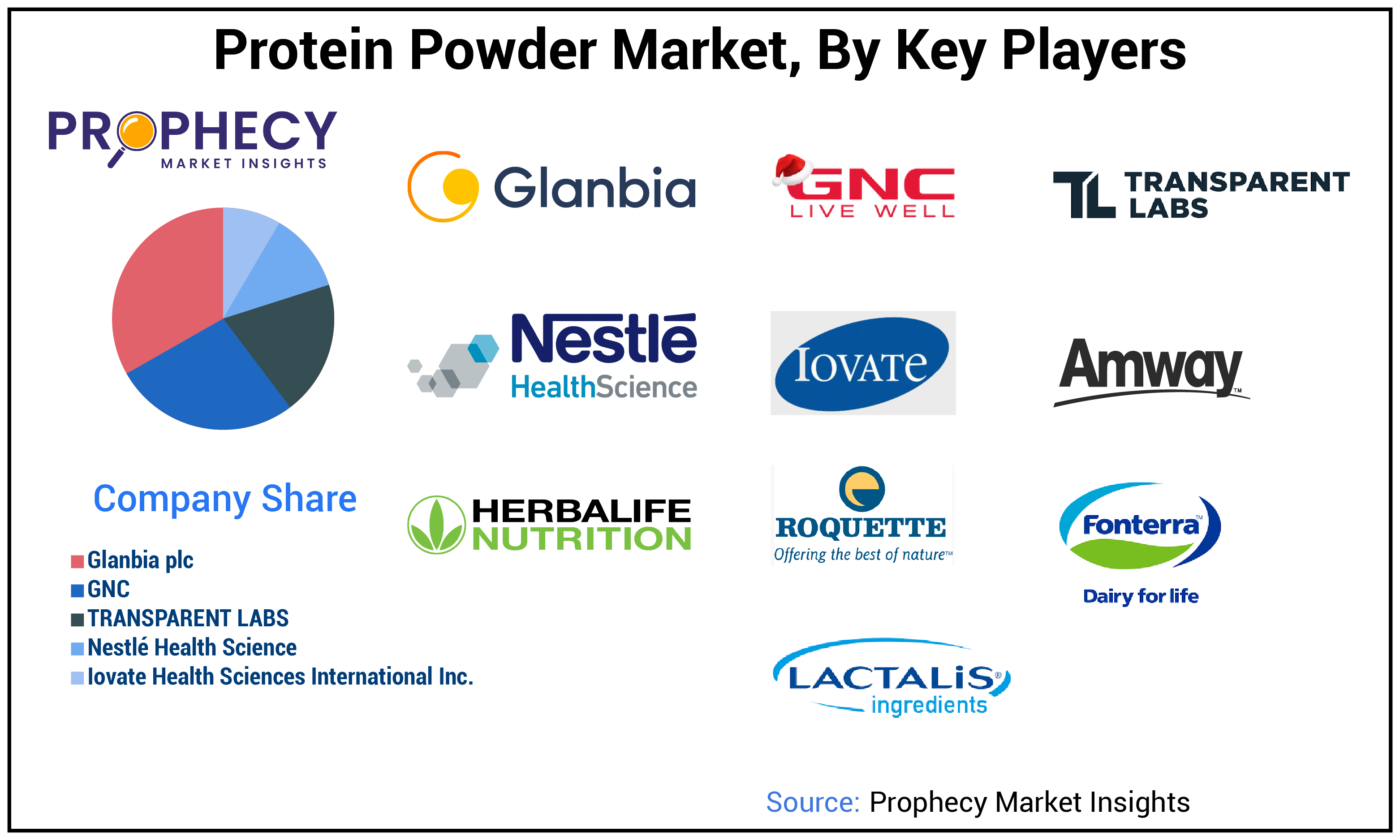
- Glanbia plc
- GNC
- TRANSPARENT LABS
- Nestlé Health Science
- Iovate Health Sciences International Inc.
- Amway India Enterprises Pvt. Ltd.
- Herbalife International of America, Inc.
- Roquette Frères
- Fonterra Co-Operative Group Limited
- Hilmar Cheese Company, Inc.
- Lactalis Ingredients
- Carbery Food Ingredients Limited
- Orgain, Inc.
- Optimum Nutrition
- Isopure
View an Additional List of Companies in the Protein Powder Market
Protein Powder Market Recent News
- In July 2025, Nestlé recently introduced Milo Pro to help teens and young people maintain their active lives. Milo Pro, which has three times more protein than regular Milo drinks, can be easily consumed on the go by people who want to fuel their love of adventure and athletics. Next year, Milo Pro, which was just introduced in Indonesia, will be distributed throughout Southeast Asia.
Analyst View:
Protein powder, which comes from plant or animal sources as whey, soy, or pea, aids in meeting daily protein requirements and promotes general wellbeing, weight control, and muscle regeneration. Rising health consciousness, more fitness involvement, increased disposable money, and the growing appeal of plant-based and clean-label products are the main factors driving its market expansion. The demand for protein powders as a practical dietary supplement is also increasing globally due to trends in weight management, veganism, and functional nutrition.
Analysis of Sources:
Primary Sources:
- In-depth interviews
- Company-specific data
- Surveys and questionnaires
- Focus group discussions (FGDs)
- Others
Secondary Sources:
- Food Safety and Standards Authority of India (FSSAI)
- United States Department of Agriculture (USDA)
- International Food Policy Research Institute (IFPRI)
- World Trade Organization (WTO)
- Others
More Related Reports
Protein Labelling Market
PEGylated Proteins Market
Functional Protein Market
Protein Purification and Isolation Market
Protein Expression Systems Market
Protein Powder Market Company Profile
|
Company Name |
Product Portfolio |
|
Nestlé Health Science |
Whey Protein Powder |
|
Iovate Health Sciences International Inc. |
Protein Supplements |
|
Herbalife International of America, Inc. |
Personalized Protein Powder |
|
Amway India Enterprises Pvt. Ltd. |
Plant Based Protein Powder |
|
GNC |
Power Protein |
Protein Powder Market Highlights
FAQs
Protein Powder Market size was valued at USD 26.24 Billion in 2025 and is expected to reach USD 51.58 Billion by 2035 growing at a CAGR of 7.0%.
Protein type, source, application, target consumers, and region are the segmentation for the Protein Powder Market.
Increased health and fitness awareness, leading to higher demand for supplements for muscle development and weight management, the rise of plant-based diets, the accessibility provided by e-commerce and expanding distribution, and product innovation as new flavors and functional ingredients, and so on are some of the Protein Powder Market growth drivers.
North America, Asia Pacific, Europe, Latin America, and the Middle East & Africa. North America is expected to dominate the Protein Powder Market.
The key players operating the Protein Powder Market include Glanbia plc, GNC, TRANSPARENT LABS, Nestlé Health Science, Iovate Health Sciences International Inc., Herbalife International of America, Inc., Roquette Frères, Hilmar Cheese Company, Inc., Lactalis Ingredients, Carbery Food Ingredients Limited, Orgain, Inc., Optimum Nutrition, and Isopure.