Placental Tissues And Skin Substitutes Market Overview
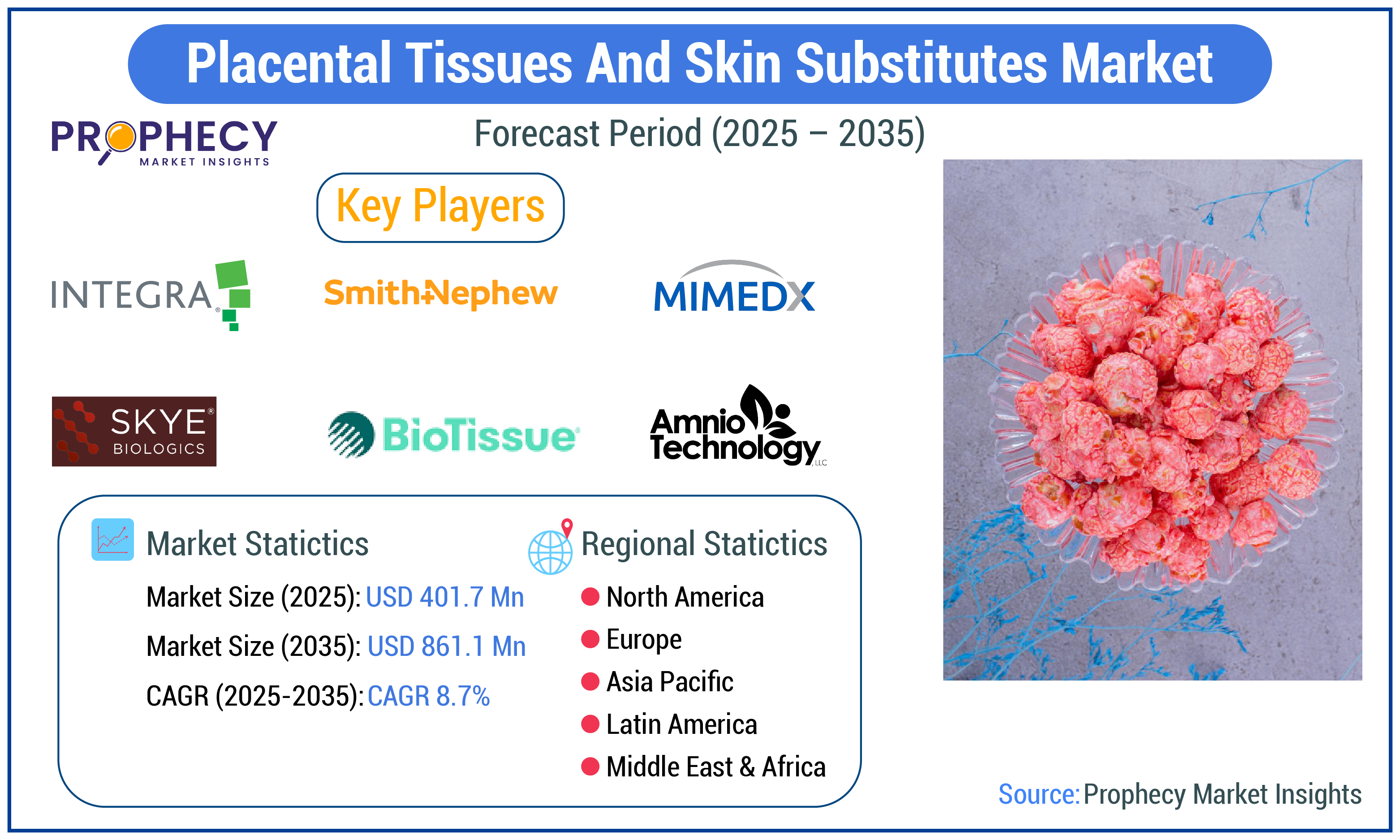
- By 2035, the placental tissues and skin substitutes market size is contemplated to enlarge at a valuation of USD 861.1 Million.
- In 2024, the placental tissues and skin substitutes market valuation was USD 380.3 Million.
- Placental tissues and skin substitutes market is developing at a CAGR of 8.7%.
Placental tissue and skin substitutes are advanced medical products obtained from human placental membrane or engineer biometrics that help repair, revive or replace damaged skin and tissue. Usually used in wound care, burns, diabetic ulcer and surgical processes, these options promote rapid treatment by providing a protective barrier, supporting cell development, reducing inflammation and reducing the risk of infection. Their natural origin and bioactive components make them particularly beneficial in increasing tissue regeneration and reducing scarring.
The expansion of the placental tissues and skin substitutes market is influenced by the growing prevalence of chronic wounds, the increase in surgical procedures such as C-sections, and the rising demand for efficient, nature-based regenerative therapies. The adoption is also being elevated by technological progress, more comprehensive regulatory approvals, and a more inclusive insurance coverage. Additionally, besides the factors mentioned, higher spending on scientific research and the rising demand for products with bioactive and anti-aging properties in healthcare and cosmetics are two significant elements that will extend the market size.
The placental tissues and skin substitutes market in the future is bright with a lot of potential. The major factors influencing the growth of this market are innovations in bioengineering, a high demand for personalized and regenerative wound care, and the growing use of next-generation products such as bio printed grafts and spray-on skin substitutes. The adoption of artificial intelligence (AI) in the evaluation of wounds and the development of plant-based or synthetic substitutes are the market that will go on to be molded. Moreover, there will be a positive effect on the worldwide distribution due to broadening regulatory approvals, higher reimbursement incentives, and increasing healthcare investments, particularly in the Asia Pacific and North America regions.
Recession Risk & Tariff Analysis:
- The placental and skin substitutes market might encounter difficulties over a limited time. These potential issues are associated with the danger of a recession and the increase of tariffs. A slowdown in the economy could lead to lower healthcare investments and the postponement of non-urgent medical interventions, thus lowering the demand. At the same time, costs are going up.
- Import tariffs raise the price of materials that manufacturers need to make their products. So, many businesses are thinking about where they can get their materials. They are either getting them locally or from some other country.
- If on the positive side, these changes will lead to the strengthening of supply chains over time, they may still hold back the pace of innovation, limit the sector's profit margins, and put upward pressure on prices.
Impact of Generative AI on Placental Tissues and Skin Substitutes Market:
- Generative Al is revolutionizing the market for placental tissues and skin substitutes by accelerating product development, facilitating tailored treatment options, and optimizing wound healing forecasts.
- It facilitates quicker innovation, elevates healthcare provider's decision making, and simplifies the workflow, thereby resulting in regenerative care solutions that are more efficient, personalized, and potent.
Placental Tissues And Skin Substitutes Market Drivers & Restraints
Key Drivers:
The Market can be driven by Growing Elderly Population
The increasing number of elderly people is one of the main reasons the market for placental tissues and skin substitutes is expanding, since with age the skin of the body takes more time to recover and it is probable that it will get chronic wounds, ulcers and surgical complications. The population with a high age is also at higher risk for diseases such as diabetes and vascular diseases, which will lead to the need for the development of advanced wound care and regenerative treatments. The worldwide senior demographic is growing and this has led to a greater need for healing methods that are efficient, natural, and minimally invasive. Consequently, the use of placental tissue products and bioengineered skin substitutes has been elevated, not only in hospitals but also in the home care sector.
- For Instance, according to article published by WHO, by 2030, 1 in 6 people in the world will be aged 60 years or over. At this time the share of the population aged 60 years and over will increase from 1 billion in 2020 to 1.4 billion. By 2050, the world’s population of people aged 60 years and older will double (2.1 billion). The number of persons aged 80 years or older is expected to triple between 2020 and 2050 to reach 426 million.
Restraints:
The Market Growth can be limited by Clinical Evidence Gaps
The placental tissues and skin substitutes market is facing clinical evidence gaps. These gaps refer to the limited availability of large-scale, high-quality clinical trials that compare the effectiveness, safety, and long-term outcomes of different products. The absence of standardized, peer-reviewed data creates a challenge for healthcare providers to make sure of the best treatment solution available, which in turn reduces the pace of adoption and insurance approvals.
- Counterbalance Statements: In order to solve this, several in-depth clinical studies, such as randomized controlled trials and actual case studies, are necessary. Moreover, cooperation between producers, medical facilities, and authorities can not only set unambiguous regulations but also help build confidence in these innovative treatment methods.
Opportunities & Trends:
Advancements in Tissue Engineering and Regenerative Medicine Technologies will be a Game-Changer Solution for the Market in Future
Breakthroughs in tissue engineering and regenerative medicine are greatly influencing the future of the market for placental tissues and skin substitutes by allowing the creation of more efficient, biologically active, and individualized treatments.
These developments such as 3D bioprinting, stem cell incorporation, and biomimetic scaffolds are not only bettering graft functionality but also speeding up tissue regeneration and making recovery faster. Such technologies enable improved vascularization, blending with native tissue, and lowered immune reactions, thus increasing the effectiveness of treatments and their applications. Consequently, these solutions can change the entire wound care market, as more extensive and more affordable implementations bring about the enormous market growth predicted in the next few years.
Placental Tissues And Skin Substitutes Market Segmentations & Regional Insights
Product, application, end user, and region are the divisions of the placental tissues and skin substitutes market.
By Product:
Placental-derived allografts, umbilical cord-derived products, skin substitutes, human-derived, and synthetic and composite materials are type on which placental tissues and skin substitutes market is segmented. The placental tissues and skin substitutes market size is now dominated by placental-derived allografts on account of their potent regeneration qualities, anti-inflammatory effects, and broad clinical acceptability in surgical and wound healing applications.
Skin substitutes, encompassing both bioengineered and human-derived materials, are the second most popular category. These are being utilized more and more in hospital and outpatient settings to treat burns, ulcers, and chronic wounds on account of their adaptability, growing therapeutic indications, and growing utilization.
By Application:
Based on the application, the placental tissues and skin substitutes market is divided into chronic & acute wound management, burns & trauma, surgical reconstruction, orthopedic & sports injuries, dermatology and plastic surgery, and others. The placental tissues and skin substitutes market share is dominated by chronic and acute wound management because of the increasing incidence of conditions including diabetic foot ulcers, pressure sores, and venous leg ulcers, particularly in the elderly and diabetic population.
The second-dominating application is surgical reconstruction, as the demand for effective post-surgical healing particularly in C-sections, abdominal surgeries, and organ transplants is increasing.
By End User:
Hospitals & specialty clinics, ambulatory surgical centers, and others are end user of the placental tissues and skin substitutes market. The market for placental tissues and skin substitutes is dominated by hospitals and specialty clinics for the reason of their sophisticated infrastructure, availability of specialized wound care units, and higher patient volume for intricate procedures consisting of burn treatment, chronic wound care, and surgical reconstruction.
The second-dominant end users are ambulatory surgery centers, which are motivated by the increasing need for less invasive treatments, faster patient turnaround, and affordable care, particularly for mild wound management and outpatient surgeries.
Regional Insights:
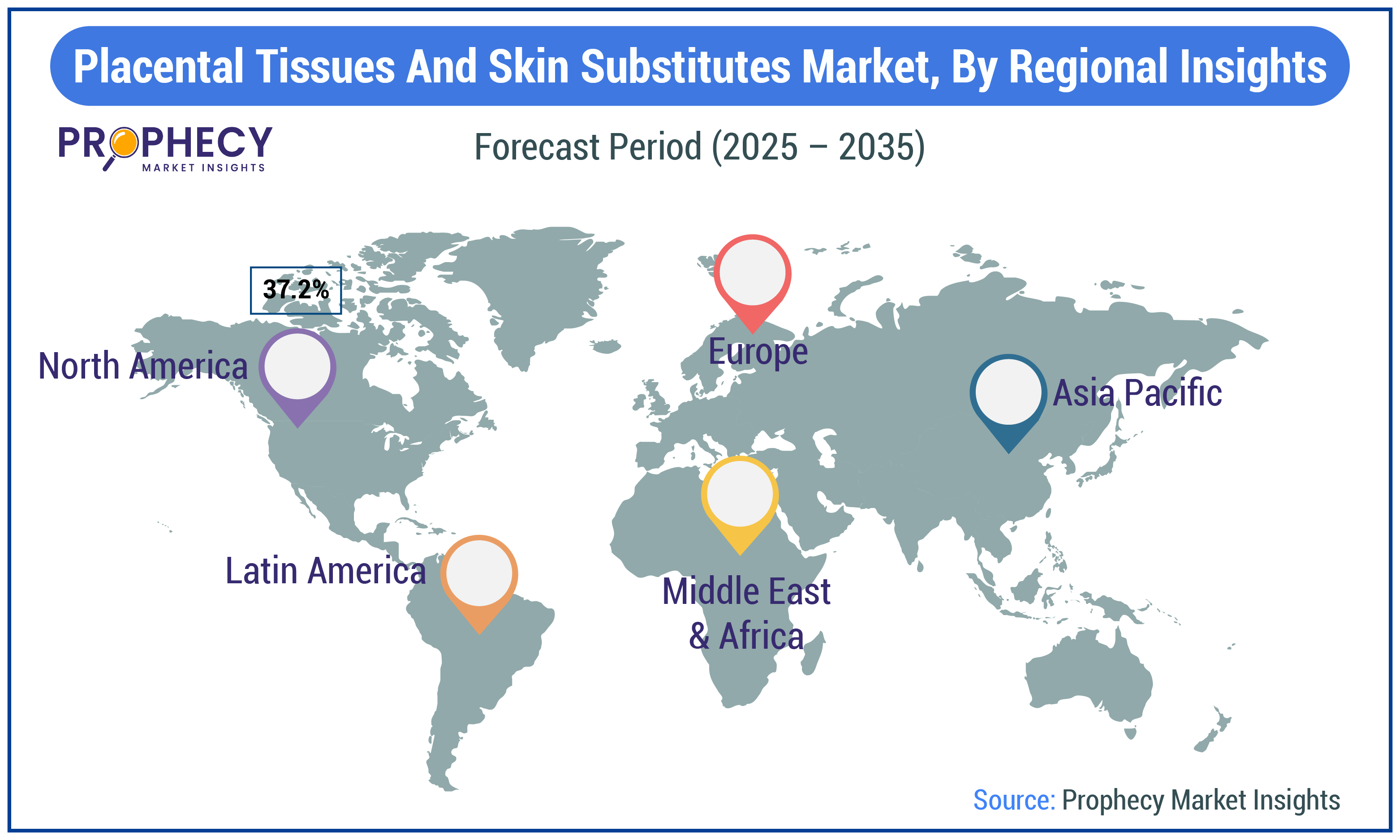
Geographically, the placental tissues and skin substitutes market is studied across North America, Europe, Asia Pacific, Latin America, and the Middle East & Africa.
North America: The placental tissues and skin substitutes market is dominated by North America with 37.2% share, mainly partially due to the region's sophisticated healthcare system, high rates of diabetes and chronic wounds, robust biotech industry, and advantageous reimbursement regulations. Market supremacy is further fueled by the region's emphasis on cutting-edge regenerative medicines and quick adoption of new technology.
- For Instance, according to the data published by U.S> Centers for Disease Control and Prevention, 38.4 million people of all ages or 11.6% of the U.S. population had diabetes. 38.1 million Adults aged 18 years or older or 14.7% of all U.S. adults had diabetes. The percentage of adults with diabetes increased with age, reaching 29.2% among those aged 65 years or older.
- U.S. Placental Tissues and Skin Substitutes Market Insights:
The U.S. leads the North American for placental tissues and skin substitutes market for the reason of its robust regenerative medicine industry, high prevalence of chronic wounds and surgical procedures, and well-established healthcare system. Strong R&D spending, enabling regulatory frameworks, and broad use of cutting-edge wound care products all benefit the United States.
Europe: This is the second-dominant region in placental tissues and skin substitutes market growth, helped by an increasing number of elderly people, more surgeries, government financing for healthcare, and improved knowledge of cutting-edge wound treatment options, particularly in nations notably Germany, the U.K., and France.
- For Instance, according to the data published by European Commission, on 1 January 2024, the EU population was estimated at 449.3 million people and more than one-fifth (21.6%) of it was aged 65 years and over. Older people (aged 65 years and over) had a 21.6% share (an increase of 0.3 percentage points (pp) compared with the previous year and an increase of 2.9pp compared with 10 years earlier).
- Germany Placental Tissues and Skin Substitutes Market Insights:
Germany is the market leader in Europe for this reason its big aging population, high surgical procedure rate, sophisticated medical infrastructure, and active participation in clinical trials and biomedical research, which makes it a center for tissue-based therapy innovation and acceptance.
Asia Pacific: This region placental tissues and skin substitutes market is expanding rapidly as a result of rising healthcare spending, increased knowledge of improved wound care, an aging population, and an increase in chronic illnesses including diabetes and vascular disorders. Demand is also being fueled by growing medical tourism, government assistance for healthcare facilities, and the existence of regional producers providing affordable options.
- Japan Placental Tissues and Skin Substitutes Market Insights:
Japan leads the APAC market due to its highly developed healthcare system, emphasis on regenerative medicine, aging population, and early adoption of cutting-edge medical technology.
Placental Tissues and Skin Substitutes Market Report Scope:
|
Attribute |
Details |
|
Market Size 2025 |
USD 401.7 Million |
|
Projected Market Size 2035 |
USD 861.1 Million |
|
CAGR Growth Rate |
8.7% (2025-2035) |
|
Base year for estimation |
2024 |
|
Forecast period |
2025 – 2035 |
|
Market representation |
Revenue in USD Million & CAGR from 2025 to 2035 |
|
Regional scope |
North America - U.S. and Canada Europe – Germany, U.K., France, Russia, Italy, Spain, Netherlands, and Rest of Europe Asia Pacific – China, India, Japan, Australia, Indonesia, Malaysia, South Korea, and Rest of Asia-Pacific Latin America - Brazil, Mexico, Argentina, and Rest of Latin America Middle East & Africa – GCC, Israel, South Africa, and Rest of Middle East & Africa |
|
Report coverage |
Revenue forecast, company share, competitive landscape, growth factors, and trends |
Segmentation:
By Product:
- Placental-Derived Allografts
- Amniotic Membranes
- Dehydrated
- Cryopreserved
- Umbilical Cord-Derived Products
- Chorion-based Grafts
- Amniotic Membranes
- Skin Substitutes
- Bioengineered skin
- Cell-based
- Acellular
- Human-derived
- Autografts
- Allografts
- Synthetic and Composite Materials
- Bioengineered skin
By Application:
- Chronic & Acute Wound Management
- Burns & Trauma
- Surgical Reconstruction
- Orthopedic & Sports Injuries
- Dermatology and Plastic Surgery
- Others
By End User:
- Hospitals & Specialty Clinics
- Ambulatory Surgical Centers
- Others
By Region:
- North America
- U.S.
- Canada
- Europe
- Germany
- U.K.
- France
- Russia
- Italy
- Spain
- Netherlands
- Rest of Europe
- Asia Pacific
- China
- India
- Japan
- Australia
- Indonesia
- Malaysia
- South Korea
- Rest of Asia Pacific
- Latin America
- Brazil
- Mexico
- Argentina
- Rest of Latin America
- Middle East & Africa
- GCC
- Israel
- South Africa
- Rest of Middle East & Africa
Placental Tissues And Skin Substitutes Market Competitive Landscape & Key Players
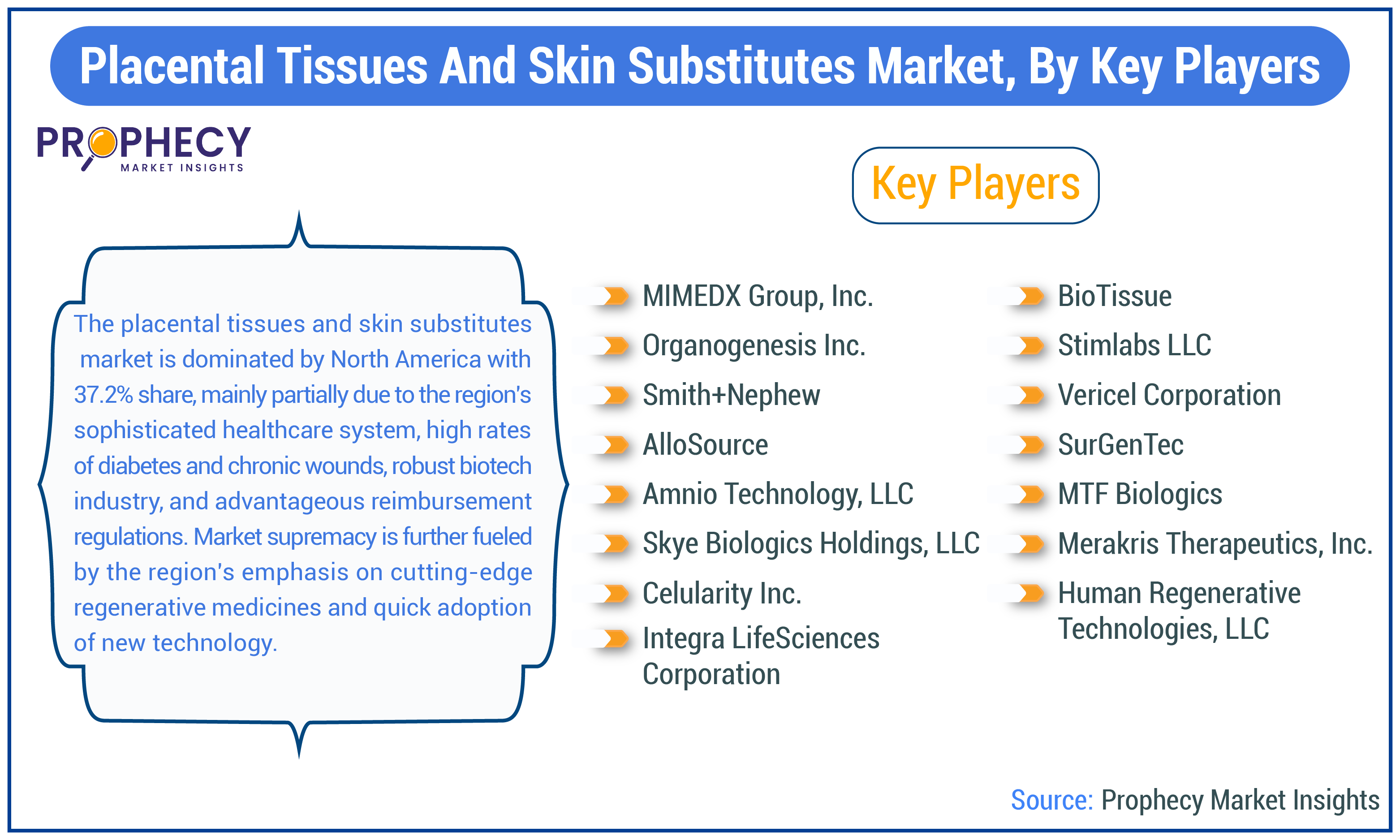
The key players operating in the placental tissues and skin substitutes market include, MIMEDX Group, Inc., Organogenesis Inc., Celularity Inc., AlloSource, Amnio Technology, LLC, and others. To increase market presence and satisfy growing demand, key growth strategies include product innovation, international expansion, strategic alliances, and robust clinical validation.
Placental Tissues and Skin Substitutes Market Companies:
- MIMEDX Group, Inc.
- Organogenesis Inc.
- Integra LifeSciences Corporation
- Smith+Nephew
- AlloSource
- Amnio Technology, LLC
- Skye Biologics Holdings, LLC
- Human Regenerative Technologies, LLC
- Celularity Inc.
- BioTissue
- Stimlabs LLC
- Vericel Corporation
- SurGenTec
- MTF Biologics
- Merakris Therapeutics, Inc.
View an Additional List of Companies in the Placental Tissues and Skin Substitutes Market
Placental Tissues And Skin Substitutes Market Recent News
- In February 2025, The Centers for Medicare & Medicaid Services (CMS) in the United States has declared that it will be altering its rules regarding how insurance companies pay doctors who use skin substitutes to treat diabetic wounds. Skin allografts and cellular and tissue-based products (CTP) used as wound dressings for the treatment of diabetic foot ulcers (DFU) and venous leg ulcers (VLU) are the special focus of the new government recommendations.
Analyst View:
The placental tissues and skin substitutes market is expanding significantly as a result of an increase in surgical operations, persistent wounds, and the need for natural, regenerative therapies. They are perfect for wound care and cosmetic use since they have their bioactive, healing qualities. Innovations including bio printed grafts, AI-based wound evaluation, and plant-based substitutes will propel future expansion. Strong healthcare investments, particularly in Asia-Pacific and North America, improved insurance coverage, and an expansion of regulatory approvals all contribute to the market's optimistic outlook.
More Related Reports
Regenerative Artificial Skin Market
Soft Tissue Market
Skin Care Products Market
Soft Tissue Repair Market
Skin Graft Blades Market
Placental Tissues And Skin Substitutes Market Company Profile
|
Company Name |
Organogenesis Inc. |
|
Headquarter |
Canton, U.S. |
|
CEO |
Gary S. Gillheeney |
|
Employee Count |
869 Employees |
Placental Tissues And Skin Substitutes Market Highlights
FAQs
Placental tissues and skin substitutes market size was valued at USD 401.7 Million in 2025 and is expected to reach USD 861.1 Million by 2035 growing at a CAGR of 8.7%.
Product, application, end user, and region are the segmentation for the placental tissues and skin substitutes market.
North America, Asia Pacific, Europe, Latin America, and the Middle East & Africa. North America is expected to dominate the market.
The key players operating the placental tissues and skin substitutes market include MIMEDX Group, Inc., Organogenesis Inc., Integra LifeSciences Corporation, Smith+Nephew, AlloSource, Amnio Technology, LLC, Skye Biologics Holdings, LLC, Human Regenerative Technologies, LLC, Celularity Inc., BioTissue, Stimlabs LLC, Vericel Corporation, SurGenTec, MTF Biologics, and Merakris Therapeutics, Inc.