Global Waterproofing Membrane Market Overview
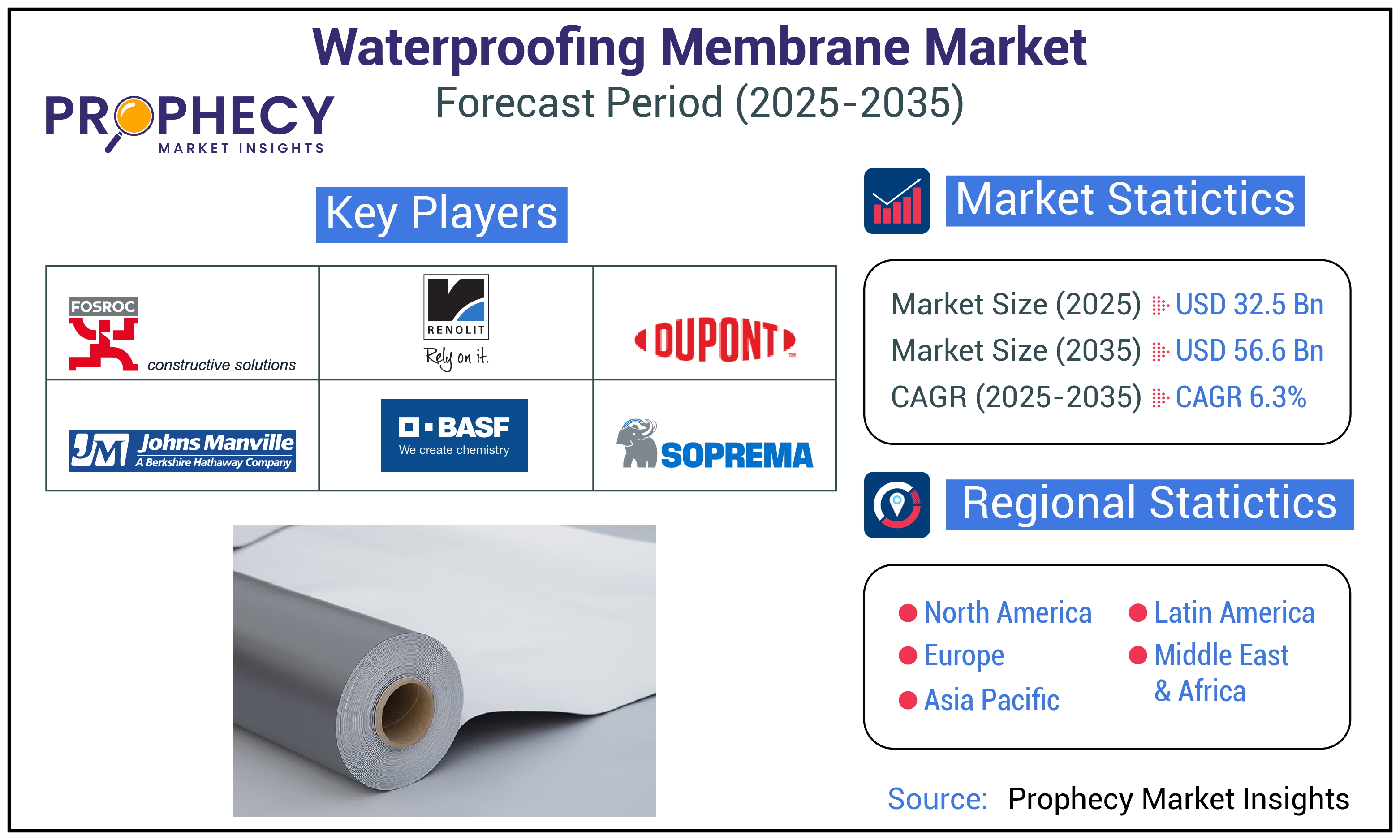
- Waterproofing membrane market size is expected to develop at a valuation of USD 56.6 Billion, by 2035.
- In 2024, the target market valuation was USD 31.0 Billion.
- The target market is growing at a CAGR of 6.3%.
A waterproofing membrane is a protective layer of material applied to a surface to prevent water from penetrating and causing damage. It acts as a barrier, keeping water out of the structure. These membranes can be applied to various areas, including foundations, roofs, basements, and bathrooms, to prevent leaks and moisture-related problems. These are protective layers that prevent water from penetrating structures such as roofs, basements, and walls. These membranes offer several advantages, including enhanced structural integrity, protection against water damage, and the prevention of mold and mildew growth.
The waterproofing membrane market is experiencing robust growth due to several key factors, including, rapid urbanization and infrastructure development, increased construction activities, including new buildings and renovation projects, increased focus on building safety and water management standards, growing concerns about waste and water management in urban areas, and increased awareness of the long-term costs and damage caused by water infiltration.
The market’s expansion is also skyrocketed by development of new and improved waterproofing membranes with enhanced performance, durability, and ease of installation, emphasis on green building and energy efficiency which is driving the use of sustainable waterproofing solutions, and waterproofing membranes offer cost-effective and efficient solutions for protecting structures from water damage.
Recession Risk and Tariff Analysis:
- Price volatility, high raw material costs, and decreased construction investment provide recession threats to the waterproofing membrane business. Economic downturns have the potential to postpone infrastructure projects, which would reduce demand for high-end membranes. In emerging countries, urbanization and sustainability tendencies, however, could counteract temporary drops.
- The waterproofing membrane market is greatly impacted by tariffs and fluctuating raw material prices. Import taxes raise prices and alter supply and demand, particularly in the United States. Price fluctuations for crude oil have an effect on the cost of raw materials, which raises manufacturing costs. These elements hinder market expansion, especially in areas where costs are high.
Impact of Generative AI on Waterproofing Membrane Market:
- By simplifying supply chains, improving R&D efficiency, and optimizing product design, generative AI is revolutionizing the waterproofing membrane business. Through the simulation of material performance and the prediction of product longevity under various situations, it speeds up innovation.
- AI-powered insights help firms anticipate demand, save waste, and customize products to meet consumer demands. AI-generated content also helps with marketing and consumer involvement, enhancing outreach and instruction. All things considered, in this historically material-intensive sector, generative AI promotes cost effectiveness, sustainability, and competitiveness.
Global Waterproofing Membrane Market Drivers & Restraints
Key Drivers:
Rising Urbanization is Stimulating the Market Augmentation
The waterproofing membrane market is greatly boosted by growing urbanization. The need for long-lasting infrastructure, such as public amenities, transit systems, and residential and commercial structures, is growing as cities get bigger. In order to keep water out of these structures and maintain its lifetime and structural integrity, waterproofing membranes are crucial. Effective waterproofing is also essential in metropolitan settings due to issues such as high rainfall and poor drainage. As a result, increased demand for sophisticated waterproofing solutions is closely correlated with the growth in urban development.
- For instance, according to the data published by World Bank Group, in order to fulfill the World Bank's purpose of eradicating poverty and promoting shared prosperity on a habitable world, more livable cities must be built. Currently, 4.4 billion people, or more than half of the world's population, reside in urban areas. This trend is predicted to continue, with nearly seven out of ten people living in cities by 2050, when the urban population is predicted to more than quadruple.
Restraints:
Environmental Impact of Synthetic Materials is Limiting the Market Expansion
The effects of synthetic materials used in membrane manufacture on the environment are a significant drawback in the waterproofing membrane industry. Bitumen and Polyvinyl Chloride (PVC), which are non-biodegradable and can emit toxic substances during production or disposal, are included in many membranes. Degradation of the environment is further exacerbated by improper application or disposal methods. Both customers and authorities are concerned about sustainability as a result. Furthermore, when exposed to UV rays or inclement weather, certain membranes may not last as long, necessitating more frequent replacements and producing more waste.
- Counterbalance Statements: Environmental issues can be lessened by encouraging the creation and use of eco-friendly membranes composed of recyclable or bio-based materials. Manufacturers ought to spend money on research to increase the recyclability and durability of membranes. In addition to promoting sustainable practices throughout the sector, regulatory incentives and certification schemes can guarantee lower environmental impact and increased compliance.
Opportunities & Trends:
Development Of New and Improved Waterproofing Membrane is Opening Up Growth Opportunities for the Future Generations
The creation of new and improved waterproofing membranes, which provide higher performance, durability, and application efficiency, greatly propels market expansion. Advanced membranes are widely sought after in building projects due to its exceptional resistance to UV radiation, chemicals, and adverse weather conditions. Self-adhesive, spray-applied, and environmentally friendly membranes are examples of innovations that make installation easier and lower labor costs, promoting use in the commercial, industrial, and residential sectors. Demand is further increased by smart membranes that include moisture-sensing or self-healing properties, which add value. Reliable, high-performance waterproofing solutions are becoming more and more necessary as infrastructure development picks up speed worldwide, particularly in metropolitan areas and high-risk flood zones. These developments equip the market for steady, long-term growth by supporting sustainability objectives in addition to meeting changing industry requirements.
Global Waterproofing Membrane Market Segmentations & Regional Insights
The waterproofing membrane market is segmented into product type, raw material, usage, application, and region.
By Product Type:
Depending upon product type, the market is bifurcated into liquid applied, and sheet based. The liquid applied segment is the leading product type, in waterproofing membrane market share. This is due to its ease of application, cost-effectiveness, and adaptability to various complex surfaces and structural designs. It also offers seamless coverage and durability, making it suitable for a wide range of applications such as roofs, basements, and bathrooms.
The sheet-based segment is the second leading product type, in the waterproofing membranes market. This is due to the development of advanced materials, ease of installation, and the ability to provide robust protection against moisture and water intrusion.
By Raw Material:
Based on raw material, the market is divided into modified bitumen, Polyvinyl Chloride (PVC), Ethylene Propylene Diene Monomer (EPDM), TPO, acrylic, polyurea, polyurethane, and others. The modified bitumen segment is attributed to dominate the waterproofing membranes market share. This is due to its cost-effectiveness, widespread availability, excellent adhesion, flexibility, and resistance to environmental factors. Modified bitumen is particularly favored in applications such as roofing, tunnels, and foundations where durability and long-term waterproofing are essential.
The acrylic segment is the second dominating raw material, in the target market. This is due to the fact that acrylic-based waterproofing solutions offer a balance of properties that make it suitable for various applications, particularly in wet room settings.
By Usage:
On the foundation of usage, the market is branched into new construction, and refurbishment. The new construction segment is holding the superior position in the waterproofing membranes market share. This is due to the widespread adoption of waterproofing membranes in new construction projects, driven by regulations, infrastructure developments, and urbanization, especially in emerging economies.
The refurbishment segment is the second superior usage, in the target market. This is due to the growing demand for renovating and revitalizing existing structures. This is driven by the need to upgrade aging infrastructure, improve energy efficiency, and address aesthetic preferences.
By Application:
Contingent to application, the market is categorized into building structure, roofing, roadways, waste & water management, walls, and others. The roofing segment is attributed to rule over the waterproofing membranes market size. This is due to the widespread use of waterproofing membranes in both roofing systems and building walls to prevent water infiltration and damage.
The building structure segment is the fastest growing application, in the target market. This is due to its necessity for various parts of building structures such as basements, foundations, and walls, extending the shelf life and protection of these structures against water damage and temperature changes.
Regional Insights:
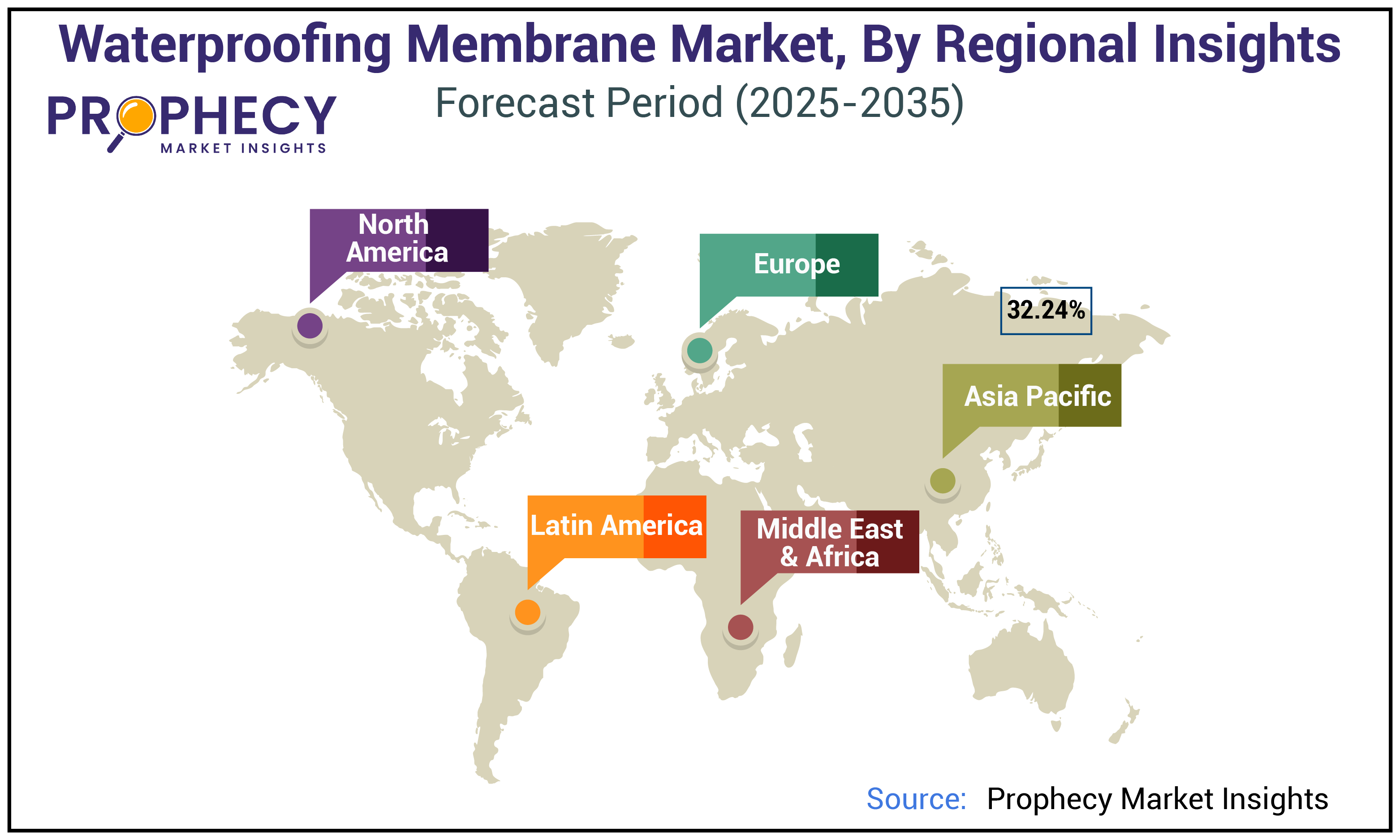
Geographically, the market is analyzed across North America, Europe, Asia Pacific, Latin America, and the Middle East & Africa.
Asia Pacific: This is the region which has the most governing waterproofing membrane market share, with an estimated share of approximately 39.1%, in the recent years. This is due to a combination of factors, such as, this region’s significant urbanization and infrastructure development, leading to a surge in the construction of new buildings and infrastructure projects, including roads, bridges, and public facilities, its growing construction sector fueled by increasing industrial operations and a growing population, and the presence of emerging markets, with rapidly growing economies and increasing investment in construction and infrastructure.
- China Waterproofing Membrane Market Insights:
The waterproofing membrane market in China is the most influential market, in the recent years. This is due to this country’s urban development and infrastructure projects, rapid urbanization as cities expand and new buildings are constructed, the need for effective waterproofing solutions increases, large-scale infrastructure projects, such as roads, bridges, and tunnels, also require waterproofing membranes to ensure durability and prevent water ingress, and the high demand for waterproofing solutions.
Europe: This is the region which has the fastest growing rate in waterproofing membrane market share during the forecast period, in the recent years. This is due to a confluence of factors, such as, this region’s substantial demand for waterproofing membranes in diverse sectors such as construction, waste management, and tunnel lining, investments in infrastructure renewal and development projects, strict building codes and environmental regulations in Europe are prompting the use of high-performance, sustainable waterproofing membranes, and the presence of key market players in this region.
- Germany Waterproofing Membrane Market Insights:
The waterproofing membrane market in Germany is growing with the highest CAGR during the forecast period in the recent years. This is due to this country’s active construction industry, particularly in commercial and industrial sectors, significant investments in infrastructure projects, such as tunnels and bridges, the German construction regulations which prioritize high-quality waterproofing, leading to increased use of advanced membranes, the country's focus on sustainable building and energy efficiency, and the presence of key market players in this region.
North America: The region which has the waterproofing membrane market experiencing considerate amount of growth in the recent years is North America. This is due to this region’s robust construction activities, stringent building codes, increasing emphasis on sustainable construction and energy-efficient building practices, infrastructure projects, including road and bridge construction, require waterproofing solutions, the economic and structural consequences of water damage are becoming more widely recognized, and the increasing use of eco-friendly waterproofing products with low VOCs.
- U.S. Waterproofing Membrane Market Insights:
The waterproofing membrane market in the U.S. is experiencing significant amount of growth, in the recent years. This is due to its extensive construction industry, which includes residential, commercial, and industrial projects, all of which require waterproofing solutions. Additionally, the U.S. is actively promoting sustainable construction practices and building durability, further driving demand for advanced waterproofing membranes.
Waterproofing Membrane Market Report Scope:
|
Attribute |
Details |
|
Market Size 2025 |
USD 32.5 Billion |
|
Projected Market Size 2035 |
USD 56.6 Billion |
|
CAGR Growth Rate |
6.3% (2025-2035) |
|
Base year for estimation |
2024 |
|
Forecast period |
2025 – 2035 |
|
Market representation |
Revenue in USD Billion & CAGR from 2025 to 2035 |
|
Regional scope |
North America - U.S. and Canada Europe – Germany, U.K., France, Russia, Italy, Spain, Netherlands, and Rest of Europe Asia Pacific – China, India, Japan, Australia, Indonesia, Malaysia, South Korea, and Rest of Asia-Pacific Latin America - Brazil, Mexico, Argentina, and Rest of Latin America Middle East & Africa – GCC, Israel, South Africa, and Rest of Middle East & Africa |
|
Report coverage |
Revenue forecast, company share, competitive landscape, growth factors, and trends |
Segmentation:
By Product Type:
- Liquid Applied
- Sheet Based
By Raw Material:
- Modified Bitumen
- Polyvinyl Chloride (PVC)
- Ethylene Propylene Diene Monomer (EPDM)
- TPO
- Acrylic
- Polyurea
- Polyurethane
- Others
By Usage:
- New Construction
- Refurbishment
By Application:
- Building Structure
- Roofing
- Roadways
- Waste & Water Management
- Walls
- Others
By Region:
- North America
- U.S.
- Canada
- Europe
- Germany
- U.K.
- France
- Russia
- Italy
- Spain
- Netherlands
- Rest of Europe
- Asia Pacific
- China
- India
- Japan
- Australia
- Indonesia
- Malaysia
- South Korea
- Rest of Asia Pacific
- Latin America
- Brazil
- Mexico
- Argentina
- Rest of Latin America
- Middle East & Africa
- GCC
- Israel
- South Africa
- Rest of Middle East & Africa
Global Waterproofing Membrane Market Competitive Landscape & Key Players
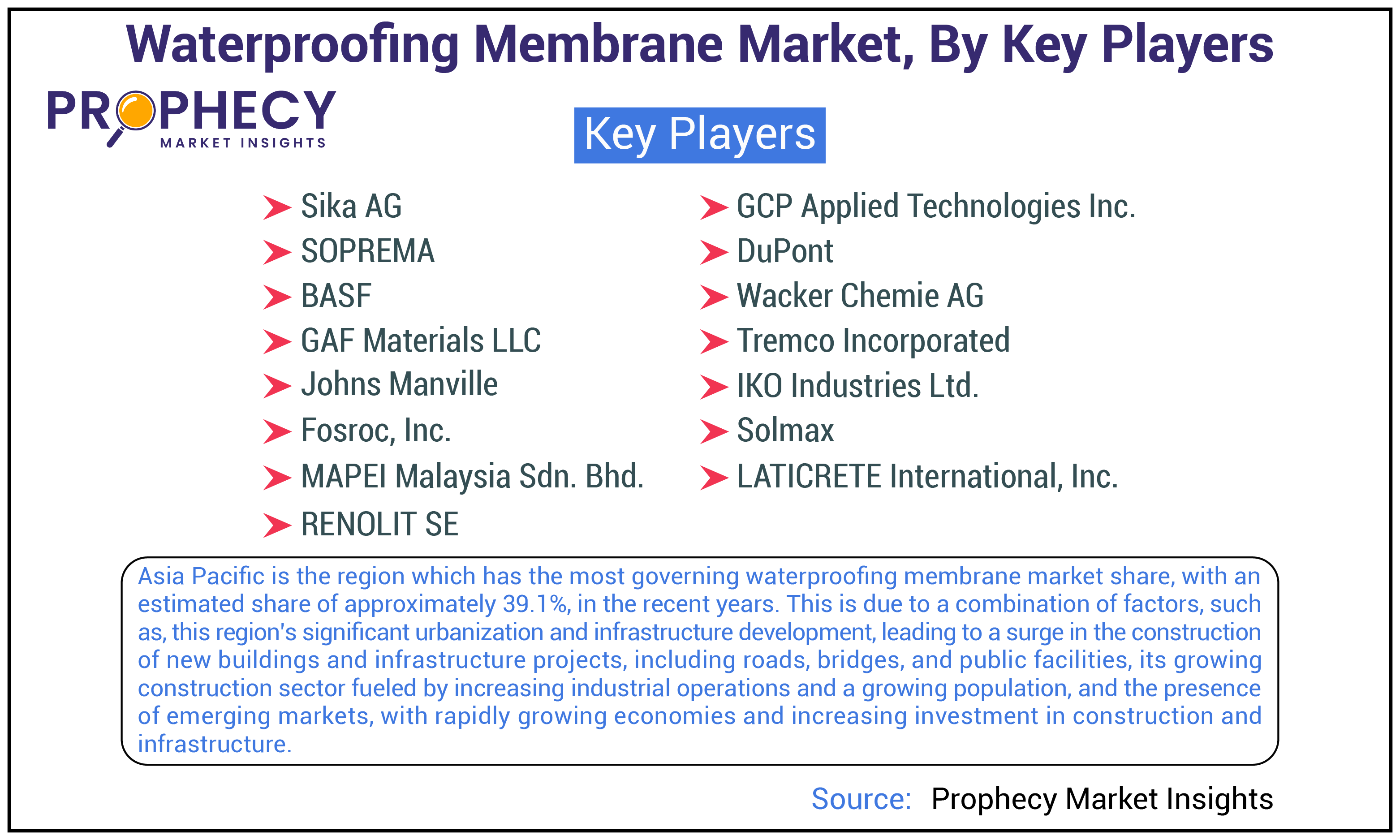
The key players operating in the market include, Sika AG, SOPREMA, BASF, and others. These key players are focusing on product innovation, expansion into new markets, and strategic partnerships. These include developing advanced materials, increasing production capacity, and investing in research and development, for driving waterproofing membrane market growth.
Waterproofing Membrane Market Companies:
- Sika AG
- SOPREMA
- BASF
- GAF Materials LLC
- Johns Manville
- Fosroc, Inc.
- MAPEI Malaysia Sdn. Bhd.
- RENOLIT SE
- GCP Applied Technologies Inc.
- DuPont
- Wacker Chemie AG
- Tremco Incorporated
- IKO Industries Ltd.
- Solmax
- LATICRETE International, Inc.
View an Additional List of Companies in the Waterproofing Membrane Market
Global Waterproofing Membrane Market Recent News
- In February 2025, the roofing and waterproofing team at Sika Corporation was thrilled to introduce a new "Hybrid" membrane and modified bitumen roofing solutions under the SikaShield brand to the American market. With its unique, cutting-edge "hybrid" membrane, SikaShield HB79, the brand SikaShield, which is well-known across Europe and beyond for its unparalleled longevity and durability, is poised to upend the modern residential roofing industry in the United States.
- In March 2023, SEAL & BLOCK, the brand's waterproofing solutions from basement to roof, were proudly introduced by Bostik India. With the SEAL & BLOCK line, the launch proudly demonstrated the importance of cutting-edge waterproofing technology in creating more sustainable infrastructures, which are essential for economic expansion. Seal & Block was created specifically to stop moisture from migrating or rising, extending the building build's lifespan and increasing its durability.
- In August 2021, Due to its superior long-term performance and durability, spray-sprayed waterproofing membranes have seen a significant increase in use in a number of countries. The application of this membrane is particularly advantageous in geometrically complicated, challenging-to-design areas such as crossing caves, turn-outs, lay-by recesses, and cross tunnels. Due to these conditions, it is difficult to install ordinary sheet waterproofing membranes in these hard-to-reach areas and to identify any leaks and make repairs.
- In January 2020, Under the Master Builders Solutions brand, BASF expanded its flexible waterproofing offering by introducing the MasterSeal 730 UVS, an innovative waterproofing membrane, throughout Asia. High-density polyethylene (HDPE) sheet waterproofing membrane MasterSeal 730 UVS was pre-applied and treated with a special pressure-sensitive adhesive and protective coating to allow for effective adhesion with concrete surfaces without the need for extra protective screed.
Analyst View:
Growing concerns about waste and water management in urban areas, increased construction activities, including new buildings and renovation projects, increased urbanization and infrastructure development, increased awareness of the long-term costs and damage caused by water infiltration, and increased focus on building safety and water management standards are all contributing factors to the waterproofing membrane market's robust growth. The market's growth has also been accelerated by the creation of new and improved waterproofing membranes that offer better performance, durability, and ease of installation; the use of sustainable waterproofing solutions is being driven by energy efficiency and green building; and waterproofing membranes provide economical and effective ways to prevent water damage to buildings.
More Related Reports
Waste or Garbage Collection Vehicle Market
Soil Vapour Extraction Market
Waste to Energy Market
Food Waste Disposers Market
Plastic Waste Management Market
Global Waterproofing Membrane Market Company Profile
|
Company Name |
Sika AG |
|
Headquarter |
Baar, Switzerland |
|
CEO |
Mr. Thomas Hasler |
|
Employee Count (2024) |
34,476 Employees |
Global Waterproofing Membrane Market Highlights
FAQs
Waterproofing membrane market size was valued at USD 32.5 Billion in 2025 and is expected to reach USD 56.6 Billion by 2035 growing at a CAGR of 6.3%.
Product type, raw material, usage, application, and region are the segmentation for the target market.
North America, Asia Pacific, Europe, Latin America, and the Middle East & Africa. Asia Pacific is expected to dominate the market.
The key players operating in the waterproofing membrane market include Sika AG, SOPREMA, BASF, GCP Applied Technologies Inc., GAF Materials LLC, Johns Manville, Fosroc, Inc., MAPEI Malaysia Sdn. Bhd., RENOLIT SE, DuPont, Wacker Chemie AG, Tremco Incorporated, IKO Industries Ltd., Solmax, and LATICRETE International, Inc.