Compound Feeds And Additives Market Overview
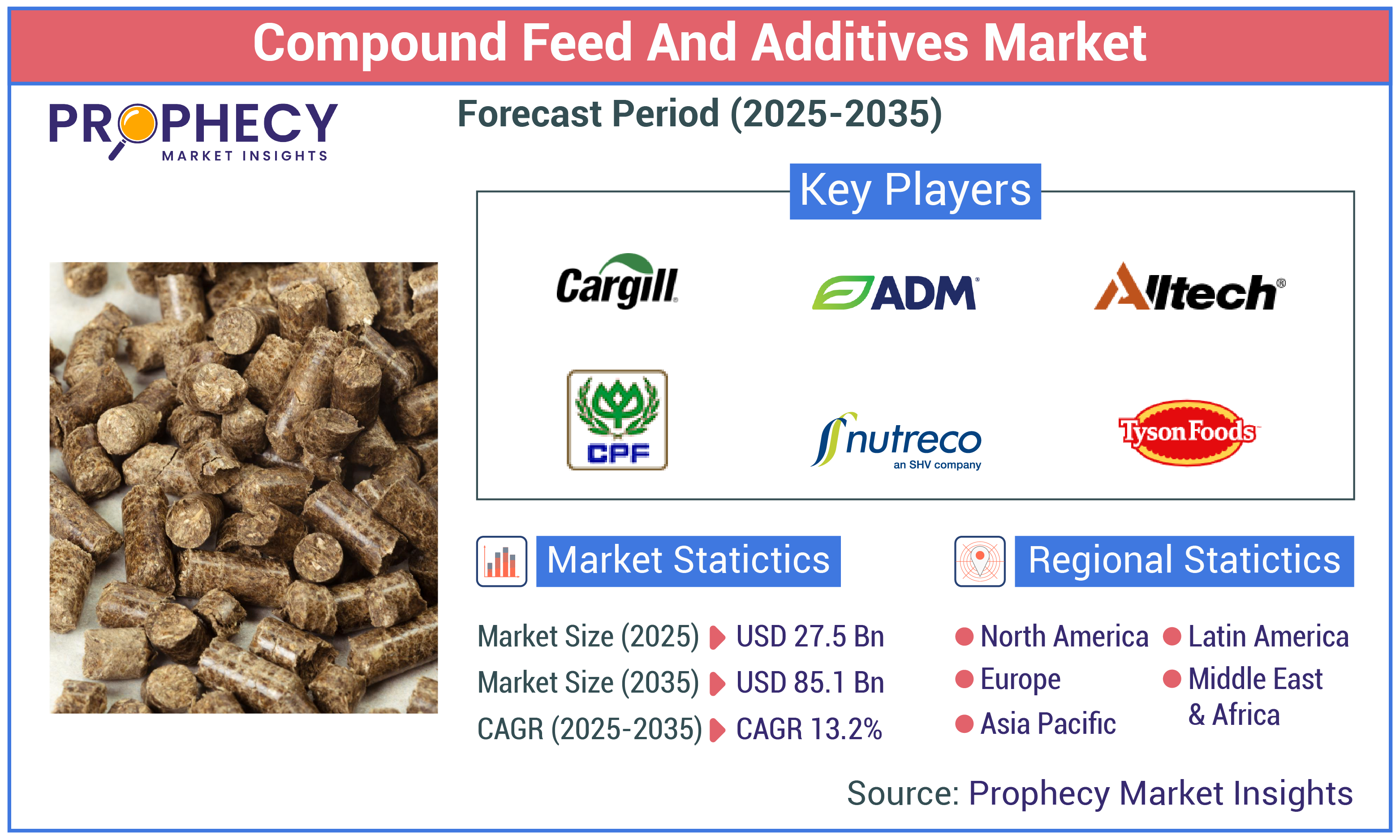
- Compound feeds and additives market size is expected to expand at a rate of USD 85.1 Billion, by 2035.
- In 2024, the compound feeds and additives market valuation was USD 24.8 Billion.
- Compound feeds and additives market is growing at a CAGR 13.2%.
Compound feed is mixture of various raw materials and additives which has nutritional need for livestock that is formulated. Supplementary ingredients such as vitamins, enzymes, probiotics, or minerals are feed additives that are added for improving animal health, growth and feed efficiency. For balanced nutrition and enhanced performance and productivity of livestock, compound feed and additives are used which boost immunity and support growth making compound feed and additives essential in modern animal farming.
Growth factors involve increasing global demand for animal protein, fueled by population growth, urbanization and rising incomes especially in developing economies is gradually driving the demand for livestock production. Factors such as precision feeding, biotechnology, and enzyme innovation, are some of the technological advancements further boosting optimized feed formulations and improve feed conversion further driving the market share for compound feed and additives.
Current trends and opportunities involve technological advancements, evolving consumer demands, and stricter regulatory frameworks where growing preference for natural and sustainable additives, such as probiotics, phytogenic and organic acids, as alternatives to antibiotics. For clean label animal products and increasing concern over antibiotic resistance the shift is being propelled to compound feed and additives in various regions. Innovations in biotechnology and enzyme development are increasing nutrient absorption and feed efficiency, giving competitive advantage to producers and manufacturers.
Key Takeaways:
- According to data from the UN Trade and Development, the seaweed industry has more than tripled in size over the past 20 years, from USD 5 billion in 2000 to USD 17 billion in 2021, when its global exports reached roughly USD 1 billion.
Recession risk & tariff analysis:
- Recession risk and tariff related challenges are moderate regarding the compound feed and additives market. Consumer expenditure on meat and dairy during economic turndowns can lower need for livestock which may impact feed production volumes.
- International trade of feed ingredients such as vitamins, amino acids and enzymes is sensitive to import duties on tariff front especially between major compound and feed additives producers such as China, the U.S and the EU. Despite these challenges the industry remains resilient in livestock productivity.
Impact of Generative AI on Compound Feeds and Additives Market:
- R&D processes, accelerating innovation in natural and functional additives by predicting biological responses and optimizing compound structures by generative AI. Feed formulations are developed, optimized, and personalized making a significant impact on the compound feed and additives market through generative AI. Nutritionist and feed manufacturers can design more precise, efficient and cost-effective feed blends tailored to specific animal species, health conditions and growth stages further driving more adoption of generative AI in the compound feed and additives industry on large scale ahead.
- Factors such as simulating outcomes, suggest novel ingredient combinations, and even create synthetic alternatives that enhance nutritional value while reducing reliance on scarce or volatile raw materials with the help of generative AI is poised to driving innovation and customization in the compound feed and additives industry driving substantial growth in the market.
Compound Feeds And Additives Market Drivers & Restraints
Key Drivers:
Rising Global Meat Consumption Fuels Surge in Compound Feed and Additives Market
Compound and Feed additives play an important role in fostering growth and overall health in livestock, propelling the meat consumption on global scale. Increase in animal feed production and the utilization of feed additives to improve livestock health and productivity due to growth factors such as population growth, rising incomes, and shifting dietary preferences, particularly in emerging and developing countries as global meat consumption is growing rapidly. Higher amount of animal protein is consumed by people as urbanization increases, leading to an upsurge in the demand for meat products specifically in Asia-Pacific and African regions where meat consumption is higher than the global feed and additives consumption over the globe.
- For instance, in 2023, around 140 million tons of poultry meat were consumed worldwide, making it the most consumed type of meat globally. Pork was the second most consumed meat worldwide, followed by beef and veal.
Rising Focus on Animal Welfare Drives Demand for Natural Feed Additives
Consumers and livestock producers are growingly concerned about animal welfare and health, fueling demand for feed formulations that promote animal well-being and utilize natural additives. Factors such as growing awareness, is influencing purchasing decisions, as more consumers prefer animal products sourced from ethically raised livestock, which does not include synthetic growth promoters and antibiotics. Feed solutions are more adopted by producers that incorporate natural ingredients which as good health impact and overall vitality in animals.
Restraints:
Rising Raw Material Costs Disrupt Feed Industry and Innovation
Production cost has an impact and profit margins of feed producers due to price fluctuations eventually resulting to higher product costing for consumer at final stage. Critical elements such as corn, soybean meal, vitamins, and amino acids are incredibly resistant to changes because of things like supply chain interruptions, trade restrictions, geopolitical conflicts, and climate change. Furthermore, uncertainty in raw material availability can disrupt long-term planning and funding in feed innovation driving further exploration in alternative ingredients and disrupting the compound and feed additives market on the global scale.
-
Counterbalance Statements: Technological advancement and growing demand for natural feed additives are passively shaping the food safety testing market, the disadvantages such as volatility in material costing and regulatory disruption remain known obstacles. Furthermore, the stringent and evolving nature of global food safety regulations need adaptations and compliance from companies, which can create delays and additional costing.
Opportunities & Trends:
The Tech Innovation and Natural Additives Boost Feed Market Growth
Technological innovations including bioengineered enzymes and microencapsulated nutrients and advancement in biotechnology are shaping the compound feed and additives market. The market for compound feeds and additives has increased rapidly due to changes in consumer preference, advances in technology, and an increased focus on conservation. One prominent development is the rise in demand for both natural and organic feed additives, including phytogenic, probiotics, and prebiotics. Concerns from consumers about antibiotic resistance and a desire for cleaner, more transparent food production methods are among the primary drivers of this shift. Further, the market is witnessing a surge in need for additives that push the animal immunity and health along with stringent regulations on antibiotic use in animal agriculture.
Compound Feeds And Additives Market Segmentations & Regional Insights
The compound feeds and additives market is segmented into product type, livestock, form, distribution channel, and region.
By Product Type:
Based on type, the compound feeds and additives market is divided into acidifiers, antibiotics, amino acids, vitamins, minerals & detoxifiers, antioxidants, flavors & sweeteners, enzymes and others. Amino acids hold the dominant position in compound feeds and additives market share as they play an important role in feed efficiency and improving animal growth. Amino acids support optimal animal performance and enhance nutrient absorption as demand for high-quality meat, poultry and dairy product increases.
Vitamins are the second dominant product in compound and feed additives market share as it plays a vital role in improving immunity and enhancing the nutritional value of animal feed. Vitamins ensure optimal growth and reproduction in livestock thereby meeting the growing healthcare requirements making the vitamin segment as second dominant and contributing to the market growth.
By Livestock:
Poultry, swine, cattle, aquaculture and others are livestock of compound feed and additives market. At the moment, the highest market share is held by poultry due to its shorter production cycle, rising global consumption of chicken meat and eggs, and relatively lower production costs. Intensive nature of poultry farming drives higher usage of feed additives to promote growth, further driving the poultry segment as dominating in the compound feeds and additives market share.
The swine segment stands as the second dominant category largely due to the significant demand for pork in regions such as Asia-Pacific and Europe, where it is a staple protein source. Factors such as efficient weight gain, disease prevention, and improved feed conversion ratios in swine production continues to drive the use of high-quality compound feeds contribute to market growth.
By Form:
Dry, liquid, are forms of the compound feeds and additives market. The dry form of compound feeds and additives holds the dominant compound feeds and additives market share as the components include ease of handling, storage stability, longer shelf life, and cost-effectiveness in transportation making it dominant in form segment.
The liquid form of compound feeds and additives holds the second-largest share due to their growth factors consisting of rapid absorption, effectiveness in improving digestion, and suitability for water-based administration.
By Distribution Channel:
According to the distribution channel, the market is categorized into online retail, offline retail. The offline retail is dominant segment in distribution channel as it has established and well networking of feed mills, cooperatives and agricultural supply stores. There is heavy dependency on offline retail in many rural and semi-urban areas where livestock farming is focused where they rely on traditional supply chains and offline retail.
Online retail is fastest growing and emerging segment as they have wide product range and growing digital adoption among feed manufacturers and livestock farmers thus online retails are gaining traction significantly. Online retail segment is anticipated to grow steadily as awareness and internet penetration increases in rural region.
Regional Insights:
Geographically, the compound feeds and additives market is studied across North America, Europe, Asia Pacific, Latin America, and the Middle East & Africa.
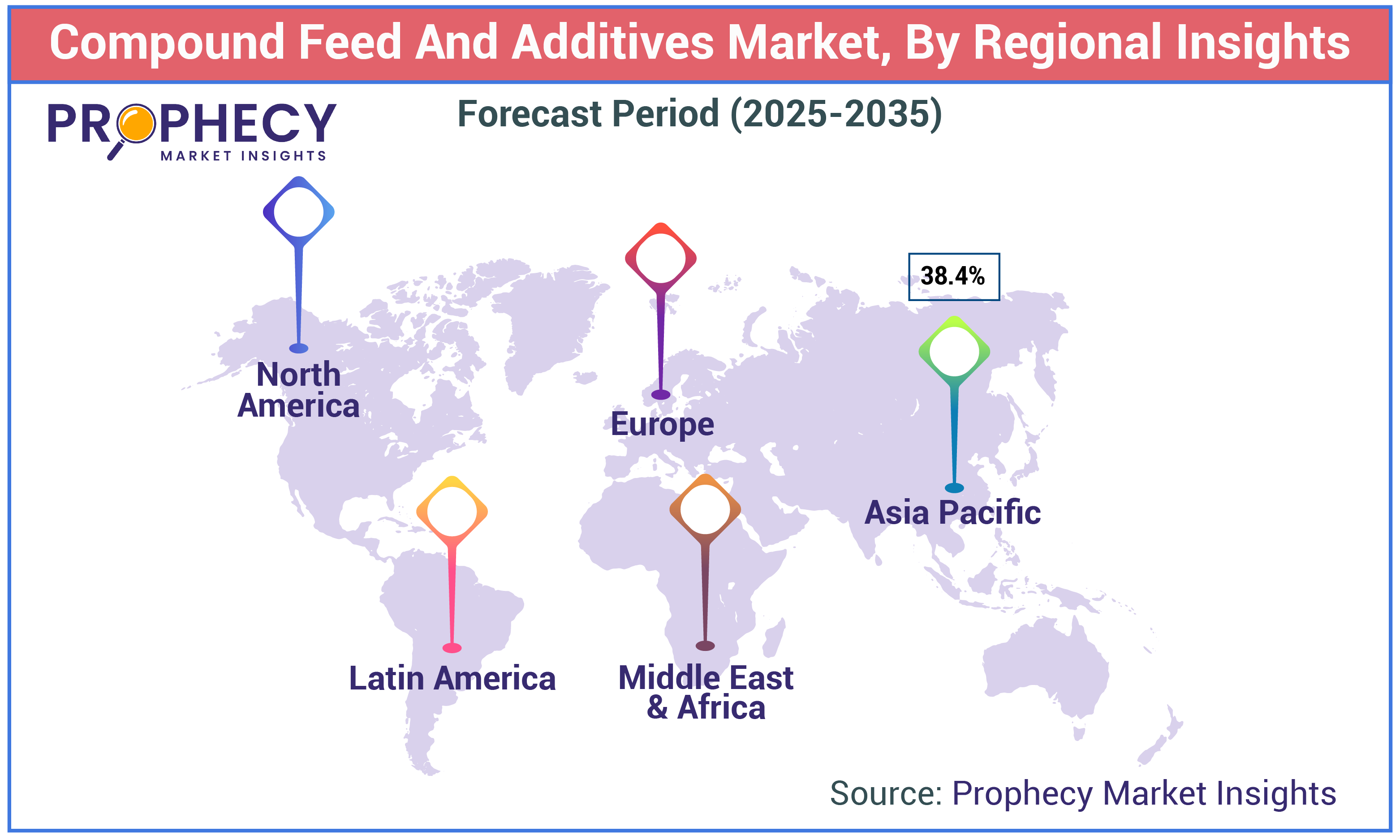
Asia Pacific: This is dominant region for compound feeds and additives market as it accounted for over 38.4% of the global compound feed market with growth factors such as growing meat consumption and livestock population, growing demand for high-quality animal protein in countries such as China and India.
- China Compound Feeds and Additives Market Insights:
China dominates the compound feed and additives market as the country produces 243.2 million metric tons of compound feed, making it the largest producer in the region along with large scale livestock population and high demand for cost-efficient animal protein makes the country leading at forefront on global scale.
Europe: Europe stands as the second largest region in compound feeds and additives market share due to growing demand for high quality protein and growth in livestock production. Germany, France and United Kingdom significantly contribute to the market, with Germany and U.K. showing rapid growth due to strong regulatory frameworks supporting animal nutrition and advanced feed technologies surging the market growth in the region.
- Germany Compound Feeds and Additives Market Insights:
Germany stands the dominant country in the compound feeds and additives market driven by advanced feed manufacturing infrastructure, well-established livestock sector and strong emphasis on animal health and nutrition further solidifying the position of Germany as market leader within European compound feed and additives market.
North America: This region holds a significant share in the global compound feeds and additives market, with growing factors such as highly industrialized livestock sector and increasing demand for efficient, high-quality animal nutrition. North America benefits from strong regulatory frameworks, advanced feed production technologies and presence of major industries in North American countries.
- U.S. Compound Feeds and Additives Market Insights:
U.S. is the dominant country the compound feeds and additives market due to growth factors such as large-scale, technologically advanced livestock industry, extensive commercial farming operations, and strong demand for high-performance animal nutrition products. Well developed feed manufacturing sector and robust regulatory environment ensuring safety and quality in the U.S.
Compound Feeds and Additives Market Report Scope:
|
Attribute |
Details |
|
Market Size 2025 |
USD 27.5 Billion |
|
Projected Market Size 2035 |
USD 85.1 Billion |
|
CAGR Growth Rate |
13.2% (2025-2035) |
|
Base year for estimation |
2024 |
|
Forecast period |
2025 – 2035 |
|
Market representation |
Revenue in USD Billion & CAGR from 2025 to 2035 |
|
Regional scope |
North America - U.S. and Canada Europe – Germany, U.K., France, Russia, Italy, Spain, Netherlands, and Rest of Europe Asia Pacific – China, India, Japan, Australia, Indonesia, Malaysia, South Korea, and Rest of Asia-Pacific Latin America - Brazil, Mexico, Argentina, and Rest of Latin America Middle East & Africa – GCC, Israel, South Africa, and Rest of Middle East & Africa |
|
Report coverage |
Revenue forecast, company share, competitive landscape, growth factors, and trends |
Segmentation:
By Product Type:
- Acidifiers
- Antibiotics
- Amino Acids
- Vitamins
- Minerals & Detoxifiers
- Antioxidants
- Flavors & Sweeteners
- Enzymes
- Others
By Livestock:
- Poultry
- Swine
- Castle
- Aquaculture
- Others
By Form:
- Dry
- Liquid
By Distribution Channel:
- Online Retail
- Offline Retail
By Region:
- North America
- U.S.
- Canada
- Europe
- Germany
- U.K.
- France
- Russia
- Italy
- Spain
- Netherlands
- Rest of Europe
- Asia Pacific
- China
- India
- Japan
- Australia
- Indonesia
- Malaysia
- South Korea
- Rest of Asia Pacific
- Latin America
- Brazil
- Mexico
- Argentina
- Rest of Latin America
- Middle East & Africa
- GCC
- Israel
- South Africa
- Rest of Middle East & Africa
Compound Feeds And Additives Market Competitive Landscape & Key Players
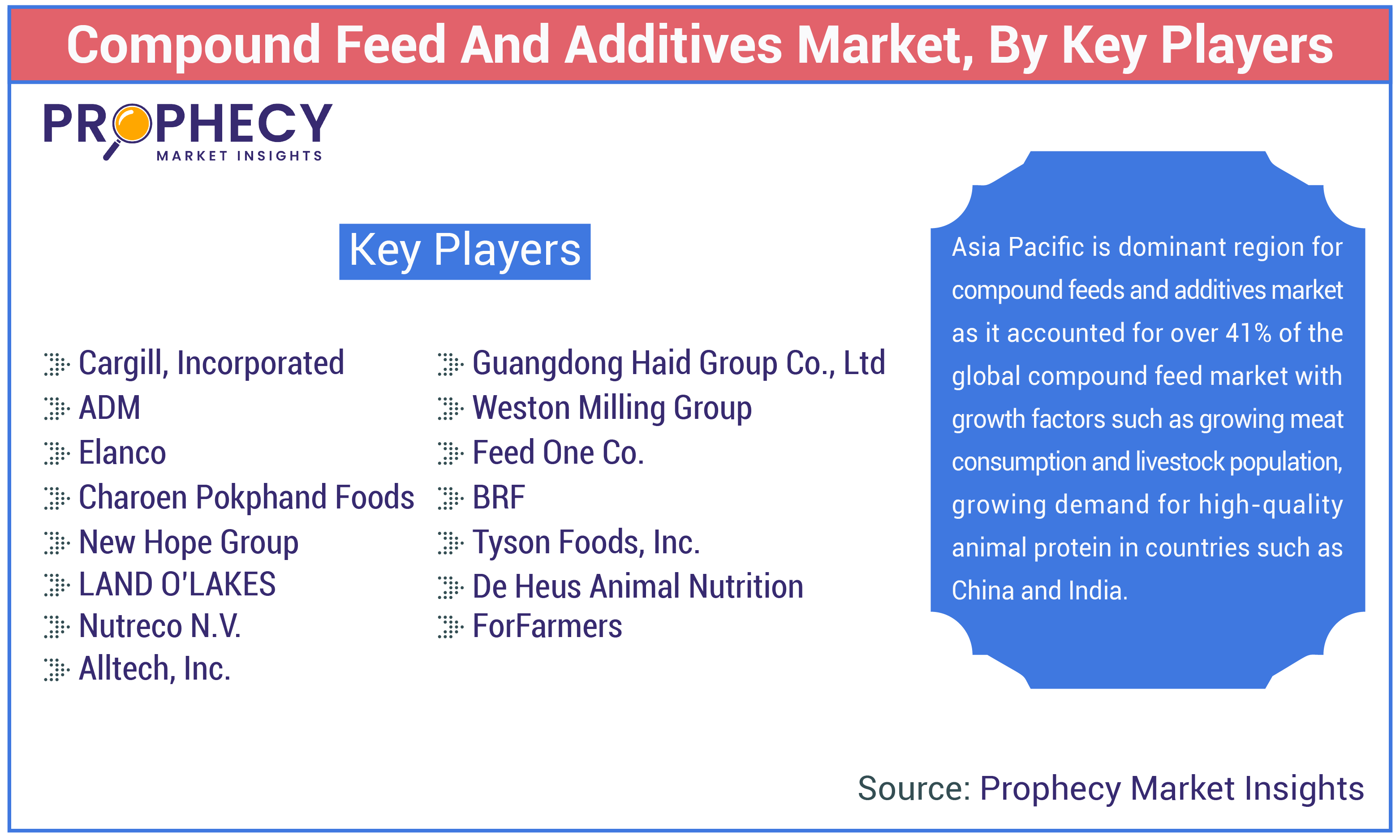
The key players operating in the compound feeds and additives market include, Cargill, Incorporated, ADM, Guangdong Haid Group Co., Ltd, New Hope Group, LAND O’LAKES, and others aiming antibiotic resistance and a desire for cleaner, more transparent food production methods are among the primary drivers of this shift.
Compound Feeds and Additives Market Companies:
- Cargill, Incorporated
- ADM
- Elanco
- Charoen Pokphand Foods
- New Hope Group
- LAND O’LAKES
- Nutreco N.V.
- Alltech, Inc.
- Guangdong Haid Group Co., Ltd
- Weston Milling Group
- Feed One Co.
- BRF
- Tyson Foods, Inc.
- De Heus Animal Nutrition
- ForFarmers
View an Additional List of Companies in the Compound Feeds and Additives Market
Compound Feeds And Additives Market Recent News
- In November 2024, Phibro Animal Health Corporation completed the acquisition of Zoetis' medicated feed additive product portfolio, including certain water-soluble products and related assets. This strategic move aims to enhance Phibro's offerings in the animal health sector, particularly in medicated feed additives.
- In October 2024, NOVUS International announced a collaboration with Ginkgo Bioworks to develop cutting-edge feed additives for animal agriculture. This partnership focuses on leveraging synthetic biology to create sustainable and efficient solutions for animal nutrition, aiming to enhance livestock health and performance.
- In March 2023, UK-based company Volac launched a new feed additives division to intensify its focus on sustainable livestock production. The division aims to provide evidence-based products and technical support services designed to improve the efficiency and sustainability of livestock production systems globally.
Analyst View:
Compound Feeds and Additives Market is poised to grow significantly with factors such as growing need for high quality animal protein, focus on animal health and sustainable farming practices that are done. Growth aspects such as rising meat consumption, increased livestock production, and the shift towards antibiotic-free animal farming, boost use of feed additives are key aspects of the market growth.
More Related Reports
Vitamins Market
Compound Feed Market
Potting Compound Market
Cattle Feed and Feed Additives Market
Feed Additives Market
Compound Feeds And Additives Market Company Profile
|
Company Name |
Cargill, Incorporated |
|
Headquarter |
Dublin, Ireland |
|
CEO |
Rob Bishop |
|
Employee Count (2024) |
135,000 Employees |
Compound Feeds And Additives Market Highlights
FAQs
Compound feeds and additives market size was valued at USD 27.5 Billion in 2025 and is expected to reach USD 85.1 Billion by 2035 growing at a CAGR of 13.2%.
Type, Livestock, Form, Distribution Channel, and region are the segmentation for the target market.
North America, Asia Pacific, Europe, Latin America, and the Middle East & Africa. North America is expected to dominate the market.
The key players operating the compound feeds and additives market include Cargill, Incorporated, ADM, Elanco, Charoen Pokphand Foods, New Hope Group, LAND O’LAKES, Nutreco N.V., Alltech, Inc., Guangdong Haid Group Co., Ltd, Weston Milling Group, Feed One Co., BRF, Tyson Foods, Inc., De Heus Animal Nutrition, and FORFARMERS.