Global Sports Energy Drinks Market Overview
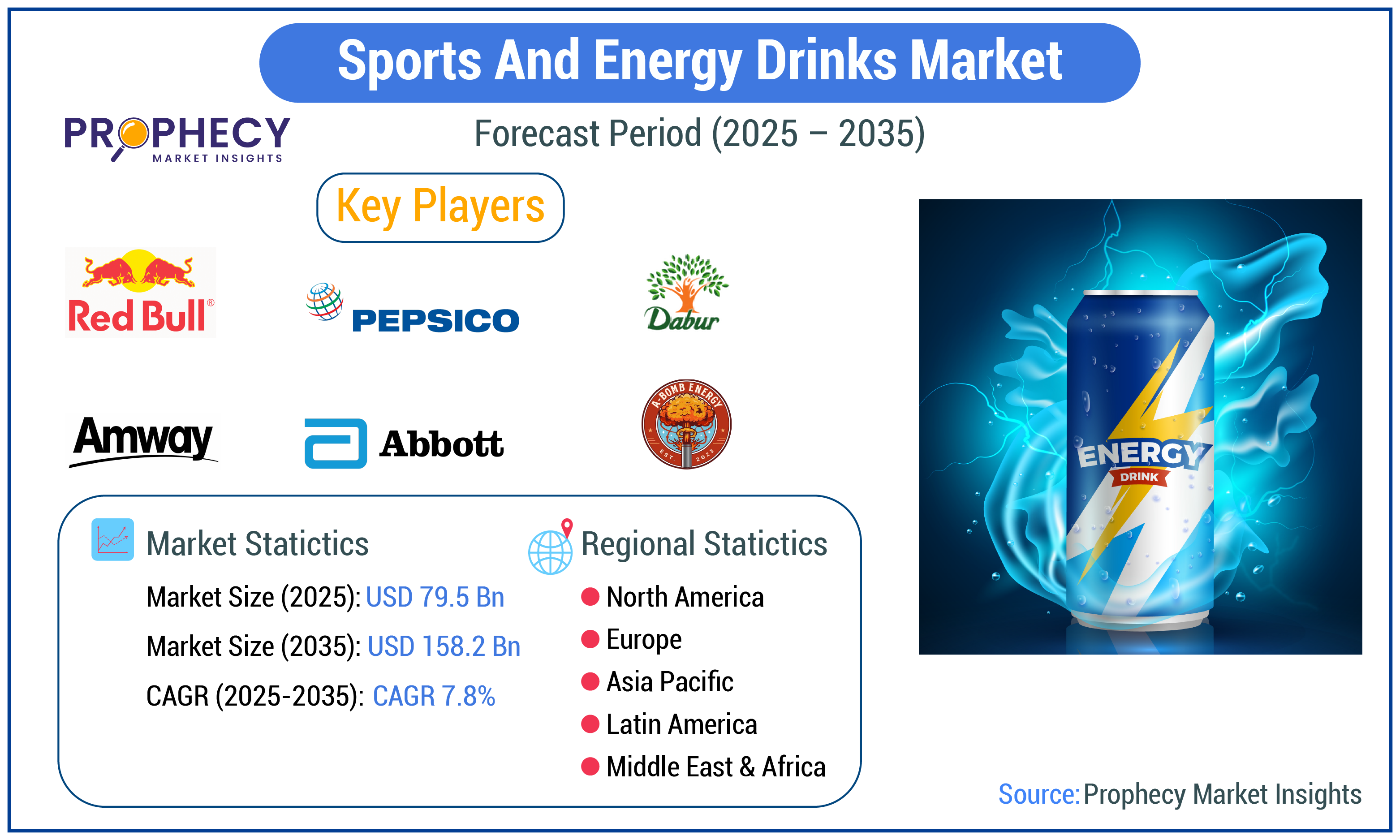
- By 2035, sports & energy Drinks market size is contemplated to enlarge at a valuation of USD 158.2 Billion.
- In 2024, the sports & energy Drinks market valuation was USD 75.0 Billion.
- Sports & energy Drinks market is developing at a CAGR of 7.8%.
Sports Drinkss or energy Drinkss, both are considered functional beverages that can improve sport performance, hydration, and energy level. Sports Drinkss usually provide fluids and electrolytes lost during sporting exercise and energy Drinkss often contain stimulants, such as caffeine, that can improve alertness and endurance. These beverages are popular with athletes and serious fit individuals and they are increasingly used amongst youth and working professionals looking for instant energy and improves focus during their day-to-day activities and the gym or mentally demanding work.
As awareness regarding health, the rising trend of fitness, and busy lifestyles fuel growth, the market for sports and energy Drinkss continues to expand. Gym memberships are increasing, more people are participating in athletic activity, and nutrition is trending toward on-the-go nutrition. As brands hone in on millennials and Gen Z as their target audience and add innovative products with low-sugar, Natural Ingredients content brands are reaching consumers who would not have considered sports and energy Drinkss otherwise.
The future holds significant upside with regards to healthier concepts using natural ingredients, vitamins, and adaptogens. As consumers both demand clean labels and functional benefits, brands that focus on wellness-enhancing energy and hydration products will likely take greater market share. Growth opportunities also exist in undeveloped rural and developing markets that remain un-tapped.
Recession Risk & Tariff Analysis:
- During a fluctuating economy, consumers might eliminate non-essential purchases. In the case of sports and energy Drinkss, that non-essential category would encompass premium Drinkss. Factors driving consumers to select lower-cost options are likely budget pressure and prioritizing core hydration needs.
- Tariffs on ingredient categories such as caffeine, sweeteners, and packaging materials may lead to increased costs for manufacturers. Manufacturers may either not be able to import these or have to source locally and/or increase their price by changing suppliers.
Impact of Generative AI on Sports & Energy Drinks Market:
- Generative AI supports groups in processing huge amounts of consumer data and records to offer perception into the patterns and development of developments and options. This leads to expand custom designed products in keeping with client alternatives and expectancies and in the end improves delight with the product and complies with the market.
- Generative AI also assists in developing the targeted advertising content, packaging design, and brand messaging that appeals to specific audiences. Generative AI allows brands to simulate opportunities to see how consumers will respond to campaigns in real life, which allows them to tweak advertisements to achieve a more optimized campaign.
Global Sports Energy Drinks Market Drivers & Restraints
Key Drivers:
Rising Health and Fitness Awareness is Changing the Dynamics of the Market
The growing health consciousness and active lifestyle are strong encouraging factors for growth in the sports and energy Drinks marketplace. The consumer is focused on hydration, endurance, and performance. Further, as interest in gym culture increases and home workouts become more prevalent and people participate in more organized sports, there are more instances in which consumers are looking for convenient ways for energy, electrolyte replacement, and post-exercise recovery. Healthy living initiatives are encouraging consumers to lead more active lifestyles, and in regards to hydration before, during, or after exercise, there are a ton of brands responding to provide convenience with a functional and supportive Drinks. Many brands are releasing Drinkss with vitamins, less sugar, and brought back to the originals with fewer processed ingredients which support the demand for functional and health-based beverages.
- For instance, according to a review published in Physical Activity Basics, 2023 - the Centers for Disease Control and Prevention (CDC) has suggested to the public to participate in exercise/physical activity for improved health and as such, has provided recommendations to the public to both hydrate and support energy needs when exercising, which indirectly continues to ensure the growth of sports and energy Drinkss.
Restraints:
Health Concerns Over Sugar and Caffeine Content to repel Market Growth:
One key constraint in the sports and energy Drinks market is rising sensitivity towards the high sugar and caffeine content levels, which are linked to obesity, heart problems, and family sleep disorders. Consequently, health associations and regulators at the district, regional, and national levels have taken action to alert consumers about their caffeine and sugar consumption and to restrict access to certain sports or energy Drinkss. As labeling becomes more apparent, health professionals are catching on to make public statements that highlight their concern over the consumption of sports and energy Drinkss by children and youth consumers, ultimately reining in their consumption in smaller demographics, as well as calling for better labeling practices on healthier sports and energy Drinkss.
- Counterbalance Statements: Manufacturers of energy and sports Drinkss are reformulating products to have lower sugar and caffeine levels, better or more naturally occurring sweeteners, added benefits (vitamins, electrolytes, herbal extracts) or a combination of all of these. The health focused development is assisting brands in retaining health-oriented consumers, while aligning with regulatory trends and public calls for safer, functional glass or plastic beverage products.
Opportunities & Trends:
Rise of Functional and Clean-Label Beverages Invites Opportunities
- An emerging possibility within the sports and electricity Drinks class is the demand for purposeful beverages that aid immunity, intellectual cognizance, and recovery. Increasing trend of clean label products, including transparency in natural ingredients, no synthetic additives and product labels, is an extension of this change in consumption pattern. With health consciousness on the rise, this trend leaves room for new product development in Natural Ingredients, plant-based, and low-calorie energy and sports Drinks product formulation.
Global Sports Energy Drinks Market Segmentations & Regional Insights
By product type, category, ingredients, flavor, functionality, packaging, distribution channel and region are the divisions of the sports & energy Drinks market.
By Product Type:
Based on Product type, the market is segmented into sports Drinkss and energy Drinks. Energy Drinkss dominate the sports & energy Drinks market share. Energy Drinkss are incredibly popular, particularly among young adults, and have solidified their position in the beverage category due to their high caffeine content, instant energy boost, and heavy marketing. The activity that surrounds these Drinkss nightly, in gaming or fitness also helps them remain relevant.
Sports Drinkss is the second highest position in global market. These tend to appeal to any person involved in sport or exercise. The electrolytes in sports Drinkss are advantageous to the consuming in hydration and recovering after an intense effort, also supports the interest, and sustainability of sports Drinkss, health and wellness trends are becoming increasingly popular.
By Category:
Based on category, the market is segmented into carbonated beverages, non-carbonated Beverages. Non-carbonated beverages are dominating the sports & energy Drinks market share as health awareness is growing and there is a preference for low-sugar beverages and functional beverages. They are great for hydration and are associated with natural ingredients and recovery from performance, which is an attractive feature for athletes and health-conscious individuals that promote an interest in these beverages. As a result, there are high and consistent demands for all non-carbonated beverages and their ever-growing market.
Carbonated beverages are in second place and are currently an established market, but they continue to experience lively consumption trends due to their fizzy energizing effect and the exciting flavors they provide. Young people tend to prefer these beverages, the beverage's brand was their friend, and growing consumption with to go consumption that income, but they face a challenge from non-carbonated beverages gaining popularity as an alternative.
By Ingredients:
Based on Ingredients, the market is segmented into natural ingredients, synthetic. Synthetic sports & energy Drinkss dominate the sports & energy Drinks market size. Synthetic sports and energy Drinkss hold the largest share of the market in large part due to their widespread availability, and efficacy in improving performance. These products typically have synthetic caffeine and sweeteners, which make them inexpensive and appealing to mass-market consumers, gyms, and convenience stores.
Natural Ingredients Drinkss are in strong second place, with increased demand for natural, chemical-free products. Natural Ingredients Drinkss are made from plant-sourced ingredients, sustainable sources of caffeine, with minimal, if any, additives. The rise of Natural Ingredients Drinkss demonstrates growing awareness and acceptance of clean nutrition among consumers interested in their health and body composition, especially millennials, athletes, and the wellness-minded.
By Flavor:
Based on Flavor, the market is segmented into fruits, herbal/botanical, sweetened & unsweetened, customized, others. Fruit-flavored beverages are the dominating category due to their refreshing nature, association with nature, and broad appeal. They are consistent with health trends and always available in some version of citrus, berry, and tropical variants that make them extremely popular among all ages and in every region.
Sweetened and unsweetened are the second-best category, accommodating a range of tastes and dietary preferences. There is demand from consumers for low-calorie or sugar-free variants of products but there is also demand from consumers seeking sweetness in the form familiar foods and brands. Fitness-minded alcohol consumers, diabetics, or anyone looking for a Drinks with function but not sacrificing the taste or calories will drive this part of the market.
By Functionality:
Based on Functionality, the market is segmented into hydration, nutritional support, energy boost, weight management, immunity support / wellness, others. Hydration category is dominating the sports & energy Drinks market share. Hydration is now the most prominent functional segment in the sports and energy Drinkss market mainly due to growing understanding of fluid replenishment during physical activity. Hydration Drinkss are embraced by athletes, bodybuilders, and fitness fans as beverages to maintain electrolytes and avoid dehydration.
Energy Boost is the second most dominant segment, fueled by consumers, who want to receive an instant stimulant for maximum performance. Energy Drinkss are widely used by students, employees and gym-goers to fight fatigue, or simply enhance mental alertness or increase physical endurance.
By Packaging:
Based on the Packaging, the sports & energy Drinks market is divided into bottles, cans, cartons, pouches, and others. Bottles dominate the sports and energy Drinks market share, as they are portable, reusable and easy to handle. Bottles are the preferred packaging for sports Drinkss that are primarily focused on hydration, especially for athletes and fitness consumers. Bottles are often resealable and have a broad range of sizes available. As rigid packaging, they fit both single-use or when on-the-go consumption patterns, which helps to support their dominance in the market.
Cans holding the second position, complete with a contemporary shape and durability as a desirable quality factor, which is especially appealing to energy Drinks consumers. Cans have a longer shelf life, a more appealing packaging image with younger consumers, and many avenues for promotional marketing. Cans hold temperature well, and there is usually great distribution specific to retail, vending machines and convenience stores.
By Distribution Channel:
Supermarkets & hypermarkets, convenience stores, specialty stores, online retail, others are distribution channel of the sports & energy Drinks market. Supermarkets & Hypermarkets account for the majority of sports and energy Drinks market share due to their extensive array of products to choose from, in-store promotions, and high consumer traffic. These retail outlets allow brand visibility and the opportunity for competitive pricing with cost-conscious consumers, making them the predominant choice for bulk and regular purchases, and are made by a great many consumers.
The second-dominant segment is Convenience stores, with many impulse purchases, and proximity to consumers. These retailers serve urban locations, gas stations, and workplaces and provide quick access to ready-to-Drinks energy and sports Drinkss, complemented by longer hours of operation, and single-serve consumers packages that have equally fast access to busier consumers looking for instant refreshment and energy on the go.
Regional Insights:
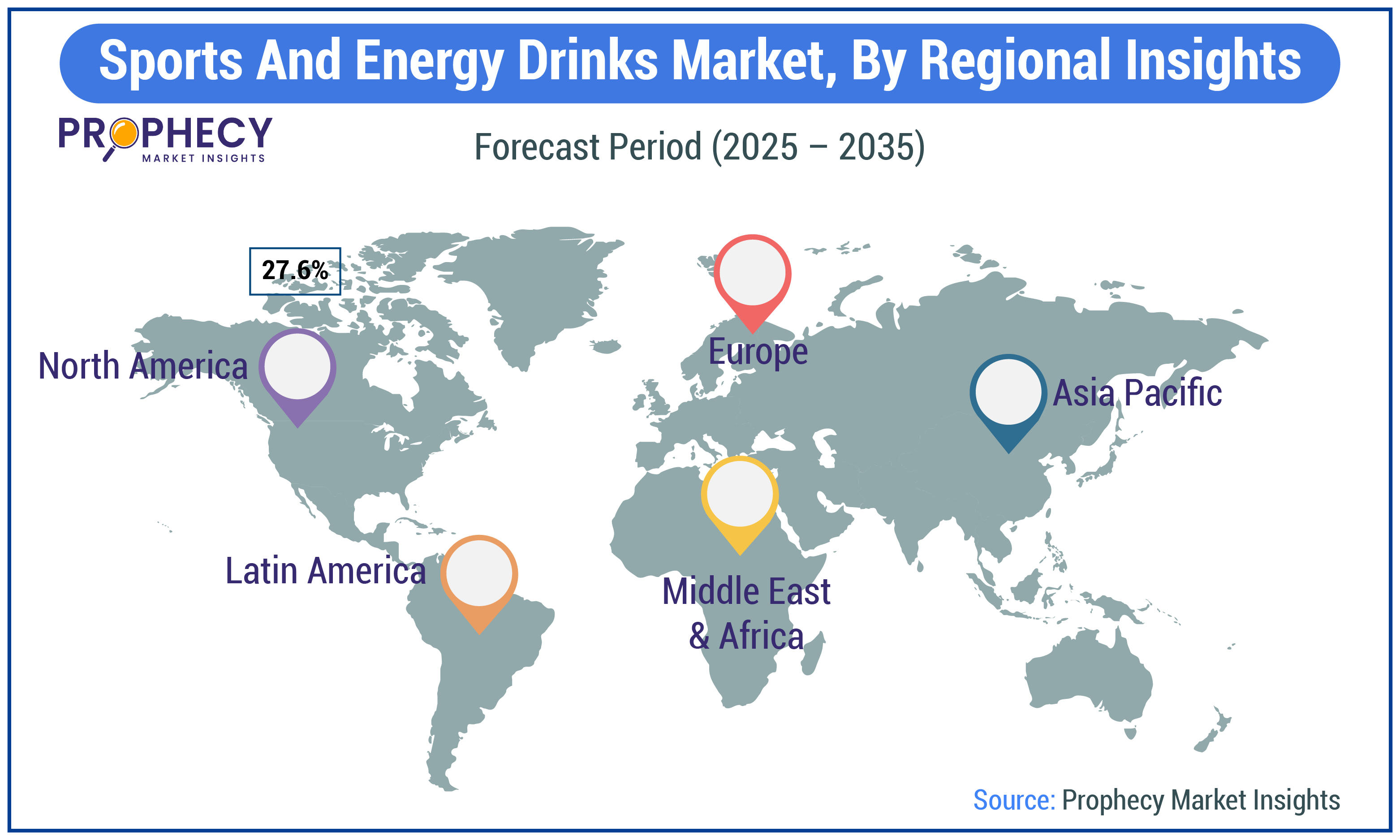
Geographically, the sports & energy Drinks market is studied across North America, Europe, Asia Pacific, Latin America, and the Middle East & Africa.
North America: This region dominates the sports and energy Drinks market size due to high consumption rates, strong brand presence, and a population that values health. The U.S., in particular, has a strong fitness culture with youth-driven demand for energy Drinkss. There is strong advertising and presence in retail outlets in urban and suburban settings.
- U.S. Sports & Energy Drinks Market Insights:
The U.S. has been the consistent North American leader in the sports and energy Drinkss category, attributed to its gym culture, and high consumer demand for performance-enhancing beverages. Through marketing to youth, professionals, and athletes, the US continues to dominate in sales and innovation.
Europe: The European region is the second-largest share of the Sports & Energy Drinks market. Influence of low-sugar Drinkss and increasing health awareness leverage market growth. Health-conscious consumers who prefer clean-label and Natural Ingredients Drinkss and promotes new formulations regarding caffeine content levels constitute the key market.
- U.K. Sports & Energy Drinks Market Insights:
In Europe, the U.K. is the market leader, driven by the increasing health awareness among consumers, the rise in fitness trends and interest, and the interest in functional beverages. Many consumers are looking for sugar-free, clean label products. The benefit of a strong retailer infrastructure and demand for convenient energy solutions on-the-go establishes the UK's position as the driver of growth for the region.
Asia Pacific: This is growing rapidly with an increase in disposable incomes, urbanization, and an increasing fitness culture. There is increased interest in sports and energy Drinkss in markets such as China, India, and Japan, with other groups of athletes. The market is also being driven by health trends and the consumption of Western lifestyles in the fitness market.
- China Sports & Energy Drinks Market Insights:
China is the forefront market located in Asia-Pacific, driven by rapid urbanization, rising disposable incomes, and increased participation in fitness and sports-related activities. The middle class is increasing and ready to purchase products to replicate Western lifestyles, which includes demand for energy-boosting products at both the domestic and international level.
Sports & Energy Drinks Market Report Scope:
|
Attribute |
Details |
|
Market Size 2025 |
USD 79.5 Billion |
|
Projected Market Size 2035 |
USD 158.2 Billion |
|
CAGR Growth Rate |
7.8% (2025-2035) |
|
Base year for estimation |
2024 |
|
Forecast period |
2025 – 2035 |
|
Market representation |
Revenue in USD Billion & CAGR from 2025 to 2035 |
|
Regional scope |
North America - U.S. and Canada Europe – Germany, U.K., France, Russia, Italy, Spain, Netherlands, and Rest of Europe Asia Pacific – China, India, Japan, Australia, Indonesia, Malaysia, South Korea, and Rest of Asia-Pacific Latin America - Brazil, Mexico, Argentina, and Rest of Latin America Middle East & Africa – GCC, Israel, South Africa, and Rest of Middle East & Africa |
|
Report coverage |
Revenue forecast, company share, competitive landscape, growth factors, and trends |
Segmentation:
By Product Type:
- Sports Drinkss
- Isotonic
- Hypertonic
- Hypotonic
- Energy Drinkss
- Non-Alcoholic
- Alcoholic
By Category:
- Carbonated Beverages
- Non-carbonated Beverages
By Ingredients:
- Natural Ingredients
- Herbal Extracts
- Natural Caffeine
- Others
- Synthetic
- Artificial Sweeteners
- Preservatives
- Others
By Ingredients:
- Fruits
- Herbal/Botanical
- Sweetened & Unsweetened
- Customized
- Others
By Functionality:
- Hydration
- Nutritional Support
- Energy Boost
- Weight Management
- Immunity Support / Wellness
- Others
By Packaging:
- Bottles
- Cans
- Cartons
- Pouches
- Others
By Distribution Channel:
- Supermarkets & Hypermarkets
- Convenience Stores
- Specialty Stores
- Online Retail
By Region:
- North America
- U.S.
- Canada
- Europe
- Germany
- U.K.
- France
- Russia
- Italy
- Spain
- Netherlands
- Rest of Europe
- Asia Pacific
- China
- India
- Japan
- Australia
- Indonesia
- Malaysia
- South Korea
- Rest of Asia Pacific
- Latin America
- Brazil
- Mexico
- Argentina
- Rest of Latin America
- Middle East & Africa
- GCC
- Israel
- South Africa
- Rest of Middle East & Africa
Global Sports Energy Drinks Market Competitive Landscape & Key Players
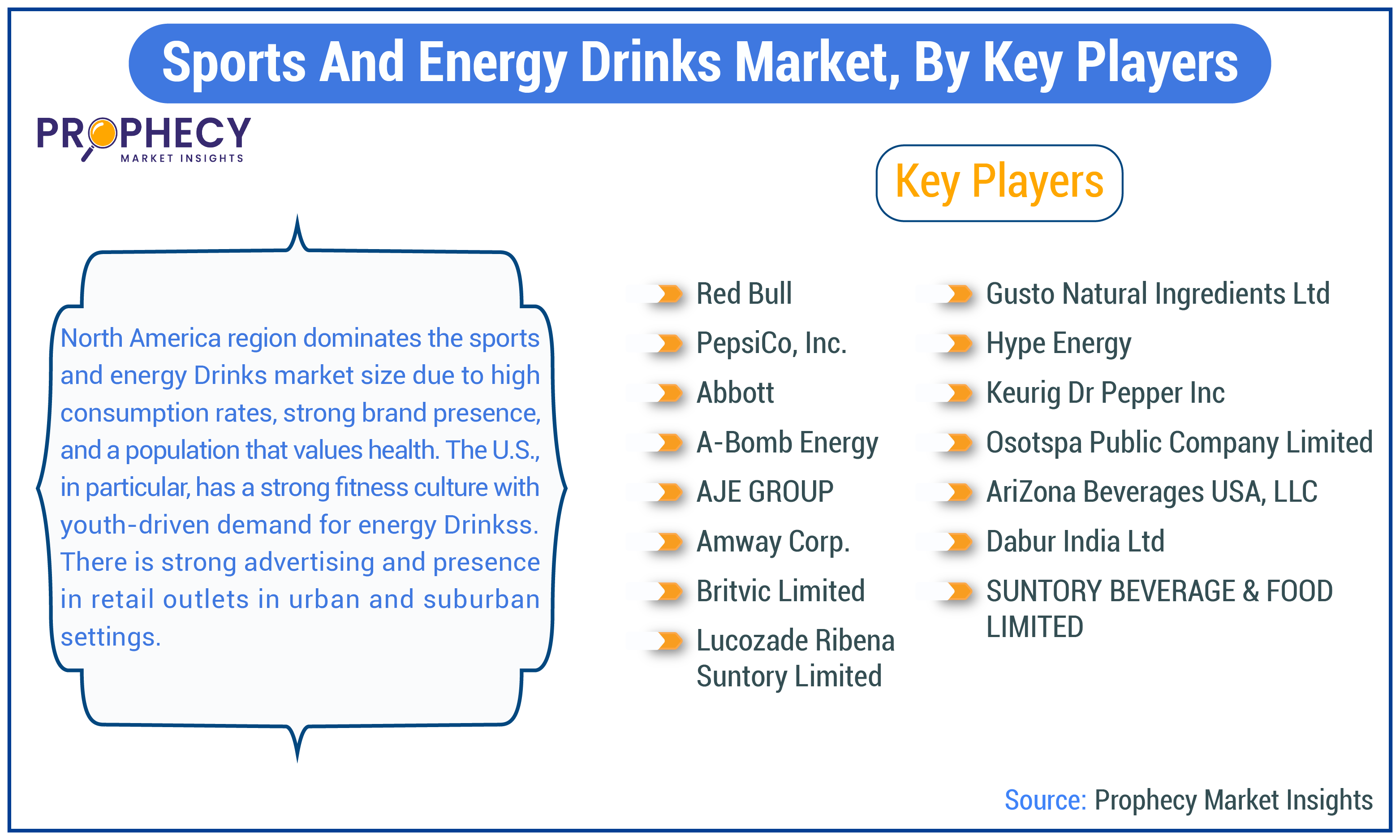
The prominent players operating in the market include, Red Bull, PepsiCo, Inc., Lucozade Ribena Suntory Limited, Abbott, A-Bomb Energy, AJE GROUP, Amway Corp., Britvic Limited, and others. The energy Drinks and sports Drinks industry are competitive, with regional and global competitors vying for consumer attention through subtle flavors, and bold advertising. Businesses focus on athlete endorsements, health-oriented formulations, and expanded retail channels to promote differentiation between brands and maintain existing brand loyalties in a very dynamic and changing market.
Sports & Energy Drinks Market Companies:
- Red Bull
- PepsiCo, Inc.
- Lucozade Ribena Suntory Limited
- Abbott
- A-Bomb Energy
- AJE GROUP
- Amway Corp.
- Britvic Limited
- Gusto Natural Ingredients Ltd
- Hype Energy
- Keurig Dr Pepper Inc
- SUNTORY BEVERAGE & FOOD LIMITED
- Osotspa Public Company Limited
- AriZona Beverages USA, LLC
- Dabur India Ltd
View an Additional List of Companies in the Sports & Energy Drinks Market
Global Sports Energy Drinks Market Recent News
- In April 2024, GURU Natural Ingredients Energy Corp., Canada's Natural Ingredients energy Drinks brand, launched Peach Mango Punch nationally with a marketing campaign. Peach Mango Punch is high in natural ingredients and low in calories and is designed to boost brain function and focus. Peach Mango Punch is certified Natural Ingredients, aspartame and sucralose free, and caffeine and plant based.
- In March 2024, Monster energy ultra launched fantasy ruby red using the beverages first ever AR (augmented reality) can reveal. At an event in Venice, Los Angeles, people were taken to a mixed reality setting that replicated the beverage experience. The event had a huge 10 foot Monster Ultra can installation as a focal point.
Analyst View:
The sports and energy Drinkss sector is expanding rapidly, with the increased health consciousness, more people living an active lifestyle, and a growing preference for functional beverages. The evidence is strong shifting trends toward clean-label, low-sugar, and Natural Ingredients formulations. Emerging markets and nutraceutical developments will be key opportunities for growth in the future. Concerns around caffeine, sugar content, and regulatory scrutiny are some significant restraints. In this ever-evolving and competitive industry, innovation and targeted marketing will be key to sustaining growth.
More Related Reports
Fantasy Sports Market
Europe Sports Facilities Market
Sports Apparel Market
Sports Apparel Market
Sports Tourism Market
Global Sports Energy Drinks Market Company Profile
|
Company Name |
AJE GROUP |
|
Headquarter |
Lima, Peru |
|
CEO |
Angel Añaños |
|
Employee Count |
10,000 Employees |
Global Sports Energy Drinks Market Highlights
FAQs
Sports & energy Drinks market size was valued at USD 79.5 Billion in 2025 and is expected to reach USD 158.2 Billion by 2035 growing at a CAGR of 7.8%.
Product type, category, ingredients, flavor, functionality, packaging, distribution channel, and region are the segmentation for the sports & energy Drinks market.
North America, Asia Pacific, Europe, Latin America, and the Middle East & Africa. North America is expected to dominate the market.
The prominent players operating in the market include, Red Bull, PepsiCo, Inc., Lucozade Ribena Suntory Limited, Abbott, A-Bomb Energy, AJE GROUP, Amway Corp., Britvic Limited, Gusto Natural Ingredients Ltd, Hype Energy, Keurig Dr Pepper Inc, SUNTORY BEVERAGE & FOOD LIMITED, Osotspa Public Company Limited, AriZona Beverages USA, LLC, and Dabur India Ltd.