Global Organic Pea Protein Market Overview
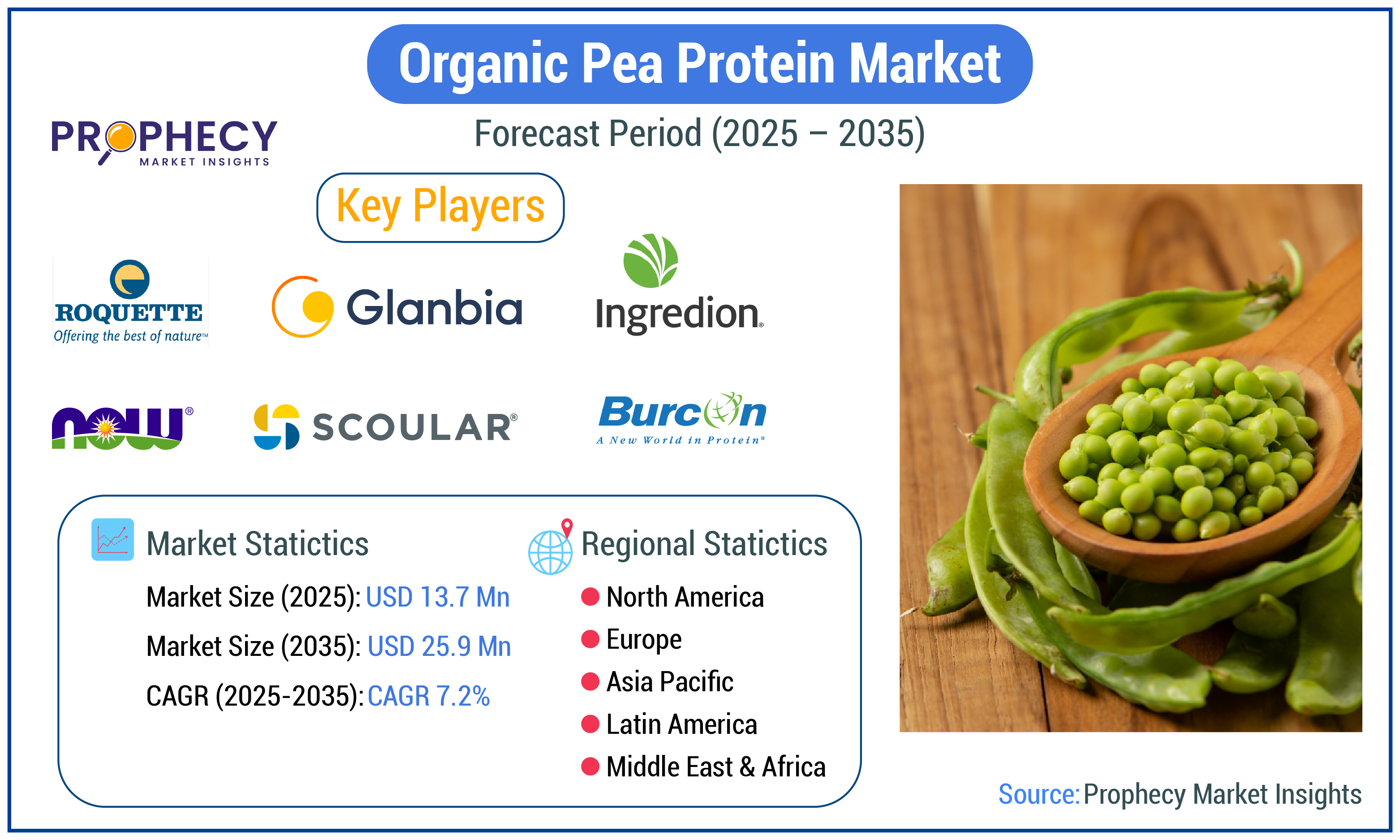
- By 2035, organic pea protein market size is contemplated to enlarge at a valuation of USD 25.9 Million.
- In 2024, the organic pea protein market valuation was USD 12.9 Million.
- Organic pea protein market is developing at a CAGR of 7.2%.
The organic pea protein market is composed of plant-based protein ingredients from organic yellow peas (Pisum sativum). The protein has recently gained in popularity since it is considered allergen-free, non-GMO, has an abundance of amino acids, and can be a viable source of protein in lieu of animal-based (beef, poultry) and soy-based proteins. The demand for organic pea protein is recognized within different industries, such as food, beverage, and dietary supplements. The major driver of growth across these industries is growing consumer demand for more sustainable and clean-label ingredients.
The organic pea protein market is on the rise due to growing consumer awareness around health and food allergies. As more consumers shift towards vegan and vegetarian diets, demand for clean, plant-based proteins has significantly increased. While consumers want the cleanest source of plant-based protein available due to concerns around genetically modified foods and animal cruelty, food manufacturers are obliged to look for formulation innovations, including plant-based proteins.
Fitness-minded consumers are now considering pea protein due to its nutritional value. The future of the organic pea protein market is bright with continued innovation in food technology and the need for functional plant-based products. Its scalability and dietary flexibility offer organic pea protein as an ingredient within the growing worldwide trend.
Recession Risk & Tariff Analysis:
- When economies have downturns, consumers will often choose to switch to cheaper protein options, which can lead to a reduction in demand for premium organic pea protein products. Budget restraints can also limit manufacturers' investment in innovation and production. Organic products are usually higher priced and restrict accessibility, which can limit market growth and a more general disruption of the supply-demand relationship.
- Tariffs applied on agricultural imports or exports can have a detrimental effect on the pricing and supply of organic peas and have a knock-on effect on production costs for pea protein. Trade barriers can also narrow the gap to market from major producing or consuming regions, causing major delays in future production schedules. Tariffs may also deter some types of cross-border co-operatives and lessen competitive standards of organic pea proteins in a global market.
Impact of Generative AI on Organic Pea Protein Market:
- Generative AI supports manufacturers in creating optimized organic pea protein formulations by analyzing nutrient profiles, taste, and consumer preferences, so that organizations are able to meet changing diets and improve their competitive advantage in a fast-moving and changing market.
- Generative AI tools handle large data sets that are predictive of consumer demand and emerging trends and optimize operations of supply chains accordingly. These tools therefore, allow companies within the organic pea protein value chain to better decide on production and marketing that minimize waste, control inventory, and transit costs while being responsive to market changes.
Global Organic Pea Protein Market Drivers & Restraints
Key Drivers:
Rising Shift Toward Plant-Based Nutrition boosting the market growth
The driving forces behind the global organic pea protein market are the worldwide trend to endorse plant-based diets due to enhanced health consciousness, lactose intolerance, and ethical concerns regarding animal agriculture practices. Furthermore, organic pea protein is rich in amino acids, is allergen-free, and fits nicely in vegetarian and vegan diets. The rising clean-label trend coupled with sustainability concerns would also enhance this shift, as more consumers are becoming interested in products that are healthy, wellness, and environmentally worthy to their merit.
- For instance, according to according to USDA FoodData Central, organic pea protein is a competitive substitute for animal-based proteins, with roughly 23–25 grams of protein per 100 grams. Additionally, it supports USDA's initiatives to encourage plant-based innovation in order to enhance sustainability and public health outcomes.
Restraints:
High Production Cost and Limited Crop Yields limits the market:
A significant limitation affecting the organic pea protein sector is the high cost of production and the availability of organic pea crops. Organic farming practices typically provide lower yields than conventional producing methods, as organic farming consumes more land and labor to grow pea crops. Higher retail pricing for organic products affects the consumption patterns of cost-sensitive consumers, especially in developing countries, where cost restricts adoption and sustainable market penetration.
- Counterbalance Statements: Consumers' willingness to spend more on clean-label, plant-based products offsets some of the higher costs and helps create demand. Additionally, the continuous development of technology and incentives for farmers to grow organic crops are projected to improve supply chain efficiency and pricing over the long term, which will help address some of the issues associated with high production costs.
Opportunities & Trends:
Expanding End-users and Innovation Driving Organic Pea Protein Growth
An emerging opportunity is the inclusion of organic pea protein in sports nutrition and functional food products, as the rate of consumption is being driven primarily by fitness-driven and vegan-focused consumers. Additionally, an important trend in the market is the use of flavor-masking and texturizing technologies that are allowing for the increased use of pea protein in plant-based meat and dairy alternatives. There are these advancements will facilitate the use of organic pea protein as a sustainable, versatile protein source across a wide range of food and beverage categories.
Global Organic Pea Protein Market Segmentations & Regional Insights
Type, form, function, end-user and region are the divisions of the organic pea protein market.
By Type:
Based on type, the market is segmented into isolates, textured, and concentrates. Isolates dominate the Organic pea protein market share due to their incredibly high protein purity and minimal taste interference. Its versatility in sports nutrition, dairy alternatives, and health supplements earns this variety a rank of choice for manufacturers to deliver a clean label via high-protein claims.
The second dominant segment is Concentrates. Pea protein concentrates come in second based on nutrients, price, and ease of processing. This type usually contains fibres and has less protein, thereby harmonizing with the increase in meat analogs and bakery products where some sort of filler ingredient aids sustainability in accordance with the plant-based dietary trend.
By Form:
Based on Type, the market is divided into dry, and liquid. Dry segment dominates the organic pea protein market size due to its extended shelf life, ease of storage, and versatility in a variety of food applications, including protein powders, snacks, and baked items. It is the go-to option for producers and consumers looking for plant-based nourishment due to its high protein content and affordability.
The second dominant segment is liquid organic pea protein, which is preferred in dairy substitutes and ready-to-drink beverages. It is perfect for liquid recipes due to its smoother texture and ease of blending. Its demand is rising in health drinks and fortified beverages aimed at clean-label and vegan consumers, despite the fact that it is less stable than dry forms.
By Function:
Texturing, emulsification, gelation, stabilization, others are the functions of organic pea protein market. In the market for organic pea protein, texturing is the most popular function and is frequently used to improve the mouthfeel and structure of plant-based and meat alternative goods. It has a fibrous, meat-like consistency, making it ideal for vegan and vegetarian food formulations that require realistic textures and sensory appeal.
The second most important process in plant-based dairy and dressing products is emulsification, which keeps oil and water mixtures stable. The consistency and shelf stability of products are enhanced by the efficient emulsifying action of organic pea protein. It is a popular option for health-conscious and allergy-free food innovations due to its clean-label status.
By End-user:
Food & beverages, animal feed, and food supplements are end-user of the organic pea protein market. Food and beverages remain the dominant force shaping the organic pea protein market growth, supported by the global growing trend of plant-based eating. Organic pea protein is now used in many food products, including meat alternatives and dairy alternatives. Consumers with health consciousness prefer clean labels and nutritional benefits.
The second position in the organic pea protein category belongs to dietary supplements, given the very high interest in fitness, well-being, and natural nutrition. Organic pea protein is also increasingly put in protein powders, energy boosters, and a wider range of dietary supplements. Easy to absorb and hypoallergenic features are the factor that usually gets preference over soy or whey in supplement formulation.
Regional Insights:
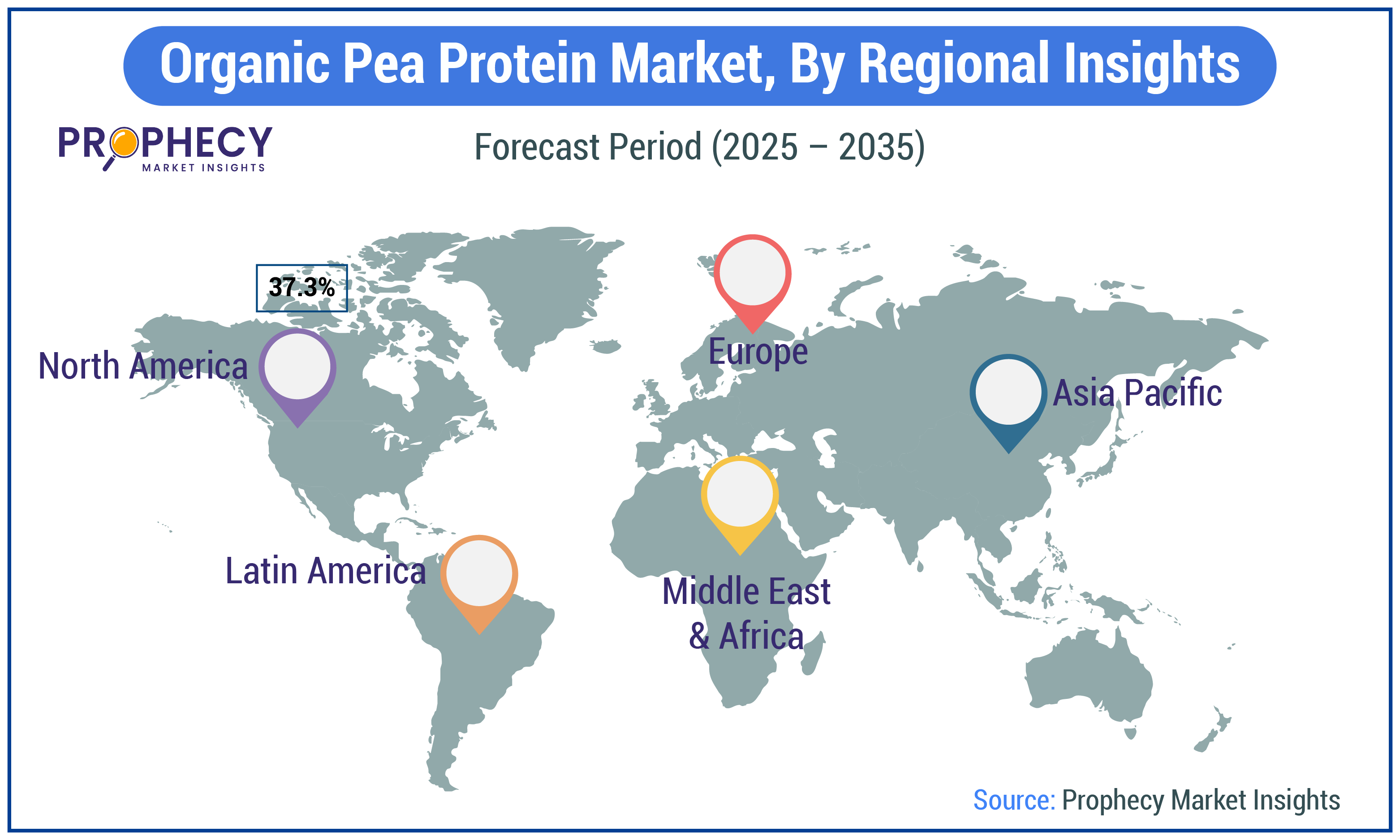
Geographically, the organic pea protein market is studied across North America, Europe, Asia Pacific, Latin America, and the Middle East & Africa.
North America: This region dominates the organic pea protein market share with 37.3% due to its increased consumption driven by consumer demand for clean-label plant-based food and health food items. Shifts in consumer interest towards plant-based food and phenomenally increasing adoption of the vegan and vegetarian lifestyle contribute to the growth and innovation of organic pea protein End-users alongside a mature functional foods market, with strong distribution channels.
- U.S. Organic Pea Protein Market Insights:
United States is the largest consumption market for organic pea protein due to its strength in being a consumer-driven market focused on plant-based, allergen-free protein sources. A sophisticated health food industry through healthy living trends with expanding adoption of the vegan lifestyle, and major manufacturers driven by increased incentives to invest in new organic product innovation, all made positive contributions to the US being a leader in organic pea protein use and production.
Europe: This region places second due to the awareness of sustainability, health, and organic consumption. Consumers are incorporating plant-based proteins into their environmentally aware diets, and the market for organic pea protein in European countries has seen some growth through government support for organic farming and additional meat substitutes being adopted in the market.
- Germany Organic Pea Protein Market Insights:
Germany leads the market for organic pea protein in Europe as it focuses on sustainability, organic labeling, and plant-based diets. Moreover, consumers are also moving toward clean eating and vegan protein alternatives. There are sponsored benefits for organic farming, and meat substitutes are available in grocery stores as well as other markets, which has dramatically increased this growth.
Asia Pacific: While the Asia Pacific region ranks third for organic pea protein production and demand, it is expanding rapidly due to the increasing awareness of personal health, the trend towards urbanization in Asia, and concerns around lactose intolerance. At the local level, manufacturers are increasing the offering of organic market products while international companies are benefiting from shifting dietary habits. Many of the plant-based trends occurring across markets in China, India, and Japan are easily expanding demand in the Asia Pacific.
- China Organic Pea Protein Market Insights:
China is the biggest player in the organic pea protein market in Asia Pacific. With increasing health, nutrition, and sustainable food choices, awareness is developing more in China. This consumption and production trend continues to expand due to urbanization, increasing lactose intolerance, and the increasing production capabilities of local providers from plant protein sources, including pea-based components.
Organic Pea Protein Market Report Scope:
|
Attribute |
Details |
|
Market Size 2025 |
USD 13.7 Million |
|
Projected Market Size 2035 |
USD 25.9 Million |
|
CAGR Growth Rate |
7.2% (2025-2035) |
|
Base year for estimation |
2024 |
|
Forecast period |
2025 – 2035 |
|
Market representation |
Revenue in USD Million & CAGR from 2025 to 2035 |
|
Regional scope |
North America - U.S. and Canada Europe – Germany, U.K., France, Russia, Italy, Spain, Netherlands, and Rest of Europe Asia Pacific – China, India, Japan, Australia, Indonesia, Malaysia, South Korea, and Rest of Asia-Pacific Latin America - Brazil, Mexico, Argentina, and Rest of Latin America Middle East & Africa – GCC, Israel, South Africa, and Rest of Middle East & Africa |
|
Report coverage |
Revenue forecast, company share, competitive landscape, growth factors, and trends |
Segmentation:
By Type:
- Isolates
- Textured
- Concentrates
By Form:
- Dry
- Liquid
By Function:
- Texturing
- Emulsification
- Gelation
- Stabilization
- Others
By End-user:
- Food & Beverages
- Animal Feed
- Food Supplements
By Region:
- North America
- U.S.
- Canada
- Europe
- Germany
- U.K.
- France
- Russia
- Italy
- Spain
- Netherlands
- Rest of Europe
- Asia Pacific
- China
- India
- Japan
- Australia
- Indonesia
- Malaysia
- South Korea
- Rest of Asia Pacific
- Latin America
- Brazil
- Mexico
- Argentina
- Rest of Latin America
- Middle East & Africa
- GCC
- Israel
- South Africa
- Rest of Middle East & Africa
Global Organic Pea Protein Market Competitive Landscape & Key Players
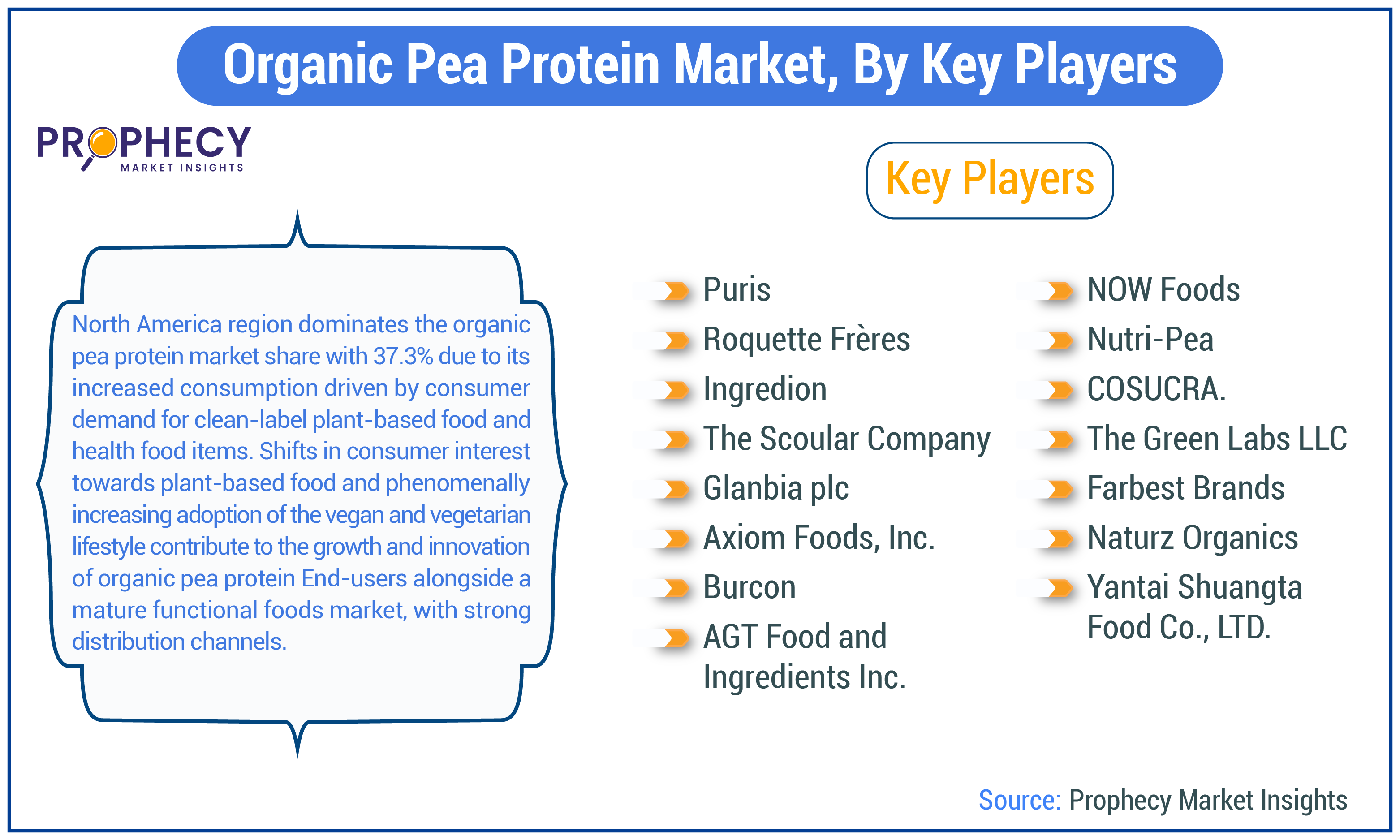
The prominent players operating in the market include, Puris., Roquette Frères, Ingredion, The Scoular Company, Glanbia plc, Axiom Foods, Inc., Burcon, NOW Foods, and others. The organic pea protein market has high levels of competition that involve innovation, partnerships, and geographic expansion. Organizations focus on developing clean-label, non-GMO products to appeal to health-conscious consumers. Competitive advantage is generally based on sourcing transparency, processing technology, and diverse End-user capabilities in drinks, meat alternative, and supplements.
Organic Pea Protein Market Companies:
- Puris.
- Roquette Frères
- Ingredion
- The Scoular Company
- Glanbia plc
- Axiom Foods, Inc.
- Burcon
- NOW Foods
- AGT Food and Ingredients Inc.
- Nutri-Pea
- COSUCRA.
- The Green Labs LLC
- Farbest Brands
- Yantai Shuangta Food Co., LTD.
- Naturz Organics
View an Additional List of Companies in the Organic Pea Protein Market
Global Organic Pea Protein Market Recent News
- In October 2024, the most neutral pea protein available on the market, Vegotein N, is being produced on a commercial scale in North America by Axiom Foods, marking a significant change in the worldwide pea protein supply chain. This is due to the steep tariffs imposed on chines products, as US pea protein market has faced several supply challenges.
- In August 2019, together with Verdient Foods, Inc., Ingredion Inc. announced plans to expand and increase output at its plant in Vanscoy, Saskatchewan. A new facility for the production of components for pulse-based proteins has been built as a result of this investment. By the middle of 2020, this facility should be up and running, greatly expanding food processing capacity to satisfy the rising demand for plant-based proteins.
Analyst View:
Demand for plant-based, allergen-free protein sources using sustainable ingredients is fuelling steady growth in the organic pea protein market. Key trends contributing to the overall growth of organic pea protein include the rise of veganism, the rise of innovation of clean-label products, and functional health benefits driving product innovation and development. Key developments in the organic pea protein market include ongoing R&D activity and additional extraction technology.
The major opportunity areas are with organic pea protein relating to sports nutrition, infant nutrition, and emerging market opportunities. The organic pea protein market has major restraints including the cost of production and lack of awareness by consumers in some regions. Notwithstanding, it is expected that increasing investment in product diversification, and formation of strategic partnerships will fuel future growth in the organic pea protein market across a diverse range of End-user sectors and regions.
More Related Reports
Protein Tyrosine Kinase 7 Market
Organic fertilizers Market
Organic Farming Market
Pea Starch Market
Peanut Butter Market
Global Organic Pea Protein Market Company Profile
|
Company Name |
Burcon |
|
Headquarter |
Vancouver, British Columbia, Canada |
|
CEO |
Kip Underwood |
|
Employee Count |
50 Employees |
Global Organic Pea Protein Market Highlights
FAQs
Organic pea protein market size was valued at USD 13.7 Million in 2025 and is expected to reach USD 25.9 Million by 2035 growing at a CAGR of 7.2%.
Type, form, function, end-user, and region are the segmentation for the organic pea protein market.
North America, Asia Pacific, Europe, Latin America, and the Middle East & Africa. North America is expected to dominate the market.
The prominent players operating in the market include, Puris., Roquette Frères, Ingredion, The Scoular Company, Glanbia plc, Axiom Foods, Inc., Burcon, NOW Foods, AGT Food and Ingredients Inc., Nutri-Pea, COSUCRA., The Green Labs LLC, Farbest Brands, Yantai Shuangta Food Co., LTD., and Naturz Organics.