Global Noninvasive Ventilators Market By Overview
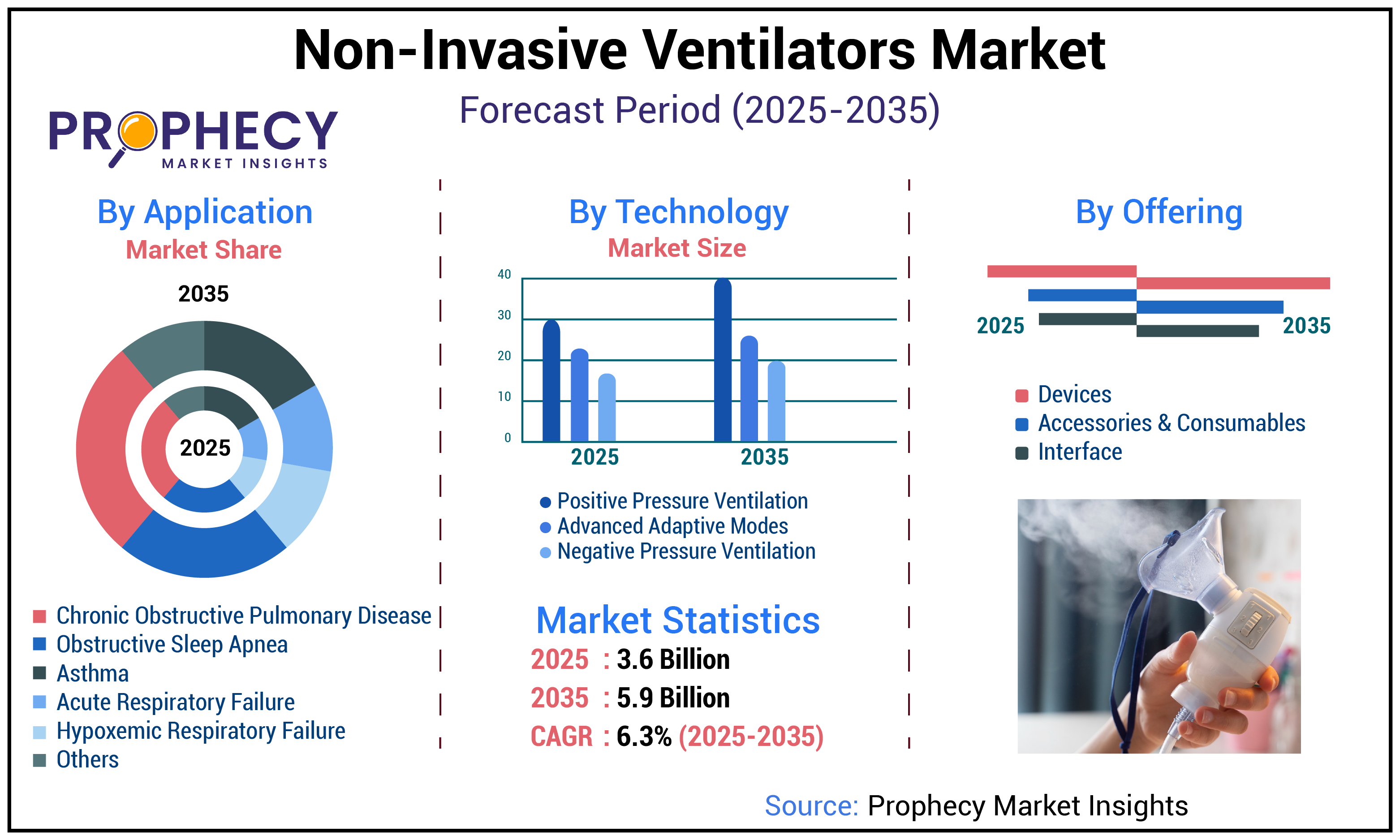
- By 2035, the non-invasive ventilator market size is contemplated to enlarge at a valuation of USD 5.9 Billion.
- In 2024, the non-invasive ventilators market valuation was USD 3.4 Billion.
- Non-invasive ventilators market is developing at a CAGR of 6.3%.
Non-invasive ventilators, or NIVs, are devices that provide breathing support to the patients through less invasive methods, e.g., those which do not require intubation. Instead of putting tubes in the airway, these machines employ masks which can be nasal, full-face or even mouthpieces for the delivery of air or oxygen-enriched air. Presently, these devices are quite popular both in hospitals for acute care and at home for the continuation of treatment, as they are generally less traumatic and more comfortable as compared to traditional ventilation. Non-invasive ventilators are thus sources of relief in the occurrence of respiratory complications such as Chronic Obstructive Pulmonary Disease, sleep apnea, asthma, along with the cases of exacerbations and development of respiratory failure.
Increasing adoption of non-invasive ventilators is driving growth in the non-invasive ventilator market. Due to the rising prevalence in chronic respiratory diseases such as chronic obstructive pulmonary disease and asthma. There is a rise in ICU admissions among older populations seen in the recent years. Hence there is a greater acceptance of home-based ventilation therapies are major contributors to market expansion. Additionally, air pollution and its impact on respiratory health seem to be pushing up demand for non-invasive ventilators worldwide. On top of that, advances such as portable and wearable designs, built-in smart features, and better reimbursement for home use appear to be driving faster adoption in both hospitals and households.
The current shift is toward home healthcare, especially for chronic disease management and post-acute care, is expected to create substantial demand for user-friendly, portable devices. Emerging markets, particularly in Asia-Pacific and Latin America, represent significant potential due to strengthening healthcare infrastructure. As environmental concerns and population aging intensify, the role of non-invasive ventilation in global respiratory care will only become more vital, underpinning sustained market expansion through the next decade.
Impact of Generative AI on Non-invasive ventilators Market:
- In neonatal intensive care units (NICUs), generative AI can facilitate more complex, data-driven decision-making. Clinicians can make real-time recommendations by using it’s synthesize complex clinical data. These recommendations could include predicting the risk of neonatal sepsis, or suggesting ventilation adjustments based on respiratory parameters, and tailoring protocols for infants with rare metabolic or respiratory conditions. This quick, context-specific study encourages more individualized and efficient respiratory care for newborns, which may enhance their chances of survival and developmental results.
Global Noninvasive Ventilators Market By Drivers & Restraints
Key Drivers:
International Guidelines and Reimbursement Support Drive Rapid Global Adoption of Non-Invasive Ventilators
The non-invasive ventilator market is significantly influenced by the strong support given by international clinical guidelines and the ample clinical evidence that is produced to back up their use. The Global Initiative for Chronic Obstructive Lung Disease (GOLD) guidelines for chronic obstructive pulmonary disease and the American Academy of Sleep Medicine (AASM) guidelines for obstructive sleep apnea are very consistent in their recommendations of non-invasive ventilation methods such as continuous positive airway pressure (CPAP), bi-level positive airway (BiPAP) as the first-line treatment.
Apart from the clinical effectiveness and safety of the devices being confirmed by these endorsements, they are also playing a vital role in obtaining reimbursement support from healthcare payers. The reimbursement enables the devices to be used more widely in hospitals, clinics, and home care settings, thus leading to a faster market growth as the therapies become more accessible and affordable to patients from all over the world.
- For instance, The Global Initiative for Chronic Obstructive Lung Disease 2023 and 2024 reports underline the considerable use of non-invasive ventilation, mainly Continuous Positive Airway Pressure (CPAP), Bi-level Positive Airway (BiPAP), as a treatment for chronic obstructive pulmonary disease exacerbations and respiratory failure, a trend that leads the clinical acceptance and insurance coverage, thus, device adoption worldwide is facilitated. Such a harmony between clinical recommendations, reimbursement policies, and actual usage scenarios is a clear indication of the guideline endorsements acting as a market expansion driver in the sector of non-invasive ventilators.
Restraints:
High Cost of Advanced Non-Invasive Ventilators Limits Adoption in Low and Middle-Income Countries
One of the main limitations of the non-invasive ventilator market is the high cost of advanced devices, especially those devices designed for portability and intensive care unit (ICU) use. The features such as auto-titration, integrated humidifiers, and telemonitoring add up the initial purchasing price as well as ongoing maintenance and other expenses. This high cost becomes a significant hurdle that limits the non-invasive ventilator market growth; hence it is less preferred widely especially in low and middle-income countries with limited healthcare budgets.
- Counterbalance Statements: The high price of advanced non-invasive ventilators is partly offset by government subsidies and public health programs. Strategies to improve affordability include rental options for patients, as well as partnerships between governments, non-governmental organizations, and device manufacturers to provide subsidized pricing.
Opportunities & Trends:
Artificial Intelligence and Remote Monitoring Drive Growth in Smart Non-Invasive Ventilators and Home Healthcare Adoption
One of the main trends in the non-invasive ventilator market is the use of artificial intelligence (AI) and remote monitoring. In fact, smart NIV devices are capable of personalizing pressure settings on a real-time basis through patient data, ensuring the continuation of therapy, as well as communication with clinicians for timely interventions. In addition to optimizing patient comfort and therapy efficacy, this technology aligns with the move towards home healthcare, therefore attracting a large customer base that includes device makers and telehealth providers.
- For instance, ResMed’s AirCurve series part of its BiPAP and adaptive servo-ventilation range really highlights how non-invasive ventilation is getting a lot smarter. These devices kind of take the guesswork out by automatically adjusting pressure support to match how a patient is actually breathing in real time, which makes therapy feel more comfortable and personal without constant tweaking from clinicians.
Global Noninvasive Ventilators Market By Segmentations & Regional Insights
Offering, technology, application, end users, and region are the divisions of the non-invasive ventilators market.
By Offering:
Devices, interfaces, and accessories & consumables are the primary offering-based segments of the non-invasive ventilators market. Devices account for the largest non-invasive ventilators market share, including portable/transport non-invasive ventilators and critical-care/ICU non-invasive ventilators. While ICU/critical-care NIVs generate significant revenue due to their higher cost, portable/home non-invasive ventilators are widely used for chronic conditions such as sleep apnea.
The non-invasive ventilator market's second-largest share is held by accessories & consumables. In order to ensure appropriate fit and efficient ventilation for all patient populations from neonates and children to adults this section contains parts including breathing circuits, helmets, and straps.
- For instance, A randomized crossover trial which was published in Respiratory Research in 2021 found that portable non-invasive ventilation helped patients with moderate to severe chronic obstructive pulmonary disease by relieving breathing and improving mobility. Patients using portable non-invasive ventilator walked an additional 14 m in 6 min test and had decreased dyspnea on the Borg Dyspnea Scale and increased average walking distance (from 312 m to 326 m).
- The equipment parameters that were used were set at a pressure of 18 cmH2O and expiratory pressure of 8 cmH2O. These advancements underscore the portability of NIV, its tendency to improve exercise tolerance, decrease discomfort, and lead to better results in rehabilitation for patients with chronic obstructive pulmonary disease.
By Technology:
Based on the technology, the non-invasive ventilators market is divided into positive pressure ventilation, advanced adaptive modes, and negative pressure ventilation. Positive pressure ventilation remains the top market segment, with continuous positive airway pressure and bi-level positive airway pressure being popular for obstructive sleep apnea and chronic obstructive pulmonary disease. These devices offer features such as auto-titration, built-in humidifiers, and remote monitoring.
Advanced adaptive modes such as proportional assist ventilation (PAV), neurally adjusted ventilatory assist (NAVA), and adaptive servo-ventilation (ASV) are specialized, complex, and personalized approaches to ventilation that match a patient's breathing effort, improving comfort and outcomes, especially for chronic respiratory conditions.
- For instance, In a meta-analysis published in Critical Care (2021), proportional assist ventilation (PAV) was found to be associated with a higher weaning success rate (16% higher off mechanical ventilation) in comparison to a standard pressure support. Proportional assist ventilation also reduced the risk for re-intubation by 51% and the average time on ventilation was almost reduced by 40 hours. These findings demonstrate proportional assist ventilation to be a state-of-the-art mode of ventilation that achieves safer, faster, and more efficient weaning in critically ill patients.
By Application:
For application the segmentation is divided into chronic obstructive pulmonary disease (COPD), asthma, obstructive sleep apnea (OSA), acute respiratory failure, neuromuscular disorders, hypoxemic respiratory failure and others. The prevalence of chronic obstructive pulmonary disease (COPD) leads to its greater non-invasive ventilator market share usage as it is one of the most common chronic respiratory diseases. The condition often causes acute exacerbations and chronic respiratory failure in which a non-invasive ventilation takes the first line of intervention.
Obstructive sleep apnea (OSA) represents the second largest application segment. The widespread adoption of CPAP devices especially auto-titrating models that dynamically adjust pressure has improved patient compliance and driven market growth, supported by the increasing prevalence of obstructive sleep apnea linked to aging populations and global obesity trends.
By End User:
Hospitals, pediatric clinics, emergency / ambulance transport, long-term care facilities, and others are end users of the non-invasive ventilators market. Hospitals are the main leaders in the non-invasive ventilators market share as they are responsible for the essential critical care management processes. Most hospitals are equipped with newer medical devices, along with an established healthcare and staff in order to take care of the patient in case of emergencies.
After hospitals, the most important end-user segment is pediatric clinics. Ventilators that are non-invasive and of a special nature for infants and kids are the major requirements of pediatric clinics for them to effectively manage such diseases as neonatal respiratory distress and complications due to premature birth. The segment's development is due to the increasing survival rate of preterm infants and the growing attention to non-invasive respiratory support.
Regional Insights:
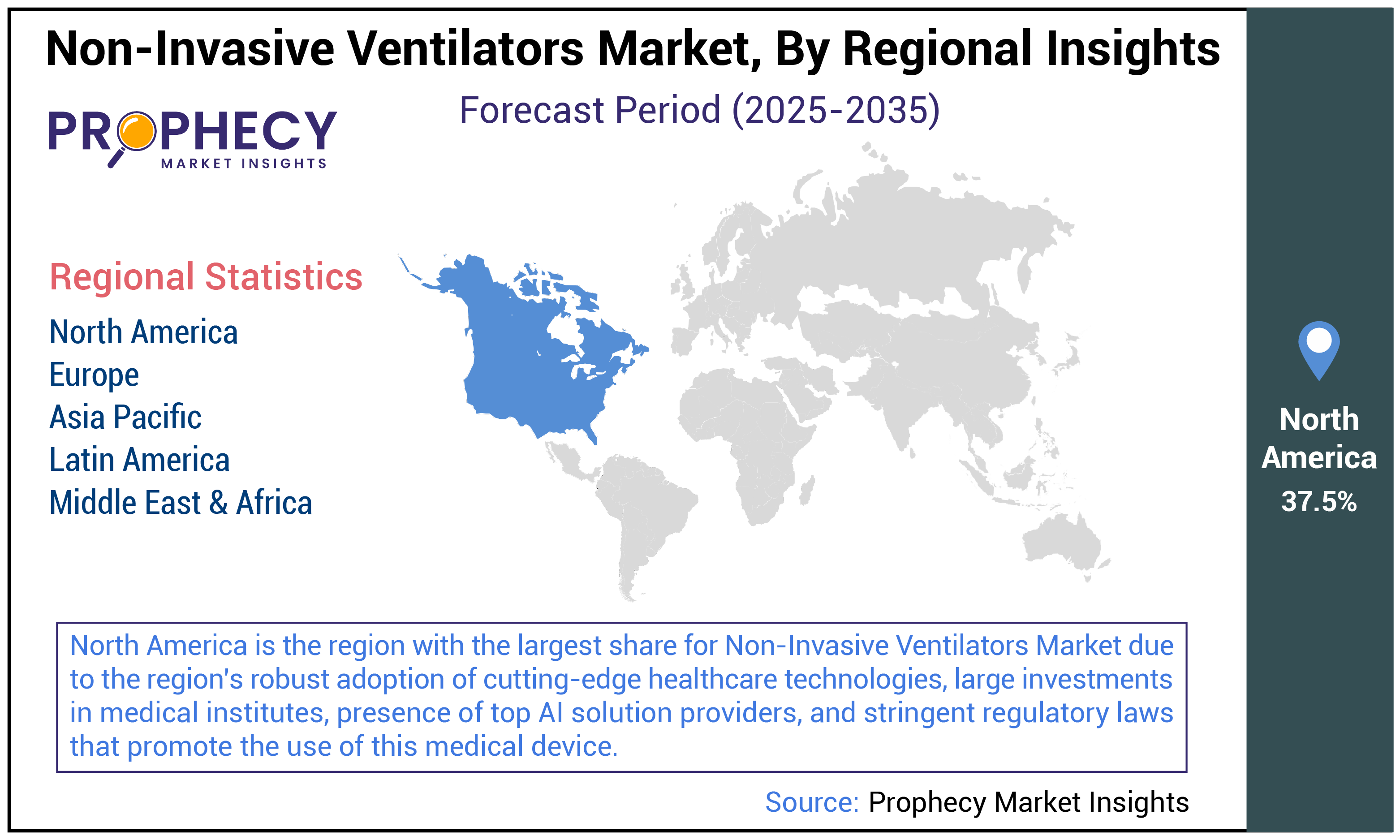
Geographically, the non-invasive ventilators market is studied across North America, Europe, Asia Pacific, Latin America, and the Middle East & Africa.
North America: This is the region with the largest share for non-invasive ventilators market due to the region's robust adoption of cutting-edge healthcare technologies, large investments in medical institutes, presence of top AI solution providers, and stringent regulatory laws that promote the use of this medical device.
- U.S. Non-Invasive Ventilators Market Insights:
U.S. leads the North American non-invasive ventilators market owing to its sophisticated healthcare infrastructure, strong adoption of new technologies, and supportive reimbursement systems. Additionally, it also could be used to well establish pediatrics clinics along with hospitals.
Europe: The second-dominant area is Europe, driven by the need for a high prevalence of chronic and age-related respiratory conditions. Furthermore, Europe's emphasis on implementing intelligent, connected ventilation systems and improving respiratory support for infants and elderly people is maintaining the market's consistent expansion.
- U.K. Non-Invasive Ventilators Market Insights:
The U.K. leads the European market the use of cutting-edge non-invasive ventilators and home-based care solutions is encouraged by favorable government regulations, increased use of smart and linked respiratory equipment, and significant investments in healthcare infrastructure. The United Kingdom has an advantage over other nations in the region due to its early adoption of AI-enabled respiratory disease monitoring and management systems.
Asia Pacific: This region non-invasive ventilators market is expanding quickly. Increased healthcare spending, the prevalence of chronic illnesses, expanding knowledge of non-invasive respiratory assistance, and government initiatives to increase access in both urban and rural regions are the main drivers of this quick growth.
- China Non-Invasive Ventilators Market Insights:
China has the highest market share of non-invasive ventilators due to the high population density, increased rates of chronic respiratory conditions such as chronic obstructive pulmonary disease and sleep apnea, and quickened growth in the health infrastructure. The growth of the government investment in the critical care facilities increasing awareness of non-invasive ventilation treatments, as well as the availability of both local and foreign manufacturers are also catalyzing the market growth in the country.
Non-Invasive Ventilators Market Report Scope:
|
Attribute |
Details |
|
Market Size 2025 |
USD3.6 Billion |
|
Projected Market Size 2035 |
USD 5.9 Billion |
|
CAGR Growth Rate |
6.3% (2025-2035) |
|
Base year for estimation |
2024 |
|
Forecast period |
2025 – 2035 |
|
Market representation |
Revenue in USD Billion& CAGR from 2025 to 2035 |
|
Regional scope |
North America - U.S. and Canada Europe – Germany, U.K., France, Russia, Italy, Spain, Netherlands, and Rest of Europe Asia Pacific – China, India, Japan, Australia, Indonesia, Malaysia, South Korea, and Rest of Asia-Pacific Latin America - Brazil, Mexico, Argentina, and Rest of Latin America Middle East & Africa – GCC, Israel, South Africa, and Rest of Middle East & Africa |
|
Report coverage |
Revenue forecast, company share, competitive landscape, growth factors, and trends |
|
Value Added Data Infosets |
Besides fundamental market insights such as the size of the market, growth rate, segmentation, regional study, and key players, our reports carry value-added data sets such as trade flow (import-export) analysis, production and consumption overview, price trend evaluation, supply and value chain mapping, and raw material availability. Moreover, we provide strategic tools as PESTLE and Porter’s Five Forces analysis, examination of the regulatory landscape, as well as monitoring of technology and innovation thereby providing a comprehensive overview which facilitates sensible and anticipatory decision-making. |
Segmentation:
By Offering:
- Devices
- Portable/transport NIV
- Critical-care/ICU NIV
- Others
- Interface
- Nasal mask
- Nasal pillows/prongs
- Others
- Accessories & Consumables
- Breathing circuits
- Headgear & straps
- Others
By Technology:
- Positive Pressure Ventilation
- Continuous Positive Airway Pressure
- Bi-level Positive Airway Pressure
- Autotitrating Positive Airway Pressure
- Non-Invasive Pressure Support Ventilation
- Advanced Adaptive Modes
- Proportional Assist Ventilation
- Neurally Adjusted Ventilatory Assist
- Adaptive Servo-Ventilation
- Negative Pressure Ventilation
- Chest cuirass devices
- Portable negative-pressure ventilators
By Application:
- Chronic Obstructive Pulmonary Disease
- Asthma
- Obstructive Sleep Apnea
- Acute Respiratory Failure
- Neuromuscular Disorders
- Hypoxemic Respiratory Failure
- Others
By End User:
- Hospitals
- Pediatric clinics
- Emergency / Ambulance Transport
- Long-Term Care Facilities
- Others
By Region:
- North America
- U.S.
- Canada
- Europe
- Germany
- U.K.
- France
- Russia
- Italy
- Spain
- Netherlands
- Rest of Europe
- Asia Pacific
- China
- India
- Japan
- Australia
- Indonesia
- Malaysia
- South Korea
- Rest of Asia Pacific
- Latin America
- Brazil
- Mexico
- Argentina
- Rest of Latin America
- Middle East & Africa
- GCC
- Israel
- South Africa
- Rest of Middle East & Africa
Global Noninvasive Ventilators Market By Competitive Landscape & Key Players
To enhance their competitiveness and reach wider markets, firms that provide non-invasive ventilators as a device-as-a-service can reduce the customer outlay by initiating devices of lower initial cost. Rather than making the outright purchase of the ventilator, a monthly subscription fee would be enough to cover the machine, software updates, maintenance and servicing.
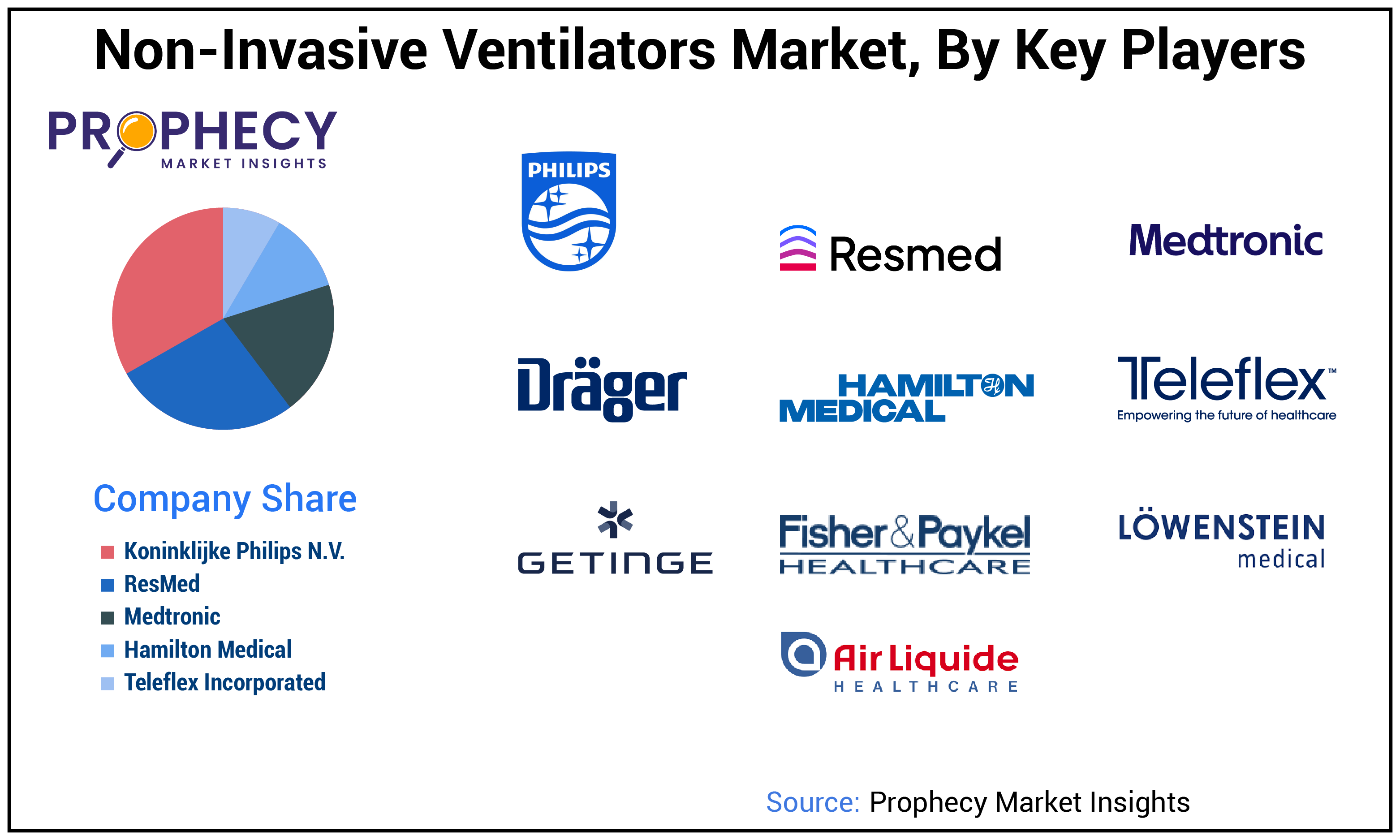
Such a subscription model help to make advanced respiratory support less expensive and creates a more favorable patient care experience in the long-term and provides regular income to a business as well. The key players operating in the non-invasive ventilators market include, Koninklijke Philips N.V., ResMed, LÖWENSTEIN MEDICAL SE & CO. KG, Teleflex Incorporated, Fisher & Paykel Healthcare Limited, and others.
Non-invasive Ventilators market Companies:
- Koninklijke Philips N.V.
- ResMed
- Medtronic
- Hamilton Medical
- Teleflex Incorporated
- Fisher & Paykel Healthcare Limited
- Drägerwerk AG & Co. KGaA
- Getinge
- Löwenstein Medical SE & Co. KG
- WEINMANN Emergency Medical Technology GmbH + Co. KG
- Inspiration Healthcare Group plc.
- Breas Medical AB
- Shenzhen Mindray Bio-Medical Electronics Co., Ltd
- APEX MEDICAL DEVICES
- Air Liquide Medical Systems
View an Additional List of Companies in the Non-invasive Ventilators Market
Global Noninvasive Ventilators Market By Recent News
- In February 2024, ResMed released the AirCurve 11 series, as an advanced upgrade to its bilevel non-invasive ventilator range, which includes the AirCurve 11 VAuto and AirCurve 11 ASV versions. These devices have inspiratory and expiratory pressure modes and use advanced algorithms such an ASV system, which tracks 13 points during each breath cycle to provide highly tailored ventilation.
- In July 2025, A meta-analysis published compared non-invasive neurally adjusted ventilatory assist (NIV-NAVA) to nasal CPAP in 326 preterm newborns. There were no significant changes in extubation failure rates, the requirement for intubation, or the frequency of complications including bronchopulmonary dysplasia, necrotizing enterocolitis, or pneumothorax. While NIV-NAVA has yet to establish unambiguous advantage, it remains an interesting topic for further exploration.
Analyst View:
The non-invasive ventilator market could potentially experience a robust growth. As chronic respiratory diseases rise, home care gains popularity, and advanced technologies such as AI and remote monitoring are seeing wider adoption worldwide.
While continuous positive airway pressure (CPAP) and bi-level positive airway (BiPAP) remain the most recognized positive pressure devices, improved clinical guidelines, expanded insurance coverage, and user-friendly features are further driving market expansion. Increasing healthcare spending and awareness in regions such as Asia-Pacific and Latin America are creating new opportunities. Although device prices remain high, growing financing options and affordable models are gradually improving accessibility.
More Related Reports
Neck Pillow Market
Volume Mode Ventilators Market
Mid-end ICU Ventilators Market
Neonatal Ventilators Market
Paediatric Ventilators Market
Global Noninvasive Ventilators Market By Company Profile
|
Company Name |
ResMed |
|
Headquarter |
San Diego, California, USA |
|
CEO |
Michael Farrell |
|
Employee Count |
10,140 Employees |
Global Noninvasive Ventilators Market By Highlights
FAQs
Non-invasive ventilators market size was valued at USD 3.6 Billion in 2025 and is expected to reach USD 5.9 Billion by 2035 growing at a CAGR of 6.3%.
Offering, technology, application, end user, and region are the segmentation for the non-invasive ventilators market.
North America, Asia Pacific, Europe, Latin America, and the Middle East& Africa. North America is expected to dominate the market.
The key players operating the non-invasive ventilators market include Koninklijke Philips N.V., ResMed, Medtronic, Hamilton Medical, Teleflex Incorporated, Fisher & Paykel Healthcare Limited, Drägerwerk AG & Co. KGaA, Getinge, Löwenstein Medical SE & Co. KG, WEINMANN Emergency Medical Technology GmbH + Co. KG, Inspiration Healthcare Group plc., Breas Medical AB, Shenzhen Mindray Bio-Medical Electronics Co., Ltd, APEX MEDICAL DEVICES, and Air Liquide Medical Systems.