Global Flax Seed Protein Market Overview
- 2024 Market Size: USD 78.8 Million
- 2035 Projected Market Size: USD 238.8 Million
- CAGR (2025-2035): 12.9%
- North America: Largest Market in 2024
Flax seed protein is a vegetable protein that is extracted from flax seed, which naturally contains essential amino acids, dietary fiber and omega-3 fatty acids. It is available in several forms such as protein powders, concentrates, and isolates and is utilized on a broad scale in food products, nutritional supplements, nutraceuticals, and also animal feed. Flax protein is valued for a balanced amino acid profile and high nutritional quality and is a favored option for health-conscious consumers and the plant-based protein market.
The flax seed protein market is experiencing exponential growth owing to the rising awareness among the consumers regarding plant-based nutrition and health benefits of flax protein. Growing demand for functional foods, dietary supplements, and clean label ingredients is fueling the adoption of flax protein across food, beverage and nutraceutical markets. Additionally, the rising trend towards vegan and vegetarian diets and the preference for sustainable and natural protein sources is further driving market growth.
Flaxseed Protein: High-Quality Amino Profile and Dominance of Globulins Across Cultivars and Processing Forms
- A 2022 review published in Frontiers in Nutrition highlights that flaxseed contains between 10–31% protein, depending on cultivar and processing, and emphasizes the balanced amino acid composition which gives flax protein a high quality nutrition score.
- According to a paper published in Foods Journal (MDPI) in 2022, Essential amino acids make up ~34% of total flaxseed protein.
- According to the a paper published in Foods Journal (MDPI) in 2022, a total of 2560 protein groups (PGs) were recovered from flaxseed products (seed cake, fine flour, and protein concentrate), and 11S globulins were the predominant seed storage proteins, comprising 41-44% of proteins in seed cake (SC), 40-46% in fine flour (FF) and even higher 72-84% in protein concentrates (PC), depending on cultivar.
- As per a paper published by Foods Journal (MDPI), Flaxseed globulins (linin) are estimated to account for up to 80% of total seed proteins, making them the major protein class, while albumins (conlinins) represent a smaller but nutritionally significant fraction
Current Industry Dynamics & Insights:
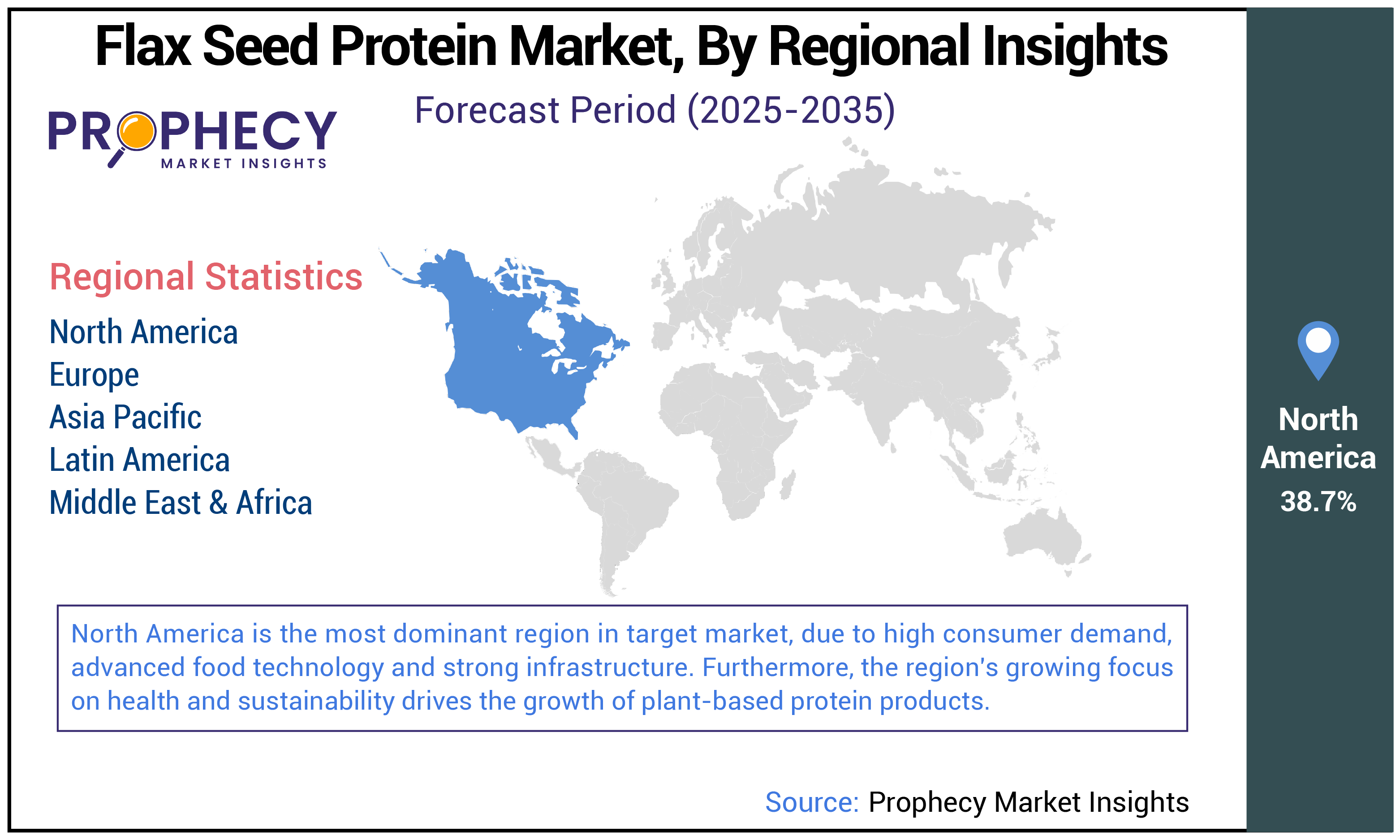
- North America has the largest regional share for the flax seed protein market, with almost 38.7%.
- The second-largest and fastest-growing area is Europe, by accounting for 25.9%.
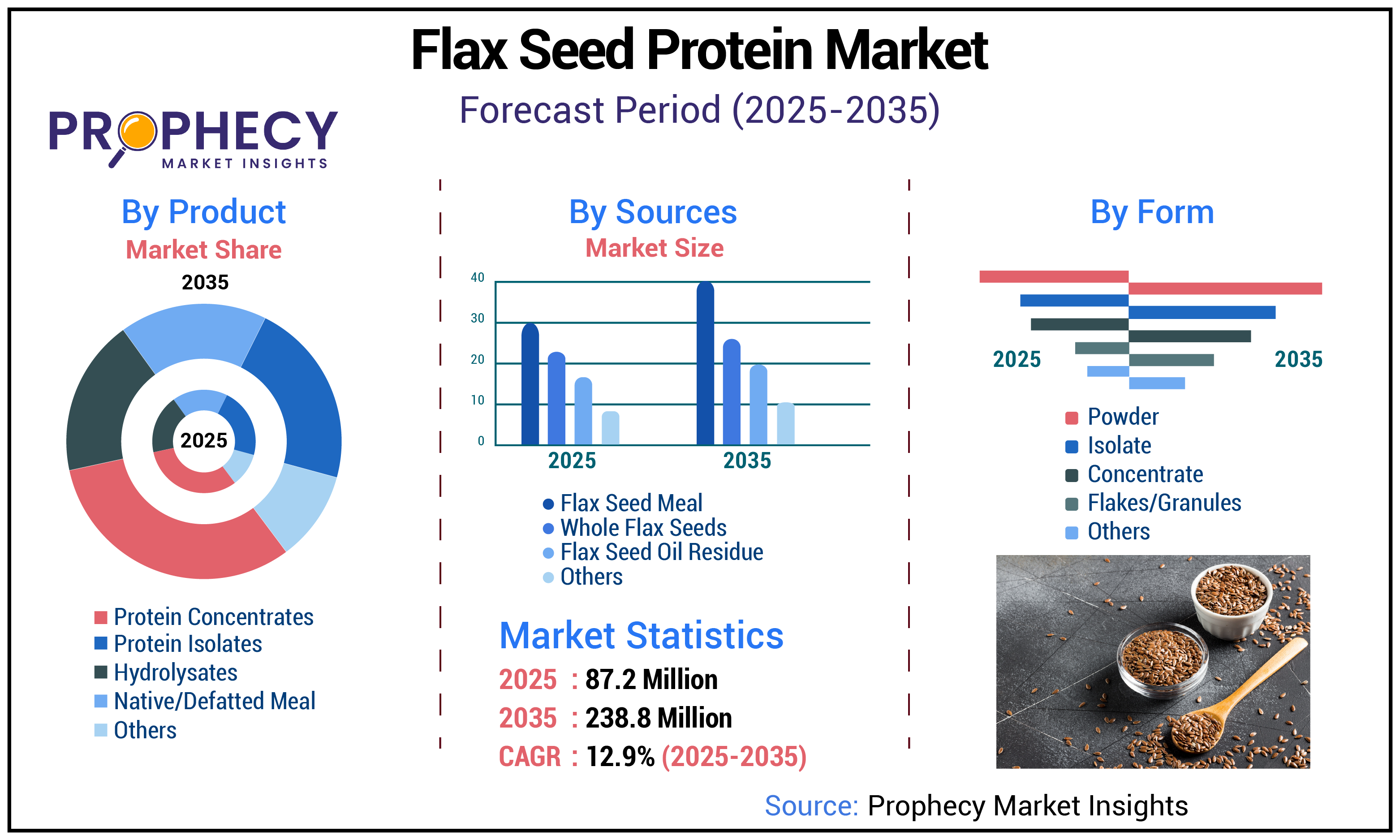
- By product type, protein concentrates holds the largest market share for the flax seed protein market.
- On the account of processing/extraction method, mechanical pressing aqueous extraction are the most widely used in the flax seed protein in the market.
Global Flax Seed Protein Market Drivers & Restraints
Drivers and Restraints:
|
Drivers |
Restraints |
Opportunities & Trends |
|
|
|
Key Drivers:
Flax Seed Protein's Balanced Amino Acid Profile Enhances Nutritional Value
Flax seed protein has balanced amino acids, which gives it its high nutritional quality. It contains significant amounts of essential amino acids, including branched-chain amino acids such as leucine and valine, and aromatic amino acids such as phenylalanine and tyrosine. Not only can flax seed protein aid in muscle repair and immune function, but the profile makes it a desirable plant-based protein food.
- For instance, As per a research paper published in MDPI in 2025, Flaxseed protein has an astonishing 76.7% of essential amino acids, way above many other plant-based proteins and proving the excellent nutritional quality of this protein. The most abundant are the glutamine (23.9%), valine (3.4%) and histidine ([3.9%) with the branched-chain amino acids including valine and leucine present in useful amounts. With a well-balanced amino acid profile, flaxseed protein aids muscle repair and immune function, making it a highly sought-after plant-based protein source to help increase the protein value in the diet.
Restraints:
High Cost of Protein Isolates Hampers Market Accessibility
The production of protein isolates including flax seed protein is complex and energetically demanding, and requires aqueous extraction, filtration, and drying. These steps add to higher production cost, and make protein isolates more expensive than concentrates. This increased price can decrease the affordability and accessibility of high quality plant-based proteins for both consumers and manufacturers.
- Counterbalance Statements: Development of extraction technologies and economies of scale are progressively lowering the cost of production, further improving the affordability and accessibility of protein isolates in the market. This trend is predicted to keep on increasing with the increasing demand for plant-based proteins. Further price reductions and increased market penetration around the world can be expected in the coming years as more and more research concentrates on alternative processing technologies that are less expensive.
Opportunities & Trends:
Innovations in Blended Plant Protein Products Drive Market Growth
The rising consumer demand for plant-based diets has given rise to the demand for plant protein products. However, these barriers such as taste, texture and nutritional completeness have led to the development of blended plant protein products. Blends that combine different sources of plant protein to improve the amino acid profile, sensory properties, and a more balanced nutrition profile. By combining the advantages of various plant proteins, manufacturers can produce products that cater to a wider audience, including those who prioritize allergens, sustainability, and health-related products.
- For instance, A 2023 study published by Foods (MDPI), using a sequence aqueous extraction process, resulted in flaxseed protein-polysaccharide fractions with excellent functional properties solubility over 90%, foaming capacity of almost 13 times that of commercial flaxseed protein and foaming stability close to 10 times greater. Blends with improved properties are effective as high-efficiency emulsifiers and stabilizers in food systems, addressing texture, sensory appeal, and formulation versatility in plant protein products.
Global Flax Seed Protein Market Segmentations & Regional Insights
By product type, processing/extraction method, sources, form, functionality, end user, and region are the divisions of the flax seed protein market.
By Product Type:
Protein concentrates, protein isolates, hydrolysates, native/defatted meal, and others are product type on which flax seed protein market is segmented. The most common protein products in the flax seed protein market share include protein concentrates as they are of low cost and have application in a wide variety. They present an ideal nutritional profile, so they can be used in different applications in food and beverages, nutraceuticals, and animal feed.
In second place are protein isolates, which mostly find application in niche products where more protein and purity are demanded. They are widely used in functional foods and sports nutrition, where protein concentration is a very important parameter.
By Processing/Extraction Method:
Based on the processing/extraction method, the flax seed protein market is divided into mechanical pressing + aqueous extraction, enzymatic extraction, alkali/acid solubilization isoelectric precipitation, membrane/ultrafiltration, and others. The most widely used method is mechanical pressing with aqueous extraction as it is the most efficient process and preserves the nutritional value of the protein. This is a popular procedure used in the industry in manufacturing quality flax seed protein concentrates.
Enzymatic extraction is second in line and has the benefits of selectivity and mild processing. It is trending towards the manufacture of protein isolates having superior functional characteristics, to meet the increasing requirements of clean-label and minimally processed foods.
- For instance, an aqueous extraction technique is a new process that has transformed the recovery of flaxseed protein in 2023 which was published in Foods Journal. This green method does not use solvents or extreme pH allowing protein-rich fractions to be recovered with yields ranging between 29.7 to 73.1, and overall protein recovery greater than 80%, without compromising the integrity of the albumin. It shows that sustainable methods of extraction are helping to increase yield and quality of flax protein on an industrial scale.
By Sources:
Whole flax seeds, flax seed meal, flax seed oil residue, and others are sources of the flax seed protein market. Flax seed meal is the most prevalent source, resulting from the oil extraction process. It is rich in protein and fiber, making it a valuable ingredient in various applications, including animal feed and plant-based food products.
Whole flax seeds are the second most utilized source, offering a natural form of protein with additional nutrients such as omega-3 fatty acids. They are commonly used in their whole or ground form in bakery products and smoothies.
By Form:
On the form, flax seed protein market is categorized into powder, concentrate, isolate, flakes/granules, and others. Flaxseed protein powder is the most common type, as it can easily be added to food such as shakes bars and baked goods. Owing to the flexibility and ease, it’s one of the favorite material of the manufacturers and the user.
Protein isolates are the next most popular kind of whey, which have higher protein concentration and purity. They are most commonly used in specialized applications where protein concentration is a significant factor, for example in sports nutrition products.
By Functionality:
Muscle growth & recovery, weight management, heart health, digestive health, skin & hair health, and others are functionality of the flax seed protein market. Digestive health is the primary functionality, as flax seed protein is high in dietary fiber, which aids gut health and regularity, which is consistent with the increasing focus on digestive wellness among consumers.
Heart health is the next leading functionality, due to the omega-3 fatty acids and lignans in flax seed protein, which consumers know are beneficial for cardiovascular health and lowering inflammation.
- For instance, A 2025 study in Food Chemistry: X found that flaxseed meal protein hydrolysates, prepared through ultrasound-enhanced hydrolysis and nanoliposome encapsulation, have superior antioxidant properties. The best nanoliposomal formulation had 87.5% DPPH radical scavenging capacity, 56.6% iron-ion chelation, and a net antioxidant activity of 1.339 absorbance units at 695 nm, surpassing natural standards. Flaxseed meal, traditionally used as a processing product, is now being recognized as a high-value ingredient for health and beauty formulations due to its powerful antioxidant action.
By End User:
The flax seed protein market on the account of end user are categorized into functional foods & beverages, nutraceuticals & dietary supplements, sports & fitness nutrition, animal feed, personal care & cosmetic products, and others. Functional foods and beverages are the leading end-user segment, driven by the increase in consumer demand for products that provide health bonuses beyond the basics of nutrition. Flax seed protein is commonly used in these products due to its nutrition profile.
Nutraceuticals and dietary supplements come in second place, using flax seed protein for its health-promoting attributes. The surge toward preventive healthcare and personalized nutrition is a strong driver of growth here.
Regional Insights:
Geographically, the flax seed protein market is studied across North America, Europe, Asia Pacific, Latin America, and the Middle East & Africa.
North America: North America is the most dominant region in target market, due to high consumer demand, advanced food technology and strong infrastructure. Furthermore, the region's growing focus on health and sustainability drives the growth of plant-based protein products.
However, the market is challenged by factors such as market saturation and the need for constant innovation to cater to changing consumer tastes. The pandemic has also created economic and supply chain issues that will need to be overcome to ensure continued growth momentum.
- U.S. Flax Seed Protein Market Insights:
The U.S. leads the North American for the flax seed protein market growth, due to a wide range of consumers and a high level of awareness around plant-based nutrition. The country's well-established retail and foodservice networks enable wide distribution and make plant-based protein products easily accessible to consumers.
Europe: The second-largest and fastest-growing area is Europe, which is supported by a rising awareness of consumers for health and environmental sustainability concerns. Moreover, the regulatory environment of the region is conducive for the production and marketing of plant-based products.
Regulatory complexity and market fragmentation are some of the challenges that Europe encounters despite this growth. Standardization of labeling and clarity on rules around plant-based claims are aspects that need to be addressed to standardize market development.
- Germany Flax Seed Protein Market Insights:
Germany is a leader in the European market, thanks to its strong sustainability and innovation culture. The nation's focus on organic farming and plant-based food innovation has positioned it as a formidable player in the segment. Furthermore, Germany is home to many research partnerships between food-technology companies and academic faculties, which ensure a constant drive for further developments in plant-protein processing and in applications of functional ingredients.
Asia Pacific: Asia Pacific is the fastest growing market for flax seed protein in the world due to changing dietary habits, urbanization and rising health awareness. And China, India, and other countries are also experiencing a transition to plant-based diets due to factors including population growth, rising incomes and increased exposure to global food trends.
However, cultural dietary preferences and the need for education regarding the benefits of plant-based nutrition in the region are also challenges. The market acceptance of new plant-based alternatives that meet the local preference for meat-based products is important.
- China Flax Seed Protein Market Insights:
China dominates the Asia Pacific market with strong emphasis on plant-based dairy products. The nation's large population and changing dietary preferences have contributed to the rise in demand for plant-based protein alternatives. Additionally, the development of sophisticated plant-protein products is being accelerated by support from the government of China in the form of food innovation and investments in alternative protein startups.
Flax Seed Protein Market Report Scope:
|
Attribute |
Details |
|
Market Size 2025 |
USD 87.2 Million |
|
Projected Market Size 2035 |
USD 238.8 Million |
|
CAGR Growth Rate |
12.9% (2025-2035) |
|
Base year for estimation |
2024 |
|
Forecast period |
2025 – 2035 |
|
Market representation |
Revenue in USD Million& CAGR from 2025 to 2035 |
|
Regional scope |
North America - U.S. and Canada Europe – Germany, U.K., France, Russia, Italy, Spain, Netherlands, and Rest of Europe Asia Pacific – China, India, Japan, Australia, Indonesia, Malaysia, South Korea, and Rest of Asia-Pacific Latin America - Brazil, Mexico, Argentina, and Rest of Latin America Middle East & Africa – GCC, Israel, South Africa, and Rest of Middle East & Africa |
|
Company Landscape |
Market Share Analysis of Companies Heat Map Analysis Company Overview, Product Types Overview Financial Information, Key Highlights Business Strategies Overview SWOT Analysis |
|
Report coverage |
Revenue forecast, company share, competitive landscape, growth factors, and trends |
|
Value Added Data Infosets |
Besides fundamental market insights such as the size of the market, growth rate, segmentation, regional study, and key players, our reports carry value-added data sets such as trade flow (import-export) analysis, production and consumption overview, price trend evaluation, supply and value chain mapping, and raw material availability. Moreover, we provide strategic tools as PESTLE and Porter’s Five Forces analysis, examination of the regulatory landscape, as well as monitoring of technology and innovation thereby providing a comprehensive overview which facilitates sensible and anticipatory decision-making. |
Segmentation:
By Product Type:
- Protein Concentrates
- Protein Isolates
- Hydrolysates
- Native/Defatted Meal
- Others
By Processing/Extraction Method:
- Mechanical Pressing + Aqueous Extraction
- Enzymatic Extraction
- Alkali/Acid Solubilization Isoelectric Precipitation
- Membrane/Ultrafiltration
- Others
By Sources:
- Whole Flax Seeds
- Flax Seed Meal
- Flax Seed Oil Residue
- Others
By Form:
- Powder
- Concentrate
- Isolate
- Flakes/Granules
- Others
By Functionality:
- Muscle Growth & Recovery
- Weight Management
- Heart Health
- Digestive Health
- Skin & Hair Health
- Others
By End User:
- Functional Foods & Beverages
- Nutraceuticals & Dietary Supplements
- Sports & Fitness Nutrition
- Animal Feed
- Personal Care & Cosmetic Products
- Others
By Region:
- North America
- U.S.
- Canada
- Europe
- Germany
- U.K.
- France
- Russia
- Italy
- Spain
- Netherlands
- Rest of Europe
- Asia Pacific
- China
- India
- Japan
- Australia
- Indonesia
- Malaysia
- South Korea
- Rest of Asia Pacific
- Latin America
- Brazil
- Mexico
- Argentina
- Rest of Latin America
- Middle East & Africa
- GCC
- Israel
- South Africa
- Rest of Middle East & Africa
Global Flax Seed Protein Market Competitive Landscape & Key Players
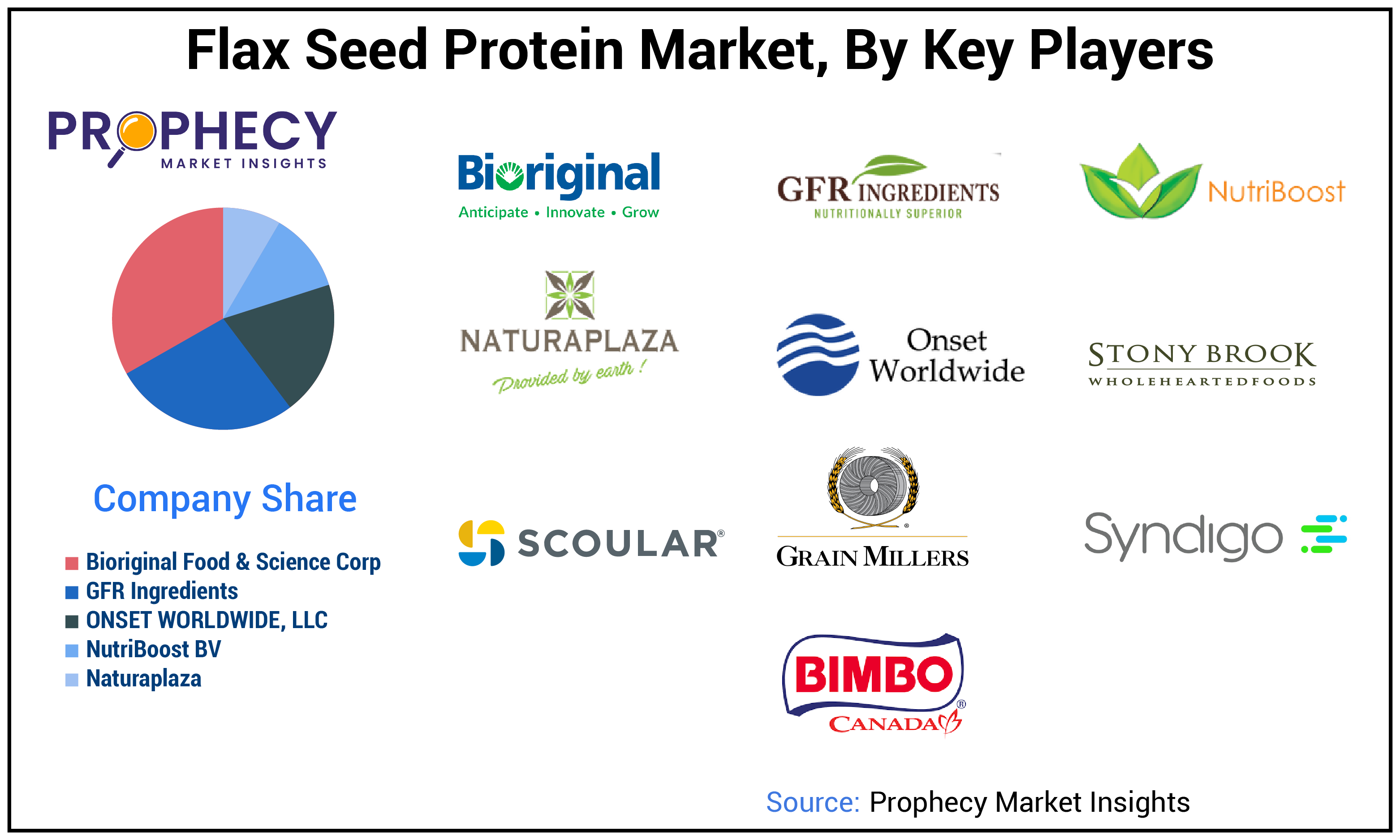
The manufacturing companies involved in innovative product development, taste and texture optimization, and nutritional profiles enhancement of the plant-based protein market can drive overall growth of the market. Invest in cutting-edge processing methods, partnerships with food tech innovators, and sustainable sourcing practices to enhance market positioning. Linking with emerging opportunities by region-specific product launches and consumer education will also facilitate the brand to create long-term demand. The key players operating in the flax seed protein market include, GFR Ingredients, Stony Brook WholeHeartedFoods, NutriBoost BV, Vehgro, and others.
Flax Seed Protein Market Companies:
- Bioriginal Food & Science Corp
- GFR Ingredients
- Solvex BV
- NutriBoost BV
- Naturaplaza
- ONSET WORLDWIDE, LLC
- Stony Brook WholeHeartedFoods
- The Scoular Company
- Grain Millers, Inc.
- Syndigo LLC
- Bimbo Canada
- Vehgro
- Yupik.com
- Glanbia plc
- Medikonda Nutrients
View an Additional List of Companies in the Flax Seed Protein Market
Global Flax Seed Protein Market Recent News
- In May 2025, Bioriginal launched the first non-GMO borage oil with a high Gamma-Linolenic Acid content in the industry. Compared to other plant-based sources such as evening primrose and black currant oils, which normally contain just 10–15% Gamma-Linolenic Acid, this product has a 25% level. Because of its clean-label profile, the new borage oil can be used in cosmeceutical and beauty-from-within products, women's health supplements, joint health formulations, and pet nutrition products that focus on mobility, skin, and coat.
- In January 2022, NextFerm Technologies and GFR Ingredients signed a commercial manufacturing deal for ProteVinTM, their ground-breaking vegan protein. The goal of this partnership was to provide the first purchase orders from clients in the nutritional supplement sector in the first half of 2022 and introduce ProteVinTM in the USA. Incorporating the protein as a vegan raw material into goods produced by international nutrition companies was made possible by the agreement.
Analyst View:
With the increasing health consciousness, demand for eco-friendly food solutions, and continuous improvements in food processing technologies, the plant protein market is poised to continue its steady growth trajectory. Companies that can innovate on taste, texture and nutritional value while managing costs are better positioned to gain stronger market positions. However, rising competition, price volatility of raw materials and consumers' worries about highly processed products continue to be major challenges. Future growth will depend on innovation, supply chain resilience, and offering transparent products of high quality suited to changing dietary preferences.
Analysis of Sources:
Primary Sources:
- In-depth interviews
- Company-specific data
- Surveys and questionnaires
- Focus group discussions (FGDs)
- Others
Secondary Sources:
- U.S. Food and Drug Administration (FDA)
- Wiley Online Library
- Foods Journal (MDPI)
- Food and Agriculture Organization (FAO)
- Others
More Related Reports
Sunflower Seeds Market
Hybrid Rice Seed Market
Seed Treatment Market
Forage Seed Market
Bio-Seeds Market
Global Flax Seed Protein Market Company Profile
|
Company Name |
Product Portfolio |
|
Bioriginal Food & Science Corp |
35% Flax seed protein powder and Organic flax protein powder |
|
GFR Ingredients |
CONVENTIONAL flax seed powder, and Organic Flax seed powder |
|
Solvex BV |
Flax seed protein powder |
|
NutriBoost BV |
Organic flax seed protein powder |
|
Naturaplaza |
Organic 33% flax seed protein powder |
Global Flax Seed Protein Market Highlights
FAQs
Flax seed protein market size was valued at USD 87.2 Million in 2025 and is expected to reach USD 238.8 Million by 2035 growing at a CAGR of 12.9%.
Product Type, Processing/Extraction Method, Sources, Form, Functionality, End User, and region are the segmentation for the flax seed protein market.
Popularity of vegan and vegetarian diets, sustainable and natural protein source, rising sports nutrition consumption, and so on are some of the flax seed protein market growth drivers.
North America, Asia Pacific, Europe, Latin America, and the Middle East & Africa. North America is expected to dominate the flax seed protein market.
Generative AI and technology advancements are revolutionizing the flaxseed protein sector by improving formulation efficiency and protein functionality. These technologies enhance nutritional profiles, texture, and solubility, shorten development times, and speed up research, making flaxseed protein more affordable, high-quality, and sustainable.
The key players operating the flax seed protein market include Bioriginal Food & Science Corp, GFR Ingredients, Solvex BV, NutriBoost BV, Naturaplaza, ONSET WORLDWIDE, LLC, Stony Brook WholeHeartedFoods, The Scoular Company, Grain Millers, Inc., Syndigo LLC, Bimbo Canada, Vehgro, Yupik.com, Glanbia plc, and Medikonda Nutrients.