Global Biomass Heating Plant Market Overview
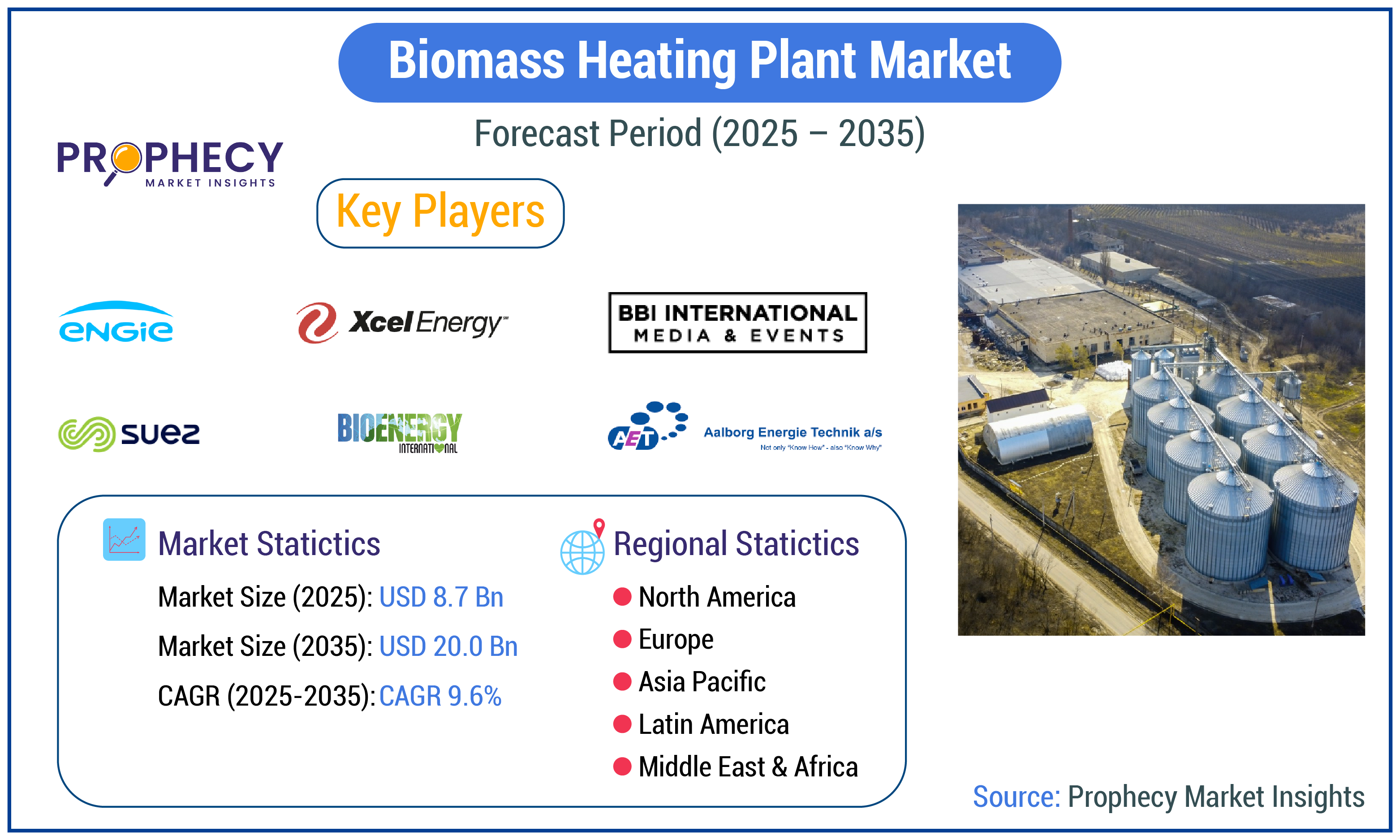
- Biomass heating plant market size is expected to expand at a rate of USD 20.0 Billion, by 2035.
- In 2024, the target market valuation was USD 8.0 Billion.
- Biomass heating plant market is growing at a CAGR 9.6%.
A biomass heating plant is a facility that utilizes organic matter, or biomass, as fuel to produce heat for various applications, including heating buildings, industrial processes, or even generating electricity. Biomass sources can include wood, wood chips, agricultural residues, and even waste materials. The heat generated is typically transferred to a fluid, such as water, for distribution and use. It offers numerous advantages, such as, reduced reliance on fossil fuels, potential for carbon neutrality, and cost-effectiveness.
The biomass heating plant market is growing due to increased government support for renewable energy, a global shift towards renewable energy sources, the growing awareness of the negative environmental impacts of fossil fuels, such as greenhouse gas emissions and pollution, and its cost-effectiveness of biomass heating plants.
Biomass heating plants can contribute to energy security by diversifying energy sources and promoting rural development through the creation of jobs and economic opportunities. Moreover, continuous advancements in biomass heating technologies, such as improved efficiency and reduced emissions, are making it more attractive and competitive, thus further contributing in the market expansion.
Recession Risk and Tariff Analysis:
- Reduced industrial activity, lower energy consumption, and a lack of finance for green projects put a biomass heating facility at risk of a recession. Economic downturns can damage biomass fuel supply chains and postpone infrastructure expenditures, which can affect operations and profitability. These risks can be reduced by diversifying sources of income and obtaining long-term agreements.
- A biomass heating plant's tariff analysis compares fuel prices, operating expenses, and government subsidies to determine how cost-effective heat production is. It aids in calculating return on investment, possible savings, and competitive pricing. This research aids in long-term financial planning for renewable heating solutions and decision-making for the adoption of sustainable energy.
Impact of Generative AI on Biomass Heating Plant Market:
- The biomass heating plant market is being revolutionized by generative AI, which improves system design, streamlines operations, and uses data-driven models to predict maintenance requirements. It facilitates better decision-making in plant management, more intelligent resource allocation, and predictive analytics for fuel economy.
- AI-generated simulations have the potential to lower costs, promote environmental compliance, and speed up innovation in biomass technology. Furthermore, market analysis powered by AI makes it easier to spot new trends and investment possibilities, increasing the renewable heating industry's sustainability and competitiveness.
Global Biomass Heating Plant Market Drivers & Restraints
Key Drivers:
Rising Adoption of Renewable Energy is Expected to Pitch the Market Expansion
The biomass heating plant market is expanding due to the growing use of renewable energy. To encourage the use of biomass and other renewable energy sources, governments throughout the world are enacting stronger emission restrictions and providing incentives. Rising energy costs, growing worries about climate change, and the need for energy security are the main causes of this development. Utilizing organic materials, biomass heating plants offer a sustainable substitute for fossil fuels, supporting international initiatives to lower carbon emissions and switch to greener energy sources. Consequently, there is a strong increase in demand for biomass heating systems in many different areas.
- For instance, according to the data published by IEA, the use of renewable energy in the transportation, heating, and electricity sectors would rise by over 60% between 2024 and 2030. By 2030, the proportion of renewable energy in total energy consumption will have increased from 13% in 2023 to about 20%. Due to the ongoing governmental support in over 130 countries, falling costs, and the growing usage of electricity for heat pumps and road transportation, more than three-quarters of the total increase is attributable to electricity generated from renewable energy sources.
Restraints:
The Dependency on a Consistent and Sustainable Biomass Supply is Limiting the Market Expansion
The biomass heating plant market has several drawbacks, one of which is its reliance on a steady and continuous supply of biomass. Operations may be disrupted by seasonal availability, competition from other biomass applications (such as biofuels), and logistical issues with collecting and transportation. Emissions and efficiency may also be impacted by irregular biomass quality. Additionally, large-scale biomass sourcing may lead to land-use changes and environmental degradation if not managed responsibly, potentially undermining the sustainability of the energy source and creating local ecological imbalances.
- Counterbalance Statements: Diversify biomass sources by include energy crops, wood debris, and agricultural leftovers to meet supply issues. Create regional supply chains for biomass and put long-term supplier agreements into place. Promote local infrastructure for the production and storage of biomass. To reduce ecological damage and provide a consistent, environmentally friendly supply of biomass, encourage sustainable land management techniques.
Opportunities & Trends:
Technological Advancements in Biomass Heating Plant is Opening Up Growth Opportunities for the Future Generation
The biomass heating plant market is expanding at a rapid pace due to technological developments. Technology advancements in gasification and combustion have improved energy conversion efficiency, lowering emissions and operating expenses. Real-time performance optimization and predictive maintenance are made possible by the integration of automation and digital monitoring systems, which reduces downtime. Furthermore, the advancement of combined heat and power (CHP) systems enhances total energy efficiency by enabling the simultaneous production of heat and electricity. As the need for renewable energy sources rises and global sustainability targets are met, these developments make biomass heating systems more appealing and cheaper.
Global Biomass Heating Plant Market Segmentations & Regional Insights
The biomass heating plant market is segmented into type, fuel type, application, end-user, and region.
By Type:
Contingent to type, the market is divided into combustion, gasification, anaerobic digestion, and others. The combustion segment is attributed to rule over the biomass heating plant market share. This is due to its maturity, simplicity, low investment barriers, and widespread adoption for power generation applications. Combustion is a well-established technology, and its ease of operation and cost-effectiveness make it a favored choice for various biomass heating applications.
The anaerobic digestion segment is the second leading type in the target market. This is due to its simplicity and maturity, while anaerobic digestion and gasification are growing.
By Fuel Type:
Appertaining from fuel type, the market is trifurcated into solid biomass, liquid biomass, and gaseous biomass. The solid biomass segment is expected to dominate biomass heating plant market share. This is due to its widespread availability, low cost, versatility, mature technology, and ease of use for both electricity generation and heat production.
The liquid biomass segment is the second dominating fuel type in the biomass heating plant market. This is due to the fact that liquid biofuels, such as biodiesel and ethanol, are widely used in heating applications and have a significant market presence.
By Application:
On the basis of application, the market is pigeonholed into power generation, heat distribution, and others. The heat distribution segment is expected to lead the biomass heating plant market size. This is due to the widespread use of biomass for residential, commercial, and industrial heating. Moreover, its cost-effectiveness, environmental benefits, direct and central heating systems, and growing awareness and policies also contribute in the segment’s growth.
The power generation segment is the fastest growing application, in the target market. This is due to the fact that these plants can be designed to generate electricity in addition to providing heat.
By End-User:
According to end-user, the market is branched into residential, commercial, industrial, and others. The residential end-user segment is the most governing segment in the biomass heating plant market. This is due to the growing awareness of climate change and rising energy costs, which incentivize homeowners to adopt energy-efficient heating systems such as biomass boilers. Additionally, the simplicity and relative ease of implementation of biomass heating systems in residential settings contribute to its popularity.
The commercial segment is the second superior end-user, in the target market. This is due to factors such as, the growing adoption of biomass heating systems for various commercial buildings and a shift towards renewable energy sources.
Regional Insights:
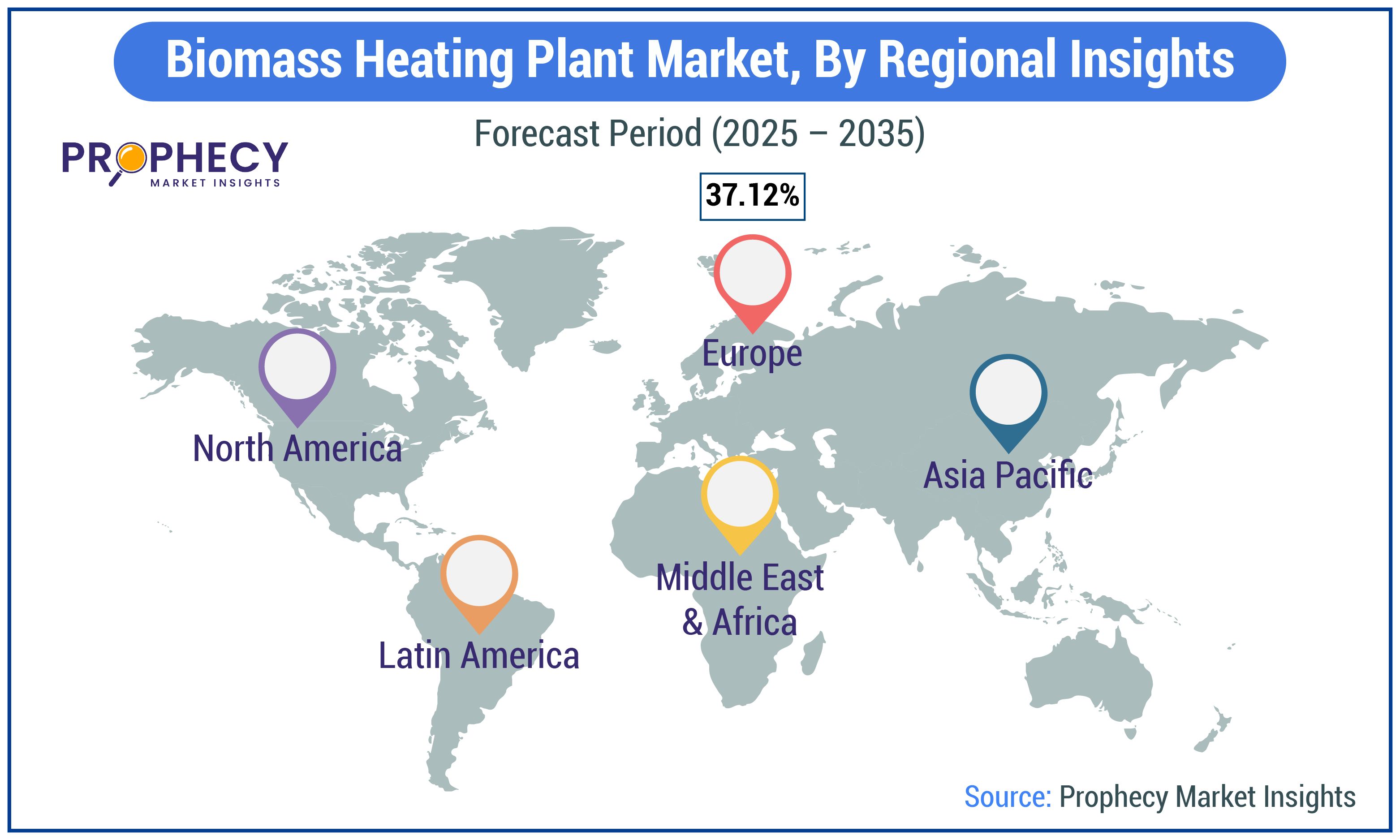
Geographically, the market is studied across North America, Europe, Asia Pacific, Latin America, and the Middle East & Africa.
Europe: This is the region which holds the superior position in the biomass heating plant market, with an estimated share of 37.1% in the recent years. This is due to a combination of factors, such as, this region’s strong regulations to reduce carbon emissions, favorable government support providing subsidies and incentives to promote the adoption of biomass heating plants, a well-developed industry, and a significant biomass production capacity, which contributes to the competitiveness of biomass heating plants.
- Latvia Biomass Heating Plant Market Insights:
The biomass heating plant market in Latvia, is the most influential market, in the recent years. This is primarily due to this country’s substantial forest resources, which provide a readily available and sustainable feedstock for biomass heating systems. Additionally, factors such as climatic conditions and government policies in Latvia also contribute to the high adoption of biomass heating. In addition to this, biomass heating is considered a renewable and environmentally friendly energy source, aligning with Latvia's sustainable development goals.
North America: This is the region which has the biomass heating plant market growing with the fastest growth rate, during the forecast period, in the recent years. This is due to a variety of factors, such as, this region’s rise in environmental concerns has led to a focus on renewable energy and sustainable solutions, its access to various biomass feedstocks, including agricultural and forest residues, a growing demand for sustainable heating solutions in residential and commercial buildings, the need to reduce carbon emissions and combat climate change has led to a greater emphasis on renewable energy sources, and favorable government incentives and regulations.
- U.S. Biomass Heating Plant Market Insights:
The biomass heating plant market in the U.S. is the country growing with the highest CAGR, during the forecast period, in the recent years. This is due to this country’s robust framework of federal and state policies that encourage renewable energy technologies, including biomass heating, and a large and diverse supply of biomass resources, including agricultural residues, forestry waste, and dedicated energy crops. In addition to this, the U.S. is increasingly shifting towards sustainable energy solutions, with biomass heating playing a key role in meeting heating and power demands in a more environmentally friendly manner.
Asia Pacific: The region which is experiencing significant amount of biomass heating plant market growth, in the recent years, is Asia Pacific. This is due to a combination of factors, including this region’s increasing urbanization, rising energy demand, and a growing focus on renewable energy sources such as biomass. The region's significant agricultural sector and abundant biomass resources, coupled with government initiatives promoting sustainable energy practices, further contribute to this trend.
- China Biomass Heating Plant Market Insights:
The biomass heating plant market in China is experiencing considerate amount of market growth, in the recent years. This is due to several factors, including a growing demand for energy, a large agricultural waste base, and government policies supporting biomass energy use. China is also actively pursuing carbon neutrality goals, which further motivates the shift towards renewable energy sources such as biomass.
Biomass Heating Plant Market Report Scope:
|
Attribute |
Details |
|
Market Size 2025 |
USD 8.7 Billion |
|
Projected Market Size 2035 |
USD 20.0 Billion |
|
CAGR Growth Rate |
9.6% (2025-2035) |
|
Base year for estimation |
2024 |
|
Forecast period |
2025 – 2035 |
|
Market representation |
Revenue in USD Billion & CAGR from 2025 to 2035 |
|
Regional scope |
North America - U.S. and Canada Europe – Germany, U.K., France, Russia, Italy, Spain, Netherlands, and Rest of Europe Asia Pacific – China, India, Japan, Australia, Indonesia, Malaysia, South Korea, and Rest of Asia-Pacific Latin America - Brazil, Mexico, Argentina, and Rest of Latin America Middle East & Africa – GCC, Israel, South Africa, and Rest of Middle East & Africa |
|
Report coverage |
Revenue forecast, company share, competitive landscape, growth factors, and trends |
Segmentation:
By Type:
- Combustion
- Gasification
- Anaerobic Digestion
- Others
By Fuel Type:
- Solid Biomass
- Liquid Biomass
- Gaseous Biomass
By Application:
- Power Generation
- Heat Distribution
- Others
By End-User:
- Residential
- Commercial
- Industrial
- Others
By Region:
- North America
- U.S.
- Canada
- Europe
- Germany
- U.K.
- France
- Russia
- Italy
- Spain
- Netherlands
- Rest of Europe
- Asia Pacific
- China
- India
- Japan
- Australia
- Indonesia
- Malaysia
- South Korea
- Rest of Asia Pacific
- Latin America
- Brazil
- Mexico
- Argentina
- Rest of Latin America
- Middle East & Africa
- GCC
- Israel
- South Africa
- Rest of Middle East & Africa
Global Biomass Heating Plant Market Competitive Landscape & Key Players
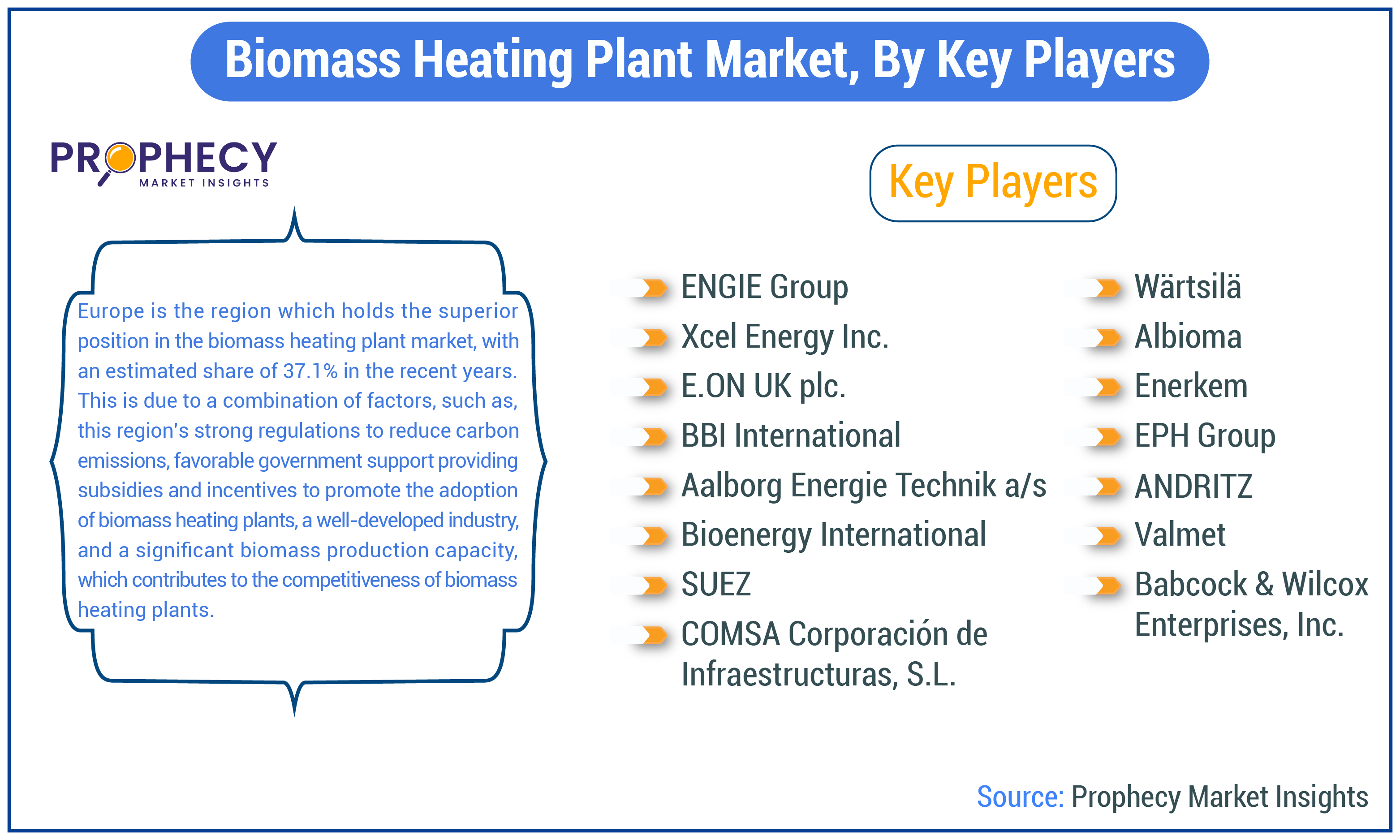
The key players operating in the market include, ENGIE Group, Xcel Energy Inc., E.ON UK plc., and others. These key players are adopting strategies including investing in research and development, expanding product lines, and focusing on cost-effectiveness and sustainable practices. These companies are also exploring partnerships and collaborations, leveraging government incentives, and addressing sustainability concerns in the biomass supply chain, for driving biomass heating plant market growth.
Biomass Heating Plant Market Companies:
- ENGIE Group
- Xcel Energy Inc.
- E.ON UK plc.
- BBI International
- Aalborg Energie Technik a/s
- COMSA Corporación de Infraestructuras, S.L.
- Bioenergy International
- SUEZ
- Wärtsilä
- Albioma
- Enerkem
- Babcock & Wilcox Enterprises, Inc.
- EPH Group
- ANDRITZ
- Valmet
View an Additional List of Companies in the Biomass Heating Plant Market
Global Biomass Heating Plant Market Recent News
- In March 2025, Engie Polska, a division of the French utility Engie SA, is committed to replacing coal at its heating facilities in Poland with waste heat, natural gas, or biomass by the end of 2025. By 2026, it is anticipated that its facility in Slupsk, in northern Poland, would produce 80% of its thermal energy from high-efficiency cogeneration, waste heat, and renewable sources. The firm is exploiting the potential of waste heat from treated sewage to construct a heat pump and convert the coal boiler to biomass.
- In November 2024, in a partnership with Energika Zbigniew Szama?ek Sp. Komandytowa, Unibep intended to spend USD 20.1 million in Zgorzelec, Lower Silesian Voivodeship, Poland. This would be the seventh biomass heating facility owned by Unibep. "Integrated network for innovative transformation and decarbonization of heating (UNITED HEAT), Stage I Construction of a biomass heating plant" is the title of the agreement that was signed to carry out the project. The Polish-German partnership with Stadtwerke Görlitz includes United Heat.
- In October 2024, Mitsubishi Heavy Industries, Ltd. (MHI)'s power solutions brand, Mitsubishi Power, successfully finished building a 50-megawatt (MW) class woody biomass-fired power plant in the city of Hyuga, Miyazaki Prefecture, and turned it over within the agreed-upon time frame. As part of a complete turnkey engineering, procurement, and construction (EPC) solution, a consortium led by MHI created the Hyuga Biomass Power Plant, which would be run by Hyuga Biomass Power Co., Ltd., a special purpose company (SPC).
- In May 2024, in order to further its environmental initiatives, Roto Frank opened a biomass heating facility in Kalsdorf, Austria. On February 16, the 1,200,176-square-foot facility started producing. The Kalsdorf biomass heating facility is Roto FTT's first of its sort. During its construction, the Austrian Bioenergy Group worked as a partner. By implementing more power and heat production systems utilizing renewable energy sources, among other things, Roto had set out to improve net zero emissions and the group's overall power supply dependability.
- In October 2022, In Novi Pazar, in southwest Serbia, a recently constructed biomass heating facility was placed into service. With assistance from Switzerland, the German development bank KfW funded the plant's construction. Up to 30 district heating facilities in Serbia will be constructed, renovated, updated, and switched from fossil fuels to biomass as part of a cooperation with KfW Bank and 22 public utility companies.
Analyst View:
The biomass heating plant market is expanding as a result of rising government support for renewable energy, a global trend toward renewable energy sources, growing public awareness of the harm that fossil fuels cause to the environment, including pollution and greenhouse gas emissions, and the affordability of biomass heating plants. By diversifying energy sources and fostering rural development by generating jobs and economic opportunities, biomass heating facilities may help ensure energy security. Additionally, ongoing developments in biomass heating technologies—such as increased efficiency and lower emissions are making it more appealing and competitive, which is helping the industry grow.
More Related Reports
Industrial Microwave Heating Equipment Market
Plant Stem Cell Market
Plant Biostimulant Market
Desalination Plants Market
Plant Based Meat Market
Global Biomass Heating Plant Market Company Profile
|
Company Name |
ENGIE Group |
|
Headquarter |
La Défense, France |
|
CEO |
Mrs. Catherine MacGregor |
|
Employee Count (2024) |
98,000 Employees |
Global Biomass Heating Plant Market Highlights
FAQs
Biomass heating plant market size was valued at USD 8.7 Billion in 2025 and is expected to reach USD 20.0 Billion by 2035 growing at a CAGR of 9.6%.
Type, fuel type, application, end-user, and region are the segmentation for the target market.
North America, Asia Pacific, Europe, Latin America, and the Middle East & Africa. Europe is expected to dominate the market.
The key players operating in the biomass heating plant market include ENGIE Group, Xcel Energy Inc., E.ON UK plc., Wärtsilä, BBI International, Aalborg Energie Technik a/s, COMSA Corporación de Infraestructuras, S.L., Bioenergy International, SUEZ, Albioma, Enerkem, Babcock & Wilcox Enterprises, Inc., EPH Group, ANDRITZ, and Valmet