Sleep Tech Devices Market Overview
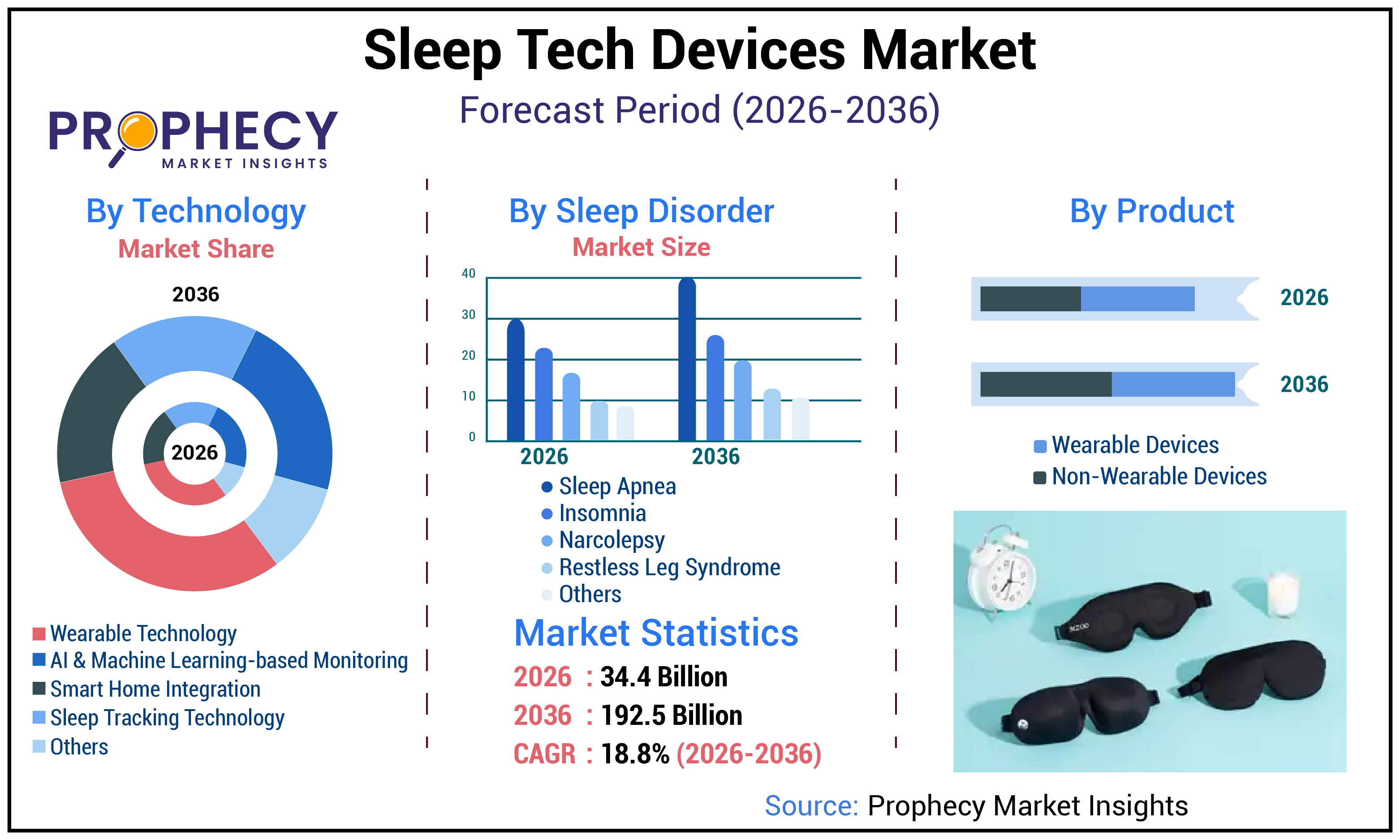
- 2025 Market Size: USD 34.4 Billion
- 2036 Projected Market Size: USD 164.9 Billion
- CAGR (2026-2036): 18.8%
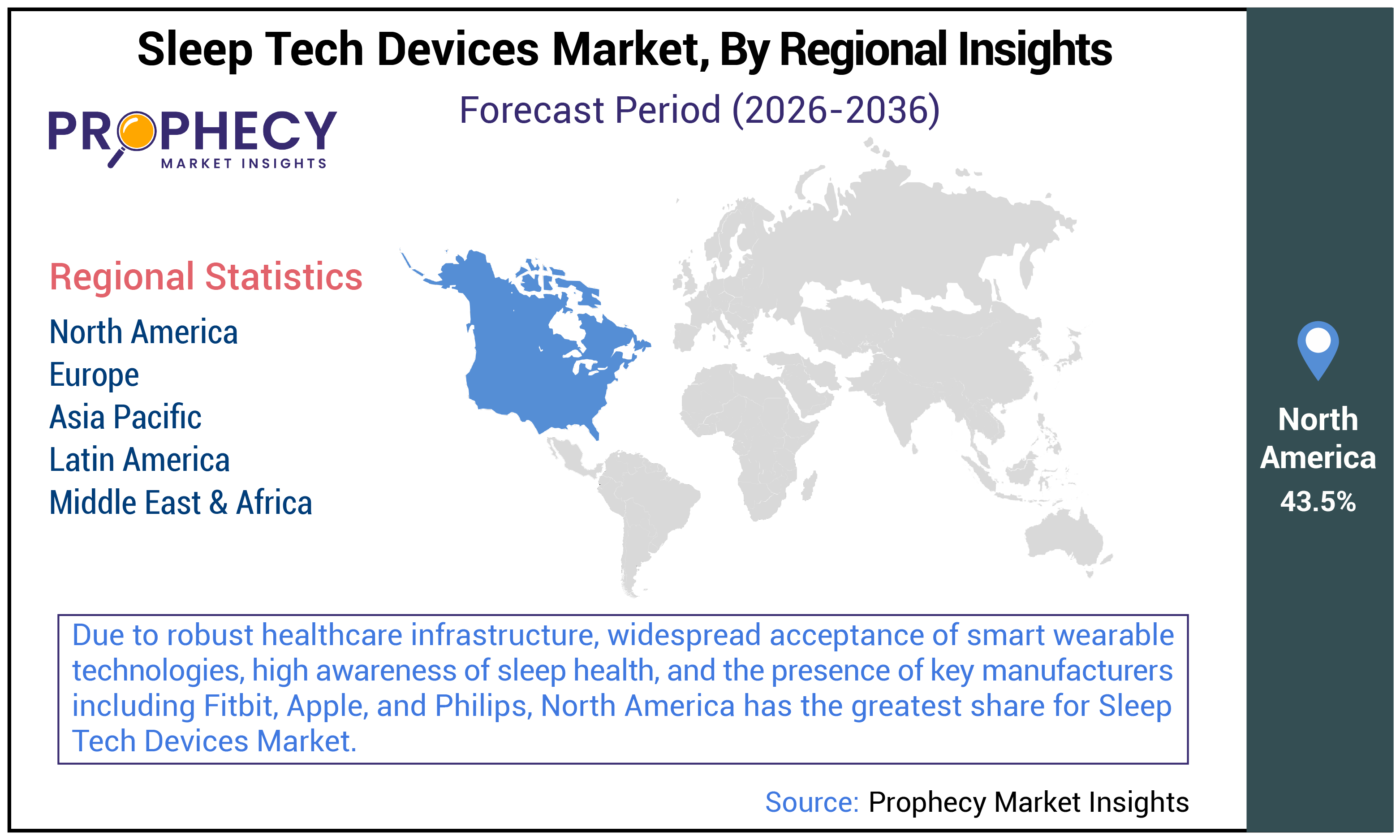
- North America: Largest Market in 2025
Sleep tech devices are intelligent electronic instruments that monitor, analyze and improve sleep quality with the help of technologies as Smart watches, artificial intelligence, and the Internet of Things. These devices can be wearable such as smart watches and rings or non-wearable such as smart mattresses, pillows, and sleep trackers.
These gadgets monitor the user's physiological parameters such as heart rate, breathing, movement, and sleep stages and then provide the user with the data of their sleeping patterns. First of all, a person's sleep health is much better understood with these devices, secondly, direct diagnosing of sleep disorders (e.g. apnea or insomnia) is possible, thirdly, individualized sleep-improving suggestions become available, sleep quality gets better, and, finally, mental and physical health get improved overall.
The growth of the sleep tech devices market is largely influenced by the escalating number of sleep disorders, for instance, insomnia and sleep apnea, the health consciousness among people, and the use of smart wearable technology. The increasing prevalence of a life full of hurry and stress resulting in irregular sleep patterns, developments in AI- and IoT-based health monitoring, as well as the uptrend in the use of home-based sleep monitoring solutions are some of the factors, which have contributed to the demand for this kind of technology. Besides that, the worldwide sleep tech devices market growth is still being supported by the integration of sleep data with smartphones and health apps as well as the rise in expenditure on wellness and preventive healthcare.
The Impact of Bedtime Technology Use on Sleep Quality:
- Using technology at night (such as smartphones, tablets, or TVs) can harm the quality of sleep because it changes the body's biologically sleep-wake rhythm.
- As if that were not enough, the blue light coming from the screens delays melatonin production - the hormone that regulates sleep -, so going to sleep becomes very difficult and the total time of sleep is reduced.
- Moreover, in case someone is exposed to an exciting content right before going to bed, the brain will become more alert and consequently, it will take longer for relaxation to come.
- The gradual result may be low-quality sleep, tiredness, and decrease of brain function. Intentional use of tech and digital health measures such as a blue light filter or a screen-free period before sleep can still be used to alleviate these effects.
Current Industry Dynamics & Insights:
- North America has the largest regional share in the market, with almost 43.5%.
- Europe is second dominating region in the market.
- By product type, wearable devices dominates the sleep tech devices market size.
Sleep Tech Devices Market Drivers & Restraints
Drivers and Restraints:
|
Drivers |
Restraints |
Opportunities & Trends |
|
|
|
Key Drivers:
Rising Prevalence of Sleep Disorders
The increasing rise of different types of sleep disorders has been a major factor in the growing for sleep tech devices market. Among these disorders are insomnia, sleep apnea, and restless leg syndrome. As a result of stress, lifestyle changes, and various health issues, a large number of people have had their sleep quality deteriorated, thus the demand for effective monitoring and improvement tools has been on the rise. Sleep tech devices allow users to monitor their sleep patterns, identify any abnormalities, and get tailored recommendations for better sleep. The worldwide use of smart sleep technologies is largely being facilitated by the growing awareness of sleep as a vital factor for overall health and a condition necessary for the early detection of sleep-related problems.
- For Instance, according to data published by SingleCare Administrators, Worldwide, more than one-third of adults report experiencing insomnia, two-thirds report sleep disturbances at least once per night, and 80% state they want to improve their sleep. About 70 million U.S. adults are affected by a sleep disorder, and the majority of high schoolers do not get enough sleep.
Restraints:
Lack of Accuracy and Standardization across Brands
One of the big reasons that the sleep tech devices market has not broadened is the absence of accuracy and standardization for various brands of sleep tech devices. Two root causes of these have been pinpointed as totally different data and measurements so inaccurate that lead to lower consumer trust and clinical acceptance. It is often the case that different qualities of Smart watches, algorithms, and data interpretation leading to inaccuracies in sleep analysis and hence users and healthcare professionals getting discouraged from considering these devices as a reliable source.
- Counterbalance Statements: The industry will need standard tests for devices, regulatory guidelines, and cooperation with medical institutions to overcome this obstacle. Credibility can become a great trust-building means by establishing standardized protocols and enhancing sensor technologies which will lead to the broad use of sleep tech devices.
Opportunities & Trends:
Expansion of Cloud-Based and Sleep Tracking Technology Solutions
The growing use smart home ecosystems with sleep optimization features is, without a doubt, becoming the major next trend in the sleep tech devices market. The integration of sleep devices with smart home systems enables the automatic control of lighting, temperature, and even ambient sound to produce the perfect sleep environment.
For example, smart mattresses may be connected to thermostats or lighting systems so that room conditions can be changed according to the sleep stages. This uninterrupted connection elevates the user's comfort, personalization, and overall sleep quality. Consequently, as a result of more and more consumers turning to connected lifestyles, the need for embedded sleep solutions in smart homes will, most probably, increase dramatically.
Sleep Tech Devices Market Segmentations & Regional Insights
Product type, technology, sleep disorder, end user, and region are the divisions of the sleep tech devices market.
By Product Type:
Wearable devices, and non-wearable devices are component on which sleep tech devices market is segmented. Due to the fact that to its broad use, ease, and multipurpose features, wearable technology has the biggest sleep tech devices market share. Smart watches, fitness bands, and smart rings are popular among health-conscious consumers since they not only track sleep but also heart rate, activity levels, and stress.
The second-largest market is non-wearable devices, which are constantly expanding as consumers look for more comfortable, contactless solutions like smart mattresses, pillows, and bedside monitors, particularly for long-term, at-home sleep tracking without causing physical discomfort.
By Technology:
From the perspective of technology, the sleep tech devices market is divided into sleep tracking technology, wearable technology, smart home integration, AI & machine learning-based monitoring, and others. In spite of its accessibility, affordability, and capacity to provide precise real-time data through well-known consumer goods including fitness trackers and smart watches, wearable technology has the most sleep tech devices market share.
AI and machine learning-based monitoring is the second most popular technology because sophisticated algorithms allow for more in-depth examination of sleep patterns, individualized insights, and early identification of sleep disorders.
By Sleep Disorder:
The sleep tech devices market, on the account of sleep disorder can categorized into insomnia, sleep apnea, narcolepsy, restless leg syndrome, and others. In consequence of its significant prevalence worldwide and rising awareness of its detrimental effects on health, including cardiovascular illnesses and fatigue-related hazards, sleep apnea has the biggest sleep tech device market share.
The second most common category is insomnia, which is caused by rising stress levels, altered lifestyles, and mental health problems that result in poor sleep. Its strong market position is further reinforced by the increasing adoption of wearable trackers and AI-driven sleep enhancement apps to treat insomnia.
By End User:
Home care settings / individuals, sleep clinics & laboratories, hospitals, wellness centers, and others are end users of the sleep tech devices market. In light of the growing popularity of self-monitoring and the ease of tracking sleep at home without clinical visits, home care settings and individuals have the biggest market share in the sleep tech devices market.
The second-largest end-user category is sleep clinics and laboratories, which depend on cutting-edge, medically approved technologies to diagnose and treat complicated sleep disorders like narcolepsy and sleep apnea, guaranteeing precise findings and bolstering expert medical evaluations.
Regional Insights:
Geographically, the sleep tech devices market is studied across North America, Europe, Asia Pacific, Latin America, and the Middle East & Africa.
North America: Due to robust healthcare infrastructure, widespread acceptance of smart wearable technologies, high awareness of sleep health, and the presence of key manufacturers including Fitbit, Apple, and Philips, North America has the greatest share for sleep tech devices market.
- U.S. Sleep Tech Devices Market Insights:
In light of its high uptake of cutting-edge wearable technology, strong presence of top manufacturers, and rising incidence of sleep disorders notably insomnia and sleep apnea, the United States leads the North American for sleep tech devices market.
Europe: The combination of rising healthcare digitization, rising demand for home-based sleep monitoring, and encouraging government programs encouraging the adoption of health and wellness technologies in nations as Germany, the United Kingdom, and France, Europe is the second-dominant area.
- Germany Sleep Tech Devices Market Insights:
Germany is the market leader in Europe on account of rising healthcare costs, early adoption of smart home and wellness technology, and increased awareness of sleep health. Germany's dominant position in the region is also a result of its robust medical device sector and emphasis on preventative healthcare.
Asia Pacific: Due to increased stress levels from urban lives, growing middle class investment in wellness technology, and growing awareness of sleep health, the Asia-Pacific (APAC) for sleep tech devices market is expanding quickly. The market's growth is also aided by the rise in wearable technology use and smartphone penetration.
- Japan Sleep Tech Devices Market Insights:
Due to its elderly population, high rate of sleep-related diseases, and robust technology advancements in smart wearables and home automation, Japan leads the APAC market. Japanese consumers' early adoption of health-tracking gadgets and focus on enhancing sleep quality further contribute to the nation's dominant position in the area.
Sleep Tech Devices Market Report Scope:
|
Attribute |
Details |
|
Market Size 2026 |
USD 34.4 Billion |
|
Projected Market Size 2036 |
USD 164.9 Billion |
|
CAGR Growth Rate |
18.8% (2026-2036) |
|
Base year for estimation |
2025 |
|
Forecast period |
2026- 2036 |
|
Market representation |
Revenue in USD Billion & CAGR from 2026 to 2036 |
|
Regional scope |
North America - U.S. and Canada Europe – Germany, U.K., France, Russia, Italy, Spain, Netherlands, and Rest of Europe Asia Pacific – China, India, Japan, Australia, Indonesia, Malaysia, South Korea, and Rest of Asia-Pacific Latin America - Brazil, Mexico, Argentina, and Rest of Latin America Middle East & Africa – GCC, Israel, South Africa, and Rest of Middle East & Africa |
|
Company Landscape |
Market Share Analysis of Companies Heat Map Analysis Company Overview, Products Overview Financial Information, Key Highlights Business Strategies Overview SWOT Analysis |
|
Report coverage |
Revenue forecast, company share, competitive landscape, growth factors, and trends |
|
Value Added Data Infosets |
Besides fundamental market insights such as the size of the market, growth rate, segmentation, regional study, and key players, our reports carry value-added data sets such as trade flow (import-export) analysis, production and consumption overview, price trend evaluation, supply and value chain mapping, and raw material availability. Moreover, we provide strategic tools as PESTLE and Porter’s Five Forces analysis, examination of the regulatory landscape, as well as monitoring of technology and innovation thereby providing a comprehensive overview which facilitates sensible and anticipatory decision-making. |
Segmentation:
By Product Type:
- Wearable Devices
- Smartwatches
- Fitness Bands
- Others
- Non-Wearable Devices
- Smart Mattresses & Beds
- Smart Pillows
- Others
By Technology:
- Sleep Tracking Technology
- Wearable Technology
- Smart Home Integration
- AI & Machine Learning-based Monitoring
- Others
By Sleep Disorder:
- Insomnia
- Sleep Apnea
- Narcolepsy
- Restless Leg Syndrome
- Others
By End User:
- Home Care Settings / Individuals
- Sleep Clinics & Laboratories
- Hospitals
- Wellness Centers
- Others
By Region:
- North America
- U.S.
- Canada
- Europe
- Germany
- U.K.
- France
- Russia
- Italy
- Spain
- Netherlands
- Rest of Europe
- Asia Pacific
- China
- India
- Japan
- Australia
- Indonesia
- Malaysia
- South Korea
- Rest of Asia Pacific
- Latin America
- Brazil
- Mexico
- Argentina
- Rest of Latin America
- Middle East & Africa
- GCC
- Israel
- South Africa
- Rest of Middle East & Africa
Sleep Tech Devices Market Competitive Landscape & Key Players
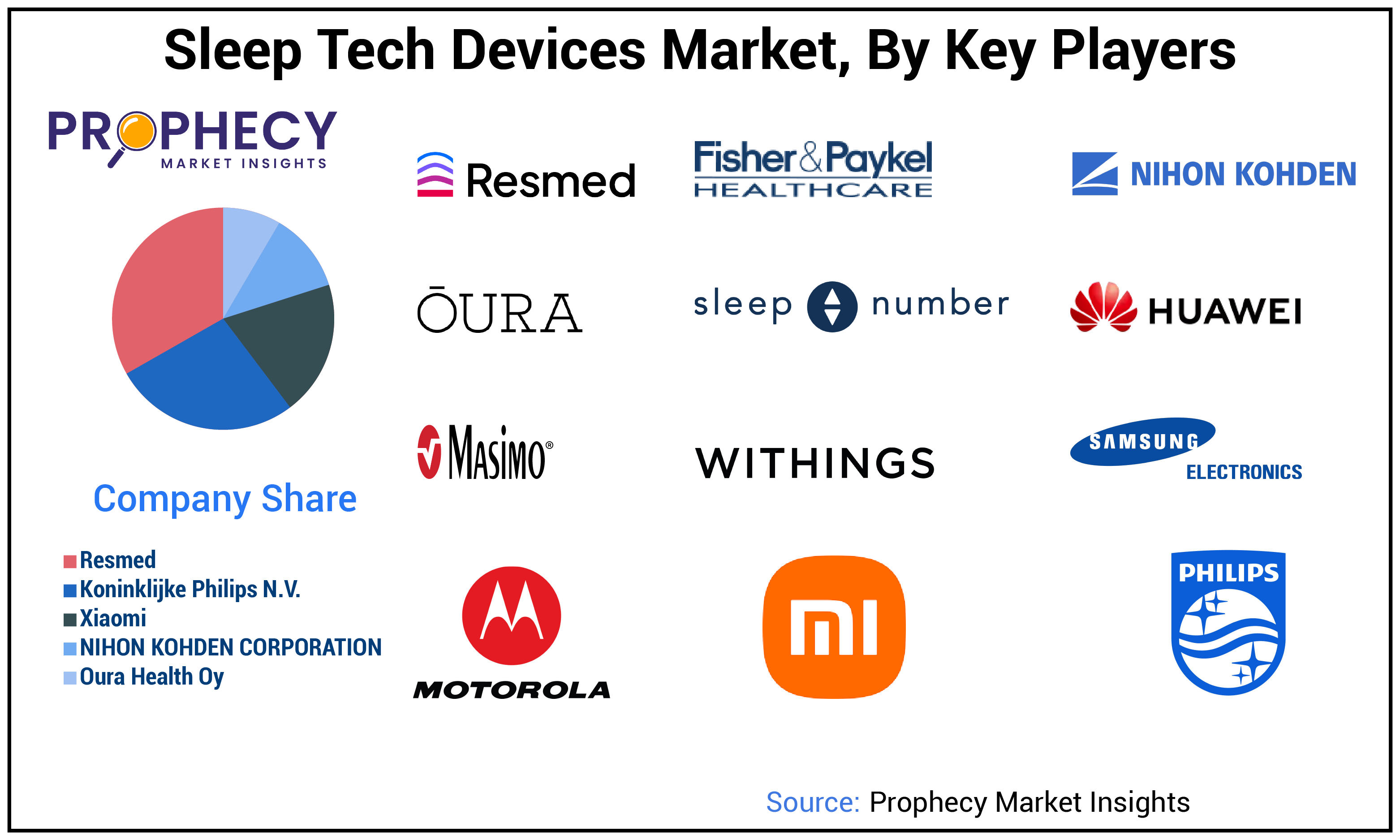
Ventures in R&D to improve device accuracy and user comfort, incorporating AI and IoT technologies for personalized sleep insights, and establishing alliances with healthcare providers to increase clinical validation and credibility are important growth strategies for sleep tech device companies. Additionally, businesses are concentrating on product diversification by providing both wearable and non-wearable solutions, reaching a wider audience through digital marketing and e-commerce, and focusing on emerging countries with reasonably priced gadgets.
Sleep Tech Devices Market Companies:
- Resmed
- Koninklijke Philips N.V.
- Xiaomi
- NIHON KOHDEN CORPORATION
- Oura Health Oy
- Withings
- Samsung Electronics
- Sleep Number Corporation
- Fisher & Paykel Healthcare Limited
- Masimo
- Huawei Device Co., Ltd
- Sleep Shepherd LLC
- Compumedics Limited
- ASUSTeK Computer Inc.
- Motorola Mobility LLC
View an Additional List of Companies in the Sleep Tech Devices Market
Sleep Tech Devices Market Recent News
- In August 2025, The New York-based firm revealed that it has raised a new $100 million round from investors as Y Combinator, HSG, Valor Equity Partners, Founders Fund, and athletes as Zak Brown and Ferrari F1 driver Charles Leclerc. Since the product's launch in 2019, the firm has sold more than USD 500 million worth of Pods, increased its revenue tenfold, and gathered insights from more than one billion hours of sleep data.
- In August 2025, to address problems including sleeplessness and dental health difficulties, Dreem Health, a digital sleep clinic, has partnered with Moona Health, DrLullaby, and Daybreak. Dreem Health provides diagnosis and at-home treatments, including Positive Airway Pressure (PAP) therapy for sleep apnea, and links patients with sleep specialists.
Analyst View:
Sleep tech gadgets are intelligent electronic tools that detect factors like heart rate, breathing, movement, and sleep stages in order to monitor and enhance the quality of sleep using technologies as artificial intelligence (AI), the Internet of Things (IoT), and smart sensors. These gadgets, which come in wearable (as smart watches and rings) and non-wearable (as smart mattresses and pillows) forms, assist users in comprehending sleep patterns, identifying conditions as apnea or insomnia, and receiving tailored advice for better sleep.
The market is expanding due to a number of factors, including the rise in sleep disorders, greater health consciousness, technological developments, and the increasing use of wellness and home-based sleep monitoring systems that are connected to smartphones and health applications.
Analysis of Sources:
Primary Sources:
- In-depth interviews
- Company-specific data
- Surveys and questionnaires
- Focus group discussions (FGDs)
- Others
Secondary Sources:
- Centers for Disease Control and Prevention (CDC)
- National Institutes of Health (NIH)
- World Health Organization (WHO)
- European Commission
- Others
More Related Reports
Sleeping Pods Cabins Market
Smart Sleep Tracking Device Market
Sleep App Market
Sleep Apnea Devices Market
AdTech Market
Sleep Tech Devices Market Company Profile
|
Company Name |
Product Portfolio |
|
Resmed |
Sleep Apnea and Snoring Solution |
|
Koninklijke Philips N.V. |
Sleep Therapy Devices |
|
Oura Health Oy |
Oura Ring |
|
Withings |
Under-Mattress Sleep Sensor |
|
Sleep Number Corporation |
SleepIQ technology |
Sleep Tech Devices Market Highlights
FAQs
Sleep tech devices market size was valued at USD 34.4 Billion in 2026 and is expected to reach USD 164.9 Billion by 2036 growing at a CAGR of 18.8%.
Product type, technology, sleep disorder, end user, and region are the segmentation for the sleep tech devices market.
Rising awareness of sleep's importance, an increase in sleep disorders, and technological advancements in AI, sensors, and connectivity, and so on are some of the sleep tech devices market growth drivers.
North America, Asia Pacific, Europe, Latin America, and the Middle East & Africa. North America is expected to dominate the sleep tech devices market.
The key players operating the sleep tech devices market include Resmed, Koninklijke Philips N.V., Xiaomi, NIHON KOHDEN CORPORATION, Oura Health Oy, Withings, Samsung Electronics, Sleep Number Corporation, SilexPro, Masimo, Huawei Device Co., Ltd, Sleep Shepherd LLC, Compumedics Limited, ASUSTeK Computer Inc., and Motorola Mobility LLC.