Protein Drink Market Overview
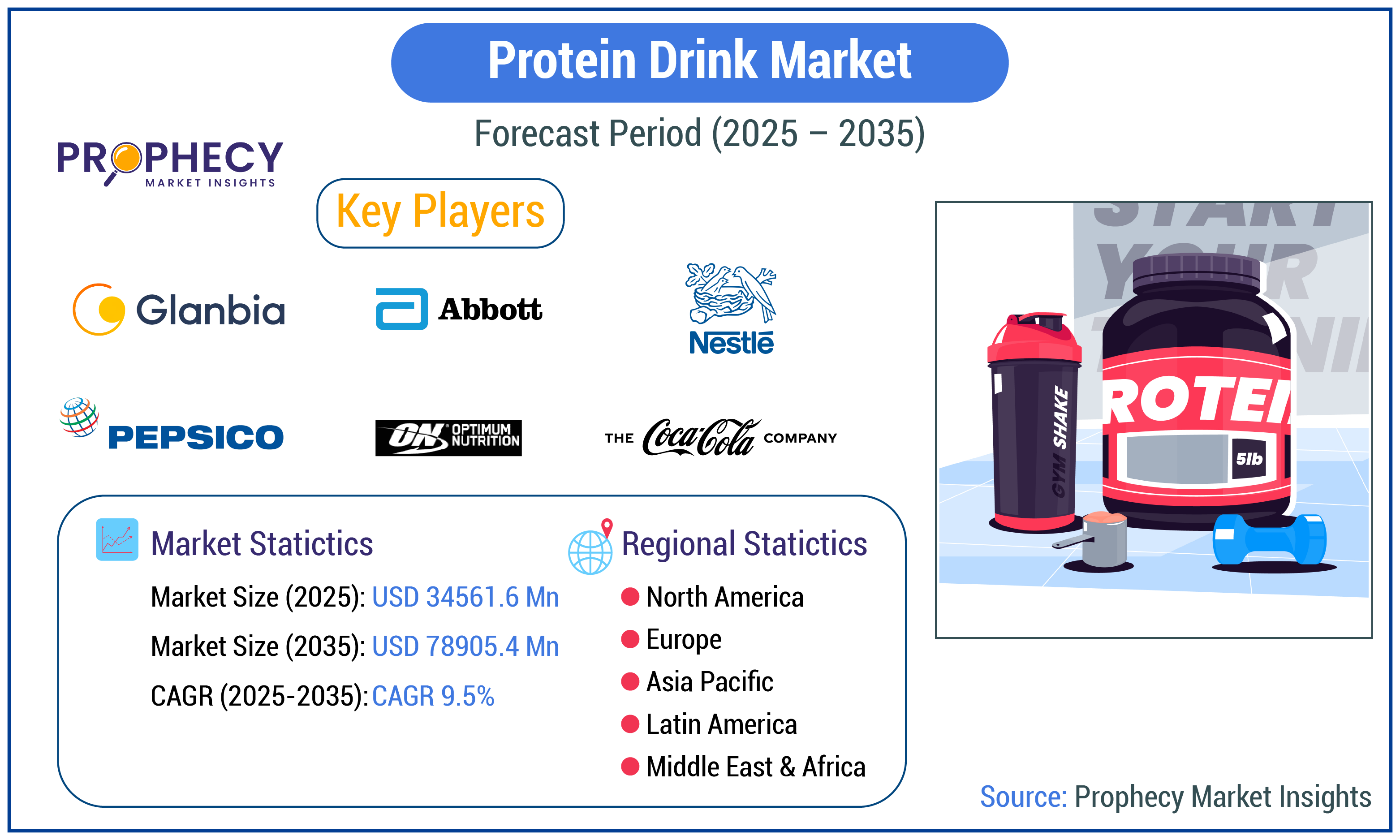
- By 2035, the protein drink market size is contemplated to enlarge at a valuation of USD 78905.4 Million.
- In 2024, the protein drink market valuation was USD 32047.99 Million.
- Protein drink market is developing at a CAGR of 9.5%.
A protein drink is a rich in nutrients beverage made with a lot of protein, usually from peas, whey, casein, or soy. Since it promotes muscle development, regeneration, and recuperation, it is frequently used by bodybuilders, athletes, and health-conscious people. Additionally, protein drinks improve metabolism, aid in weight control, and provide a quick and easy meal or snack option particularly for people with hectic schedules or higher protein requirements.
Consumers who are seeking quick, wholesome solutions for weight management, muscle recovery, and overall wellbeing, as well as increased gym and sports culture and health and wellness awareness, are driving the demand for protein drink market. Flavors, plant-based formulations, and functional advantages consisting of gut health are expanding the product's appeal to a wider range of consumers, including Gen Z, busy professionals, and senior citizens, while social media and celebrity endorsements increase demand and exposure.
With advancements in precision-fermentation and upcycled proteins, plant-based and clean-label formulations, gut-health-enhanced RTDs (such as those with prebiotics/probiotics), and environmentally friendly packaging, protein drinks are moving beyond basic nutrition to become sustainable and functional beverages. In the meanwhile, well-known companies are adding protein to common drinks (such as Starbucks' new protein cold cream) and providing high-end "wellness shakes" that serve as lifestyle declarations for millennials and Generation Z.
Recession Risk & Tariff Analysis:
- The protein drink market is currently facing recessionary pressures as customers shift their spending to necessities, which is causing demand to tighten. This is similar to patterns observed in the food and beverage industry, where businesses such as PepsiCo point to declining consumer spending and cost increases brought on by tariffs.
- On the trade front, anti-dumping tariffs on plant-based proteins that include pea isolate, along with high import duties such as India's nearly 44% total customs duty (basic duty, surcharge, IGST) on protein powder are driving up costs and reducing margins, which could impede market growth and drive-up retail prices.
Impact of Generative AI on Protein Drink Market:
- By transforming product development and ingredient discovery, generating AI is already changing the protein drink market. It is speeding up R&D timelines by up to 40–70%, improving flavor, texture, and nutrition profiles, and simplifying recipe conceptualization.
- The challenges of plant-based protein are also being addressed by AI-driven platforms, which help brands launch new, customized, and more sustainable protein drinks more quickly by enhancing gelation, mouthfeel, and functional qualities through simulated testing and even finding novel sweet and functional proteins through precision fermentation.
Protein Drink Market Drivers & Restraints
Key Drivers:
Rising Number of Consumers Actively Engaging in Gym to Propel Market Development
Considering the fact that protein consumption is crucial for muscle repair, strength development, and endurance support, the growing number of consumers actively participating in gym workouts and fitness regimens is a significant factor propelling the protein drink market growth. Ready-to-drink protein drinks are a popular option for gym-goers looking for quick, portable, and efficient nutrition solutions due to growing health consciousness, particularly among millennials and Gen Z. The demand for both plant-based and animal-based protein beverages is rising in both mainstream and niche sectors as a result of this change in lifestyle, as well as the popularity of high-protein diets and customized fitness objectives.
- For instance, according to the data published by WodGuru, there are approximately 184.59 million gym memberships worldwide. The global gym industry is valued at USD 96.7 billion. There are over 184 million gym members worldwide. Over 205,000 gyms are operating globally.
Restraints:
Regulatory Compliance & Labeling Issues Concern Could Affect Market Development
Different international requirements regarding health claims, nutritional content, ingredient source, and allergy declaration give rise to regulatory compliance and labeling challenges in the protein drink market. For example, what is considered "natural" or "high-protein" in one nation could not be in another, which might result in product recalls, delays in market access, or misbranding issues. Furthermore, statements including "muscle recovery" frequently need to be supported by scientific data; otherwise, they risk breaking advertising regulations.
- Counterbalance Statements: Working closely with regulatory consultants, standardizing product development with international compliance in mind, and implementing transparent, science-backed labeling that satisfies the needs of important markets (such as the FDA in the United States, the EFSA in Europe, and the FSSAI in India) are the ways to ensure a smoother global rollout and consumer trust.
Opportunities & Trends:
Rising Health Awareness among Gen Z can Drive Growth of the Market in Future
The protein drink market will expand significantly in the future owing to Gen Z's growing health consciousness, which places a higher value on exercise, holistic wellbeing, and clean nutrition than on conventional diets. Gen Z actively searches out functional beverages that fit with their ideals, such as plant-based, sustainable, low-sugar, and gut-friendly protein drinks, in contrast to previous groups. Adoption of protein-based products designed for energy, recuperation, or mental clarity is also accelerated by their dependence on social media, fitness influencers, and digital health tracking systems. As a consequence, companies that use innovative techniques including eco-friendly packaging, tailored nutrition, and transparent labeling stand a good chance of winning over this health-conscious consumer base over the long run.
- For Instance, Gen Zers and millennials are now purchasing more wellness products and services than older generations are according to McKinsey’s latest Future of Wellness research. This research shows that Gen Z is most interested in wellness spending that is focused on appearance and overall health.
Protein Drink Market Segmentations & Regional Insights
Product, source, flavors, packaging, functionality, distribution channel, and region are the divisions of the protein drink market.
By Product:
Ready-to-Drink (RTD), protein shots, protein shakes, reflow oven, and others are type on which protein drink market is segmented. With regard to its unparalleled convenience, ready-to-consume format, and ongoing innovation in flavors, plant-based choices, and aseptic packaging, the Ready-to-Drink (RTD) category dominates the protein drink market share by a significant margin.
Protein shakes is the second-largest segment. This format is a strong runner-up owing to its adaptability, affordability, and customizability, which enable customers to customize protein intake, tastes, and add-ins at home.
By Source:
Based on the source, the protein drink market is divided into animal-based protein, and plant-based protein. Athletes, fitness fanatics, and users of medical nutrition choose animal-based protein particularly whey protein, which has the highest protein drink market share due to its better amino acid profile, high bioavailability, and quick absorption.
Plant-based protein on the other hand, is the second-dominant category and is gaining popularity quickly as a result of growing veganism, lactose intolerance, and environmental concerns.
By Flavors:
Chocolate, vanilla, strawberry, berry mix, and others are flavors of the protein drink market. Due to its widespread appeal, familiarity, and rich flavor profile, which successfully covers up the occasionally gritty or bitter taste of protein, chocolate is the most popular flavor on the protein drink market.
The second most popular flavor is vanilla, which is prized for its adaptability and mild flavor that makes it possible to combine it with coffee, fruits, or other supplements.
By Packaging:
On the packaging, protein drink market is categorized into bottles & tetra packs, pouches, cans, and others. A combination of their mobility, simplicity, and appropriateness for Ready-to-Drink (RTD) products the most popular protein format Bottles and Tetra Packs hold the biggest protein drink market share.
Cans are the second most popular container format, especially in the sports nutrition and energy mix markets. Particularly among younger, fitness-focused audiences, cans are appealing due to their robustness, stylish branding, and association with high-performance drinks.
By Functionality:
Muscle building & recovery, weight management, general wellness/nutritional supplement, sports performance, and others are functionality of the protein drink market. Muscle building & recovery is the market leader in protein drinks, mostly due to its core clientele of bodybuilders, athletes, and fitness fanatics who depend on consuming substantial amounts of protein to aid in muscle building, repair, and recovery after exercise.
Weight management is the second most popular category, driven by rising knowledge of high-protein diets that help with hunger control fat reduction, and metabolism enhancement.
By Distribution channel:
The protein drink market on the account of distribution channel is categorized into convenience stores, hypermarkets/supermarkets, specialty stores, online sales channel, and others. The highest protein drink market share is held by hypermarkets and supermarkets on account of their extensive physical presence, wide range of products, and customer trust, which enables in-person brand, flavor, and price comparison.
Online sales are the second most popular distribution channel, and they are growing quickly driven by digital ease, more product availability, subscription models, and focused marketing through fitness influencers and e-commerce platforms.
Regional Insights:
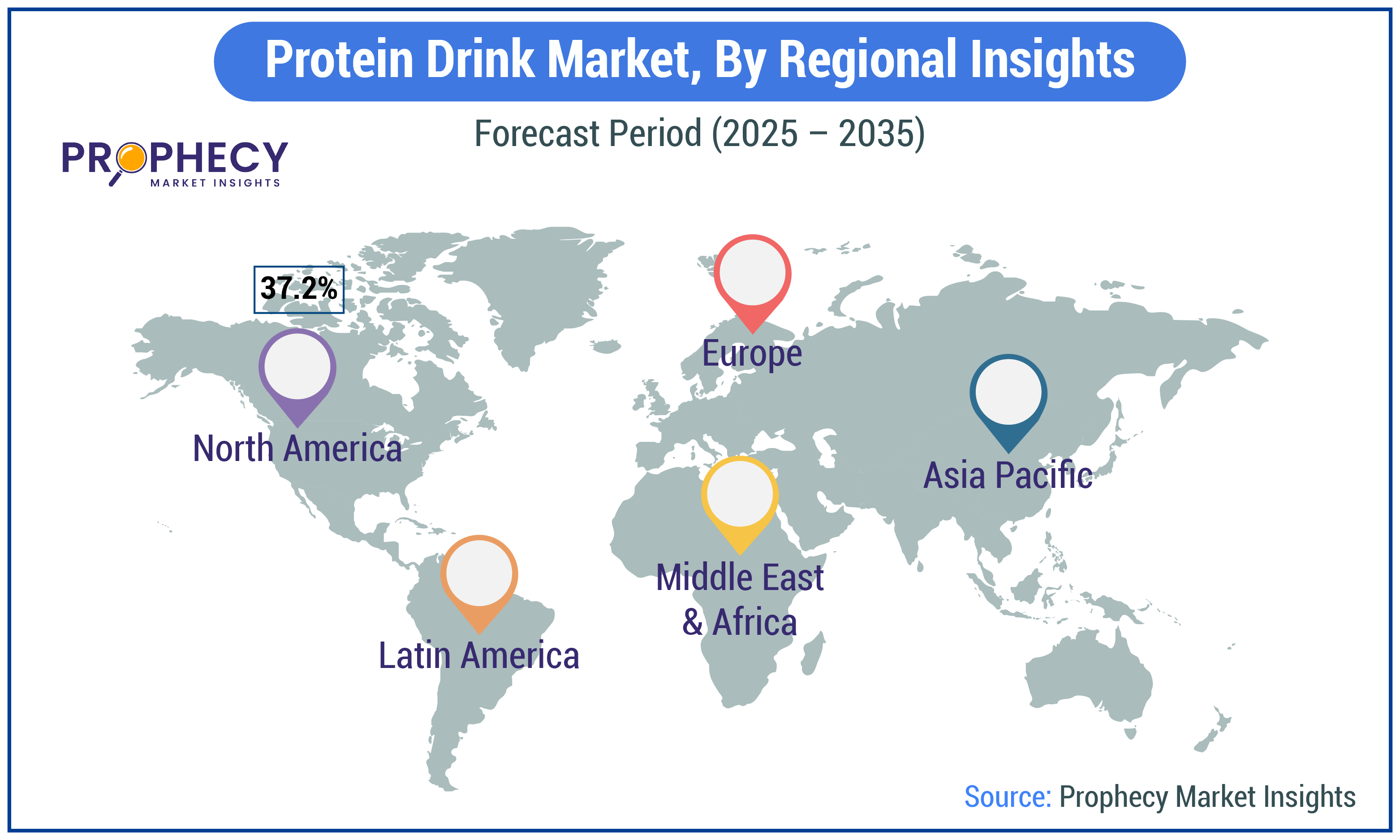
Geographically, the protein drink market is studied across North America, Europe, Asia Pacific, Latin America, and the Middle East & Africa.
North America: With about 37.2% of overall sales North America dominates the worldwide protein drink market share, especially the RTD and quick categories. High spending incomes, a well-established exercise culture, general health consciousness, and an established distribution and retail infrastructure in the US and Canada are the main causes of this supremacy.
- U.S. Protein Drink Market Insights:
U.S. leads the North American protein drink market size owing to its strong retail and e-commerce infrastructure, well-established health and fitness culture, high consumer knowledge of nutritional advantages, and extensive gym memberships. The United States leads the world in both demand and innovation as its consumers strongly choose functional drinks and diets high in protein.
Europe: With over 28% of worldwide sales Europe is the second-largest area. This is due to strong wellness trends, rising demand for plant-based and clean-label protein drinks, and robust retail networks in nations consisting of Germany, the United Kingdom, and France.
- Germany Protein Drink Market Insights:
Due to its strong industrial infrastructure, leadership in metal processing, coatings, and automobiles, as well as its early adoption of cutting-edge oven technology, Germany dominates the region by a significant margin.
Asia Pacific: The protein drink market in Asia Pacific is growing quickly as a result of growing fitness cultures in emerging nations, greater health consciousness, and rising disposable incomes. Demand is also increased by young urban populations' rising knowledge of high-protein diets, which is fueled by changes in lifestyle and government food initiatives including India's Protein Score.
- China Protein Drink Market Insights:
With 36% of the market, China dominates the area considering to its sizable urban customer base, robust distribution systems, and ongoing innovation in functional protein beverages.
Protein Drink Market Report Scope:
|
Attribute |
Details |
|
Market Size 2025 |
USD 34561.6 Million |
|
Projected Market Size 2035 |
USD 78905.4 Million |
|
CAGR Growth Rate |
9.5% (2025-2035) |
|
Base year for estimation |
2024 |
|
Forecast period |
2025 – 2035 |
|
Market representation |
Revenue in USD Million & CAGR from 2025 to 2035 |
|
Regional scope |
North America - U.S. and Canada Europe – Germany, U.K., France, Russia, Italy, Spain, Netherlands, and Rest of Europe Asia Pacific – China, India, Japan, Australia, Indonesia, Malaysia, South Korea, and Rest of Asia-Pacific Latin America - Brazil, Mexico, Argentina, and Rest of Latin America Middle East & Africa – GCC, Israel, South Africa, and Rest of Middle East & Africa |
|
Report coverage |
Revenue forecast, company share, competitive landscape, growth factors, and trends |
Segmentation:
By Product:
- Ready-to-Drink (RTD)
- Protein Shots
- Protein Shakes
- Others
By Source:
- Animal-based Protein
- Whey Protein
- Casein Protein
- Others
- Plant-based Protein
- Soy Protein
- Rice Protein
- Others
By Flavors:
- Chocolate
- Vanilla
- Strawberry
- Berry Mix
- Others
By Packaging:
- Bottles & Tetra Packs
- Pouches
- Cans
- Others
By Functionality:
- Muscle Building & Recovery
- Weight Management
- General Wellness/Nutritional Supplement
- Sports Performance
- Others
By Distribution Channel:
- Convenience Stores
- Hypermarkets/Supermarkets
- Specialty Stores
- Online Sales Channel
- Others
By Region:
- North America
- U.S.
- Canada
- Europe
- Germany
- U.K.
- France
- Russia
- Italy
- Spain
- Netherlands
- Rest of Europe
- Asia Pacific
- China
- India
- Japan
- Australia
- Indonesia
- Malaysia
- South Korea
- Rest of Asia Pacific
- Latin America
- Brazil
- Mexico
- Argentina
- Rest of Latin America
- Middle East & Africa
- GCC
- Israel
- South Africa
- Rest of Middle East & Africa
Protein Drink Market Competitive Landscape & Key Players
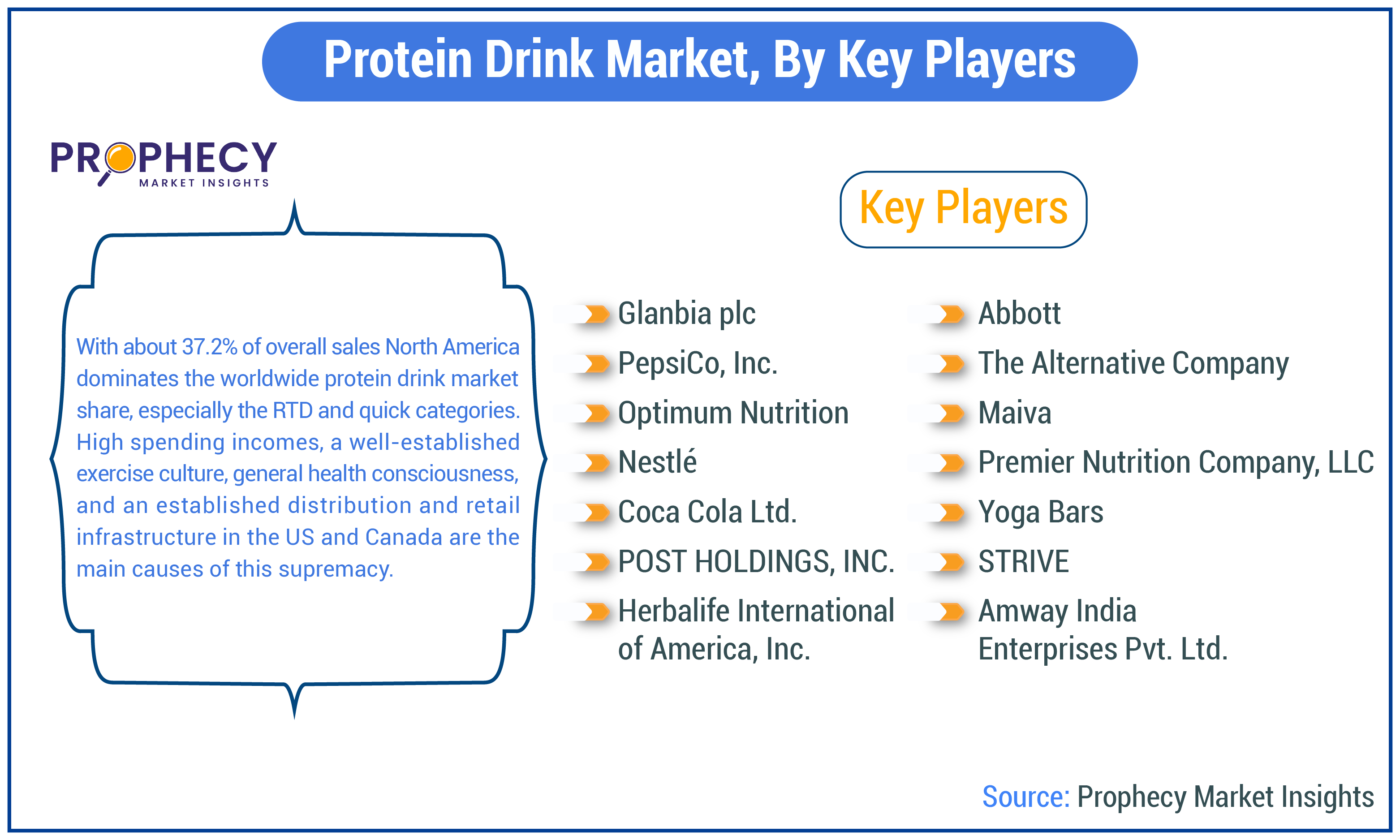
Innovation, customization, and sustainability are the main growth strategies that protein drink companies are concentrating on. This entails creating clean-label and plant-based formulations, branching out into functional beverages with extra advantages consisting of immunity or gut health, and utilizing AI-driven R&D to speed up product development. The key players operating in the Protein Drink Market include, Glanbia plc, PepsiCo, Inc., Abbott, Nestlé, Amway India Enterprises Pvt. Ltd., and others.
Protein Drink Market Companies:
- Glanbia plc
- PepsiCo, Inc.
- Herbalife International of America, Inc.
- Optimum Nutrition
- Nestlé
- Amway India Enterprises Pvt. Ltd.
- Coca Cola Ltd.
- POST HOLDINGS, INC.
- Abbott
- The Alternative Company
- Maiva
- Premier Nutrition Company, LLC
- Yoga Bars
- STRIVE
View an Additional List of Companies in the Protein Drink Market
Protein Drink Market Recent News
- In May 2025, in response to growing demand from consumers who are health-conscious and using weight-loss medications, the French food and beverage firm Danone has introduced a protein drink under its Oikos yogurt brand, breaking into the USD 7 billion protein shake industry. The action was taken since sales of comparable goods in the US are increasing for rivals like Chobani and Coca-Cola's Fairlife.
- In April 2025, with the introduction of Darigold Protein Shakes, Darigold, Inc., one of the biggest dairy producers in the country, is broadening its range of products. Each shake, which comes in chocolate and vanilla varieties, has 30 grams of premium protein along with electrolytes, key amino acids, and vital vitamins and minerals. It is a lactose-free, sugar-free beverage that is ready to consume.
- In February 2025, a new sparkling clear whey protein isolate drink that tastes closer to a refreshing soda than a thick protein shake has been released by Genius Gourmet, the rapidly expanding manufacturer of delectable and clever protein treats. This light and energizing beverage provides taste and function with a crisp, sparkling finish in every sip. Each 12-fl-oz can of this ready-to-drink beverage, which comes in three vibrant, energizing flavors (Orange, Fruit Punch, and Blue Raspberry), has 20g of protein, 1g of carbohydrates, 0g of sugar, 0g of lactose, and no artificial coloring or preservatives.
Analyst View:
Athletes, bodybuilders, and health-conscious people frequently take protein drinks, which are nutrient-rich beverages manufactured mostly from sources that include whey, casein, soy, or peas, for easy nutrition, weight control, and muscle rehabilitation. The industry is expanding as a result of increased health consciousness, gym culture, and the need for quick, practical meal alternatives. Their popularity among Gen Z, working people, and senior citizens is growing as a result of advancements in plant-based, gut-health-enhancing, and clean-label ingredients as well as environmentally friendly packaging. Furthermore, protein beverages are being positioned as high-end health goods that go beyond simple fitness applications thanks to lifestyle marketing, social media impact, and product extensions comprising Starbucks' protein cold cream.
More Related Reports
Protein Engineering Market
Functional Protein Market
Protein Purification and Isolation Market
Proteomics Market
Protein Labelling Market
Protein Drink Market Company Profile
|
Company Name |
Glanbia plc |
|
Headquarter |
Kilkenny, Ireland |
|
CEO |
Hugh McGuire |
|
Employee Count |
5700 Employees |
Protein Drink Market Highlights
FAQs
Protein drink market size was valued at USD 34561.6 Million in 2025 and is expected to reach USD 78905.4 Million by 2035 growing at a CAGR of 9.5%.
Product, source, flavors, packaging, functionality, distribution channel, and region are the segmentation for the target market.
North America, Asia Pacific, Europe, Latin America, and the Middle East & Africa. North America is expected to dominate the market.
The key players operating the protein drink market include Glanbia plc, PepsiCo, Inc., Herbalife International of America, Inc., Optimum Nutrition, Nestlé, Amway India Enterprises Pvt. Ltd., Coca?Cola Ltd., POST HOLDINGS, INC., Abbott, The Alternative Company, Maiva, Premier Nutrition Company, LLC, Yoga Bars, and STRIVE.