North America Blockchain Technology In Healthcare Market Overview
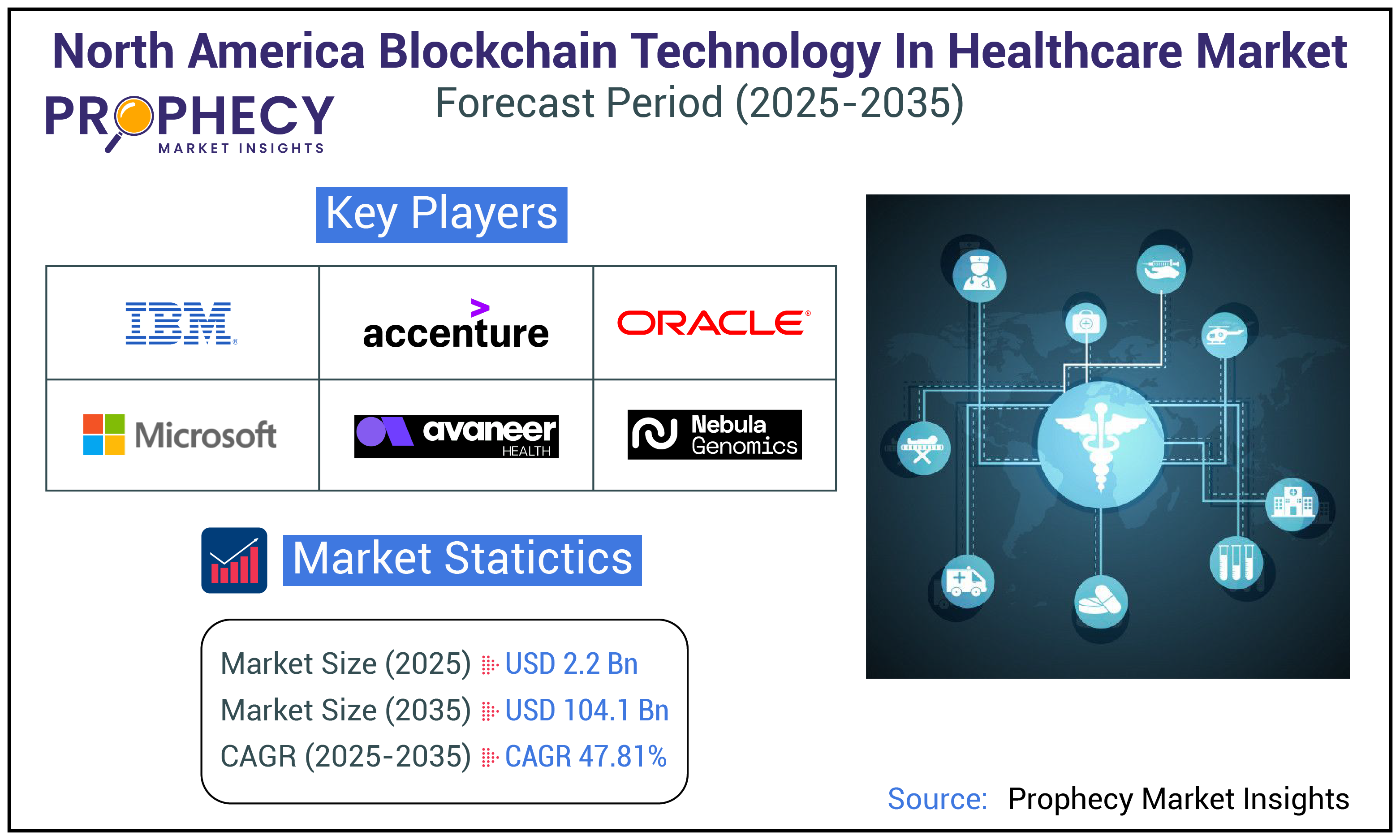
- By 2035, the North America blockchain technology in healthcare market size is contemplated to enlarge at a valuation of USD 104.1 Billion.
- In 2025, the North America blockchain technology in healthcare market valuation was USD 2.2 Billion.
- North America blockchain technology in healthcare market is developing at a CAGR of 47.81%.
Blockchain technology in healthcare involves the utilization of decentralized, secure, and unchangeable digital ledgers to manage health records, facilitate data-sharing, and increase transparency throughout the healthcare system. It aids in maintaining data integrity, safeguarding patient privacy, minimizing administrative inefficiencies, and combating fraud.
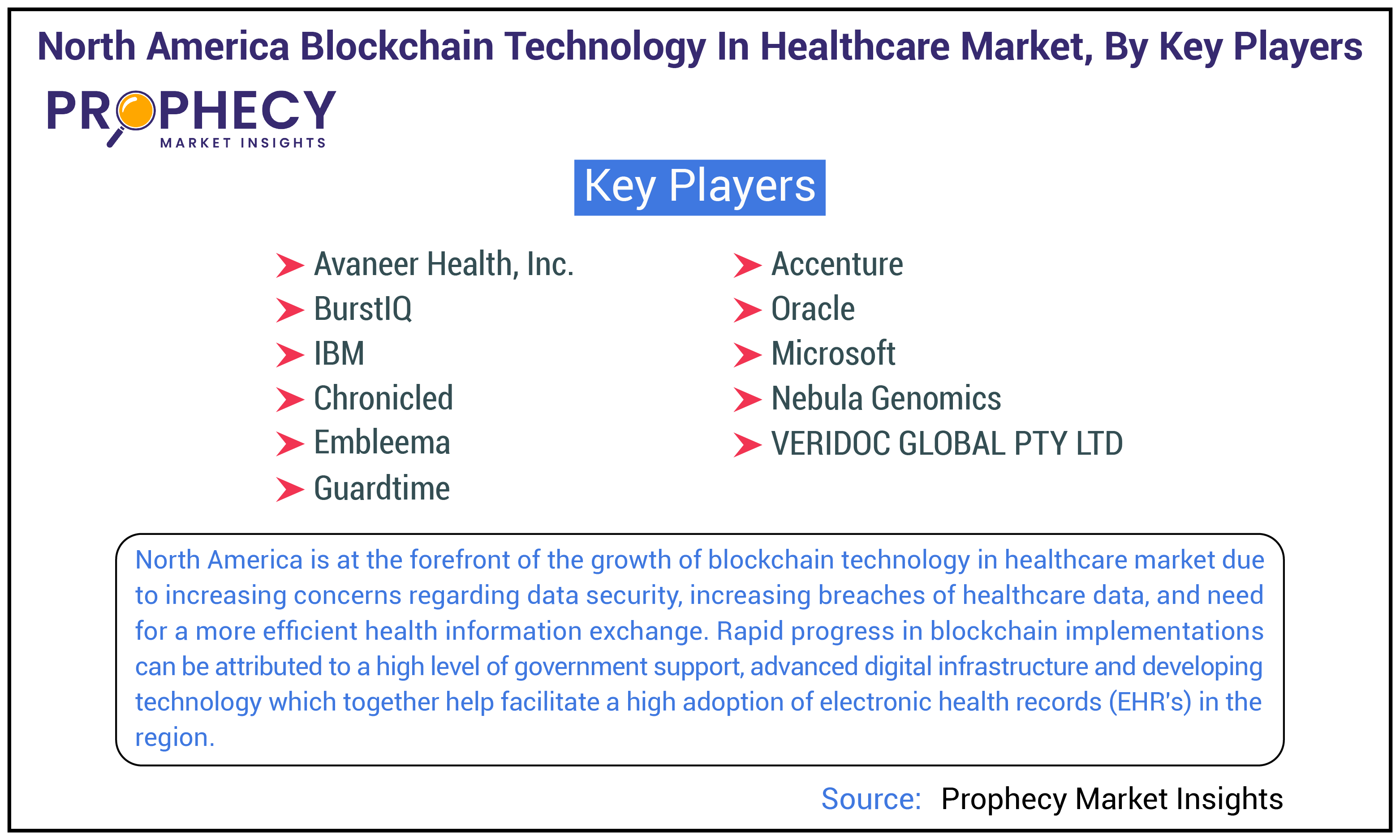
North America is at the forefront of the growth of blockchain technology in healthcare market due to increasing concerns regarding data security, increasing breaches of healthcare data, and need for a more efficient health information exchange. Rapid progress in blockchain implementations can be attributed to a high level of government support, advanced digital infrastructure and developing technology which together help facilitate a high adoption of electronic health records (EHR's) in the region. The growth and expansion in the North America blockchain technology in healthcare market are also complemented by the presence of major technology players and developments in health information technology (HIT).
North America blockchain technology in healthcare market is set to have even more integrative connection with AI and IoT for predictive analytics, personalized medicine, and patient monitoring in real-time. Expect more private and permissioned blockchain adoption for regulatory compliance and data privacy requirements regarding EHRs and supply chain tracking. Additionally, Web3-centric patient-centric platforms help individuals own their health data and consent access, aided by increasing governmental aid and regulatory improvements that spur secure interoperable healthcare ecosystems.
Recession Risk & Tariff Analysis:
- North America blockchain in healthcare market may be faced with short-term challenges from recession issues and tariffs as issued by the federal government. Economic downturns will slow investment and delay adoption even though healthcare will always be a vital function that hospitals continue to maintain.
- At the same time, more recent tariffs on tech components imported from abroad now can cause infrastructure to increase significantly as needed components become less competitive and dollar for dollar can cost providers and tech companies money.
- Despite the short-term challenges many in this marketplace face, the long-term path is undoubtedly a sure and reachable goal due to ongoing digital transformation and significant mandates for secure and interoperability types of health systems.
Impact of Generative AI on North America Blockchain Technology in Healthcare Market:
- Generative AI joining the healthcare blockchain ecosystem has expedited North America innovation through intelligent, secure automation, and enhanced data insights. Generative AI improve self-executing smart contracts, predictive analytics, and real-time monitoring, while blockchain technology guarantees data provenance, integrity, and privacy critical for EHRs, clinical trials, and securing the supply chain.
- This synergy can lead to personalized treatment plans and improved fraud detection; however, issues with scalability, regulatory compliance and ethical use need to be addressed to fully realize the impact.
North America Blockchain Technology In Healthcare Market Drivers & Restraints
Key Drivers:
The Market is Maturing Progressively due to the Rising Adoption of Electronic Health Records (EHR)
North America blockchain technology in healthcare market is driven by the adoption of Electronic Health Records (EHRs). The implementation of EHRs creates an immediate need for secure, interoperable, and tamper-proof systems for managing continuously increasing volumes of patient health data. Traditional EHR systems have had difficulty isolating data by organization or side-tracking patient privacy consent agreement that restricts sharing or what has been recorded. Blockchain technology comes into play when there is the ability to decently share data, the capability for EHR integrity without providing access to individual’s diagnosis, the capability to grant permission, or a limited use aspect of smart contracts. A key entry point issue recognized by healthcare administrators and providers is how too securely, accurately and manage these new volumes of sensitive patient data. Blockchain technology is typically understood as an opportunity to have trust and security when managing sensitive patient data, this growth empowers the blockchain receipts simply by exploring broader meanings to facilitate opportunities for implementations and future rolls out as part of a coordinated regional effort.
- For Instance, according to the data published by Assistant Secretary for Technology Policy, as of 2021, nearly 4 in 5 office-based physicians (78%) and nearly all non-federal acute care hospitals (96%) adopted a certified EHR. This marks substantial 10-year progress since 2011 when 28% of hospitals and 34% of physicians had adopted an EHR.
Restraints:
Privacy Concern may impedes the Market Development
With the emergence of blockchain-based healthcare systems, there is concern around privacy since, based on the immutable and transparency characteristics of a blockchain, blockchain technology potentially conflicts with laws such as HIPAA related to the ability to change and/or delete patient data. Health data that is written to a blockchain is immutable and indelible. Therefore, there are legitimate concerns surrounding patient consent with respect to data verification, and data changes, and ultimately, the right to be forgotten.
- Counterbalance Statements: One way to proceed is to keep the sensitive patient data stored off-chain in secure encrypted databases, and only write the hashed references, or hash pointers or metadata about that data onto the Blockchain. Organizations are able to preserve the integrity of the Blockchain, as well as the auditability of the health data, while still address privacy concerns in a tailored fashion and allow individual organizations more flexibility and discretion to manage the actual health record data.
Opportunities & Trends:
The Deeper Integration with IoT and AI could be used to Investigate Future Market Prospects
Deeper integration with AI and IoT is shaping the future of the North America blockchain technology in healthcare market by powering the intelligent, connected, and secured healthcare ecosystem in nature. IoT devices produce a mammoth volume of real-time patient data; however, AI is applied in studying such data to find patterns, foresee health risks, and assist in clinical decisions. It, then, adds a layer of trust, security, and data provenance, thus ensuring that the AI insights arose from genuine, untampered data. So, this forms the ecosystem where the stakeholders perform automated workflows, in-depth diagnostics, personalized treatment plans, and better remote patient monitoring, making the healthcare system in the region efficient, transparent, and patient-centric.
North America Blockchain Technology In Healthcare Market Segmentations & Regional Insights
Network type, application, end use, and country are the divisions of the North America blockchain technology in healthcare market.
By Network Type:
Private, public, and others are network type on which North America blockchain technology in healthcare market is segmented. Private blockchain networks dominate the North America blockchain technology in healthcare market share owing to its improved security, scalability, and control all of which are essential for managing sensitive patient data in accordance with laws include HIPAA.
Although their popularity is restricted upon account of privacy issues and slower transaction rates than private networks, public blockchains are the second most popular form and are mostly utilized in research and patient-centric applications where openness and decentralization are valued.
By Application:
Based on the application, the North America blockchain technology in healthcare market is divided into clinical data exchange & interoperability, claims adjudication & billing, supply chain management, clinical trials & econsent, and others. Clinical data interchange and interoperability have the most North America blockchain technology in healthcare market share as they meet the urgent requirement for safe, instantaneous patient data sharing between various healthcare systems and providers.
The desire to cut down on fraud, automate verification, and simplify the intricate reimbursement process has made claims adjudication and billing the second most popular application.
By End Use:
Providers, payers, biopharmaceutical & medical device companies, and others are end use of the North America blockchain technology in healthcare market. Since they are at the center of patient care and are under growing pressure to guarantee the safe, interoperable, and effective administration of electronic health records (EHRs), healthcare providers possess the greatest North America blockchain technology in healthcare market share.
The second-dominant end users are payers, such insurance companies, who employ blockchain technology for fraud detection, claims adjudication, and transparent invoicing. These features save administrative expenses and increase confidence in healthcare payments.
North America Blockchain Technology in Healthcare Market Report Scope:
|
Attribute |
Details |
|
Market Size 2025 |
USD 2.2 Billion |
|
Projected Market Size 2035 |
USD 104.1 Billion |
|
CAGR Growth Rate |
47.81% (2025-2035) |
|
Base year for estimation |
2024 |
|
Forecast period |
2025 – 2035 |
|
Market representation |
Revenue in USD Billion & CAGR from 2025 to 2035 |
|
Regional scope |
North America - U.S. and Canada |
|
Report coverage |
Revenue forecast, company share, competitive landscape, growth factors, and trends |
Segmentation:
By Network Type:
- Private
- Public
- Others
By Application:
- Clinical Data Exchange & Interoperability
- Claims Adjudication & Billing
- Supply Chain Management
- Clinical Trials & eConsent
- Others
By End Use:
- Providers
- Payers
- Biopharmaceutical & Medical Device Companies
- Others
By Country:
- U.S.
- Canada
North America Blockchain Technology In Healthcare Market Competitive Landscape & Key Players
To increase acceptance, North American blockchain healthcare enterprises are concentrating on hybrid blockchain models, strategic alliances, and practical pilot projects. To fulfill healthcare standards, they place a high priority on interoperability, regulatory compliance, and secure data processing. These businesses hope to establish credibility, prove their worth, and quicken the adoption of blockchain in healthcare systems by making investments in R&D and education. The key players operating in the North America Blockchain Technology in Healthcare Market include, Avaneer Health, Inc., BurstIQ, Embleema, and others.
North America Blockchain Technology in Healthcare Market Companies:
- Avaneer Health, Inc.
- BurstIQ
- IBM
- Chronicled
- Embleema
- Guardtime
- Accenture
- Oracle
- Microsoft
- Nebula Genomics
- VERIDOC GLOBAL PTY LTD
North America Blockchain Technology In Healthcare Market Recent News
- In March 2025, Circular Protocol and Arculus by CompoSecure (CMPO) and IT Lab have announced a ground-breaking collaboration to build the first blockchain-enabled healthcare provider ecosystem. The initiative's main goal is to employ blockchain technology to improve digital transparency and security in global healthcare. The technology gives healthcare facilities real cards with secret keys by integrating Arculus Authentication with Circular's MedTech gadget.
Analyst View:
The need for effective health information interchange, increased data security concerns, and an increase in data breaches have all contributed to the rapid advancement of blockchain technology in North American healthcare. Strong government backing, cutting-edge digital infrastructure, and widespread use of electronic health records (EHRs) all contribute to the region's advantages in implementing blockchain. Growth is further fueled by significant IT companies and advancements in health IT. In the future, Web3 platforms and private blockchains will improve data privacy, regulatory compliance, and patient ownership of health data, while further integration with AI and IoT will allow predictive analytics, tailored care, and real-time patient monitoring.
More Related Reports
Blockchain Technology in Healthcare Market
Blockchain for Cold Chain Logistics Market
Blockchain Market
Blockchain in Energy Market
Blockchain Gaming Market
North America Blockchain Technology In Healthcare Market Company Profile
|
Company Name |
Oracle |
|
Headquarter |
Austin, Texas |
|
CEO |
Safra A. Catz |
|
Employee Count |
160,000 Employees |
FAQs
North America blockchain technology in healthcare market size was valued at USD 2.2 Billion in 2025 and is expected to reach USD 104.1 Billion by 2035 growing at a CAGR of 47.81%.
Network type, application, end use, and country are the segmentation for the target market.
The market is segmented by countries U.S., and Canada. U.S. is expected to dominate the Market.
The key players operating the North America blockchain technology in healthcare market include Avaneer Health, Inc., BurstIQ, IBM, Chronicled, Embleema, Guardtime, Accenture, Oracle, Microsoft, Nebula Genomics, and VERIDOC GLOBAL PTY LTD.