Neurological Disorder Market Overview
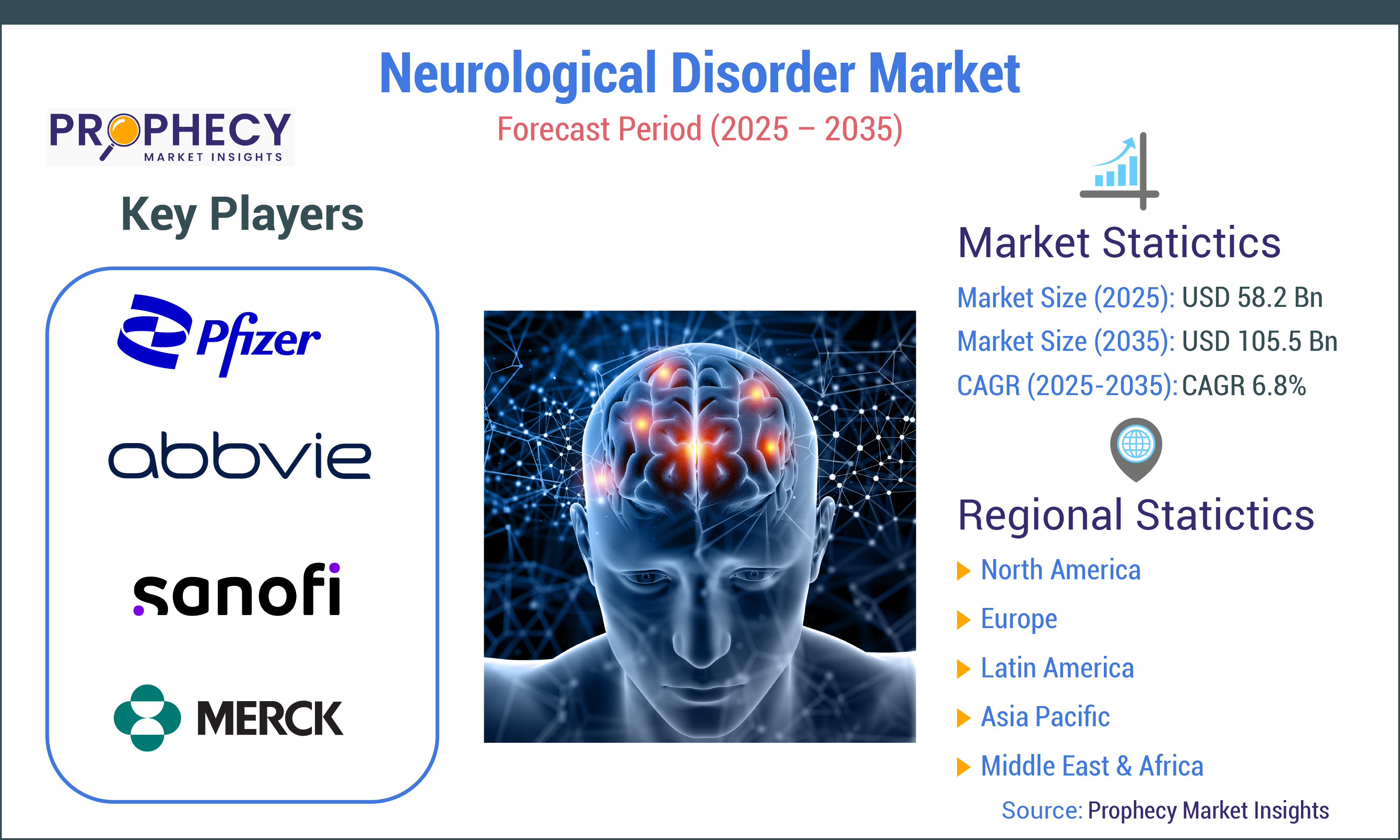
- By 2035, the neurological disorder market size is contemplated to enlarge at a valuation of USD 105.5 Billion.
- In 2024, the neurological disorder market valuation was USD 55.0 Billion.
- Neurological Disorder Market is developing at a CAGR of 6.8%.
A neurological disorder is a condition that affects the brain, spinal cord or nerves, causing physical, emotional or cognitive loss. These disorders can result in genetic factors, infections, injuries, or degenerative diseases and include epilepsy, Alzheimer's disease, Parkinson's disease, stroke, and multiple sclerosis. Symptoms vary widely, but may include muscle weakness, coordination problems, confusion, seizures, or changes in behavior and mood.
The neurological disorder market is rapidly expanding due to the convergence of demographic, economic and technical factors, the global aging population has increased the prevalence of conditions such as Alzheimer's, Parkinson's and stroke; Increased health care expenses and infrastructure investment especially in North America and Asia, increased awareness and initiative for initial diagnosis are promoting demand; and fueling innovation and treatment pipelines, including ongoing R&D, disease-propelled treatments, digital biomarkers, and so on.
The growing prevalence of neurological conditions operated by aging population and changing lifestyles is expected to increase in the neurological disorder market. AI-operated diagnostics, wearable monitoring devices and telemedicine are enhancing advance initial identity and individual care in digital health technologies. Additionally, research in neurogenetics, biomarkers and regenerative medicine is supporting the development of innovative treatment. Cross-industry cooperation between pharmaceutical, biotech and technology companies are accelerating progress in diagnosis, medical and patient management strategies.
Recession Risk & Tariff Analysis:
- Neurological disorder market may be affected by the risk of recession through low healthcare expenses, delayed treatments and increasing demand for mental health services. Economic recession can stress the patient's reach and health care systems.
- Additionally, tariff production on imported medical devices and pharmaceutical materials can increase the cost, disrupt supply chains, and lead a potential deficiency, put pressure on manufacturers to make alternative sourcing or production local to maintain market stability.
Impact of Generative AI on Neurological Disorder Market:
- The generative AI is changing the neurological disorder market by improving clinical accuracy, accelerating drugs and enabling personal treatment plans. This enhances imaging analysis, automates clinical documentation, and streamlines workflows, which helps doctors to detect neurological conditions first and more efficiently.
- Additionally, generative AI supports research by creating synthetic patient data and modeling drug interactions, eventually by running innovation and improving patient results in neurology.
Neurological Disorder Market Drivers & Restraints
Key Drivers:
Rising Cases of Neurological Disorders will Push Market Growth
Increasing cases of neurological disorders are a major driver of market development, as increasing prevalence leads to more demand for diagnosis, treatment and long-term care solutions. High events of aging population, lifestyle-related factors, and high phenomena of Alzheimer's, Parkinson's, stroke and epilepsy are stressing health care systems and indicating investing in advanced medical science and technologies. This increased burden increases the need for more effective drugs, innovative clinical equipment and digital health solutions, causing expansion of neurological disorder market in developed and emerging areas.
- For Instance, according to the data published by News-Medical, in 2021, an estimated 3.4 billion individuals, equating to 43.1% of the global population, were living with a nervous system condition, leading to 11.1 million deaths and generating 443 million disability-adjusted life years (DALYs), positioning these conditions as the primary contributor to global DALYs. This category included a broad array of conditions, with previously identified disorders accounting for 70.5% of the total neurological DALYs.
Restraints:
Shortage of Trained Neurologists Could Affect Market Development
Lack of trained neurologists is a significant challenge in the neurological disorder market, especially the demand increases due to increasing population and increase in diseases. This gap is delayed by delayed, the patient's access to limited patients and health care systems are overburdened.
- Counterbalance Statements: A major solution includes expanding neurology training programs, offering encouragement for expertise, and integrating tele-neurology services to expand specialized care in remote and underscore areas. Additionally, taking advantage of AI-powered diagnostic tools may support general physicians in management of basic neurological assessments, reduces pressure on experts.
Opportunities & Trends:
Development of New Drugs will be a Game-Changer Solution for the Market in Future
The market for neurological disorders is expected to see significant growth in the creation of new medications as scientists work to produce more potent, specialized, and disease-modifying treatments. Emerging therapeutic breakthroughs, fueled by advances in genetics, biomarkers, and personalized medicine, seek to target the underlying causes of neurological disorders including multiple sclerosis, Parkinson's disease, and Alzheimer's disease. Traditional medicines frequently control symptoms without changing the course of the disease. The future of neurology treatment is being shaped by pharmaceutical firms' efforts to develop new compounds and biologics that enhance patient outcomes and quality of life through increased expenditure in R&D and clinical trials.
Neurological Disorder Market Segmentations & Regional Insights
Drug class, category, route of administration, disorder type, patient type, distribution channel, and region are the divisions of the neurological disorder market.
By Drug Class:
Antiepileptic drugs, anticonvulsants, cholinesterase inhibitors, antipsychotic & antidepressants, beta blockers, and others are drug class on which neurological disorder market is segmented. Due to the high prevalence of epilepsy worldwide and their extensive usage in treating a variety of off-label and seizure-related neurological diseases, antiepileptic drugs (AEDs) have the biggest market share among the medication classes in the neurological disorder market.
The second most common class of medications are antipsychotics and antidepressants, which are fueled by the growing prevalence of neurological disorders with psychiatric symptoms involving Huntington's disease, Parkinson's disease, and Alzheimer's disease and the growing recognition and diagnosis of mental health conditions associated with neurological dysfunctions.
By Category:
Based on the category, the neurological disorder market is divided into branded, and generic. Branded medications have largest neurological disorder market share due to their sophisticated formulations, solid effectiveness records, and the prevalence of patented treatments for complicated illnesses including multiple sclerosis, Parkinson's disease, and Alzheimer's.
Due to their cheap and growing popularity in developing nations, generic medications are the second most popular category. Due to the restricted availability of more recent or yet patented medications, their market share is somewhat smaller even when they have comparable therapeutic outcomes.
By Route of Administration:
Oral, parenteral, and others are route of administration of the neurological disorder market. The oral method of administration has the most neurological disorder market share for the reason it is convenient, patient-complies, and is appropriate for long-term medication-requiring chronic illnesses including epilepsy, depression, and Alzheimer's disease.
In contrast to oral formulations, the parenteral route is the second most popular route. It is mainly utilized for acute care, hospital-based treatments, or situations where a rapid drug action is required, consisting of multiple sclerosis or severe mental disorders. However, its invasiveness and higher cost restrict its wider use.
By Disorder Type:
On the disorder type, neurological disorder market is categorized into alzheimer's disease, parkinson's disease, amyotrophic lateral sclerosis (ALS), epilepsy, multiple sclerosis, and others. Due to its high and rising global incidence, particularly among older populations, as well as significant healthcare expenditures for long-term care, diagnostics, and new therapies, Alzheimer's disease commands the biggest neurological condition market share.
The second most common condition type is epilepsy, which affects people of all ages and need ongoing antiepileptic medication treatment.
By Patient Type:
Pediatric, adult, and geriatric are patient type of the neurological disorder market. Given the high frequency of age-related neurological diseases such Alzheimer's, Parkinson's disease, and stroke, the geriatric patient group commands the greatest neurological disorder market share.
Due to the increasing prevalence of neurological disorders associated with depression, multiple sclerosis, and epilepsy in the working-age population, the adult segment is the second-dominant group.
By Distribution Channel:
The neurological disorder market on the account of distribution channel is categorized into hospital pharmacies, retail pharmacies, and online pharmacies. Due to their crucial role in providing specialized medications for both acute and chronic neurological conditions, particularly for inpatient care and complex treatments consisting of injectables or biologics used in Alzheimer's, Parkinson's, and multiple sclerosis, hospital pharmacies hold the largest neurological disorder market share.
Due to their extensive availability, accessibility for people with chronic illnesses such as depression or epilepsy, and the growing popularity of oral drugs that don't need hospital care, retail pharmacies are the second-dominant channel.
Regional Insights:
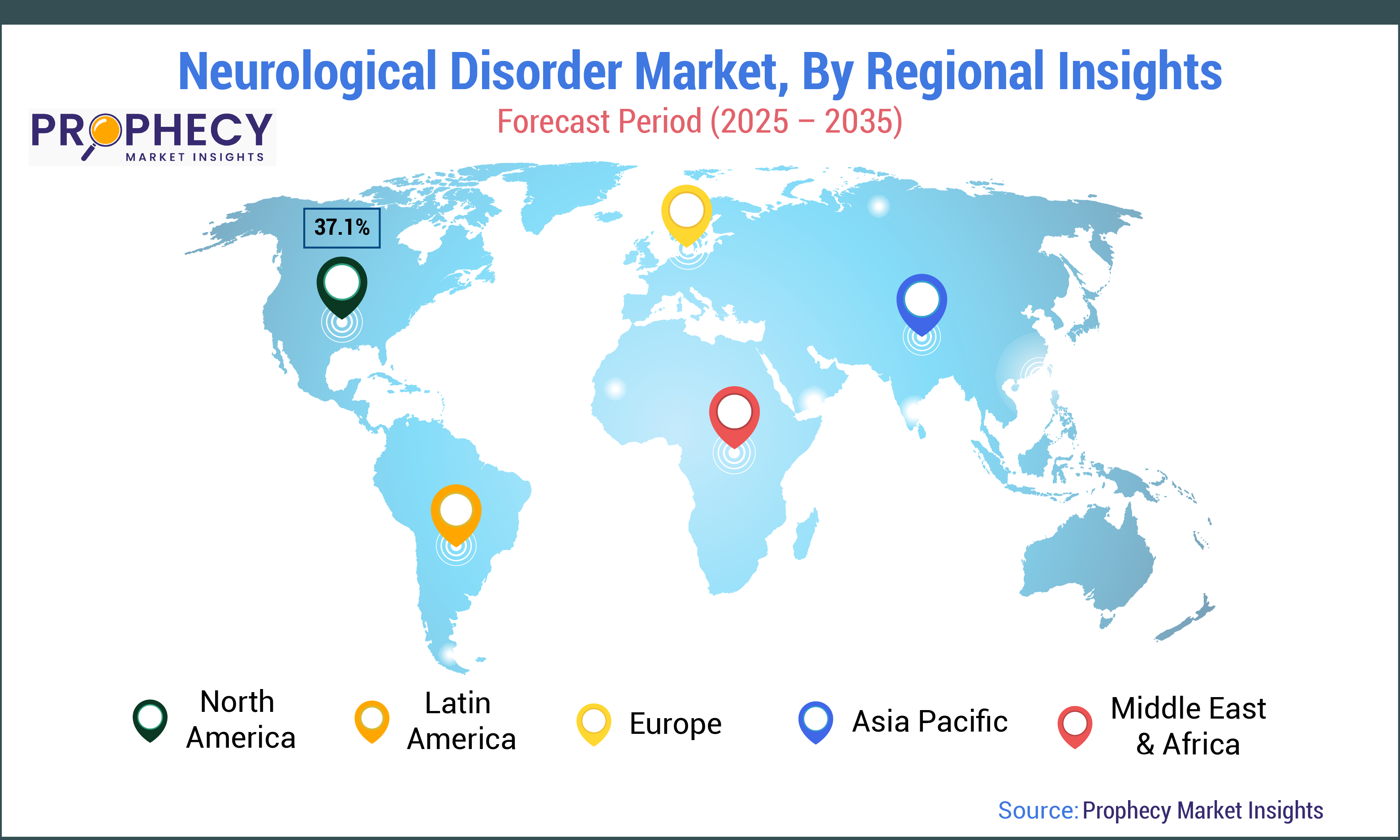
Geographically, the neurological disorder market is studied across North America, Europe, Asia Pacific, Latin America, and the Middle East & Africa.
North America: The neurological disorders market is dominated by North America for the reason of its sophisticated healthcare system, high healthcare costs, presence of significant pharmaceutical firms, and aging population, which makes it vulnerable to neurological conditions notably Parkinson's and Alzheimer's. Additionally, the area gains from significant R&D expenditures as well as early adoption of cutting-edge treatments and digital health technology.
- ·U.S. Neurological Disorder Market Insights:
The U.S. leads the neurological condition market in North America by virtue of its robust pharmaceutical and biotech businesses, big aging population, high per capita healthcare spending, and well-established healthcare system. With significant investments in clinical trials, medication development, and cutting-edge neurological care technology, the United States also leads the world in research and innovation.
Europe: Due in large part to rising awareness, the incidence of neurological illnesses, supporting government policies, and the availability of cutting-edge diagnostic and treatment facilities, especially in nations include Germany, France, and the United Kingdom, Europe is now the second-dominant area.
- Germany Neurological Disorder Market Insights:
Germany is the leading country in Europe upon account of its powerful pharmaceutical sector, extensive healthcare system, high rate of neurological illnesses, and substantial R&D spending. Germany also gains from early acceptance of cutting-edge treatment alternatives and a well-functioning reimbursement system.
Asia Pacific: This region market for neurological disorders is expanding quickly as a result of factors such an aging population, greater awareness of neurological disorders, better healthcare infrastructure, and rising investment in diagnosis and treatment. The need for neurological care is also being exacerbated by changes in lifestyle, urbanization, and increased rates of epilepsy, dementia, and stroke.
- Japan Neurological Disorder Market Insights:
Japan is the market leader in the area attributed to its strong pharmaceutical sector, fast aging population, sophisticated healthcare system, and high level of public awareness of neurological disorders including Parkinson's and Alzheimer'.
Neurological Disorder Market Report Scope:
|
Attribute |
Details |
|
Market Size 2025 |
USD 58.2 Billion |
|
Projected Market Size 2035 |
USD 105.5 Billion |
|
CAGR Growth Rate |
6.8% (2025-2035) |
|
Base year for estimation |
2024 |
|
Forecast period |
2025 – 2035 |
|
Market representation |
Revenue in USD Billion & CAGR from 2025 to 2035 |
|
Regional scope |
North America - U.S. and Canada Europe – Germany, U.K., France, Russia, Italy, Spain, Netherlands, and Rest of Europe Asia Pacific – China, India, Japan, Australia, Indonesia, Malaysia, South Korea, and Rest of Asia-Pacific Latin America - Brazil, Mexico, Argentina, and Rest of Latin America Middle East & Africa – GCC, Israel, South Africa, and Rest of Middle East & Africa |
|
Report coverage |
Revenue forecast, company share, competitive landscape, growth factors, and trends |
Segmentation:
By Drug Class:
- Antiepileptic Drugs
- Anticonvulsants
- Cholinesterase Inhibitors
- Antipsychotic & Antidepressants
- Beta Blockers
- Others
By Category:
- Branded
- Generic
By Route of Administration:
- Oral
- Parenteral
- Others
By Disorder Type:
- Alzheimer’s Disease
- Parkinson’s Disease
- Amyotrophic Lateral Sclerosis (ALS)
- Epilepsy
- Multiple Sclerosis
- Others
By Patient Type:
- Pediatric
- Adult
- Geriatric
- Others
By Distribution Channel:
- Hospital Pharmacies
- Retail Pharmacies
- Online Pharmacies
By Region:
- North America
- U.S.
- Canada
- Europe
- Germany
- U.K.
- France
- Russia
- Italy
- Spain
- Netherlands
- Rest of Europe
- Asia Pacific
- China
- India
- Japan
- Australia
- Indonesia
- Malaysia
- South Korea
- Rest of Asia Pacific
- Latin America
- Brazil
- Mexico
- Argentina
- Rest of Latin America
- Middle East & Africa
- GCC
- Israel
- South Africa
- Rest of Middle East & Africa
Neurological Disorder Market Competitive Landscape & Key Players
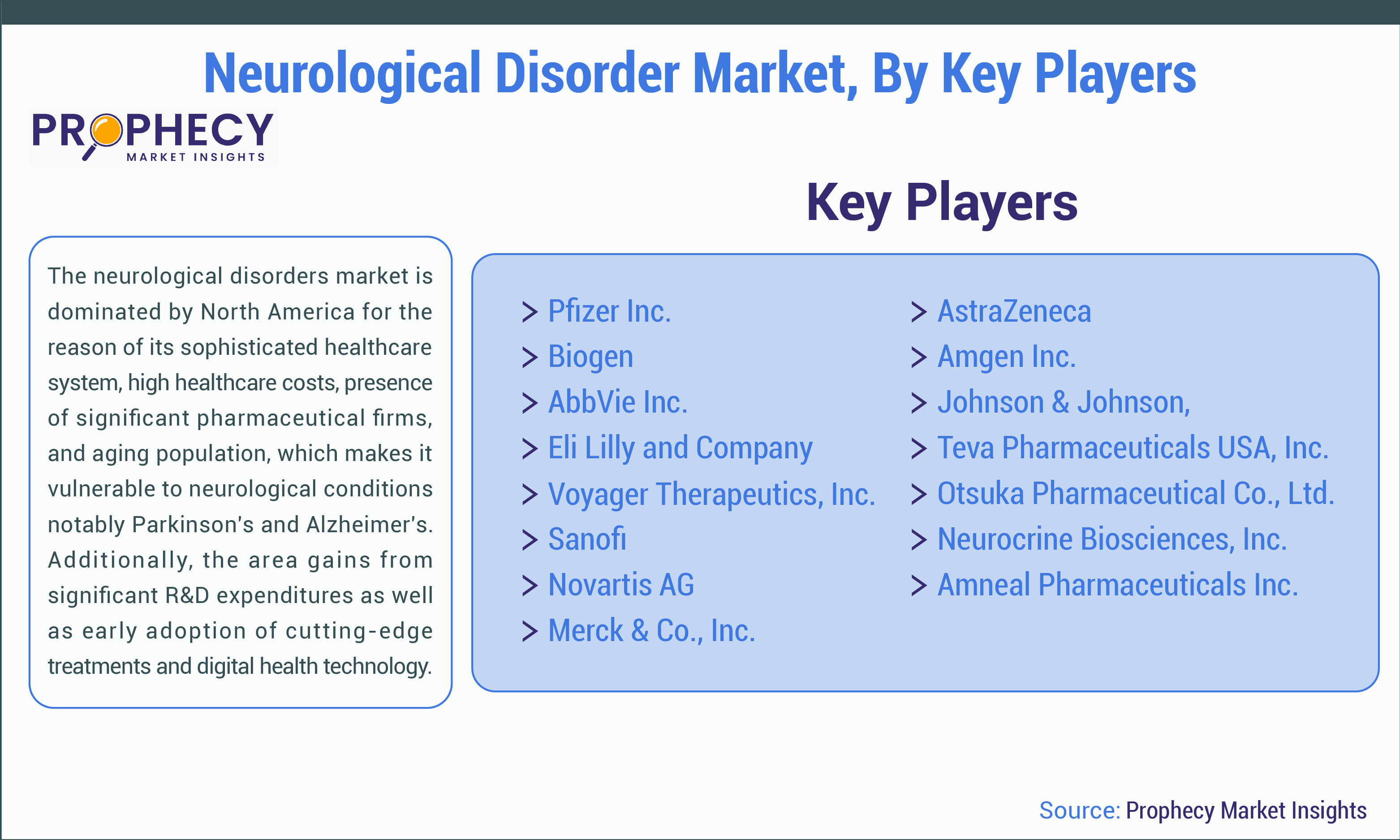
Investing in R&D for novel and disease-modifying treatments, establishing strategic alliances and partnerships, entering emerging markets, embracing digital health technologies such as artificial intelligence and telemedicine, and bolstering product portfolios through acquisitions and pipeline development are important growth strategies for businesses dealing with neurological disorders. The key players operating in the neurological disorder market include, Pfizer Inc., Biogen, AstraZeneca, Voyager Therapeutics, Inc., Sanofi, and others.
Neurological Disorder Market Companies:
- Pfizer Inc.
- Biogen
- AbbVie Inc.
- Eli Lilly and Company
- Voyager Therapeutics, Inc.
- Sanofi
- Novartis AG
- Merck & Co., Inc.
- AstraZeneca
- Amgen Inc.
- Johnson & Johnson,
- Teva Pharmaceuticals USA, Inc.
- Otsuka Pharmaceutical Co., Ltd.
- Neurocrine Biosciences, Inc.
- Amneal Pharmaceuticals Inc.
View an Additional List of Companies in the Neurological Disorder Market
Neurological Disorder Market Recent News
- In July 2024, in order to help countries meet the 2031 targets of the Intersectoral Global Action Plan on Epilepsy and Other Neurological Disorders (IGAP), WHO has released a new implementation toolkit that outlines specific actions and resources for improving services for individuals with neurological disorders. In 2022, the Seventy-fifth World Health Assembly unanimously adopted the neurology action plan, which lays out a comprehensive plan to improve services by promoting research and innovation, lowering discrimination, increasing awareness, and fortifying policies, systems, and services.
- In April 2024, the successful completion of a fresh €5 million investment round was announced today by neuroClues, a French-Belgian medtech business that specializes in the detection of neurodegenerative illnesses. The European Commission's EIC Accelerator initiative and the White Fund spearheaded the investment, with involvement from current investors Invest. Incubated in the Paris Brain Institute's innovation acceleration hub, iPEPS-ICM, the funds will help neuroClues create new products and access the European and North American markets.
Analyst View:
The neurological disorder market is expanding quickly because to the increased occurrence of diseases including stroke, Parkinson's, and Alzheimer's, which is mostly caused by aging populations and shifting lifestyles. Wearable technology, telemedicine, and AI-driven diagnostics are examples of technological innovations that are enhancing early detection and individualized treatment. Research in neurogenetics, biomarkers, and regenerative medicine is among the areas where innovation in treatment development is being further fueled by rising healthcare funding, increased awareness, and cross-industry partnerships.
More Related Reports
Neurodegenerative Disorder Therapeutics Market
Rare Neurological Disease Treatment Market
Neurological Disorder Diagnostics Market
Neurological Disorder Diagnostics Market
Bipolar Disorder Market
Neurological Disorder Market Company Profile
|
Company Name |
Pfizer Inc. |
|
Headquarter |
New York, U.S. |
|
CEO |
Albert Bourla |
|
Employee Count |
81,000 Employees |
Neurological Disorder Market Highlights
FAQs
Neurological disorder market size was valued at USD 58.2 Billion in 2025 and is expected to reach USD 105.5 Billion by 2035 growing at a CAGR of 6.8%.
Drug class, category, route of administration, disorder type, patient type, distribution channel, and region are the segmentation for the target market.
North America, Asia Pacific, Europe, Latin America, and the Middle East & Africa. North America is expected to dominate the market.
The key players operating the neurological disorder market include Pfizer Inc., Biogen, AbbVie Inc., Eli Lilly and Company, Voyager Therapeutics, Inc., Sanofi, Novartis AG, Merck & Co., Inc., AstraZeneca, Amgen Inc., Johnson & Johnson, Teva Pharmaceuticals USA, Inc., Otsuka Pharmaceutical Co., Ltd., Neurocrine Biosciences, Inc., and Amneal Pharmaceuticals Inc.