Global Neurological Disorder Diagnostics Market Overview
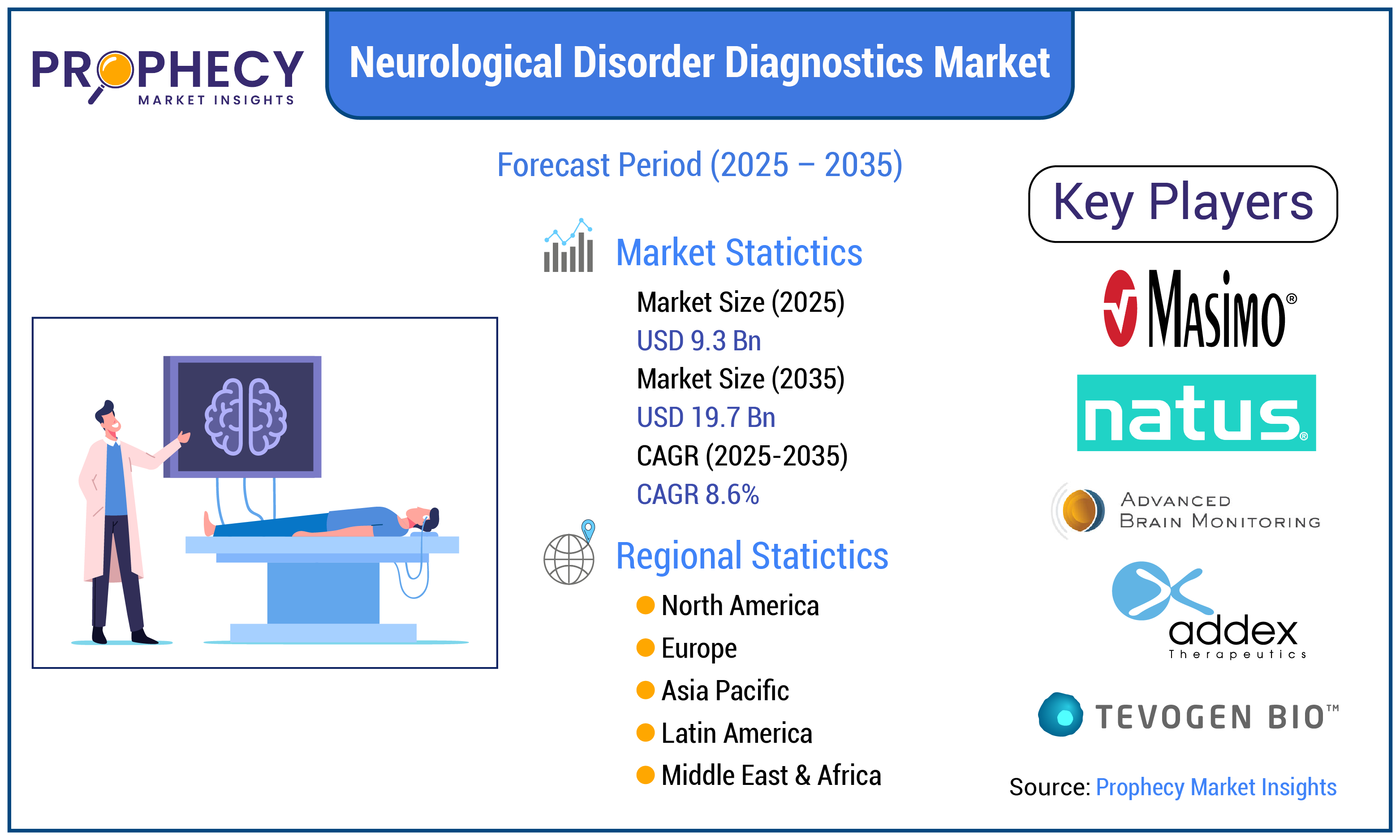
- By 2035, the target market is expected to increase at a rate of USD 19.7 Billion.
- In 2024, the market for neurological disorder diagnostics market systems size was worth USD 8.66 Billion.
- The market is expanding at a CAGR of 8.6%.
Neurological disorder diagnostics is the process of evaluating and identifying neurological disorder by performing neurological examination, patient’s medical history, and diagnostic tests, such as MRI and CT scans for brain imaging tests. The demand for neurological diagnostics is rising due to the increasing incidence of neurological disorders, growing patients stress, increasing demand for technological advancements, and early disease diagnosis, further helping to drive target market growth.
For instance, in April 2020, Aptar Pharma formed a partnership with Sonmol to develop digital platform for respiratory related disorders. This collaboration is aimed to bring digital platform for asthma and COPD diseases. Aptar Pharma and Sonmol have worked together to expand services for enabling remote patient monitoring, improve patient and physical interactions, and improve health outcomes.
Impact of AI in Neurological Disorder Diagnostics Market:
Artificial Intelligence (AI) has a significant ability to transform neurology by enhancing the diagnosis and treatment of brain diseases. AI can analyze large data volumes, explore biomarkers, contains machine learning algorithms to process expensive data sets, and patient information to develop accurate models for diagnosis and treatment. AI has the capacity to detect complex data for neurological disorders, such as, Alzheimer’s and Parkinson’s to create personalized treatment for the patient.
Global Neurological Disorder Diagnostics Market Drivers & Restraints
Key Drivers of Target Market:
Increasing Prevalence of Neurological Disorders is Anticipated to Drive the Market Growth
An increase in neurological disorders, such as epilepsy, Parkinson’s, and Alzheimer disease, are affecting significant proportion of the population. The main factor responsible for the increasing prevalence is modern lifestyles with less physical activity, poor dietary habits, and high stress levels, also, exposure to toxic substances, head injuries, and neurological infections leading to the rising neurological disease number.
- For instance, in March 2024, the World Health Organization (WHO) studied the Global Burden of Disease, Injuries, and Risk Factor. According to this study, over 1 in 3 people are affected by neurological conditions and is leading to illness and premature death. This study targets the interferences to allow access quality care, treatment, and rehabilitation for the people living with neurological disorder.
Technological Advancements to Augment Market Growth
Technological advancements in the neurological disease diagnostic, such as genetic testing, AI-driven diagnostics, and functional imaging techniques, to improve accuracy and efficiency of neurological disease detection. AI helps clinicians and researchers in early diagnosis and personalized treatment for deeper insights and enhance accuracy of treatment. The advanced imaging techniques, such MRI, Positron Emission Tomography (PET), and scans are used to detect conditions, such as brain tumors, multiple sclerosis, and others, and allow for faster treatment.
- For instance, in February 2024, Philips and synthetic MR company launched Smart Quant Neuro 3D technology. An AI-based quantitative brain imaging technology aimed to take advanced neurology care for patients by supporting diagnosis and therapy assessment of brain disorder, including multiple sclerosis, traumatic brain injury, and dementia. These AI based technology enhance decision support of brain disease and monitor effect of therapy.
Restraints:
High Cost of Equipment Disturb the Target Market Growth
The high cost of healthcare facilities, diagnostics tools, and shortage of skilled professionals to operate advanced diagnostic tools is expected to disrupt neurological disorder diagnostics market growth. In areas with limited sources, there is less access the advanced neurological diagnostics test due to high cost of equipment.
- Counterbalance Statements: Investments in automation technologies to improve efficiency of tools and reduce labor costs, utilization of maintenance software to identify potential issues before they occur. Developing cost-benefiting strategies before purchasing new equipment and track expenses to identify cost-saving areas.
Opportunities & Market Trends:
Brain-Computer Interfaces Technology Boost the Market Opportunity
The healthcare providers and diagnostics are continuously focusing on earlier detection and more accurate diagnosis through technological advancement known as brain-computer interface (BCI). BCI has the potential to direct communication with the brain to assess neural activity and monitor disease progression in spinal cord and brain injuries. The rapid development of personalized and flexible technologies to provide powerful therapeutic option for neurologic disorders.
Global Neurological Disorder Diagnostics Market Segmentations & Regional Insights
The neurological disorder diagnostics market is segmented into product, disease indication, end-user, and region.
Product:
Imaging systems [electroencephalogram (EEG) system, ultrasound imaging systems, magnetic resonance imaging (MRI) system, computed tomography (CT) scanner, and others], in-vitro diagnostics [instruments (next-generation sequencing, analyzers, and others) and reagent kits] are the product segments in which the neurological disorder diagnostics market is divided. The electroencephalogram (EEG) imaging system segment dominates in the target market. EEG systems help to scan brain’s electrical activity to detect conditions, such as, head injuries, brain tumors and sleep disorder. EEG system is non-invasive, painless test that provide real-time information about brain activity; thus, it is widely applicable in diagnostic labs, further driving the target market growth.
- For instance, in October 2024, LVIS Corporation, launched NeuroMatch Access, a cloud-based SaaS platform designed for electroencephalogram (EEG) diagnostics by streamlining review and enhancing physician collaboration. This helps to improve clinical workflows allowing neurologists to quickly review and interpret EEG data by collaborating with real-time to provide more accurate and timely diagnosis.
Disease Indication:
By disease indication, neurological disorder diagnostics market is divided into strokes, multiple sclerosis, neurodegenerative diseases, headaches, sleep disorder, and others. The neurodegenerative disorder plays a dominant role in the target market due to the increasing prevalence of neurodegenerative diseases, such as Alzheimer’s disease and Parkinson’s disease. In neurodegenerative diseases, nerve cells in the brain and spinal cord die or stop working, leading to loss of mental and physical health. Thus, growing clinical focus on neuro diseases can drive the target market expansion.
- For instance, in March 2024, Backman Coulter Diagnostics made partnerships with Fujirebio aimed to development, manufacturing and clinical adoption of neurodegenerative disease assays. This collaboration focused on new biomarkers aligned with monoclonal antibody-based Alzheimer’s disease therapeutics. This collaboration increased laboratory, clinician and access patient to more neurodegenerative biomarker around the world.
End-User:
Neurological disorder diagnostics market by end-user is divided into hospitals, specialty clinics, diagnostic centers, and ambulatory care centers. The hospitals play a dominant role in target market due to the availability of advanced neurodiagnostic tools and surgery specialty rooms. Hospitals provide facilities for MRI, CT, and EEG scans, which is required to identify neurological symptoms. The high infrastructure investments in neurological department and skilled profession also lead to drive target market expansion.
Region:
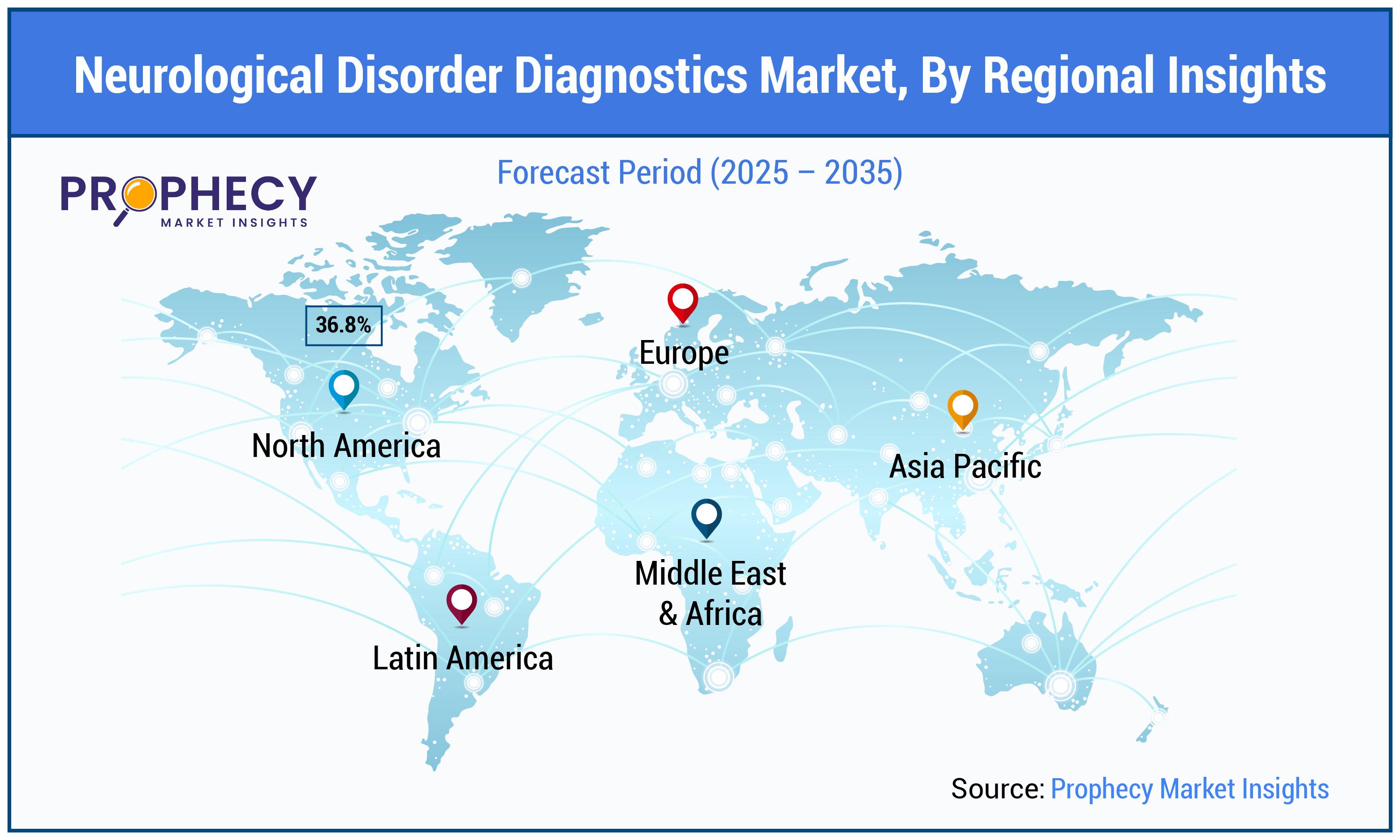
Geographically, the market is studied across North America, Europe, Asia Pacific, Latin America, and the Middle East & Africa.
North America: This is the dominating region for neurological disorder diagnostics market due to well developed healthcare infrastructure, technological advancement in countries, such as the U.S. and Canada. North America contains leading neurodiagnostic device manufacturing companies, including GE Healthcare, Siemens Healthineers, and others that lead to target market growth
- For instance, in May 2024, GE HealthCare launched SIGMA MAGNUS a magnetic-resonace scanner designed to explore advancements in neuroscience, which have been restrictited with traditional MR systems. SIGNA MAGNUS specifically designed for the highest standards of neurological and oncological research for head-only imaging that allows in-depth exploration of brain microstructure, microvasculature, and function.
Aisa Pacific: Asia Pacific is expected as a growing region for the target market owing to the rising number of neurodegenerative diseases, growing health awareness, expanding healthcare infrastructure in countries such as China, India and other Asian regions. The manufacturing companies’ partnerships and government initiatives, which are aimed to make affordable healthcare, are resulting to drive target market in the upcoming years.
Neurological Disorder Diagnostics Market Report Scope:
|
Attribute |
Details |
|
Market Size 2025 |
USD 9.3 Billion |
|
Projected Market Size 2035 |
USD 19.7 Billion |
|
CAGR Growth Rate |
8.6% (2025-2035) |
|
Base year for estimation |
2024 |
|
Forecast period |
2025 – 2035 |
|
Market representation |
Revenue in USD Billion & CAGR from 2025 to 2035 |
|
Regional scope |
North America - U.S. and Canada Europe – Germany, U.K., France, Russia, Italy, Spain, Netherlands, and Rest of Europe Asia Pacific – China, India Japan, Australia Indonesia Malaysia, South Korea, and Rest of Asia-Pacific Latin America - Brazil, Mexico, Argentina, and Rest of Latin America Middle East & Africa – GCC, Israel, South Africa, and Rest of Middle East & Africa |
|
Report coverage |
Revenue forecast, company share, competitive landscape, growth factors, and trends |
Segmentation:
By Product:
- Imaging Systems
- Electroencephalogram (EEG) System
- Ultrasound Imaging Systems
- Magnetic Resonance Imaging (MRI) System
- Computed Tomography (CT) Scanner
- Others
- In-vitro Diagnostics
- Instruments
- Next-generation Sequencing
- Analysers
- Others
- Reagent Kits
- Instruments
By Disease Indication:
- Strokes
- Multiple Sclerosis
- Neurodegenerative Diseases
- Headaches
- Sleep Disorder
- Others
By End-User:
- Hospitals
- Specialty Clinics
- Diagnostic Centers
- Ambulatory Care Centers
By Region:
- North America
- U.S.
- Canada
- Europe
- Germany
- U.K.
- France
- Russia
- Italy
- Spain
- Netherlands
- Rest of Europe
- Asia Pacific
- China
- India
- Japan
- Australia
- Indonesia
- Malaysia
- South Korea
- Rest of Asia Pacific
- Latin America
- Brazil
- Mexico
- Argentina
- Rest of Latin America
- Middle East & Africa
- GCC
- Israel
- South Africa
- Rest of Middle East & Africa
Global Neurological Disorder Diagnostics Market Competitive Landscape & Key Players
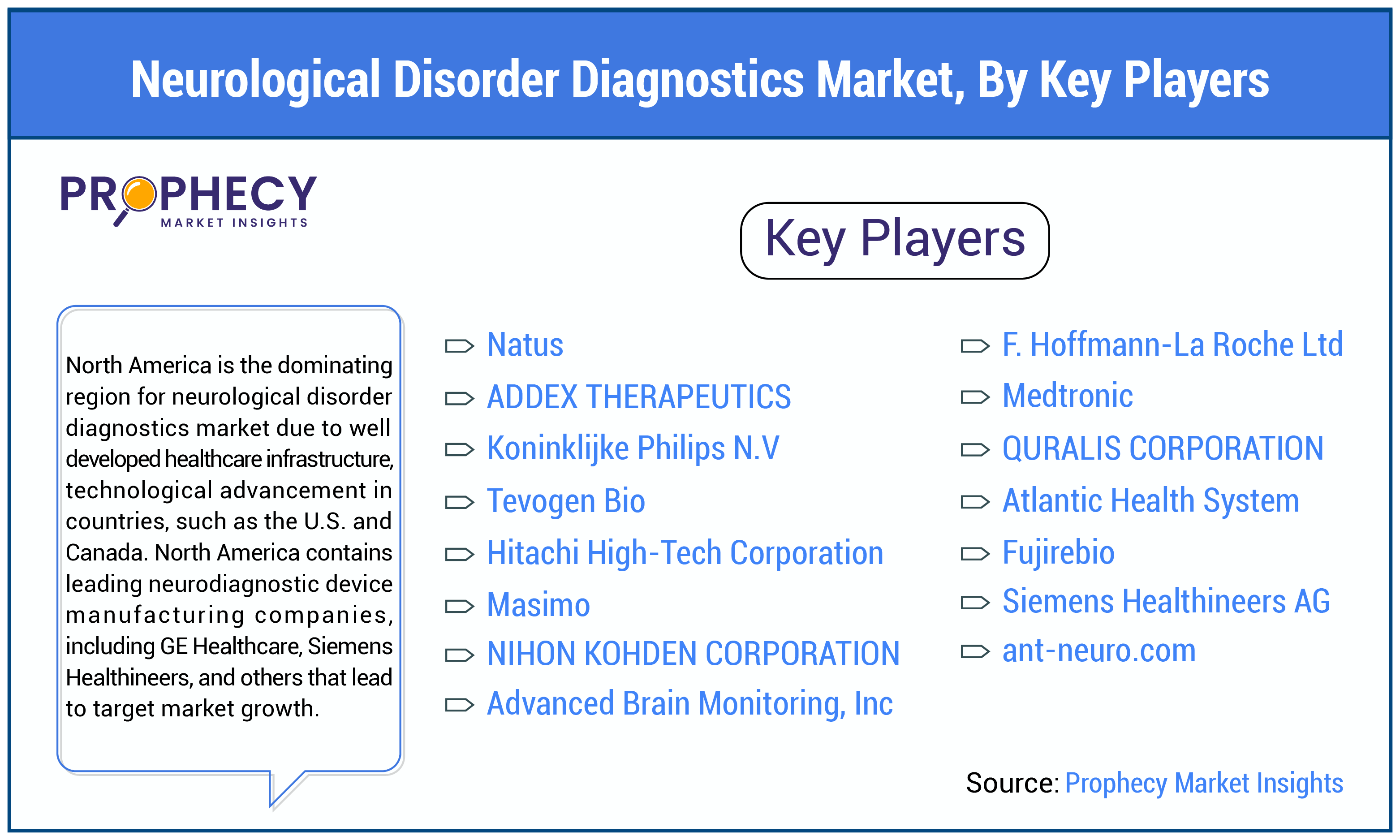
The key players operating in the neurological disorder diagnostics market include Natus, ADDEX THERAPEUTICS, Advanced Brain Monitoring, Inc, and other companies. The players are adopting strategies, such as new product launches, partnerships, agreement, higher investments, and collaboration with other organizations to boost their market presence globally.
List of Key Players in the Market:
- Natus
- ADDEX THERAPEUTICS
- Advanced Brain Monitoring, Inc
- Koninklijke Philips N.V
- Tevogen Bio
- Hitachi High-Tech Corporation
- Masimo
- NIHON KOHDEN CORPORATION
- F. Hoffmann-La Roche Ltd
- Medtronic
- QURALIS CORPORATION
- Atlantic Health System
- Fujirebio
- Siemens Healthineers AG
- ant-neuro.com
Global Neurological Disorder Diagnostics Market Recent News
- In February 2024: Philips launched their new Azurion neuro biplane system to speed up and improve invasive diagnosis and treatment of neurovascular patients. It is a new image-guided therapy system for diagnosis, image guidance, and therapy assessment solutions for patients with stroke and other neurovascular diseases. The new interventional system is aimed to design a new therapy to achieve better outcomes and enhance 2D & 3D imaging and x-ray detector positioning flexibility. Philips is also partnering with customers to improve productivity and access more sustainable and high-quality healthcare.
- In July 2024: the World Health Organization (WHO) launched a new toolkit to improve care for neurological disorders. The new toolkit to the Intersectoral global action plan on epilepsy and other neurological disorder (IGAP), outlining specific actions and resources for countries to improve services for the people with neurological disorders. This tool kit is beneficial for the conditions, such as insufficient services for low- and middle-income countries people living with neurological disorder and have difficulties to access treatment.
Analyst View:
Neurological disorder diagnostics is a tool that help in diagnosis of neurological diseases, to detect and diagnose brain and spinal cord related disease and disorder. Advancement in technology, increasing number of hospitals & diagnostics centers, and increasing demand of patients for early disease diagnosis are expected to drive target market growth.
More Related Reports
Iron Metabolism Disorders Drugs Market
Eating Disorder Therapy Market
Bipolar Disorder Market
Companion Diagnostics Market
Sepsis Diagnostics Market
Global Neurological Disorder Diagnostics Market Company Profile
|
Company Name |
GE HealthCare |
|
Headquarter |
Chicago, Illinois , U.S. |
|
CEO |
Peter J. Arduini |
|
Employee Count (2024) |
50, 000 Employees |
Global Neurological Disorder Diagnostics Market Highlights
FAQs
Neurological disorder diagnostics market size was valued at USD 9.3 Billion in 2025 and is expected to reach USD 19.7 Billion by 2035 growing at a CAGR of 8.6%.
Product, disease indication, end-user, and region are the segmentation for the target market.
North America, Asia Pacific, Europe, Latin America, and the Middle East & Africa. North America is expected to dominate the market.
The key players operating in the neurological disorder diagnostics market include Natus, Addex THERAPEUTICS, Advanced Brain Monitoring, Inc, Koninklijke Philips N.V, Tevogen Bio, Hitachi High-Tech Corporation, Masimo, NIHON KOHDEN CORPORATION, F. Hoffmann-La Roche Ltd, Medtronic, QURALIS CORPORATION, Atlantic Health System, Fujirebio, Siemens Healthineers AG, and ant-neuro.com