G Protein Coupled Receptor Gpcr Market Overview
- 2024 Market Size: USD 3916 Million
- 2035 Projected Market Size: USD 7637.52 Million
- CAGR (2025-2035): 6.3%
- North America: Largest Market in 2024
G-Protein Coupled Receptors (GPCRs) are the protein family with the largest number of members located in the plasma membrane of cells. Signaling from the extracellular to the intracellular compartments is the main function of these proteins. GPCRs have a significant role in the modulation of various physiological processes, e.g., the function of the eyes and tongue, the activity of the immune system, and the transmission of the nerve impulses. Among their major advantages as one of the most important drug target classes, hence the opportunity for a wide range of diseases to be treated such as cardiovascular, neurological disorders, or cancer, and the era of personalized medicine by customizing signaling pathways for the more successful therapeutic outcomes.
The rise in the chronic diseases' incidence is one of the chief reasons for the G-Protein Coupled Receptors (GPCRs) market expansion trend. Along with this, the role of GPCRs in drug discovery has been a significant factor in raising the GPCR market. Moreover, the progress in the screening technologies, high-throughput assays, and biotechnology has shortened tremendously the drug development process targeting GPCRs, and a rising investment by big pharma and biotech firms is taking the market further.
Rules and Mechanisms Governing G Protein Coupling Receptor:
- G-Protein Coupled Receptors (GPCRs) are mechanisms describing the ligand binding where the receptor change the conformation to combine the intracellular G proteins.
- Due to this union, the GDP in the α-subunit of the G protein is exchanged for GTP, thus the α-subunit is activated which leads to the changes in the signal transduction pathways that may involve cAMP production, phospholipase C activation, or ion channel regulation.
- The characteristics that define the selectivity of the GPCR-G protein coupling are the structural compatibility, the pattern of receptor phosphorylation, and the regulatory proteins such as RGS (Regulators of G protein Signaling) that not only provide a tight control of the cell responses but also a balance at the physiological level.
Current Industry Dynamics & Insights:
- North America has the largest regional share in the market, with almost 42.3%.
- Europe is second dominating region in the market.
- By type, cell surface receptors dominate the g-protein coupled receptor (GPCR) market growth.
G Protein Coupled Receptor Gpcr Market Drivers & Restraints
Drivers and Restraints:
|
Drivers |
Restraints |
Opportunities & Trends |
|
|
|
Key Drivers:
Rising Prevalence of Chronic
Among the factors leading to the expansion of the global musculoskeletal system drug market is the increasing duration and occurrence of the most common chronic diseases: cardiovascular diseases, diabetes, neurodegenerative disorders, and cancer. As a result of the mentioned trend, there is a growing need for therapies that are both efficient and specific. In this context, G-Protein Coupled Receptor (GPCR) Market have been identified as the most promising targets. Based on the fact that GPCRs are involved in the most fundamental physiological functions of the body, it becomes evident that their regulation will lead to the remission of these ailments, hence the rising demand for drugs in the category of GPCRs, which in turn is the market growth.
- For instance, according to the data published by WHO, Noncommunicable diseases (NCDs) killed at least 43 million people in 2021, equivalent to 75% of non-pandemic-related deaths globally. Cardiovascular diseases account for most NCD deaths, or at least 19 million deaths in 2021, followed by cancers (10 million), chronic respiratory diseases (4 million), and diabetes (over 2 million including kidney disease deaths caused by diabetes).
Restraints:
Regulatory Challenges
One of the factors which hinder the G-Protein Coupled Receptor (GPCR) Market growth is that the drugs targeting GPCR can be greatly slowed down in their development and commercialization by regulatory obstacles such as complicated approval processes, challenging clinical trial requirements and diverse regulations in different regions.
- Counterbalance Statements: These obstacles can be removed to a great extent if regulatory pathways are made simple, international guidelines are coordinated and adaptive clinical trial designs are utilized. This, in turn, can facilitate the quicker obtaining of approvals and easy access to a wide market.
Opportunities & Trends:
Rising Focus on Precision Medicine and Personalized Therapies
The increasing emphasis on targeted and customized treatments has been a significant factor in the growth of the G-Protein Coupled Receptor (GPCR) Market. It is now possible to create medications that specifically target a given receptor subtype of a person’s genetic and molecular profile.
This development not only allows for less harmful and more effective therapies but also prompts the allocation of funds to studies dealing with GPCR as a drug target. Besides that, it is predicted to influence the way pharmaceutical companies plan their research, thus broadening the horizon of the market.
G Protein Coupled Receptor Gpcr Market Segmentations & Regional Insights
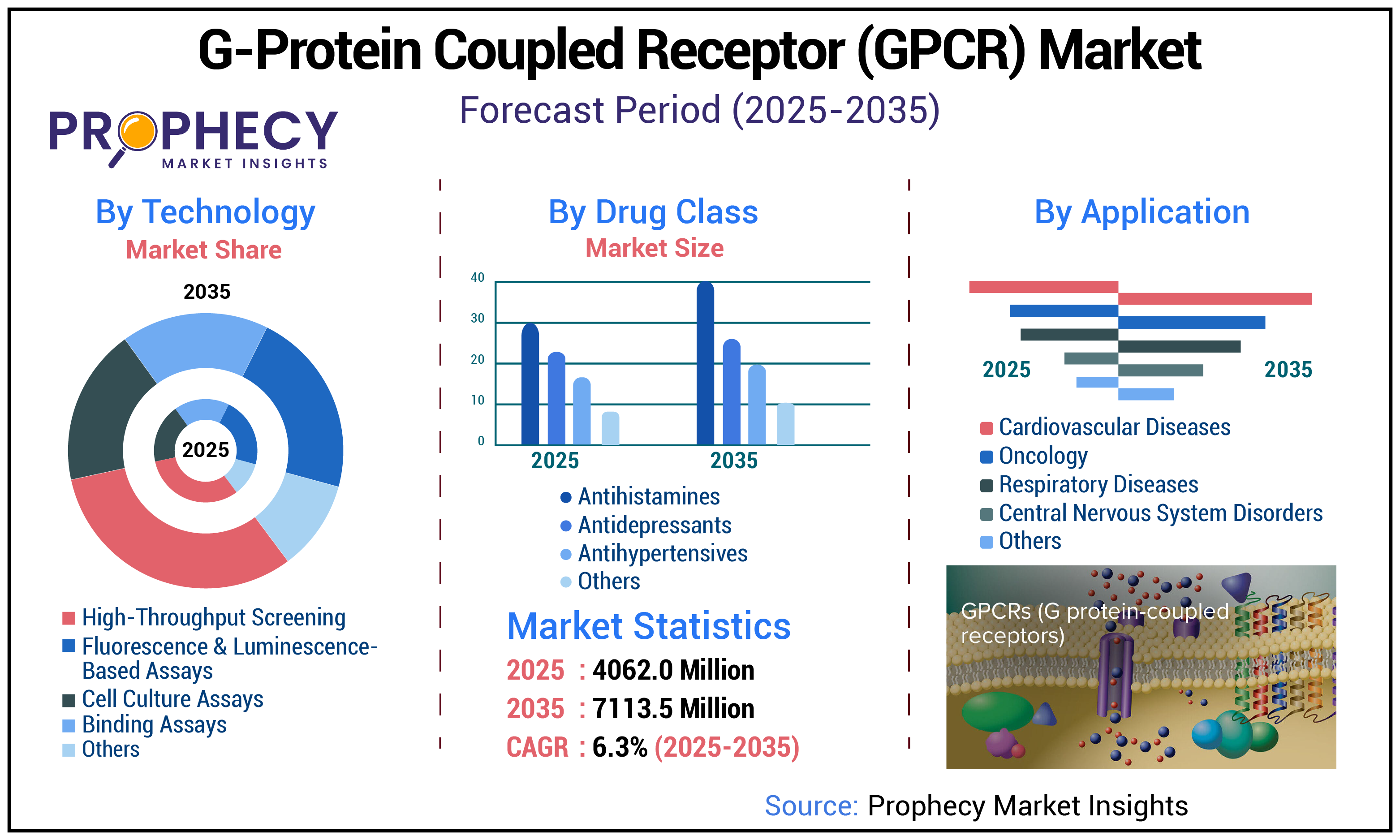
Type, drug class, technology, application, end user, and region are the divisions of the G-protein coupled receptor (GPCR) market.
By Type:
Cell surface receptors, and intracellular receptors are type on which g-protein coupled receptor (GPCR) market is segmented. The Cell surface receptors segment dominates the G-protein coupled receptor (GPCR) market share due to their simplicity of drug targeting, critical function in several physiological processes, and widespread use in treating chronic diseases including as cardiovascular, neurological, and metabolic disorders.
Intracellular Receptors are the second-largest group, driven by increased research into intracellular signaling pathways and their potential in precision medicine and oncology, despite the fact that medication targeting is more complex than cell surface receptors.
By Drug Class:
Based on the drug class, the g-protein coupled receptor (GPCR) market is divided into antihistamines, antidepressants, antihypertensives, and others. The Antihypertensives drug class has the biggest G-protein coupled receptor (GPCR) market share due to the global prevalence of hypertension and the critical role of GPCR-targeted medicines, such as angiotensin and adrenergic receptor modulators, in successful blood pressure management.
Antidepressants are the second-largest market, driven by increased awareness and diagnosis of mental health illnesses, as well as the usage of GPCR-targeting medicines such as serotonin and dopamine receptor modulators to treat depression and other neurological conditions.
By Technology:
The g-protein coupled receptor (GPCR) market is categorized into high-throughput screening, cell culture assays, fluorescence and luminescence-based assays, binding assays, and others on the account of technology. High-throughput screening (HTS) technology has the biggest G-protein coupled receptor (GPCR) market share due to its capacity to swiftly screen thousands of compounds for potential GPCR interactions, hence expediting drug discovery and saving development time.
Fluorescence and Luminescence-Based Assays are the second-largest segment, valued for their sensitivity, specificity, and capacity to monitor real-time GPCR signaling, making them critical tools for verifying HTS results and moving drug development forward.
By Application:
The g-protein coupled receptor (GPCR) market can be categorized into oncology, cardiovascular diseases, respiratory diseases, central nervous system disorders, and others, by application. The Cardiovascular Diseases application dominates the G-protein coupled receptor (GPCR) market due to the high global prevalence of heart-related illnesses and the efficacy of GPCR-targeted medications, such as beta-blockers and angiotensin receptor modulators, in treating these disorders.
Oncology is the second-largest segment, driven by an increasing emphasis on GPCRs as therapeutic targets in cancer treatment, allowing for the discovery of new medicines that can influence tumor growth, metastasis, and the tumor microenvironment.
By End User:
The g-protein coupled receptor (GPCR) market on the account of distribution channel is categorized pharmaceutical & biotechnology companies, academic & research institutions, contract research organizations (CROs), and others. Pharmaceutical & biotechnology companies dominate the G-protein coupled receptor (GPCR) market since they lead the majority of GPCR-targeted drug discovery, development, and commercialization operations, which are supported by significant R&D spending.
Academic and research institutions are the second-largest group, contributing through fundamental research, the discovery of new GPCR targets, and preclinical studies that establish the groundwork for drug development and industrial collaborations.
Regional Insights:
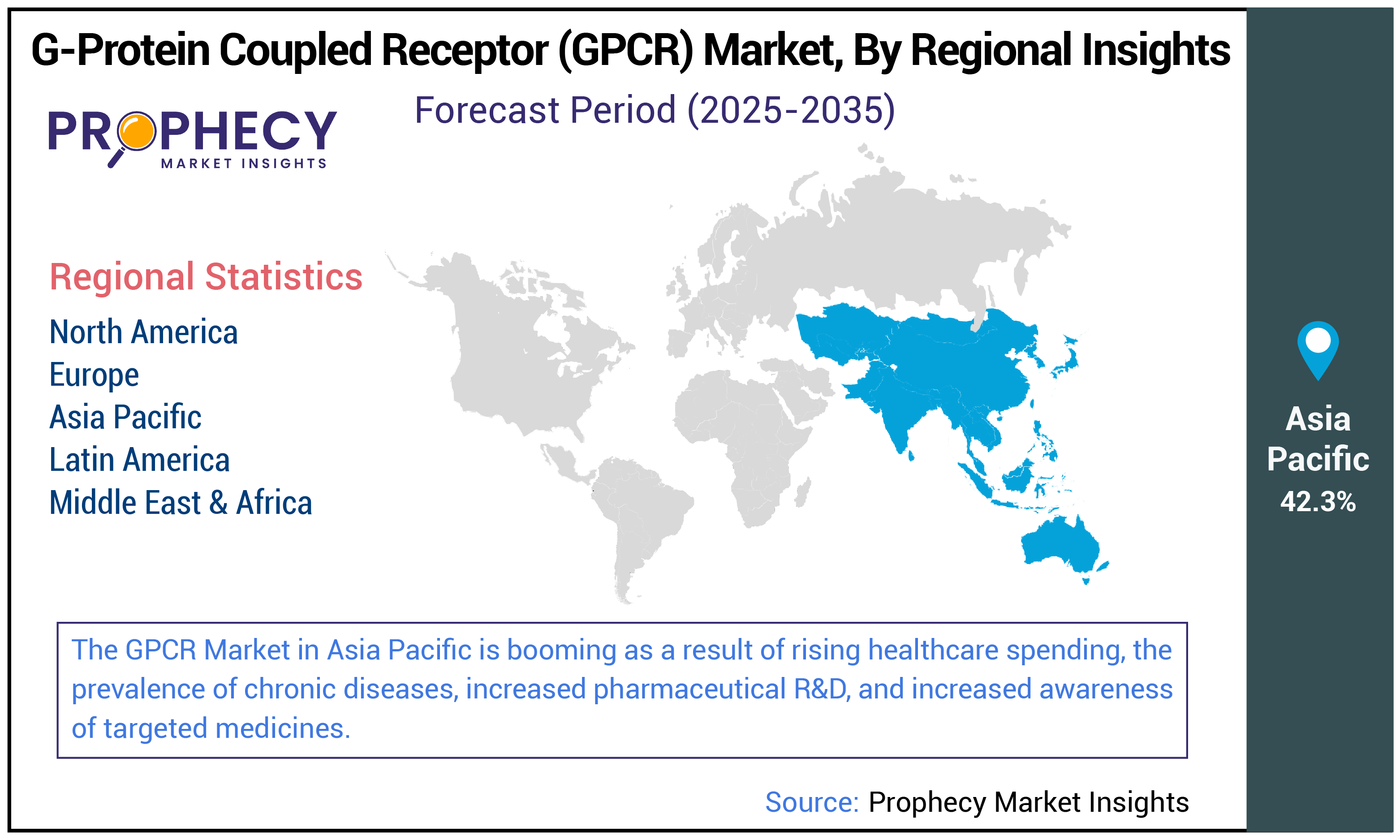
Geographically, the G-protein coupled receptor (GPCR) market is studied across North America, Europe, Asia Pacific, Latin America, and the Middle East & Africa.
North America: This region dominates the G-protein coupled receptor (GPCR) market size owing to its well-established pharmaceutical and biotechnology industries, high R&D spending, superior healthcare infrastructure, and early adoption of novel drug development technologies.
- U.S. G-Protein Coupled Receptor (GPCR) Market Insights:
North America's G-protein coupled receptor (GPCR) market is dominated by the U.S. due to its leading pharmaceutical and biotechnology sector, high healthcare expenditure, strong research infrastructure, and early adoption of new drug discovery technology.
Europe: This is the second-largest market, owing to significant government funding for life sciences research, a substantial presence of pharmaceutical businesses, and increased investment in GPCR-targeted medicines in important nations such as Germany, the United Kingdom, and France.
- Germany G-Protein Coupled Receptor (GPCR) Market Insights:
In Europe, Germany dominates the market, thanks to strong life sciences research, a well-established pharmaceutical sector, a supportive regulatory framework, and significant investment in GPCR-targeted drug development.
Asia Pacific: The GPCR market in Asia Pacific is booming as a result of rising healthcare spending, the prevalence of chronic diseases, increased pharmaceutical R&D, and increased awareness of targeted medicines.
- China G-Protein Coupled Receptor (GPCR) Market Insights:
China dominates the APAC market, owing to its huge patient population, rapid adoption of modern drug discovery technologies, government funding for biotech and pharmaceutical research, and increased expenditures in GPCR-focused treatments by both domestic and international enterprises.
G-Protein Coupled Receptor (GPCR) Market Report Scope:
|
Attribute |
Details |
|
Market Size 2025 |
USD 4136.45 Million |
|
Projected Market Size 2035 |
USD 7637.52 Million |
|
CAGR Growth Rate |
6.3% (2025-2035) |
|
Base year for estimation |
2024 |
|
Forecast period |
2025 – 2035 |
|
Market representation |
Revenue in USD Million & CAGR from 2025 to 2035 |
|
Regional scope |
North America - U.S. and Canada Europe – Germany, U.K., France, Russia, Italy, Spain, Netherlands, and Rest of Europe Asia Pacific – China, India, Japan, Australia, Indonesia, Malaysia, South Korea, and Rest of Asia-Pacific Latin America - Brazil, Mexico, Argentina, and Rest of Latin America Middle East & Africa – GCC, Israel, South Africa, and Rest of Middle East & Africa |
|
Company Landscape |
Market Share Analysis of Companies Heat Map Analysis Company Overview, Products Overview Financial Information, Key Highlights Business Strategies Overview SWOT Analysis |
|
Report coverage |
Revenue forecast, company share, competitive landscape, growth factors, and trends |
|
Value Added Data Infosets |
Besides fundamental market insights such as the size of the market, growth rate, segmentation, regional study, and key pAntidepressants, our reports carry value-added data sets such as trade flow (import-export) analysis, production and consumption overview, price trend evaluation, supply and value chain mapping, and raw material availability. Moreover, we provide strategic tools as PESTLE and Porter’s Five Forces analysis, examination of the regulatory landscape, as well as monitoring of technology and innovation thereby providing a comprehensive overview which facilitates sensible and anticipatory decision-making. |
Segmentation:
By Type:
- Cell Surface Receptors
- Intracellular Receptors
By Drug Class:
- Antihistamines
- Antidepressants
- Antihypertensives
- Others
By Technology:
- High-Throughput Screening
- Cell Culture Assays
- Fluorescence and Luminescence-Based Assays
- Binding Assays
- Others
By Application:
- Oncology
- Cardiovascular Diseases
- Respiratory Diseases
- Central Nervous System Disorders
- Others
By End User:
- Pharmaceutical & Biotechnology Companies
- Academic & Research Institutions
- Contract Research Organizations (CROs)
- Others
By Region:
- North America
- U.S.
- Canada
- Europe
- Germany
- U.K.
- France
- Russia
- Italy
- Spain
- Netherlands
- Rest of Europe
- Asia Pacific
- China
- India
- Japan
- Australia
- Indonesia
- Malaysia
- South Korea
- Rest of Asia Pacific
- Latin America
- Brazil
- Mexico
- Argentina
- Rest of Latin America
- Middle East & Africa
- GCC
- Israel
- South Africa
- Rest of Middle East & Africa
G Protein Coupled Receptor Gpcr Market Competitive Landscape & Key Players
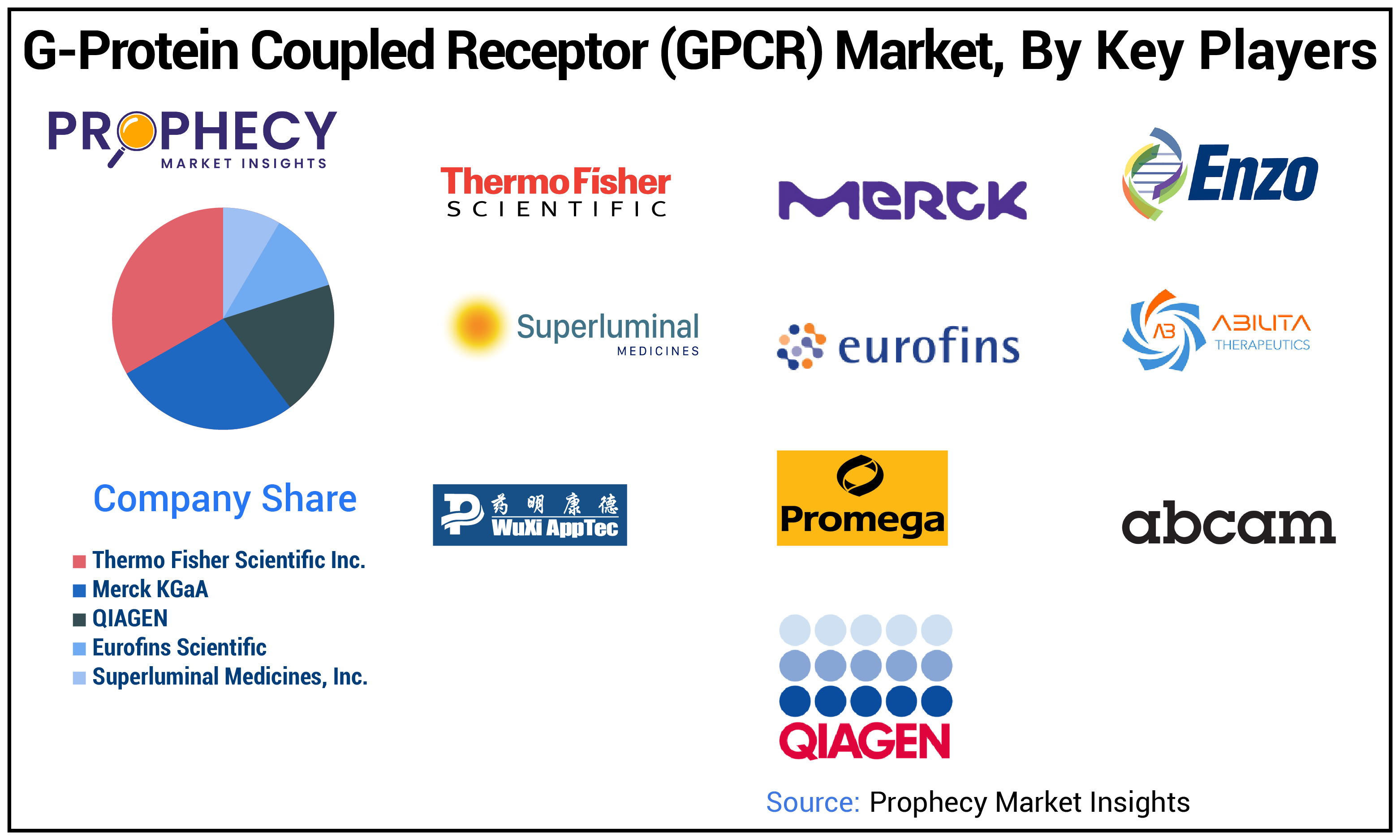
GPCR companies' key growth strategies include investing in advanced drug discovery technologies such as high-throughput screening and artificial intelligence-driven research, expanding pipelines through collaborations and partnerships with academic institutions and biotech firms, focusing on precision medicine and personalized therapies, and entering emerging markets to capitalize on rising healthcare demand.
G-Protein Coupled Receptor (GPCR) Market Companies:
- Thermo Fisher Scientific Inc.
- Merck KGaA
- QIAGEN
- Eurofins Scientific
- Superluminal Medicines, Inc.
- Abilita Therapeutics, Inc.
- WuXi AppTec
- Promega Corporation
- Abcam Limited
- Enzo Biochem Inc.
- Septerna Corporation
- GPCR Therapeutics, Inc.
- Confo Therapeutics
- Domain Therapeutics
- Tectonic Therapeutic
View an Additional List of Companies in the G-Protein Coupled Receptor (GPCR) Market
G Protein Coupled Receptor Gpcr Market Recent News
- In February 2023, Orbit Discovery has formed a relationship with Endevica Bio following the release of data demonstrating that the company's lead chemical is safe and well-tolerated in Phase I trials. A new collaboration intends to speed the development of sophisticated G-protein coupled receptor (GPCR)-targeting therapies for cancer-related cachexia and other chronic illnesses.
- In January 2023, GPCR Therapeutics, Inc., a drug development firm focused on G Protein Coupled Receptor (GPCR) pairings, has begun a phase 2 trial in the United States for GPC-100, its lead small molecule asset. GPC-100 targets CXCR4, one of the most commonly overexpressed chemokine GPCRs in over 23 malignancies.
- In April 2021, Tectonic Therapeutic, a pre-clinical stage biotechnology firm focused on the discovery of novel G-protein-coupled receptor (GPCR)-targeted medicines, has raised $80 million in Series A funding. Vida Ventures, T.A. Springer, and Polaris Partners co-led the fundraising, which also included EcoR1 Capital.
Analyst View:
G-Protein Coupled Receptors (GPCRs) are a broad family of cell membrane proteins that convey signals from the external environment to the cell interior, controlling important physiological processes such as vision, taste, immunity, and nerve communication. They are important drug targets, enabling treatments for cardiovascular, neurological, and cancer-related disorders while also facilitating personalized medicine methods.
The GPCR market is growing due to the increasing frequency of chronic diseases, their critical role in drug discovery, advances in screening and high-throughput technologies, and increased investment from pharmaceutical and biotechnology companies.
Analysis of Sources:
Primary Sources:
- In-depth interviews
- Company-specific data
- Surveys and questionnaires
- Focus group discussions (FGDs)
- Others
Secondary Sources:
- National Institutes of Health
- Food and Drug Administration
- National Center for Biotechnology Information
- European Medicines Agency
- European Commission
- Others
More Related Reports
Protein Expression Systems Market
PEGylated Proteins Market
Functional Protein Market
Protein Purification and Isolation Market
Proteomics Market
G Protein Coupled Receptor Gpcr Market Company Profile
|
Company Name |
Product Portfolio |
|
Thermo Fisher Scientific Inc. |
G-Protein Coupled Receptors - GPCR |
|
Merck KGaA |
G Protein-coupled Receptors (GPCRs) |
|
QIAGEN |
G-Protein Coupled Receptor Signaling |
|
Eurofins Scientific |
GPCR Product Solution |
G Protein Coupled Receptor Gpcr Market Highlights
FAQs
G-protein coupled receptor (GPCR) market size was valued at USD 4136.45 Million in 2025 and is expected to reach USD 7637.52 Million by 2035 growing at a CAGR of 6.3%.
Type, drug class, technology, application, end user, and region are the segmentation for the G-protein coupled receptor (GPCR) market.
Growing prevalence of chronic diseases, advancements in drug discovery and personalized medicine, and increased investment in pharmaceutical R&D, and so on are some of the G-protein coupled receptor (GPCR) market growth drivers.
North America, Asia Pacific, Europe, Latin America, and the Middle East & Africa. North America is expected to dominate the G-protein coupled receptor (GPCR) market.
The key players operating the G-protein coupled receptor (GPCR) market include Thermo Fisher Scientific Inc., Merck KGaA, QIAGEN, Eurofins Scientific, Superluminal Medicines, Inc., Abilita Therapeutics, Inc.WuXi AppTec, Promega Corporation, Enzo Biochem Inc., Septerna Corporation, GPCR THERAPEUTICS, INC., Confo Therapeutics, Domain Therapeutics, and Tectonic Therapeutic.