Bone Regeneration Market Overview
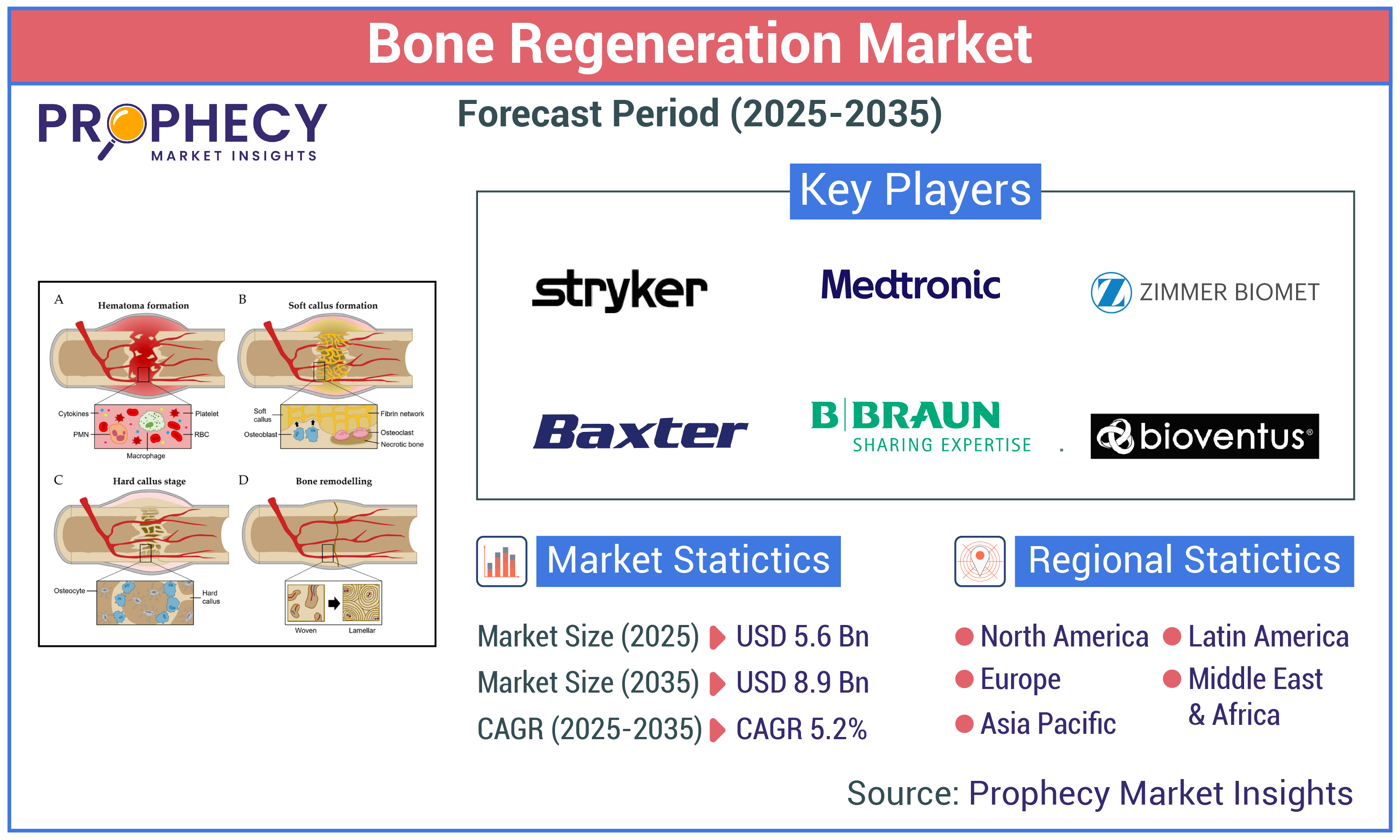
- By 2035, the bone regeneration market size is contemplated to enlarge at a valuation of USD 8.9 Billion.
- In 2024, the bone regeneration market valuation was USD 5.4 Billion.
- Bone regeneration market is developing at a CAGR of 5.2%.
Bone regeneration is a natural or aided procedure by which the body repair or re-receive damaged or missing bone tissue, often using grafts, biometrics or stem cell therapy. This technique is usually used in dental, orthopedic and trauma surgery. The main benefits include restoring bone composition and function, supporting transplantation, improving the time of treatment and increasing overall mobility and quality of life.
Increasing cases of bone disorders, an aging population and increasing demand for minimal invasive processes are increasing can drive bone regeneration market growth. Technological progression such as 3D printing, biomaterials and stem cell therapy is increasing the results of treatment. Assistant takes forward government policies, rising health care expenses, and better awareness market expansion in emerging markets.
The future of the bone regeneration market is powered by innovations in biometrics, 3D printing and individual drugs. Progresses such as AI-designed scaffolds, stem cell-enhanced biologics, biodegradable implants and exosome-based treatments are expected to improve treatment results. Minimum invasive procedures and AR-directed surgery are increasing accurate and recovery. Additionally, growing healthcare investment, especially in emerging areas such as Asia-Pacific, are adopting the market and expanding access to advanced regenerative solutions.
Recession Risk & Tariff Analysis:
- The bone regeneration market during the economic recession is relatively flexible due to the frequent demand for medical treatment, although investment in research and development may slow down.
- However, tariffs on imported medical content especially from major suppliers such as China can increase production costs, affect profitability. To offset these effects, companies are searching for domestic manufacturing and global participation.
- Together, the risk of recession and trade obstacles may delay small projects and there may be tension in supply chains, but the demand for the core market is expected to remain stable.
Impact of Generative AI on Bone Regeneration Market:
- The generative AI is changing the bone regeneration market by enabling individual transplants and rapid and more accurate design of scaffolds. It helps in customizing physical properties for individual patients using clinical data, simulating results and tailor treatment.
- The AI also supports the monitoring of the progression of treatment and improves decision making, reduces testing-and-trunk in both research and clinical applications. It leads to more efficient development, better patient results, and maximum adoption of advanced regenerative solutions.
Bone Regeneration Market Drivers & Restraints
Key Drivers:
Aging Population will Push Market Growth
The aging population is a major driver of development in the bone regeneration market, as older specialty clinics are more at risk than conditions such as osteoporosis, fracture and degenerative orthopedic. With age, the body's natural treatment capacity declines, which increases the requirement of advanced bone repair solutions. This demographic tendency increases demand for bone grafts, transplantation and regenerative treatments, especially in orthopedic and dental applications, the elderly focus a significant focus to the expansion of health care systems and fuel markets.
- For Instance, according to the data published by WHO, by 2030, 1 in 6 people in the world will be aged 60 years or over. At this time the share of the population aged 60 years and over will increase from 1 billion in 2020 to 1.4 billion. By 2050, the world’s population of people aged 60 years and older will double (2.1 billion). The number of persons aged 80 years or older is expected to triple between 2020 and 2050 to reach 426 million.
The Market is Driven by Growing Cases of Periodontal Diseases
Increasing cases of periodontal disease increase the demand for growing bone regeneration solutions significantly, as advanced periodontitis often causes tooth loss and alveolar bone supporting alveolar bone erosion for impaired oral function. With more than one billion people globally affected by severe periodontitis and circulation, especially in areas such as South Asia there is a growing requirement of medical processes such as bone grafting, guided tissue regeneration, and biometric that facilitates bone repair in periodontal defects. As such treatments are expanded to awareness and availability of such treatments, enlarged adoption in dental and periodontal care settings in the bone regeneration market is beneficial, leading to overall market growth.
- For Instance, according to the data published by National Library of Medicine, the prevalence of periodontal disease was reported to range from 20% to 50% around the world. Globally, periodontal diseases accounted for 3.5 million years lived with disability (YLD) in 2016. During the period from 1990 to 2010, there was a 57.3% increase in the global burden of periodontal disease.
Restraints:
Lack of Skilled Professionals Could Affect Market Development
Lack of skilled professionals in the bone regeneration market such as trained surgeons, biomedical engineers and technicians reduced the effective implementation of advanced treatments and technologies. This difference is particularly clear in developing areas, where access to special training is rare.
- Counterbalance Statements: As a solution, enhancing investment in medical education, offering targeted training programs, collaborating with global health organizations, and integrating virtual simulation tools for skill development can help create a strong, more competent task force to support growing demand for regenerative processes.
Opportunities & Trends:
Advancements in Medical Technology will be a Game-Changer Solution for the Market in Future
Progress in medical technology is a major future tendency for the bone regeneration market, as innovations such as 3D printing, bioactive scaffolds, nanotechnology and stem cell therapy are revolutionized as to how bone defects are treated. These technologies enable the formation of patient-specific implants, increase treatment with biologically active materials, and reduce the need for traditional grafts. Integration of robotics, AI and imaging systems is also improving surgical accuracy and treatment results.
Bone Regeneration Market Segmentations & Regional Insights
Product type, material, application, end use industry, and region are the divisions of the bone regeneration market.
By Product Type:
Bone grafts and substitutes, bone growth stimulators, and others are product type on which bone regeneration market is segmented. In the bone regeneration market, bone grafts and replacements make up the largest product category. Allografts are the most common option due to their excellent biocompatibility, surgeon familiarity, and plentiful tissue bank supply.
The second-largest section is made up of bone growth stimulators, specifically electrical stimulation devices and recombinant bone morphogenetic proteins (BMPs).
By Material:
Based on the material, the bone regeneration market is divided into natural, and synthetic. Native materials have most bone regeneration market share on account of its exceptional osteoconductivity, biocompatibility, and ability to blend in perfectly with the body's native bone.
The second-largest category is made up of synthetic materials, which are becoming more popular due to their regulated composition, scalability, and less risk of disease transmission.
By Application:
Oral and maxillofacial surgeries, spinal fusion surgeries, joint reconstruction, trauma and fracture repair, and others are application of the bone regeneration market. The greatest bone regeneration market share is held by spinal fusion operations which is due to the enormous number of procedures carried out worldwide to address problems including scoliosis, spinal stenosis, and degenerative disc disease.
The increasing incidence of periodontal disease, tooth loss, and the increasing need for dental implants have led to the second-largest use, which is oral and maxillofacial operations.
By End Use Industry:
On the end use industry, bone regeneration market is categorized into hospitals, specialty clinics, and others. Hospitals have the most the bone regeneration market share on account of their sophisticated infrastructure, access to highly qualified surgeons, and capacity to manage difficult treatments including trauma care, joint repair, and spinal fusion.
The second-largest market is specialty clinics, which are distinguished by their emphasis on certain services includes dentistry or orthopedic care, reduced wait times, and individualized attention.
Regional Insights:
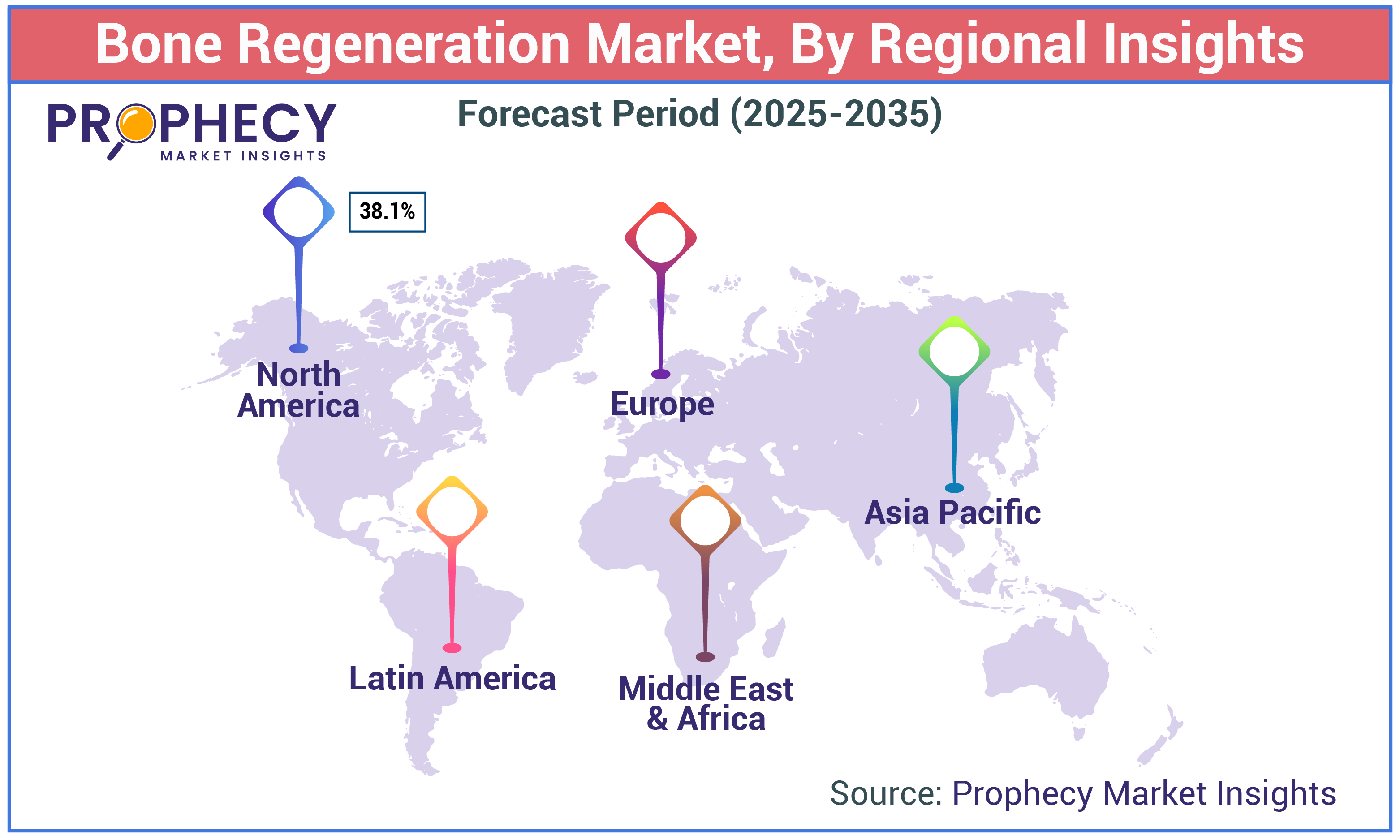
Geographically, the bone regeneration market is studied across North America, Europe, Asia Pacific, Latin America, and the Middle East & Africa.
North America: At the moment, North America dominates the worldwide bone regeneration market. The region's significant R&D investment, large number of orthopedic and dental procedures, modern healthcare infrastructure, advantageous reimbursement environment, and early adoption of cutting-edge bone regeneration products and techniques are the main drivers of this supremacy.
- U.S. Bone Regeneration Market Insights:
The U.S. has the biggest bone regeneration market share in North America primarily due to its highly developed healthcare system, huge aging population, high volume of orthopedic and dental treatments, and significant presence of top biotech and medical device businesses. Additionally, the United States gains from early adoption of cutting-edge technology, significant R&D spending, and advantageous reimbursement regulations.
Europe: With its well-established healthcare systems, rising incidence of age-related bone disorders, focus on minimally invasive procedures, active research and development, and regulatory frameworks that encourage the use of cutting-edge regenerative therapies, Europe is the second-largest region.
- Germany Bone Regeneration Market Insights:
Germany dominates the market for the reason to its sophisticated healthcare system, large healthcare expenditures, aging population, and emphasis on dental and orthopedic treatment. Germany's leadership in the region is further reinforced by its strong manufacturing and research capacities in biomaterials and regenerative medicine.
Asia Pacific: The bone regeneration market in the Asia-Pacific (APAC) region is expanding quickly due to a number of factors, including growing healthcare infrastructure, an increase in the prevalence of trauma and bone disorders, an increase in the number of middle-class and geriatric people, a rise in medical tourism, particularly for orthopedic and dental procedures, and increased government support in nations consisting of China, India, Japan, and Vietnam.
- China Bone Regeneration Market Insights:
China's enormous number of surgeries, big aging population, extensive use of bone graft replacements, and expanding healthcare coverage environment all contribute to its dominant market dominance.
Bone Regeneration Market Report Scope:
|
Attribute |
Details |
|
Market Size 2025 |
USD 5.6 Billion |
|
Projected Market Size 2035 |
USD 8.9 Billion |
|
CAGR Growth Rate |
5.2% (2025-2035) |
|
Base year for estimation |
2024 |
|
Forecast period |
2025 – 2035 |
|
Market representation |
Revenue in USD Billion & CAGR from 2025 to 2035 |
|
Regional scope |
North America - U.S. and Canada Europe – Germany, U.K., France, Russia, Italy, Spain, Netherlands, and Rest of Europe Asia Pacific – China, India, Japan, Australia, Indonesia, Malaysia, South Korea, and Rest of Asia-Pacific Latin America - Brazil, Mexico, Argentina, and Rest of Latin America Middle East & Africa – GCC, Israel, South Africa, and Rest of Middle East & Africa |
|
Report coverage |
Revenue forecast, company share, competitive landscape, growth factors, and trends |
Segmentation:
By Product Type:
- Bone Grafts and Substitutes
- Bone Growth Stimulators
- Others
By Material:
- Natural
- Synthetic
By Application:
- Oral and Maxillofacial Surgeries
- Spinal Fusion Surgeries
- Joint Reconstruction
- Trauma and Fracture Repair
- Others
By End Use Industry:
- Hospitals
- Specialty Clinics
- Others
By Region:
- North America
- U.S.
- Canada
- Europe
- Germany
- U.K.
- France
- Russia
- Italy
- Spain
- Netherlands
- Rest of Europe
- Asia Pacific
- China
- India
- Japan
- Australia
- Indonesia
- Malaysia
- South Korea
- Rest of Asia Pacific
- Latin America
- Brazil
- Mexico
- Argentina
- Rest of Latin America
- Middle East & Africa
- GCC
- Israel
- South Africa
- Rest of Middle East & Africa
Bone Regeneration Market Competitive Landscape & Key Players
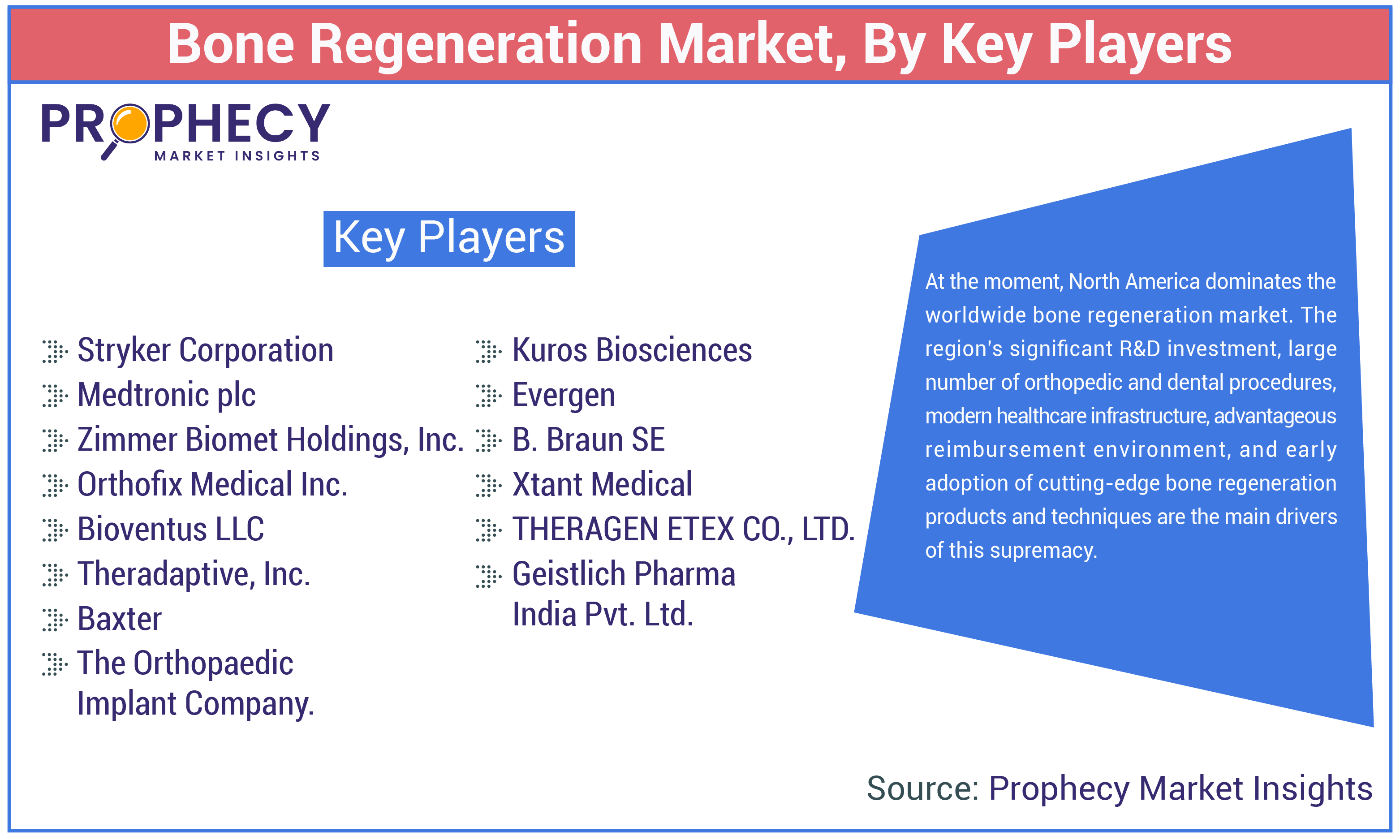
The key players operating in the bone regeneration market include, Stryker Corporation, Medtronic plc, Baxter, The Orthopaedic Implant Company., Bioventus LLC, and others. In order to accelerate research and broaden applications, bone regeneration businesses are concentrating on innovation through cutting-edge technologies including 3D printing and stem cell treatments. They are also establishing strategic alliances. To improve their market position and spur expansion, they are also expanding into developing areas, broadening their product lines, and purchasing smaller businesses.
Bone Regeneration Market Companies:
- Stryker Corporation
- Medtronic plc
- Zimmer Biomet Holdings, Inc.
- Orthofix Medical Inc.
- The Orthopaedic Implant Company.
- Bioventus LLC
- Theradaptive, Inc.
- Baxter
- Kuros Biosciences
- Evergen
- Geistlich Pharma India Pvt. Ltd.
- B. Braun SE
- Xtant Medical
- THERAGEN ETEX CO., LTD.
View an Additional List of Companies in the Bone Regeneration Market
Bone Regeneration Market Recent News
- In March 2025, For the 3D bioprinting of bone-like structures, a research team from the National Institute of Technology (NIT) Rourkela has created a bioink composed of natural ingredients. By offering a biocompatible and effective substitute for conventional bone grafts and implants, the bioink is intended to enhance current bone healing methods.
- In February 2025, two novel drug-eluting bone graft products that can treat bone infections and mend fractures have been introduced to the market by the Sree Chitra Tirunal Institute for Medical Sciences and Technology. The products were created by the Department of Biomaterial Science and Technology at SCTIMST's Biomedical Technology branch and are marketed under the names BONYX (for treating bone infections) and CASPRO (a bioactive, drug-delivering, self-setting bone cement).
Analyst View:
An aging population, a rise in bone ailments, and a growing need for less invasive procedures are the main factors propelling the bone regeneration market. Treatment results are getting better because to developments in technology including stem cell therapy, biomaterials, and 3D printing. Growth is further fueled by government assistance, rising healthcare expenditures, and rising awareness in emerging economies. Future developments including biodegradable implants, AI-designed scaffolds, and AR-guided operations could improve accuracy and recuperation, while growing investments in areas that include Asia-Pacific are expanding access to cutting-edge regenerative therapies.
More Related Reports
Bone Allograft and Xenograft Consumption Market
Bone Graft Substitutes Market
Dental Membrane and Bone Graft Substitute market
Bone Growth Stimulator Market
Bone Marrow Aspirate Concentrate Market
Bone Regeneration Market Company Profile
|
Company Name |
Stryker Corporation |
|
Headquarter |
Kalamazoo, Michigan, United States |
|
CEO |
Kevin Lobo |
|
Employee Count |
53,000 Employees |
Bone Regeneration Market Highlights
FAQs
Bone regeneration market size was valued at USD 5.6 Billion in 2025 and is expected to reach USD 8.9 Billion by 2035 growing at a CAGR of 5.2%.
Product type, material, application, end use industry, and region are the segmentation for the Bone Regeneration Market.
North America, Asia Pacific, Europe, Latin America, and the Middle East & Africa. North America is expected to dominate the Bone Regeneration Market.
The key players operating the bone regeneration market include Stryker Corporation, Medtronic plc, Zimmer Biomet Holdings, Inc., Orthofix Medical Inc., The Orthopaedic Implant Company., Bioventus LLC, Theradaptive, Inc., Orthofix Medical Inc., Baxter, Kuros Biosciences, Evergen Geistlich Pharma India Pvt. Ltd., B. Braun SE, Xtant Medical, and THERAGEN ETEX CO., LTD.