Natural And Organic Cosmetics Market Overview
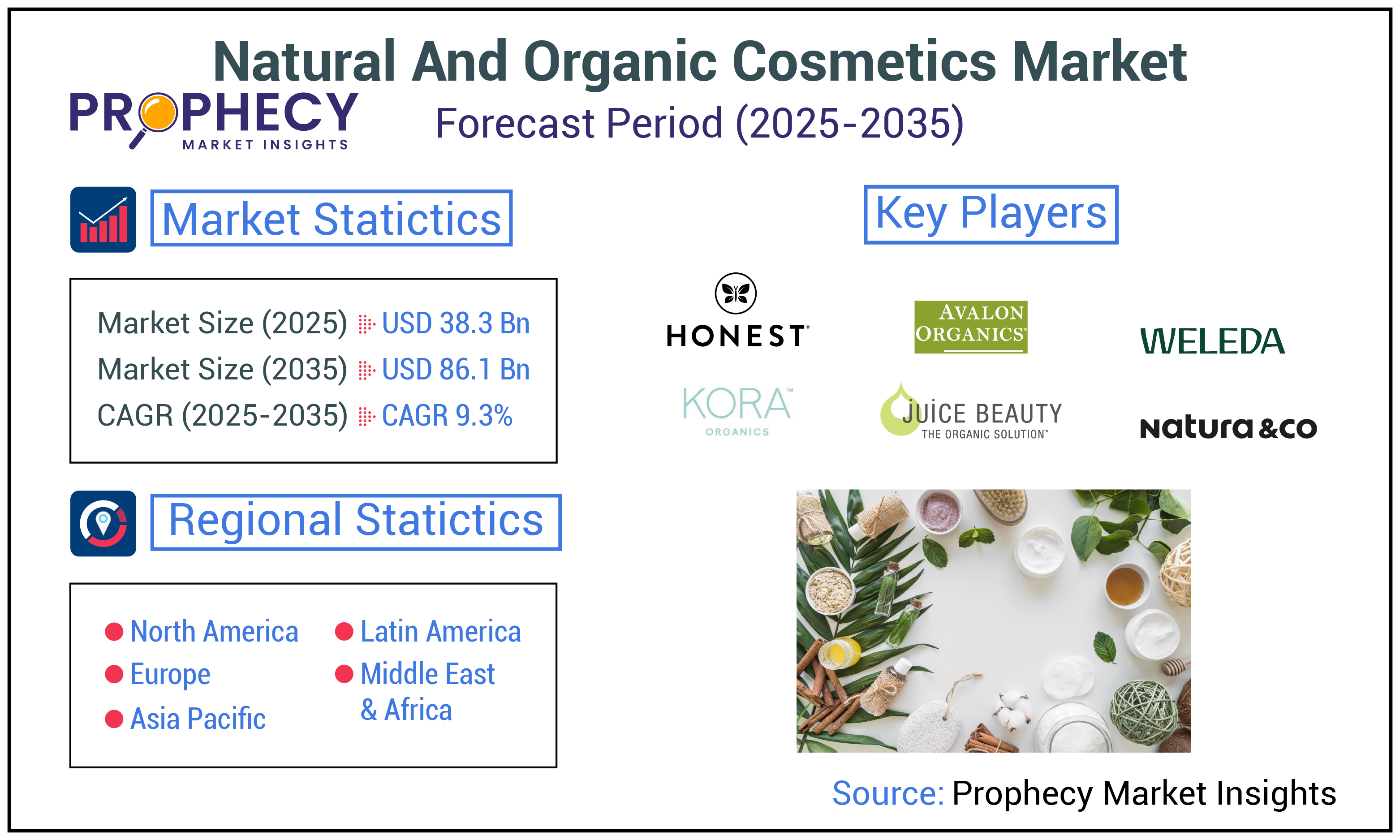
- By 2035, natural and organic cosmetics market size is contemplated to enlarge at a valuation of USD 86.1 Billion.
- In 2024, the natural and organic cosmetics market valuation was USD 35.6 Billion.
- Natural and organic cosmetics market is developing at a CAGR of 9.3%.
Natural and organic cosmetics are beauty products that are sourced from minerals and plants and do not contain synthetic chemicals or artificial chemicals, are considered non-toxic, and are made without synthetic chemicals that are potentially dangerous. Consumer involvement in natural cosmetics may also be health -focused, easily available, and sustainable. Healthier cosmetics are also healthier for the environment. Personal care and cosmetics are highlighted.
There are a number of elements driving market share regarding natural products, including, consumer knowledge of dangerous chemicals included in most common cosmetics, demand to buy sustainable and cruelty-free products, and a growing awareness regarding health and beauty and personal care products. This trend is powered by consumer demand for cleaner and safer beauty products, which leads to social media, engaged brands, and interested brands with transparency concerning their process, with regulations providing growth in innovation around botanical ingredients, etc. Given these elements, natural cosmetics is expected to continue to grow as viable products for a diverse demographic of consumers.
The outlook for natural and organic cosmetics is positive, as the natural cosmetics industry seems to be continuing to innovate as a result of technology, additional choices available in retail, and readily available to consumers. This potential growth will lead to emerging opportunities in markets, changing levels of spending by consumers with increasing disposable income alongside a global shift in consumer preferences.
Recession Risk & Tariff Analysis:
During times of recession, consumers generally curtail their discretionary spending, so premium, discretionary items, particularly natural and organic cosmetics, may be negatively impacted. While natural cosmetic brands often have a compelling ethical claim, they are generally at a price premium over conventional cosmetics, meaning that their demand will be exposed if consumer demand is curtailed. Smaller brands may also be challenged to secure financing and may be offered less support from retailers, which may have a serious impact on overall market expansion.
- The imposition of tariffs on both imported raw ingredients and final imported cosmetic products will raise the cost of production, and therefore, raise the price of natural and organic cosmetics. This can also reduce the competitiveness of natural and organic cosmetics in the global marketplace, particularly for brands that rely on sourcing their raw ingredients cross-border.
Impact of Generative AI on Natural and Organic Cosmetics Market:
- Generative AI technology enables brands to process consumer feedback data and create a more personalized Natural and Organic Cosmetics offering. AI can simulate ingredient combinations to generate projected compatibility with skin, reducing R&D, and accelerating testing and reformulations in order to generate more personalized solutions that better serve the customer, providing additional loyalty possibilities in an increasingly competitive health and wellness market.
- Generative AI facilitates the content creation process within the marketing of Natural and Organic Cosmetics products and generates high-quality product descriptions, blogs, and social media posts. Brands enjoy consistency in messaging and engage with target niche audiences to strengthen engagement and brand awareness, enabling marketers to scale, reduce their dependency on large agency creative teams or several marketing team members.
Natural And Organic Cosmetics Market Drivers & Restraints
Key Drivers:
Rising Consumer Awareness toward Health and Sustainability to propel market growth
As individuals become more aware of the negative effects of synthetics in conventional cosmetics, they turn to safer choices and natural alternatives. Furthermore, more consumers in today's traditional consumer economy expect clean labels, sustainable sourcing and ethical sourcing. The increasing prevalence of social media along with brands being more transparent with their consumers help support environmental and ethical concerns to reinforce natural and organic cosmetic consumption. Citizens have become more educated on the safety of ingredients and environmental implications of synthetic products, which increases demand for natural and organic cosmetics across every age and region.
- For instance, The U.S. Environmental Protection Agency’s Safer Choice program can identify and certify a range of products, including personal care products, are made with safer chemical ingredients to help to support the demand of consumers for transparency and safety. This has further enhanced growth of natural and organic cosmetics in the market.
Restraints:
High Production Costs and Limited Shelf Life to repel market growth:
- The production costs of organic and natural cosmetics will probably be higher. This has to do with ingredient cost, sustainable sources, production standards, and all products will have no synthetics and preservatives. These increase the challenges of warehousing and logistics since products will have a shorter shelf life.
- As a result, these factors not only deterred price sensitive customers but also limited the scalability size for small brands to compete in cosmetics. In addition, there may be technical challenges in producing consistently higher quality with consistent product stability due to sourcing natural materials, this adds a lot of layers of requirements in formulations, supply chain management.
Counterbalance Statements: Despite the higher costs of production, the demand for "safe", ethical and sustainable goods has created a consumer willingness to pay a premium. The development of technological solutions such as green chemistry and natural preservation have results in improved shelf life, fighting costs down with inflation, and in some areas of production efficiencies. As demand has risen, there has even been some improvement in terms of producing products for marketing for natural cosmetics brands, including economies of scale, and private labels, and in some cases more investment in R&D.
Opportunities & Trends:
Technological Innovation Driving Personalized and Eco-Friendly Solutions is trending
A possible area of opportunity is leveraging AI and biotech to deliver custom natural cosmetic items for specific skin types and concerns. This closely matches the cleanest beauty trends due to the consumer desire for transparency, sustainability, and ethically-sourced ingredients. The technology will support traceability for ingredients, sustainable packaging, and custom formulations. Also, there are more digital touch points and many brands with data-driven personalization and any natural, certified ingredient products have a good opportunity to secure market share and consumer loyalty competing against all the current competitors.
Natural And Organic Cosmetics Market Segmentations & Regional Insights
By product type, ingredient type, distribution channel and region are the divisions of the natural and organic cosmetics market.
By Product Type:
Based on product type, the natural and organic cosmetics market is segmented into skin care, hair care, oral care, and others. Due to increased consumer awareness of synthetic ingredients that can be harmful, skin care products in particular are dominant in the natural and organic cosmetics market share and the increasing demand for natural and chemical free alternatives is primarily in response to a demand for anti-aging products and hydration and sun protection as well as the growing trend in the popularity of organic facial cleansers, moisturizers and serums with health-conscious consumers.
Hair care enjoyed the second largest segment in the natural and organic cosmetics market share, as more consumers are also becoming notably aware of the damaging effects of traditional synthetic shampoos and dyes. Organic shampoos, conditioners and oils with herbal ingredient options appeal to consumers who are concerned for their hair scalps and the amount of chemicals that they put into their body, especially among younger and eco-conscious populations.
By Ingredient Type:
Based on the ingredient type, the natural and organic cosmetics market is divided into herbal, organic, essential oils, and others. The market is dominated by organic ingredients due to the growing prevalence and preference for certified, chemical-free products by consumers. Organic ingredients have specific organic production characteristics, as defined by conditions of growth without artificial pesticides and without the use of genetically modified organisms (GMOs), ensuring they are both high quality and environmentally safe.
Essential oils are in second place in the market, as consumers are buying them due to their therapeutic aspects, valuable natural smell, and multifunctional benefits in cosmetics. Essential oils have found their way into a plethora of products for skincare, haircare, and wellness and appeal to consumers looking for holistic wellness application/approach. Essential oils appeal to consumers, as they are associated with the growing demand for the experience of using sensorial plant-based formulations that have anti-inflammatory and antimicrobial properties.
By Distribution Channel:
Online retail, supermarkets and hypermarkets, specialty stores, and convenience stores are distribution channel of the natural and organic cosmetics market. In the natural and organic cosmetics market size, online retail as a distribution channel has grown to bear a major share. E-commerce is the most rapidly growing distribution channel in the natural and organic cosmetics market as consumers appreciate its ease of access and the expanding array of products available digitally. Younger, more tech-savvy consumers especially love the e-commerce environment, which offers access to information, reviews, and price discounts. The everyday and unique product offerings attract many consumers to e-commerce platforms every day, even if it was not their original intent.
Supermarkets and hypermarkets account for the second-largest distribution channel for Natural and Organic Cosmetics. The benefits include easy product visibility, instant purchasing of products, and the ability to compare brands. The size of their distribution network provides consumers with easy access to products and services, enticing in-store promotions, or trust and confidence in a physical retailer, particularly in regions still developing their digital capabilities.
Regional Insights:
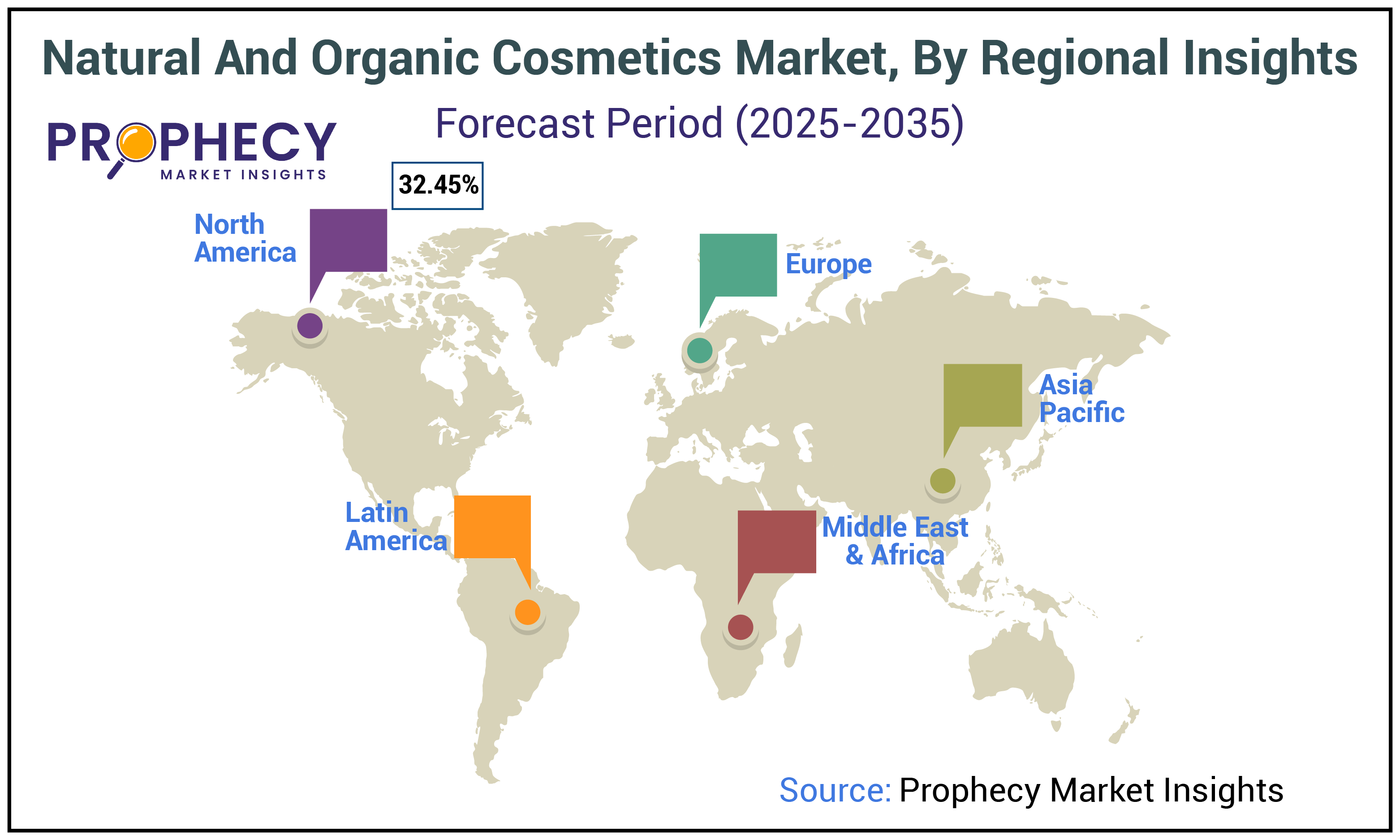
Geographically, the natural and organic cosmetics market is studied across North America, Europe, Asia Pacific, Latin America, and the Middle East & Africa.
North America: With growing consumer awareness, a large demand for natural and sustainable products as well as a solid retail infrastructure, North America is leading growth in the Natural and Organic Cosmetics market. The U.S. level of growth is being driven by increased preference for clean beauty, more disposable income and increasing developments by premium personal care brands launching organic products.
- U.S. Natural and Organic Cosmetics Market Insights:
The U.S. is at the forefront of the natural and organic cosmetics market in North America due to the growing consumer preference to use natural and non-toxic beauty and personal care products. Coupled with comparatively high consumer awareness, increasing disposable incomes, and the growth of organic brands in retail and online markets, the U.S. is heavily involved in product innovation and consumption of Natural and Organic Cosmetics products.
Europe: This is following closely second due to the country regulations placed on cosmetic ingredients and the strong consumer preference for environmentally-friendly, cruelty-free cosmetics. Germany, France and the UK have the strongest demand in the region as many consumers will increasingly gravitate to the organic label. Although great sustainability concerns and a mature beauty market are contributing to stable growth expectations in the region over the forecast period.
- Germany Natural and Organic Cosmetics Market Insights:
Germany is the leading country in the Natural and Organic Cosmetics market in Europe due to the environmental understanding of its consumers and its regulation of organic certification is strict. Germany has a long history regarding food favoring herbal and natural remedies, and both domestic and national brands of personal care products and a rapidly growing interest in sustainable, vegan, and cruelty-free personal care products are all driving market growth.
Asia Pacific: This region ranks third in development from growing middle class, urbanization and increased awareness of skin and hair health. Natural and Organic Cosmetics products are driving demand from consumers in China, Japan and India. Brands, both domestic and international are reacting with intense growth of expansion to capture a potential market from a massive and youth market.
- China Natural and Organic Cosmetics Market Insights:
China is the leading country in Natural and Organic Cosmetics market, driven by the rise of the middle class, increased health consciousness, and the consumption of premium clean label products. Increased usage of e-commerce, social media, and younger consumers' preference for natural ingredients contribute to market growth.
Natural and Organic Cosmetics Market Report Scope:
|
Attribute |
Details |
|
Market Size 2025 |
USD 38.3 Billion |
|
Projected Market Size 2035 |
USD 86.1 Billion |
|
CAGR Growth Rate |
9.3% (2025-2035) |
|
Base year for estimation |
2024 |
|
Forecast period |
2025 – 2035 |
|
Market representation |
Revenue in USD Billion & CAGR from 2025 to 2035 |
|
Regional scope |
North America - U.S. and Canada Europe – Germany, U.K., France, Russia, Italy, Spain, Netherlands, and Rest of Europe Asia Pacific – China, India, Japan, Australia, Indonesia, Malaysia, South Korea, and Rest of Asia-Pacific Latin America - Brazil, Mexico, Argentina, and Rest of Latin America Middle East & Africa – GCC, Israel, South Africa, and Rest of Middle East & Africa |
|
Report coverage |
Revenue forecast, company share, competitive landscape, growth factors, and trends |
Segmentation:
By Product Type:
- Skin Care
- Hair Care
- Oral Care
- Others
By Ingredient Type:
- Herbal
- Organic
- Essential Oils
- Others
By Distribution Channel:
- Online Retail
- Supermarkets and Hypermarkets
- Specialty Stores
- Convenience Stores
By Region:
- North America
- U.S.
- Canada
- Europe
- Germany
- U.K.
- France
- Russia
- Italy
- Spain
- Netherlands
- Rest of Europe
- Asia Pacific
- China
- India
- Japan
- Australia
- Indonesia
- Malaysia
- South Korea
- Rest of Asia Pacific
- Latin America
- Brazil
- Mexico
- Argentina
- Rest of Latin America
- Middle East & Africa
- GCC
- Israel
- South Africa
- Rest of Middle East & Africa
Natural And Organic Cosmetics Market Competitive Landscape & Key Players
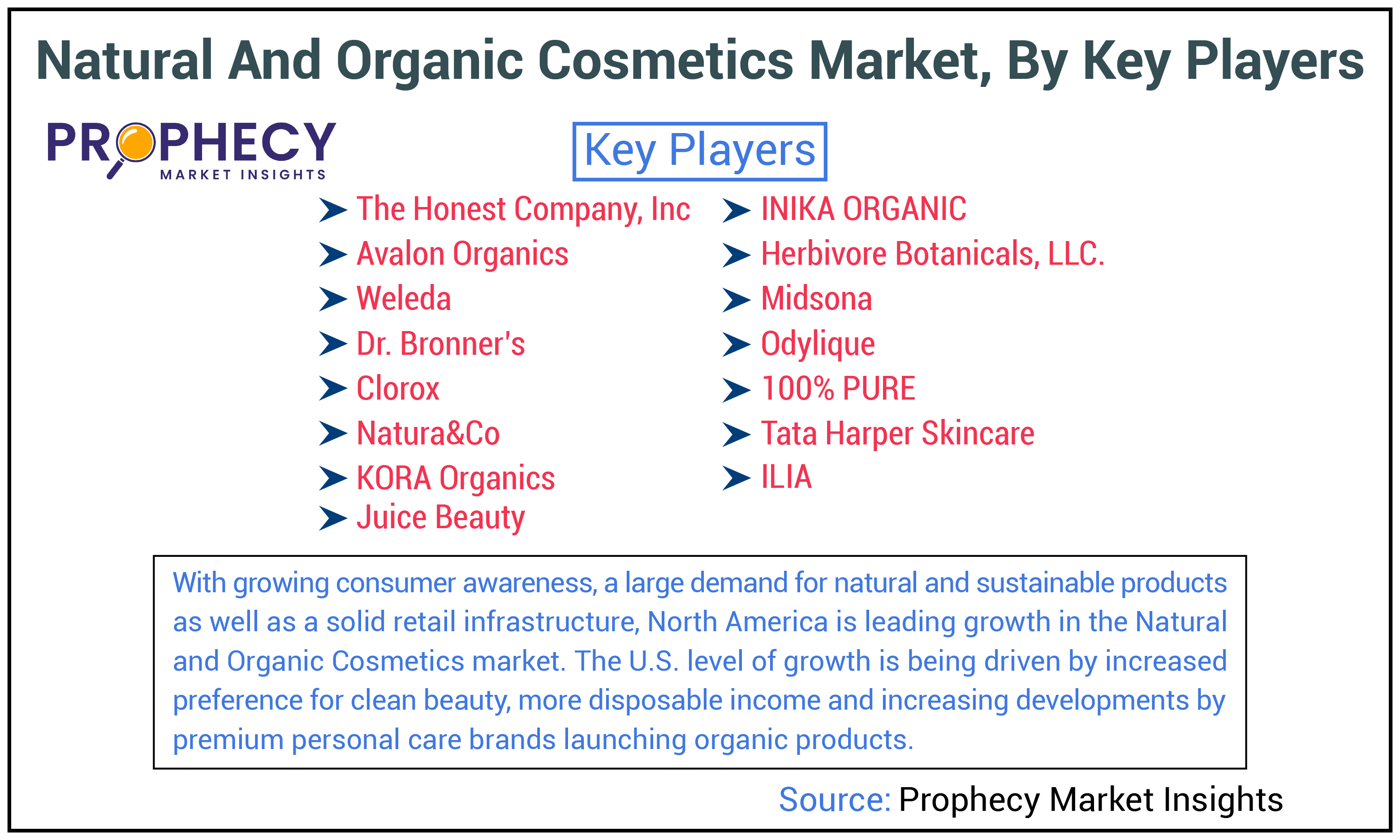
The prominent players operating in the market include, The Honest Company, Inc, Avalon Organics, Weleda, Dr. Bronner’s, Clorox, Natura&Co, KORA Organics, Juice Beauty, INIKA ORGANIC, and others. With both domestic and foreign companies, the market shows a semi-fragmented structure. Several well-known firms are influencing the market through their inventions, new Product Type introductions, research and development, and other market-penetration campaigns. Among the main tactics they have used to bolster their market position include base expansion, mergers and acquisitions, and the introduction of new Product Types.
Natural and Organic Cosmetics Market Companies:
- The Honest Company, Inc
- Avalon Organics
- Weleda
- Dr. Bronner’s
- Clorox
- Natura&Co
- KORA Organics
- Juice Beauty
- INIKA ORGANIC
- Herbivore Botanicals, LLC.
- Midsona
- Odylique
- 100% PURE
- Tata Harper Skincare
- ILIA
View an Additional List of Companies in the Natural and Organic Cosmetics Market
Natural And Organic Cosmetics Market Recent News
- In April 2025, Organic skincare brand Kora Organics partnered with Beautindia to relaunch its products in India. Made up of an abundance of products including its Turmeric Glow Foaming Cleanser, Kakadu Plum Vitamin C Serum, Noni Glow Face Oil, Turmeric Brightening and Exfoliating Scrub + Mask, Active Algae Calming Cleansing Balm and Milky Mushroom Gentle Cleansing Oil.
- In April 2025, Evolve Organic Beauty released commercial refill products in sustainable fiber bottles made from PEFC accredited and FSC certified wood pulp. Its packaging opportunity demonstrates a clear evolution in sustainable packaging technology. The bottles are recyclable with standard household paper and cardboard waste, giving consumers a sustainable option for their beauty products.
Analyst View:
The natural and organic cosmetics industry is growing rapidly as consumers are changing their purchase behaviors, seeking clean-label products, considering their environmental impact, and their attitudes toward environmental issues. The natural and organic cosmetics industry trends are focusing on personalized skincare products, a move toward plant-based formulations, sustainable packaging, and continued opportunities for innovation or customization using biotech and AI. When it comes to realizing those opportunities and related new products, challenges will include potentially higher product prices, shorter shelf-life, and regulatory issues.
The domestic market holds considerable opportunity for more mature markets and strong potential for many emerging economies, as consumers shift to cleaner, more sustainable beauty products. Strategic alliances, product diversification, and asset behaviors will continue to shape competitive exchanges in the natural and organic cosmetic space in the future.
More Related Reports
Organic Bread Flour Market
Natural Killer (NK) Cell Therapeutics Market
Natural Food Flavor Market
Natural Household Cleaners Market
Natural Zeolite Market
Natural And Organic Cosmetics Market Company Profile
|
Company Name |
Natura&Co |
|
Headquarter |
São Paulo, Brazil |
|
CEO |
Joao Paulo Brotto Gonçalves Ferreira |
|
Employee Count |
35,000 Employees |
Natural And Organic Cosmetics Market Highlights
FAQs
Natural and organic cosmetics market size was valued at USD 38.3 Billion in 2025 and is expected to reach USD 86.1 Billion by 2035 growing at a CAGR of 9.3%.
Product Type, Ingredient Type, Distribution Channel, and region are the segmentation for the natural and organics cosmetics market.
North America, Asia Pacific, Europe, Latin America, and the Middle East & Africa. North America is expected to dominate the market.
The prominent players operating in the market include, The Honest Company, Inc, Avalon Organics, Weleda, Dr. Bronner’s, Clorox, Natura&Co, KORA Organics, Juice Beauty, INIKA ORGANIC, Herbivore Botanicals, LLC., Midsona, Odylique, 100% PURE, Tata Harper Skincare, amd ILIA