Luxury Packaging Market Overview
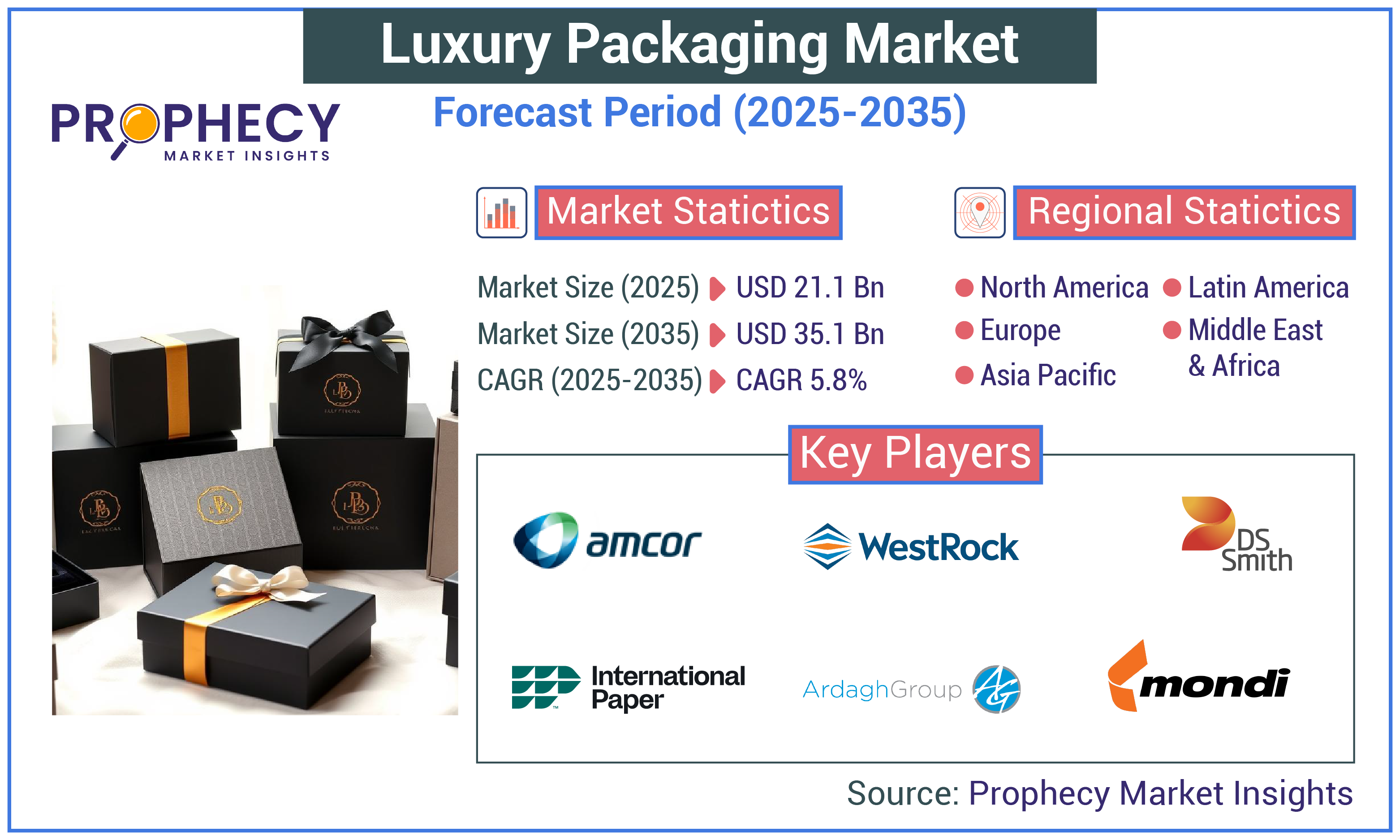
- By 2035, luxury packaging market size is contemplated to enlarge at a valuation of USD 35.1 Billion.
- In 2024, the luxury packaging market valuation was USD 19.7 Billion.
- Luxury packaging market is developing at a CAGR of 5.8%.
Luxury packaging refers to premium, aesthetically enhanced packaging designed to elevate brand value and consumer appeal. It combines high-quality materials, elegant designs, and functionality to reflect exclusivity. Commonly used in cosmetics, jewelry, and premium beverages, luxury packaging plays a crucial role in influencing purchasing decisions and brand perception.
The luxury packaging market size is expanding due to rising consumer demand for premium products, increased gifting trends, and a strong emphasis on brand identity. High-income groups seek exclusivity and quality, driving innovation in packaging materials and design. Moreover, sustainability concerns are prompting luxury brands to adopt eco-friendly, yet elegant solutions. E-commerce growth also fuels demand for visually appealing, protective packaging that enhances unboxing experiences.
The future of luxury packaging lies in sustainable innovation, digital integration, and personalization. Brands will increasingly focus on biodegradable materials, smart packaging technologies, and bespoke designs. As premium consumerism grows across emerging markets, the luxury packaging sector is expected to witness robust global expansion and technological advancements.
Recession Risk & Tariff Analysis:
- During economic downturns, consumer spending on non-essential luxury goods declines, directly impacting demand for luxury packaging. Brands may reduce packaging budgets or shift to cost-effective alternatives, affecting market revenue. Small packaging firms, reliant on high-end clients, face heightened vulnerability due to reduced orders and longer product development cycles.
- Tariffs on imported raw materials such as metals, paperboard, and glass can inflate production costs for luxury packaging. Trade restrictions between manufacturing and consuming countries may disrupt supply chains. Brands might relocate sourcing or pass costs to consumers, potentially lowering demand. Cross-border packaging customization also faces delays and regulatory complications.
Impact of Generative AI on Luxury Packaging Market:
- Generative AI enables rapid prototyping and hyper-personalized packaging designs by analyzing consumer preferences and market trends. It allows brands to experiment with unique structures, colors, and textures, reducing time-to-market while maintaining creativity and exclusivity essential for luxury packaging.
- AI-driven tools optimize material usage, minimize waste, and automate design adjustments, improving efficiency in luxury packaging production. By integrating generative AI into design workflows, manufacturers can reduce costs and enhance sustainability without compromising the premium look and feel consumers expect from high-end brands.
Luxury Packaging Market Drivers & Restraints
Key Drivers:
Rising Demand for Sustainable and Eco-Friendly Luxury Packaging is changing the dynamics of the market
Sustainability is a significant driver for the luxury packaging market. Consumer and regulatory pressure for sustainable alternatives are causing high-end brands to adopt biodegradable, recyclable, and reusable materials without sacrifice to their aesthetic and function. Consumers that care about the environment expect luxury products to reflect some ethical values, as packaging choices that protect the planet. The resulting change will enable innovation in sustainable design, materials such as molded fiber or glass, and eco-labeling, medium to large prices for green luxury packaging will create a competitive advantage in today’s market.
- For instance, according to 2023 McKinsey Study, 82% of global consumers are willing to pay more for sustainable packaging, and 90% of Gen Z consumers strongly prefer it. Luxury brands are under pressure to adopt sustainable packaging to gage with consumer expectations and competitive advantage in the premium space.
Restraints:
High Cost of Sustainable Luxury Packaging to repel market growth:
The adoption of eco-friendly materials and advanced production techniques in luxury packaging significantly increases manufacturing costs. Materials such as biodegradable bioplastics, molded fiber, or sustainably sourced paperboard are more expensive than conventional options. Additionally, achieving aesthetic excellence while adhering to sustainability standards requires specialized design and machinery, further driving up production costs. This can limit affordability for mid-tier luxury brands and reduce overall profit margins, making widespread implementation challenging, particularly for smaller players in the luxury goods segment.
- Counterbalance Statements: Despite higher costs, luxury consumers increasingly prioritize ethical and sustainable choices, justifying premium pricing. Many brands successfully offset expenses through brand loyalty, enhanced perceived value, and regulatory incentives, proving that investing in green packaging can lead to long-term profitability and strengthened market position.
Opportunities & Trends:
Personalization and Digital Integration in Luxury Packaging is a rising trend:
- A key opportunity in the luxury packaging market lies in personalized packaging, where, brands tailor designs to individual preferences, limited editions, or cultural themes. This enhances consumer connection and brand exclusivity. Simultaneously, a major trend is digital integration, such as QR codes, AR, and NFC technology, allowing interactive storytelling, authentication, and immersive experiences. These innovations not only elevate brand engagement but also align with modern consumer expectations for luxury, tech-savvy, and sustainable packaging solutions.
Luxury Packaging Market Segmentations & Regional Insights
Product type, material type, technology, application, distribution channels and region are the divisions of the luxury packaging market.
By Product Type:
Based on product type, the luxury packaging market is divided into boxes & cartons, bottles, tubes, cans, bags & pouches, and others. Boxes & cartons dominate the luxury packaging market share, primarily due to their customization facility, variability, and premium look and feel. They are commonly used in the beauty industry, jewelry, and fashion, as they can provide detailed embellishment, embossing, and the option of eco-friendly material, which allows luxury brands to provide a premium unpackaging experience while protecting their product.
Bottles are the second largest category, especially in the luxury goods sector, such as perfumes, spirits, and skincare. Bottles allow luxurious looks while being functional, which makes them very popular. Glass bottles and premium resins allow brand identity while providing protection and many are made to be reused, ticking both luxury and sustainability boxes.
By Material Type:
Based on the material type, the luxury packaging market is divided into paper & paperboard, glass, metal, plastics, and wood. Paper and paperboard continue to dominate the luxury packaging market share supported by their versatility, affordability, and sustainability. Paper and paper materials make their way into luxury applications such as premium cartons, gift boxes, and wrapping options. Their ability to hold high-quality printing and embossing create great opportunities for branding and visual impactful packaging experiences across many consumer and industrial sectors.
Glass ranks second, predominately for luxury packaging of perfumes, cosmetics, and bottled beverages. Its transparency offers product visibility, it is durable with a premium aesthetic value, and glass is recyclable and reusable, which are important sustainability objectives, while delivering the premium look expected in presenting a luxury product.
By Technology:
Based on the technology, the luxury packaging market is divided into embossing/debossing, hot foil stamping, UV coating, lamination (glossy/matte), 3d printing / additive manufacturing, and others. Embossing and debossing remain the top choices in the luxury packaging technology area since they are incredibly effective at creating tactile or physically striking effects. The materials and techniques are very commonly utilized for logos, patterns, and branding elements to invoke value and exclusivity in the perception of packaging through embossed or debossed materials.
Hot foil stamping is in second place for being able to add a premium value by adding a metallic or shiny appearance to a package. Hot foil stamping also is widely used in luxury packaging and offers elegance, contrast, and a brand distinguishable appeal that others cannot offer. Hot foil stamping is used primarily to embellish text or logos identified on cartons and other labels and rigid boxes primarily associated with higher-end products.
By Application:
Based on the application, the luxury packaging market is divided into cosmetics & personal care, confectionery & food, electronics, watches & jewelry, fashion, home decor, and others. Cosmetics and personal care products will dominate the luxury packaging market share, as these industries rely primarily on visual perception, brand identification, and consumer experience. Premium cosmetics, fragrance, and skincare products typically invest in premium packaging to denote exclusivity.
Watches and jewelry hold the second largest segment, with high-end watches and jewelry that need elegant, secure, and strong packaging to best reflect the value of the items. Expensive luxury boxes will typically include fine materials, custom finishes, and special insert materials, which will allow these products to be displayed and protected while improving buyer perception and preserving the premium brand.
By Distribution Channels:
Retail stores, specialty stores, brand outlets, e-commerce platforms are distribution channels of the luxury packaging market. Retail stores lead the luxury packaging market growth since the physical presentation of the product plays a powerful factor in consumer purchases. To encourage impulse buying, luxury branded packaging must enhance shelf appeal while also representing the luxury brand image. In-store visual merchandising relies heavily on packaging that is visually striking and draws attention when held.
The second-largest share of the luxury packaging segment belongs to e-commerce due to the tremendous growth in online luxury shopping. Similar to retail, products sold through e-commerce also require packaging that provides protection, but can also provide a premium unboxing experience for consumers. As a result, brands are considering attractive but functional and durable, portable, and recyclable or biodegradable elements of packaging to be seen as valued products.
Regional Insights:
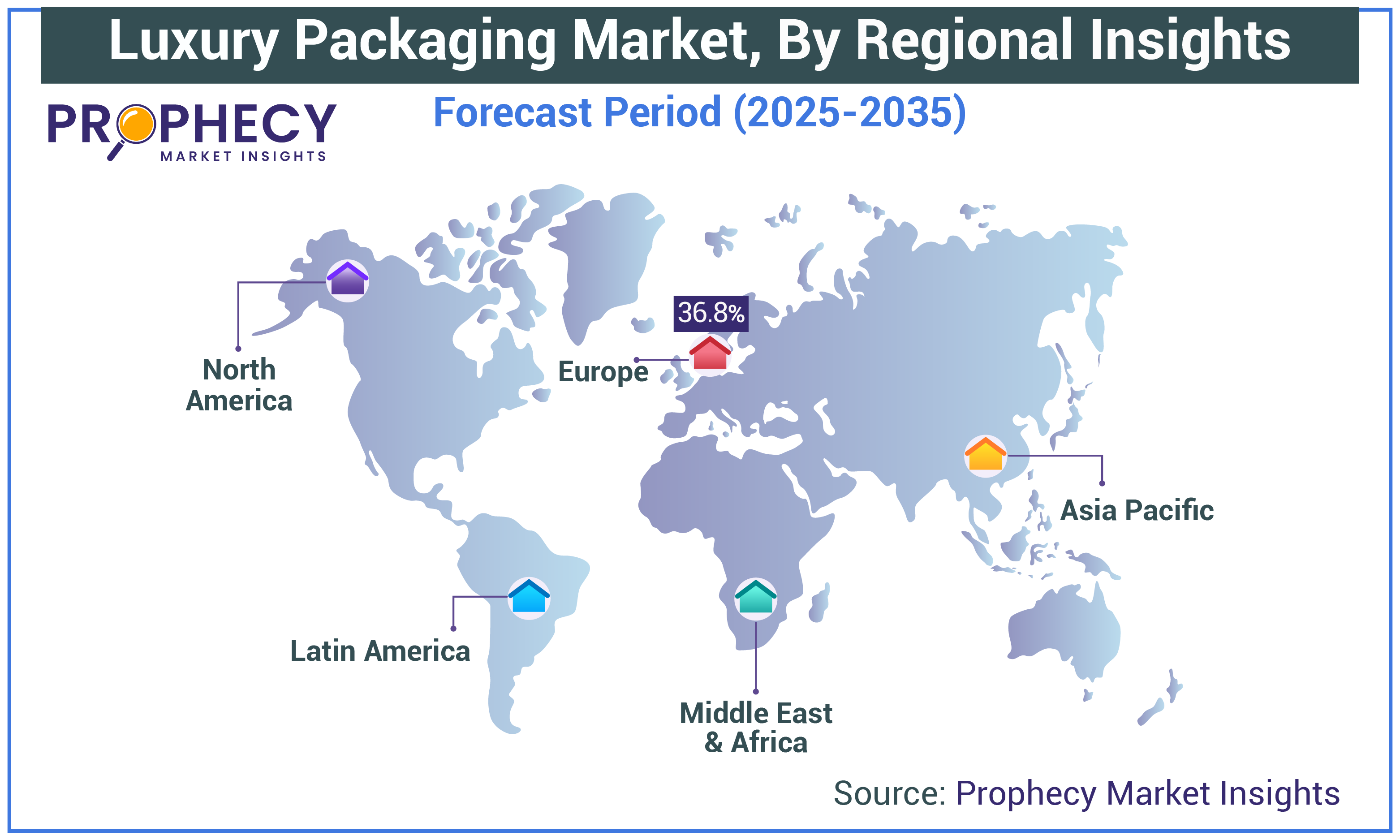
Geographically, the luxury packaging market is studied across North America, Europe, Asia Pacific, Latin America, and the Middle East & Africa.
Europe: This region dominates the luxury packaging market size with 36.8% share, due to a large number of high-end brands in the fashion, cosmetics, and fragrances segments. Further growth is supported by consumer preferences for sustainable, high-quality packaging options and advancement in their manufacturing capabilities.
- France Luxury Packaging Market Insights:
France's dominance of the Europe luxury packaging market size narrowed owes a lot to the strength of France as a global center for high-end fashion, cosmetics, and perfumes. As the hub for many named luxury brands, France has a significant impact on the demand for premium, designer packaging. France is also prioritizing sustainability and providing an impetus for design and development of sustainable and luxurious packaging options.
Asia Pacific: This region ranks second in luxury packaging market share and accounts for growth in luxury packaging sales from an increase in luxury consumption around the world based on increasing disposable incomes of the middle class in many regions, and rising luxury consumerism and urbanization. Countries such as China, Japan, and South Korea continue to see rising demand for premium products, and therefore brands are addressing a market opportunity to use high-end, culturally driven packaging, and improving the customer's experience in a vibrant consumer landscape.
- China Luxury Packaging Market Insights:
China occupies the top position of the luxury packaging market in Asia Pacific with a budding affluent market in combination with a booming e-commerce ecosystem. The need for luxury packaging is stimulated by the ever-increasing demand for luxury goods, a gift-giving culture, and growing brand awareness, in combination with fast changing customer expectations. Brands both local and international, invest significantly in attractive and culturally relevant packaging designed to appeal to sophisticated Chinese consumers.
North America: This region accounts for third in luxury packaging and accounts for the mature consumer experience with high-end demand for personal care, cosmetics, and alcoholic beverages. North America incorporates innovation, sustainability, and smart-packaging. Most luxury brands the believe that they need to invest in creativity and sustainable packaging development to meet the evolving demands of the consumer.
- U.S. Luxury Packaging Market Insights:
The U.S. is the leading player in the luxury packaging market in North America fueled by the presence of major brands associated with cosmetics, electronics, and premium spirits. Consumer behavior is driving innovation with a preference for personalized, sustainable, and tech integrated packaging. American marketers promote the unboxing experience for customers involved with the luxury product, promote eco-friendly materials to appeal to changing consumer lifestyle habits, and address consumers' environmental concerns in the luxury packaging industry.
Luxury Packaging Market Report Scope:
|
Attribute |
Details |
|
Market Size 2025 |
USD 21.1 Billion |
|
Projected Market Size 2035 |
USD 35.1 Billion |
|
CAGR Growth Rate |
5.8% (2025-2035) |
|
Base year for estimation |
2024 |
|
Forecast period |
2025 – 2035 |
|
Market representation |
Revenue in USD Billion & CAGR from 2025 to 2035 |
|
Regional scope |
North America - U.S. and Canada Europe – Germany, U.K., France, Russia, Italy, Spain, Netherlands, and Rest of Europe Asia Pacific – China, India, Japan, Australia, Indonesia, Malaysia, South Korea, and Rest of Asia-Pacific Latin America - Brazil, Mexico, Argentina, and Rest of Latin America Middle East & Africa – GCC, Israel, South Africa, and Rest of Middle East & Africa |
|
Report coverage |
Revenue forecast, company share, competitive landscape, growth factors, and trends |
Segmentation:
By Product Type:
- Boxes & Cartons
- Bottles
- Tubes
- Cans
- Bags & Pouches
- Others
By Material Type:
- Paper & Paperboard
- Glass
- Metal
- Plastics
- Wood
By Technology:
- Embossing/Debossing
- Hot Foil Stamping
- UV Coating
- Lamination (Glossy/Matte)
- 3D Printing / Additive Manufacturing
- Others
By Application:
- Cosmetics & Personal Care
- Confectionery & Food
- Electronics
- Watches & Jewelry
- Fashion
- Home Décor
- Others
By Distribution Channels:
- Retail Stores
- Specialty Stores
- Brand Outlets
- E-commerce platforms
By Region:
- North America
- U.S.
- Canada
- Europe
- Germany
- U.K.
- France
- Russia
- Italy
- Spain
- Netherlands
- Rest of Europe
- Asia Pacific
- China
- India
- Japan
- Australia
- Indonesia
- Malaysia
- South Korea
- Rest of Asia Pacific
- Latin America
- Brazil
- Mexico
- Argentina
- Rest of Latin America
- Middle East & Africa
- GCC
- Israel
- South Africa
- Rest of Middle East & Africa
Luxury Packaging Market Competitive Landscape & Key Players
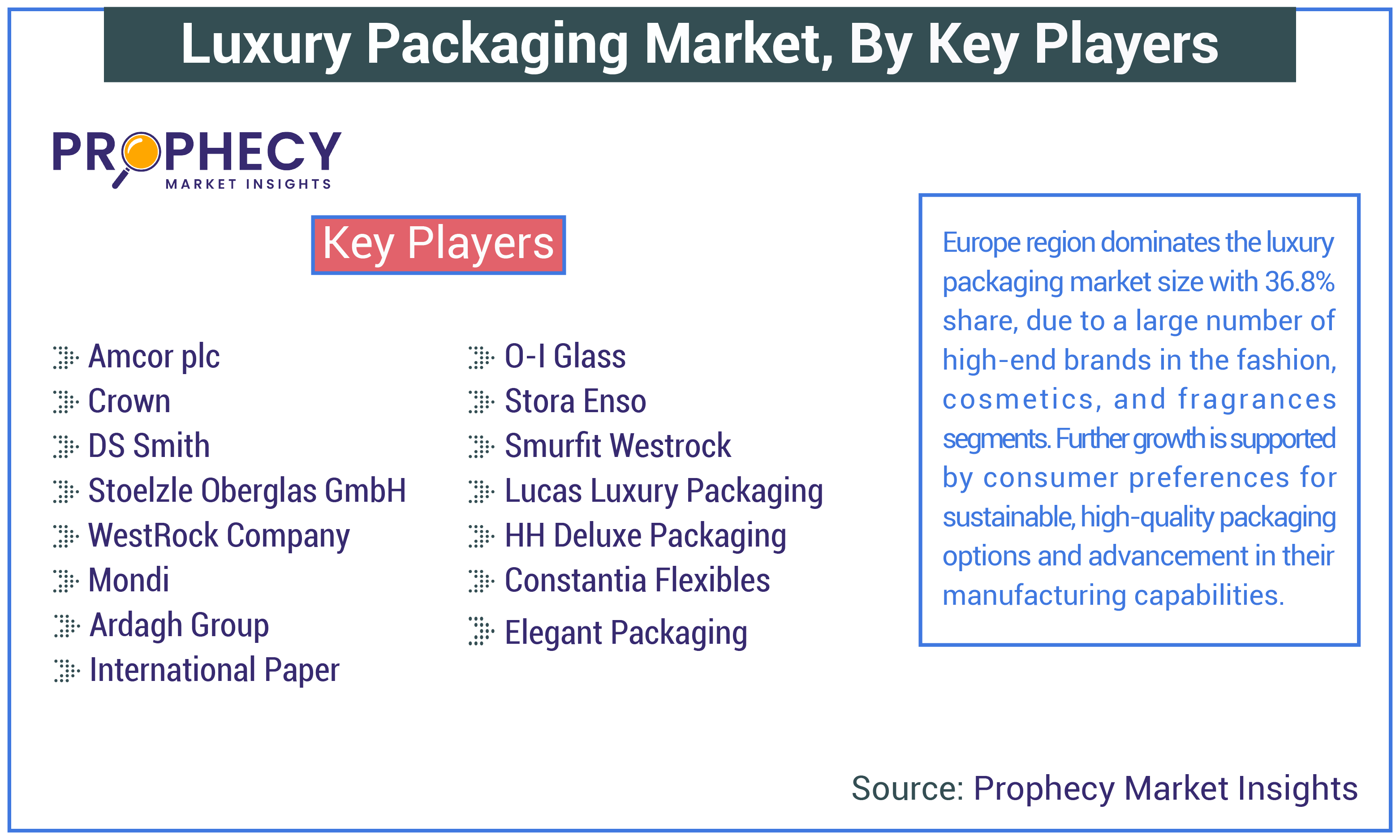
The prominent players operating in the market include, Amcor plc, Crown, DS Smith, Stoelzle Oberglas GmbH, WestRock Company, Mondi, Ardagh Group, International Paper. Innovation, sustainability, and global reach frameworks the competitive environment of these companies. Industry leaders distinguish themselves through advanced material use, sustainability, and customization. Mergers, recognition or awards, and technologic integration reinforce their position as leading companies. Regional knowledge, along with excellence in design, give the leading companies the edge on accommodating the needs of rapidly changing luxury brands.
Luxury Packaging Market Companies:
- Amcor plc
- Crown
- DS Smith
- Stoelzle Oberglas GmbH
- WestRock Company
- Mondi
- Ardagh Group
- International Paper
- O-I Glass
- Stora Enso
- Smurfit Westrock
- Lucas Luxury Packaging
- HH Deluxe Packaging
- Constantia Flexibles
- Elegant Packaging
View an Additional List of Companies in the Luxury Packaging Market
Luxury Packaging Market Recent News
- In January 2025, Smurfit Westrock achieved international recognition with 10 WorldStar 2025 packaging innovation awards, demonstrating the company's sustainable and innovative designs in luxury packaging while continuing to build its position as the green leader in sustainable solutions for premium markets such as cosmetics, beverages and high-end retail for Europe, Asia and the Americas.
- In January 2025, Mondi presented its premium papers PERGRAPHICA, IQ BOARD and IQ GRASS + PACKAGING papers for sustainable packaging of luxury items at Stand E34 at Paris Packaging Week from 28-29 January 2025. The newest addition to the paper portfolio is a grammage that is specific to perfume packaging: 350 g/m² that is available for PERGRAPHICA Classic Rough and PERGRAPHICA Natural Rough. The range of papers from Mondi further enables companies in the luxury segment to reinforce their sustainability commitments.
Analyst View:
The luxury packaging market is experiencing strong growth driven by rising demand for premium consumer goods, personalization, and sustainable packaging innovations. Trends such as smart packaging and eco-friendly materials are reshaping brand strategies. Recent developments include the integration of AR and biodegradable materials to enhance customer experience and environmental compliance. However, high production costs and complex design requirements act as restraints, particularly for smaller brands. Opportunities lie in digital engagement tools and recyclable luxury materials, which help balance exclusivity with environmental responsibility making the sector ripe for innovation and long-term investment potential.
More Related Reports
China Luxury Car Market
Luxury Hotels Market
Luxury Vinyl Tile Floor Covering Market
Hard Luxury Goods Market
Luxury Pet Accessories Market
Luxury Packaging Market Company Profile
|
Company Name |
Amcor plc |
|
Headquarter |
Zürich, Switzerland |
|
CEO |
Peter Konieczny |
|
Employee Count |
41,000 Employees |
Luxury Packaging Market Highlights
FAQs
Luxury packaging market size was valued at USD 21.1 Billion in 2025 and is expected to reach USD 35.1 Billion by 2035 growing at a CAGR of 5.8%.
Product Type, Material Type, Technology, Application, Distribution Channels, and region are the segmentation for the Luxury Packaging market.
North America, Asia Pacific, Europe, Latin America, and the Middle East & Africa. Europe is expected to dominate the market.
The prominent players operating in the market include, Amcor plc, Crown, DS Smith, Stoelzle Oberglas GmbH, WestRock Company, Mondi, Ardagh Group, International Paper, O-I Glass, Stora Enso, Smurfit Westrock, Lucas Luxury Packaging, HH Deluxe Packaging, Constantia Flexibles, and Elegant Packaging.