Global Zero Emission Buildings Market Overview
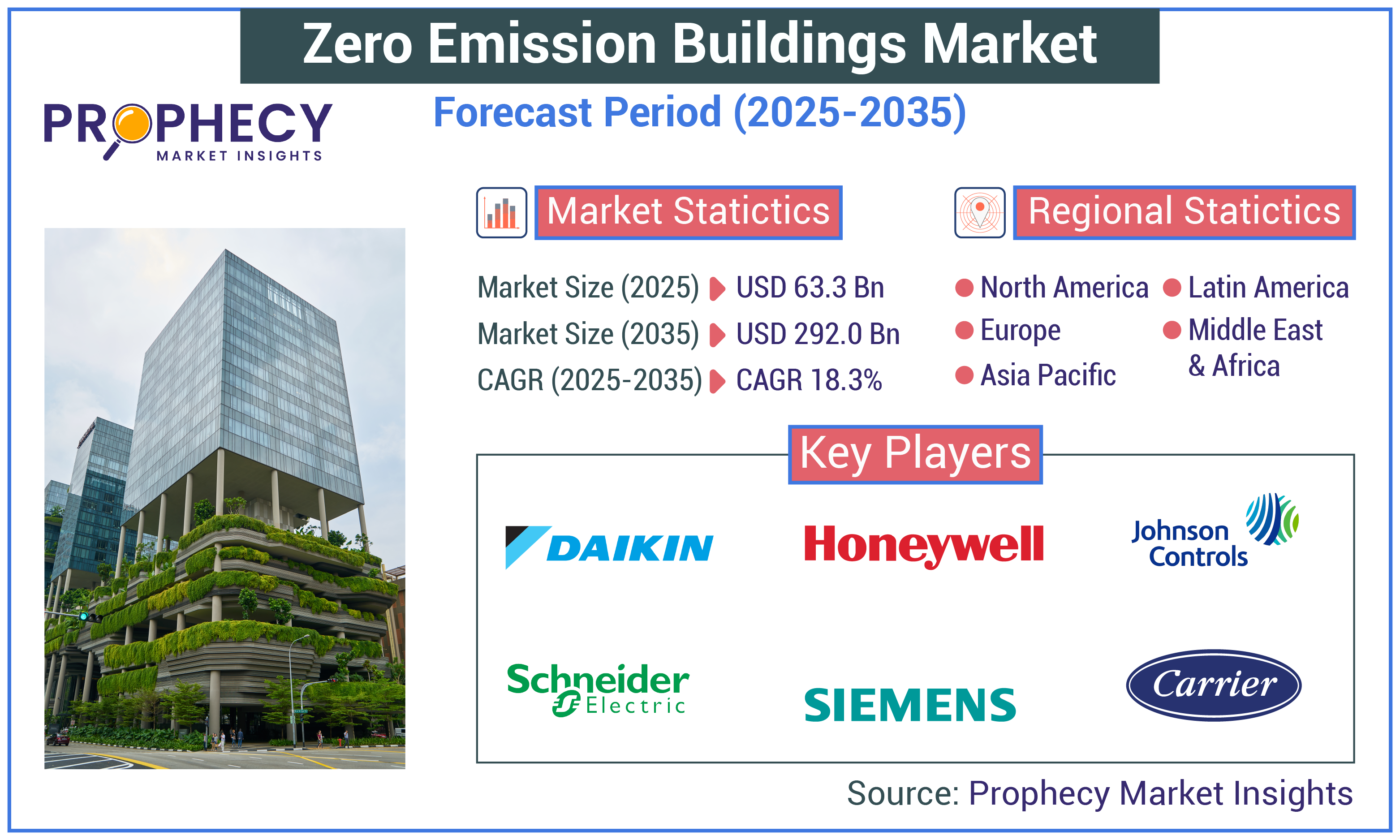
- By 2035, zero emission buildings market size is contemplated to enlarge at a valuation of USD 292.0 Billion.
- In 2024, the zero emission buildings market valuation was USD 55.0 Billion.
- Zero emission buildings market is developing at a CAGR of 18.3%.
Zero-emission buildings can include buildings that utilize clean energy to generate enough energy to offset the amount of energy being consumed, resulting in zero carbon emissions. These buildings utilize renewable energy sources (solar, wind) in conjunction with high-efficiency insulating materials and energy-efficient applications. The notion of zero-emission buildings is a critical element of battlefield preparations for climate change and supporting sustainable urbanization while enhancing community educational resources, in line with global environmental targets and energy-efficiency goals related to climate-resilient infrastructure.
The market for zero-emission buildings continues to expand and develop as a result of increased global commitment to becoming carbon neutral, new emissions standards, and increases in the cost of energy for organizations and consumers. Both private and government stakeholders are investing heavily in sustainable buildings and design projects based on climate objectives. Rising consumer awareness of climate impacts and the direct link to energy-use efficiencies (future savings) in technology continues to drive demand. Furthermore, developments in surrounding technologies such as smart grids, renewable energy systems and energy storage technologies will continue to accelerate the use of these systems in commercial, community and residential buildings.
The prospects for the future of zero-emission buildings products and their relevance to their markets are optimistic. Signs that will drive the prospects include continued policy support, technology, and increasing awareness surrounding climate change. Merging emerging technologies such as artificial intelligence and the Internet of Things with energy-efficient systems is stimulating new forms of performance. Growth is expected as emerging and developing nations grow into zero-emission market participants in buildings energy conservation, and the retrofitting of older buildings will stimulate long-term positive growth through green technologies.
Recession Risk & Tariff Analysis:
- Economic recessions can delay, postpone or cancel construction and investments in green infrastructure (including zero emission buildings). Lack of capital can refocus priorities from sustainable solutions to lower short-term costs, reduce momentum in the evolving marketplace, and impact developing areas where the initial capital investment is considered one of the greatest barriers to embracing zero emission technologies.
- Tariffs on imports of renewable energy components, including solar panels, batteries, and smart systems, can increase the value of zero emission buildings. This could create an obstacle to uptake in price-sensitive markets however, local manufacturing and supportive trade policies can limit the impacts of tariffs and encourage innovation in domestic green buildings technologies.
Impact of Generative AI on Zero Emission Buildings Market:
- Generative AI allows architects and engineers to accurately simulate and optimize energy efficient buildings significantly faster than traditional methods. By considering numerous design alternatives, AI helps find buildings that reduce energy loss and maximize renewable energy sources. As a result, generative AI will allow for the rapid development of zero emission buildings with enhanced performance and smaller carbon footprints.
- Generative AI also supports the development of smart energy management systems which forecast buildings energy use and control it in real-time. These systems optimize energy use by integrating data from weather and grid loads to support the stable operation of zero emission buildings.
Global Zero Emission Buildings Market Drivers & Restraints
Key Drivers:
Rising Policy Mandates and Sustainability Goals to propel market growth.
The key identified driving factor influencing the zero emission buildings market is the growing global emphasis on carbon neutrality and the growing trend of stricter regulations. It's not simply that governments and municipalities are promoting net-zero construction for new buildings and upgrading existing buildings, they are also enforcing it. Incentives and certification schemes for green buildings provide more attractive options for Architects, Engineers and Contractors to implement net-zero buildings. Both the public and private sectors, are increasingly focused on aligning strategies to eliminate emissions, increasing energy results and integrate renewable resources which is increasing the viability of the market and technological development in both energy and construction sectors.
- For instance, according to the data published by IEA, buildings are responsible for over one-third of global final energy consumption and nearly 40% of total direct and indirect CO? emissions. The IEA notes that without implementing zero-emission buildings policies, which in turn innovate and eventually lead to widespread global implementation of zero-emission buildings, global net-zero goals by 2050 will not be reached.
Restraints:
High Initial Costs and Infrastructure Limitations restraints the market:
One of the major barriers to entry for beginning in the zero-emission buildings market is the high level of upfront investment for advanced energy efficiency processes, renewable energy systems, and performance-based construction materials. Retrofitting existing buildings to comply with zero emission standards further complicates the potential upfront costs of constructing zero emissions buildings, especially given older urban regions where property owners might lease space or where buildings already exhibit aging infrastructure. The additional barrier of insufficient education and access to skilled labor breeds even more uncertainty for property owners trying to adopt the zero emissions model, particularly in developing areas that are not supported by policy or financial incentives.
- Counterbalance Statements: Notwithstanding financial barriers, the increased adoption of the zero-emission model is a result of long-term savings from substantially lowered energy bills, level of financial incentives from governments, and the increasing financial options provided by the green finance sector. The more consistent utilization of the same technologies and economy of scale is helping to diminish the high barrier to entry, and subsequently adoption of the zero-emission buildings model in all global markets.
Opportunities & Trends:
Integration of Smart Energy Management Systems Fueling Growth of the market
One important opportunity in the zero-emission buildings market is the development of a smart energy management system. These systems utilize automation, real-time data tracking, and AI-driven insights to improve energy use and performance while minimizing operational costs. The development and application of Internet of Things (IoT) systems are becoming increasingly popular, where users can easily control their lighting, heating, and cooling. These systems lead to a transition towards a sustainable future that resonates with eco-conscious consumers and progressive urban planners.
Global Zero Emission Buildings Market Segmentations & Regional Insights
By component, technology, energy source, buildings type and region are the divisions of the zero emission buildings market.
By Component:
Based on Component, the market is divided into equipment, software, and services. The zero emission buildings market share was dominated by software. In order to achieve net-zero targets, software solutions that enable real-time monitoring and energy consumption management are becoming indispensable. Buildings may now gather a great deal of data on patterns of energy use due to the widespread use of Internet of Things (IoT) devices. This data can then be evaluated to increase efficiency. As these technologies advance, they give specialized software developers the chance to construct applications that are specifically designed to meet NZEB framework requirements.
The equipment segment ranks second in the zero emission buildings market as more zero carbon energy-efficient systems are adopted, including heat pumps, smart HVAC systems, and enhanced ventilation systems. These components help to support low-emission outcomes by lowering energy consumption, and improving overall buildings performance which is crucial when it comes to sustainable infrastructure.
By Technology:
Based on Technology, the market is divided into on-site renewable generation systems, energy storage systems (ESS), smart grid integration, energy management systems (EMS), and others. On-site renewable generation systems, such as solar panels and wind turbines, are the dominant technologies in the zero-emission buildings market share. By enabling buildings to generate clean energy locally, these technologies can reduce the buildings reliance on pollution-causing fossil fuels. Growth of these technologies is the result of lower installation costs, government incentives, and getting serious about emission reduction and decarbonization.
Energy management systems (EMS), are the second most dominant technology in the zero-emissions buildings sector. An EMS remotely and in real-time monitors how energy is used in a buildings and provides information and tools for optimizing energy use. With the objective of creating efficiencies, reducing operational costs, and supporting the integration of renewable energy technologies, an EMS can minimize waste, which is vital for effective zero energy buildings performance and compliance.
By Energy Source:
Based on energy source, the market is divided into solar energy, wind energy, geothermal energy, and others. Solar energy currently leads the zero emission buildings market share based on its scalability, cost, and availability. Photovoltaic panels are often added to roofs as a way of generating clean electricity. A number of factors have made solar energy the preferable choice, including government incentives, falling costs of panels, and ease of integration.
Wind energy ranks second, particularly with buildings located in high-wind locations. Small wind turbines can be combined with solar systems, generating electricity when the sun does not shine. While wind energy is less common in urban settings, it has some efficiency and continues to gain momentum and development as a supplemental, hybrid renewable energy system in zero-emission buildings that target energy independence year-round.
By Building Type:
Residential buildings, commercial building, institutional buildings, and others are building type of the zero emission buildings market. Commercial segments dominate the target market. Leading the way in the overall zero Emission buildings energy market is the commercial sector, primarily as a result of evolving regulatory and sustainability pressures, a sharp rise in energy costs, and corporate sustainability strategies. Commercially, that translates into more hospitals, offices, educational institutions, and retail spaces using zero-emission materials and technologies to improve their operations, meet local laws or regulations, and lower their energy costs in the long run.
The residential sector ranks second in the amount of zero-emission floor space market share. Unlike commercial buildings owners, the residential buildings owner has an increasing criminal background check of interest in reducing both energy costs, and making their living environment greener. Supported by government incentives, buildings codes that permit access to low-carbon homes, and increased public awareness concerning the environment, and environmental issues, residential users have been rapidly adopting the buildings sector's energy-smart appliances and systems, including renewable energy systems, Network-Plus separated services system commercial entities, and zero emission construction materials.
Regional Insights:
Geographically, the zero emission buildings market is studied across North America, Europe, Asia Pacific, Latin America, and the Middle East & Africa.
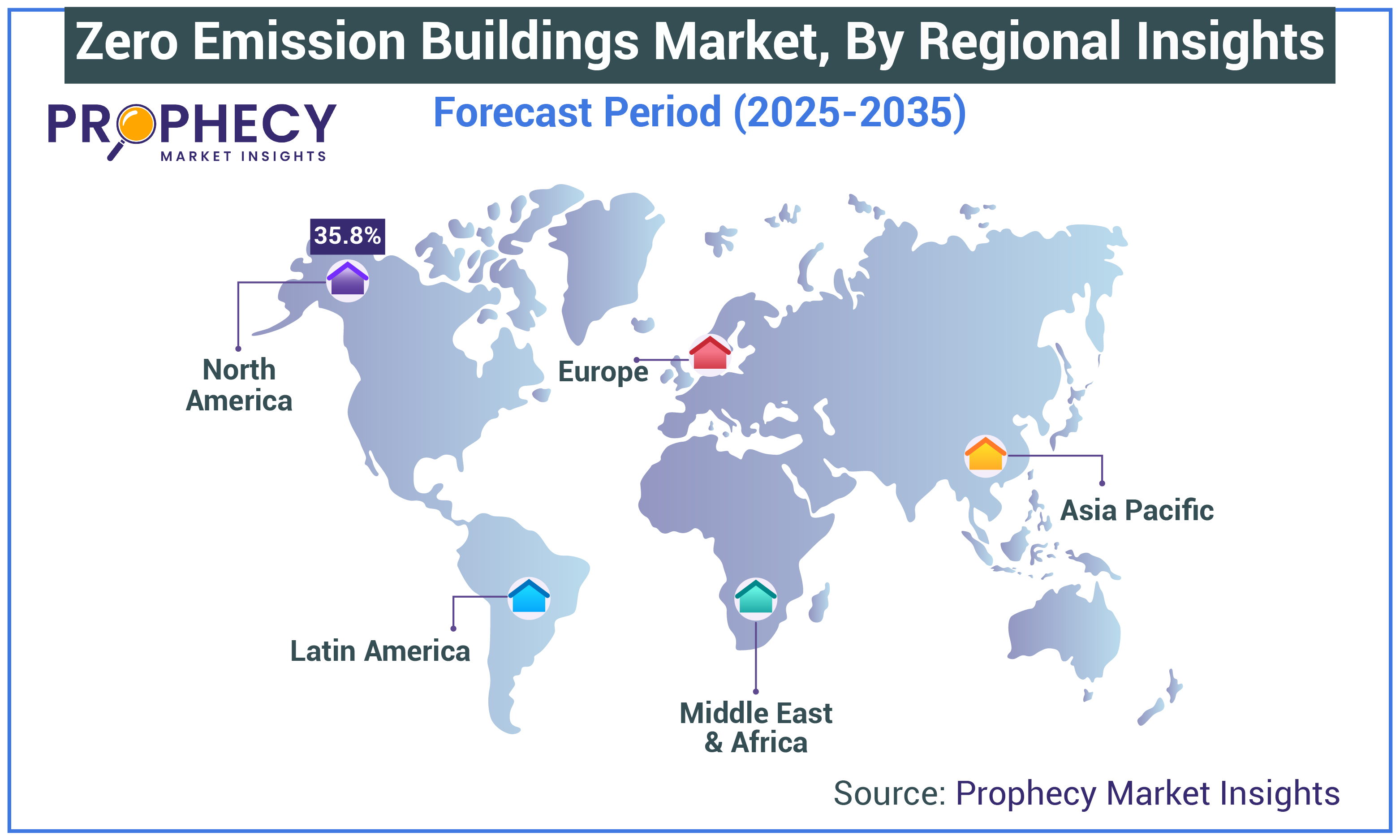
North America: This region dominates the zero emission buildings market with 35.8% share. The market for net-zero energy buildings in North America was sizable. Interest in net-zero energy buildings as part of larger resilience planning initiatives in North American cities is being fueled by increased awareness of the effects of climate change. Climate change-related extreme weather occurrences have forced municipal governments to reconsider urban design tactics that prioritize sustainability.
- U.S. Zero Emission Buildings Market Insights:
The U.S. controls the Zero Emission Buildings energy market in North America. In 2023, the North American market for net-zero energy buildings was dominated by the United States. ANSI/ASHRAE standard offers a thorough evaluation framework for zero energy and zero carbon buildings, representing a crucial step towards achieving net-zero carbon emissions in the built environment.
Europe: This region is ranked second in the zero emission buildings market, backed by the strict buildings regulations and climate policies of the EU. The EU's Energy Performance of Buildings Directive calls for nearly zero new buildings and promote low carbon construction are applied across member states.
- Germany Zero Emission Buildings Market Insights:
Germany is the European leader in zero emission buildings, supported by strong climate objectives such as a net-zero target in the national strategy, and mandatory standards for energy efficiency in buildings. It is the established leader of the market, where it leads in both the residential and commercial sectors, and it is enhancing its green buildings efforts with substantial investments in smart systems and renewable heating projects across German municipalities.
Asia Pacific: This region is growing significantly in zero emission buildings market growth with increasing urbanization and sustainability initiatives. Green buildings frameworks and certifications are attracting increasing attention. However, uneven uptake and infrastructure gaps will prevent the region from being a solid market leader.
- Australia Zero Emission Buildings Market Insights:
Australia is the regional leader in zero-emission buildings, aided by stringent green buildings standards and increased uptake of renewables. A strong suite of urban sustainability policies, many developments that are Green Star-certified and an increased investment in rooftop solar and smart technologies have put Australia in a powerful position as a regional proponent of ZEBs.
Zero Emission Buildings Market Report Scope:
|
Attribute |
Details |
|
Market Size 2025 |
USD 63.3 Billion |
|
Projected Market Size 2035 |
USD 292.0 Billion |
|
CAGR Growth Rate |
18.3% (2025-2035) |
|
Base year for estimation |
2024 |
|
Forecast period |
2025 – 2035 |
|
Market representation |
Revenue in USD Billion & CAGR from 2025 to 2035 |
|
Regional scope |
North America - U.S. and Canada Europe – Germany, U.K., France, Russia, Italy, Spain, Netherlands, and Rest of Europe Asia Pacific – China, India, Japan, Australia, Indonesia, Malaysia, South Korea, and Rest of Asia-Pacific Latin America - Brazil, Mexico, Argentina, and Rest of Latin America Middle East & Africa – GCC, Israel, South Africa, and Rest of Middle East & Africa |
|
Report coverage |
Revenue forecast, company share, competitive landscape, growth factors, and trends |
Segmentation:
By Component:
- Equipment
- Solar Panels
- Turbines
- Others
- Software
- Energy monitoring
- Building analytics
- Services
- Design & Engineering
- Installation
- Others
By Technology:
- On-site Renewable Generation Systems
- Energy Storage Systems (ESS)
- Smart Grid Integration
- Energy Management Systems (EMS)
- Others
By Energy Source:
- Solar Energy
- Wind Energy
- Geothermal Energy
- Others
By Building Type:
- Residential buildings
- Commercial Building
- Institutional Buildings
- Others
By Region:
- North America
- U.S.
- Canada
- Europe
- Germany
- U.K.
- France
- Russia
- Italy
- Spain
- Netherlands
- Rest of Europe
- Asia Pacific
- China
- India
- Japan
- Australia
- Indonesia
- Malaysia
- South Korea
- Rest of Asia Pacific
- Latin America
- Brazil
- Mexico
- Argentina
- Rest of Latin America
- Middle East & Africa
- GCC
- Israel
- South Africa
- Rest of Middle East & Africa
Global Zero Emission Buildings Market Competitive Landscape & Key Players
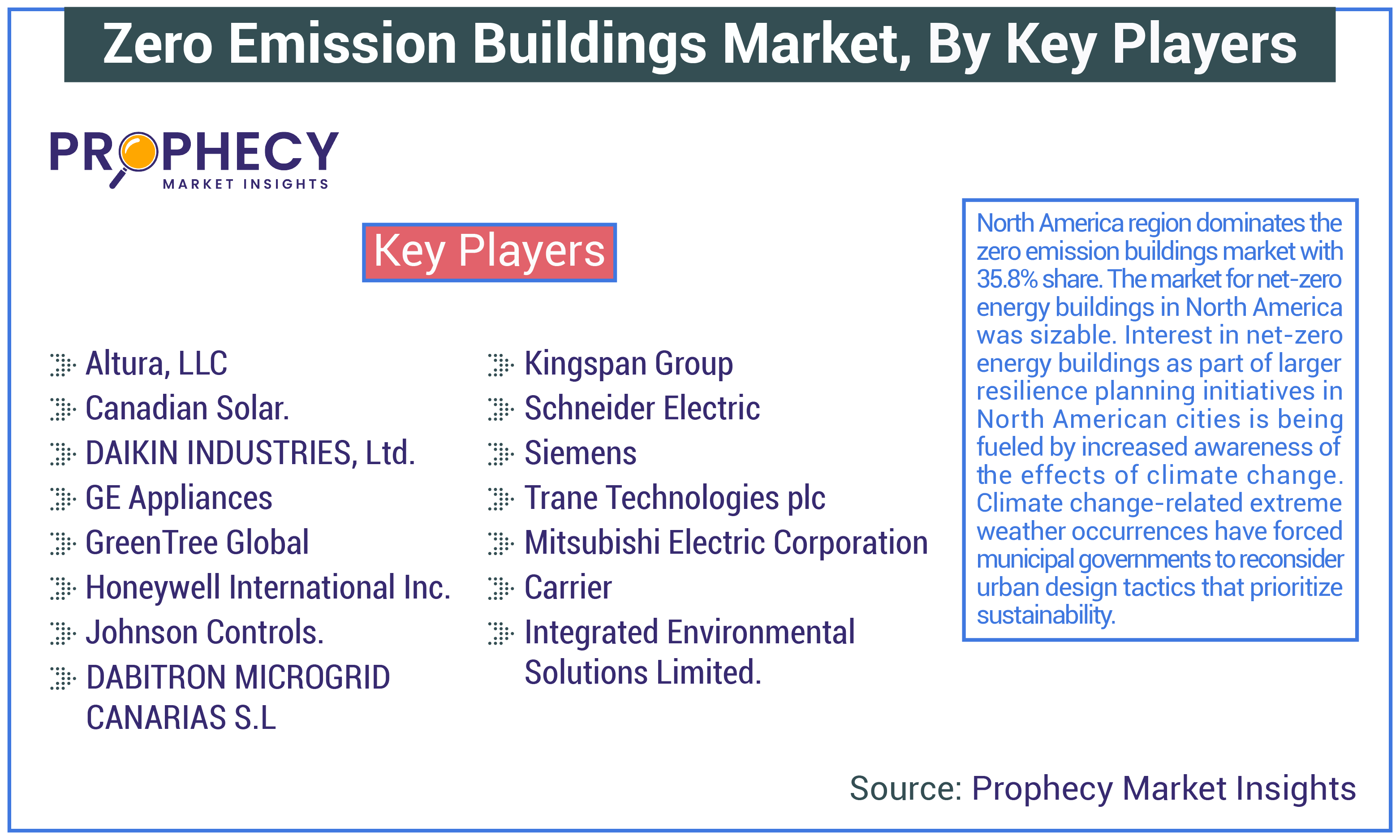
The prominent players operating in the market include, Altura, LLC, Canadian Solar., DAIKIN INDUSTRIES, Ltd., DABITRON MICROGRID CANARIAS S.L, GE Appliances, GreenTree Global, and others. The market is significantly fragmented, with many market participants around the world. The major players are truly striving and global players who can use product innovation and digitalization strategies to bolster their position in the market. A few have focused on specific regions to meet the growing demand for renewable energy from both electricity and direct uses. As for the companies involved in Zero Emission Buildings production, the primary purpose is capacity expansion and innovative exploration.
Zero Emission Buildings Market Companies:
- Altura, LLC
- Canadian Solar.
- DAIKIN INDUSTRIES, Ltd.
- DABITRON MICROGRID CANARIAS S.L
- GE Appliances
- GreenTree Global
- Honeywell International Inc.
- Integrated Environmental Solutions Limited.
- Johnson Controls.
- Kingspan Group
- Schneider Electric
- Siemens
- Trane Technologies plc
- Mitsubishi Electric Corporation
- Carrier
View an Additional List of Companies in the Zero Emission Buildings Market
Global Zero Emission Buildings Market Recent News
- In October 2023, Honeywell International, Inc. and Nexii Building Solutions teamed up with the goal of promoting sustainable buildings development. This collaboration is a significant pairing because it unites Honeywell’s buildings technologies experience with Nexii’s innovative green buildings products. This collaboration is addressing a unique and urgent need around sustainability in the construction industry, which is a significant contributor to carbon emissions globally.
- In July 2023, Siemens introduced the Masterguard E-Hybrid system, they aim to achieve net zero energy consumption. The technology consists of three primary components: energy storage, solar panels and intelligent buildings controls. The technology enables buildings to generate, store and manage their own energy, instead of primarily relying on the current power system, by integrating all three components to arrive at a new and robust technology.
Analyst View:
The role of zero-emission buildings in combatting climate change and achieving sustainability goals is now increasingly acknowledged. A growing set of stricter environmental laws and the economic benefits of energy efficiency are the primary drivers behind the emergence of ZEBs. Government bodies at all levels support ZEBs with laws and incentives. These are partly fiscal incentives, such as tax incentives and subsidies, but also include certifications like BREEAM (Building Research Establishment Environmental Assessment Method) and LEED (Leadership in Energy and Environmental Design). The market for green buildings is also growing as a result of both public demand and corporate sustainability goals. Companies are beginning to see that sustainability and green buildings may improve employee satisfaction and add to their brand reputation.
More Related Reports
Windows and Doors Market
Prefabricated Buildings Market
Smart Buildings Market
Smart Cities Market
Building Information Modeling (BIM) Market
Global Zero Emission Buildings Market Company Profile
|
Company Name |
Canadian Solar. |
|
Headquarter |
Guelph, Canada |
|
CEO |
Xiaohua H. Qu |
|
Employee Count |
22,234 Employees |
Global Zero Emission Buildings Market Highlights
FAQs
Zero emission buildings market size was valued at USD 63.3 Billion in 2025 and is expected to reach USD 292.0 Billion by 2035 growing at a CAGR of 18.3%.
Component, technology, energy source, building type, and region are the segmentation for the zero emission buildings market.
North America, Asia Pacific, Europe, Latin America, and the Middle East & Africa. North America is expected to dominate the market.
The prominent players operating in the market include, Altura, LLC, Canadian Solar., DAIKIN INDUSTRIES, Ltd., DABITRON MICROGRID CANARIAS S.L, GE Appliances, GreenTree Global, Honeywell International Inc., Integrated Environmental Solutions Limited., Johnson Controls., Kingspan Group, Schneider Electric, Siemens, Trane Technologies plc, Mitsubishi Electric Corporation, and Carrier.