Global Solar Wind Hybrid Systems Overview
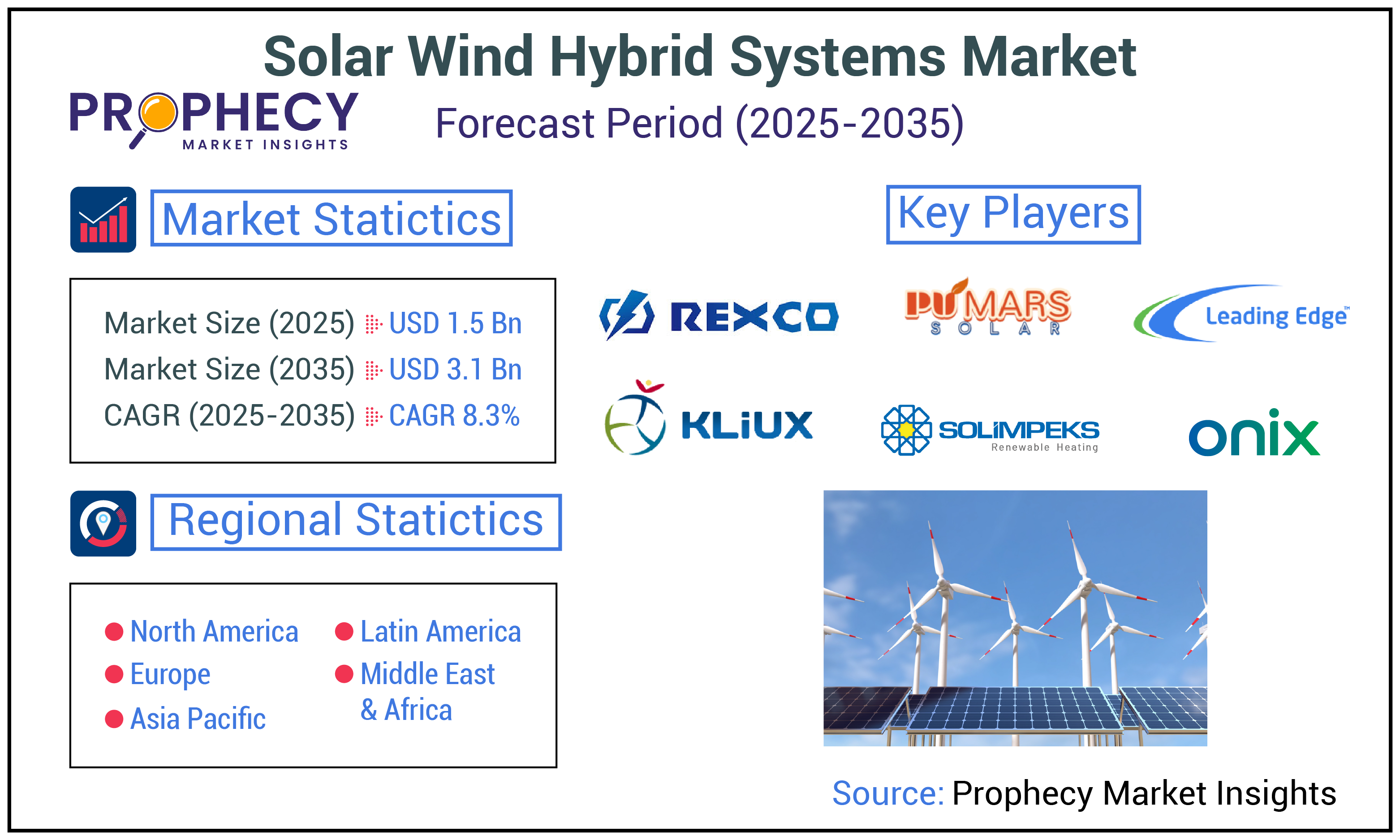
- By 2035, solar wind hybrid systems market size is contemplated to enlarge at a valuation of USD 3.1 Billion.
- In 2024, the solar wind hybrid systems market valuation was USD 1.36 Billion.
- Solar wind hybrid systems market is developing at a CAGR of 8.3%.
A hybrid solar wind system combines solar photovoltaic panels and wind turbines for electricity generation. By incorporating two renewable energy sources, the hybrid solar wind power system provided a more reliable source of power, especially since it's probably to provide a continuous source of electricity in off-grid and remote locations. The hybrid approach also offered a reduction in reliance on fossil fuels, reduced emissions, and better sustainability and resilience of energy systems.
Demand for hybrid systems has increased due to our increasing energy demands around the world and awareness of climate change, both globally and locally, and many countries are looking for clean, reliable power solutions. A mix of government support schemes, technological improvements, and decreasing cost of solar and wind systems and components has broadened applicability and markets for hybrid energy systems. Hybrid systems, hybrid solar wind energy systems, are also advantageous due to more stable energy output compared to stand-alone solutions ideally suited for remote rural electrification projects, commercial energy use, and backup power for homes or residential. Furthermore, their use contributes to energy security and emissions targets, contributing to their potential popularity in the market.
The future of hybrid solar wind energy systems is bright! With an increasing emphasis on and investments into renewable energy infrastructure and microgrid projects, and related installations, hybrid systems are probably to be at the forefront of these developments. It's mostly that as the world pushes targets for sustainability and hybrid systems are adopted to achieve climate change mitigation targets.
Recession Risk & Tariff Analysis:
- The funding of renewable energy projects may decrease during a recession as businesses focus on immediate economic issues. When routine infrastructure projects are delayed, they can postpone hybrid solar and wind system adoption, which may have a detrimental influence on the development of the solar-wind hybrid systems agenda.
- Tariffs on foreign solar panels, wind turbines, or electronic components may increase the overall cost of hybrid solar and wind systems; this can affect the affordability of hybrid solar wind systems and slow down deployment, especially in markets that are price-sensitive. Moreover, trade restrictions and analyses may delay the availability of supply chains, forcing manufacturers to seek local alternatives or revisit the rationale for sourcing, so they can remain competitive.
Impact of Generative AI on Solar Wind Hybrid Systems Market:
- Generative AI allows solar wind hybrid systems to operate more efficiently by forecasting weather and predicting energy consumption levels. With the forecasted weather and real-time power demand, the system can determine the optimal load balance, reduce energy waste, and provide a consistent energy supply.
- Generative AI allows for the advantages of predictive maintenance through the analysis of system data to identify wear and tear or mechanical problems. Continuously being able to pinpoint potential problems with turbines or solar panels allows for fewer outages and more extended lifespan for each piece of equipment. A proactive approach means that hybrid renewable facilities are mostly to be more reliable and with reduced maintenance costs over time.
Global Solar Wind Hybrid Systems Drivers & Restraints
Key Drivers:
Growing Demand for Reliable Off-Grid Renewable Power to propel market growth.
A major factor driving the solar wind hybrid systems market is the growing demand for reliable off-grid renewable power in remote locations. Hybrid renewable systems generate power continuously by concertedly using the abundance of solar and wind resources. They allow for energy production in areas where grid access is unavailable or unreliable and can be used in place of, or conjunction with, batteries. Increasingly, governments and organizations are investing in hybrid systems for rural electrification, telecommunication towers, and agriculture projects, bolstering energy security, while promoting sustainability and emissions reduction targets on a global scale.
- For instance, according to the data provided by the International Energy Agency (IEA), hybrids are also an important feature in electrifying off-grid rural communities, especially for potential projects in developing countries, as over 700 million people still do not have reliable access to electricity.
Restraints:
High Initial Capital Investment and Infrastructure Needs restraints the market:
The significant upfront cost to install the solar and wind energy generation and the infrastructure for the combined hybrid systems represents a key constraint for the solar wind hybrid systems market. Major components such as the solar panels, wind turbines, batteries, and control systems do require substantial capital costs, and for a target market of low-income or budget constrained regions, this cost is frequently a barrier to adoption.
In addition, the requirement for a level of technical expertise is a challenge, along with all of the additional grid or microgrid infrastructure that may be required. It is also challenging in more remote areas that may lack local grid distribution infrastructure. Financing barriers along with other logistical challenges means that initial project deployment could be delayed. Even with potential long-term savings of adopting hybrid energy systems, it can still be heavy in the short run for large-scale adoption.
- Counterbalance Statements: Government subsidies and tax incentives, along with declining costs of technology are helping to offset some of the upfront capital costs. New alternative financing mechanisms such as leases, and pay-as-you-go financing are also making hybrid energy solutions more viable, especially in low-income developing markets that have objectives of sustainable energy and of off-grid electrification.
Opportunities & Trends:
Integration with Energy Storage and Smart Grids can fuel market growth
A developing opportunity in both solar wind hybrid systems market is in collaboration with advanced energy storage solutions and advanced smart grid technologies. Storing energy in batteries improves energy security by making intermittent power more predictable while smart grids improve user experience by providing remote monitoring capabilities and serving more efficiently distributed energy.
One of the important trends is the deployment of hybrid systems through microgrids for rural electrification and for regions most susceptible to disasters. Integration of hybrid systems with energy storage solutions and smart grid technologies offers people energy independence, energy stability and energy sustainability, while also addressing needs to modernize the energy distribution in countries worldwide and reducing their carbon footprints.
Global Solar Wind Hybrid Systems Segmentations & Regional Insights
Type, component, capacity, end-user and region are the divisions of the solar wind hybrid systems market.
By Type:
Based on type, the market is divided into on-grid, and stand-alone. The solar wind hybrid systems market share is dominated by the Stand-alone segment. Their affordability is the reason for this expansion, particularly in isolated locations. Additionally, as stand-alone systems provide a sustainable substitute for conventional fossil fuel power generation, the growing demand for clean energy sources encourages their implementation.
ON-grid comes second. Increasing energy needs are predicted to steadily strain the local networks for electricity; hence, demand for on-grid systems is expected to increase. Concerning the expansion of on-grid systems, policies and incentives provided by the governments for renewable energy integration are crucial. These systems are also becoming very important with the increasing awareness for environmental concerns in lowering carbon footprints.
By Component:
Solar photovoltaic (PV) panels, wind turbines, battery storage systems, power conversion systems, mounting structures, and others are component of the solar wind hybrid systems market. Solar PV panels are the dominant technology in the solar wind hybrid systems market share. This dominance is largely due to cost, ease of installation, and extensive adoption. Advances in solar panel technology and declining solar panel prices, improve their availability and affordability, particularly in high solar irradiance climates. As such, they are an especially significant contributor to hybrid systems.
Wind turbines come in second. They complement solar PV panels with the power output during periods that are not sunny or bright enough for solar PVs, as they convert wind to electricity. Wind resilience adds stability to a hybrid system to account for solar conditions. For hybrid systems used in off grid/remote sites with a focus on reliable renewable energy, wind and solar components are important for power reliability.
By Capacity:
Based on Capacity, the market is divided into Up to 10 kW, 10 - 50 kW, 50 - 100 kW, and above 100 kW. The 10–50 kW capacity category is in lead for the subgroup of solar wind hybrid systems market size, as it works well for small businesses, commercial applications and community uses. Within these applications, this size range gives good energy production and installation cost, making it a prime choice for electrification projects in semi-urban and rural areas.
The above 100 kW category is in second place, as it is applied in industrial facilities, large institutions, and utility-scale applications. Projects in the above 100kW range support substantial energy usage and grid interconnectivity while enabling large-scale renewable energy installation projects to make an important contribution to sustainable energy infrastructure.
By End-User:
Residential, commercial, and industrial are end-user of the solar wind hybrid systems market. Commercial segments dominate the solar wind hybrid systems market share. Commercial organizations benefit from lower electricity costs, energy independence and green branding. Hybrid systems continuously supply power regardless of the energy source at any given time, which is beneficial to the commercial sector especially in remote or off-grid locations supporting commercial establishments and infrastructure.
The second-dominant segment is Industrial. Industrial sectors, such as mining and manufacturing industries, require reliable and cost-effective energy production. Further, hybrid systems still reduce dependency on fossil fuels, reduce peak loads of energy, and provide continuous operations. The industries themselves do this in conjunction with environmental regulatory requirements to improve ecological sustainability and to meet long-term energy efficiency goals.
Regional Insights:
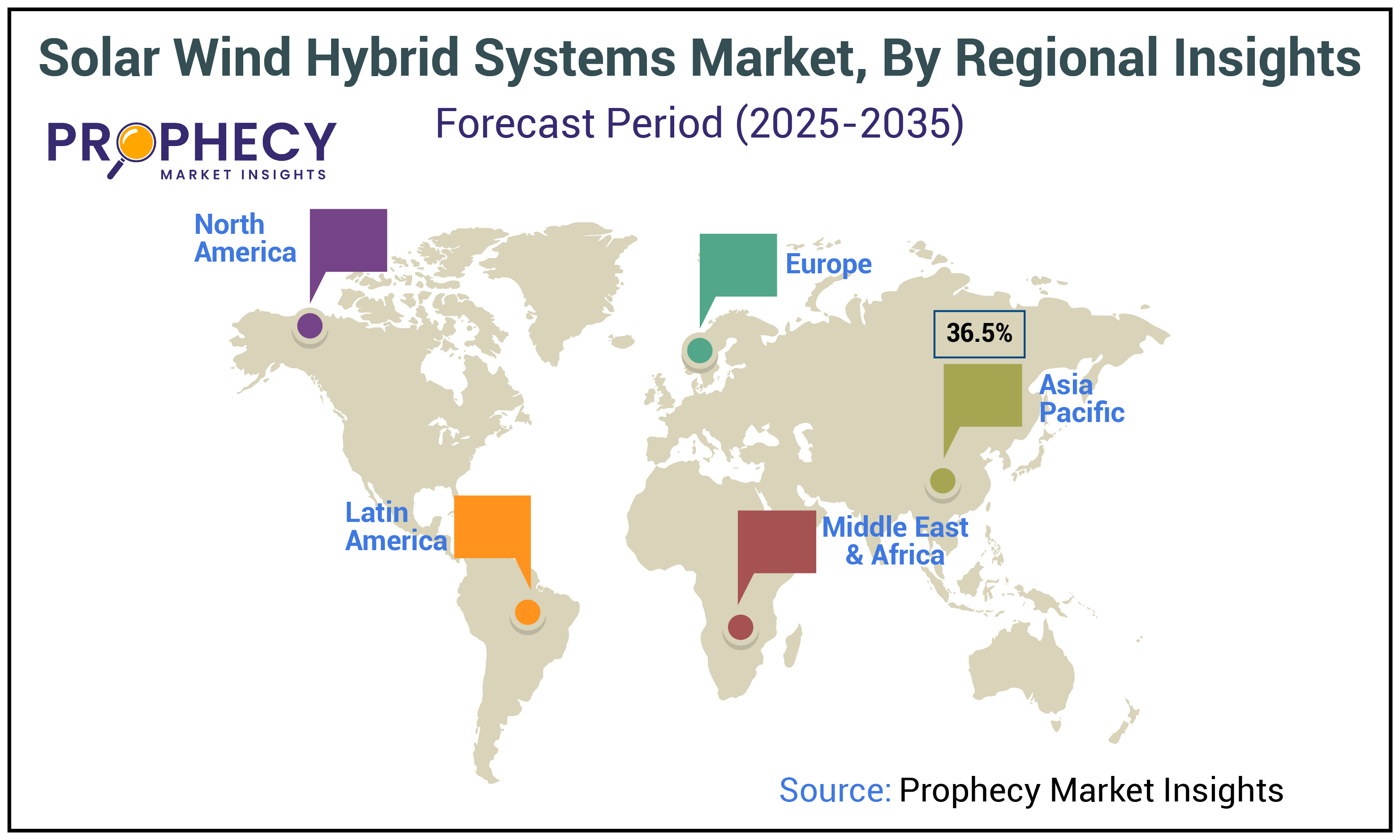
Geographically, the solar wind hybrid systems market is studied across North America, Europe, Asia Pacific, Latin America, and the Middle East & Africa.
Asia Pacific: This region has the largest solar wind hybrid systems market size with 36.5% share of the market due to the influence of government support, rapid industrialization, and energy demands in countries such as China and India, along with strong investments in renewable infrastructure and rural electrification projects. As a result, Asia Pacific is the largest and fastest developing region for hybrid energy systems.
- China Solar Wind Hybrid Systems Market Insights:
China's dominance in the Asia Pacific solar wind hybrid systems market is driven by its established renewable energy investment, as well as government-led sustainability initiatives. China is providing a less fossil fuel-reliant energy method with policy backing by integrating hybrid systems into both remote and industrial portions of its economy.
North America: This region is in second place with the positive influence of supporting renewable energy policies, technological advances, and the growing need/focus of sustainable power solutions in remote locations. The U.S. is at the forefront of hybrid system adoption at the regional level as commercial and industrial operators have adopted hybrid systems to provide energy resiliency and limit grid dependency, especially during outages or peak energy demand.
- U.S. Solar Wind Hybrid Systems Market Insights:
The U.S. is the leader in North America, motivated by federal and state incentives promoting clean energy. Solar wind hybrid systems are increasingly deployed in pristine, off-grid areas, natural disaster-prone areas, and commercial operations. Demand is rising across industries nationwide given strong research and development investments, projected renewable targets for commercial and institutional users, and corporate sustainability goals.
Europe: This is the growing region in the market with an abundance of climate commitments and a strong focus on integrating renewable energy into existing energy systems. Countries such as Germany and the Netherlands have thoughts on solar-wind hybrid systems to achieve their energy transition aims. Financial incentives such as green energy targets, and research initiatives have allowed the region to maintain steady growth.
- Germany Solar Wind Hybrid Systems Market Insights:
Germany is the leader for regional markets in the solar wind hybrid systems market in Europe, thanks to its adopted "Energiewende" policy and energy market initiatives to promote integration of renewables into the grid. Its legacy for these initiatives such as Distributed Energy Resources policy as a renewable energy powerhouse promotes the deployment of hybrid systems in rural and industrial areas while benefitting from established infrastructure, partnerships between public and private institutions, and strong environmental regulations.
Solar Wind Hybrid Systems Market Report Scope:
|
Attribute |
Details |
|
Market Size 2025 |
USD 1.5 Billion |
|
Projected Market Size 2035 |
USD 3.1 Billion |
|
CAGR Growth Rate |
8.3% (2025-2035) |
|
Base year for estimation |
2024 |
|
Forecast period |
2025 – 2035 |
|
Market representation |
Revenue in USD Billion & CAGR from 2025 to 2035 |
|
Regional scope |
North America - U.S. and Canada Europe – Germany, U.K., France, Russia, Italy, Spain, Netherlands, and Rest of Europe Asia Pacific – China, India, Japan, Australia, Indonesia, Malaysia, South Korea, and Rest of Asia-Pacific Latin America - Brazil, Mexico, Argentina, and Rest of Latin America Middle East & Africa – GCC, Israel, South Africa, and Rest of Middle East & Africa |
|
Report coverage |
Revenue forecast, company share, competitive landscape, growth factors, and trends |
Segmentation:
By Type:
- On-grid
- Stand-alone
By Component:
- Solar Photovoltaic (PV) Panels
- Wind Turbines
- Battery Storage Systems
- Power Conversion Systems
- Mounting Structures
- Others
By Capacity:
- Up to 10 kW
- 10 - 50 kW
- 50 - 100 kW
- Above 100 kW
By End-User:
- Residential
- Commercial
- Industrial
By Region:
- North America
- U.S.
- Canada
- Europe
- Germany
- U.K.
- France
- Russia
- Italy
- Spain
- Netherlands
- Rest of Europe
- Asia Pacific
- China
- India
- Japan
- Australia
- Indonesia
- Malaysia
- South Korea
- Rest of Asia Pacific
- Latin America
- Brazil
- Mexico
- Argentina
- Rest of Latin America
- Middle East & Africa
- GCC
- Israel
- South Africa
- Rest of Middle East & Africa
Global Solar Wind Hybrid Systems Competitive Landscape & Key Players
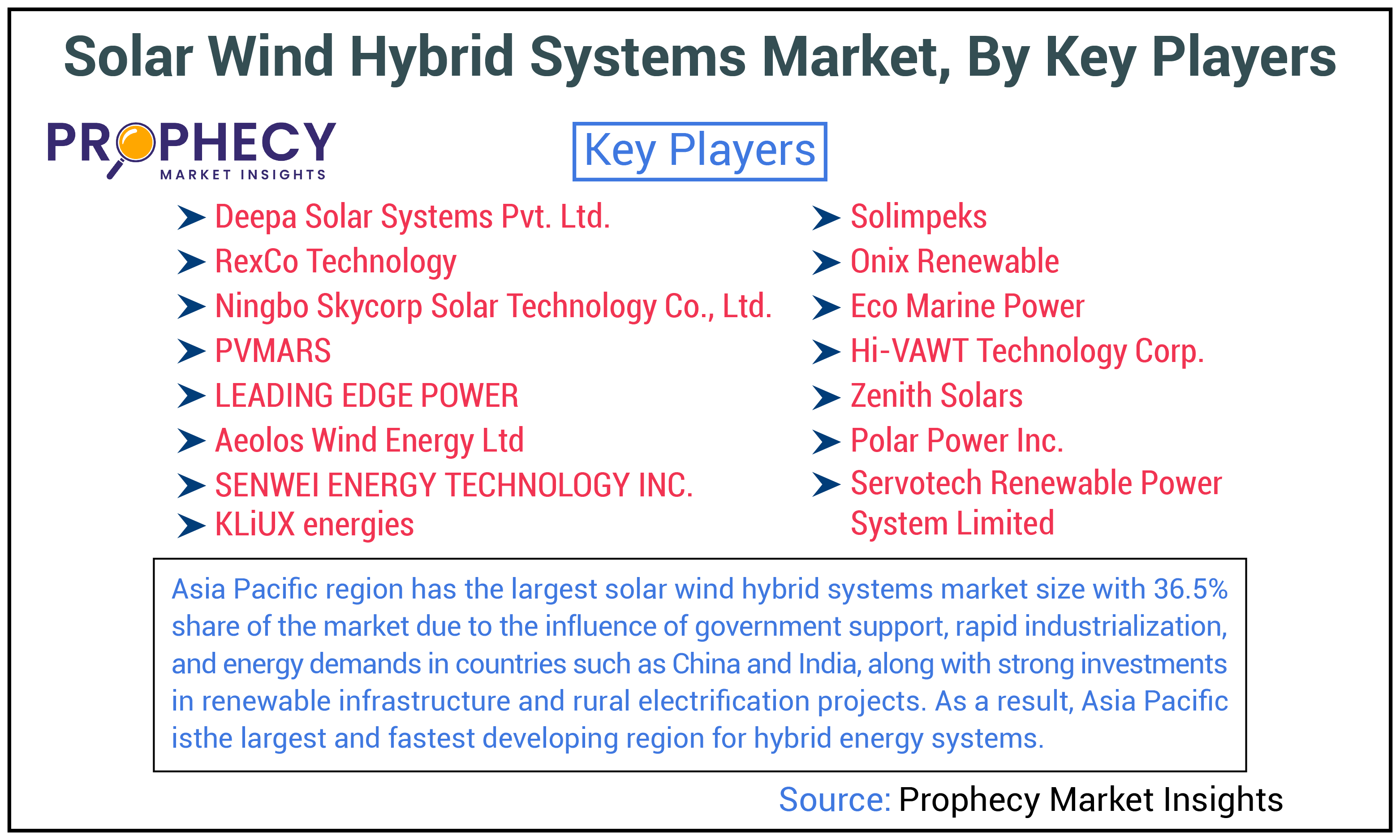
The prominent players operating in the market include, Deepa Solar Systems Pvt. Ltd., RexCo Technology, Ningbo Skycorp Solar Technology Co., Ltd., PVMARS, LEADING EDGE POWER, Aeolos Wind Energy Ltd, and others. To innovate and increase system efficiency, major players are spending money on R&D. Additionally, they are growing their product portfolios to meet a range of consumer needs with technology providers for improved integration. In order to propel market expansion, businesses are also concentrating on sustainability initiatives and improving consumer involvement.
Solar Wind Hybrid Systems Market Companies:
- Deepa Solar Systems Pvt. Ltd.
- RexCo Technology
- Ningbo Skycorp Solar Technology Co., Ltd.
- PVMARS
- LEADING EDGE POWER
- Aeolos Wind Energy Ltd
- SENWEI ENERGY TECHNOLOGY INC.
- KLiUX energies
- Solimpeks
- Onix Renewable
- Eco Marine Power
- Hi-VAWT Technology Corp.
- Servotech Renewable Power System Limited
- Polar Power Inc.
- Zenith Solars
View an Additional List of Companies in the Solar Wind Hybrid Systems Market
Global Solar Wind Hybrid Systems Recent News
- In March 2024, Schneider Electric and Mainspring Energy announced their partnership to develop a hybrid energy technology that utilizes Mainspring's Linear Generator and Schneider's EcoStruxure Microgrid Solution, with the intent to facilitate better decarbonization and energy resilience for commercial and industrial customers. This innovative capability now enables facilities to produce power on-site while dynamically switching between multiple fuels including low- and zero-carbon fuel options.
- In December 2020, India started a 30 GW hybrid solar and wind power project. The hybrid power plant's 72,600-hectare site in the Kutch district is equivalent to Singapore's whole land area. Storage systems will support the energy generated by solar and wind turbines.
Analyst View:
The solar wind hybrid systems space is on the rise as the demand for ongoing power supply and sustainable energy continues to increase, especially in off-grid and remote locations. Analysts have noted trends such as energy storage, smart grids and micro grids, and demonstrate a growing measurability. Some notable developments in the solar wind hybrid systems include government incentives, rural electrification, and technological advances that can enhance the overall efficiency of the solar wind hybrid systems.
Emerging markets and decentralized energy models or pathways are future connectors in the solar wind hybrid systems. The global push for clean, resilient energy sources is inspiring the growth potential for this market but obstacles remain, such as a lack of openness to hybridization, the cost of installation, some level of complexity, and required infrastructure. Overall, the solar wind hybrid systems market has good potential for growth, especially as global energy policies continues to focus in the direction of clean, resilient, and sufficient power solutions.
More Related Reports
Solar PV Power Market
Solar Photovoltaic (PV) Market
Solar Rooftop Market
Solar Control Window Films Market
Bifacial Solar Market
Global Solar Wind Hybrid Systems Company Profile
|
Company Name |
LEADING EDGE POWER |
|
Headquarter |
Hereford, Herefordshir, UK |
|
CEO |
David Walters |
|
Employee Count |
50 Employees |
Global Solar Wind Hybrid Systems Highlights
FAQs
Solar wind hybrid systems market size was valued at USD 1.5 Billion in 2025 and is expected to reach USD 3.1 Billion by 2035 growing at a CAGR of 8.3%.
Type, component, capacity, end-user, and region are the segmentation for the solar wind hybrid systems market.
North America, Asia Pacific, Europe, Latin America, and the Middle East & Africa. Asia-Pacific is expected to dominate the market.
The prominent players operating in the market include, Deepa Solar Systems Pvt. Ltd., RexCo Technology, Ningbo Skycorp Solar Technology Co., Ltd., PVMARS, LEADING EDGE POWER, Aeolos Wind Energy Ltd, SENWEI ENERGY TECHNOLOGY INC., KLiUX energies, Solimpeks, Onix Renewable, Eco Marine Power, Hi-VAWT Technology Corp., Servotech Renewable Power System Limited, Polar Power Inc., and Zenith Solars