Global Single Cell Analysis Market Overview
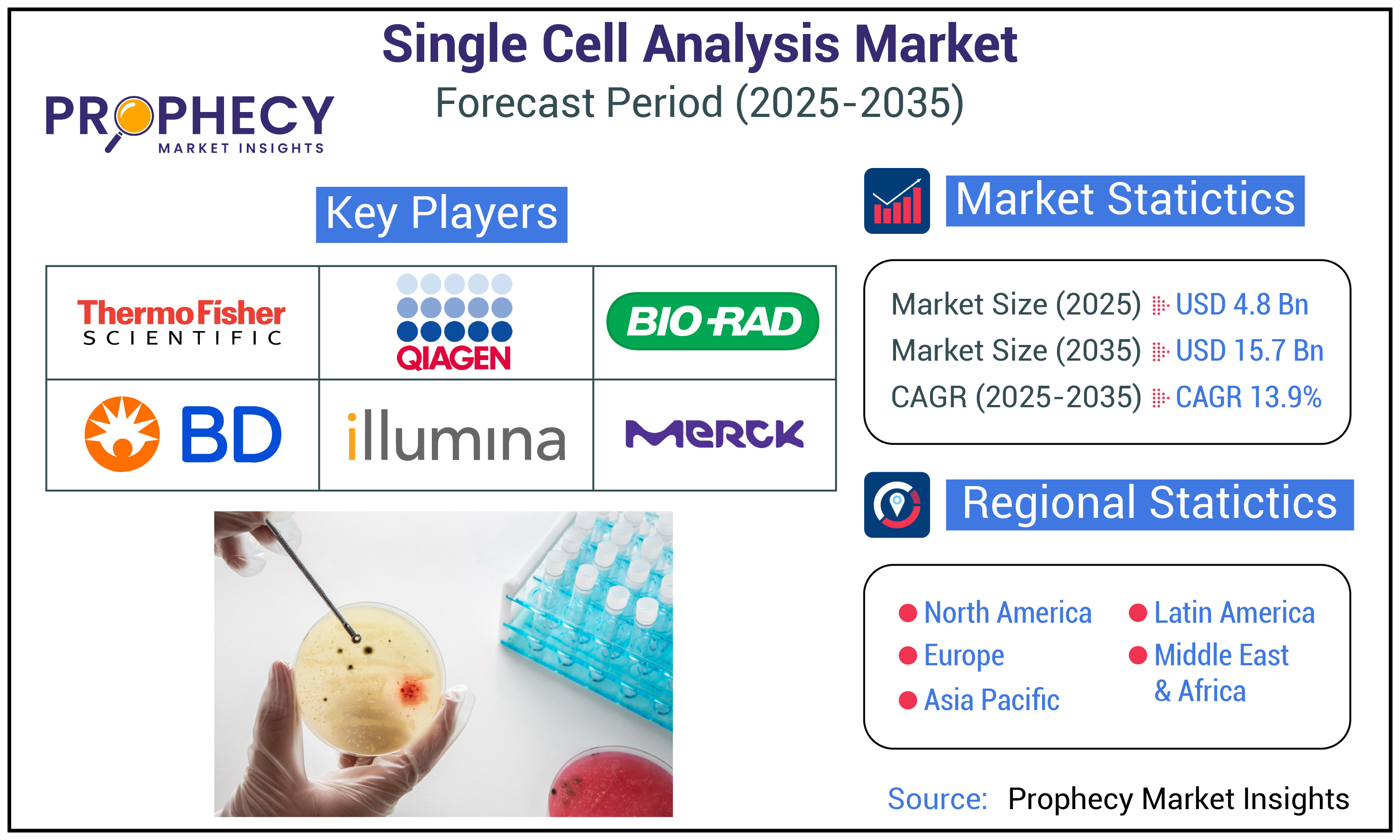
- The single cell analysis market size is expected to be USD 15.7 Billion by 2035.
- The market was valued at USD 4.0 Billion in 2024.
- Target market is growing at a CAGR of 13.9%.
Researchers can examine cell-to-cell variations within a population by using a scientific technique known as single cell analysis. This involves isolating and analyzing individual cells to study its distinctive molecular characteristics, such as gene expression, protein levels, or DNA modifications, which is not feasible when studying a bulk tissue sample of many cells at once.
Rising cancer and immunological disease rates, technological advancements in single-cell analysis products, increased emphasis on stem cell research, and increased attention to the biotechnology sector are some of the factors driving the single-cell analysis market growth. Furthermore, single cell analysis has a high resolution analysis, identifies rare cell types, can be used for cell lineage tracing, and can be used for multi-omics integration, further contributing in the market diversification.
AI Impact on the Market:
- Through automated cell type identification, behavior prediction, and integration of multi-omics data, artificial intelligence (AI) greatly influences single-cell analysis by facilitating the efficient analysis of large, complex datasets produced by single-cell sequencing. This allows for deeper insights into cellular heterogeneity, developmental trajectories, and disease mechanisms, ultimately speeding up biological research discovery.
Global Single Cell Analysis Market Drivers & Restraints
Key Drivers of Target Market:
Rising Incidence of Cancer is Fostering the Single Cell Analysis Market Growth
The ability to thoroughly examine the genetic and molecular diversity within individual cancer cells gives researchers a more thorough understanding of tumor development, progression, and potential therapeutic targets, all of which are essential for creating individualized treatment plans to fight the rising cancer burden. This is why single-cell analysis is becoming more and more significant in the face of rising cancer incidences.
- For Instance, in November 2024, researchers from UCL and The Francis Crick Institute, designed an algorithm called single-cell proliferation rate inference in non-homogeneous tumors through evolutionary routes or SPRINTER for the single cell analysis of genomic data, focusing on the proliferative behavior of cancer cells. The study also investigated the variations in cell proliferation across genetically distinct tumor clones.
Restraints:
Loss of Spatial Information in Single Cell Analysis is Obstructing the Market Growth
Single-cell analysis loses spatial information, disrupting cell connections and arrangement. Understanding biological processes including, tissue architecture, cell signaling, and microenvironments requires awareness of spatial context, especially in complex tissues such as cancers or brain networks.
- Counterbalance Statements: It is possible to maintain single-cell resolution while preserving spatial context by combining single-cell analysis with spatial transcriptomics or imaging methods.
Opportunities:
Integration of Multi-Omics with Single Cell will Open Up Opportunities in the Future
Integration of multi-omics with single cell refers to a technique in biology where researchers analyze individual cells using multiple omics technologies simultaneously. By integrating information from various biological layers, such as gene expression (RNA), protein levels, DNA methylation, and chromatin accessibility, all within the same cell, it is possible to study a complete picture of a cell's molecular state and gain a deeper understanding of cellular processes and mechanisms that could by examining just one omics layer at a time.
- For instance, in June 2024, Mission Bio had launched the Tapestri Single-cell Multiple Myeloma Multi-Omics Solution, a product suite designed to revolutionize multiple myeloma research and therapeutic development. The suite offered comprehensive insights into disease evolution and biology at the single-cell level, enabling researchers and drug developers to understand therapy resistance and disease relapse at the sub clonal level.
Global Single Cell Analysis Market Segmentations & Regional Insights
The market is segmented into product, cell type, technique, workflow, application, end-user, and region.
Product
By product, the market is bifurcated into consumables and instruments. The consumables segment dominated the market as there is a rising demand for high-quality reagents for the development of advanced bio therapeutic products. Additionally, there is also an increasing need of assay kits and beads.
- For instance, in October 2024, 10x Genomics, Inc., a leader in single cell and spatial biology, announced the launch of two new Chromium products intended to democratize access to single cell analysis. The new offerings, GEM-X Flex and GEM-X Universal Multiplex, were two Gene Expression Kits, which introduced significant improvements in performance, workflow and cost effectiveness, and enabled more researchers to pursue single cell analysis for more applications.
Cell Type
On the premise of cell type, the market is divided into human cells, animal cells, and others. The human cells hold the largest single cell analysis market share due to its widespread use in research, stem cell research, growing prevalence of cancer and infectious diseases, increased investment in cancer research, and the growing use of studying human cells for studying immune response to pathogens, vaccines, and other cancer cells.
Technique
Based on technique, the market is sub-segmented into flow cytometry, NGS, PCR, microscopy, and others. The flow cytometry segment is expected to dominate the market due to its ability to quickly measure the physical and chemical characteristics of many cells. In addition to this, it is used to analyze multiple characteristics of a sample at the single-cell level, and can be used in research and diagnostic labs to understand cell morphologies.
- For instance, in September 2022, BD (Becton, Dickinson and Company), a leading global medical technology company, launched BD Research Cloud, a cloud-based software solution designed to streamline the flow cytometry workflow to enable higher quality experiments with faster time and to analyze single cells, thereby, helping the scientists working across a range of disciplines including immunology, virology, oncology and infectious disease monitoring.
Workflow
By workflow, the market is categorized into single cell isolation and library preparation downstream analysis, and data analysis. The downstream analysis workflow is attributed to lead the market as it encompasses a broader range of activities including data visualization, statistical analysis, cell type annotation, pathway analysis, and others. These activities are crucial for extracting meaningful biological insights from the raw single-cell data generated in the initial analysis steps.
- For instance, in May 2023, Cellenion, a BICO company, announced the opening of the BICO group’s first Single Cell Analysis Centre of Excellence at its facilities in Lyon. This state-of-the-art centre offered a range of services (cellenSERVICES) to companies and academic groups seeking complete solutions for its single cell projects from tissue dissociation to single cell isolation, library preparation, sequencing and subsequent downstream analysis.
Application
On the basis of application, the market is grouped into cancer, immunology, neurology, stem cell, non-invasive prenatal diagnosis, in-vitro fertilization, and others. The cancer segment of the application is forecasted to govern the market due to the high prevalence of cancer and the potential of single cell analysis to significantly impact cancer diagnosis and treatment by identifying tumor heterogeneity and rare cell populations.
- For instance, in January 2025, BioSkryb Genomics, a pioneer in single-cell and ultra-low input multiomics announced the launch of ResolveSEQ MRD, an innovative service offering designed to empower further classification and characterization of the MRD cells for hematologic malignancies. ResolveSEQ MRD integrated seamlessly with established flow cytometry (FC) protocols to provide unparalleled single-cell genome analysis and transcriptome characterization, offering deeper biological insights to drive greater discoveries in precision oncology.
End-User
Academic and research laboratories, biotechnology and pharmaceutical companies, hospitals and diagnostic laboratories, and others, are the classifications of this market, under end-user. The academic and research laboratories segment is influencing the market as the extensive use of single cell analysis by academic and research laboratories is done to explore various applications in fields, such as genomics, transcriptomics, epigenomics, and metabolomics.
- For instance, in June 2024, Bio-Rad Laboratories, Inc., a global leader in life science research and clinical diagnostics products, announced the launch of the ddSEQTM Single-Cell 3' RNA-Seq Kit and complementary Omnition v1.1 analysis software for single-cell analysis, transcriptome and gene expression research. The ddSEQ Cell Isolator, the ddSEQ Single-Cell 3' RNA-Seq Kit delivered high-quality single-cell 3' RNA-Seq libraries in a fast, efficient, and affordable workflow, allowing researchers to easily conduct single-cell gene expression and regulation analyses
Region
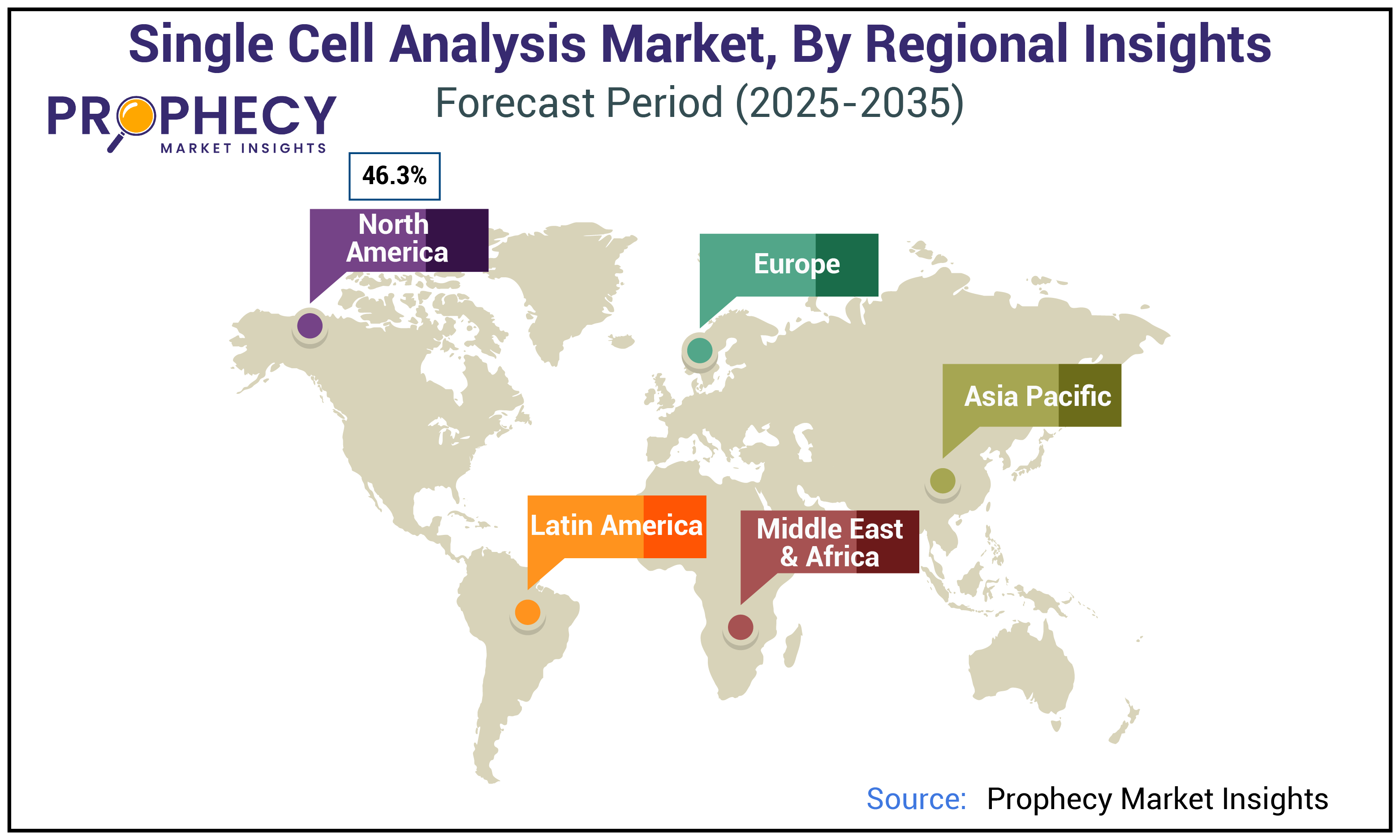
Geographically, the market is catalogued into North America, Europe, Asia Pacific, Latin America, and the Middle East & Africa.
North America: This region held the biggest single cell analysis market share. This is due to a number of factors, including the presence of a robust healthcare sector, rising research and development in the pharmaceutical industry, technological developments, and supportive government initiatives.
- For instance, in August 2022, Novogene America launched a new single-cell laboratory, based on chromium platform powered by 10x Genomics. Benefited from cutting-edge Next GEM technology powered by 10x Genomics, single-cell RNA-seq made it possible to identify each single cell from a pool of cells by partitioning each cell into a separate microdroplet called GEM (Gel Bead-In EMulsion) and labeling each single cell with unique cell barcode, each mRNA transcript with UMI (unique molecular identifier), which can be traced via bioinformatic data analysis.
Europe: This region has the fastest growing market, during to the forecast period. This is due to this region’s, strong healthcare infrastructure and research facilities, its focus on precision medicine, a well-established healthcare infrastructure, and a strong government funding.
- For instance, in January 2025, Sphere Fluidics, a leading provider of innovative picodroplet-based microfluidics solutions for functional single cell analysis and isolation, announced the launch of Cyto-Mine Chroma and the opening of its Early Access Program at SLAS2025 International Conference and Exhibition in San Diego. Cyto-Mine Chroma represented the next generation of Sphere Fluidics’ industry-leading Cyto-Mine single-cell analysis platform.
Single Cell Analysis Market Report Scope:
|
Attribute |
Details |
|
Market Size 2025 |
USD 4.8 Billion |
|
Projected Market Size 2035 |
USD 15.7 Billion |
|
CAGR Growth Rate |
13.9% (2025-2035) |
|
Base year for estimation |
2024 |
|
Forecast period |
2025 – 2035 |
|
Market representation |
Revenue in USD Billion & CAGR from 2025 to 2035 |
|
Regional scope |
North America - U.S. and Canada Europe – Germany, U.K., France, Russia, Italy, Spain, Netherlands, and Rest of Europe Asia Pacific – China, India, Japan, Australia, Indonesia Malaysia, South Korea, and Rest of Asia Pacific Latin America - Brazil, Mexico, Argentina, and Rest of Latin America Middle East & Africa – GCC, Israel, South Africa, and Rest of the Middle East & Africa |
|
Report coverage |
Revenue forecast, company share, competitive landscape, growth factors, and trends |
Segmentation:
By Product:
- Consumables
- Beads
- Kits
- Reagents
- Others
- Instruments
- Microscopes
- Hemocytometers
- Flow Cytometers
- Others
By Cell Type:
- Human Cells
- Animal Cells
- Others
By Technique:
- Flow Cytometry
- NGS
- PCR
- Microscopy
- Others
By Workflow:
- Single Cell Isolation and Library Preparation
- Downstream Analysis
- Data Analysis
By Application:
- Cancer
- Immunology
- Neurology
- Stem cell
- Non-invasive prenatal diagnosis
- In-vitro fertilization
- Others
By End-User:
- Academic and Research Laboratories
- Biotechnology and Pharmaceutical Companies
- Hospitals and Diagnostic Laboratories
- Others
By Region:
- North America
- U.S.
- Canada
- Europe
- Germany
- U.K.
- France
- Russia
- Italy
- Spain
- Netherlands
- Rest of Europe
- Asia Pacific
- China
- India
- Japan
- Australia
- Indonesia
- Malaysia
- South Korea
- Rest of Asia Pacific
- Latin America
- Brazil
- Mexico
- Argentina
- Rest of Latin America
- Middle East & Africa
- GCC
- Israel
- South Africa
- Rest of the Middle East & Africa
Global Single Cell Analysis Market Competitive Landscape & Key Players
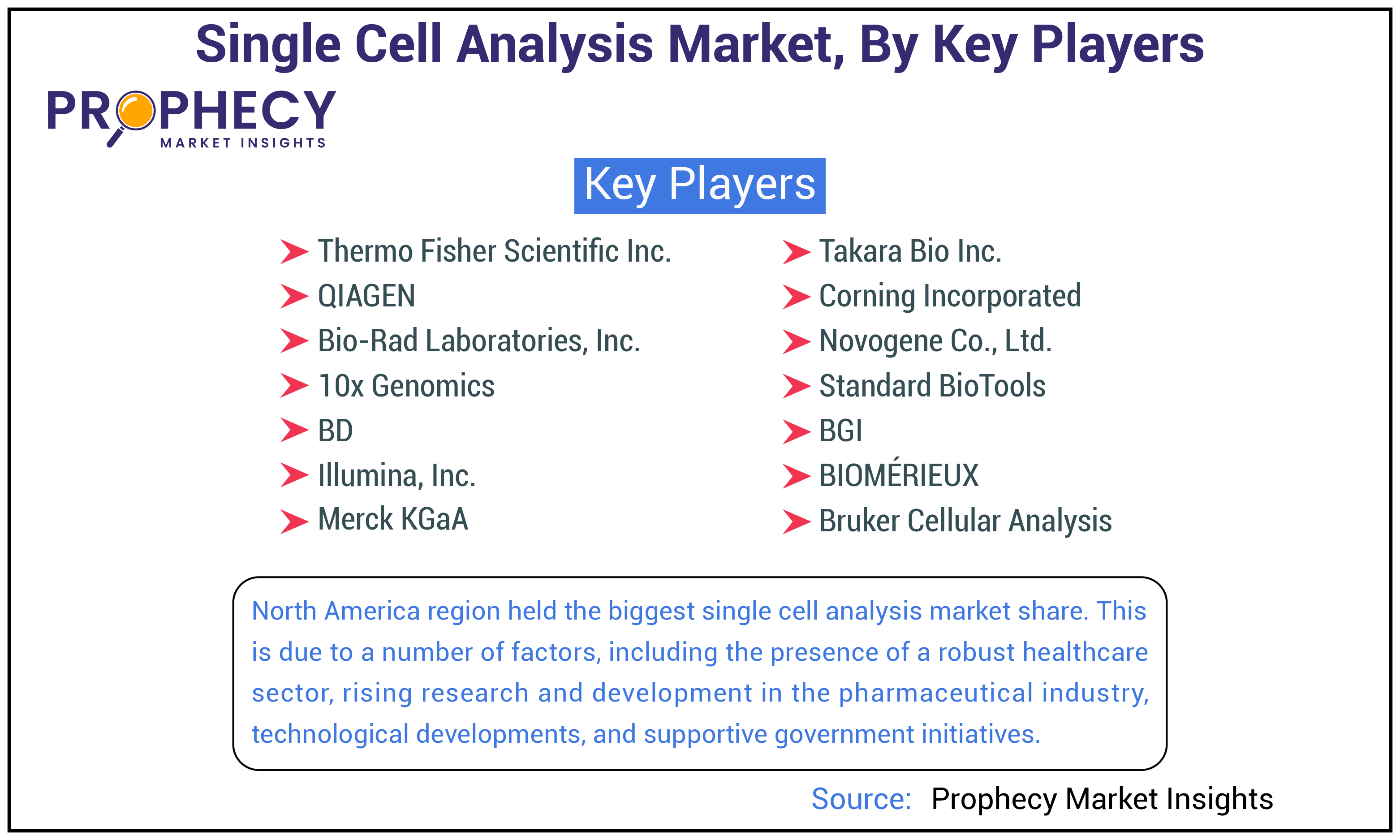
The companies operating in the market are Thermo Fisher Scientific Inc., QIAGEN, Bio-Rad Laboratories, Inc., 10x Genomics, BD, and others. The key players are adopting strategies such as increased efforts in research and development, collaborating with research institutions, providing comprehensive data analysis solutions, and adopting new technologies for the diversification of the market.
Single Cell Analysis Market Companies:
- Thermo Fisher Scientific Inc.
- QIAGEN
- Bio-Rad Laboratories, Inc.
- 10x Genomics
- BD
- Illumina, Inc.
- Merck KGaA
- Takara Bio Inc.
- Corning Incorporated
- Novogene Co., Ltd.
- Standard BioTools
- BGI
- BIOMÉRIEUX
- Bruker Cellular Analysis
View a Additional List of Companies in Single Cell Analysis Market
Global Single Cell Analysis Market Recent News
- In October 2024, Parse Biosciences, a leading provider of accessible and scalable single cell sequencing solutions, announced the launch of the Parse GigaLab to scale single cell sequencing to billions of cells per year. The GigaLab leveraged Parse’s Evercode single cell technology with a scaled up workflow and expanded automation to enable discoveries never before deemed possible with current single cell approaches.
- In October 2024, BD (Becton, Dickinson and Company), a leading global medical technology company, announced the commercial launch of the first in a family of high-throughput, robotics-compatible reagent kits that would enable automation to ensure greater consistency and increased efficiency of large-scale, single-cell discovery studies and analysis.
Analyst View:
Rising cancer and immunological disease rates, technological advancements in single-cell analysis products, increased emphasis on stem cell research, rising demand for personalized medicine, increased funding and investments, emerging applications in drug discovery, and increased attention to the biotechnology sector are some of the factors driving the single-cell analysis market expansion.
More Related Reports
Single-Cell Genome Sequencing Market
Single-Cell Multi-Omics Market
Single Cell Analysis Market
Single-use Bioprocessing Probes and Sensors Market
Cell Cryopreservation Market
Global Single Cell Analysis Market Company Profile
|
Company Name |
Thermo Fisher Scientific Inc. |
|
Headquarter |
Waltham, Massachusetts, U.S. |
|
CEO |
Mr. Marc N. Casper |
|
Employee Count (2024) |
122,000 Employees |
Global Single Cell Analysis Market Highlights
FAQs
Single cell analysis market size was valued at USD 4.8 Billion in 2025 and is expected to reach USD 15.7 Billion by 2035 growing at a CAGR of 13.9%.
The market is segmented into product, cell type, technique, workflow, application, end user, and region.
The market is segmented by region North America, Asia Pacific, Europe, Latin America, and the Middle East & Africa. North America is expected to dominate the Market.
The key players operating in the single cell analysis market include Thermo Fisher Scientific Inc., QIAGEN, Bio-Rad Laboratories, Inc., 10x Genomics, BD, Illumina, Inc., Merck KGaA, Takara Bio Inc., Corning Incorporated, Novogene Co., Ltd., Standard BioTools, BGI, BIOMÉRIEUX, and Bruker Cellular Analysis.