Global Rotigotine Transdermal Patches Market Overview
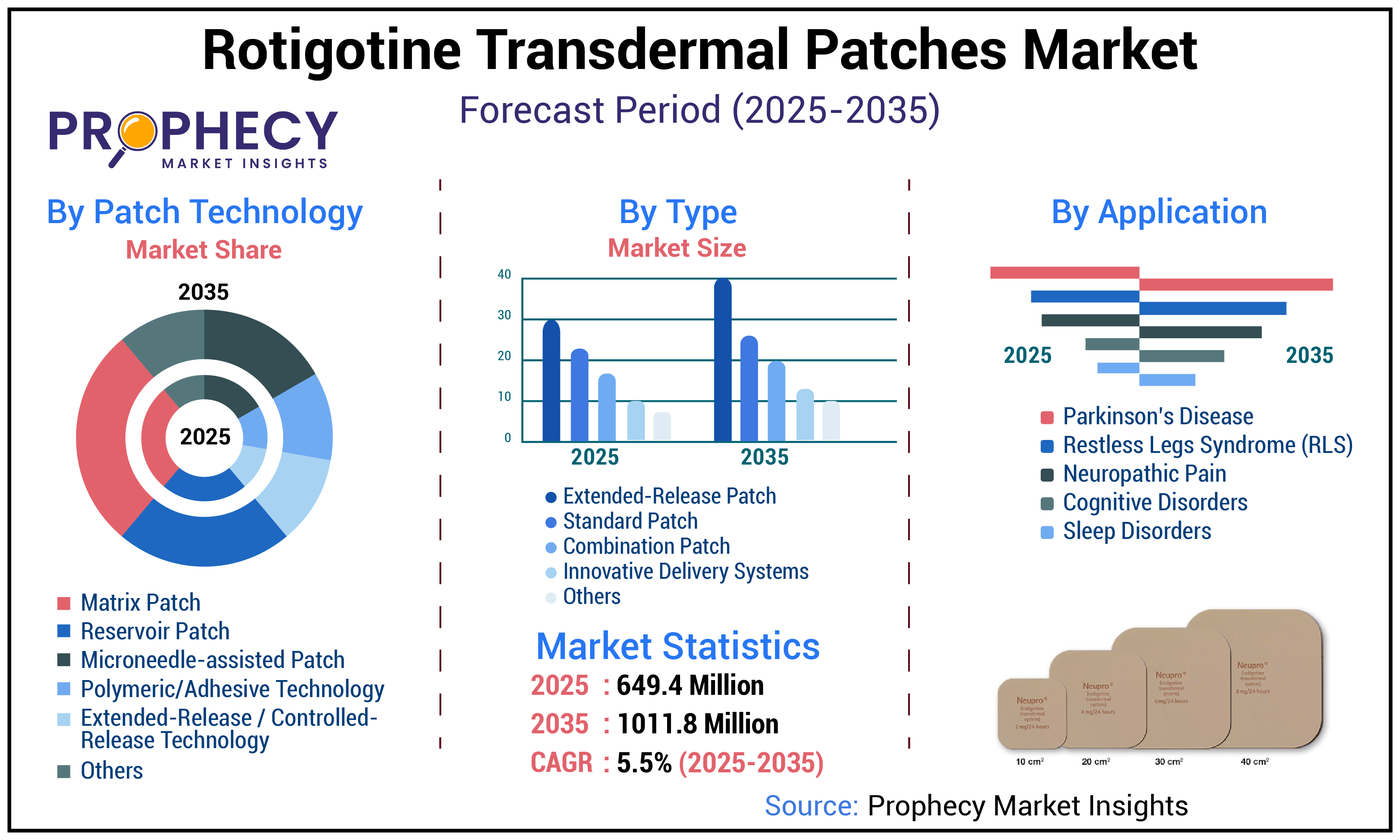
- 2024 Market Size: USD 621.1 Million
- 2035 Projected Market Size: USD 1011.8 Million
- CAGR (2025-2035): 5.5%
- North America: Largest Market in 2024
Rotigotine transdermal patches is a new type of medicine delivering system aimed at delivering long lasting and controlled amounts of rotigotine, a non-ergoline type of dopamine receptor agonist, in the form of patches that are attached on the skin. The patches are primarily related to the treatment of Parkinson disease and Restless Legs Syndrome (RLS) and provide a consistent plasma drug concentrations in a 24 hours dosing where motor fluctuations are minimized, lessening of the off periods and enhance patient compliance over conventional oral formulations. They are particularly advantageous as they can be used in non-invasive processes among the elderly patients or patients with problems in swallowing.
Rotigotine transdermal patches market is experiencing robust growth due to of the rising incidences of Parkinson and Restless Legs Syndrome (RLS) across the globe, especially in the aging world. As per Parkinson’s Foundation more than 10 million people worldwide are estimated to be living with Parkinson’s disease.
An increased level of awareness regarding non-oral drug delivery systems, as well as patient preference to convenient and sustained forms of treatment, are also increasing adoption. Also, growing healthcare coverage in new economies as well as on-going technological development of different types of transdermal patches are increasing market opportunities. The support of the regulatory bodies to therapies aimed at increasing patient compliance and lowering the costs of long term treatment also helps in the smooth upward growth cycle of this market.
Rotigotine Transdermal Patches E.U. Clinical Trial Data:
|
EudraCT Number |
Sponsor Protocol Number |
Sponsor Name |
Title |
Medical condition |
Population Age |
Start Date |
|
2021-003403-18 |
RL0007 |
UCB Biopharma SRL |
A Remote, Open-Label, Long-Term, Follow-up Study to Determine the Safety, Tolerability, and Efficacy of Rotigotine Transdermal System as Monotherapy in Adolescents With Restless Legs Syndrome |
Restless Legs Syndrome (RLS) |
Adolescents, Under 18 |
2023-09-18 |
|
2018-001445-13 |
SP1006 |
UCB Biopharma SRL |
A Remote, Double-Blind, Randomized, Placebo-Controlled Study of Rotigotine Transdermal System in Adolescent Subjects With Idiopathic Restless Legs Syndrome |
Restless Legs Syndrome (RLS) |
Adolescents, Under 18 |
2023-09-18 |
Current Industry Dynamics & Insights:
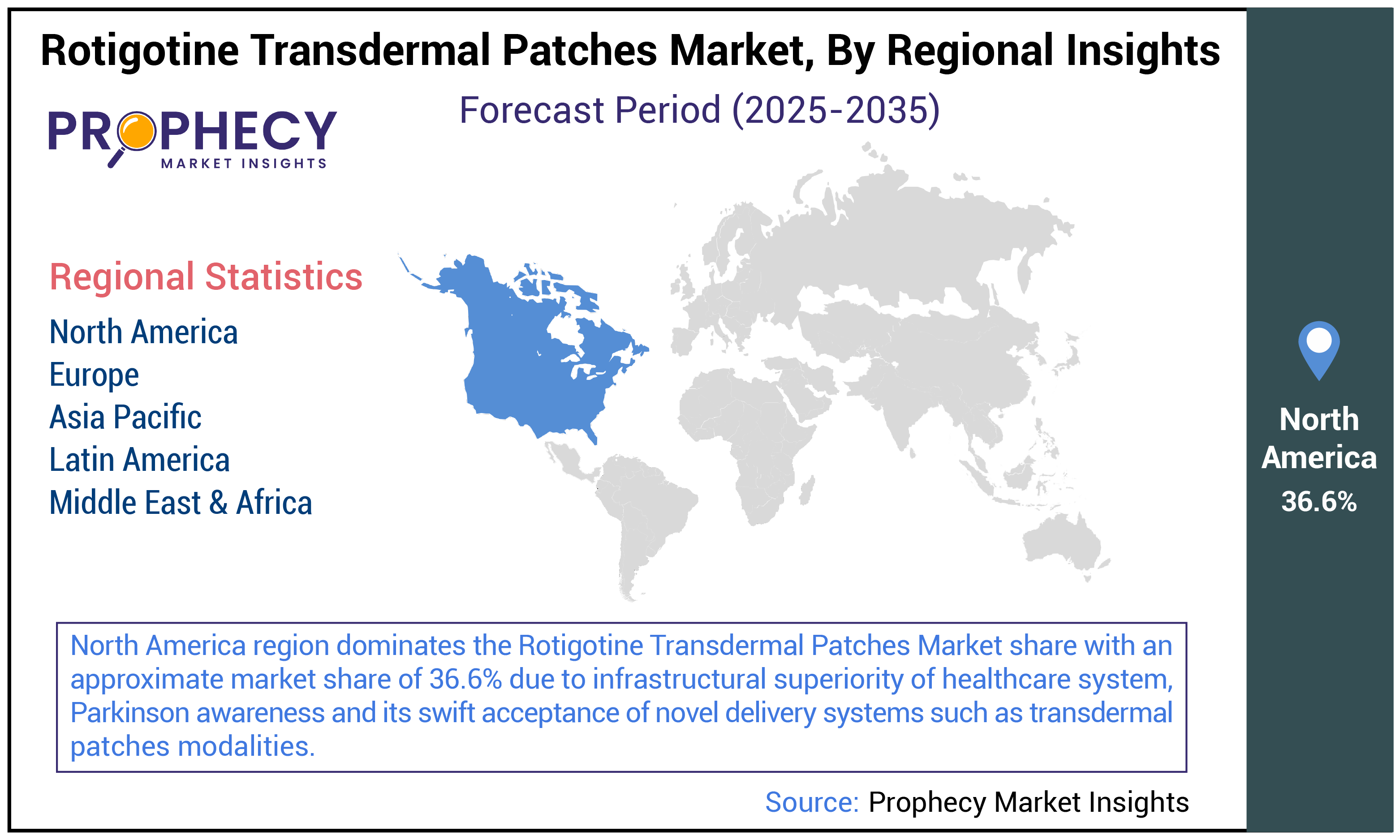
- North America has the largest regional share in the rotigotine transdermal patches market, with almost 36.6%.
- The second-largest and fastest-growing area is Europe, by accounting for 23.9%.
- By type, standard Patch probably have the most market share among others.
- On the account of patch technology, matrix patch are the most widely used in the rotigotine transdermal patches market.
Global Rotigotine Transdermal Patches Market Drivers & Restraints
Drivers and Restraints:
|
Drivers |
Restraints |
Opportunities & Trends |
|
|
|
Key Drivers:
Rising Parkinson’s prevalence with aging population
One of the major factors that attributes to the expansion of the rotigotine transdermal patches market is the increment of the cases of Parkinson disease, which has been largely correlated with the aging population of the global world. Patients with Parkinson are particularly over the age of 60 and the patients who need prolonged treatment of dopaminergic treatments are rising continuously with the improvement of life expectancy globally. This drives the need to have patient-friendly single continuous drug delivery modes such as rotigotine patches with minimal pill burden and better adherence.
- For Instance, according to a BMJ study, Parkinson will more than double in the world by 2050 to become 25.2 million, a 112% rise compared to 2021. This is mainly attributed to aging population and 89% of the augment is associated with aging population. The increasing aging population is resulting in an increase in patients requiring long-term dopaminergic therapy and this aspect necessities patient-friendly continuous drug delivery systems such as rotigotine transdermal patches to enhance adherence and drug efficacy in this growing patient population.
Restraints:
Complex patch manufacturing & scale-up
Complexity of patch manufacturing and scale up is a major constraint in the development in the rotigotine transdermal patches market. In the development of transdermal patches, careful management is needed in terms of drug formulation, the makeup of the matrix, and adhesive performance so that the drug delivery and the skin permeability can be reproducible. Such technical issues are compounded when in large-scale manufacturing processes where the maintaining uniformity, standard and regulatory conformity become even more challenging. Also, the cost of production and the time it takes to get to market is increased due to of the need of specialized equipment and quality control measures.
- Counterbalance Statements: The manufacturing and scale-up complexities in the rotigotine transdermal patches market are being addressed through transdermal technology modifications, automation, improved formulation techniques, and quality control systems. Collaborations and investments by industry leaders are facilitating an efficient manufacturing process, reducing expenses, and reducing time to market, despite challenges in the market.
Opportunities & Trends:
New Delivery Technologies Offer Strong Growth Potential for Rotigotine Patches
The rotigotine transdermal patch market has potent prospects due to the introduction of new transdermal delivery technologies, i.e., micro needle-assisted patches and enhancing permeability films. These new formulations can increase the absorption of drugs, provide more predictable drug release patterns and minimize skin irritation, which have plagued conventional matrix patches or reservoir patches. Such systems as micro needle systems, in particular, allow a non-painful, minimally invasive route of application via the skin barrier, and, possibly, can be used to increase patient adherence, as well as extend the therapeutic use to other disorders such as dystonia and Tourette syndrome.
- For Instance, In a 2024 article published in a Journal of Controlled Release, a dissolving microarray (micro needle) patch loaded with a rotigotine Nano suspension could be a solution to the traditional, matrix-based formulation. Although bodes well as a next-generation transdermal system in terms of potentially improving absorption and user experience, no clinical assessment data or studies evaluating patient outcomes have been published to date to validate its efficacy or patient tolerance.
Global Rotigotine Transdermal Patches Market Segmentations & Regional Insights
Type, patch technology, strength, application, end users, and region are the divisions of the rotigotine transdermal patches market.
By Type:
Standard patch, extended-release patch, combination patch, and innovative delivery systems, and others are type on which rotigotine transdermal patches market is segmented. Extended-Release Patch are the most widely use and are most dominant segment in rotigotine transdermal patches market share due to its slow-release forms which provides a stable dopaminergic stimulation throughout 24 hours, minimizing motor fluctuations and off states in Parkinson disease, and are hence favored by clinicians to provide enhanced symptom control and patient compliance.
Second most commonly used transdermal rotigotine patches are standard patches due to their inexpensive cost and established safety profile. They are frequently prescribed for patients with early disease stages or who require dose adjustments.
By Patch Technology:
Based on the patch technology, the rotigotine transdermal patches market is divided into matrix patch, reservoir patch, micro needle-assisted patch, polymeric/adhesive technology, extended-release / controlled-release technology, and others. Matrix patch are the most widely used in rotigotine transdermal patches market as it is simpler to manufacture, offers a steady drug release, and eliminates the leakage risks seen in reservoir patches. It is also easier to scale for commercial production, making it the industry standard.
The second most common commonly used patch is reservoir as it allows for precise dose control and is still used in niche cases, particularly for patients requiring stable, long-term dopaminergic therapy with minimized fluctuations in drug levels..
- For instance, A study in the Journal of Frontiers in Neurology in 2021 found that rotigotine transdermal patch employs a silicone adhesive matrix system to enable a 24-hour continuous delivery of the drug. This patch technology of patches will make sure that the plasma concentrations are stable which increases patient compliance and give good consistent therapeutic results in the treatment of conditions such as the Parkinson disease and Restless Legs Syndrome.
By Strength:
Low dose, medium dose, high dose, and others are strength of the rotigotine transdermal patches market. Medium dose i.e. 6 mg/24h, 8 mg/24h around has the biggest rotigotine transdermal patches market share. Such doses are optimal combination of positively affecting the symptoms of the disease without the manifestation of side effects, which is why they can be used as a maintenance method.
Second place goes to Low dose (2 mg/24h, 4 mg/24h), as low-dose patches are often prescribed for initiating therapy or treating Restless Legs Syndrome (RLS), where lower dopamine stimulation is sufficient.
By Application:
On the application, rotigotine transdermal patches market is categorized into Parkinson’s disease, restless legs syndrome (RLS), neuropathic pain, cognitive disorders, sleep disorders, and others. Parkinson ’s disease is the most dominant in rotigotine transdermal patches market share when it comes to applications. Parkinson’s is the primary approved indication for rotigotine patches, driving the majority of sales. The chronic and progressive nature of the disease sustains long-term demand.
The second most common application is restless legs syndrome this is due to its dopaminergic action. Lower-dose patches make it easier to manage symptoms overnight.
- For instances, In 2022, The Lancet Neurology published a clinical trial that established the effectiveness of the rotigotine transdermal patch in the treatment of motor and non-motor symptoms of Parkinson's disease. The patch showed significant enhancement of motor and quality of life in patients, which underscores its suitability as a first-line treatment method in the management of Parkinson disease.
By End Users:
Hospitals &neurology clinics, rehabilitation centers, specialty care centers, homecare / self-administration, clinical research centers, and others are end users of the rotigotine transdermal patches market. Hospitals and neurology clinics holds largest rotigotine transdermal patches market share for end users as initial diagnosis, titration, and management of complex cases occur in hospitals and specialty clinics. Physicians prefer to monitor patients closely when starting dopaminergic therapy.
The second largest market is for homecare/ Self- administration, once stabilized, patients can apply patches at home, improving adherence and convenience.
Regional Insights:
Geographically, the rotigotine transdermal patches market is studied across North America, Europe, Asia Pacific, Latin America, and the Middle East & Africa.
North America: This region dominates the rotigotine transdermal patches market share with an approximate market share of 36.6% due to infrastructural superiority of healthcare system, Parkinson awareness and its swift acceptance of novel delivery systems such as transdermal patches modalities. It is also advantaged by potent payer mechanics and CNS disorders research and development abilities.
- North America is experiencing the pressure of prices and, payment is strict and the market is powerful. The costs of drugs and the complicated payer requirements (e.g., prior authorization processes) may restrict the uptake and slow access to specific patients, particularly when the expensive transdermal products are provided at high prices.
- U.S. Rotigotine Transdermal Patches Market Insights:
The largest market share in North America is captured in the United States due to of the advantages of advanced healthcare infrastructure complemented by a high prevalence of Parkinson disease, and fast uptake of innovative drug-delivery products such as Neupro (rotigotine patches). The presence of strong reimbursement models and properly constructed neurology networks will provide patients with the ability to receive these treatments fast.
Europe: This region holds the second largest market due to developed healthcare systems, well-developed reimbursement system, as well as older population with growing dopaminergic treatment demands. The area has robust networks of clinical research, early use of evidence-based treatment, and a large concentration of neurological expertise. Also, harmonizing drug approvals at European Union wide level by the European medicine agency ensures that approvals are made as quickly as possible and the government funding in neurodegenerative disease programs enhances the diagnosis and treatment rates.
- One of the problems Europe faces is that of intense regulatory landscape and the increasing cost-effectiveness concern. Health systems require robust pharmacoeconomic rationale, which can delay introduction or expansion of new formulation/generics to the market.
- Germany Rotigotine Transdermal Patches Market Insights:
In the European market, Germany is the leader in the intensive use of rotigotine patches, which is due to unrestricted access to healthcare and the reimbursement system, which prefers the introduction of evidence-based treatment of neurodegenerative disorders. A large ratio of elderly patients available in the country leads to a continuing demand, and the developed system of networks and hospitals and high population of major pharmaceutical companies ensures a certainty of the country to base distribution.
Asia Pacific: This region follows in terms of total market share but leads in growth potential due to the increased prevalence of Parkinson, increased aged population and enhanced access to healthcare. It can be predicted that the region will increase the most this upcoming period due to of the development of healthcare infrastructure and the rising need in patient-friendly medication delivery systems.
- Asia Pacific is seeing rapid growth among urban areas, on the other hand uneven healthcare infrastructure is put forward and gaps in rural accessibility opens up significant obstacles of adoption. As large cities find better diagnostics and spend more on health care, an inconsistent supply chain and low disease awareness hamper widespread adoption in developing areas. These differences could delay a uniform market on-demand despite strong types.
- China Rotigotine Transdermal Patches Market Insights:
For the Asia-Pacific region boasts a maximum market size and growth rate in China due to the rapid aging population and an increase in physicians and patients using the symptoms of Parkinson disease. Rates of adoption are spurred by government spending on medical infrastructure and the growth of a middle-class with improved access to specialty care.
Rotigotine Transdermal Patches Market Report Scope:
|
Attribute |
Details |
|
Market Size 2025 |
USD 649.4 Million |
|
Projected Market Size 2035 |
USD 1011.8 Million |
|
CAGR Growth Rate |
5.5% (2025-2035) |
|
Base year for estimation |
2024 |
|
Forecast period |
2025 – 2035 |
|
Market representation |
Revenue in USD Million& CAGR from 2025 to 2035 |
|
Regional scope |
North America - U.S. and Canada Europe – Germany, U.K., France, Russia, Italy, Spain, Netherlands, and Rest of Europe Asia Pacific – China, India, Japan, Australia, Indonesia, Malaysia, South Korea, and Rest of Asia-Pacific Latin America - Brazil, Mexico, Argentina, and Rest of Latin America Middle East & Africa – GCC, Israel, South Africa, and Rest of Middle East & Africa |
|
Company Landscape |
Market Share Analysis of Companies Heat Map Analysis Company Overview, Types Overview Financial Information, Key Highlights Business Strategies Overview SWOT Analysis |
|
Report coverage |
Revenue forecast, company share, competitive landscape, growth factors, and trends |
|
Value Added Data Infosets |
Besides fundamental market insights such as the size of the market, growth rate, segmentation, regional study, and key players, our reports carry value-added data sets such as trade flow (import-export) analysis, production and consumption overview, price trend evaluation, supply and value chain mapping, and raw material availability. Moreover, we provide strategic tools as PESTLE and Porter’s Five Forces analysis, examination of the regulatory landscape, as well as monitoring of technology and innovation thereby providing a comprehensive overview which facilitates sensible and anticipatory decision-making. |
Segmentation:
By Type:
- Standard Patch
- Extended-Release Patch
- Combination Patch
- Innovative Delivery Systems
- Others
By Patch Technology:
- Matrix Patch
- Reservoir Patch
- Microneedle-assisted Patch
- Polymeric/Adhesive Technology
- Extended-release / Controlled-release Technology
- Others
By Strength:
- Low Dose (2 mg/24h, 4 mg/24h)
- Medium Dose (6 mg/24h, 8 mg/24h)
- High Dose(10 mg/24h, 12 mg/24h)
- Others
By Application:
- Parkinson’s Disease
- Restless Legs Syndrome (RLS)
- Neuropathic Pain
- Cognitive Disorders
- Sleep Disorders
- Others
By End Users:
- Hospitals & Neurology Clinics
- Rehabilitation Centers
- Specialty Care Centers
- Homecare / Self-Administration
- Clinical Research Centers
- Others
By Region:
- North America
- U.S.
- Canada
- Europe
- Germany
- U.K.
- France
- Russia
- Italy
- Spain
- Netherlands
- Rest of Europe
- Asia Pacific
- China
- India
- Japan
- Australia
- Indonesia
- Malaysia
- South Korea
- Rest of Asia Pacific
- Latin America
- Brazil
- Mexico
- Argentina
- Rest of Latin America
- Middle East & Africa
- GCC
- Israel
- South Africa
- Rest of Middle East & Africa
Global Rotigotine Transdermal Patches Market Competitive Landscape & Key Players
Companies should also promote the development of transdermal drug delivery technologies, i.e. microneedle systems or enhanced permeability films, so that the absorption of drugs is enhanced and patients are made more comfortable. The large, multinational studies have the ability to increase the size of clinical evidence thereby strengthen physician confidence and drive guideline inclusion.
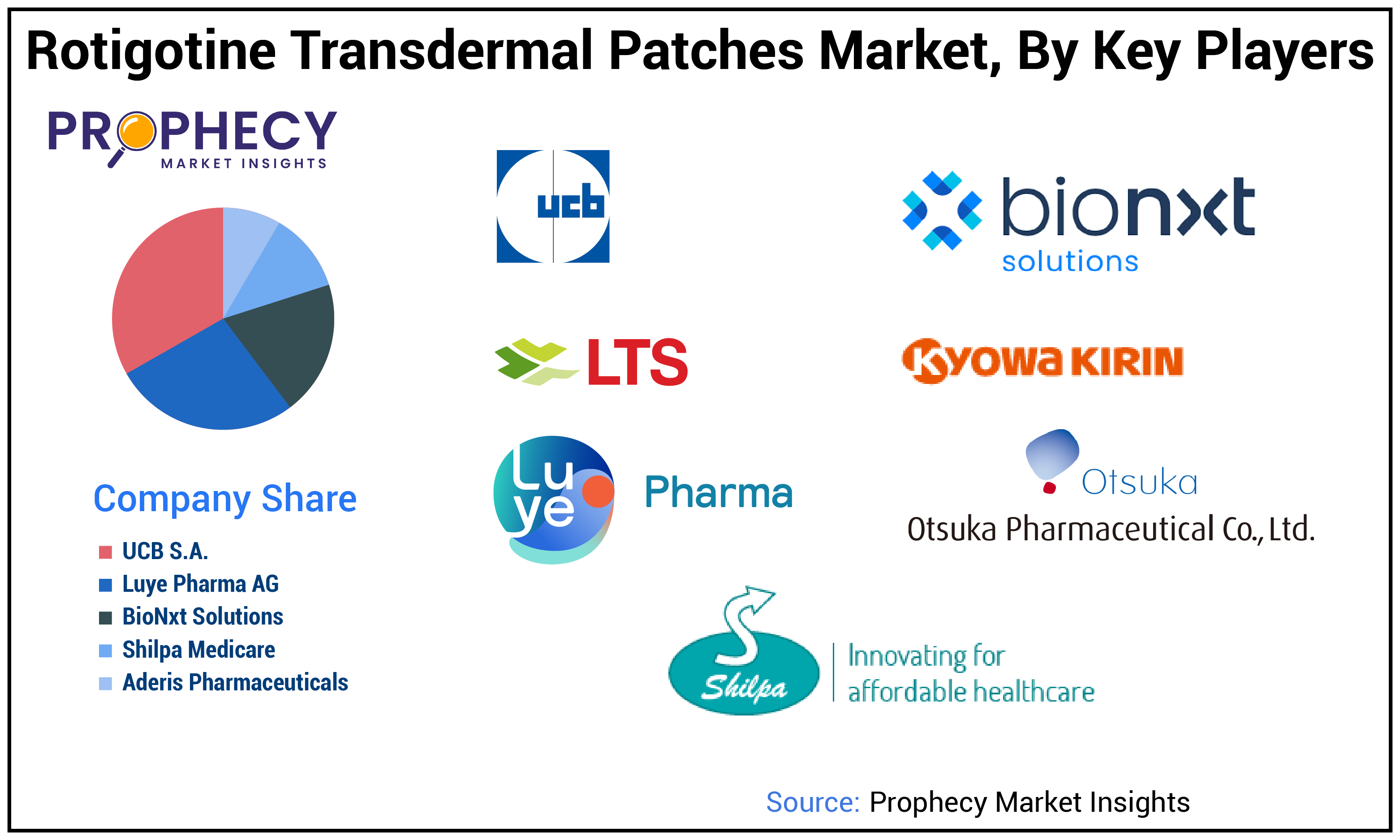
Market access in the new regions can be enhanced via strategic alliances with local distributors, coupled with promotion of education amongst the patients. Also, the pricing and reimbursement strategies to be implemented will be optimized in the effort to remove cost barriers to adoption. The key players for this market are Luye Pharma AG Key players for this market are UCB S.A and others.
Rotigotine Transdermal Patches Market Companies:
- UCB S.A.
- Luye Pharma AG
- BioNxt Solutions
- Shilpa Medicare
- Aderis Pharmaceuticals
- Otsuka Pharmaceutical Co., Ltd.
- Kyowa Kirin Co., Ltd.
- LTS Lohmann Therapie-Systeme AG
View an Additional List of Companies in the Rotigotine Transdermal Patches Market
Global Rotigotine Transdermal Patches Market Recent News
- In April 2025, Luye Pharma Group reported the commercialization of its rotigotine transdermal patch under the brand Rotigotine Luye in UK and Germany. The product is used in the treatment of early-stage and advanced idiopathic Parkinson disease and moderate to severe restless legs syndrome. RotigotineLuye is similar to the commercially familiar Neupro patch in that they both are transdermal patches, but have an 8 percent smaller diameter (loading) patch and possess a lower payload. Also, it does not include sodium metabisulfite in the adhesive, alleviating the chances of any allergic reactions. This will broaden the choice of patients and further demonstrate the Luye Pharma interest in the central nervous system therapeutic area.
- In 2024, A study published in Journal of controlled release proposed a patch of dissolving microarray preloaded with a nanosuspension of rotigotine as a possible replacement of conventional patches, such as Neupro. The effectiveness of delivery of this system is enhanced by microneedles, and it has the advantage of producing therapeutic levels of rotigotine over sustained periods, thus possibly fewer adverse effects such as irritation to the skin. This technology is a potential breakthrough in transdermal delivery which has the potential to improve outcomes and patient adherence to treatment and drug delivery in Parkinson disease.
Analyst View:
The rising population of aging people and need to ensure continuous dopaminergic delivery is the reason why rotigotine transdermal patches are gaining popularity as an alternative treatment approach to Parkinson disease and other neurological disorders. The rotigotine transdermal patches market is a growing market since patients and clinicians are looking out for non-invasive and patient friendly replacement of oral medications.
New technologies such as modified permeability films and micro needle-aided systems are opening possibilities of new generation patch design. These patches are becoming more popular with the creation of more awareness, favorable reimbursement climate and continuous clinical study.
Analysis of Sources:
Primary Sources:
- In-depth interviews
- Company-specific data
- Surveys and questionnaires
- Focus group discussions (FGDs)
- Others
Secondary Sources:
- Parkinson’s Foundation
- MedlinePlus
- Multidisciplinary Digital Publishing Institute Pharmaceutics (MDPI)
- Others
More Related Reports
Education Technology (Ed Tech) and Smart Classrooms Market
Legal Technology Market
Financial Technology Market
Corynebacterium Glutamicum Technology Market
Haptic Technology Market
Global Rotigotine Transdermal Patches Market Company Profile
|
Company Name |
Product Portfolio |
|
UCB S.A.
|
Neuprorotigotine transdermal patch |
|
Luye Pharma AG |
Single Day rotigotine transdermal patch
|
Global Rotigotine Transdermal Patches Market Highlights
FAQs
Rotigotine transdermal patches market size was valued at USD 649.4 Million in 2025 and is expected to reach USD 1011.8 Million by 2035 growing at a CAGR of 5.5%.
By Type, patch technology, strength, application, end users, and region are the segmentation for the rotigotine transdermal patches market.
Non-oral route advantages (dysphagia, GI issues), Fewer drug–drug interactions (bypass first-pass metabolism), and so on are some of the rotigotine transdermal patches market growth drivers.
North America, Asia Pacific, Europe, Latin America, and the Middle East & Africa. North America is expected to dominate the rotigotine transdermal patches market.
The key players operating the rotigotine transdermal patches market include UCB S.A., Luye Pharma AG, BioNxt Solutions, Shilpa Medicare, Aderis Pharmaceuticals, Otsuka Pharmaceutical Co., Ltd., Kyowa Kirin Co., Ltd., and LTS Lohmann Therapie-Systeme AG