Global Ring Pessary Market By Overview
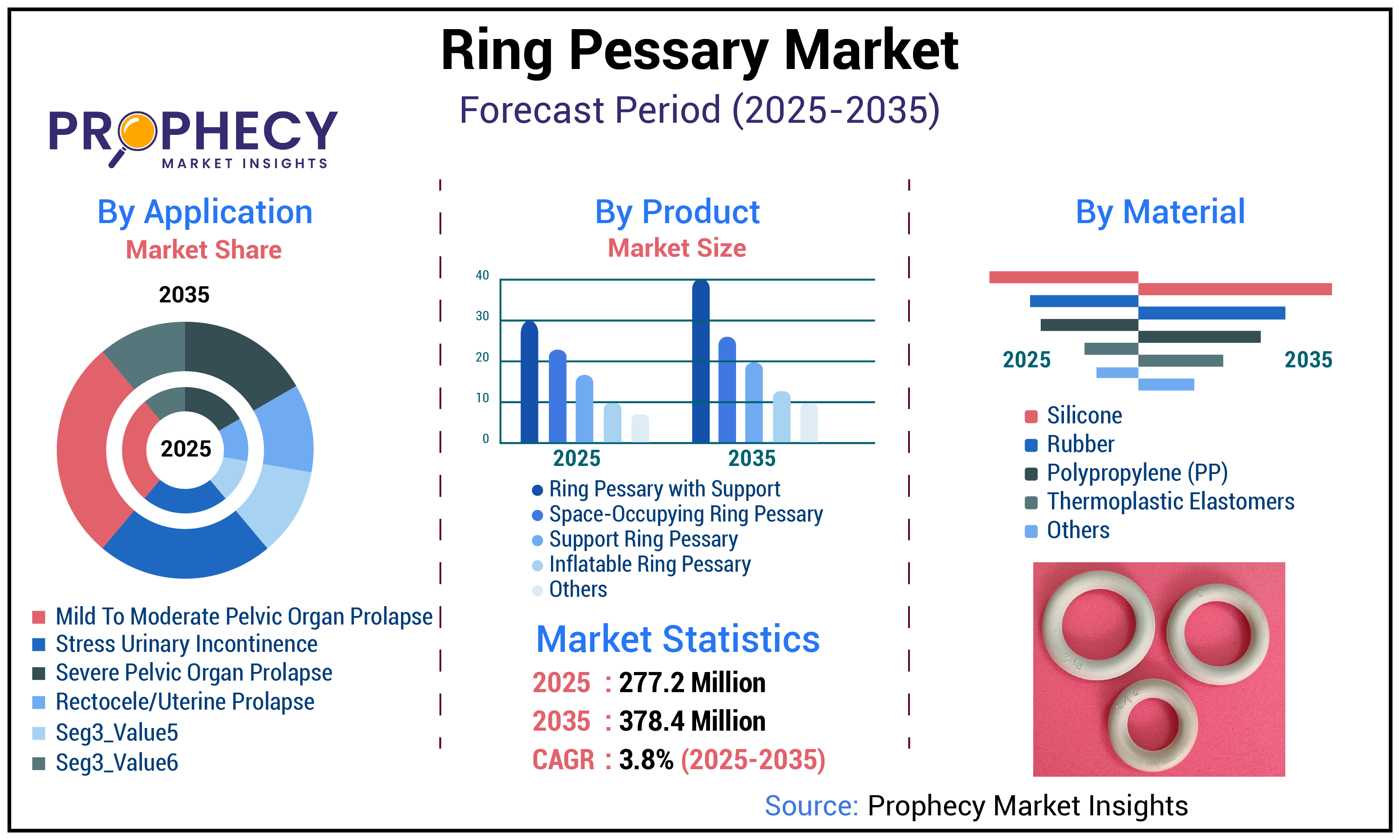
- By 2035, the ring pessary market size is contemplated to enlarge at a valuation of USD 378.4 Million.
- In 2024, the ring pessary market valuation was USD 268.7 Million.
- Ring pessary market is developing at a CAGR of 3.8%.
A ring pessary is a medical device for women who are experiencing pelvic organ prolapse (POP). A pessary can also be useful if someone has stress incontinence, which causes them to leak urine when they cough, strain, or exercise. Women who experience incontinence during pregnancy may also benefit from a pessary device. It is a flexible ring that is placed inside of a vagina to help maintain a proper position for pelvic organs such as uterus, bladder or rectum. These rings are made from medical-grade silicone or other biocompatible Products; hence they are comfortable, durable and suitable for both long- and short-term use.
There is a rise in the prevalence of pelvic organ prolapse and urinary incontinence, particularly among older women, which is increasing the demand for a more discreet, non-surgical approach. Pessaries can be seen as a first choice for many patients and healthcare providers, as they can delay or even eliminate the need for invasive procedures. More advances are being made in this industry to ensure that newer pessaries are safer, more comfortable, and easier to use. In addition, the expansion of women's health services at primary care and community health levels, along with the integration of telemedicine and direct-to-consumer healthcare, has made access to ring pessaries more widespread than ever before.
In the coming years, the pessary market could see substantial growth and innovation. Since 2021, companies such as Femtherapeutics are using AI-driven machine learning and 3D design to create customized pessaries tailored to each patient, addressing issues of fit and comfort that are common with standard devices. Smart pessaries with sensor could also emerge as they might track fit, comfort, and effectiveness in real time. Manufacturers have opportunities to serve overlooked groups, such as teens, new mothers, and people in low-resource areas. Affordable and user-friendly designs could meet their needs. As awareness of pelvic health grows, the stigma around it is fading. More education and outreach could expand the market. This may also lead to better pessary designs and easier access for patients.
Impact of Generative AI on Ring Pessary Market:
- Integration of AI with 3D printing could create more opportunities for women to access personalized pessaries. This could, in turn, reduce bulk production waste and improve accessibility, allowing women to use these devices in greater comfort.
- In the future, generative AI is predicted to enable next-generation smart pessaries equipped with sensors that can continuously monitor fit, comfort, and pelvic health parameters. These smart gadgets could combine therapeutic function and digital health monitoring, allowing for remote doctor oversight and proactive management of pelvic organ prolapse.
Global Ring Pessary Market By Drivers & Restraints
Key Drivers:
Rising preference for pessaries as a safer and simpler alternative to surgery for pelvic organ prolapse
According to a 2025 PubMed study, about 50% of women will experience some degree of pelvic organ prolapse at least once in their lifetime. These conditions are most commonly seen in women aged 50–70 years. The study also noted that while surgical treatments provided symptom relief, the pain and complications caused by surgery remain a significant concern. Hence, pessaries have become a popular choice among women due to their simplicity and lower risk of pain.
- A 2025 prospective study done by Yale University School of Medicine, involving 680 women with symptomatic prolapse found that 63% initially chose pessary management over surgery. The review highlighted high satisfaction rates, with a median usage duration of over three years and approximately 77% of women continuing use after one year.
Restraints:
High dependence on costly and limited medical-grade silicone constraining ring pessary market growth
Due to a shortage of medical-grade silicone, which had around 78.54% of the pessary market share in 2024, the ring pessary market is severely limited. This Product is the best option for women due to its biocompatibility, longevity, and resistance to sterilization. But in order to achieve medical device standards, creating high-quality medical-grade silicone necessitates a difficult and expensive manufacturing process with stringent quality controls. These issues restrict supply and increase production costs, which in turn affects the cost and accessibility of silicone-based pessaries. They are compounded by global supply chain constraints and the growing demand for medical-grade silicone across many healthcare sectors.
- Counterbalance Statements: As silicone prices rise, research into other biocompatible Products such as medical-grade polyurethane and thermoplastic elastomers is growing and could offer good alternatives. Additionally, following the pandemic-era shortages, a number of top suppliers are investing in supply chain resilience plans and capacity increases, which should stabilize availability. Together, these advancements lessen the long-term effects of silicone scarcity on ring pessary cost and accessibility, guaranteeing market expansion in spite of difficulties with raw Products.
Opportunities & Trends:
AI-powered customization and digital innovations transforming the ring pessary market
The market for ring pessary is expanding, particularly due to their conveniences and comfort. A significant trend and opportunity in the ring pessary market is the growing integration of artificial intelligence (AI) and digital technologies to enhance product customization, patient engagement, and clinical outcomes. AI-driven solutions are enabling personalized pessary design, fit prediction, and virtual fittings, transforming how patients and healthcare providers approach pelvic organ prolapse management.
- For Instance, companies such as Cosm Medical have developed FDA-cleared platforms such as Gynethotics, which use anatomical imaging and AI-assisted design combined with in-clinic 3D printing to create custom-fit pessaries. This technology reduces trial-and-error fittings and improves comfort and clinical success. As AI algorithms improve, these platforms can better analyze patient anatomical data and feedback to optimize device design and usage.
Global Ring Pessary Market By Segmentations & Regional Insights
By product, material, application, end users, and region are the divisions of the ring pessary market.
By Product:
Support ring pessary, space-occupying ring pessary, ring pessary with support, inflatable ring pessary, and others are material on which ring pessary market is segmented. Ring Pessary with Support is the most widely use product. Ring pessaries, in general, are the most commonly used type due to their flexibility and ease of insertion and removal, making them suitable for various stages of prolapse and stress urinary incontinence.
Space-occupying are the second most widely used pessaries, they are effective in supporting advanced stages of pelvic organ prolapsed.
By Material:
Based on the material, the ring pessary market is divided into silicone, rubber, polypropylene (pp), thermoplastic elastomers, and others. Due to its flexibility, most pessaries are made up of silicones, hence making them more comfortable to use. It’s also biocompatible, durable and easy to clean and sterilize.
The second-largest market is rubber due to its flexibility and suitability for women who may be allergic to latex.
By Application:
Mild to moderate pelvic organ prolapse, severe pelvic organ prolapse, stress urinary incontinence, rectocele/uterine prolapse, and others are application of the ring pessary market. In the market for colored ring pessary, mild to moderate pelvic organ prolapse maintains the largest ring pessary market share on account due to their ease of insertion and removal, and their ability to provide support and reduce symptoms associated with prolapse.
Stress Urinary Incontinence is the second-largest category, Ring pessaries are a common second-line treatment for Stress Urinary Incontinence (SUI) as they are a relatively non-invasive and effective option for managing SUI symptoms, particularly when first-line treatments such as pelvic floor exercises are not sufficient
By End Users:
On the By End Users, ring pessary market is categorized into hospitals, specialty gynecology clinics, ambulatory surgical centers, and others. Hospitals account for the biggest ring pessary market share of procurement as they house urogynecology services, fitting clinics, and bulk purchasing.
Specialty gynecology clinics are the second most dominant one. These clinics do the majority of pessary fittings and follow-ups outside the inpatient setting and represent the next biggest demand channel. Ambulatory surgical centers and retail channels follow behind.
Regional Insights:
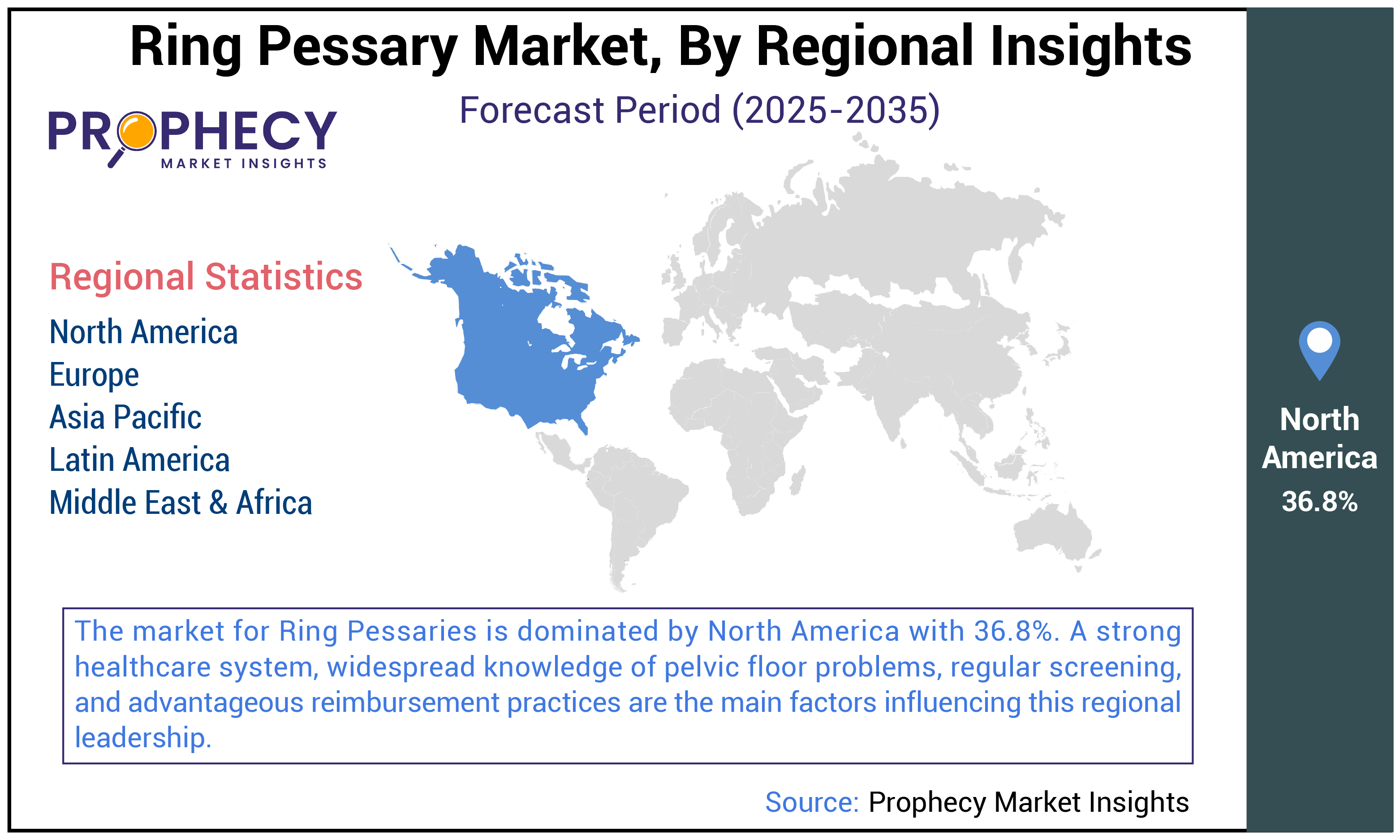
Geographically, the ring pessary market is studied across North America, Europe, Asia Pacific, Latin America, and the Middle East & Africa.
North America: The market for ring pessaries is dominated by North America with 36.8%. A strong healthcare system, widespread knowledge of pelvic floor problems, regular screening, and advantageous reimbursement practices are the main factors influencing this regional leadership.
- U.S. Ring Pessary Market Insights:
Due in large part to its modern healthcare system, which provides easy access to specialists, screening, and treatment for pelvic health issues, the United States dominates the North American ring pessary industry. Strong demand is driven by an aging population and the rising prevalence of pelvic organ prolapse (POP). Furthermore, many women may afford and obtain pessaries due to the broad insurance coverage provided by Medicare and other insurers.
Europe: As its evidence-based medical practices, universal healthcare coverage, and long-standing tradition of using pessary to treat pelvic organ prolapse, Europe is the second most dominating continent. High requirements for product safety and effectiveness are imposed by EU regulations such as the Medical Device Regulation (MDR), which further supports market expansion.
- U.K. Ring Pessary Market Insights:
Europe’s strong position comes from its universal healthcare models that provide easy access to pelvic health services and pessary devices. Clinical guidelines from major European medical societies emphasize pessary use for prolapse and urinary incontinence, making it a well-accepted treatment. Longstanding experience with pessary use and robust regulatory frameworks (e.g., EU Medical Device Regulation) ensure safety and quality, boosting patient and clinician confidence.
Asia Pacific: This region is ranked third in the ring pessary market mainly due to, while the region is seeing very fast growth, it is still catching up to North America and Europe in terms of healthcare access and awareness. In North America and Europe, ring pessaries have been widely used for much longer thanks to established healthcare systems, standardized screening for pelvic organ prolapse, and strong support from both government and private insurance, making these devices more accessible and familiar to both doctors and patients.
- China Ring Pessary Market Insights:
Although Asia Pacific currently ranks third, it is the fastest-growing region for ring pessaries. Growth is driven by larger aging populations and increasing investment in healthcare infrastructure. Countries such as China and India are seeing growing awareness about pelvic floor disorders and greater acceptance of non-surgical options, spurred by increasing urbanization and rising healthcare expenditure. Japan’s advanced healthcare system also contributes to regional growth.
Ring Pessary Market Report Scope:
|
Attribute |
Details |
|
Market Size 2025 |
USD 277.2 Million |
|
Projected Market Size 2035 |
USD 378.4 Million |
|
CAGR Growth Rate |
3.8% (2025-2035) |
|
Base year for estimation |
2024 |
|
Forecast period |
2025 – 2035 |
|
Market representation |
Revenue in USD Million & CAGR from 2025 to 2035 |
|
Regional scope |
North America - U.S. and Canada Europe – Germany, U.K., France, Russia, Italy, Spain, Netherlands, and Rest of Europe Asia Pacific – China, India, Japan, Australia, Indonesia, Malaysia, South Korea, and Rest of Asia-Pacific Latin America - Brazil, Mexico, Argentina, and Rest of Latin America Middle East & Africa – GCC, Israel, South Africa, and Rest of Middle East & Africa |
|
Report coverage |
Revenue forecast, company share, competitive landscape, growth factors, and trends |
Segmentation:
By Product:
- Support Ring Pessary
- Space-Occupying Ring Pessary
- Ring Pessary with Support
- Inflatable Ring Pessary
- Others
By Material:
- Silicone
- Rubber
- Polypropylene (PP)
- Thermoplastic Elastomers
- Others
By Application:
- Mild to Moderate Pelvic Organ Prolapse
- Severe Pelvic Organ Prolapse
- Stress Urinary Incontinence
- Rectocele/Uterine Prolapse
- Seg3_Value5
- Seg3_Value6
- Others
By End Users:
- Hospitals
- Specialty Gynecology Clinics
- Ambulatory Surgical Centers
- Primary Care Offices
- Others
By Region:
- North America
- U.S.
- Canada
- Europe
- Germany
- U.K.
- France
- Russia
- Italy
- Spain
- Netherlands
- Rest of Europe
- Asia Pacific
- China
- India
- Japan
- Australia
- Indonesia
- Malaysia
- South Korea
- Rest of Asia Pacific
- Latin America
- Brazil
- Mexico
- Argentina
- Rest of Latin America
- Middle East & Africa
- GCC
- Israel
- South Africa
- Rest of Middle East & Africa
Global Ring Pessary Market By Competitive Landscape & Key Players
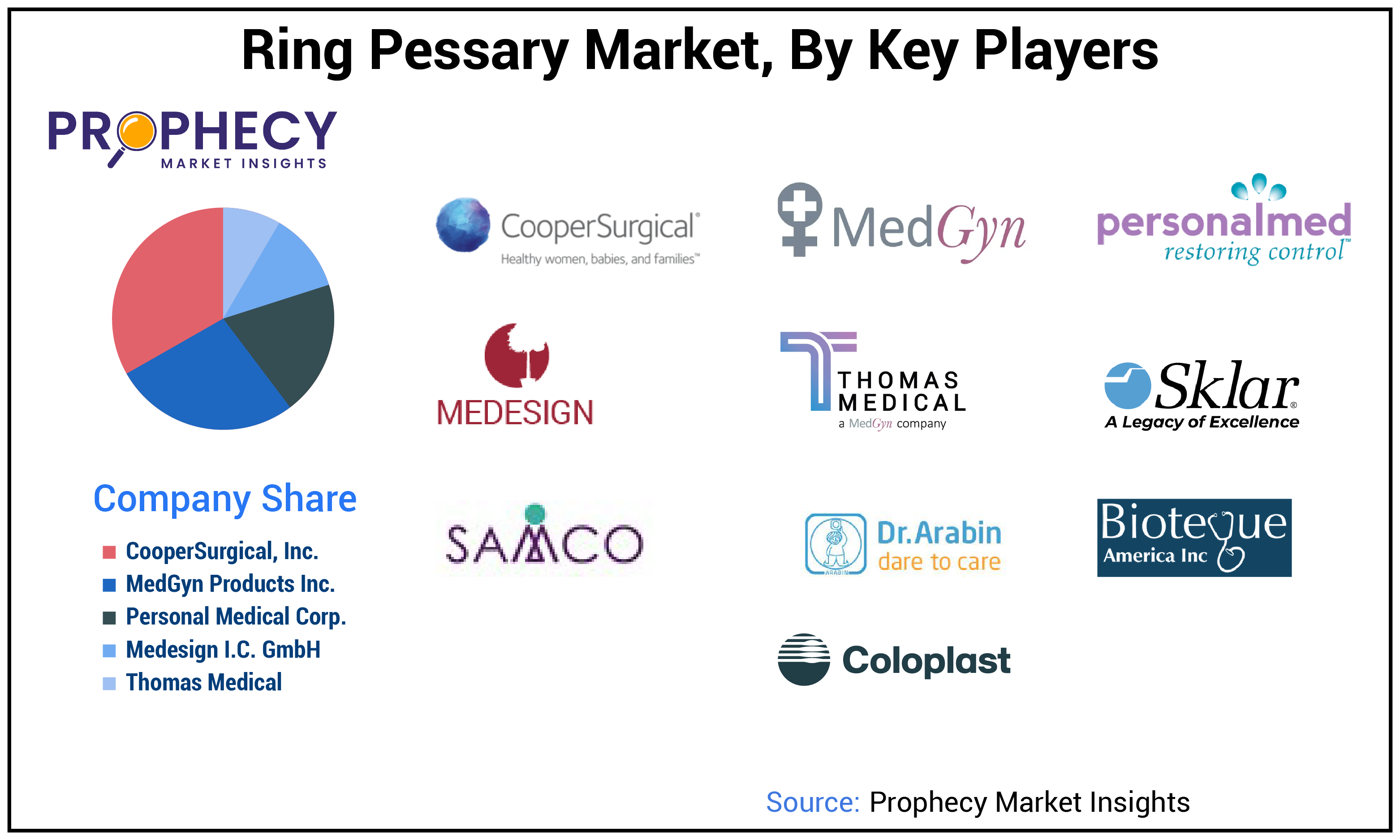
This market may expand as women become more conscious of the importance of pelvic floor health and the advantages of non-surgical treatments for disorders including pelvic organ prolapse, such as ring pessaries. Additionally, ring pessary producers can boost market expansion by concentrating on rapidly expanding regions such as Asia-Pacific and investing in AI-assisted design and 3D printing technology. They may increase their reach, reputation, and patient acceptance rates by forming strategic alliances with pelvic health physiotherapists, gynecologists, and women's wellness organizations. The key players operating in the ring pessary market include, CooperSurgical, Inc., MedGyn Products Inc., Thomas Medical, Sklar, and others.
Ring Pessary Market Companies:
- CooperSurgical, Inc.
- MedGyn Products Inc.
- Personal Medical Corp.
- Medesign I.C. GmbH
- Thomas Medical
- Sklar
- Samco Medical
- Dr. Arabin GmbH & Co. KG
- Bioteque America Inc.
- Coloplast A/S
- Cosm Medical Corp
- INTEGRA LIFESCIENCES
View an Additional List of Companies in the Ring Pessary Market
Global Ring Pessary Market By Recent News
- In March 2024, Cosm Medical received FDA approval for Gynethotics Personalized Pessaries, the first customized pessary system in North America. They combined in-clinic 3D printing, AI-driven design, along with anatomical imaging, to simplifying the procedure by providing millions of configuration options and drastically cutting down on trial-and-error fittings. Cosm Medical's growth in North America is already being fueled by this innovation, and the same growth is being observed when it comes to Asia-Pacific, where demand is being driven by aging populations and growing awareness of non-surgical pelvic health options.
- In May 2025, Mediplus Ltd announced the expansion of its POPY (Pelvic Organ Prolapse) pessary product range with the introduction of five additional sizes, increasing the total to 11 options in both short and long stem versions. According to the company, this expansion aims to provide clinicians with greater flexibility in achieving a precise fit for patients, improving comfort, reducing fitting times, and enhancing treatment outcomes for women with pelvic organ prolapse.
Analyst View:
The ring pessary market is seeing steady growth as more women become aware of pelvic floor disorders and look for alternatives to surgery. These small, soft devices are a go-to option for conditions such as pelvic organ prolapse (POP) and stress urinary incontinence, and in many countries especially in the U.S. and across Europe they’re recommended as the first line of treatment. Support from clinical guidelines and insurance coverage makes them even more accessible.
They come in many forms, from standard and custom-fit designs to disposable versions, most made from comfortable, medical-grade silicone. Recent improvements in comfort and fit, along with easier access through hospitals, clinics, and even telehealth services, are helping more women try them earlier in their care journey. This momentum is especially strong in Asia-Pacific and North America, where innovations such as AI-powered fitting tools, virtual consultations, and educational programs led by healthcare professionals are making a real difference.
More Related Reports
Artificial Organ Market
Shelf Pessary Market
Thermal Spray Material Market
Next Generation Display Materials Market
Virtual Hospitals Market
Global Ring Pessary Market By Company Profile
|
Company Name |
CooperSurgical, Inc. |
|
Headquarter |
Connecticut, United States |
|
CEO |
Holly Sheffield |
|
Employee Count |
16,000 Employees |
Global Ring Pessary Market By Highlights
FAQs
Ring pessary market size was valued at USD 277.2 Million in 2025 and is expected to reach USD 378.4 Million by 2035 growing at a CAGR of 3.8%.
Product, material, application, end users, and region are the segmentation for the ring pessary market.
North America, Asia Pacific, Europe, Latin America, and the Middle East& Africa. North America is expected to dominate the market.
The key players operating the ring pessary market include CooperSurgical, Inc.,MedGyn Products Inc., Personal Medical Corp., Medesign I.C. GmbH, Thomas Medical, Sklar, Samco Medical, Dr. Arabin GmbH & Co. KG, Bioteque America Inc., Coloplast A/S , Cosm Medical Corp, and INTEGRA LIFESCIENCES.