Global Parenteral Nutrition Market By Overview
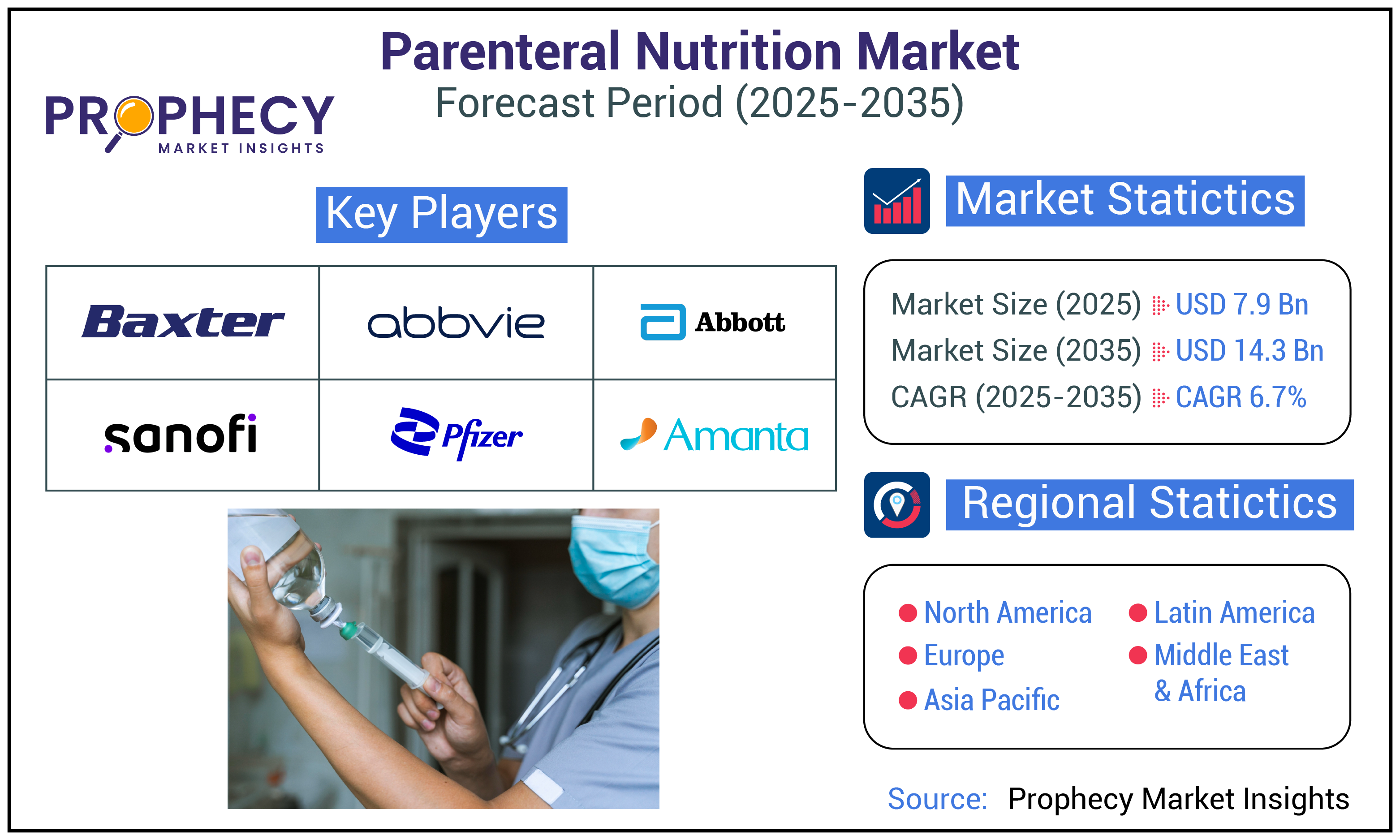
- Parenteral nutrition market size is expected to increase at a rate of USD 14.3 Billion, by 2035.
- In 2024, the target market size was estimated to be worth USD 7.5 Billion.
- Parenteral nutrition market is rising at a 6.7% CAGR.
Parenteral nutrition is a method of delivering nutrients directly into a patient’s bloodstream through a catheter inserted into a vein, bypassing the digestive system. This method is used in patient which are unable to eat or absorb nutrients through their gut due to illness or injury. The parenteral nutrition market involves the production, distribution, and consumption of parenteral nutrition (PN) products. The nutrients include in parenteral nutrition are, carbohydrates, proteins, fats, vitamins and minerals, which are tailored to the individual patient’s needs. This form of nutrition is typically used for individuals who cannot obtain adequate nutrition through oral intake or enteral feeding.
Growing prevalence of chronic diseases such as cancer, gastrointestinal diseases, growing global aging population, and improvement in healthcare facilities, is anticipated to drive parenteral nutrition market growth.
Advancement in home parenteral nutrition (HPN), development of more personalized solutions, integration of digital health technologies, such as remote monitoring, is anticipated to drive parenteral nutrition market share. The growing demand for specialized nutrition in hospitals for more complex, intensive care procedures, innovation in efficient delivery system and the integration of natural genomics to enhance precision of care, is expected to the expansion of parenteral nutrition market share.
Impact of AI in Clinical Trials Market:
- Artificial Intelligence (AI) algorithms can analyze vast amounts of data from patient profiles to personalized parenteral nutrition solutions. AI help to create more accurate and optimize inventory management of supply chains for parenteral nutrition products. Machine learning models can predict the nutritional requirements of patients in real time based health condition and adjust the parenteral nutrition formula.
Global Parenteral Nutrition Market By Drivers & Restraints
Key Drivers of Target Market:
Rising Prevalence of Malnutrition is expected to Drive Target Market Growth
Malnutrition includes under nutrition and over nutrition, is increasing recognized as a global health issue. Malnutrition occurs due to poor intake, digestive disorders, and difficulty to absorbing nutrients, which lead to demand for parenteral nutrition. Parenteral nutrition is necessary to stabilize the patient’s condition and provide adequate nutrition, by reducing the risk of complications such as wound healing delays, immune suppression, and organ failure. Parenteral nutrition is used to support these patients, by providing them with the energy, protein, and essential nutrients which need to fight the disease, recover from treatments, and maintain bodily functions, is anticipated to drive parenteral nutrition market growth.
- For instance, according to data published by National Library of medicine, in July 2023, this article states that, a total of 47,654 adult hospitalized patients and 15,089 malnourished patients based on the global leadership initiative in malnutrition (GLIM) criteria. The prevalence of malnutrition diagnosed by the one-and two-step approaches was 53% and 39%, respectively. The prevalence of malnutrition diagnosed by the Nutritional Risk Screening 2002 GLIM tool was 35%; and the prevalence of malnutrition diagnosed by the Mini Nutrition Assessment (MNA) GLIM tool was 48%.
Restraints:
Risk of Complications Limits Target Market Growth
Parenteral nutrition requires interceptor administration through central venous catheters, which can increase the risk of catheter-related bloodstream infections. Long-term of parenteral nutrition lead to liver complication such as fatty acids, cholestasis, due to the prolonged infusion of nutrients directly into the bloodstream. Sometimes, patients suffer from electrolyte imbalances, hyperglycemia and fluid retention, if the nutritional formulation is not properly tailored according to patient’s need.
- Counterbalance Statements: The use of smart infusion pumps, and real-time monitoring system help to precise delivery of nutrients, and reduces the risk of complication such as electrolyte imbalance and hyperglycemia. Personalized parenteral nutrition formulation allow for more accurate nutrient delivery by reducing liver dysfunction and metabolic disturbances.
Opportunities & Market Trends:
Research and Development (R&D) in Parenteral Nutrition Formulations Propels Market Growth
The complex medical conditions require more specialized care, which rises the demand for more precise tailored parenteral nutrition formulations. Research focuses on determining the optimal nutrient mixture for mal absorption syndromes, cancer, organ failure and critical illness patients. Research and development focuses in advanced lipid emulations, customized amino acid solutions, and new vitamin and mineral formulation, to improve nutrient absorption and utilization in the body. The growing research and development investment to provide more effective, efficient and sustainable nutrition solution, resulting to drive parenteral nutrition market growth over the forecast period.
Improvement in Patient-Centered Cancer Care through Nutrition Support will Create Significant Opportunity for Target Market
The role of nutrition in cancer treatment is increasingly recognized as a main factor for improving patient outcomes, including treatment adherence, recovery rates, and overall quality of life. The growing focus on oncology care, the shits towards more personalized, patient-centered approaches, plays crucial role to optimize clinical outcomes and patient well-being, which create opportunity for parenteral nutrition. Cancer patients often experience malnutrition, weight loss, and decreased appetite due to the side effects of treatments such as chemotherapy, radiation, and surgery. Parenteral nutrition is essential for patients to meet their nutritional needs via real intake or enteral feeding. The growing prevalence of cancer patient, more healthcare professionals integrate nutrition management into routine oncology rate, which rises the demand for parenteral nutrition products, is expected to the expansion parenteral nutrition market size.
- For instance, according to a study published in Seminars in Oncology Nursing, in February 2025, this article states that, the integration of nutrition management into cancer care is crucial for optimizing patient outcomes, and oncology nurses play a crucial role in this process. Cancer patients are undergo chemotherapy, often face significant nutrition-related challenges. Up to 87% of patients with gastrointestinal tumors and 31% of those with non-solid tumors experience weight loss before starting chemotherapy. A 2.4% reduction in body weight has been identified as an independent prognostic factor for survival. Thus, as it contain deficiency of malnutrition, parenteral nutrition is essential to deliver nutrients intravenously to the patient’s body.
Global Parenteral Nutrition Market By Segmentations & Regional Insights
The parenteral nutrition market is segmented into product, consumer type, indication, distributional channel, and region.
By Product:
Based on Product, parenteral nutrition market categorized into, amino acid solution, and dextrose injections, sterile water, fat emulations, potassium chloride. Amino acid solution segment dominates in parenteral nutrition market share, as it is play crucial role in providing protein-based nutrients for tissue repair, growth and metabolic support. These solution are used to supply necessary proteins to patients, which are unable to receive nutrition orally or feeding, leading to parenteral nutrition market growth.
Fat emulsions is the second dominating segment in the parenteral nutrition market share. It is used to prevent essential fatty acid deficiency, focused to provide a concentrated energy source, increasing energy requirements, a d growing demand of home parenteral nutrition, is projected to drive segment’s growth in parenteral nutrition market size.
By Consumer Type:
On the basis of consumer type, parenteral nutrition market is classified into, new-born & children and adults. Adults segment hold the largest parenteral nutrition market share, due to adults are suffering from chronic diseases, critical illness and undergoes major surgeries. The higher incidence of diseases that require long-term parenteral nutrition and it contains complex nutritional need, which leads to demand for tailored parenteral nutrition solution, resulting to drive segment’s growth in target market size.
The newborn and children segment holds the second largest parenteral nutrition market share. The segment’s growth in parenteral nutrition market, is attributed by, increasing prevalence of neonatal, pediatric diseases, rises the need for parenteral nutrition, growing use in oral feeding, or enteral nutrition, and growing focus on Neonatal Intensive Care Units (NICU).
By Indication:
By indication, parenteral nutrition market is segmented into, Alzheimer’s, nutrition deficiency, chronic kidney diseases, cancer care, orphan diseases, diabetes, pain management, and others. Cancer care segment dominates in parenteral nutrition market share, due to cancer patients are continuously treated with chemotherapy, radiation therapy and surgical treatments, there is higher chances of malnutrition. Parenteral nutrition provide vital nutrients by improving recovery, maintaining body weight, and enhancing immune function during cancer treatment.
The diabetes is the fastest growing segment in parenteral nutrition market size. The rising prevalence of lifestyle-related risk factors such as obesity, sedentary lifestyles, and poor dietary habits contributes to the growing incidence of diabetes, the development of new approaches, and increasing investment by government and pharmaceutical companies, is projected to segment’s growth in target market.
By Distributional Channel:
By distributional channel parenteral nutrition market is divided into, hospital pharmacies, retail pharmacies, online pharmacies, and research laboratories. Hospital pharmacies segment dominates in parenteral nutrition market share, as it is main source for parenteral nutrition products. Hospitalized patients require nutrition due to critical conditions, surgeries, thus hospital pharmacies play crucial role in procurement, formulation, and delivery of parenteral solution, leading to growth of segment in parenteral nutrition market share.
Regional Insights:
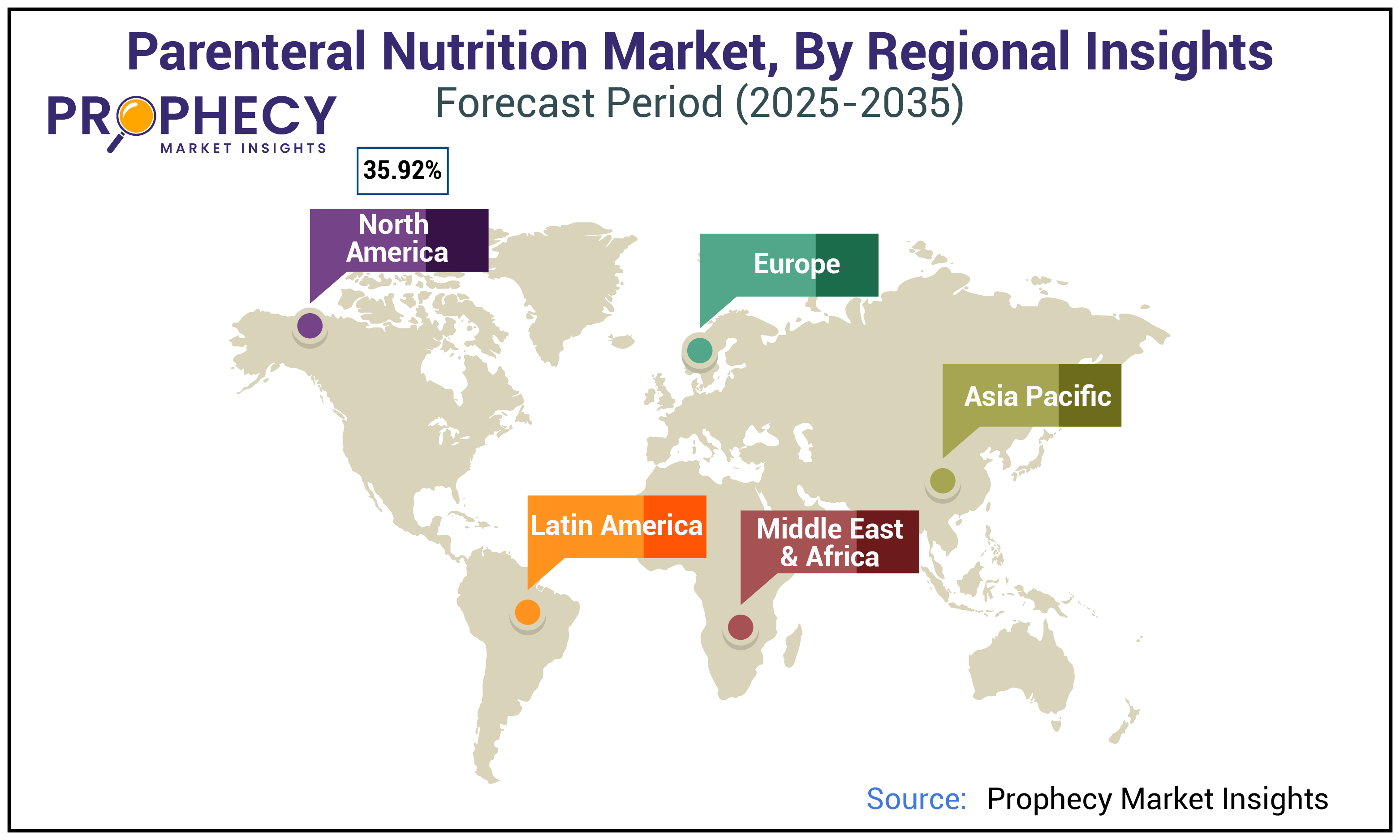
Geographically, the market is studied across North America, Europe, Asia Pacific, Latin America, and the Middle East & Africa.
North America: This is the dominating region in parenteral nutrition market share with 38.2% share over the forecast period. Increasing geriatric population, technological advancements and regulatory framework is anticipated to drive parenteral nutrition market growth. The advancement in clinical nutrition, medical technologies, and the development of more effective parenteral nutrition formulations, is expected to drive region growth in target market size.
- U.S. Parenteral Nutrition Market Insights:
In North America, the U.S. dominates the parenteral nutrition (PN) market size. The growing prevalence of chronic diseases, such as cancer, diabetes, gastrointestinal disorders, presence of well-established healthcare system, large number of patients undergoing cancer treatment, surgeries, which rises the demand for nutritional supports, are this factors are responsible of parenteral nutrition market growth.
Asia Pacific: This is expected as fastest growing region over forecast period, due to high prevalence of chronic diseases, and expanding healthcare facilities in countries such as China, India and Japan. The countries such as China and India have the high prevalence of premature birth, which rises the demand for neonatal parenteral nutrition solution, resulting to drive parenteral nutrition market growth in Asia Pacific region.
- Japan Parenteral Nutrition Market Insights:
Japan hold the major share in Asia Pacific region for parenteral nutrition market. The target market growth is attributed by several factors, such as it has highest old population, with a high incidence of age-related health issues, advanced healthcare system, rising relevance of chronic disease, and government support for medical treatments.
Europe: This region is experiencing continuous growth in parenteral nutrition market size. The growing aging population, high prevalence of chronic diseases, advancement in parenteral nutrition delivery system, and regulatory approval for the production, quality control and distribution of nutritional products, is expected to growth of parenteral nutrition market size in Europe region.
- Germany Parenteral Nutrition Market Insights:
Germany is the dominant country in Europe region for the parenteral nutrition market. Germany contains most advanced healthcare system, with well-established medical facilities. The growing prevalence of chronic diseases, and cancer, rises the demand for nutritional support, and growing focus on patient care, is anticipated to drive parenteral nutritional market growth.
Parenteral Nutrition Market Report Scope:
|
Attribute |
Details |
|
Market Size 2025 |
USD 7.9 Billion |
|
Projected Market Size 2035 |
USD 14.3 Billion |
|
CAGR Growth Rate |
6.7% (2025-2035) |
|
Base year for estimation |
2024 |
|
Forecast period |
2025 – 2035 |
|
Market representation |
Revenue in USD Billion & CAGR from 2025 to 2035 |
|
Regional scope |
North America - U.S., and Canada Europe – Germany, U.K., France, Russia, Italy, Spain, Netherlands, and Rest of Europe Asia Pacific – China, India Japan, Australia Indonesia Malaysia, South Korea, and Rest of Asia-Pacific Latin America - Brazil, Mexico, Argentina, Rest of Latin America Middle East & Africa – GCC, Israel South Africa, and Rest of Middle East & Africa |
|
Report coverage |
Revenue forecast, company share, competitive landscape, growth factors, and trends |
Segmentation:
By Product:
- Amino Acid Solution
- Dextrose Injections
- Sterile Water
- Fat Emulations
- Potassium Chloride
- Others
By Consumer Type:
- New-Born & Children
- Adults
By Indication:
- Alzheimer’s
- Nutrition Deficiency
- Chronic Kidney Diseases
- Cancer Care
- Orphan Diseases
- Diabetes
- Pain Management
- Others
By Distributional Channel:
- Hospital Pharmacies
- Retail Pharmacies
- Online Pharmacies
- Research Laboratories
By Region:
- North America
- U.S.
- Canada
- Europe
- Germany
- U.K.
- France
- Russia
- Italy
- Spain
- Netherlands
- Rest of Europe
- Asia Pacific
- China
- India
- Japan
- Australia
- Indonesia
- Malaysia
- South Korea
- Rest of Asia Pacific
- Latin America
- Brazil
- Mexico
- Argentina
- Rest of Latin America
- Middle East & Africa
- GCC
- Israel
- South Africa
- Rest of Middle East & Africa
Global Parenteral Nutrition Market By Competitive Landscape & Key Players
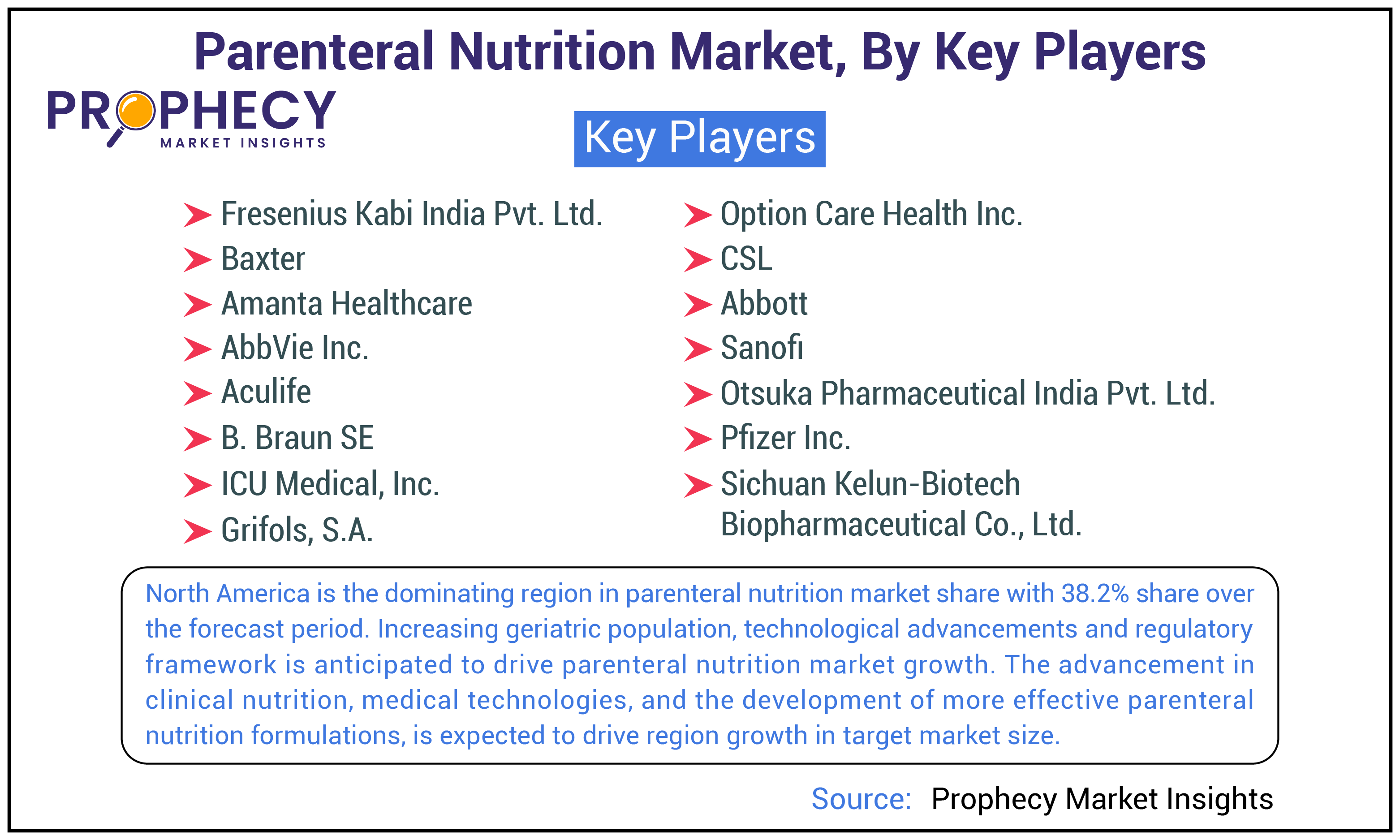
The key players operating in the parenteral nutrition market include Fresenius Kabi India Pvt. Ltd., Baxter, Amanta Healthcare, and others. These key players are focusing on improving on research and development, innovative strategies, new drug development practices, strategic partnerships and acquisitions to enhance parenteral nutrition procedures, resulting to growth of target market share.
Parenteral Nutrition Market Companies:
- Fresenius Kabi India Pvt. Ltd.
- Baxter
- Amanta Healthcare
- AbbVie Inc.
- Aculife
- B. Braun SE
- ICU Medical, Inc.
- Grifols, S.A.
- Option Care Health Inc.
- CSL
- Sichuan Kelun-Biotech Biopharmaceutical Co., Ltd.
- Abbott
- Sanofi
- Otsuka Pharmaceutical India Pvt. Ltd.
- Pfizer Inc.
View an Additional List of Companies in the Parenteral Nutrition Market
Global Parenteral Nutrition Market By Recent News
- In February 2025, according to article published by Cogora, this article states that, Neonatal parenteral nutrition and its delivery is a complex process. The multidisciplinary team (MDT) offer expertise to ensure adequate nutrition to avoid deficits and promote growth by reducing any associated risks. Neonatal Parenteral Nutrition (PN) and its delivery present a significant challenge, given the vulnerability of neonates, especially premature infants, to nutritional deficiencies and the complexity of their growth and development. It was used in neonatal invasive care units, due to gastrointestinal immaturity, prematurity or underdeveloped swallows mechanisms, where the oral and eternal feeding is difficult.
- In October 2024, Fresenius Kabi launched Kanbiven for intravenous use. Kabiven is a parenteral nutrition (PN) product in a three-chamber bag which was approved in the U.S. It was an intravenously infused solution of lipids, dextrose, amino acids and electrolytes in a three-chamber bag that efficiently delivered these nutrients in volumes and concentrations that required for the nutritional needs in patients.
- In May 2024, Baxter received U.S. FDA approval for Clinolipid, a lipid injectable emulsion for the use in pediatric patients. Clinolipid was Baxter’s proprietary mixed oil lipid emulsion that used to provide calories and essential fatty acids in parenteral nutrition (PN) when oral or enteral nutrition is not possible.
- In March 2022, Fresenius Kabi launched SMOFlipid Lipid Injectable Emulsion, for pediatric patients in the U.S. SMOFlipid is indicated in adult and pediatric patients, which included term and preterm neonates, as a source of calories and essential fatty acids for parenteral nutrition (PN) when oral or enteral nutrition was unable or insufficient to the patient.
- In September 2020, Baxter Inetrnational, Inc., received FDA approval for new formulations of Clinimix Injections and Clinimix E Injections. These new Clinimix formulations contains up to 80 g/L amino acids solutions, which aimed to reduce malnutrition and making it easier to reach patient protein targets by delivered less fluid and dextrose as compared to existing formulations.
Analyst View:
The rising incidence of chronic diseases, and advancement in healthcare infrastructure, is anticipated to drive target market growth. The demand for more personalized and specialized nutrition solutions, innovation in lipid based emulations, amino acid solutions, and advances in medical technology, projected to growth of parenteral nutrition market share.
More Related Reports
Amino Acid Surfactants Market
Parenteral Drugs Market
Personalized Nutrition Market
Pediatric Nutrition Market
Animal and Pet Nutrition Ingredients Market
Global Parenteral Nutrition Market By Company Profile
|
Company Name |
Pfizer, Inc. |
|
Headquarter |
Manhattan, New York |
|
CEO |
Dr. Albert Bourla |
|
Employee Count (2024) |
88,000 employees |
Global Parenteral Nutrition Market By Highlights
FAQs
Parenteral nutrition market size was valued at USD 7.9 Billion in 2025 and is expected to reach USD 14.3 Billion by 2035 growing at a CAGR of 6.7%.
Product, consumer type, indication, distributional channel and region are the segmentation for the target market.
North America, Asia Pacific, Europe, Latin America, the Middle East, and Africa. North America is expected to dominate the Market.
The key players operating the parenteral nutrition market include Fresenius Kabi India Pvt. Ltd., Baxter, Amanta Healthcare, AbbVie Inc., Aculife, B. Braun SE, ICU Medical, Inc., Grifols, S.A., Option Care Health Inc., CSL, Sichuan Kelun-Biotech Biopharmaceutical Co., Ltd., Abbott, Sanofi, Otsuka Pharmaceutical India Pvt. Ltd., Pfizer Inc.