Global Nutraceutical Ingredients Market By Overview
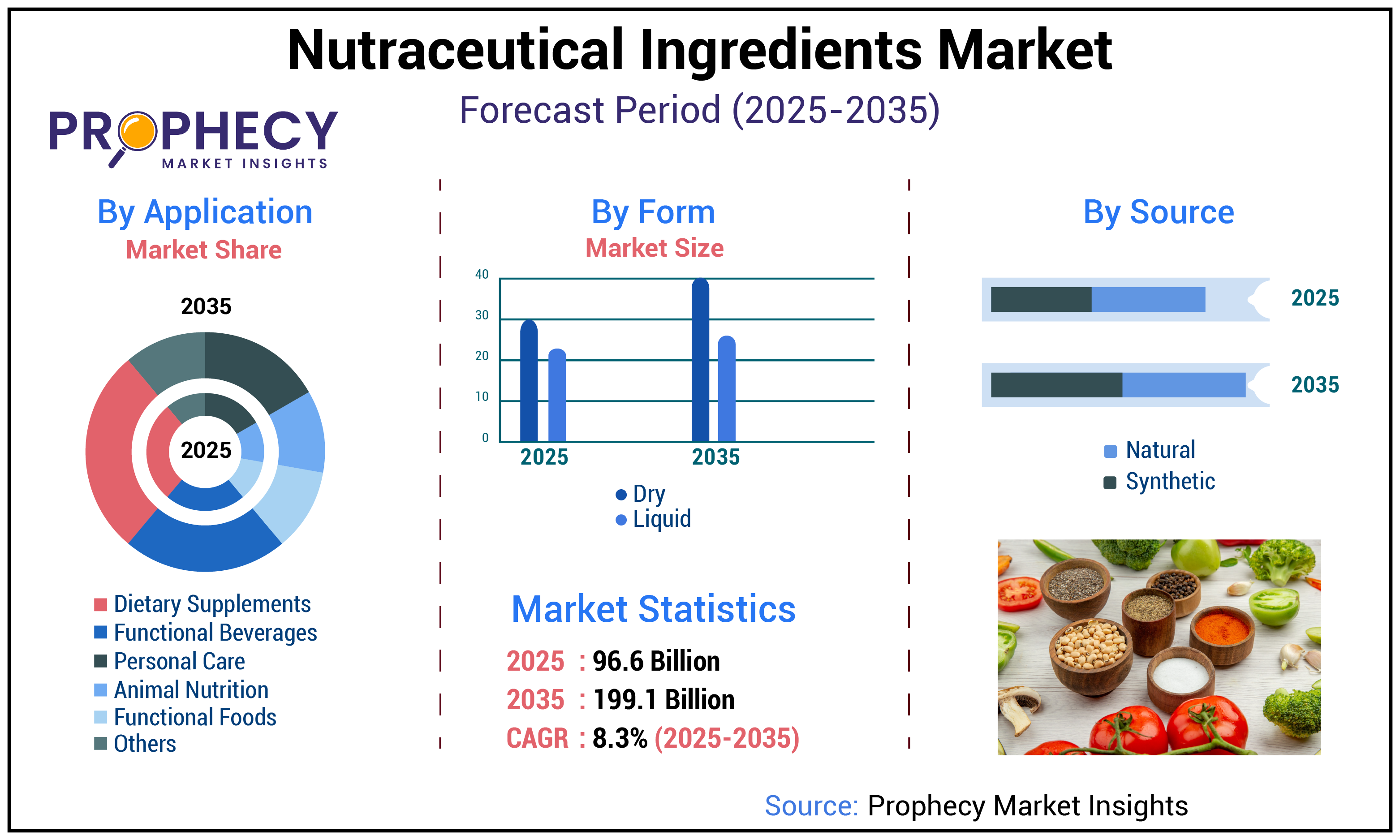
- Nutraceutical ingredients market size is forecasted to develop at a rate of USD 199.1 Billion, by 2035.
- In 2024, the market valuation was USD 88.0 Billion.
- The market is growing at a CAGR of 8.3%.
Nutraceutical ingredients are substances derived from food sources that offer additional health benefits beyond basic nutrition, often in a concentrated form. These are essentially "foods" with medicinal properties, combining the concepts of nutrition and pharmaceuticals. These offer a range of advantages, including improved overall health, boosted energy, and potential protection against chronic diseases. These can also help with anxiety relief, better sleep, and potentially even increased life expectancy. Key ingredients such as vitamins B and D, omega-3 fatty acids, magnesium, and iron are known for its cognitive benefits and ability to reduce anxiety and stress.
The nutraceutical ingredients market is experiencing robust growth due to several key factors, including the rising prevalence of chronic diseases, the increasing aging population, consumer’s increasing awareness of the of the benefits of dietary supplements and are seeking out products that can help prevent or manage chronic diseases, rising disposable incomes, and a growing emphasis on preventing diseases rather than just treating these diseases.
The market’s augmentation is also stimulated by innovations in ingredient sourcing and extraction technologies are improving the quality and efficacy of nutraceutical products, strong governmental support for herbal medicines and traditional ingredients, and consumers are increasingly looking for foods and supplements that offer additional health benefits beyond basic nutrition.
Recession Risk and Tariff Analysis:
- The nutraceutical ingredients market is more vulnerable to recession due to its high R&D expenses, strict regulations, and premium pricing. Consumer expenditure on health items may decline during economic downturns, and supply chain interruptions and fierce competition put further pressure on profitability. Nonetheless, resilience and long-term growth potential are provided by rising health consciousness and the need for preventative treatment.
- Pricing, market access, and international supply chains are all greatly impacted by import taxes and trade obstacles, according to a tariff study of the nutraceutical ingredients market. High tariff nations impede the movement of ingredients, which reduces manufacturers' cost effectiveness. Lowering tariffs may encourage global innovation, commerce, and accessibility to nutraceutical goods.
Impact of Generative AI on Nutraceutical Ingredients Market:
- By facilitating personalized nutrition, speeding up product development, and increasing R&D efficiency, generative AI is revolutionizing the nutraceutical ingredients market. It assists in analyzing large datasets to find new bioactive chemicals, forecast component efficacy, and improve formulations.
- Targeted marketing and trend predictions are supported by AI-driven insights, which help businesses better satisfy changing customer expectations. It also gives businesses a competitive edge by cutting development and time-to-market expenses. The nutraceutical industry is well-positioned to benefit from increased innovation and development as AI usage increases.
Global Nutraceutical Ingredients Market By Drivers & Restraints
Key Drivers:
Rising Aging Population is Skyrocketing the Market Expansion
The nutraceutical ingredients market is expanding due in large part to the growing ageing population, as more and more senior citizens look for solutions that promote immunity, bone health, healthy ageing, and cognitive function.
The need for vitamins, minerals, omega-3 fatty acids, and herbal supplements is being driven by this change in the population. As older customers are increasingly concerned about its health, specific, useful chemicals that address age-related health issues have been developed. The demand for preventative healthcare solutions is driving market development as life expectancy rises internationally, increasing the use of nutraceuticals.
- For instance, in October 2024, according to the data published by WHO, by 2030, 1 in 6 people in the world will be aged 60 years or over. At this time the share of the population aged 60 years and over will increase from 1 billion in 2020 to 1.4 billion. By 2050, the world’s population of people aged 60 years and older will double (2.1 billion). The number of persons aged 80 years or older is expected to triple between 2020 and 2050 to reach 426 million.
Restraints:
The Lack of Standardization Regulations is Hindering the Market Growth
The absence of uniform laws and quality assurance in various geographical areas is a significant drawback of the market for nutraceutical components. Consumer distrust, safety concerns, and inconsistent product efficacy are the results of this inconsistency. Without precise rules, producers can employ unsubstantiated claims or inferior components, which would jeopardize the dependability of the final product. International cooperation and trade are further hampered by the disjointed regulatory environment. Furthermore, insufficient clinical validation of certain components diminishes its legitimacy in the eyes of medical experts, which restricts its incorporation into standard medical procedures.
- Counterbalance Statements: Product safety and confidence may be improved by establishing international regulatory frameworks and standardized quality standards. Consistent effectiveness is ensured by supporting clinical research, open labelling, and third-party testing. To establish standardized procedures that promote consumer protection and ease international commerce in nutraceutical ingredients, regulatory agencies and industry participants must work together.
Opportunities & Trends:
Advancements in Nanotechnology and Nanofabrication Open Up Growth Opportunities for the Future Generations
The nutraceutical ingredients market is expanding due to advancements in nanotechnology and nanofabrication, which improve the stability, bioavailability, and targeted administration of active chemicals. Nano encapsulation improves effectiveness by facilitating improved absorption of poorly soluble substances. Additionally, these technologies allow for regulated release, which prevents the deterioration of delicate nutrients.
Manufacturers can create more inventive and potent nutraceutical items as a consequence. Due to this technical advantage, which increases demand and draws in health-conscious customers, nanotechnology is positioned as a major force behind innovation and market growth in the nutraceuticals industry.
- For instance, according to the data published by NLM, the production of biocompatible active ingredients and nutraceuticals in a sustainable manner unquestionably improves food quality and fosters health. Delivery systems based on proteins, lipids (liquid and solid), and carbohydrates are examples of nanofabricated delivery systems. Lipid nanoparticles are part of solid nano-delivery systems. Nano liposomes and nano emulsions are examples of liquid nano-delivery systems. Since the safety of nano delivery systems for usage in food applications is unclear, further study in toxicity studies is required to guarantee the safety of the nanofabricated delivery systems. Thus, enhanced nanotechnology may be essential to the creation of functional meals, a modern idea that promises customers high-quality, expensive, and planned research into nanofabricated delivery methods.
Global Nutraceutical Ingredients Market By Segmentations & Regional Insights
The nutraceutical ingredients market is segmented into ingredients type, source, form, application, end user, and region.
By Ingredients Type:
Dependent on ingredients type, the market is sub-segmented into vitamins, proteins & amino acids, carotenoids, enzymes, fibers & specialty carbohydrates, plant extracts & phytochemicals, prebiotics & probiotics, and others. The proteins & amino acids segment is attributed to rule over the nutraceutical ingredients market share. This is due to the growing demand for protein-based supplements and functional foods and beverages, especially among individuals seeking to support muscle growth, repair, and overall well-being.
The vitamins segment is the fastest growing ingredients type, in the nutraceutical ingredients market. This is due to the growing demand for vitamins as supplements and the increasing awareness of its role in supporting overall health and well-being.
By Source:
On the foundation of source, the market is branched into synthetic, and natural. The natural segment is leading the nutraceutical ingredients market. This is due to its high nutritional value, cost-effectiveness, and widespread use in various applications such as food and beverage fortification, dietary supplements, and animal feed. While synthetic antioxidants also have a significant presence, proteins lead due to its versatility and essential role in human health.
The synthetic segment is the second leading source in the nutraceutical ingredients market. This is due to its ability to offer specific benefits, it often faces a negative perception among consumers who prefer natural alternatives.
By Form:
Appertaining from form, the market is bifurcated into dry and liquid. The dry segment is the dominating form in the nutraceutical ingredients market. This is due to its advantages in stability, shelf life, and ease of storage. Dry forms are often more convenient to handle, store, and transport, making it a preferred choice for manufacturers and consumers alike.
The liquid segment is the second dominating form, in the nutraceutical ingredients market. This is due to its advantages, such as, longer shelf life and easier handling, Liquid form sees significant growth due to its ease of consumption and suitability for various applications such as beverages and personal care products.
By Application:
According to application, the market is pigeonholed into functional food, functional beverages, personal care, animal nutrition, dietary supplements, and others. The dietary supplements segment is holding the superior position, in the nutraceutical ingredients market share. This is due to the growing demand for supplements to enhance overall health and well-being, address specific nutritional gaps, and support various physiological functions.
The functional beverages segment is the second superior application, in the nutraceutical ingredients market. This is due to the growing demand for fortified foods and beverages, and the increasing use of nutraceutical ingredients to enhance the nutritional profile of these products.
By End User:
Stemming from end user, the market is classified into adults, children/infants, geriatric population, pet owners & livestock farmers, and others. The adults segment is holding the largest nutraceutical ingredients market share. This is due to the increasing focus of adults on preventive health, lifestyle-related health issues, and the market offers a broad spectrum of products tailored for adults, from functional foods and beverages to specialized supplements, catering to diverse health needs.
The geriatric population is the second largest end user, in the nutraceutical ingredients market. This is due to the increasing focus of this population on specific health concerns, such as bone health and cognitive function, leading to a more targeted but smaller market segment. ?
Regional Insights:
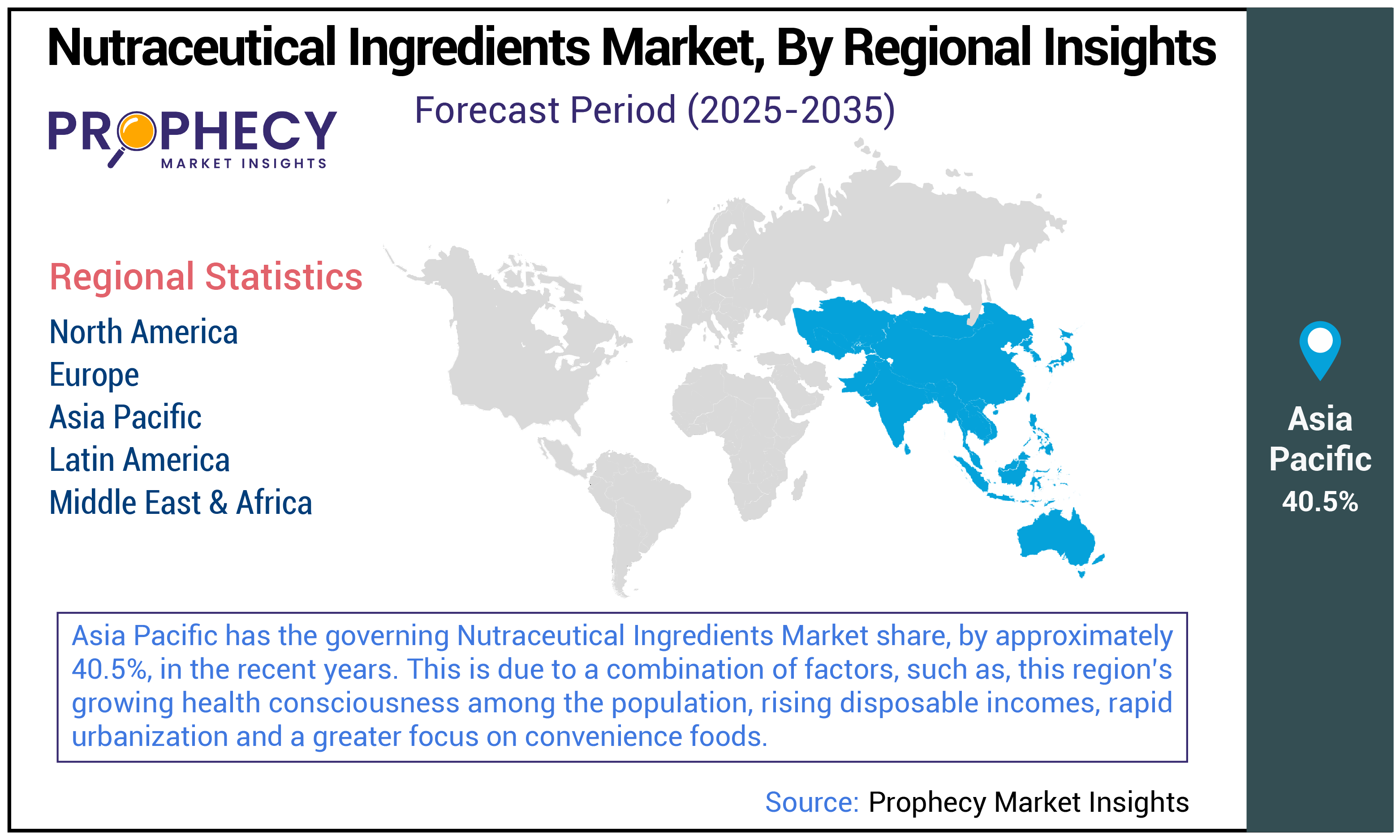
Geographically, the market is analyzed across North America, Europe, Asia Pacific, Latin America, and the Middle East & Africa.
Asia Pacific: This is the region which has the governing nutraceutical ingredients market share, by approximately 40.5%, in the recent years. This is due to a combination of factors, such as, this region’s growing health consciousness among the population, rising disposable incomes, rapid urbanization and a greater focus on convenience foods, increasing awareness of the importance of preventative healthcare, a dominant sourcing hub for nutraceutical ingredients, with increasing local production and the development of native plant sources and extraction technologies, and a strong government support for initiatives focused on herbal medicines and traditional ingredients.
- China Nutraceutical Ingredients Market Insights:
The nutraceutical ingredients market in China is the most influential market, in the recent years. This is due to this country’s massive population, and its economic growth has led to a significant increase in disposable incomes, growing awareness among Chinese consumers about the importance of preventative healthcare and the benefits of nutraceuticals for maintaining good health, rapid urbanization and changing lifestyles, including increased stress and unhealthy eating habits, increasing demand for functional foods, a well-established regulatory framework, and the presence of both traditional retail channels.
North America: This is the region which has the nutraceutical ingredients market growing with the fastest growth rate, during the forecast period, in the recent years. This is due to a number of factors, such as, this region’s high prevalence of chronic diseases, increased consumer awareness about health benefits, and the growing adoption of functional foods and dietary supplements. The region also experiences rising healthcare costs, which further motivates consumers to explore preventive measures such as nutraceuticals and this region also has a rising popularity of functional foods and dietary supplements.
- U.S. Nutraceutical Ingredients Market Insights:
The nutraceutical ingredients market in the U.S. is growing with the highest CAGR, during the forecast period, in the recent years. This is due to this country’s rising health-conscious consumers, rising popularity of functional foods and dietary supplements, including sports nutrition products, rising geriatric population, rising prevalence of chronic diseases, a strong economy and higher disposable incomes, the U.S. Dietary Supplement Health and Education Act (DSHEA) provides a legal framework for dietary supplements, and the presence of several major market players in this country.
Europe: The region which has the nutraceutical ingredients market growing significantly, in the recent years, is Europe. This is due to a confluence of factors, such as, the increasing focus on health and well-being by the Europeans, presence of a well-established regulatory framework for nutraceuticals, ensuring product safety and quality, and the rising aging population. Moreover, a significant portion of the European population has higher disposable incomes and a greater awareness of the health benefits of nutraceuticals, contributing to increased demand.
- Germany Nutraceutical Ingredients Market Insights:
The nutraceutical ingredients market in Germany is experiencing considerate amount of growth, in the recent years. This is due to this country’s well-established healthcare system facilitates the uptake and distribution of nutraceuticals, increasing health-conscious population, growing aging population, strong economy and large population, increasing focus on products with scientific evidence of efficacy, and the German consumers increasingly prefer natural and organic products, further driving the demand for these types of nutraceutical ingredients.
Nutraceutical Ingredients Market Report Scope:
|
Attribute |
Details |
|
Market Size 2025 |
USD 96.6 Billion |
|
Projected Market Size 2035 |
USD 199.1 Billion |
|
CAGR Growth Rate |
8.3% (2025-2035) |
|
Base year for estimation |
2024 |
|
Forecast period |
2025 – 2035 |
|
Market representation |
Revenue in USD Billion & CAGR from 2025 to 2035 |
|
Regional scope |
North America - U.S. and Canada Europe – Germany, U.K., France, Russia, Italy, Spain, Netherlands, and Rest of Europe Asia Pacific – China, India, Japan, Australia, Indonesia, Malaysia, South Korea, and Rest of Asia-Pacific Latin America - Brazil, Mexico, Argentina, and Rest of Latin America Middle East & Africa – GCC, Israel, South Africa, and Rest of Middle East & Africa |
|
Report coverage |
Revenue forecast, company share, competitive landscape, growth factors, and trends |
Segmentation:
By Ingredients Type:
- Vitamins
- Proteins & Amino Acids
- Carotenoids
- Enzymes
- Fibers & Specialty Carbohydrates
- Plant Extracts & Phytochemicals
- Prebiotics & Probiotics
- Others
By Source:
- Synthetic
- Natural
By Form:
- Dry
- Liquid
By Application:
- Functional Foods
- Functional Beverages
- Personal Care
- Animal Nutrition
- Dietary Supplements
- Others
By End User:
- Adults
- Children/Infants
- Geriatric Population
- Pet Owners & Livestock Farmers
- Others
By Region:
- North America
- U.S.
- Canada
- Europe
- Germany
- U.K.
- France
- Russia
- Italy
- Spain
- Netherlands
- Rest of Europe
- Asia Pacific
- China
- India
- Japan
- Australia
- Indonesia
- Malaysia
- South Korea
- Rest of Asia Pacific
- Latin America
- Brazil
- Mexico
- Argentina
- Rest of Latin America
- Middle East & Africa
- GCC
- Israel
- South Africa
- Rest of Middle East & Africa
Global Nutraceutical Ingredients Market By Competitive Landscape & Key Players
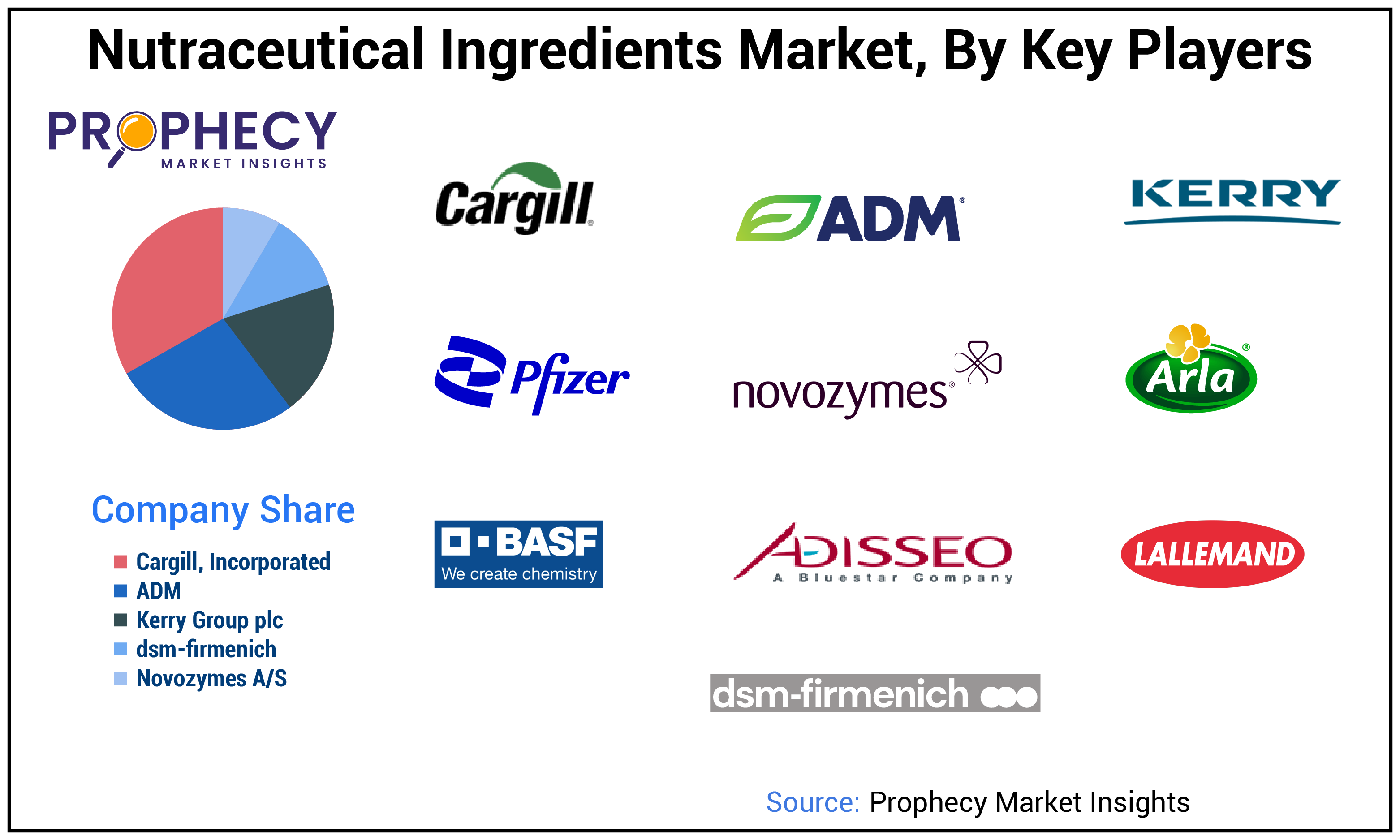
The prominent players operating in the market include, Cargill, Incorporated, ADM, Kerry Group plc, and others. These key players are focusing on growing partnerships between ingredient manufacturers to support new product development, growing demand for clean-label natural ingredient-based products to support market growth, and increasing popularity of nutraceuticals among athletes and health-conscious consumers to fuel market expansion, for driving Nutraceutical Ingredients Market growth.
Nutraceutical Ingredients Market Companies:
- Cargill, Incorporated
- ADM
- Kerry Group plc
- dsm-firmenich
- Novozymes A/S
- Arla Foods Ingredients Group P/S
- ANiagen Bioscience
- Givaudan
- Adisseo
- Herbalife International of America, Inc.
- BASF
- Lallemand Inc.
- Pfizer Inc.
- Lupin
- Novus International, Inc.
View an Additional List of Companies in the Nutraceutical Ingredients Market
Global Nutraceutical Ingredients Market By Recent News
- In April 2025, Lubrizol had established a distribution agreement with Palmer Holland, Inc. to increase the accessibility of its cutting-edge ingredient solutions for the food and beverage, dietary supplement, and nutraceutical industry segments throughout the Northeastern United States. By optimizing ingredient distribution and bioavailability, Lubrizol's fundamental technology of microencapsulation would assist address the increasing demand for nutraceutical products that are both pleasurable and effective.
- In September 2024, After Turnspire Capital Partners LLC purchased the business from Ashland, Inc., Pharmachem Innovations, LLC, a well-known supplier of nutraceuticals products and solutions, announced its debut as an independent enterprise. Pharmachem, with its headquarters located in Kearny, New Jersey, has a long history of collaborating closely with clients worldwide to create and manufacture a variety of specialised nutraceuticals.
- In August 2024, Leading Indian company Denzour Nutrition, known for its dedication to natural and potent sports supplements, has revealed that it is entering the fascinating field of organic nutraceuticals. With the help of nature's best components, this new product line caters to both athletes and the general public looking to improve its fitness and health. This business was paving the way for a healthier and brighter future for India and was becoming a formidable competitor for fitness lovers looking for a more natural approach.
- In May 2024, In Geneva, Switzerland, Evonik was showcasing its most recent advancements in nutraceutical ingredients at Vitafoods Europe 2024. With the introduction of the Healthberry portfolio to the U.S. market, the new AvailOm & Boswellia concept for joint health, and the most recent IN VIVO BIOTICS study results, the company offers cutting-edge, scientifically supported food ingredients to enhance consumer preferences and set functional food and food supplement brands apart.
Analyst View:
The nutraceutical ingredients market is expanding rapidly due to a number of important factors, such as the growing number of people with chronic illnesses, the ageing of the population, consumers' growing awareness of the advantages of dietary supplements and its desire for products that can help prevent or manage chronic illnesses, rising disposable incomes, and a growing focus on disease prevention rather than just disease treatment.
The quality and effectiveness of nutraceutical products are being improved by advancements in ingredient sourcing and extraction technologies, robust government support for herbal remedies and traditional ingredients, and consumers' growing desire for foods and supplements that provide health benefits beyond basic nutrition are all factors driving the market's expansion.
More Related Reports
Bioactive Ingredients Market
Pet Food Nutraceutical Market
Nutraceutical Packaging Market
Aroma Ingredients Market
Moringa Ingredients Market
Global Nutraceutical Ingredients Market By Company Profile
|
Company Name |
Cargill, Incorporated |
|
Headquarter |
Wayzata, Minnesota, United States |
|
CEO |
Mr. Brian Sikes |
|
Employee Count (2024) |
160,000 Employees |
Global Nutraceutical Ingredients Market By Highlights
FAQs
Nutraceutical ingredients market size was valued at USD 96.6 Billion in 2025 and is expected to reach USD 199.1 Billion by 2035 growing at a CAGR of 8.3%.
Ingredient type, source, form, application, end user, and region are the segmentation for the nutraceutical ingredients market.
North America, Asia Pacific, Europe, Latin America, and the Middle East & Africa. Asia Pacific is expected to dominate the market.
The key players operating in the nutraceutical ingredients market include Cargill, Incorporated, ADM, Kerry Group plc, Adisseo, dsm-firmenich, Novozymes A/S, Arla Foods Ingredients Group P/S, ANiagen Bioscience, Givaudan, Herbalife International of America, Inc., BASF, Lallemand Inc., Pfizer Inc., Lupin, and Novus International, Inc.