Global Low Calorie Food Market Overview
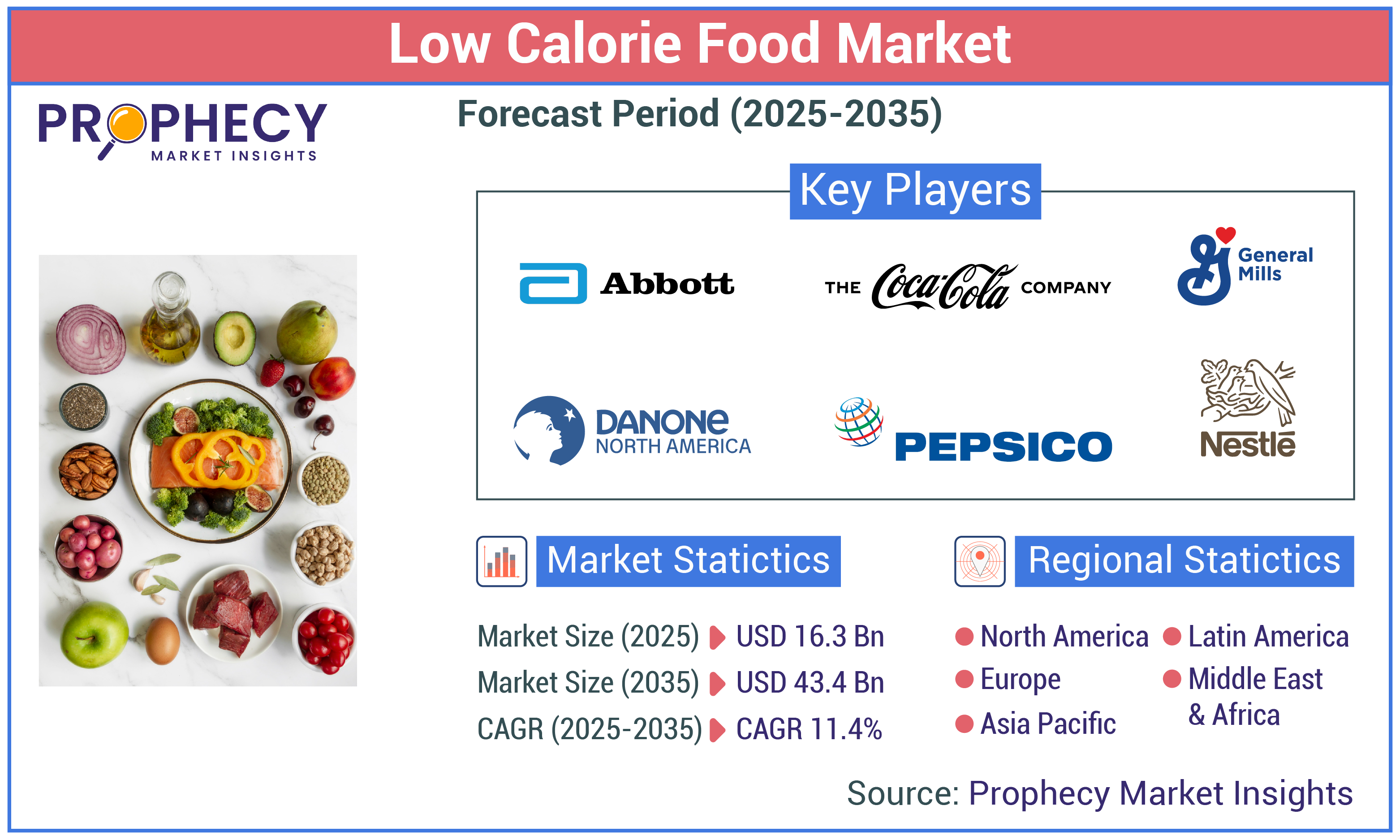
- By 2035, low calorie food market size is contemplated to enlarge at a valuation of USD 43.4 Billion.
- In 2024, the low calorie food market valuation was USD 14.5 Billion.
- Low calorie food market is developing at a CAGR of 11.4%.
The low calorie food market is comprised of products that can reduce calories while offering nutrition, taste, such as sugar substitutes, reduced-fat dairy, and health snacks. Growing global awareness of lifestyle-associated health problems has changed attitudes towards diets. The market tends to attract health-conscious customers who want to maintain their weight and improve overall health, driving food manufacturers to come up with innovative, nutritious, low calorie foods that tempt consumers to try them.
The low calorie food market has good growth prospects, with rising concerns over health issues such as obesity and cardiovascular problems. Advancements in food processing technology have also made low calorie substitutes and alternatives taste better than in the past, which helps widen market appeal to a broader segment of consumers.
The low calorie food market prospects look bright in the near and long term based on continued product innovation, expansion into emerging markets, and the increasing consumer use of digital health applications that focus on controlling weight through calorie intake. The anticipated growth of the low calorie food market will also be supported by investments into R&D focused on clean label, plant-based, and functional low calorie foods due to the growing awareness toward health.
Recession Risk & Tariff Analysis:
- In a recession, consumers seek affordability first and foremost. Consumers are likely to forget premium-priced low calorie foods and revert to cheaper, traditional alternatives. It is reasonable to assume that when economic fortunes slide, companies will also curb spending on innovation and marketing budgets, ultimately impacting product development and reducing visibility of low calorie foods on retailers' shelves.
- Heightened tariffs on different imported ingredients, stevia or sugar substitutes, for example, could raise production costs of low calorie food manufacturers, yielding higher retail prices that reduce consumer access to low calorie foods and decreased overall market growth. Trade tensions, regulatory changes, and cross-border sources may globally impact supply chains and product availability and comparative competitiveness.
Impact of Generative AI on Low Calorie Food Market:
- Generative AI allows food businesses to quickly model ingredient combinations, taste, and nutritional profiles. This helps increase the development of new products with reduced calorie levels for specific health trends, such as keto or plant-based diets, while greatly reducing the time involved in the research and development stage and increasing accuracy in developing a product that targets a consumer segment.
- Generally, by incorporating consumer behavior data and feedback using large data sets, Generative AI enables brands to develop targeted marketing and product recommendations for individuals. This increases engagement and retention for health-conscious consumers as low calorie food products align with their dietary choices and wellness aspirations.
Global Low Calorie Food Market Drivers & Restraints
Key Drivers:
Rising Health Consciousness and Lifestyle Diseases leveraging the growth of the market.
The worldwide rise in obesity, diabetes, and cardiovascular diseases is changing the way people are eating. Consumers are finding lower-calorie foods to control weight and improve their well-being. This is encouraged by the rise in awareness through nutritional labeling, fitness culture, and aspects of preventive health care. Therefore, manufacturers are innovating in the low calorie space to be palatable and compliant with dietary needs, and this will continue to facilitate cumulative growth worldwide.
- For instance, according to the UK’s Public Health England, as part of the Childhood Obesity Plan, the UK formally introduced its sugar reduction reformulation initiative in 2016. Public Health England released technical guidelines in March 2017 that called for a 20% decrease in sugar by 2020, with a 5% cut in the first year based on a 2015 standard.
Restraints:
High Cost of Low Calorie Ingredients reducing the market growth.
To produce a low calorie food product, there are often ingredients used that are novel, such as natural sweeteners, plant-based fibers, or sugar substitutes that are premium-priced. Collective pricing for these premium items may result in high retail pricing, which may not be accessible to price-sensitive consumers in developed economies that limit their market penetration and adoption, particularly in developing economies. Furthermore, product development and research costs are included with the costs to keep the taste and texture equivalent to standard products limits widespread market expansion.
- Counterbalance Statements: Despite the price impediment, as the health demand is increasing due to heightened consumer awareness as well as the larger incidences due to obesity and diabetes, many consumers to prioritizing nutrition over price. As the demand for low calorie foods increases and the market develops, potential economies of scale to produce premium ingredients as well as improvements in ingredient manufacturing processes, may reduce retail pricing enough to make low calorie foods more accessible.
Opportunities & Trends:
Rising Demand for Natural and Functional Low Calorie Foods is leveraging the market:
- A new opportunity in the low calorie food space is the rise in consumer preference for plant-based and functional foods that support health and wellness. This trend is representative of a larger mode shift toward preventive health and clean-label products. One of the trending areas is the use of natural low calorie sweeteners such as monk fruit and stevia, which are growing in popularity with health conscious and diabetic consumers because these products require virtually no processing and are believed to represent a highly beneficial blend of functions, especially in the eyes of the consumer needing to control their caloric intake.
Global Low Calorie Food Market Segmentations & Regional Insights
By product, application, distribution channel and region are the divisions of the low calorie food market.
By Product:
On the basis of Product, the market is segmented into aspartame, sucralose, stevia, saccharin, cyclamate, and others. sucralose dominates the market. Sucralose retains the leading position in high-intensity sweeteners with its heat stability, zero-calorie content, and clean taste aboard usage of a wider range of products such as baked goods, soft drinks, and dairy products. This category, in addition to the fact that the product has been approved by regulatory bodies in many countries, and food manufacturers are using it in a wide range of applications, has supported sucralose.
Stevia has the second-largest proportion of the market supported by its plant-derived nature and widely held beliefs that stevia is a "healthier" choice than artificial sweeteners. There is still a shift in consumer preference towards more natural (and organic) ingredients, so stevia continues to grow in reputation and utility. Specifically, its ability to serve as an ingredient in health-conscious products and beverages has helped further its proposition as a key high-intensity sweetener in the market.
By Application:
On the basis of Application, the market is segmented into beverages, dairy products, bakery products, dietary supplements, confectionery, and others. Beverages dominates the Low-calorie food market share. Low-calorie drinks remain at the forefront of the market along with the growing popularity of but reduction calories and no sugar drinks including flavored water, diet sodas, and functional beverages/snacks. Consumer awareness around obesity and diabetes has enhanced the demand for healthier drink options, making this sector a global contributor to market growth.
Dietary Supplements has the second-largest proportion of the market. Consumers who want to be healthy in the long run are looking for nutrient convenience in calorie-managed vitamins, minerals, and protein supplements are also on the rise. With health-conscious consumers already aware of using supplements for weight management, many consumers and fitness enthusiasts will use the products for overall well-being. With ageing consumers looking for ways to support their nutrition, health, and wellness, supplements will be used increasingly in developed and developing cultures.
By Distribution Channel:
Based on distribution channel, market is segmented into B2B, supermarkets and hypermarkets, convenience stores, e-commerce, and others. Supermarkets and hypermarkets dominate the distribution channel segment due to their strong presence, large number of products, and ability to provide immediate access to many substitutes for low calorie foods. Consumers choose them for their one-stop shop and for the opportunity to physically compare brands, ingredients, and prices while making choices, building trust, and for convenience.
E-commerce is the second-largest, owing in part to the digital transformation of retail and increased comfort with online grocery shopping. Consumers continue to enjoy home delivery and subscriptions and are becoming value-conscious about the availability of access to a greater selection of low calorie products, especially with niche dietary needs or specialty ingredients.
Regional Insights:
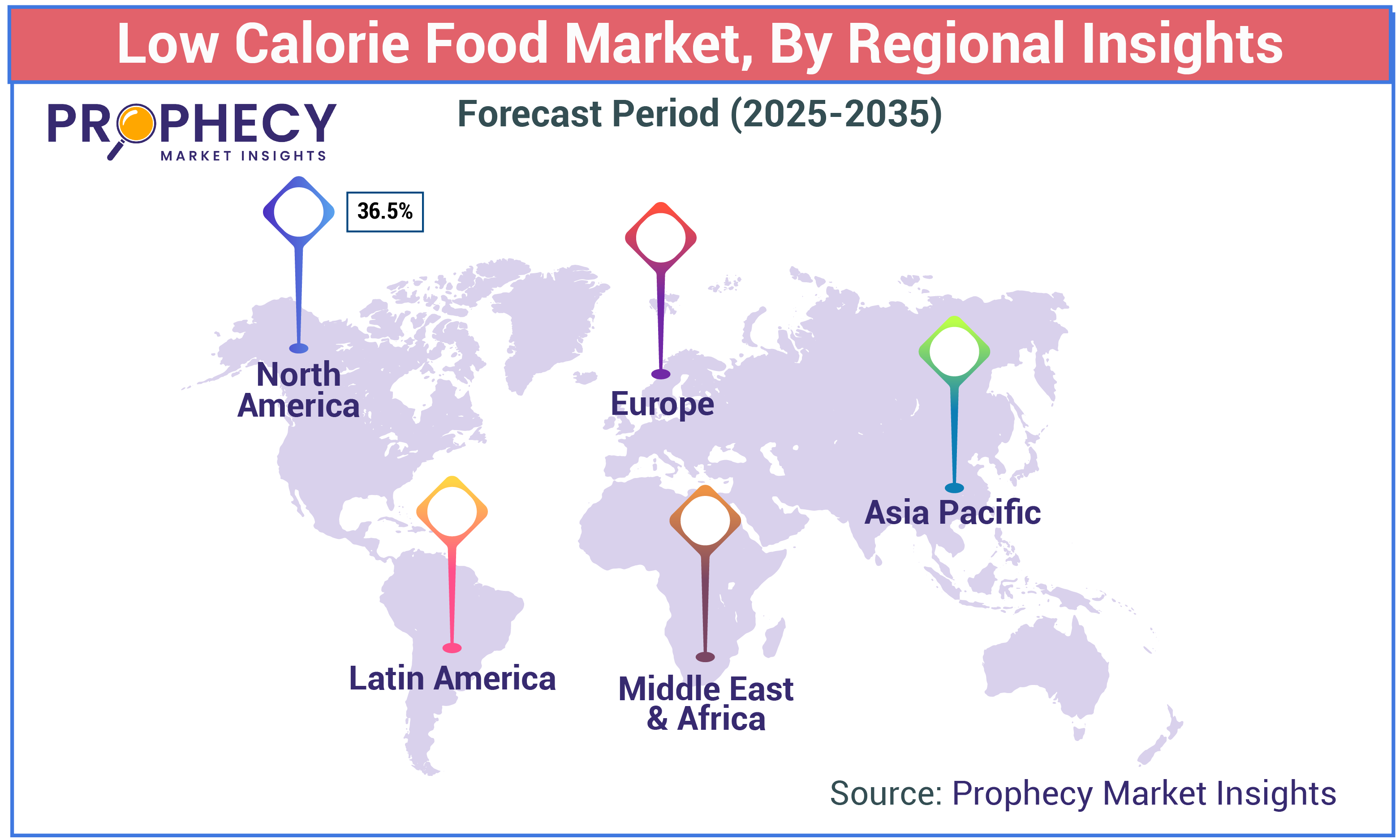
Geographically, the low calorie food market is studied across North America, Europe, Asia Pacific, Latin America, and the Middle East & Africa.
North America: This is dominating region in low calorie food market due to engaged consumer interest, the high obesity epidemic, and a rapidly expanding group of healthy dieters. The existing retail development, the escalating disposable income, and the strong rate of populating low calorie options are all pointing to continued leadership from this region.
- U.S. Low Calorie Food Market Insights:
The U.S. is the key player in North America’s low calorie food market given the high prevalence of obesity, a highly health-conscious population and early adoption of diet-specific trends. Together with strong demand for sugar-free, low-carbohydrate and plant-based foods and also an established food manufacturing sector, we feel that the United States will be well situated in this sector.
Europe: This is the second-largest market, benefiting from well-developed regulatory stimulus suggesting consumers ought to be calorie conscious through updated labeling, and in-general, better regulation of calorie limiters for low calorie diets. Also, many Western European nations indicated a growing preference for organic and sugar-free intervention as a source of variety, again allowing a population to be increasingly taken with up-market low calorie offerings across the weight-loss food service and retail development.
- Germany Low Calorie Food Market Insights:
Germany leads the way in Europe low calorie food market as a country with a high health-conscious population and consumers looking for clean-label and reduced-calorie food products. The large retail structure, clear food labeling regulation, and develop of functional food innovation are other indicators to suggest Germany is an important hub for both local consumption and low calorie food product development.
Asia Pacific: This is the third largest region of low calorie food market share, yet it is the fastest growing. The low calorie food interest is made possible by the swelling urbanization; the increased income earned at work has an impact on copying the lifestyle of urbanites, also the hurdles of lifestyle-related health impact. Beyond border difficulties amongst China, India, and Japan's populations show a growing appetite for low calorie snack applications, low calorie drink applications, and low calorie dietary supplement applications.
- China Low Calorie Food Market Insights:
China is found to be the leading country in the Asia Pacific low calorie food market, as urbanization is growing, a greater middle class is being formed, and society has a growing number of health conditions related to diet, the food industry, and obesity. Sensitivity related to nutrition in food and its connection to health, and increased demand for packaged foods labelled as healthier options, contribute to this rapid growth seen in China.
Low Calorie Food Market Report Scope:
|
Attribute |
Details |
|
Market Size 2025 |
USD 16.3 Billion |
|
Projected Market Size 2035 |
USD 43.4 Billion |
|
CAGR Growth Rate |
11.4% (2025-2035) |
|
Base year for estimation |
2024 |
|
Forecast period |
2025 – 2035 |
|
Market representation |
Revenue in USD Billion & CAGR from 2025 to 2035 |
|
Regional scope |
North America - U.S. and Canada Europe – Germany, U.K., France, Russia, Italy, Spain, Netherlands, and Rest of Europe Asia Pacific – China, India, Japan, Australia, Indonesia, Malaysia, South Korea, and Rest of Asia-Pacific Latin America - Brazil, Mexico, Argentina, and Rest of Latin America Middle East & Africa – GCC, Israel, South Africa, and Rest of Middle East & Africa |
|
Report coverage |
Revenue forecast, company share, competitive landscape, growth factors, and trends |
Segmentation:
By Product:
- Aspartame
- Sucralose
- Stevia
- Saccharin
- Cyclamate
- Others
By Application:
- Beverages
- Dairy Products
- Bakery Products
- Dietary Supplements
- Confectionery
- Others
By Distribution Channel:
- B2B
- Supermarkets and Hypermarkets
- Convenience Stores
- E-Commerce
- Others
By Region:
- North America
- U.S.
- Canada
- Europe
- Germany
- U.K.
- France
- Russia
- Italy
- Spain
- Netherlands
- Rest of Europe
- Asia Pacific
- China
- India
- Japan
- Australia
- Indonesia
- Malaysia
- South Korea
- Rest of Asia Pacific
- Latin America
- Brazil
- Mexico
- Argentina
- Rest of Latin America
- Middle East & Africa
- GCC
- Israel
- South Africa
- Rest of Middle East & Africa
Global Low Calorie Food Market Competitive Landscape & Key Players
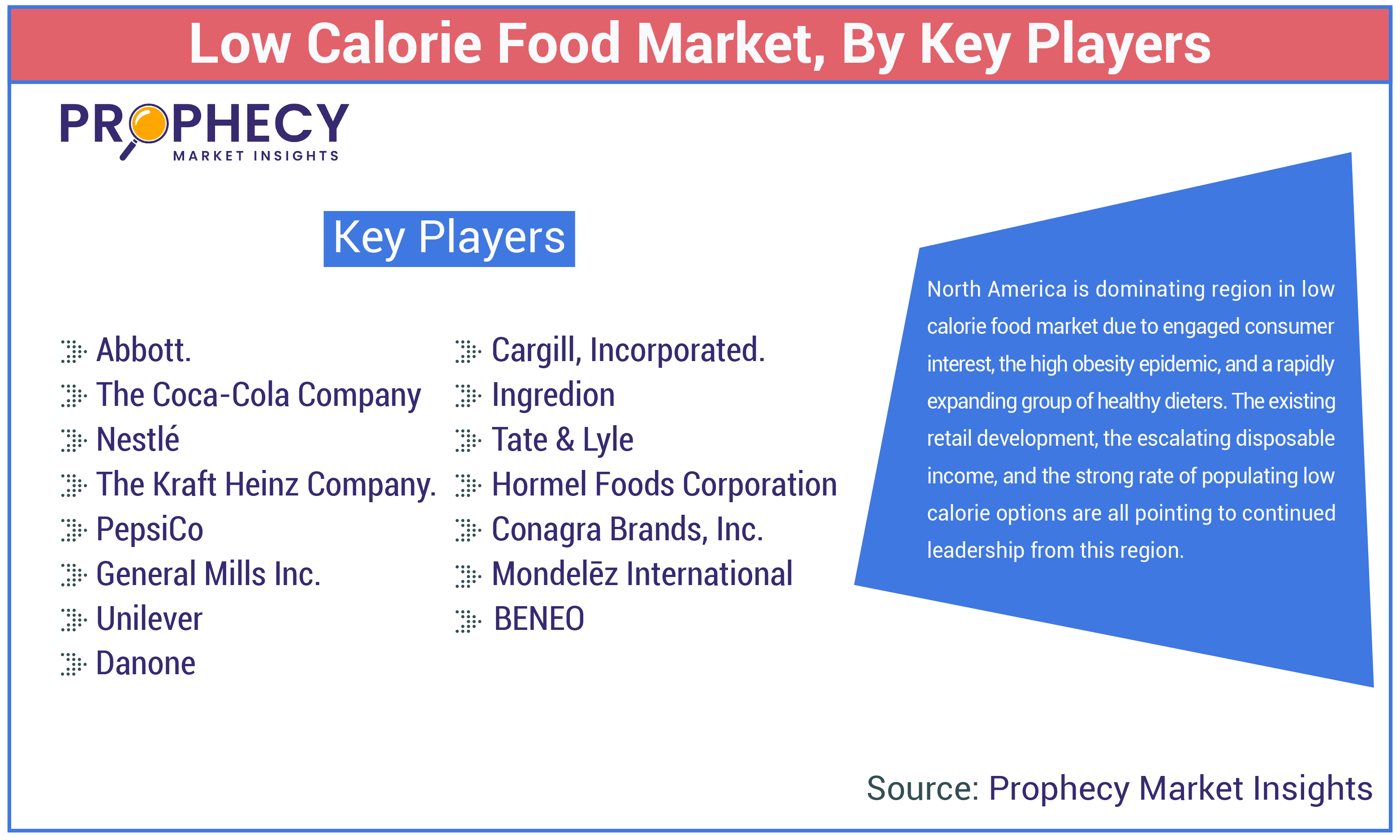
The prominent players operating in the market include, Abbott., The Coca?Cola Company, Nestlé, The Kraft Heinz Company., PepsiCo, General Mills Inc., Unilever, and others. The competitive environment for the low calorie food market presents a mix of multinational food companies and nascent health and wellness brands. Companies compete on their ability to innovate and reformulate products, ensure clean labeling, and advertise based on health benefits. Strategic expansions, partnerships, and larger portfolios of snacks, beverages, and the like keep a player relevant amid changing consumer dietary preferences.
Low Calorie Food Market Companies:
- Abbott.
- The Coca?Cola Company
- Nestlé
- The Kraft Heinz Company.
- PepsiCo
- General Mills Inc.
- Unilever
- Danone
- Cargill, Incorporated.
- Ingredion
- Tate & Lyle
- Hormel Foods Corporation
- Conagra Brands, Inc.
- Mondel?z International
- BENEO
View an Additional List of Companies in the Low Calorie Food Market
Global Low Calorie Food Market Recent News
- In January 2025, Nestlé launched a new range of low calorie ice cream products under the Häagen-Dazs brand in an effort to satisfy consumers' increasing desire for decadent but healthful treats.
- In October 2024, PepsiCo expanded its line of healthier food options, when it purchased a stake in a plant-based snack business that offers low calorie snacks targeted at people who are health-conscious.
Analyst View:
The low calorie food sector is experiencing steady demand, fueled by growing health consciousness, increasing incidence of obesity, and consumer awareness stemming from government endorsed nutrition programs. Manufacturers in the low calorie food market are responding to demand by innovating with sugars substitutes and clean-label ingredients. Some of the key trends are functional foods, plant-based alternatives, and portion-controlled segments.
Market opportunities exist in developing e-commerce channels in addition to increasing low calorie food sales in emergent economies. There is also a degree of resistance to higher prices typically associated with low calorie food products and consumer skepticism regarding artificial sweeteners, as well as changing regulations and competition in the health food space, that are challenges to manufacturers in the sector.
More Related Reports
Baby Food Market
Very Low Sulfur Fuel Oil (VLSFO) Market
Low Code Development Platform Market
Food Fiber Market
Food Safety Testing Market
Global Low Calorie Food Market Company Profile
|
Company Name |
PepsiCo |
|
Headquarter |
Harrison, New York, U.S. |
|
CEO |
Ramon Laguarta |
|
Employee Count |
318,000 Employees |
Global Low Calorie Food Market Highlights
FAQs
Low calorie food market size was valued at USD 16.3 Billion in 2025 and is expected to reach USD 43.4 Billion by 2035 growing at a CAGR of 11.4%.
Product, application, distribution channel and region are the segmentation for the target market.
North America, Asia Pacific, Europe, Latin America, and the Middle East & Africa. North America is expected to dominate the market.
The prominent players operating in the market include, Abbott, The Coca?Cola Company, Nestlé, The Kraft Heinz Company., PepsiCo, General Mills Inc., Unilever, Danone, Cargill, Incorporated., Ingredion, Tate & Lyle, Hormel Foods Corporation, Conagra Brands, Inc., Mondel?z International, and BENEO