Global Frozen Bakery Products Market Overview
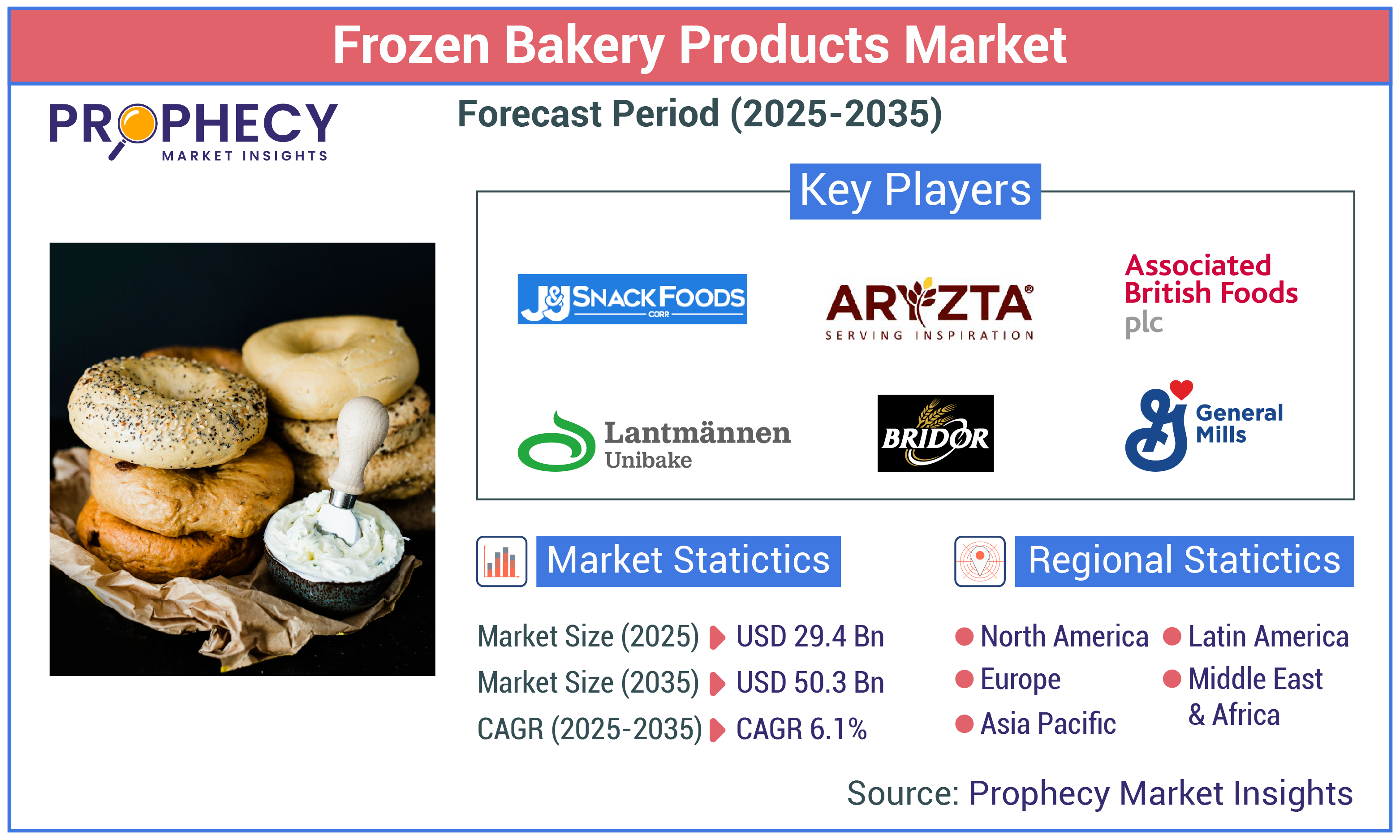
- The frozen bakery products market size is anticipated to develop at a rate of USD 50.3 Billion, by 2035.
- The valuation of the target market was accounted for USD 28.0 Billion in 2024.
- The frozen bakery products market is expanding at a CAGR 6.1%.
Frozen bakery products are the baked goods that are prepared, partially or fully baked, and then frozen to preserve freshness and extend shelf life. These products are designed for convenience, consistency, and long-term storage, allowing them to be distributed and consumed over extended periods without compromising quality. Common types of frozen bakery items include breads, cakes, pastries, cookies, muffins, pizza bases, croissants, and more. The growing popularity of frozen bakery products is driven by urbanization, fast-paced lifestyles, and the rising demand for ready-to-eat and convenience foods.
Changing lifestyle, responsible to consumer prioritizing convenience, time-saving meal option, and increasing urbanizations, exposure to Western food culture, has significantly boost frozen bakery products market growth. Growth in foodservice industry, and improved cold chain infrastructure, is anticipated to drive frozen bakery products market growth.
Rising health consciousness is creating opportunities for launching gluten-free, low-carb, high-fiber, or fortified frozen bakery products, and growth in emerging economics, is significantly drive frozen bakery products market growth. Rise of online grocery, food delivery platforms, and expansion of private-label frozen bakery lines, is expected to pitch frozen bakery products market growth.
Recession Risk and Tarriff Analysis on Frozen Bakery Products Market:
- As consumer spending on non-essential food items can decline during economic downturns. The category is protected due to its affordability, long shelf life, and convenience, which demand to budget-conscious consumers looking to reduce eating-out expenses. During recessions, demand may shift from premium to more basic or private-label products, especially in retail channels.
- In developed markets such as the EU and the U.S., tariffs are relatively low under trade agreements, but strict labeling, ingredient, and sanitary standards can pose non-tariff barriers. Emerging economies, such as India and parts of Southeast Asia, may impose higher tariffs and duties to protect domestic producers, which can affect pricing and competitiveness for imported goods.
Impact of Generative AI on Frozen Bakery Products Market:
- In product innovation, AI algorithms can analyze large consumer data sets to predict emerging taste preferences, dietary needs, and regional trends. This allows companies to develop new recipes, flavors, or health-focused frozen bakery items with more efficient and greater alignment to meet consumer demand.
- AI enables brands to create personalized advertising content, product descriptions, social media posts, and packaging ideas at scale. AI-driven content can be adapted for different markets and demographics, helping brands communicate effectively across regions.
Global Frozen Bakery Products Market Drivers & Restraints
Key Drivers:
Rising Demand for Convenient and Ready-to-Eat Snacks can Stimulate Market Augmentation
The growing consumer preference for convenient, time-saving food options is a major driver in the frozen bakery products market. As urban lifestyles become more hectic and working populations expand, especially in urban areas, in which people increasingly seek ready-to-eat or quick-to-prepare snacks that fit into their busy schedules. Frozen bakery products, such as pre-baked pastries, muffins, pizza bases, and snackable breads offer a practical solution, which requires minimal effort and preparation time. The expansion of on-the-go eating habits, or snacks, single-person households and dual-income facilities contributes to shift traditional cooking to convenient food consumption. The rising demand for ready-to-eat snacks boost the frozen bakery products sale, and encourages brands to innovate with new formats, flavors, healthier option, resulting to drive frozen bakery products market growth.
- For instance, according to article published in February 2024, this article states that, the demand for on-the-go snack is continuously expanding, due to busy lifestyle, and the need for quick, easy solution. Fruit and vegetable snacks consumed by 60% globally. As the growing health awareness, increasing interest in snacks that cater to specific dietary needs, such as gluten-free, keto, vegan, or high-protein options.
Restraints:
Market Hindered by High Cold Chain and Storage Costs
Frozen bakery products require constant refrigeration during transportation, storage, and retail display to maintain quality and safety. This dependence on a reliable cold chain significantly increases operational and logistical costs, particularly in underdeveloped infrastructure region. These high costs can limit market penetration in emerging economies and reduce profitability for smaller manufacturers or retailers.
- Counterbalance Statements: Ongoing investments in cold chain infrastructure, especially in fast-growing market, are steadily reducing these costs. Advancements in energy-efficient refrigeration technologies and the emergence of shared logistics networks are helping businesses to optimize storage and distribution, making frozen bakery products more viable and cost-effective.
Opportunities & Trends:
Expansion of Food Delivery Platforms Surge Market Growth
The rapid growth of food delivery platforms such as Swiggy, Zomato, Uber Eats, DoorDash, and others presents a significant opportunity for the frozen bakery products market. These platforms have transformed consumer behavior by making a wide variety of ready-to-eat meals and snacks easily accessible at home, which fuels the demand for foodservice businesses that rely on frozen bakery items for efficiency and speed.
Restaurants, cafés, and cloud kitchens increasingly turn to frozen doughs, pizza bases, pastries, and breads to maintain consistent quality and reduce preparation time by meeting high-volume delivery orders. The integration of frozen bakery products into meal kits or pre-packaged offering delivered using e-commerce platforms to provide new sales channels and greater reach. The expansion of food delivery services creates new avenues for frozen bakery manufacturers, is expected to create future opportunities for frozen bakery products market share.
- For instance, according to data published by deliverect, in 2024, an estimated globally 2.1 billion people used food delivery services, while 1.5 billion people chose for online grocery delivery. In North America region, DoorDash holds the 67% of market share, and Uber Eats has 23% share in the U.S. While, in Canada, Uber Eats have 54%, and DoorDash have 49% of share. In China, Meituan and Ele.me delivery platforms have highest rate of services. In India, Zomato served 80 million users per month. Ghost kitchens will account for 50% of drive-thru by 2030. At workplace about 32% meal programs increased by year-over-over. 67% of millennials and 63% of Gen Z relay on food delivery regularly.
Global Frozen Bakery Products Market Segmentations & Regional Insights
The frozen bakery products market is segmented into type, form of consumption, distribution channel, and region.
By Type:
Based on type, the market is divided into breads, pizza crusts, cakes & pastries, and others. Breads hold the largest frozen bakery products market share due to their high global consumption, long shelf life, and versatility in both retail and foodservice channels. This include products such as sliced loaves, rolls, baguettes, and buns, which are daily staples in many regions. Their popularity is driven by convenience, consistent quality, and rising demand in both developed and emerging economies, resulting to propel frozen bakery products market size in following segment.
Pizza crusts are the second most dominant segment, fueled by the growing global popularity of frozen pizza, especially in millennials and working-class consumers seeking quick meal solutions. Frozen crusts are heavily used in quick-service restaurants, cafés, and home cooking, with demand rising in both western and Asian markets, is expected to impel segment’s growth in frozen bakery products market size.
By Source:
Corn, wheat, barley, rye are classified by source in the market. Corn holds the largest share in the market and is increasingly used as a source material for gluten-free frozen bakery products, targeting the rising segment of consumers with gluten intolerance or celiac disease. Cornmeal and corn flour are commonly used in frozen tortillas, cornbread, pizza bases, and snack items. The growing health-conscious population and demand for alternative grains are contributing to segment’s expansion in frozen bakery products market share.
Wheat is second leading segment in the market. The texture, taste, and baking performance of wheat-based products are highly preferred by consumers across North America, Europe, and parts of Asia. Wheat flour is more cost-effective and readily available, making it the preferred base ingredient for commercial frozen bakery manufacturers, is projected to boost frozen bakery products market size.
By Form of Consumption:
On the basis of form of consumption, the market is segmented into, ready-to-proof, ready-to-bake, and ready-to-eat. Ready-to-bake frozen bakery products are the most dominant as it offer an optimal balance between freshness, convenience, and control. These products, such as frozen doughs, croissants, or pastry shells allow retailers, bakeries, and foodservice operators to bake on-site as needed, ensuring a fresh product by reducing waste, is projected to fuel growth f segment in frozen bakery products market share.
Ready-to-eat is second leading segment in the market. This segment gaining traction, especially in retail and convenience stores, due to the rise in on-the-go consumption and busy lifestyles. These products require no further preparation and appeal to consumers looking for immediate consumption without additional effort, is estimated to impel frozen bakery products market size in following segment.
By Distribution Channel:
Under distribution channel, the market is categorized into conventional stores, foodservice providers, baker’s shops, online and others. The market is dominated by conventional stores, due to their wide reach and established infrastructure for frozen goods. These retail outlets offer consumers easy access to a variety of frozen bakery products, such as m bread, pastries. The growing trend of shopping at large, multi-product retail stores for convenience and value drives, is predicted to boost growth of segment in frozen bakery products market share.
Foodservice providers is second superior segment in the market, as it includes hotels, cafes, and quick-service restaurants (QSRs). These businesses rely on frozen bakery products for consistency, cost-efficiency, and to reduce preparation time. This channel has seen growth due to the increasing demand for convenience in the foodservice sector, particularly in fast-casual dining, is probably to fuel segment’s development in frozen bakery products market size.
Regional Insights:
Geographically, the market is studied across North America, Europe, Asia Pacific, Latin America, and the Middle East & Africa.
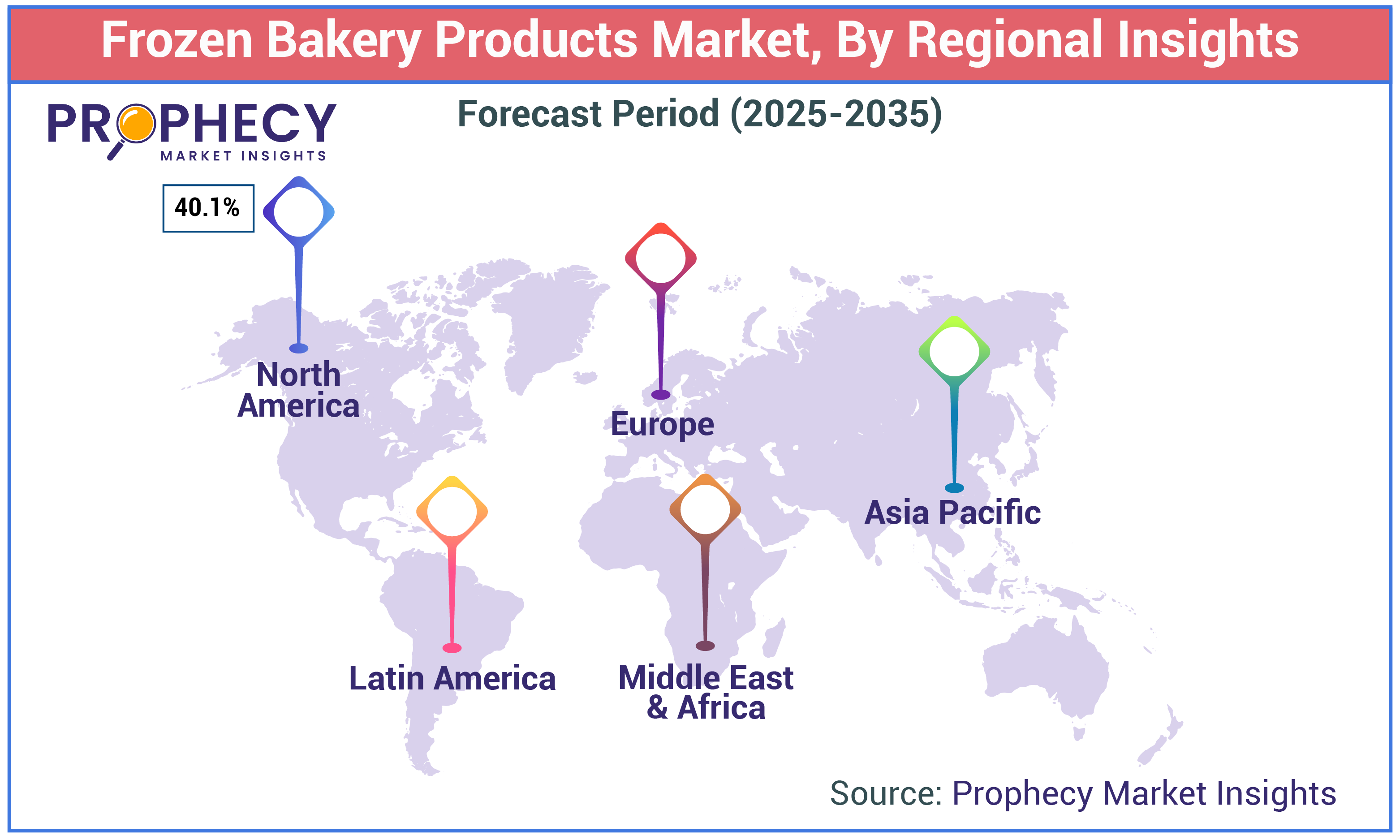
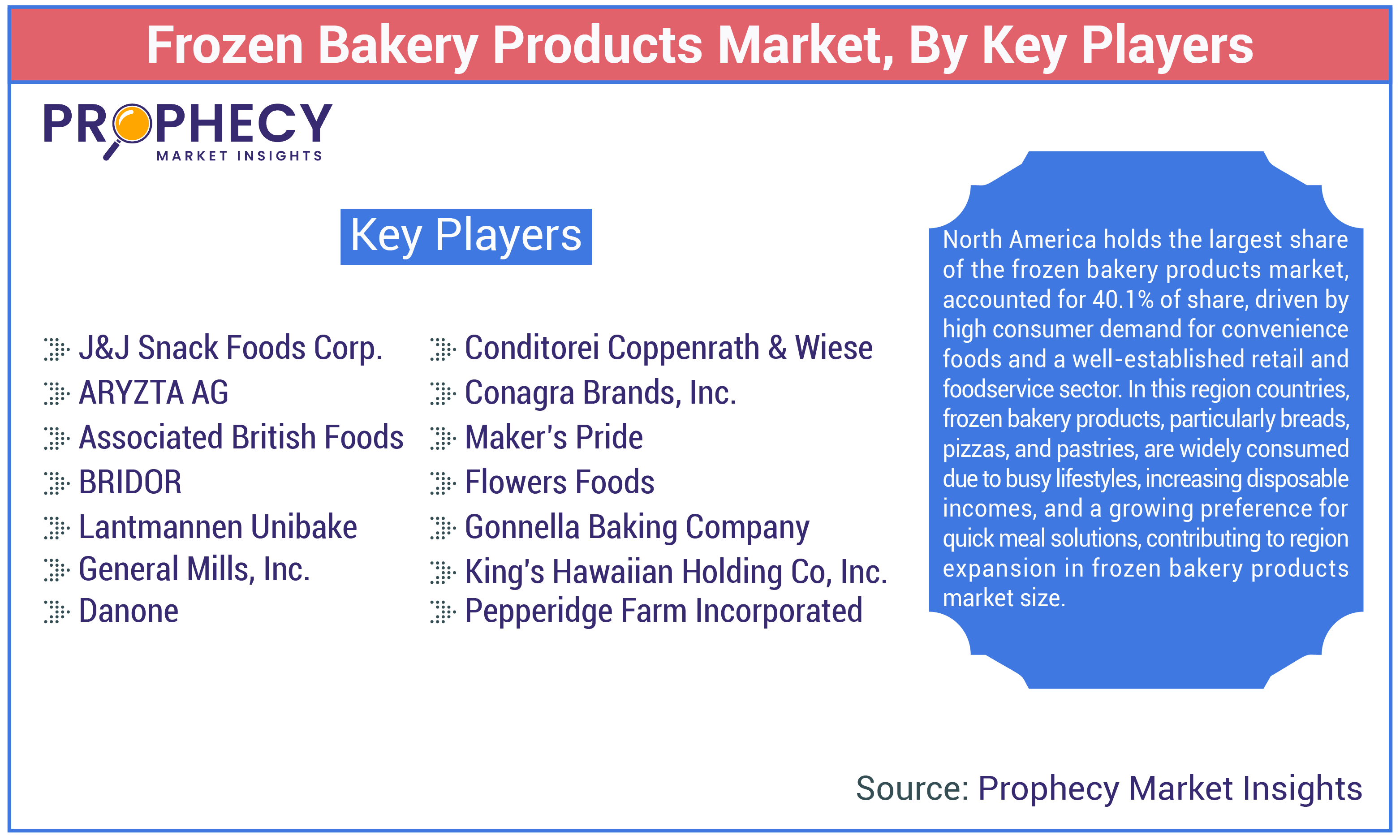
North America: This region holds the largest frozen bakery products market share, accounted for 37.1% of share, driven by high consumer demand for convenience foods and a well-established retail and foodservice sector. In this region countries, frozen bakery products, particularly breads, pizzas, and pastries, are widely consumed due to busy lifestyles, increasing disposable incomes, and a growing preference for quick meal solutions, contributing to region expansion in frozen bakery products market size.
- U.S. Frozen Bakery Products Market Insights:
In North America, the U.S. is the dominant country in the market. Driven by the high demand for convenience foods, the U.S. has a well-established retail infrastructure, widespread availability of frozen bakery goods in supermarkets, and a strong foodservice sector that relies heavily on frozen products, is anticipated to drive frozen bakery products market share.
Europe: This is the second-largest region in the frozen bakery market. The demand for frozen bakery products in Europe is driven by traditional consumption patterns, with countries having a strong baking culture. The popularity of frozen bread, pastries, and pizza in both retail and foodservice sectors contributes to significant growth. Technological advancements in freezing methods and a growing trend toward premium and health-conscious bakery products support frozen bakery products market expansion in the region.
- Germany Frozen Bakery Products Market Insights:
Germany is the leading country in Europe for frozen bakery products. Germany has a strong bakery culture, and its market for frozen bakery products is growing steadily, driven by the high demand for bread, rolls, and frozen pastries, is assessed to fuel frozen bakery products market.
Asia Pacific: This region is experiencing rapid growth in the frozen bakery products market, driven by urbanization, changing lifestyles, and increasing disposable incomes. Frozen bakery items are witnessing a surge in demand due to growing adoption of Western eating habits, the expansion of modern retail channels, and the rising popularity of convenience foods. The increasing presence of international food chains and the growth of the foodservice sector are contributing to the frozen bakery products market size expansion.
- China Frozen Bakery Products Market Insights:
China is the dominating country in the Asia Pacific region for frozen bakery products. The market is expanding rapidly due to the growing urban population, rising disposable incomes, and increasing exposure to western food trends, such as frozen pizza and baked goods. China's foodservice sector, with modern retail channels such as supermarkets and e-commerce, is accelerating the adoption of frozen bakery items across the country, is expected to pitch frozen bakery products market growth.
Frozen Bakery Products Market Report Scope:
|
Attribute |
Details |
|
Market Size 2025 |
USD 29.4 Billion |
|
Projected Market Size 2035 |
USD 50.3 Billion |
|
CAGR Growth Rate |
6.1% (2025-2035) |
|
Base year for estimation |
2024 |
|
Forecast period |
2025 – 2035 |
|
Market representation |
Revenue in USD Billion & CAGR from 2025 to 2035 |
|
Regional scope |
North America - U.S. and Canada Europe – Germany, U.K., France, Russia, Italy, Spain, Netherlands, and Rest of Europe Asia Pacific – China, India, Japan, Australia, Indonesia, Malaysia, South Korea, and Rest of Asia-Pacific Latin America - Brazil, Mexico, Argentina, and Rest of Latin America Middle East & Africa – GCC, Israel, South Africa, and Rest of Middle East & Africa |
|
Report coverage |
Revenue forecast, company share, competitive landscape, growth factors, and trends |
Segmentation:
By Type:
- Breads
- Pizza Crusts
- Cakes & Pastries
- Others
By Source:
- Corn
- Wheat
- Barley
- Rye
By Form of Consumption:
- Ready-to-Proof
- Ready-to-Bake
- Ready-to-Eat
By Distribution Channel:
- Conventional Stores
- Foodservice Providers
- Baker’s Shops
- Online
- Others
By Region:
- North America
- U.S.
- Canada
- Europe
- Germany
- U.K.
- France
- Russia
- Italy
- Spain
- Netherlands
- Rest of Europe
- Asia Pacific
- China
- India
- Japan
- Australia
- Indonesia
- Malaysia
- South Korea
- Rest of Asia Pacific
- Latin America
- Brazil
- Mexico
- Argentina
- Rest of Latin America
- Middle East & Africa
- GCC
- Israel
- South Africa
- Rest of Middle East & Africa
Global Frozen Bakery Products Market Competitive Landscape & Key Players
The main key players operating in the frozen bakery products market are ARYZTA AG, Lantmannen Unibake., and others. These companies are constantly innovating, expanding their product portfolios, and optimizing production processes to meet the evolving demands of consumers, through their collaboration or partnerships. Companies are investing in research and development (R&D) to introduce innovative frozen products, resulting to propel Frozen Bakery Products market growth.
Frozen Bakery Products Market Companies:
- J&J Snack Foods Corp.
- ARYZTA AG
- Associated British Foods
- BRIDOR
- Lantmannen Unibake
- General Mills, Inc.
- Danone
- Conditorei Coppenrath & Wiese
- Conagra Brands, Inc.
- Maker’s Pride
- Flowers Foods
- Gonnella Baking Company
- King's Hawaiian Holding Co, Inc.
- Pepperidge Farm Incorporated
View an Additional List of Companies in the Frozen Bakery Products Market
Global Frozen Bakery Products Market Recent News
- In March 2025, Belgian food group Vandemoortele acquired French frozen bakery specialist Délifrance from grain cooperative Vivescia. Through this acquisition Vandemoortele become largest frozen bakery products producers in Europe. Vandemoortele has active bakery sector for five decades and has USD 1.5 billion turnover in Europe and the U.S.
- In December 2024, Furlani Foods acquired Cole’s Quality Foods. This acquisition aimed to create leading brands in the frozen garlic category, create production, innovation and supply chain advantages for both brands consumers. Their products were sold at leading national retailers under Durlani brand, as privet label, and food service brands.
- In October 2024, General Mills Foodservice offered high-quality frozen bread dough. The line of Pillsbury breads and rolls aimed to help in-store bakeries balance limited time and resources, which offer a produce fresh-baked bread without requiring skilled labor. The new frozen bread products include, Pillsbury Dinner Roll Dough, Pillsbury 4” Steak Roll Dough, Pillsbury Bolillo Roll Dough, Pillsbury 6” Hoagie Dough and many others.
- In September 2024, Holland’s Pies launched a new frozen range of sausage, rolls, bakes, wraps and puddings. This new product line contains, steak bakes, bacon & cheese wraps, three cheese pastry wraps, steak puddings, sausage & baked bean bakes, and others. This new offering aimed to represent classic, comforting flavors combined with convenience of frozen food to meet consumer demand.
Analyst View:
The frozen bakery products market driven by rapid growth in e-commerce platforms, rising demand for convenience, ready-to-eat snacks, growing urbanization and shifting consumer lifestyles. Expansion of food delivery services, growth foodservice sector and trend toward health-oriented innovation, such as gluten-free, clean-label products, can open new doors for frozen bakery products market share.
More Related Reports
Frozen Pizza Market
Frozen Fruits and Nuts Market
Frozen Fruits and Nuts Market
Frozen Dessert Market
Frozen Vegetables Market
Global Frozen Bakery Products Market Company Profile
|
Company Name |
J&J Snack Foods Corp. |
|
Headquarter |
New Jersey, U.S. |
|
CEO |
Dan Fachner |
|
Employee Count |
5,000 Employees |
Global Frozen Bakery Products Market Highlights
FAQs
Frozen bakery products market size was valued at USD 29.4 Billion in 2025 and is expected to reach USD 50.3 Billion by 2035 growing at a CAGR of 6.1%.
Type, source, form of consumption, distribution channel, and region are the segmentation for the target market.
North America, Asia Pacific, Europe, Latin America, and the Middle East & Africa. North America is expected to dominate the market.
The key players operating in the frozen bakery products market include J&J Snack Foods Corp., ARYZTA AG, Associated British Foods, BRIDOR, Lantmannen Unibake, General Mills, Inc., Danone, Conditorei Coppenrath & Wiese, Conagra Brands, Inc., Maker’s Pride, Flowers Foods, Gonnella Baking Company, King's Hawaiian Holding Co, Inc., and Pepperidge Farm Incorporated.