Global Coal To Liquid Market Size
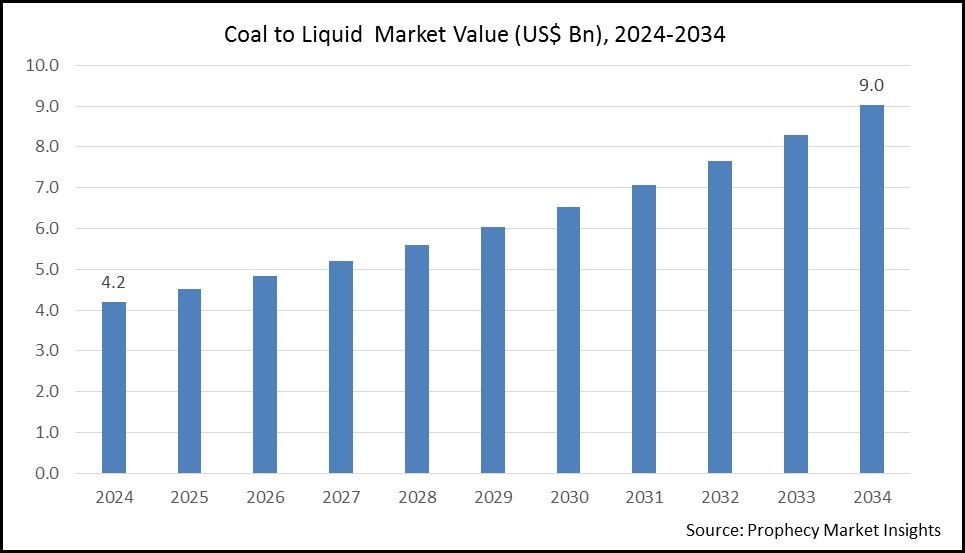
The market for coal to liquid is expected to increase at a compound annual growth rate (CAGR) of 8.8% from its 2024 valuation of US$ 4.2 billion to US$ 9.0 billion by 2034.
The "Coal to Liquid" (CTL) market is concerned with the production and use of coal-based synthetic fuels. Although petroleum-based fuels are widely utilized in all types of automobiles, coal is the most frequently used worldwide to generate electricity. Additionally, as coal and liquid fuels are composed of hydrocarbons and have similar structural structures, coal may be easily transformed into these liquid fuels.
This process turns coal into clean, liquid fuels that can be used for various applications, including manufacturing, generating electricity, and transportation. Coal is transformed into liquid fuel through a process known as coal liquefaction. Coal liquefaction is the term used to describe any process that converts coal into liquid products that resemble crude oil. The two processes that have been investigated the most are carbonization, which heats coal without the presence of air, and hydrogenation, which causes the coal to react with hydrogen at high pressures, usually with the assistance of a catalyst.
This method of producing fuels is becoming increasingly popular as people become more conscious of the depletion of petroleum resources. One of its primary benefits is that CTL fuels have a lower carbon footprint than traditional fossil fuels because of their high energy density and ease of transportation. Their value is particularly apparent in areas where reducing greenhouse gas emissions is a significant priority or when access to crude oil is limited.