Global Canister Wet Tissue Market Size
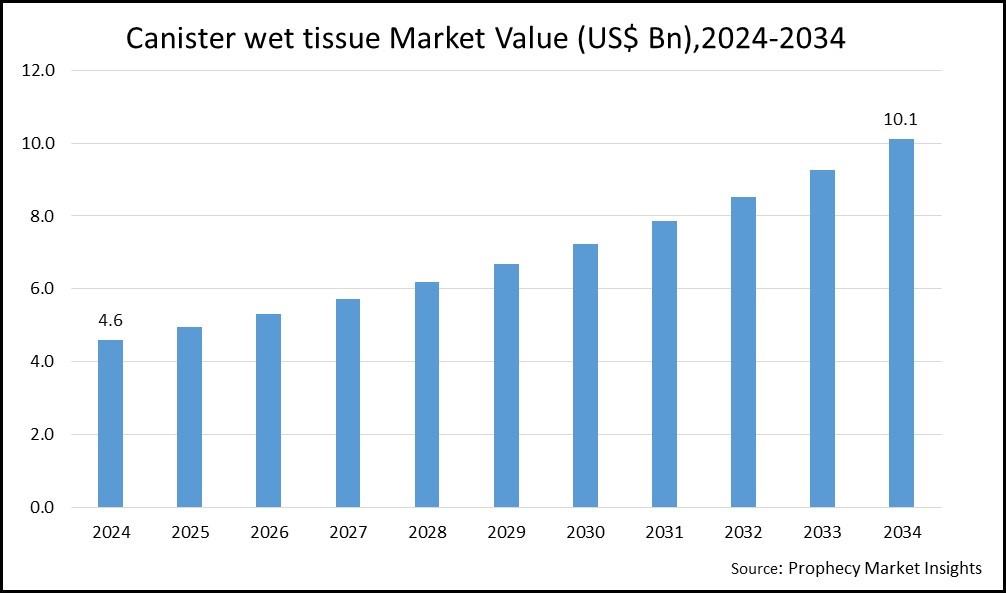
Canister Wet Tissue Market is expected to develop at a CAGR of 9.0% to reach US$ 10.1 billion by 2034, from its estimated US$ 4.6 billion in 2024.
Simply said, a canister of wet tissue is a container of wet wipes that is cylindrical and usually made of hard plastic. When compared to flat packs, these canisters typically hold more wipes, and they frequently have a dispensing lid that makes it simple to take out one wipe at a time. The increased convenience of using canister wet wipes is one of the advantages that has contributed to the market's growth. One wipe at a time is easy to grasp thanks to the container's dispensing cap, especially if the person's hands are otherwise engaged.
Compared to packets, which can dry up if improperly sealed, the canister not only holds more wet wipes, but also keeps them moist for longer periods. This is an important factor to take into account for homes with little children that are inherently messy. Customers won't need to change canisters as frequently as they would with flat packs because they usually carry more wipes. Refill packets, which can ultimately be more economical and environmentally beneficial, are provided by certain brands for their canisters. Wet wipes in a canister are a handy and transportable solution for cleaning while on the road. They are perfect for busy persons who need to clean their hands or surfaces during the day because they are compact and can easily fit in a handbag, backpack, or automobile.
Canister wet wipes are continually being innovated by manufacturers with new features and advantages. Wipes that are flushable, biodegradable, and composed of natural materials are among the options available today. When consumers come up with more inventive and useful uses for these wipes, this kind of consistent innovation is fueling demand in the canister wet tissue industry. Furthermore, the worldwide pandemic caused an exponential increase in the sales of cleaning supplies and disinfectants, which even reached the canister wet tissue industry. Even after the pandemic has ended, demand has continued to rise at an accelerated rate.