AI In Medical Imaging Market Overview
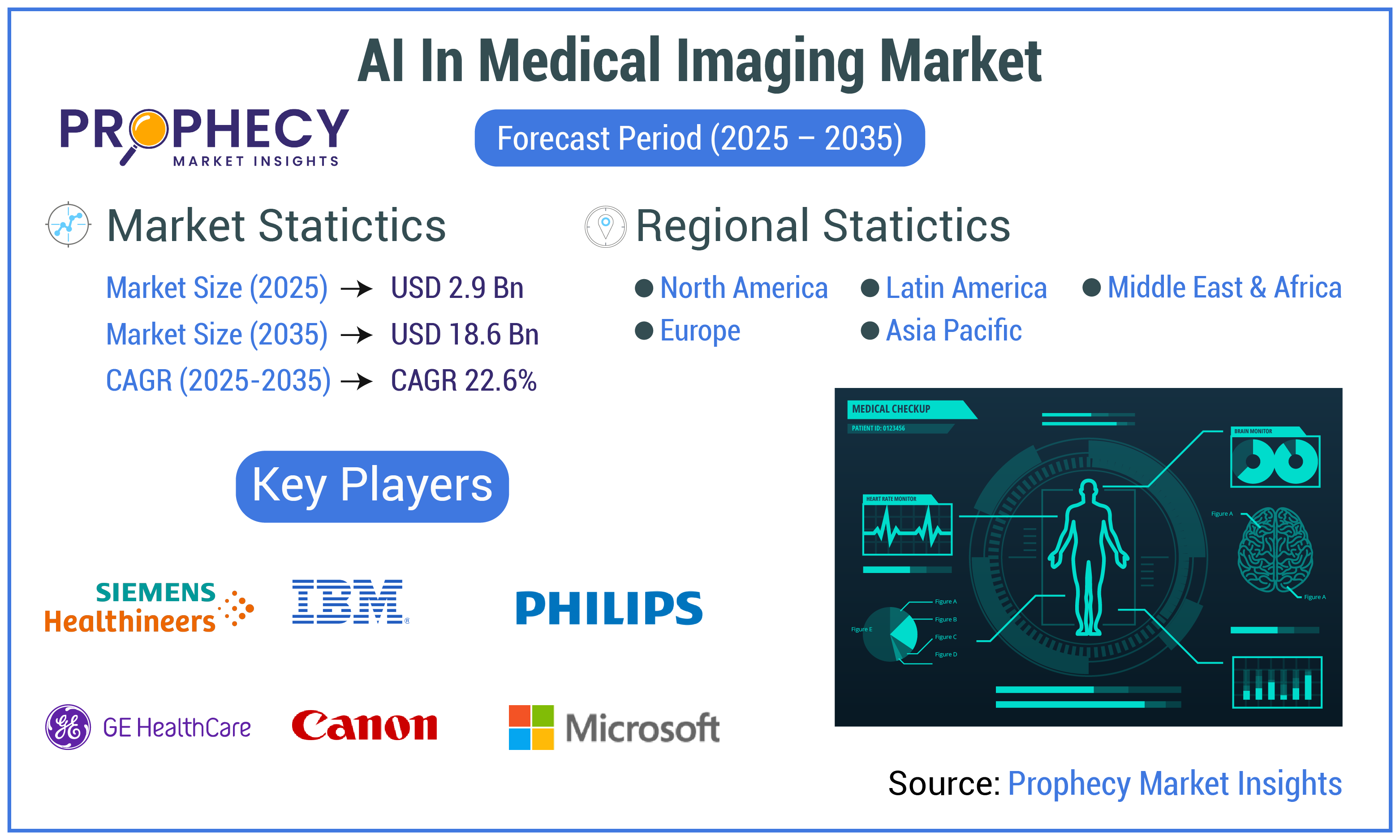
- Prior to 2035, the market is looking forward to enlarge at USD 18.6 Billion.
- AI in medical imaging market size was valued at USD 2.1 Billion within 2024.
- Target market is developing at a CAGR of 22.6%.
The use of sophisticated computer algorithms to analyze medical images, such as X-rays, CT scans, and MRIs, is known as artificial intelligence (AI) in medical imaging. The robust research and development on AI-based imaging tools, funding for AI-based startups, a high demand for AI-based medical imaging equipment, development of human aware AI-systems, and collaborations across industries is contributing in driving AI in medical imaging market growth. Moreover, AI in medical imaging helps in faster and more accurate diagnosis, early disease detection, improved treatment planning, reduced variability between clinicians, and has the ability to analyze complex data patterns that might be missed by the human eye, further contributing in the market expansion.
Impact of AI on the Market:
Artificial intelligence (AI) in medical imaging greatly enhances the precision and effectiveness of disease detection through the analysis of large volumes of imaging data, facilitating earlier diagnosis, improved treatment planning, and ultimately better patient outcomes, especially in recognizing minor anomalies frequently overlooked by human vision; this influence is evident in diverse fields such as cancer screening, cardiovascular disease evaluation, and neurological disorders, with AI algorithms offering superior image analysis and interpretation to support clinicians in its decision-making processes.
AI In Medical Imaging Market Drivers & Restraints
Key Drivers of Target Market:
Soaring Use of AI in Medical Imaging for the Purpose of Faster and Accurate Diagnosis is Driving the Market Growth
Accelerated and more precise diagnosis via AI in medical imaging propels market expansion by facilitating early disease identification, enhanced treatment strategies, optimized workflows, and ultimately superior patient results, as AI systems can swiftly examine extensive datasets of medical images to detect subtle irregularities that may elude human observation, resulting in faster diagnosis and prompt interventions.
- For instance, in September 2024, the emergency physicians and radiologists at AZ Sint-Blasius had been using an artificial intelligence (AI) application since the beginning of this year that allows it to make faster diagnoses based on X-Ray images. The application was designed for faster and accurate diagnosis of fractures, dislocations and swelling in joints on X-ray images.
Restraints:
Production of Biased Results in AI in Medical Imaging is Hindering the Market Growth
AI models in medical imaging may yield biased outcomes due to restricted or homogeneous training datasets, resulting in incorrect diagnoses and diminished trust among healthcare professionals. Moreover, the significant implementation expenses and requirement for specialized expertise can obstruct adoption in smaller healthcare institutions.
- Counterbalance Statements: Making sure the datasets are high-quality and varied, and periodically checking AI models for biases and closing the talent gap, providing healthcare workers with training programs and reasonably priced AI technologies are possible solutions for this problem.
Opportunities:
AI in Medical Imaging can Help Personalize Treatment Plans for Patients Unlocking Growth Potential in the Upcoming Years
Future treatments for liver disease may include cell therapy, such as macrophage immune cells, mesenchymal stem cells, and gene therapy to treat genetic liver disease, targeted therapies for treating cirrhosis, dietary changes such as the mediterranean diet or calorie-restricted diet, and certain lifestyle changes. These future advancements in the treatment of liver diseases can help in improving the quality of life of people and prevent death, thereby fueling the market growth.
- For instance, in October 2024, Microsoft announced that it was unveiling several artificial intelligence enhancements in Microsoft Cloud for Healthcare innovations, including new healthcare AI models in Azure AI Studio, new healthcare data capabilities in Microsoft Fabric and developer tools in Copilot Studio. This unlocked conversational data for clinical insights and supported app development, reporting, medical imaging and other use cases while enhancing trustworthiness, and also helped in developing personalized treatment plans for patients.
AI In Medical Imaging Market Segmentations & Regional Insights
The market is classified into technology, modalities, application, and end-user.
Technology
On the basis of technology, the market is divided into deep learning, natural language processing (NLP), and others. The market is being dominated by the deep learning sector because of its exceptional capacity to evaluate intricate medical pictures and offer precise diagnoses. Its remarkable effectiveness in image identification tasks has also contributed to its extensive use in medical imaging applications.
Modalities
Based on modalities, the market is categorized into CT scan, MRI, X-rays, ultrasound, and nuclear imaging. The CT scan segment holds the largest AI in medical imaging market share. This is due to its ability to provide detailed cross-sectional images of the body making it indispensable in medical diagnosis.
- For instance, in May 2024, Qure.ai, a healthcare startup funded by Fractal Analytics, had launched an artificial intelligence based system to identify abnormalities in head CT scans. Qure.ai was aimed at a key supply and demand choke point in the healthcare system. The general idea was that AI could be used to interpret results and free physicians up for patient care. Speed was also an issue when it came to interpreting a head CT scan of a stroke victim.
Application
By application, the market is sub-segmented into neurology, respiratory and pulmonary, cardiology, breast screening, orthopedics, and others. The neurology application is attributed to lead the market due to the complex nature of brain imaging and the high prevalence of neurological disorders that could be effectively diagnosed and monitored using AI-powered analysis of MRI and other neuroimaging techniques.
- For instance, in November 2024, Royal Philips, a global leader in health technology, and computer-aided diagnostics company icometrix had teamed up to deploy an AI-driven, end-to-end solution for acquiring, reading, and reporting the results of MRI brain scans to optimize diagnosis and treatment monitoring of neurological conditions including Alzheimer’s and multiple sclerosis (MS). By leveraging advanced MRI techniques, neurologists could identify the most suitable candidates for these therapies, ensuring timely and personalized treatment.
End-User
According to end-user, the market is branched into hospitals, diagnostic imaging centers, and others. The hospitals segment is expected to govern the market due to its robust IT infrastructure, access to extensive patient data, and ability to invest in advanced AI technologies for diagnosis and treatment planning.
- For instance, in December 2024, Amsterdam-based Royal Philips and Mayo Clinic physicians would investigate using AI to shorten complex cardiac magnetic resonance imaging (MRI) exams and improve radiology workflows. By applying AI at every stage of a cardiac MRI exam, the physicians intended to expand access and greatly improve the patient experience, increase departmental efficiency and deliver the detailed diagnostic information needed for optimal patient outcome.
End-User
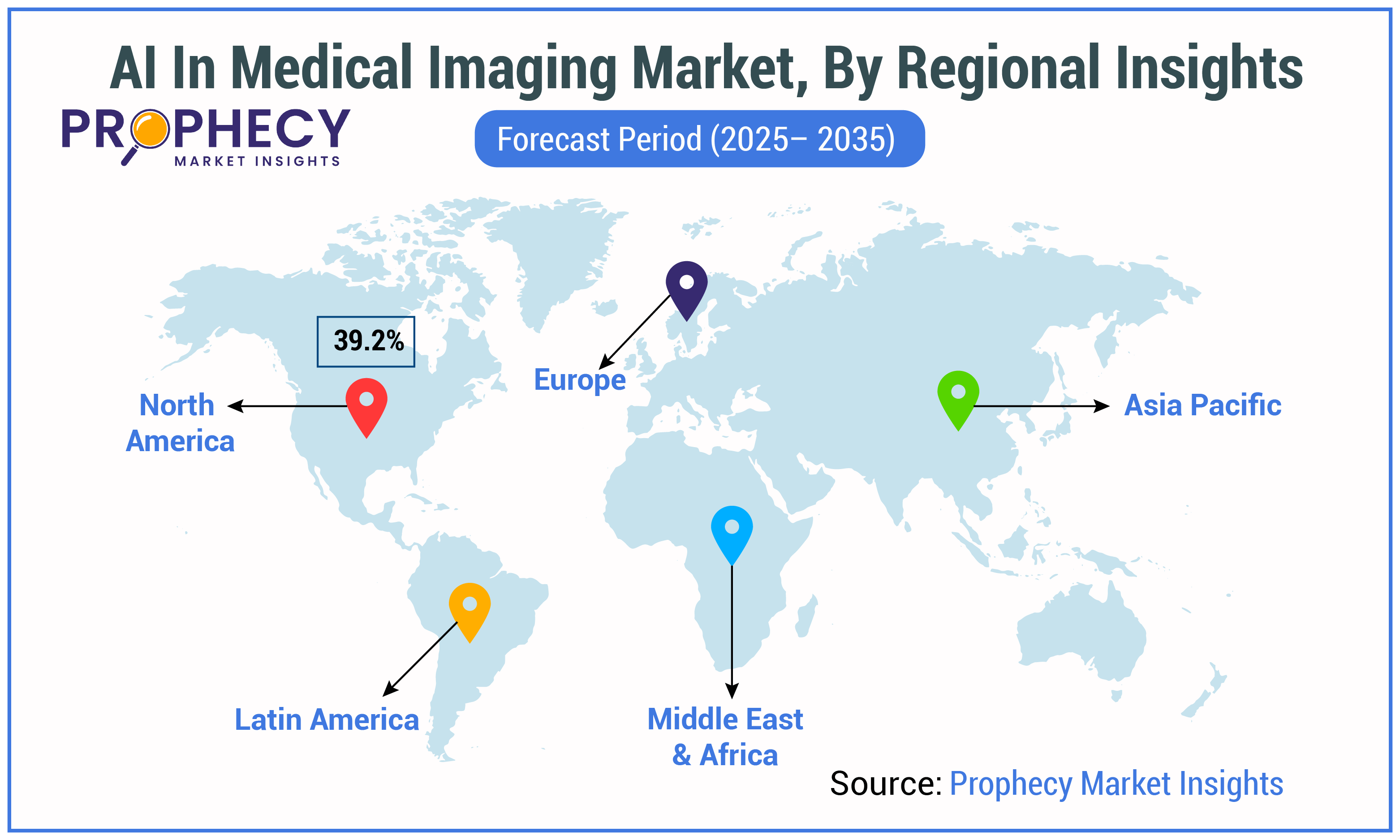
Geographically, the market is catalogued into North America, Europe, Asia Pacific, Latin America, and the Middle East & Africa.
North America: This region has the biggest AI in medical imaging market share of 39.23%. This is due to its advanced healthcare infrastructure, significant investments in AI research and development, early adoption of AI technologies within the healthcare sector, and favorable regulatory environment in this region.
- For instance, in November 2024, Canon Medical USA debuted new AI-powered magnetic resonance imaging (MRI) systems at the upcoming Radiological Society of North America (RSNA) conference in Chicago. The U.S. medical subsidiary of the Japanese electronics giant had commercially released the Vantage Galan 3T/Supreme Edition, the company’s latest MRI system.
Europe: This region has the fastest growing market during the forecast period. This is due to its advanced healthcare infrastructure, significant investments in research and development, strong presence of companies driving this market, and its increased focus on innovation and development of Ai-based medical imaging solutions.
- For instance, in February 2024, Aidoc, a leading healthcare AI provider, introduced seven new AI solutions to the European healthcare market. These additions marked a significant expansion of Aidoc's award-winning aiOS platform, which alerted radiologists and care teams to suspected urgent pathologies in medical images, ensuring rapid delivery of treatment to patients.
AI in Medical Imaging Market Report Scope:
|
Attribute |
Details |
|
Market Size 2025 |
USD 2.9 Billion |
|
Projected Market Size 2035 |
USD 18.6 Billion |
|
CAGR Growth Rate |
22.6% (2025-2035) |
|
Base year for estimation |
2024 |
|
Forecast period |
2025 – 2035 |
|
Market representation |
Revenue in USD Billion & CAGR from 2025 to 2035 |
|
Regional scope |
North America - U.S. and Canada Europe – Germany, U.K., France, Russia, Italy, Spain, Netherlands, and Rest of Europe Asia Pacific – China, India, Japan, Australia, Indonesia Malaysia, South Korea, and Rest of Asia Pacific Latin America - Brazil, Mexico, Argentina, and Rest of Latin America Middle East & Africa – GCC, Israel, South Africa, and Rest of the Middle East & Africa |
|
Report coverage |
Revenue forecast, company share, competitive landscape, growth factors, and trends |
Segmentation:
By Technology:
- Deep Learning
- Natural Language Processing (NLP)
- Others
By Modalities:
- CT scan
- MRI
- X-rays
- Cancer
- Nuclear Imaging
By Application:
- Neurology
- Respiratory and Pulmonary
- Cardiology
- Breast Screening
- Orthopaedics
- Others
By End-User:
- Hospitals
- Diagnostic Imaging Centers
- Others
By Region:
- North America
- U.S.
- Canada
- Europe
- Germany
- U.K.
- France
- Russia
- Italy
- Spain
- Netherlands
- Rest of Europe
- Asia Pacific
- China
- India
- Japan
- Australia
- Indonesia
- Malaysia
- South Korea
- Rest of Asia Pacific
- Latin America
- Brazil
- Mexico
- Argentina
- Rest of Latin America
- Middle East & Africa
- GCC
- Israel
- South Africa
- Rest of the Middle East & Africa
AI In Medical Imaging Market Competitive Landscape & Key Players
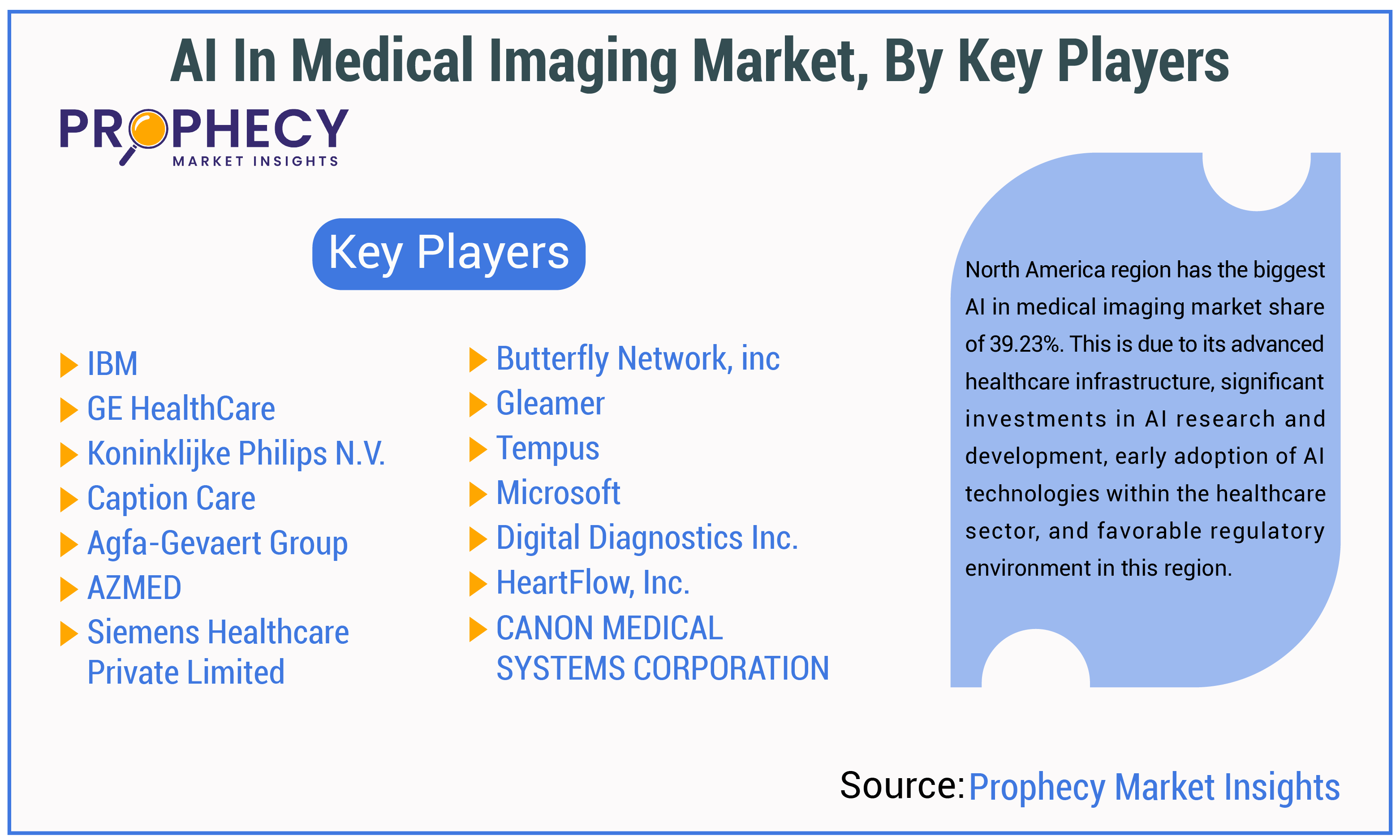
The companies operating in the market are IBM, Siemens Healthcare Private Limited, GE HealthCare, Koninklijke Philips N.V., Caption Care, and others. The key players are adopting strategies, such collaborating with healthcare providers, focusing on developing robust deep learning models, ensuring regulatory compliance, and prioritizing user-friendly interfaces for the diversification of the market.
List of Key Players in the Market:
- IBM
- Siemens Healthcare Private Limited
- GE HealthCare
- Koninklijke Philips N.V.
- Caption Care
- Agfa-Gevaert Group
- AZMED
- Butterfly Network, inc
- Gleamer
- Tempus
- Microsoft
- Digital Diagnostics Inc.
- HeartFlow, Inc.
- CANON MEDICAL SYSTEMS CORPORATION
AI In Medical Imaging Market Recent News
- In June 2024, the American College of Radiology (ACR) launched the ACR Recognized Center for Healthcare-AI (ARCH-AI), the first national artificial intelligence quality assurance program for radiology facilities. The program, built on best practices, outlined expert consensus-based building blocks of infrastructure, processes and governance in AI implementation in real-world practice.
- In October 2024, GE HealthCare integrated third party artificial intelligence (AI)-enabled application orchestration feature into True PACS and Centricity PACS. In collaboration with Blackford, the new AI-enabled offerings help radiologists with its workload which could help lead to quicker diagnosis and treatment for patients. The collaboration was intended to offer health care providers an AI-enabled platform with a catalogue of third-party AI applications that spanned across various clinical area use cases, ranging from mammography to lung scans.
Analyst View:
The AI in medical imaging market is expanding as a result of strong research, startup investment, increasing equipment demand, human-aware AI systems, and cross-industry cooperation. AI contributes to market expansion by facilitating quicker diagnosis, early illness identification, treatment planning, decreased variability, and sophisticated data processing.
More Related Reports
Artificial Intelligence in Healthcare Market
Medical Electronics Market
Molecular Imaging Market
Dental Imaging Equipment Market
Medical Image Analysis Software Market
AI In Medical Imaging Market Company Profile
|
Company Name |
IBM |
|
Headquarter |
Armonk, New York, U.S. |
|
CEO |
Mr. Arvind Krishna |
|
Employee Count (2024) |
345,000 Employees |
AI In Medical Imaging Market Highlights
FAQs
AI in medical imaging market size was valued at USD 2.9 Billion in 2025 and is expected to reach USD 18.6 Billion by 2035 growing at a CAGR of 22.6%.
The market is segmented into technology, modalities, application, end user and region.
The market is segmented by region North America, Asia Pacific, Europe, Latin America, and the Middle East & Africa. North America is expected to dominate the market.
The key players operating in the AI in Medical Imaging Market include IBM, Siemens Healthcare Private Limited, GE HealthCare, Koninklijke Philips N.V., Caption Care, Agfa-Gevaert Group, AZMED, Butterfly Network, inc, Gleamer, Tempus, Microsoft, Digital Diagnostics Inc., HeartFlow, Inc., and CANON MEDICAL SYSTEMS CORPORATION