Zygomatic Implants Market Overview
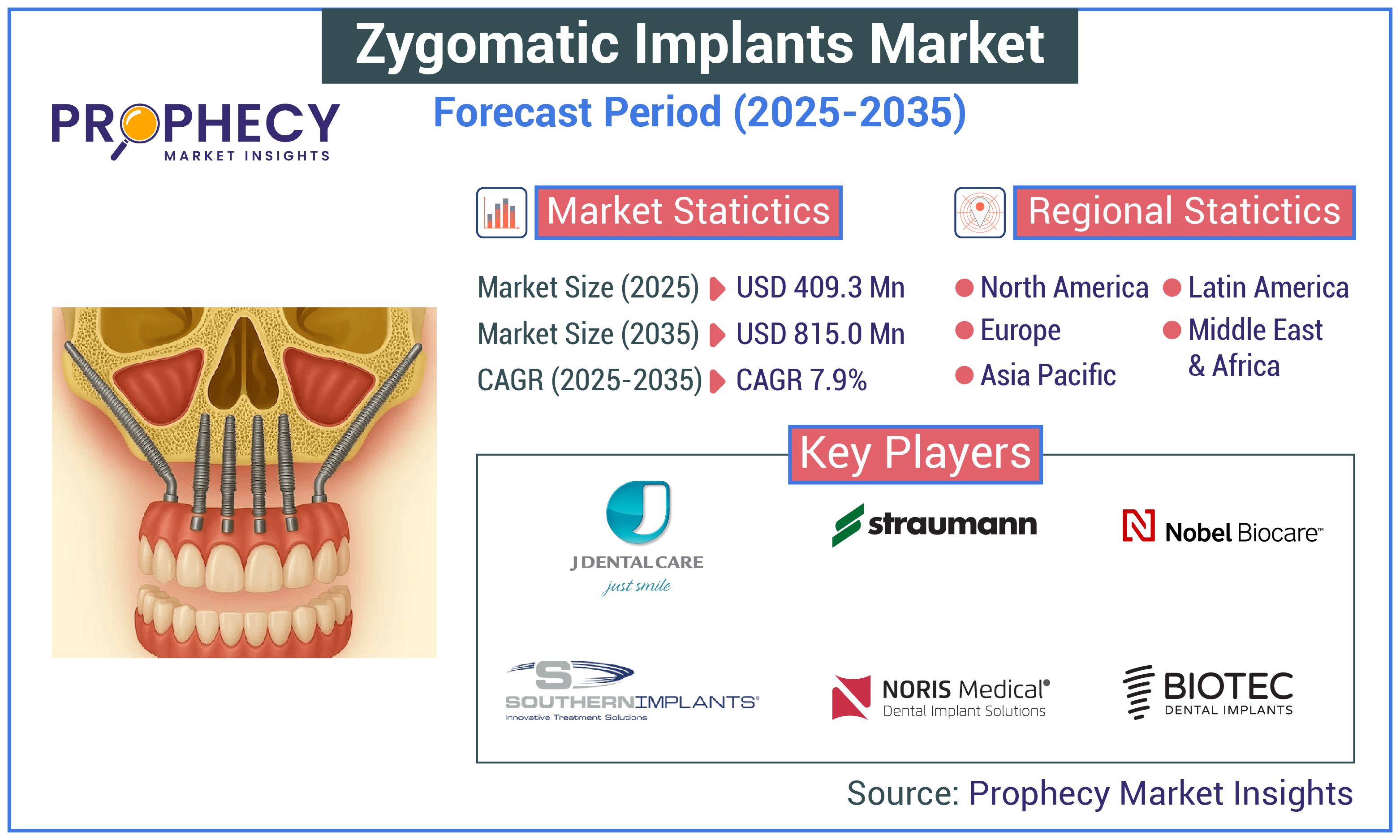
- By 2035, the zygomatic implants market size is contemplated to enlarge at a valuation of USD 815.0 Million.
- In 2024, the zygomatic implants market valuation was USD 386.0 Million.
- Zygomatic implants market is developing at a CAGR of 7.9%.
Zygomatic implants refer to a new type of dental implants that are specially designed for patients who have suffered a great amount of bone loss in the upper jaw to such an extent that traditional implants are not an option. These longer implants, rather than being fixed into the jawbone, are secured into the zygomatic bone (cheekbone), which is strong and dense enough to support them. The advantages of this method are that it prevents the necessity of using a bone graft, provides a solid base for the prosthetic teeth, allows the treatment to be done in less time and also helps to recuperate the function and the beauty of people who are not suitable for traditional implants.
The zygomatic implants market growth is expanding largely due to the rising number of patients suffering from severe upper jaw bone loss. This problem is especially common among the elderly, who make up the aging populations. Furthermore, the need for sophisticated dental restoration has also contributed significantly to the positive development of zygomatic implants market. Technological advancements such as 3D imaging and guided surgery have raised the success percentages, while awareness of dental health, greater disposable incomes, and medical tourism-especially in the developing areas are allowing these implants to be more accessible and used as a dependable alternative to the traditional ones.
The prospects for the zygomatic implants market are bright as it is anticipated to experience consistent expansion. This positive trend can be attributed to the rising preference for less invasive procedures, the convergence of 3D printing and the use of guided implants, and progress in the production of more biocompatible materials. The worldwide need for the product is increasing, particularly in the Asia-Pacific region where the healthcare facilities are getting better, and middle-class families have more disposable income. On the other hand, the U.S. and Europe are still the main areas with the most modern dental technologies and the oldest populations. Such tendencies suggest that this business will have a lot of growth in the next years.
Recession Risk & Tariff Analysis:
- Some potentially adverse influences on the market of zygomatic implants could be recession risks, international tariffs, or foreign trade barriers. In a crisis scenario, expenditures of patients on luxury dental treatments are among the first to be cut, and hence there will be a decrease in the zygomatic implants demand.
- First and foremost, tariffs on imported medical components, which are commonly used in dental implant systems, are probably to elevate the manufacturing costs. When these factors are combined, they can exert a considerable amount of pressure on profit margins thereby leading to a deceleration of market growth, particularly in regions that are sensitive to costs.
Impact of Generative AI on Zygomatic Implants Market:
- Generative Al is significantly transforming the zygomatic implants market, improves treatment planning precision, reducing human error, and accelerating surgical workflows. Al-powered tools are able to quickly analyze 3D scans to find the best implant position, thus shortening planning time and enhancing accuracy.
- Moreover, Al-powered robotic technology can lead to the improvement of results through the reduction of surgical variations. On the whole, creative Al is facilitating complicated implant surgeries to be quicker and more available as well as enabling medical professionals in providing safer and more reliable outcomes.
Zygomatic Implants Market Drivers & Restraints
Key Drivers:
Expanding Geriatric Population will Push Market Growth
The broadly growing senior population is a significant factor for the zygomatic implants market, which is related that aging is mainly involved by tooth loss, bone resorption, and health complications in the mouth that make traditional implants less helpful. Mature people often suffer from severe maxillary atrophy that leads to the necessity of zygomatic implants as a sophisticated solution for the full mouth restoration. The need for dependable long-term dental restoration has been escalating with the global rise in average lifespan and the substantial growth of the elderly population, particularly in the developed areas and emerging markets. This trend sustains the expansion of the market.
- For Instance, according to the data published by WHO, by 2030, 1 in 6 people in the world will be aged 60 years or over. At this time the share of the population aged 60 years and over will increase from 1 billion in 2020 to 1.4 billion. By 2050, the world’s population of people aged 60 years and older will double (2.1 billion). The number of persons aged 80 years or older is expected to triple between 2020 and 2050 to reach 426 million.
The Market Growth can be Achieved due to Medical Tourism & Global Access
Medical tourism, along with better global connectivity, is aiding the zygomatic implants market to move forwards by enabling cutting-edge dental procedures at lower costs and greater accessibility. In this way, a lot of patients from expensive countries prefer going to places such as India, Thailand, Mexico, and Turkey to get their zygomatic implant surgeries done since the quality of the procedure is the same but the price is much lower.
Countries with skilled dentists, well-equipped clinics, and shorter waiting periods, have become popular among patients from other countries. In addition to better global connections and the dissemination of information about these alternatives, medical tourism is still leading the demand for complicated dental treatments such as zygomatic implants.
- For instance, according to the data published by Global Healthcare Accreditation, Thailand is benefitting from 2.5 million patients, Mexico from 1.3 million, and Malaysia from 1.2 million. The main reason behind the success of these destinations is the provision of affordable and high-quality healthcare services. The most popular treatments are dental care, cosmetic surgery, orthopedics, and cardiology. In 2019 India and Turkey each attracted roughly 700,000 patients. Both countries offer specialty services like cardiology, cancer treatment, and hair transplants. Patients from all over the world visit Costa Rica, Taiwan, Singapore, South Korea, and the UAE.
Restraints:
Surgical Complexity and Risks Could Affect Market Development
Zygomatic implant surgery is difficult because the implant is placed in the cheekbone (zygomatic bone) that is near the maxillary sinus and the nerves. This can lead to side effects such as sinus infection, nerve damage or the implant not working if the surgery is done wrongly.
- Counterbalance Statements: These risks can minimize with the help of advanced imaging technologies such as CBCT scans, computer-guided surgical planning, and robotic-assisted systems. Moreover, a great safety and success rate can be expected if the procedure is done by a skilled oral and maxillofacial surgeon.
Opportunities & Trends:
Growing Aesthetic and Functional Demand Expected to Expand the Market Growth in Upcoming Years
The zygomatic implants market is witnessing the trend of rising demand for aesthetic and functional purposes. Patients are looking for long-lasting, natural-looking solutions to severe tooth and bone loss which has made this trend a key factor in the future of the market. There is a growing consciousness about facial aesthetics, oral health, and the overall quality of life, which has led people to seek treatments that not only revitalize their look but also provide function. Zygomatic implants provide a stable and durable option for individuals who have lost a considerable amount of their jawbone, thereby eliminating the need for removable dentures. The trend of patients living longer and seeking superior dental results will persist, thereby fostering the introduction and usage of novel implant solutions.
Zygomatic Implants Market Segmentations & Regional Insights
Type, length, technique/surgical procedure, application, end user, and region are the divisions of the zygomatic implants market.
By Type:
Standard zygomatic implants, custom/patient-specific zygomatic implants, type on which zygomatic implants market is segmented. In the market for zygomatic implants, the current leading are the standard ones that prevail due to their extensive clinical use, successful results in the long term, and the manufacturing procedures that have been standardized and guarantee the same quality and also their availability in different parts of the world.
Custom/patient-specific zygomatic implants represent the second largest segment in zygomatic implants market share. These implants have been gaining attention as they find more applications in complex oncology reconstructions, congenital deformities, and severe maxillary atrophy cases. In such situations, standard implants may not be able to deliver the optimal fit or function, which is why there is a preference for custom implants.
By Length:
Less than 35 mm, 35–45 mm, 45-55 mm, and above 55 mm are length of the zygomatic implants market. Zygomatic implants in the 45-55 mm length range most probably have the largest zygomatic implants market share as they provide the best reach and support for the majority of patients with moderate to severe maxillary bone loss. This size allows for deep enough fixation into the zygomatic bone while being able to fit most anatomical variations.
Implants in the range of 35-45 mm are probably in second place as they can be used on patients with moderate bone loss or where the anatomical features limit the use of longer implants.
By Technique/Surgical Procedure:
On the technique/surgical procedure, zygomatic implants market is categorized into intrasinus approach, extrasinus approach, and combination approach. Regarding the zygomatic implant market growth, the intrasinus approach is the current market leader in terms of surgical technique. This dominance is mainly due to the fact that the intrasinus method has been the preferred technique for a long time, is extensively clinically documented, and is well-supported by the knowledge and training of the surgeons.
The second most influential technique in the zygomatic implant market size is the extrasinus approach, known as a less-invasive method that does not involve the penetration of the maxillary sinus. An increasing number of cases are progressively opting for this technique, in which the main advantages become the reduction of the risk of sinus complications, the decrease of postoperative discomfort, and the maintenance of sinus integrity.
By Application:
Atrophic maxilla rehabilitation, maxillofacial reconstruction, oncology resections, and others are application of the zygomatic implants market. The segment of atrophic maxilla rehabilitation accounts for most of the zygomatic implants market share as it is the major indication for such implants. Usually, those with extreme bone loss in the maxilla caused by aging, extended edentulism, or the failure of traditional implants significantly necessitate zygomatic implants as a graft-free approach for complete arch restoration.
Maxillofacial reconstruction is probably the second most important application of zygomatic implants. The main reasons for this are trauma cases, deformities, and surgical resections. In these situations, zygomatic implants are used to reconstruct the facial structure and to regain lost functions.
By End User:
The zygomatic implants market on the account of end user are categorized into hospitals, dental clinics, ambulatory surgical centers, and others. Dental clinics are top the zygomatic implants market growth and hold the largest zygomatic implants market share, as they are the most important centers for implant procedures and generally have specialist implantologists or oral surgeons who are trained to perform complex treatments.
Hospitals are probably in second place, particularly in situations of trauma, cancer, or patients with complicated medical conditions that need the help of different types of doctors.
Regional Insights:
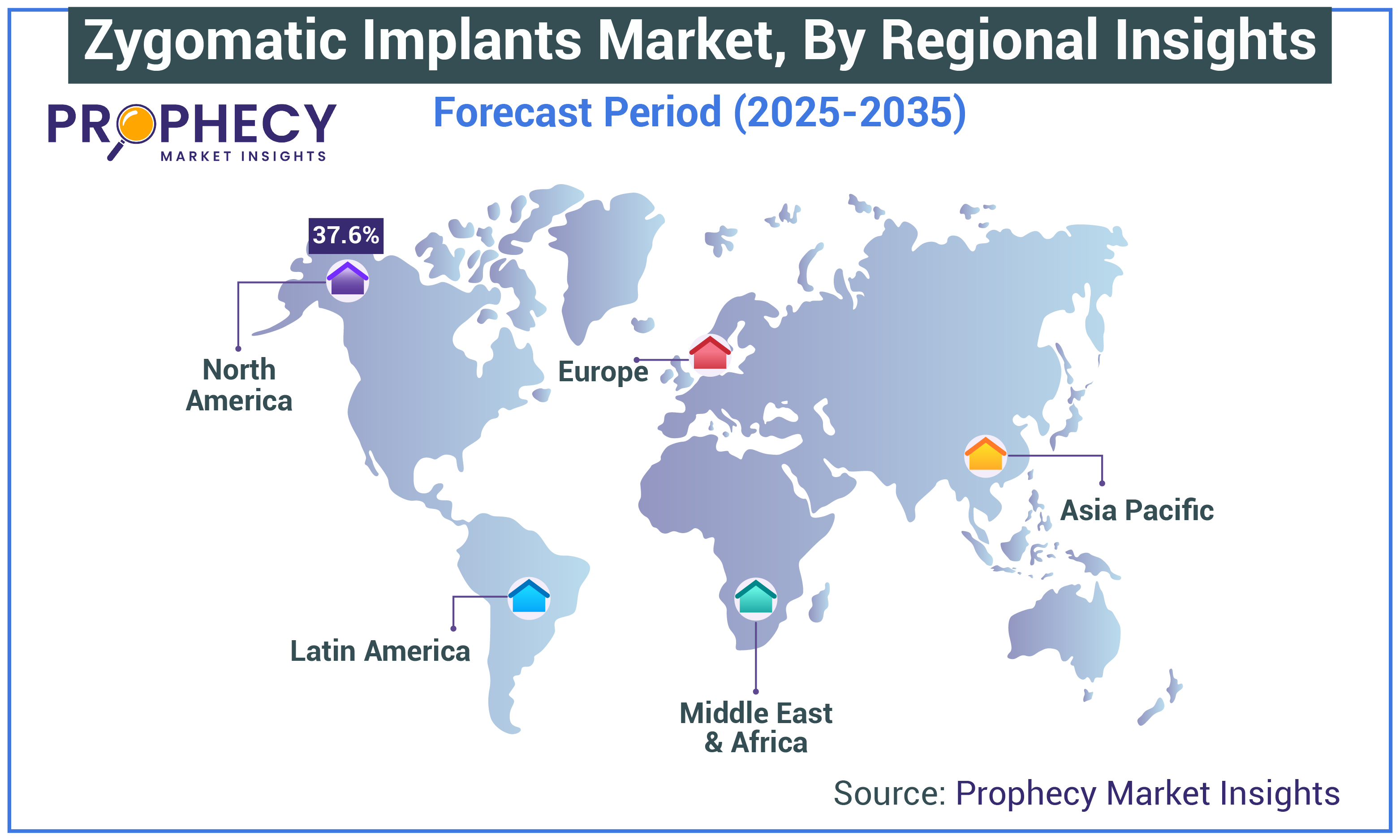
Geographically, the zygomatic implants market is studied across North America, Europe, Asia Pacific, Latin America, and the Middle East & Africa.
North America: This region is the leading region in the zygomatic implants market size with 37.6% share, primarily as it has an impressive dental infrastructure, the dental awareness of the people is quite high, the elderly population is increasing, and there are many implant manufacturers and dental professionals who are highly skilled. The need for sophisticated dental restoration techniques is high, and this is being promoted by not only good reimbursement policies but also the high rate of cosmetic dental procedures.
- U.S. Zygomatic Implants Market Insights:
The zygomatic implants market in North America is largely dominated by the U.S. where the dental care industry is well established. Moreover, the extensive use of advanced technologies such as guided surgery and 3D imaging, a high concentration of implant specialists with proper certification, and a robust patient demand for cosmetic and functional dental treatments have all contributed to the US holding a significant share of the market.
Europe: This region is probably in second place, and that is mostly due to similar factors. These are aging demographics, strong public and private healthcare systems, and increased usage of complex implant procedures. Both regions have the advantages of being the first to adopt technology and having clinical expertise, which keeps them ahead of the emerging markets.
- U.K. Zygomatic Implants Market Insights:
In the European market, Germany is at the forefront of the dental implant industry. This is attributed to the country's healthcare system, which is not only strong but has high dental care standards. Besides these, it is also due to the notable presence of the leading manufacturers of implants and the large aging population that is in need of a full-mouth rehabilitation.
Asia Pacific: This region zygomatic implants market is experiencing rapid growth from the launch of several advanced dental treatments. The increasing medical tourism, expanding healthcare infrastructure, and rising middle-class population in this region significantly contribute to the market's growth. The area's old people are still growing, so they want more full-mouth rehabilitation solutions with zygomatic implants.
- India Zygomatic Implants Market Insights:
India is leading the market in dental care in the APAC region. This has been possible due to the combination of high-quality dental care that is affordable, a large number of skilled dental professionals, and a good inflow of international patients who seek affordable implant procedures. The market is further supported by healthcare government aid and fast urbanization.
Zygomatic Implants Market Report Scope:
|
Attribute |
Details |
|
Market Size 2025 |
USD 409.3 Million |
|
Projected Market Size 2035 |
USD 815.0 Million |
|
CAGR Growth Rate |
7.9% (2025-2035) |
|
Base year for estimation |
2024 |
|
Forecast period |
2025 – 2035 |
|
Market representation |
Revenue in USD Million & CAGR from 2025 to 2035 |
|
Regional scope |
North America - U.S. and Canada Europe – Germany, U.K., France, Russia, Italy, Spain, Netherlands, and Rest of Europe Asia Pacific – China, India, Japan, Australia, Indonesia, Malaysia, South Korea, and Rest of Asia-Pacific Latin America - Brazil, Mexico, Argentina, and Rest of Latin America Middle East & Africa – GCC, Israel, South Africa, and Rest of Middle East & Africa |
|
Report coverage |
Revenue forecast, company share, competitive landscape, growth factors, and trends |
Segmentation:
By Type:
- Standard Zygomatic Implants
- Custom/Patient-Specific Zygomatic Implants
By Length:
- Less than 35 mm
- 35–45 mm
- 45-55 mm
- Above 55 mm
By Technique/Surgical Procedure:
- Intrasinus Approach
- Extrasinus Approach
- Combination Approach
By Application:
- Atrophic Maxilla Rehabilitation
- Maxillofacial Reconstruction
- Oncology Resections
- Others
By End User:
- Hospitals
- Dental Clinics
- Ambulatory Surgical Centers
- Others
By Region:
- North America
- U.S.
- Canada
- Europe
- Germany
- U.K.
- France
- Russia
- Italy
- Spain
- Netherlands
- Rest of Europe
- Asia Pacific
- China
- India
- Japan
- Australia
- Indonesia
- Malaysia
- South Korea
- Rest of Asia Pacific
- Latin America
- Brazil
- Mexico
- Argentina
- Rest of Latin America
- Middle East & Africa
- GCC
- Israel
- South Africa
- Rest of Middle East & Africa
Zygomatic Implants Market Competitive Landscape & Key Players
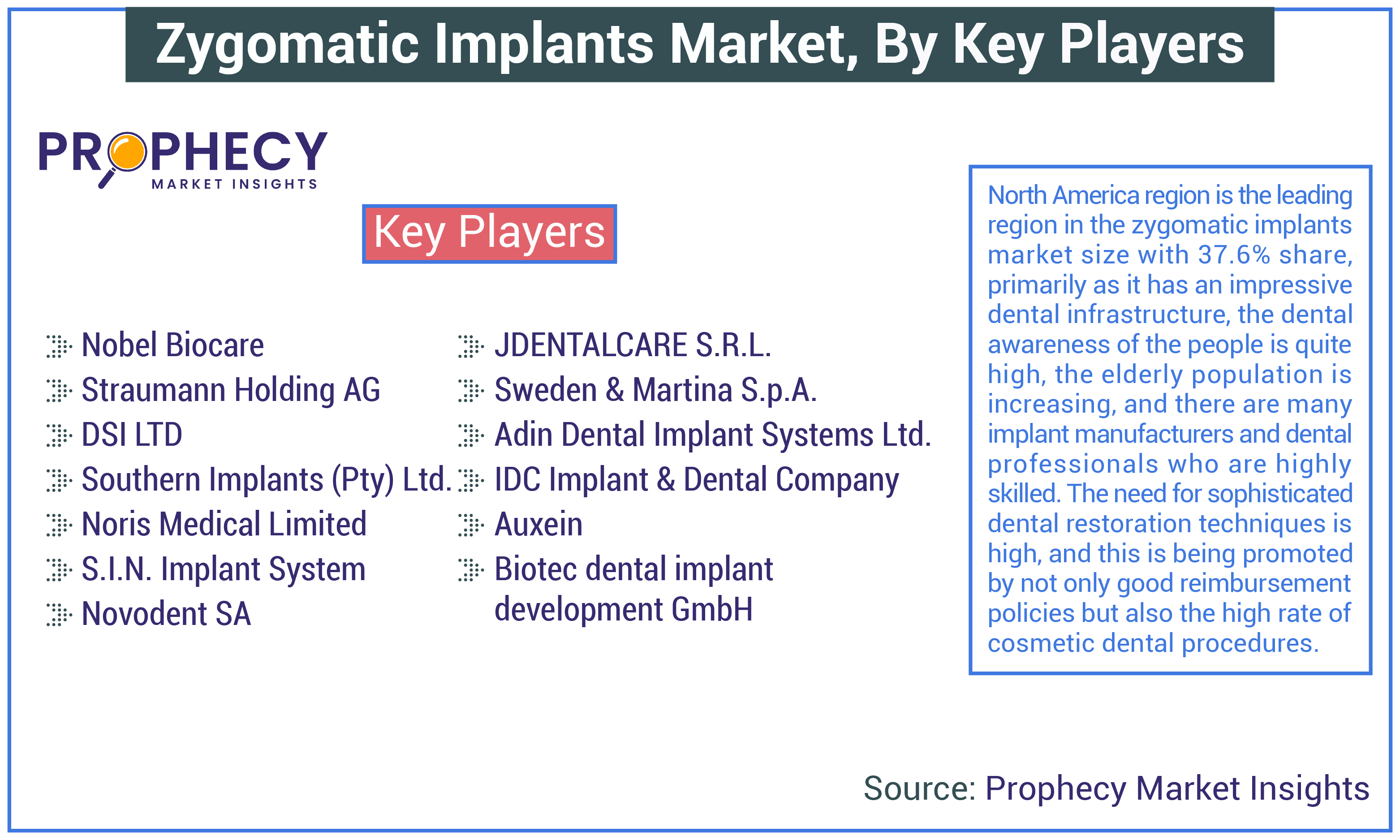
The key players operating in the zygomatic implants market include, Nobel Biocare, Straumann Holding AG, JDENTALCARE S.R.L., Noris Medical Limited, and others. Zygomatic implant companies are significantly expanding through the following methods developing new implant designs, extending their reach in emerging markets, collaborating with healthcare facilities, providing professional training to clinicians, and utilizing digital tools to facilitate visibility and adoption.
Zygomatic Implants Market Companies:
- Nobel Biocare
- Straumann Holding AG
- DSI LTD
- Southern Implants (Pty) Ltd.
- Noris Medical Limited
- S.I.N. Implant System
- Novodent SA
- JDENTALCARE S.R.L.
- Sweden & Martina S.p.A.
- Adin Dental Implant Systems Ltd.
- IDC Implant & Dental Company
- Biotec dental implant development GmbH
- Auxein
View an Additional List of Companies in the Zygomatic Implants Market
Zygomatic Implants Market Recent News
- In March 2025, together with Rajan Dental Institute (RDI), the Chennai Dental Research Foundation (CDRF) has reached a noteworthy milestone by producing 1,000 specialized ZYGOMA dental implants. In honor of the accomplishment, CDRF declared a charitable endeavor, promising "100 Free Zygoma Implants" to worthy patients.
- In May 2024, During the recent Envista Summit in Barcelona, Spain, Nobel Biocare unveiled Zygoma Academy, their newest professional development innovation. More doctors will be able to deliver quick full-arch restorations in extremely challenging situations thanks to this community-driven program, which also involves one-on-one mentorship sessions with worldwide specialists.
Analyst View:
Zygomatic implants are specialist dental implants that anchor into the cheekbone to provide a graft-free treatment for individuals with significant upper jaw bone loss. The aging population, the growing need for sophisticated dental restorations, and technical developments such as 3D imaging and guided surgery are all driving the market's expansion.
Adoption is also being aided by increased awareness, increased disposable wealth, and medical tourism, particularly in underdeveloped nations. North America and Europe continue to be important markets due to their sophisticated dental infrastructure, but the market is anticipated to develop gradually owing to a move toward less invasive treatments and advancements in implant materials and methods, especially in Asia-Pacific.
More Related Reports
Brain Implants Market
Implantable Drug Device Market
Radial Head Resection Implants Market
TMJ Implants Market
Spinal Implant Market
Zygomatic Implants Market Company Profile
|
Company Name |
Nobel Biocare |
|
Headquarter |
Kloten, Switzerland |
|
CEO |
Richard T. Laube |
|
Employee Count |
2,400 Employees |
Zygomatic Implants Market Highlights
FAQs
Zygomatic implants market size was valued at USD 409.3 Million in 2025 and is expected to reach USD 815.0 Million by 2035 growing at a CAGR of 7.9%.
Type, length, technique/surgical procedure, application, end user, and region are the segmentation for the zygomatic implants market.
North America, Asia Pacific, Europe, Latin America, and the Middle East & Africa. North America is expected to dominate the market.
The key players operating the zygomatic implants market include Nobel Biocare, Straumann Holding AG, DSI LTD, Southern Implants (Pty) Ltd., Noris Medical Limited, S.I.N. Implant System, Novodent SA, JDENTALCARE S.R.L., Sweden & Martina S.p.A., Adin Dental Implant Systems Ltd., IDC Implant & Dental Company, Biotec dental implant development GmbH, and Auxein