Orthopedic Devices Market Overview
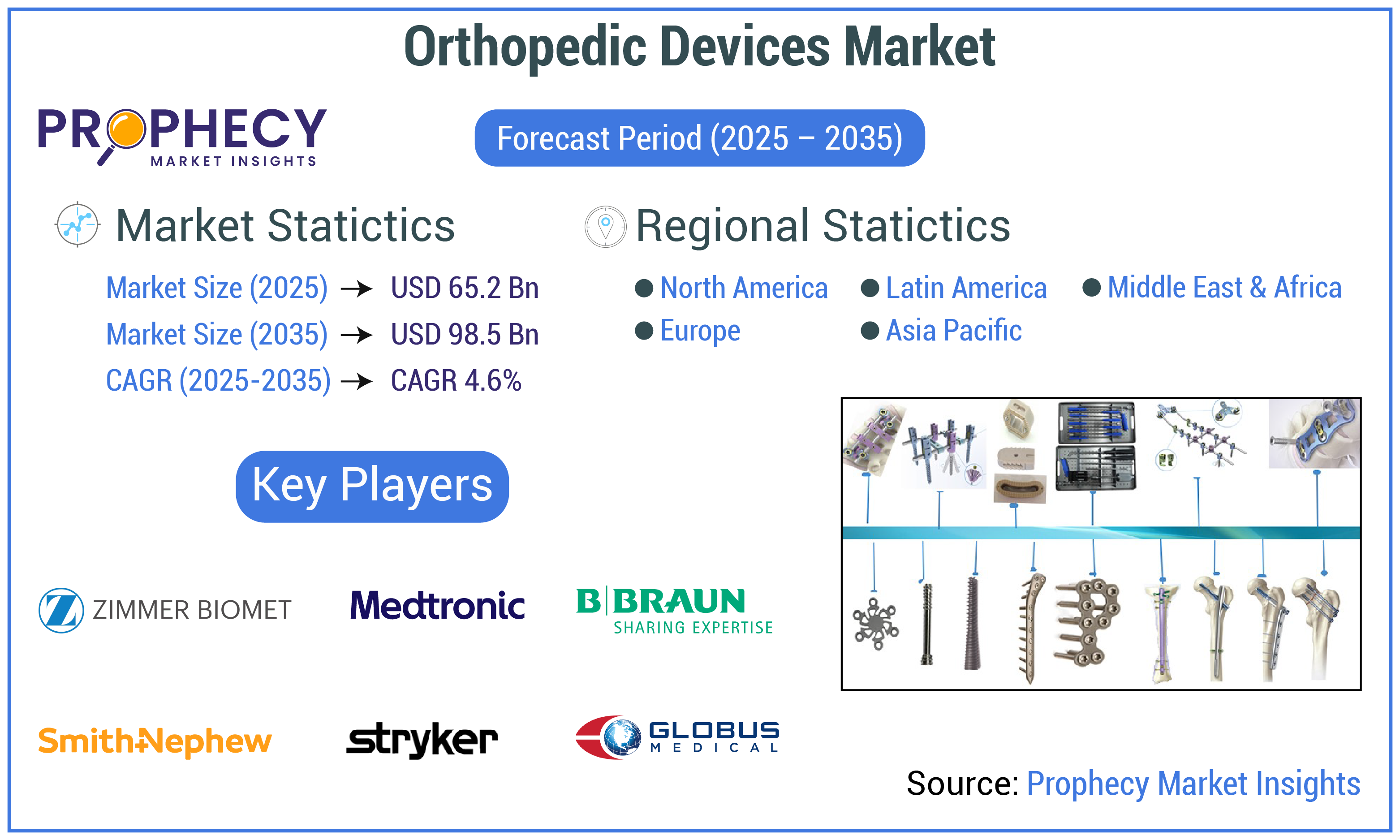
- By 2035, the orthopedic devices market size is contemplated to enlarge at a valuation of USD 98.5 Billion.
- In 2024, the orthopedic devices market valuation was USD 62.8 Billion.
- Orthopedic devices market is developing at a CAGR of 4.6%.
Orthopedic devices are medical tolls and implants that are designed for diagnosis and treatment of disorders of musculoskeletal systems that includes fixation devices, spinal instruments and prosthetics. Given devices restore mobility and reduces pain in patients with joint, bone and muscle disorders. Orthopedic devices are commonly used in procedures such as joint replacements, spinal corrections and fracture repairs.
The orthopedic devices market rapidly with increasing aging population that is prone to arthritis, osteoporosis, and degenerative joint diseases which comes under the musculoskeletal disorders. The demand for assistance devices and surgical procedures is also being increased due to a surge in traffic accidents, sports injuries, and orthopedic disorders associated with lifestyle choices. The precision and efficiency of orthopedic therapies are being improved by technological developments such as 3D printing, robotically assisted surgery, and AI-based diagnostics, which is promoting larger utilization. Improved access to medical services in emerging markets, growing expenditure in healthcare and expansion of outpatient surgical centers are leveraging the market expansion on global scale.
The orthopedic devices market unlocks significant opportunities with prominent trends in the orthopedic devices market on global scale. Precision and patient outcomes are being significantly improved while recovery times have been decreased by robots and AI-enabled surgical devices, with robotic-assisted treatments increasingly becoming the standard in keyhole operations globally. With growing smart, 3D?printed, and patient-specific implants enhance the nanotechnology and IoT connectivity driving more efficient treatment solutions in the orthopedic ecosystem.
Recession Risk & Tariff Analysis:
- The orthopedic devices market may be slowed by economic downturns and recession risks that impacts the healthcare spending, leading towards delayed or reduced elective orthopedic procedures. Due to financial constraints or limited insurance coverage the patients may postpone treatments affecting the demand for orthopedic devices.
- Furthermore, global trade tensions and tariff impositions on medical devices impact with increase in the distribution and production cost mainly for organizations that depend on cross-border supply chains and raw material imports.
Impact of Generative AI on Orthopedic Devices Market:
- The orthopedic devices market is being impacted by generative AI by enhancing personalization, accelerating innovation and improvement in surgical outcomes. Generative AI can design customized implants leading to reduced complications, better fit and rapid recovery rate.
- Additionally, generative AI driven insights can streamline the R&D processes, reduced market for new-devices and optimize manufacturing for orthopedic devices that drive significant improvements, accuracy and patient outcomes across orthopedic landscape.
Orthopedic Devices Market Drivers & Restraints
Key Drivers:
Aging Population Drives Steady Growth in the Global Orthopedic Devices Market
The orthopedic devices market continues to grow due to aging population becoming more prone to a range of musculoskeletal conditions, such as joint degradation, osteoarthritis and osteoporosis that need surgical intervention and orthopedic support. Effective orthopedic treatments are becoming more crucial as life expectancy rises worldwide and the percentage of elderly population increases, especially in countries such as the US, Japan, and Germany and certain countries in Asia-Pacific.
- For Instance, according to WHO report, in 2020, the elder population aged 65 years and older was 727 million, and it is expected to reach 1.5 billion by 2050. The US National Institute on Aging also states that the number of people over 65 will double between 2005 and 2030. 40% of Japan's population will be 65 years and older in 2060
Restraints:
High Cost Associated with Orthopedic Surgery Slow Down the Adoption of Orthopedic Devices
Due to advanced technology and advanced implants associated with orthopedic surgery especially hip and knee replacement can contribute to high costs. The follow-up surgery after the orthopedic surgery also contributes to high cost majorly in the emerging economies and low-income countries. Robotic-assisted surgery under advanced technology integration and customized implants increases the financial burden of healthcare systems and patients leading to disruption of orthopedic devices growth in certain markets. A 2022 report also revealed that robotic total knee Arthroplasty in the U.S. cost 10% more than traditional surgeries.
- Counterbalance Statements: Minimally invasive techniques with advancements are lowering overall treatment cost, reducing hospital stays, recovery times and surgical complications. Orthopedic procedures are becoming more accessible with increasing availability of health insurance coverage, government healthcare subsidies and favorable reimbursement policies majorly in Asia-Pacific, Latin America and other developing countries holding the significant growth for the orthopedic devices.
Opportunities & Trends:
Emerging Technologies and Aging Population Drive New Opportunities in the Global Orthopedic Devices Market
Numerous growth opportunities regarding the orthopedic devices market are driven by expanding healthcare access, shifting demographic trends and advancement in technologies. One of the primary factors is an increasing percentage of elderly people globally becoming more vulnerable to orthopedic diseases such osteoporosis, arthritis, and fractures. Opportunities for improvements in treatment proficiency and recovery outcomes are being established by the rising demand for robotic-assisted operations, 3D-printed implants, and minimally invasive treatments. Asia Pacific and Latin America are witnessing emerging market growth with focus on rehabilitation devices, sports medicine and outpatient orthopedic care shaping the market with high innovative opportunities for orthopedic devices landscape.
Orthopedic Devices Market Segmentations & Regional Insights
Product, procedure, application, end user and region are the divisions of the orthopedic devices market.
By Product:
Orthopedic replacement devices, spinal implants & surgical devices, orthopedic fixation devices, orthopedic prosthetics and others are product on which orthopedic devices market is segmented. Due to growing prevalence of degenerative joint diseases along with aging population the demand for joint replacement has grown on global scale making the orthopedic replacement devices as dominant in orthopedic devices market share.
Spinal implants & surgical devices hold the second dominant position with increasing cases of spinal disorders such as scoliosis and spinal stenosis among elder population. There is rising demand for motion preservation solutions and spinal stabilization propelling spinal implants and surgical device adoption at higher scale.
By Procedure:
On the basis of procedure, orthopedic devices market is categorized into joint replacement, arthroscopy procedural and others. Joint replacement segment has the largest orthopedic devices market share with steadily increasing number of hip and knee replacement surgeries which are performed globally with rising obesity rates and growing issues of osteoarthritis.
Growing preference for minimally invasive surgical techniques for joint issue treatment has largely driven the arthroscopy procedural in the orthopedic devices market. Increasing number of sports-related injuries with innovations in arthroscopic tools and techniques further fuel demand for given procedures.
By Application:
The orthopedic devices market on the account of application is categorized into fracture treatment & recovery, spinal fusion, ligament injuries, neurological disorders and others. The fracture treatment & recovery application holds the most orthopedic devices market share with high global incidence of bone fractures and osteoporosis which is age-related conditions. Growing geriatric population and increasing trauma-related injuries is driving need for fracture management solutions.
The second-largest proportion is held by the spinal fusion with growing prevalence of chronic back pain and spinal disorders among the sedentary and aging populations. Increasing adoption of spinal fusion for long-term solution regarding the degenerative spinal conditions is solidifying the spinal fusion segment in the market.
By End User:
The end user segment is distinguished by hospitals & surgical centers, orthopedic clinics, home care settings and others. The hospitals and surgical centers hold the dominant end user segment in orthopedic devices market share with availability of skilled healthcare professionals and advanced medical infrastructure for carrying out major orthopedic procedures. Advanced surgical capabilities and growing investments in hospital infrastructure is further driving segments leadership in the market.
Orthopedic clinics are fastest growing end user segment with increasing preference for specialized and personalized orthopedic care in outpatient settings that offer quick consultations and follow-up services along with targeted treatments for patients. Growing number of standalone orthopedic centers with advanced diagnostic and therapeutic equipment are growing especially in urban and semi-urban regions.
Regional Insights:
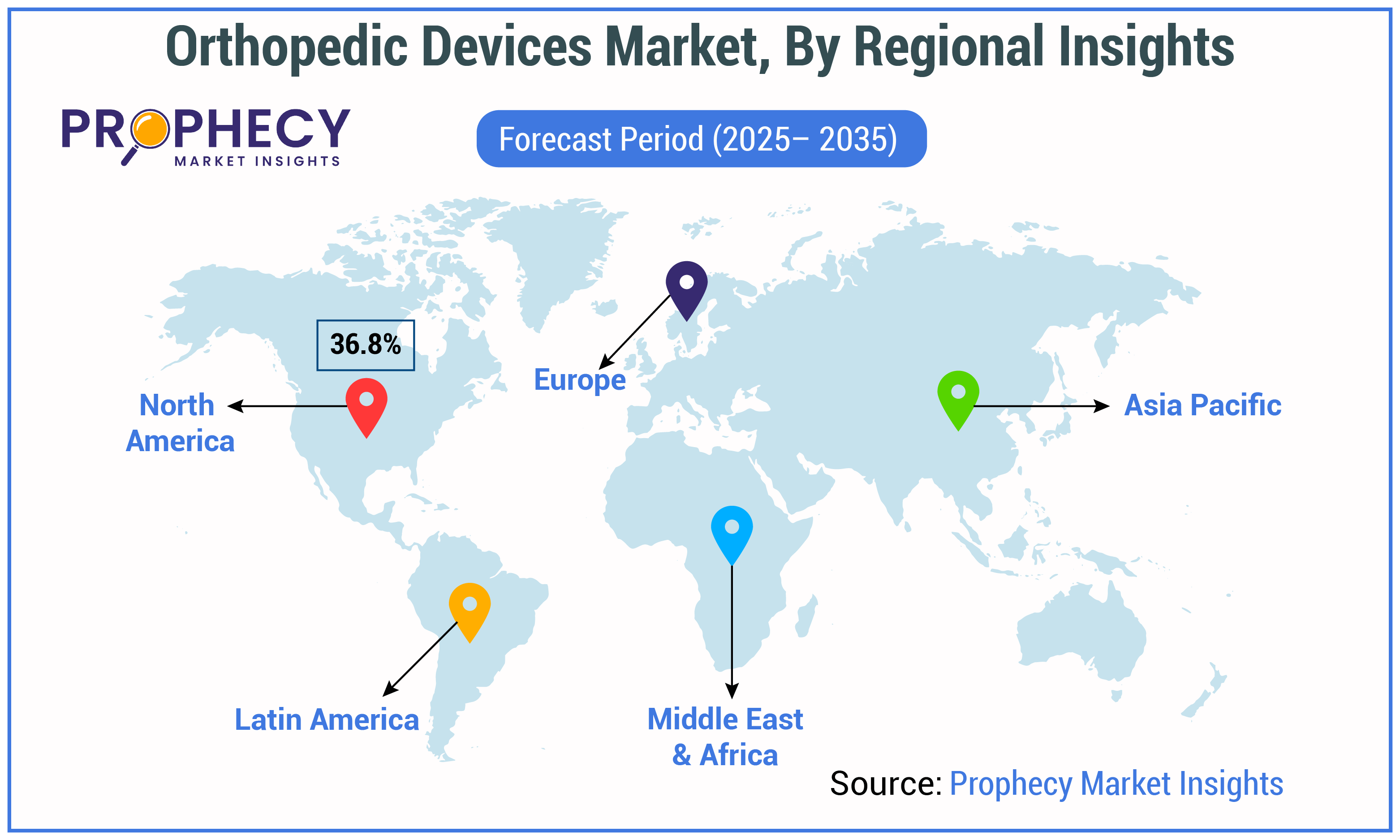
Geographically, the orthopedic devices market is studied across North America, Europe, Asia Pacific, Latin America, and the Middle East & Africa.
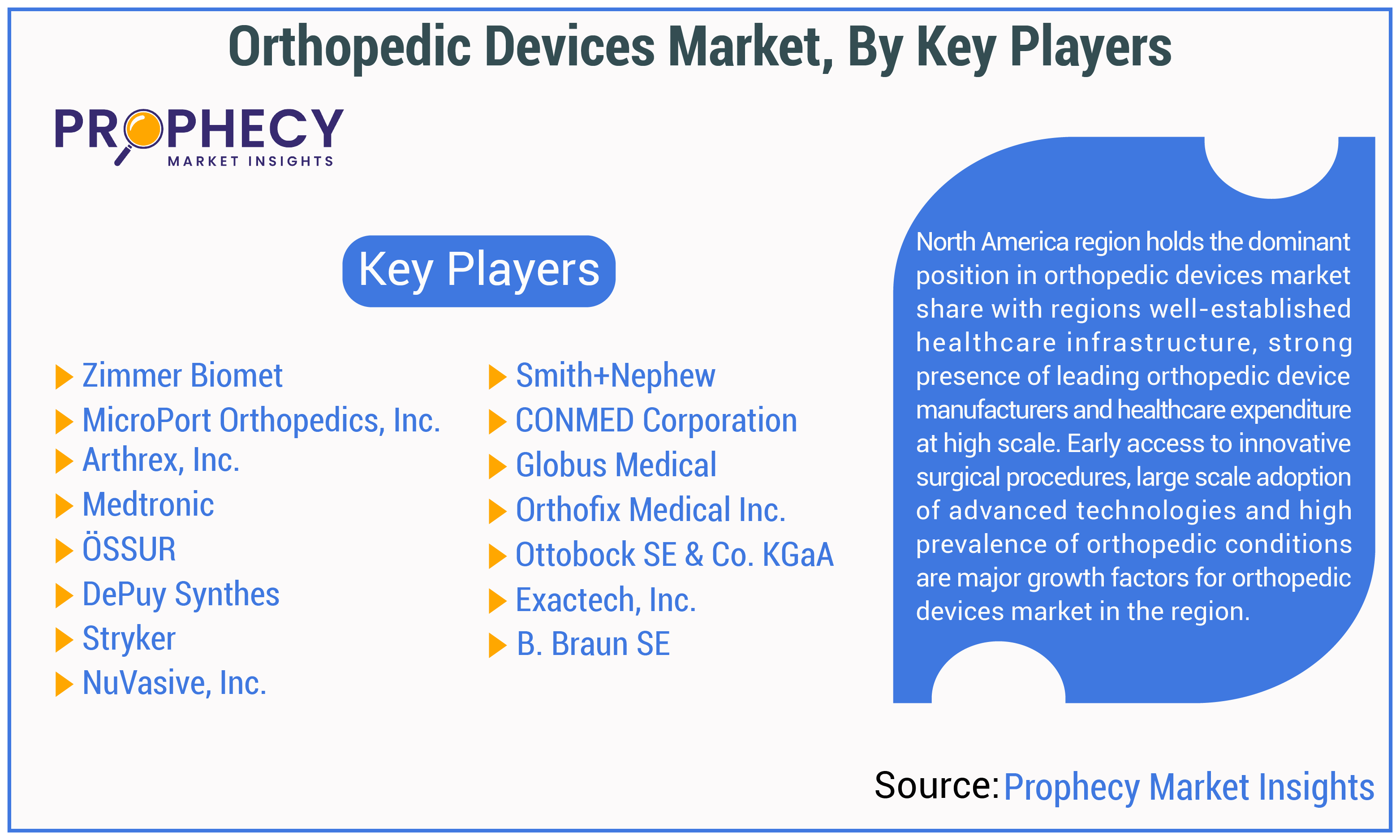
North America: This region holds the dominant position in orthopedic devices market share with regions well-established healthcare infrastructure, strong presence of leading orthopedic device manufacturers and healthcare expenditure at high scale. Early access to innovative surgical procedures, large scale adoption of advanced technologies and high prevalence of orthopedic conditions are major growth factors for orthopedic devices market in the region.
- U.S. Orthopedic Devices Market Insights:
Due to factors including high volume of orthopedic procedure, advancement in healthcare system and strong presence of key medical device manufacturers and research institutions United State holds the leading position in North America for orthopedic devices market.
Europe: With countries such as Germany, the U.K., and France are leading players in advanced healthcare systems, skilled medical professionals and growing investments in healthcare, the Europe region is fastest growing region in global orthopedic devices market. Advancements in orthopedic technologies and favorable government policies are major growth drivers for orthopedic device market in the region.
- Germany Orthopedic Devices Market Insights:
Germany is the orthopedic devices market leader in Europe due to strong presence of global and local orthopedic device manufacturers and high volume of orthopedic procedures performed annually. Country focus on technological innovation and clinical research in orthopedics solidifies its dominance in the region.
Asia Pacific: The orthopedic devices market in Asia-Pacific is expanding significantly with combination of demographic shift and rising awareness of musculoskeletal health. China, India and Japan are leading contributors to target market share with their large aging population and increasing presence of multinational and domestic medical device manufacturers, accelerating the market expansion in Asia-Pacific in the forecast period ahead.
- Japan Orthopedic Devices Market Insights:
Japan leads the orthopedic devices market in the Asia-Pacific region with its high per capita healthcare spending and significantly aging population further driving the demand for spinal procedure and joint replacement surgeries. Government support for elderly care and large-scale adoption of minimally invasive and robotic-assisted orthopedic surgeries makes Japan dominant player in the region.
Orthopedic Devices Market Report Scope:
|
Attribute |
Details |
|
Market Size 2025 |
USD 65.2 Billion |
|
Projected Market Size 2035 |
USD 98.5 Billion |
|
CAGR Growth Rate |
4.6% (2025-2035) |
|
Base year for estimation |
2024 |
|
Forecast period |
2025 – 2035 |
|
Market representation |
Revenue in USD Billion & CAGR from 2025 to 2035 |
|
Regional scope |
North America - U.S. and Canada Europe – Germany, U.K., France, Russia, Italy, Spain, Netherlands, and Rest of Europe Asia Pacific – China, India, Japan, Australia, Indonesia, Malaysia, South Korea, and Rest of Asia-Pacific Latin America - Brazil, Mexico, Argentina, and Rest of Latin America Middle East & Africa – GCC, Israel, South Africa, and Rest of Middle East & Africa |
|
Report coverage |
Revenue forecast, company share, competitive landscape, growth factors, and trends |
Segmentation:
By Procedure Type:
- Orthopedic Replacement Devices
- Spinal Implants & Surgical Devices
- Orthopedic Fixation Devices
- Orthopedic Prosthetics
- Others
By Procedure:
- Joint Replacement
- Arthroscopy Procedural Volume
- Others
By Application:
- Fracture Treatment & Recovery
- Spinal Fusion
- Ligament Injuries
- Neurological Disorders
- Others
By End user:
- Hospitals & Surgical Centers
- Orthopedic Clinics
- Home Care Settings
- Others
By Region:
- North America
- U.S.
- Canada
- Europe
- Germany
- U.K.
- France
- Russia
- Italy
- Spain
- Netherlands
- Rest of Europe
- Asia Pacific
- China
- India
- Japan
- Australia
- Indonesia
- Malaysia
- South Korea
- Rest of Asia Pacific
- Latin America
- Brazil
- Mexico
- Argentina
- Rest of Latin America
- Middle East & Africa
- GCC
- Israel
- South Africa
- Rest of Middle East & Africa
Orthopedic Devices Market Competitive Landscape & Key Players
The key players operating in the orthopedic devices market include, Zimmer Biomet, MicroPort Orthopedics, Inc., Smith+Nephew, ÖSSUR, DePuy Synthes, and others. Focusing on orthopedic device development with high quality solutions for surgical efficiency and enhance patient outcomes. Expanding global access to orthopedic care that is cost-friendly with prioritizing sustainability and regulatory compliance for long-term growth and trust in healthcare systems.
Orthopedic Devices Market Companies:
- Zimmer Biomet
- MicroPort Orthopedics, Inc.
- Arthrex, Inc.
- Medtronic
- ÖSSUR
- DePuy Synthes
- Stryker
- NuVasive, Inc.
- Smith+Nephew
- CONMED Corporation
- Globus Medical
- Orthofix Medical Inc.
- Ottobock SE & Co. KGaA
- Exactech, Inc.
- B. Braun SE
View an Additional List of Companies in the Orthopedic Devices Market
Orthopedic Devices Market Recent News
- In November 2023, CartiHeal was acquired by Smith+Nephew, the developer of the Agili-C implant, in a deal valued at USD 330 million. This acquisition aligns with Smith+Nephew's strategic focus on investing in its sports medicine business and incorporating innovative technology.
- In October 2023, DePuy Synthes received U.S. FDA 510k clearance for TriLEAP which is its lower extremity anatomic plating system. A modular system that is specifically designed to meet the complex needs of podiatric medicine doctors, orthopedic surgeons, and specialists in foot & ankle care treatment.
- In September 2023, PROstep MIS Lapidus was launched by Stryker, a novel internal fixation system designed for the treatment of bunions. This system facilitates a minimally invasive surgical approach to address hallux valgus deformity and achieve fusion of the first metatarsal cuneiform joint.
Analyst View:
Analyst highlight the orthopedic device market a steady expanding growth with constant technological advancements, strong demographic trends and growing demand for improved mobility solutions. Analyst also highlight population shift towards the outpatient care and ambulatory surgical centers with technology integration in device design and surgical planning. The aging of the global population, the increase in musculoskeletal conditions, and the rising acceptance of minimally invasive surgical methods are all estimated to have a major beneficial effect on the market.
More Related Reports
Enteral Feeding Devices Market
Orthopedic Orthotics Market
Veterinary Orthopedic Implants Market
Orthopedic Mattress Market
Foot Orthopedic Insoles Market
Orthopedic Devices Market Company Profile
|
Company Name |
ÖSSUR |
|
Headquarter |
Reykjavík, Iceland |
|
CEO |
Sveinn Sölvason |
|
Employee Count |
4,000 Employees |
Orthopedic Devices Market Highlights
FAQs
Orthopedic devices market size was valued at USD 65.2 Billion in 2025 and is expected to reach USD 98.5 Billion by 2035 growing at a CAGR of 4.6%.
Product, Procedure, application, end user and region are the segmentation for the target market.
North America, Asia Pacific, Europe, Latin America, and the Middle East & Africa. North America is expected to dominate the market.
The key players operating the orthopedic devices market include Zimmer Biomet, MicroPort Orthopedics, Inc., Arthrex, Inc., Medtronic, ÖSSUR, DePuy Synthes, Stryker, NuVasive, Inc., Smith+Nephew, CONMED Corporation, Globus Medical, Orthofix Medical Inc., Ottobock SE & Co. KGaA, Exactech, Inc., and B. Braun SE.