Global Chocolate Confectionery Market Overview
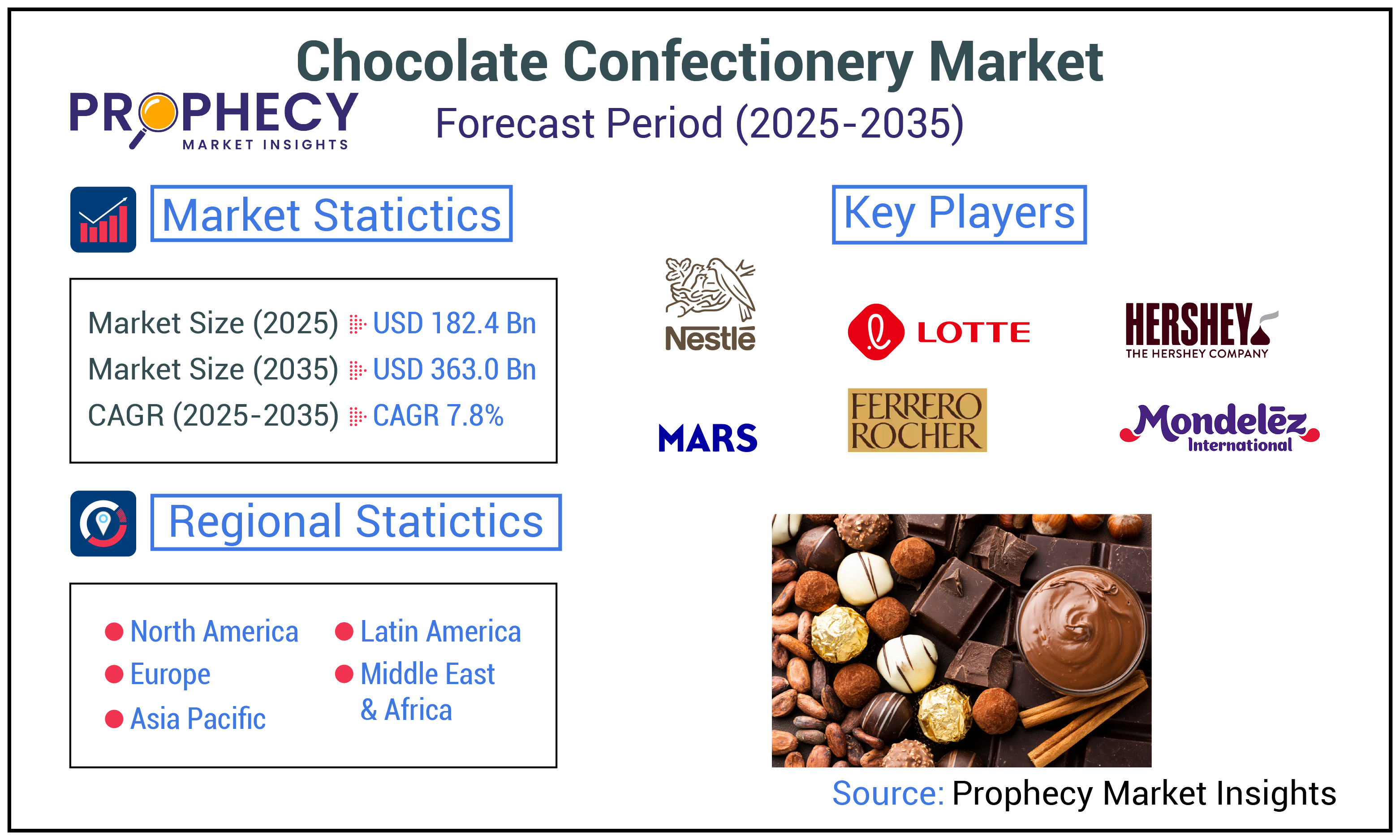
- By 2035, chocolate confectionery market size is contemplated to enlarge at a valuation of USD 363.0 Billion.
- In 2024, the chocolate confectionery market valuation was USD 172.1 Billion.
- Chocolate confectionery market is developing at a CAGR of 7.8%.
Chocolate confectionery encompasses sweet products made from cocoa, including bars, truffles and molded chocolate. These products are sold and primarily consumed as gifts and snacks. Most chocolate products carry cultural and emotional meaning as well. The chocolate confectionery market is highly democratized and segmented, with chocolate products across the spectrum from mass-market to premium handcrafted options available to consumers.
The chocolate confectionery market is poised to expand, with rising disposable incomes, and an increasing gifting culture. The growing health trend is shifting consumer interest toward dark chocolate and organic chocolate products. Strong marketing, retail expansion and easy consumable formats in e-commerce are also increasing availability, and consumption of chocolate confectionery. Consumer seasonal demand greatly drives sales, as relevant celebrations will help sustain or increase chocolate confectionery consumption from region to region, leading to additional, consistent, market expansion globally.
The chocolate confectionery market growth outlook remains bright, with growth in demand for premium, sustainable, and health-inspired offerings. Innovations in sugar reduction and alternative plant-based ingredients coupled with sustainable packaging are anticipated to continue attracting new consumers. Emerging markets will provide important expansion opportunities and brand development platforms, particularly in Asia and Latin America.
Recession Risk & Tariff Analysis:
- During economic times of recession, consumers may cut their discretionary spend which results in less spending on premium chocolate that affects sales of premium chocolate. Manufacturers may be pressured to reduce their margins lower as customers shift preferences to lower-cost product categories. Reduced gifting and the decline in travel retail will also affect revenues, particularly for luxury brands.
- Tariffs applied to imports have the potential to increase the cost of production as well as trade restrictions between cocoa-producing countries and chocolate-consuming countries could lead to supply chain and logistics issues. The way that regulatory differentials and tariffs influence the supply chain in different regions are things manufacturers may want to consider when looking to expand internationally.
Impact of Generative AI on Chocolate Confectionery Market:
- Generative AI leverages the analysis of consumer tastes and preferences, market trends, and flavor combinations to facilitate rapid rapidity in product idea generation for chocolate producers. Similarly, it enables personalization and customization to strengthen personal marketing and engage with customers in niche audiences about branded and tailored packaging, flavors, and experiences.
- Generative AI also helps improve supply chain efficiency by forecasting demand patterns and optimizing inventory control. Companies can simulate at market levels the relevant to model consumer behavior and demand in order to mitigate waste, avoid stockouts, and adjust quickly to changes in consumer demand including improvements to supply chain strategies.
Global Chocolate Confectionery Market Drivers & Restraints
Key Drivers:
Rising Demand for Premium and Health-Conscious Chocolate Products Drives Growth
The main driver of the growth in the chocolate confectionery market is to increase the demand for premium and healthy options such as dark, organic and low-sugar chocolates. Health awareness, ethical sourcing, and sustainability trends are starting to affect purchasing decisions. Consumers are looking for indulgent treats, while wanting to feel guilt free and manufacturers are starting to innovate by adding functional ingredients, clean labels on packaging, and an artisanal feel to their products. Overall, these changes are being driven to a great extent by millennials, with a strong preference for healthier options, and millennial/urban populations are important contributors to the growth of the chocolate confectionery market.
- For instance, according to The International Diabetes Federation, by 2050, 1 in 8 adults or about 853 million individuals will have diabetes, representing a 46% increase. The Growth in global premium and organic chocolate market continues to rise as health and sustainability are increasing concerns. Reports even suggest consumers are willing to pay a premium, on ethically sourced and low-sugar chocolate, reinforcing this another growth point.
Restraints:
Volatility in Cocoa Prices and Supply Chain Disruptions is restraining the market:
The fluctuating pricing of cocoa due to climate change effects, geopolitical unrest in some of the largest cocoa-producing countries, and labor conditions, have consequences for the price of cocoa ingredients. These price fluctuations have significant consequences for producer profit margin issues. Supply disruption to the chocolate supply chain from trade restrictions, and climatic concerns makes consistency in raw material supply very difficult and poses challenges to planned production. Inconsistent supply creates exposure to financial risk across the chocolate confectionery industry. Lastly it struggles with maintaining stable pricing and long-term sourcing contracts with fluctuating pricing, and exposure to risks in downstream supply chain disruptions.
- Counterbalance Statements: Some chocolate companies are diversifying their supplier base and seeking sustainable sourcing partnerships, and considering alternatives to cocoa-based products, such as plant-based use alternatives. Similarly, advancements in technology and partnerships and the use of alternative ingredient use and trade reduce excess reliance on traditional cocoa sourcing countries and upstream supply chain or product inconsistency.
Opportunities & Trends:
Health-Conscious and Sustainable Chocolate in Emerging Markets is an emerging opportunity
- Market for chocolate confectionery is growing rapidly, providing health-based innovation with a sustainable plan, especially in emerging economies. Increasing demand for low-sugar, functional chocolates as well as consumer preference towards ethically sourced ingredients presents an opportunity for a dual opportunity. Brands promising guilt-free indulgence with a sustainable commitment are eating away at market share.
Global Chocolate Confectionery Market Segmentations & Regional Insights
Product, type, distribution channel and region are the divisions of the chocolate confectionery market.
By Product:
Based on product, the market is segmented into boxed, molded bars, truffles, and others. Molded bars dominate the chocolate confectionery market share due to their wide availability, inexpensive price point, and convenience for the consumer. Consumers can store molded chocolate bars for longer periods of time and they come in a variety of flavors making them desirable to all age groups. Continued brand strategy and innovative inclusion of fillings and texture change has kept this product in a leading position in the global market.
Boxed chocolates come second in terms of dominance based primarily on consumer seasonal demand and gifting nature. Boxed chocolate can have a premium pricing compared molded chocolate bars for gifting occasions which consumers are attracted based on the elegant packaging and assortment of chocolate treats and offerings. The escalating demand for gourmet and luxury chocolates has also been significant in boxed chocolate product acceptability.
By Type:
Based on the Type, the chocolate confectionery market is divided into dark, milk, white. Milk chocolate constitutes the largest edible share within the chocolate confectionery market growth since its creamy mouthfeel and sweet flavor appeal most widely across consumers. Milk chocolate is typically employed in bars, boxed assortments, and much more. This means alongside higher end versus lower end products, it remains the most probable choice to an everyday occasion and for consumer gifting in many different parts of the world.
Dark chocolate, the second most important edible type within chocolate confectionery, is growing in popularity due to its health perception and cocoa content. The growing consumer awareness around antioxidants, as well as those focusing on sugar intake reduction, have fueled demand. Dark chocolate appeals to health-oriented individuals and premium buyers alike, thus it is growing strongly both in high developed markets and developing markets.
By Distribution Channel:
Supermarkets & hypermarkets, convenience stores, online, others are distribution channel of the chocolate confectionery market. Supermarkets and hypermarkets are the foremost leaders of the chocolate confectionery market share due to their shelf space availability, product assortment, and one-stop-shop convenience. These stores provide the perfect promotional or impulse buy location, making them the best place for everyday purchases of chocolate and seasonal purchases of chocolate by urban and semi-urban consumers.
Convenience stores are in the second position. Their strength is their easy access and the strategic location of the stores in residential and transitional areas, which appeals to impulse purchases or immediate consumption purchases. Their hours, ready-to-eat placement, and easy checkout make convenience stores a go-to channel and are especially attractive for single-serve or snack-size chocolate products.
Regional Insights:
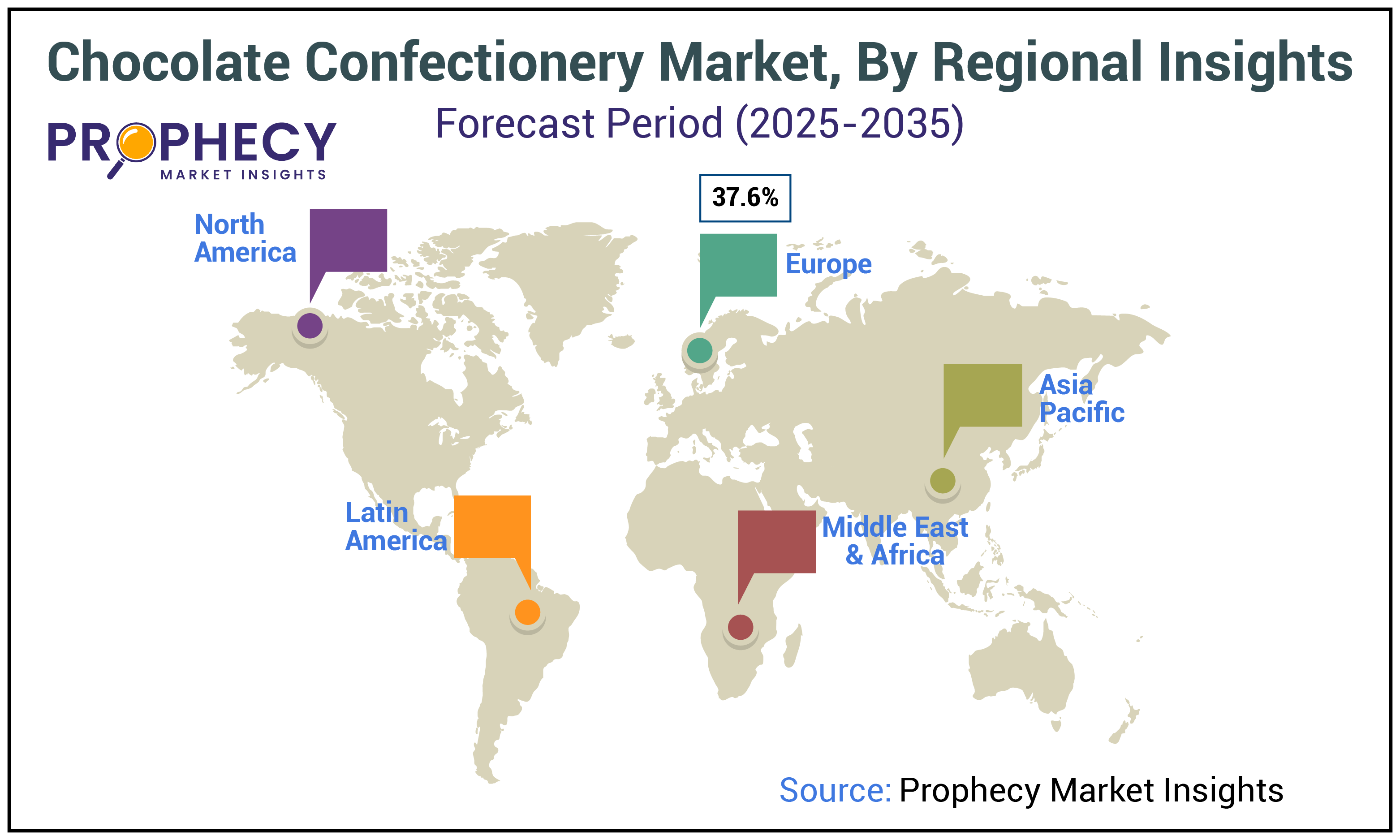
Geographically, the chocolate confectionery market is studied across North America, Europe, Asia Pacific, Latin America, and the Middle East & Africa.
Europe: This region has a stronghold in the chocolate confectionery market growth with 37.6% share due the established chocolate culture and consumption levels. Germany, Switzerland and the U.K. are key players and have significant ownership of their own brands, premium offerings, and gifting. Additionally, innovation and growth in demand for artisanal and organic chocolates is continuing to fortify their stronghold.
- Germany Chocolate Confectionery Market Insights:
Germany leads the European market for chocolate confectioneries due to its history of manufacture and consumer demand. Germany has world-leading brands and has excess production to export to Europe. The large per capita consumption, development of product formats and retail structure, makes it the leader of the chocolate market in Europe.
North America: This region is second largest region in chocolate confectionery market growth, as the U.S. ranks high as a large contributor with established brands and large consumer base. Seasonal and innovative flavors keep increasing premium product category demand accordingly. Change and the drive from retail expansion and an increase in health-conscious trends, which include dark chocolate and organic alternatives, continue pushing purchase penetration of the chocolate confectionery category.
- U.S. Chocolate Confectionery Market Insights:
In North America, the large consumer population and existing chocolate brands, and varied consumer requirements, make the U.S. the region leader. The gifting occasions, and continued novelty in flavor and active supply and distribution through supermarket chains to convenience stores, make the US market leader. The premium and health product range is now emerging in the market as an alternative for American consumers.
Asia Pacific: This is the third-largest region and has grown rapidly due to growing disposable incomes and Western influence on snacking. Countries such as China, Japan, and India, as emerging markets consume increasing volumes of premium chocolate and imported chocolate. With an increasing number of retail locations and the adoption of e-commerce for the sale of chocolate products will further propel the chocolate confectionery market growth in the region.
- Japan Chocolate Confectionery Market Insights:
Japan is seen as the powerhouse of the continent for chocolate confectionery due to its innovation and packaging opportunities, and seasonal production cycles. The strength of the market is driven by consumer demand for unique favor and premium content. Japan also has a strong domestic producer market within a well-defined retail distribution that contributes to overall high chocolate confectionary consumption across all demographics.
Chocolate Confectionery Market Report Scope:
|
Attribute |
Details |
|
Market Size 2025 |
USD 182.4 Billion |
|
Projected Market Size 2035 |
USD 363.0 Billion |
|
CAGR Growth Rate |
7.8% (2025-2035) |
|
Base year for estimation |
2024 |
|
Forecast period |
2025 – 2035 |
|
Market representation |
Revenue in USD Billion & CAGR from 2025 to 2035 |
|
Regional scope |
North America - U.S. and Canada Europe – Germany, U.K., France, Russia, Italy, Spain, Netherlands, and Rest of Europe Asia Pacific – China, India, Japan, Australia, Indonesia, Malaysia, South Korea, and Rest of Asia-Pacific Latin America - Brazil, Mexico, Argentina, and Rest of Latin America Middle East & Africa – GCC, Israel, South Africa, and Rest of Middle East & Africa |
|
Report coverage |
Revenue forecast, company share, competitive landscape, growth factors, and trends |
Segmentation:
By Product:
- Boxed
- Molded Bars
- Truffles
- Others
By Type:
- Dark
- Milk
- White
By Distribution Channel:
- Supermarkets & Hypermarkets
- Convenience Stores
- Online
- Others
By Region:
- North America
- U.S.
- Canada
- Europe
- Germany
- U.K.
- France
- Russia
- Italy
- Spain
- Netherlands
- Rest of Europe
- Asia Pacific
- China
- India
- Japan
- Australia
- Indonesia
- Malaysia
- South Korea
- Rest of Asia Pacific
- Latin America
- Brazil
- Mexico
- Argentina
- Rest of Latin America
- Middle East & Africa
- GCC
- Israel
- South Africa
- Rest of Middle East & Africa
Global Chocolate Confectionery Market Competitive Landscape & Key Players
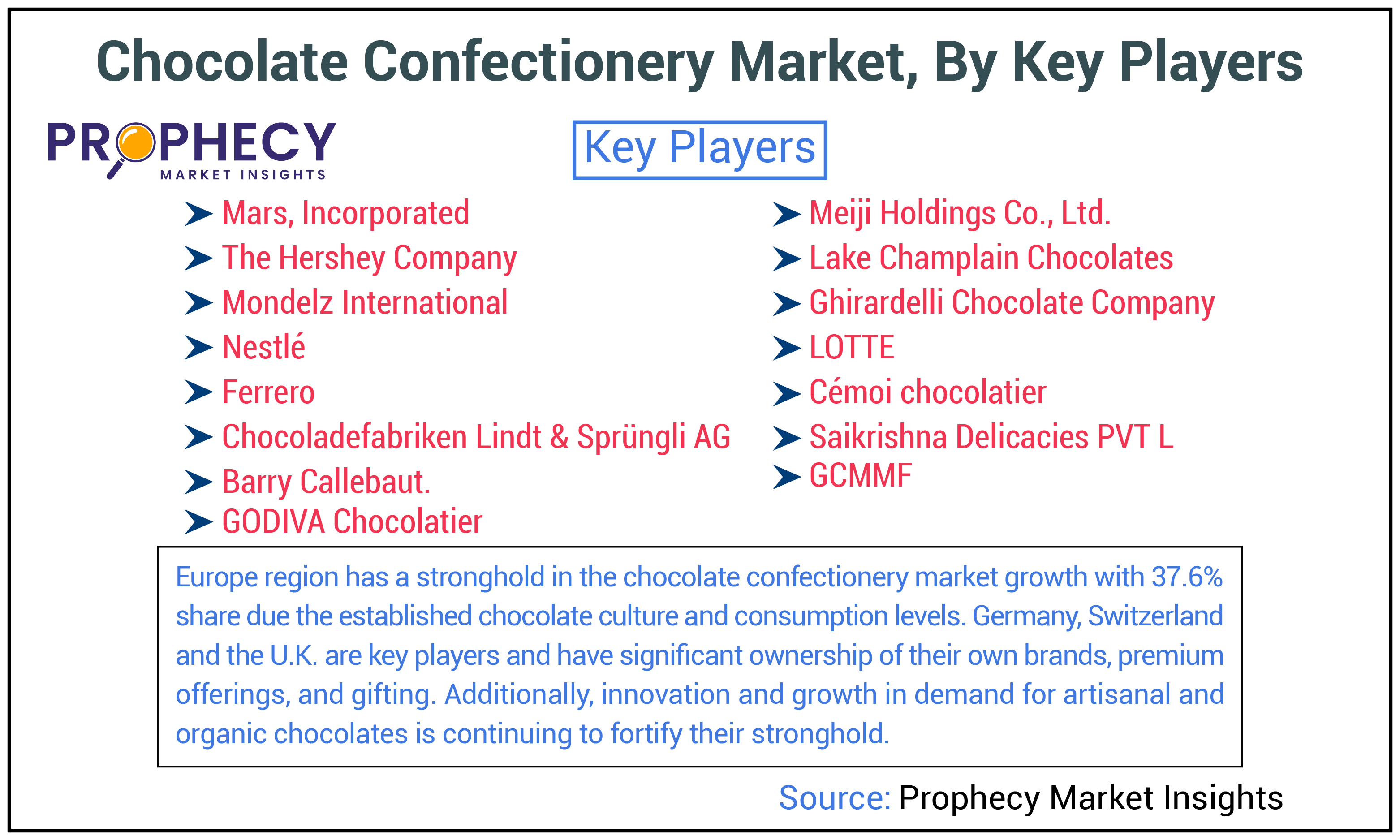
The prominent players operating in the market include, Mars, Incorporated, The Hershey Company, Mondel?z International, Nestlé, Ferrero, Chocoladefabriken Lindt & Sprüngli AG, Barry Callebaut., and others. The chocolate confectionery sector sees cut-throat competition from global companies with strong brand equity, wide distribution channels, and continuing product development. Companies compete on price, quality, variety of flavors, and sustainability practices. Premiumization, health benefits, and development in emerging markets form the core of competitive differentiation and long-term competitive positioning arenas.
Chocolate Confectionery Market Companies:
- Mars, Incorporated
- The Hershey Company
- Mondel?z International
- Nestlé
- Ferrero
- Chocoladefabriken Lindt & Sprüngli AG
- Barry Callebaut.
- GODIVA Chocolatier
- Meiji Holdings Co., Ltd.
- Lake Champlain Chocolates
- Ghirardelli Chocolate Company
- LOTTE
- Cémoi chocolatier
- Saikrishna Delicacies PVT L
- GCMMF
View an Additional List of Companies in the Chocolate Confectionery Market
Global Chocolate Confectionery Market Recent News
- In June 2025, the launch of Pepero in India follows Choco Pie in order to strengthen Lotte brand presence in the Indian marketplace. Anticipating a contribution to the Pepero brand - a goal to hit 1 trillion won in global sales of Pepero brand.
- In April 2025, Barry Callebaut announced a 4.7% reduction in sales volume in the inventory for the first half of fiscal year 2024/25, the total for the half-year was 1,085,048 tonnes. The decrease for the volume for the global sales had been attributed to volatile cocoa prices and delays in customer orders. Still, there was volume growth in Global Gourmet, Global Specialties and AMEA segments.
Analyst View:
The chocolate confectionery industry is expanding steadily. There are few things driving us forward into the future, including changing consumer taste, increasing demand for premium and healthy chocolates, and growth in emerging economies. Functional chocolates, sustainable sourcing, and advances in digital retailing are some key trends that have recently developed. The market still has an opportunity with health-conscious consumers and untapped areas of the world to attract new customers. The market appears to be poised for continued innovation and growth for some time to come.
More Related Reports
Coconut Milk Yogurt Alternatives Market
Human Milk Oligosaccharides Market
Chocolate Market
India Industrial Chocolate Market
Industrial Chocolate Market
Global Chocolate Confectionery Market Company Profile
|
Company Name |
Nestlé |
|
Headquarter |
Vevey, Switzerland |
|
CEO |
Laurent Freixe |
|
Employee Count |
275,000 Employees |
Global Chocolate Confectionery Market Highlights
FAQs
Chocolate confectionery market size was valued at USD 182.4 Billion in 2025 and is expected to reach USD 363.0 Billion by 2035 growing at a CAGR of 7.8%.
Product, type, distribution channel, and region are the segmentation for the chocolate confectionery market.
North America, Asia Pacific, Europe, Latin America, and the Middle East & Africa. Europe is expected to dominate the market.
The prominent players operating in the market include, Mars, Incorporated, The Hershey Company, Mondel?z International, Nestlé, Ferrero, Chocoladefabriken Lindt & Sprüngli AG, Barry Callebaut., GODIVA Chocolatier, Meiji Holdings Co., Ltd., Lake Champlain Chocolates, Ghirardelli Chocolate Company, LOTTE, Cémoi chocolatier, Saikrishna Delicacies PVT LTD, and GCMMF.