Asia Pacific Legal Cannabis Market Overview
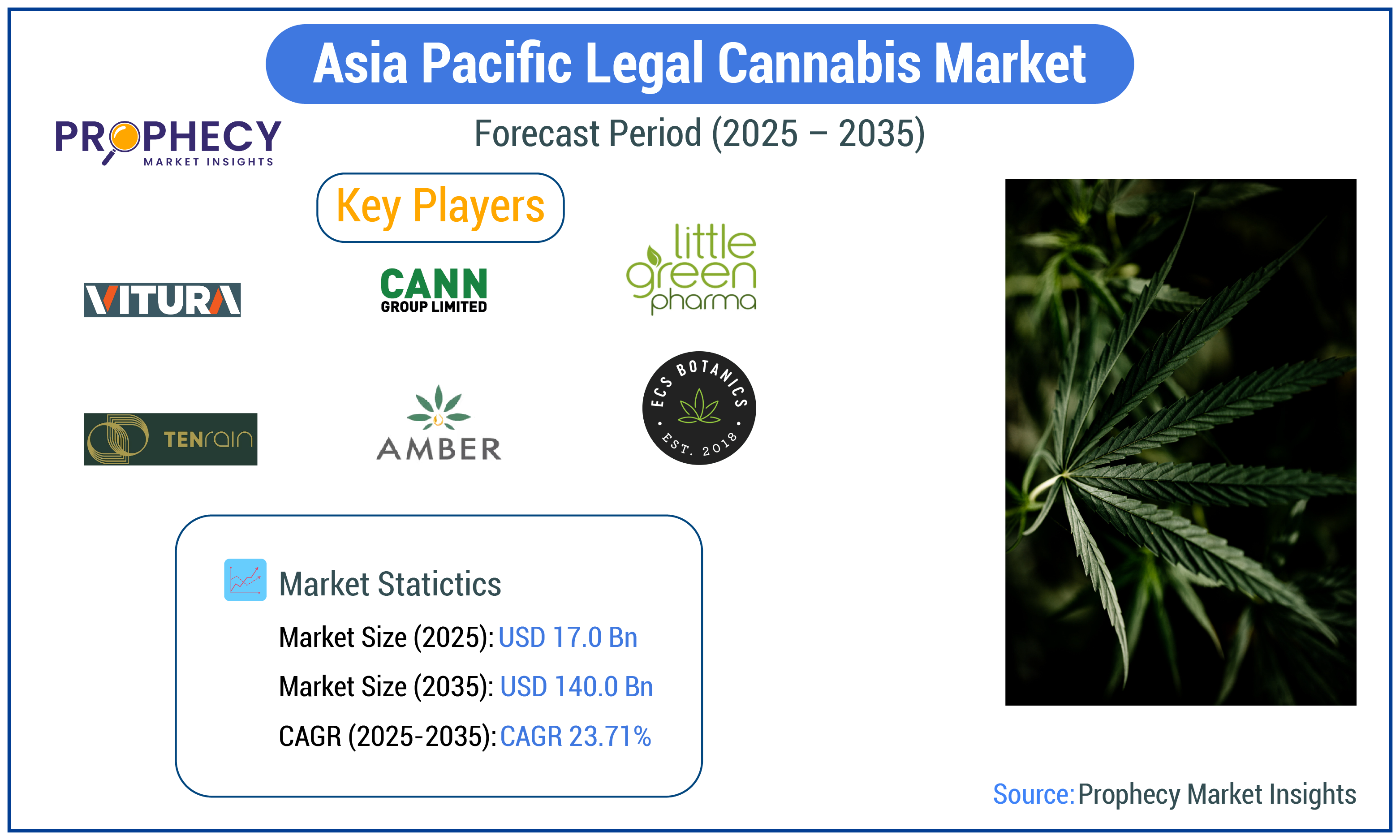
- By 2035, the Asia Pacific legal cannabis market size is contemplated to enlarge at a valuation of USD 140.0 Billion.
- In 2025, the Asia Pacific legal cannabis market valuation was USD 17.0 Billion.
- Asia Pacific Legal Cannabis Market is developing at a CAGR of 23.71%.
Legal cannabis is a cannabis which is validly approved for the use of law, usually for medical treatment or entertaining enjoyment, under the regulatory structure of a country. Resemble as illegal cannabis, it is subject to strict quality, safety and labeling standards. Its benefits include providing patients with safe access to alternative medicine, reducing dependence on opioids and offering natural relief for a series of conditions such as chronic pain, insomnia and nausea. Additionally, legalization promotes transparency, supports scientific research, curb illegal trade, and produce economic benefits through regulated sales and industry employment generation.
The Asia Pacific legal cannabis market is growing rapidly due to increasing government support for medical cannabis legalization in countries such as Thailand, Australia and South Korea. Awareness about its medical benefits is demanding increasing awareness, especially for chronic pain, epilepsy and mental health conditions. Additionally, developing the popularity and public outlook of CBD-based wellness products-especially promoting the consumer interest among the young urban population. Investment in farming, research, and regulatory infrastructure is also accelerating market development, giving the region a major emerging player in the global cannabis industry.
The future of Asia Pacific legal cannabis market looks promising, which is inspired by the expansion of medical globalization, increasing investment in research and increasing demand for CBD-based wellness products. Countries such as Thailand, Australia and South Korea are moving forward with supporting rules and drug-grade product development. Innovation and telehealth growth in cannabis delivery methods are making it easier, while changing the public approach especially among the young population are encouraged to have comprehensive acceptance. Since more governments detect pilot programs and clinical trials, the region is ready to become a major development center in the global cannabis industry.
Recession Risk and Tariff Analysis:
- Asia Pacific legal cannabis market faces risk from both economic recession and trade tariffs. During a recession, low consumer and healthcare can limit the demand for expenses, especially for non-necessary cannabis products.
- At the same time, tariffs on imported equipment and materials increase the cost of production, squeezing margins for businesses relying on global supply chains. These challenges can especially slow down growth for small firms, and can lead to a change towards market consolidation or local sourcing and manufacturing to maintain competition.
Impact of Generative AI on Asia Pacific Legal Cannabis Market:
- Asia Pacific legal cannabis market is booming due to integration of generative AI, increasing the efficiency of farming, improving the stability of the product and streamlining health services.
- AI technologies help to automate growing conditions, detect plant health issues and adapt to yields. In medical space, AI supports personal treatment schemes, simplifies digital consultation, and ensures regulatory compliance through automatic documentation.
- Since the adoption of AI accelerates the entire region, the cannabis businesses using these devices are gaining a competitive edge through better quality, low cost and rapid operating processes.
Asia Pacific Legal Cannabis Market Drivers & Restraints
Key Drivers:
Rising Awareness of Cannabis’s Therapeutic Benefits to Foster Market Growth
Increasing awareness about the medical benefits of cannabis is a major driver of development in Asia Pacific Legal cannabis market. As more patients, healthcare professional, and policy makers learn about its effectiveness in treating conditions such as chronic pain, epilepsy, anxiety and cancer, increasing demand for legal access.
This growing understanding is reducing stigma, encouraging medical prescriptions, and motivating governments to develop assistant rules. Public education, media coverage, and clinical research further strengthens confidence in cannabis-based treatments, expand the patient and create a favorable environment for market expansion throughout the region.
- For Instance, according to the data published by National Library of Medicine, in adults with chronic pain, patients who were treated with cannabis or cannabinoids are more likely to experience a clinically significant reduction in pain symptoms. In adults with multiple sclerosis (MS)-related spasticity, short-term use of oral cannabinoids improves patient-reported spasticity symptoms. In adults with chemotherapy-induced nausea and vomiting, oral cannabinoids are effective antiemetics.
Restrains:
High Import Dependence for Cultivation Equipment can Restrict the Development of the Market
High import dependence for farming equipment in the Asia Pacific legal cannabis market presents a major challenge, as many countries lack domestic manufacturing capabilities for special devices such as LED grow lights, climate control system, extraction machinery and hydroponic setup. This dependence on imports actually from America, Canada or Asia Pacific not only increases operating costs due to tariffs and shipping, but also exposes producers to the delay in chain and also to supply ups and currency in currency.
- Counterbalance Statements: A permanent solution is to encourage local production through government incentive, partnership with technology firms and investment in agricultural-technical innovation hubs, which will reduce costs, increase self-reliance and support long-term industry development.
Opportunities & Trends:
The Market can Experiencing Steady Growth in Future due to Growing Demand for CBD-based Wellness and Cosmetic Products
The growing demand for CBD-based welfare and cosmetic products is a major future tendency in the Asia Pacific Legal cannabis market. Consumers are rapidly looking for natural, anti-inflammatory and skin-satisfying solutions, causing CBD-infected skincare and popular self-care items in countries such as Japan, South Korea, Australia and Thailand. Since awareness about the benefits of CBD increases and rules are more helpful, beauty and welfare brands are expanding their product lines. This trend is running innovation, promoting e-commerce sales, and opening new avenues for market development throughout the region.
Asia Pacific Legal Cannabis Market Segmentations & Regional Insights
Product type, source, species, end user, and country are the divisions of the Asia Pacific legal cannabis market.
By Product Type:
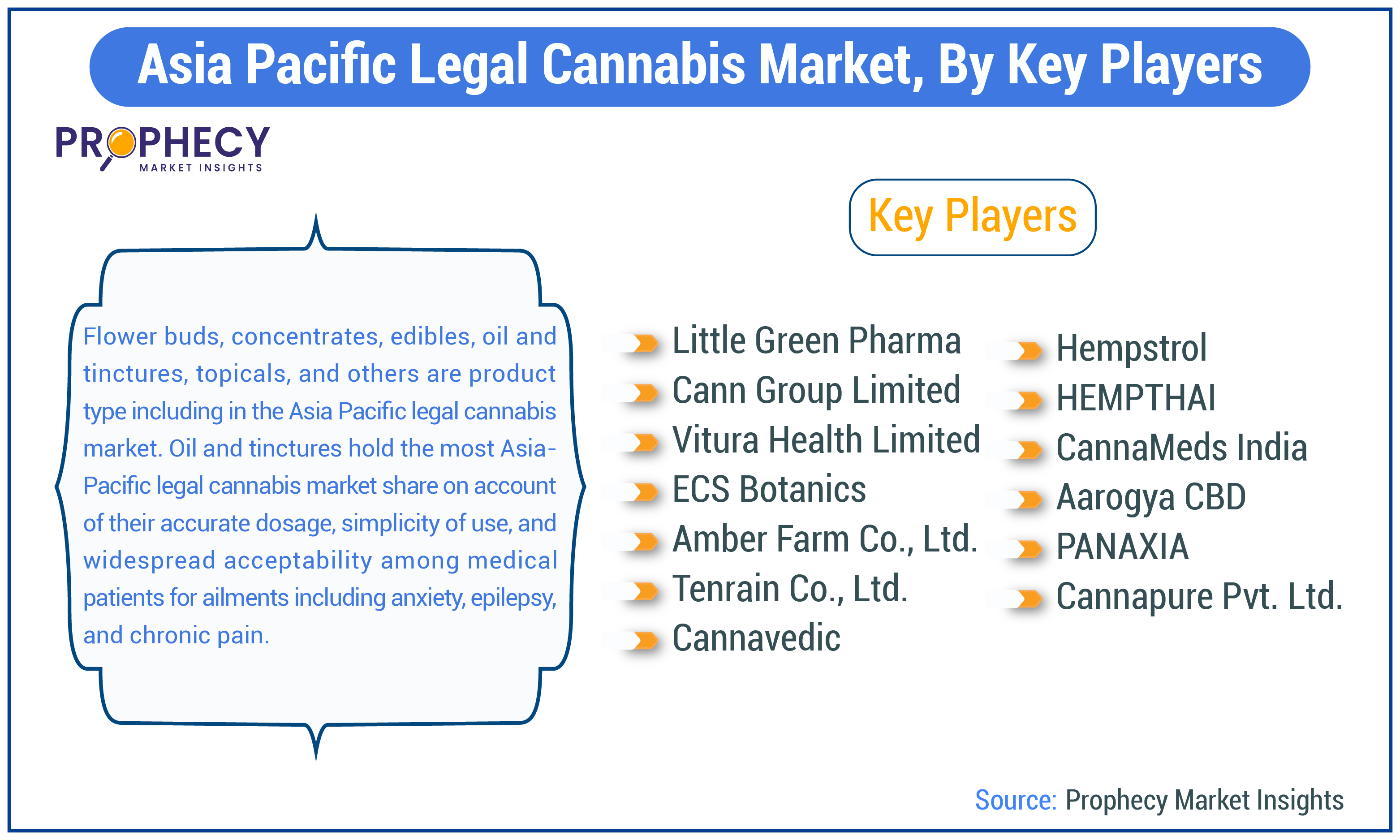
Flower buds, concentrates, edibles, oil & tinctures, topicals, and others are product type including in the Asia Pacific legal cannabis market. Oil and tinctures hold the most Asia-Pacific legal cannabis market share on account of their accurate dosage, simplicity of use, and widespread acceptability among medical patients for ailments including anxiety, epilepsy, and chronic pain.
The second-largest percentage is held by flower buds, or dried cannabis flower, especially in nations including Australia and Thailand where the therapeutic use of smokeable or vaporizable flower is growing.
By Source:
Marijuana, and hemp are source for which market is categorized. Hemp-derived products have the largest Asia Pacific legal cannabis market share, making up about 88% of revenue in 2023. This is primarily given that they are widely legal under many national laws, CBD-infused wellness and cosmetics are growing rapidly, and they are easier to access than THC products.
Despite its significant development in therapeutic usage and medicinal uses, marijuana (THC-containing cannabis) remains the second-largest market, despite most nations' limited adult-use frameworks and tougher medical-only rules.
By Species:
Cannabis sativa, cannabis indica, and cannabis ruderalis are species of the Asia Pacific legal cannabis market. Cannabis sativa has the largest Asia Pacific legal cannabis market share solely due to its high CBD concentration, which makes it perfect for hemp-based goods, which rule the wellness, cosmetic, and medicinal sectors in the area.
In medical cannabis programs, cannabis indica, which comes in second, is frequently given for pain reduction, anxiety, and sleeplessness since it has its calming and soothing qualities.
By End User:
By end user, the market is categorized into patients, adult consumers, pharmaceutical companies, research institutes, beauty & personal care industry, and others. Patients make up the largest end-user sector in the Asia-Pacific legal cannabis market size since medical cannabis programs are the main source of access for chronic diseases such cancer-related symptoms, anxiety, chronic pain, and epilepsy.
Among the second-largest category are pharmaceutical businesses, which are essential in the development of standardized cannabis-based drugs, clinical studies, and collaboration with healthcare systems to provide prescription-grade, regulated medicines.
By Country:
On the virtue of country, the market is categorized into China, India, Japan, Australia, Indonesia, Malaysia, South Korea, and Rest of Asia Pacific. China presently holds the top spot in the Asia-Pacific legal cannabis market growth, mostly as a result of its extensive hemp farming (which accounts for over half of the global supply of legal hemp) and significant investments in infrastructure for CBD extraction and export. China's size and export function place it at the top of the legal cannabis market in the area, which is based mostly on hemp and CBD products.
Asia Pacific Legal Cannabis Market Report Scope:
|
Attribute |
Details |
|
Market Size 2025 |
USD 17.0 Billion |
|
Projected Market Size 2035 |
USD 140.0 Billion |
|
CAGR Growth Rate |
23.71% (2025-2035) |
|
Base year for estimation |
2024 |
|
Forecast period |
2025 – 2035 |
|
Market representation |
Revenue in USD Billion & CAGR from 2025 to 2035 |
|
Regional scope |
Asia Pacific – China, India, Japan, Australia, Indonesia, Malaysia, South Korea, and Rest of Asia Pacific |
|
Report coverage |
Revenue forecast, company share, competitive landscape, growth factors, and trends |
Segmentation:
By Product Type:
- Flower Buds
- Concentrates
- Edibles
- Oil & Tinctures
- Topicals
- Others
By Source:
- Marijuana
- Hemp
By Species:
- Cannabis Sativa
- Cannabis Indica
- Cannabis Ruderalis
By End User:
- Patients
- Adult Consumers
- Research Institutes
- Beauty & Personal Care Industry
- Others
By Country:
- China
- India
- Japan
- Australia
- Indonesia
- Malaysia
- South Korea
- Rest of Asia-Pacific
Asia Pacific Legal Cannabis Market Competitive Landscape & Key Players
In order to reduce costs and satisfy regulatory requirements, legal cannabis producers in Asia-Pacific expand their businesses by concentrating on medical cannabis, growing their CBD wellness lines, investing in pharmaceutical-grade research and development, establishing local alliances, utilizing e-commerce, and localizing farming. The key players operating in the Asia Pacific legal cannabis market include Cann Group Limited?, HEMPTHAI, Amber Farm Co., Ltd., Tenrain Co., Ltd., and others.
List of Key Players in the Market:
- Little Green Pharma
- Cann Group Limited
- Vitura Health Limited
- ECS Botanics
- Amber Farm Co., Ltd.
- Tenrain Co., Ltd.
- Cannavedic
- Hempstrol
- HEMPTHAI
- CannaMeds India
- Aarogya CBD
- PANAXIA
- Cannapure Pvt. Ltd.
Asia Pacific Legal Cannabis Market Recent News
- In August 2020, Village Farms International, Inc. announced that it has signed a legally binding agreement to purchase 6.6% of Altum International Pty Ltd, a leading cannabinoid platform in Asia-Pacific, based in Australia. The agreement is contingent upon the fulfillment of specific requirements, which should be completed in the coming weeks. Village Farms may choose to expand its stake in Altum on comparable terms under the provisions of the Agreement.
Analyst View:
Legal cannabis, which is permitted by national legislation for either medicinal or recreational use, promotes controlled, open markets and provides therapeutic advantages including pain alleviation and decreased dependence on opioids. Increased government backing, increased knowledge of the health advantages, and growing demand for CBD-based wellness products particularly among younger, urban populations are all driving the market's rapid expansion in the Asia Pacific area. Leading nations with encouraging laws, research funding, and pharmaceutical-grade development include Thailand, Australia, and South Korea. The area is poised to emerge as a major worldwide cannabis growing hub thanks to advancements in delivery techniques and changing public perceptions.
More Related Reports
Legal Cannabis Market
Medical Cannabis Market
Legal Technology Market
Legal Cannabis Market
Cannabis Extract Market
Asia Pacific Legal Cannabis Market Company Profile
|
Company Name |
Little Green Pharma |
|
Headquarter |
West Perth, Australia |
|
CEO |
Paul Long |
|
Employee Count |
64 Employees |
FAQs
Asia Pacific legal cannabis market size was valued at USD 17.0 Billion in 2025 and is expected to reach USD 140.0 Billion by 2035 growing at a CAGR of 23.71%.
Product type, source, species, end user, and country are the segmentation for the Asia Pacific legal cannabis market.
The market is segmented by countries China, India, Japan, Australia, Indonesia, Malaysia, South Korea, and Rest of Asia Pacific. China region is expected to dominate the Market.
The key players operating the Asia Pacific legal cannabis market include Little Green Pharma, Cann Group Limited, Vitura Health Limited, ECS Botanics, Amber Farm Co., Ltd.Tenrain Co., Ltd., Cannavedic, Hempstrol, HEMPTHAI, CannaMeds India, Aarogya CBD, Inspire Fitness, PANAXIA, and Cannapure Pvt. Ltd.