Preimplantation Genetic Testing Market Overview
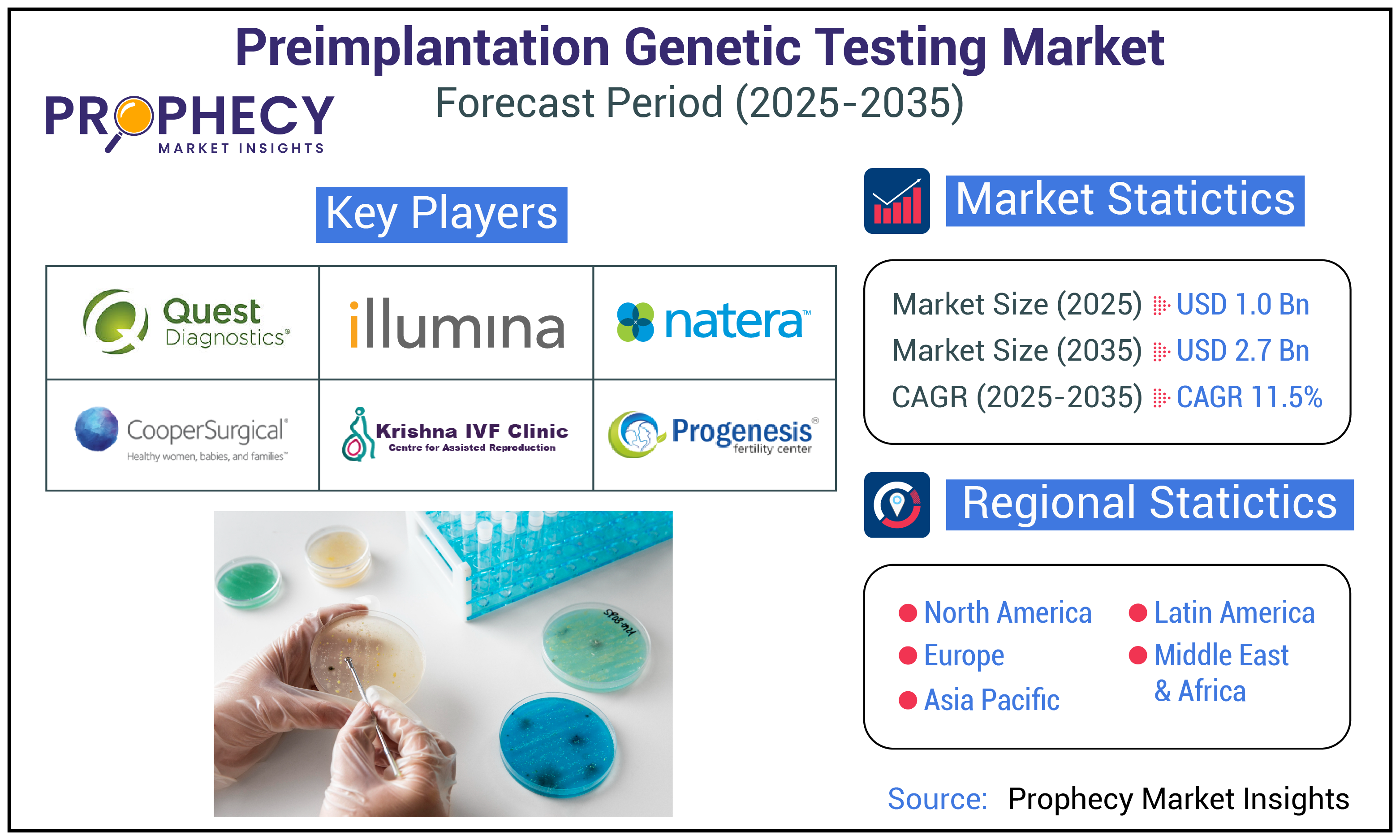
- Prior to 2035, the target market size is approximated to grow at a valuation of USD 2.7 Billion.
- Preimplantation genetic testing market size was calculated at USD 0.9 Billion, in 2024.
- The market is developing at a CAGR of 11.5%.
A screening procedure called preimplantation genetic testing (PGT) looks for genetic anomalies in embryos. It is carried out on embryos produced by intracytoplasmic sperm injection (ICSI) or in vitro fertilization (IVF). Preimplantation genetic testing helps in identifying embryos with genetic abnormalities, reduces risks of genetic disorders, increases IVF success rates, and improves embryo selection, resulting in successful and healthy pregnancies.
The increasing prevalence of infertility and delayed childbearing, increased public awareness about genetic disorders, increased Adoption of Assisted Reproductive Technologies (ART), and the increasing focus on embryo quality are factors driving the preimplantation genetic testing market growth. Additionally, the growth in medical tourism for fertility treatment, mitigation of genetic disorders, and the expanding applications of PGT also contribute in the market augmentation.
Improvements in genetic analysis techniques and the development of new PGT technologies, such as, non-invasive PGT are making PGT more accessible and effective and women have children later in life, the risk of chromosomal abnormalities in embryos increases, making PGT an important tool for ensuring healthy pregnancies, are also factors contributing in the target market expansion.
Impact of Generative AI on Preimplantation Genetic Testing Market:
- Preimplantation genetic testing is changing as a result of generative AI's improvements to data processing, precision, and decision-making. Large genomic databases are analyzed by AI-driven algorithms, which quickly and accurately detect genetic anomalies. In vitro fertilization (IVF) success rates rise as a result of improved embryo selection, less mistakes, and fewer false positives. Furthermore, generative AI simplifies the understanding of intricate genetic variants, allowing for more individualized treatment regimens and better patient results. These developments boost market expansion by quickening the adoption of PGT.
Preimplantation Genetic Testing Market Drivers & Restraints
Key Drivers of Target Market:
The Increasing Prevalence of Infertility is Skyrocketing the Market Growth
Preimplantation genetic testing market growth is driven by the rising incidence of infertility, which increases demand for assisted reproductive technologies such as in vitro fertilization (IVF). Infertility-challenged couples look for cutting-edge remedies to improve the chances of a successful pregnancy. PGT increases implantation rates and lowers the chance of miscarriage by identifying genetic defects in embryos. More couples choose IVF with PGT as infertility rates rise as a result of lifestyle choices and medical issues, which fuels market growth and advances in genetic testing technology.
- For instance, in April 2023, according to the data published by WHO, infertility affects 17.5% of adults, or one in six people globally, highlighting the critical need to provide access to high-quality, reasonably priced fertility care for those who need it. According to the updated figures, there is little regional difference in the prevalence of infertility. Comparable rates across high-, middle-, and low-income nations suggest that this is a significant global health concern. In high-income nations, the lifetime prevalence was 17.8%, whereas in low- and middle-income countries, it was 16.5%.
Restrains:
Ethical and Social Concerns Faced during Preimplantation Genetic Testing is Hindering the Market Expansion
Ethical concerns about embryo selection in preimplantation genetic testing (PGT) have sparked debates about eugenics and potential discrimination based on genetic traits. Some argue it may reduce genetic diversity and reinforce cultural prejudices. Psychological effects on parents and cultural beliefs also impact PGT's acceptability, potentially stifling market expansion and regulatory clearances.
- Counterbalance Statements: Addressing societal issues can be facilitated by putting in place stringent ethical standards and open counseling. Campaigns for public awareness can inform individuals about PGT's health advantages while upholding moral principles, thereby helping in overcoming this snag.
Opportunities:
Advancements in Preimplantation Genetic Testing is Fueling the Market Expansion for the Future Generations
Preimplantation genetic testing innovations, such as, non-invasive PGT, provide safer, more precise, and less invasive diagnostic techniques, which drive market expansion. By analyzing cell-free DNA from the culture media, non-invasive PGT lowers the hazards involved with embryo biopsy. This breakthrough increases implantation success rates, improves patient acceptability, and increases embryo viability. The need for sophisticated PGT solutions increases as more clinics implement these cutting-edge methods. By increasing the accessibility and dependability of genetic testing, this propels technical advancement and broadens the market.
- For instance, according to the article published by NCBI, to assist address the difficulties associated with low-throughput analysis in PGD/PGS and conventional invasive biopsies, a number of non-invasive and high-throughput tests have recently been developed. The article outlined the latest developments in these novel PGD/PGS techniques and how these non-invasive PGT methods were used in IVF.
Preimplantation Genetic Testing Market Segmentations & Regional Insights
The preimplantation genetic testing market is classified into component, procedure, technology, application, end user, and region.
Component
Based on component, the market is bifurcated into product and services. The product segment is attributed to lead the target market as it plays an important role in conducting genetic screenings during in vitro fertilization (IVF) procedures, and the rising demand for IVF procedures and technological advancements is increasing the demand for the product segment.
The services segment is holding the second largest position in the preimplantation genetic testing market. This is due to the fact that it provides essential services for IVF and genetic screening, driving demand for PGT among couples facing infertility or seeking to reduce genetic risks.
Procedure
Dependent on procedure, the market is sub-segmented into screening and diagnosis. The preimplantation genetic screening process is dominating target market. This is due to the fact that the most common application for PGT is screening embryos for chromosomal abnormalities (aneuploidy), which is driven by increasing maternal age and desire to select embryos with the highest chance of implantation.
The diagnosis segment is the second-most dominating procedure in the preimplantation genetic testing market. This is due to its effectiveness in preventing genetic diseases and improving IVF outcomes, especially for couples at high risk of genetic disorders.
Technology
The market is divided into next generation sequencing (NGS), polymerase chain reaction (PCR), fluorescent in-situ hybridization (FISH), single nucleotide polymorphism, validation biomarkers, and others, on the basis of technology. The NGS segment has largest preimplantation genetic testing market share, as it is cost-effective, provides a lot of data, and helps in improving pregnancy outcomes.
PCR is the technology which holds the second-leading position in the target market. This is due to this technology’s high accuracy, cost-effectiveness, and widespread use in genetic screening.
Application
By application, the market is branched into chromosomal abnormalities, x-linked diseases, embryo testing, aneuploidy screening, HLA typing, and others. The aneuploidy screening segment holds the largest preimplantation genetic testing market share, as aneuploidy is the most common chromosomal abnormality detected in embryos during IVF, thus leading to reproductive failures.
End User
According to end user, the market is categorized into fertility centers, hospitals, diagnostic centers, and others. The fertility centers segment is estimated to govern the target market as fertility centers are the primary providers of in vitro fertilization treatments, which is the necessary procedure to utilize preimplantation genetic testing.
Regional Insights:
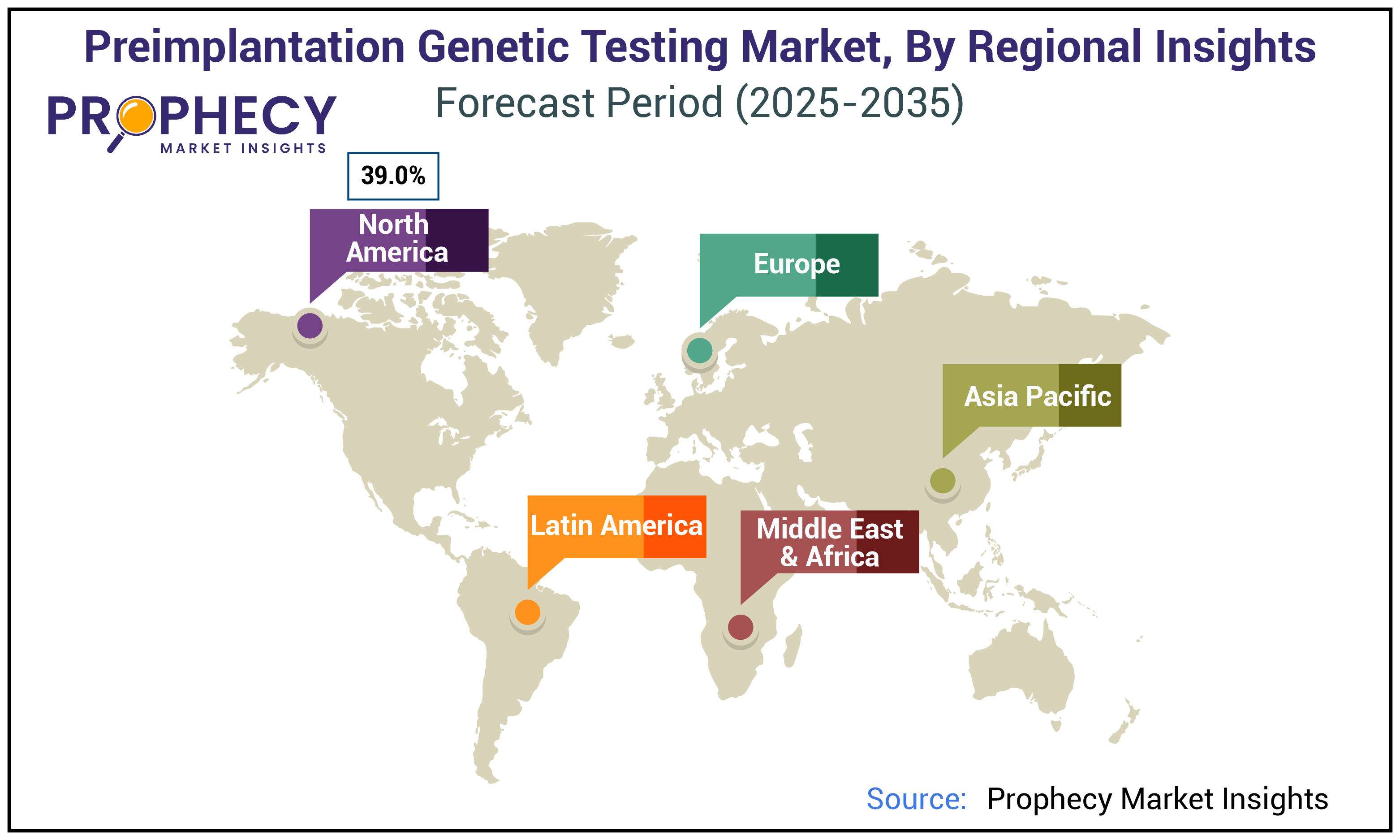
Geographically, the market is analyzed across into North America, Europe, Asia Pacific, Latin America, and the Middle East & Africa.
North America: This is the region which hold the superior preimplantation genetic testing market share of almost 37.1%, in the recent years. This is due to this region’s, established healthcare infrastructure, widespread adoption of assisted reproductive technologies (ART), and a growing awareness of genetic screening. Moreover, the increasing prevalence of infertility, coupled with the growing number of couples seeking solutions, favorable legal frameworks, technological advancements, and increased funding for genetic research, also promotes the region’s growth in the target market.
- U.S. Preimplantation Genetic Testing Market Insights:
The preimplantation genetic testing market of U.S. is the most dominating market, in the recent years. This is due to this country’s widespread adoption of advanced reproductive technologies such as IVF, strong awareness of genetic screening, and the presence of leading fertility clinics and PGT providers. Additionally, legal frameworks in North America, particularly, in the U.S. are more permissive regarding the use of PGT compared to other regions.
Asia Pacific: This is the region has growing with the fastest growth rate, during the forecast period. This is due to this region’s increasing infertility and ART awareness, rising awareness of advanced reproductive technologies, and supportive government policies. Furthermore, the region’s growing number of fertility clinics and enhanced healthcare infrastructure, high burden of genetic diseases, and the growing medical tourism for infertility treatment, are also contributing in Asia Pacific’s growth in the target market.
- China Preimplantation Genetic Testing Market Insights:
The preimplantation genetic testing market of China is the fastest growing market, in the recent years, during the forecast period. This is due to this country’s increase in infertility rates, driving demand for assisted reproductive technologies (ART) such as IVF and PGT, Increased awareness of advanced reproductive technologies, and the expansion of fertility clinics and healthcare infrastructure. Additionally, Chinese government policies that promote ART and reproductive health, and Rapid economic growth in China, are also promoting its growth in the PGT market.
Europe: This is the region which is anticipated to experience significant growth in the preimplantation genetic testing market, in the recent years. This is due to this region’s advanced healthcare infrastructure, favorable regulatory environments, increasing awareness of genetic disorders, and a growing trend towards assisted reproductive technologies (ART). In addition to this, the high burden of genetic diseases, coupled with a large population, is further increasing the demand for PGT to screen embryos and select those free of genetic mutations.
- Germany Preimplantation Genetic Testing Market Insights:
The preimplantation genetic testing market in Germany is experiencing considerable amount of growth in the recent years. This is due to Germany’s well-established healthcare system with numerous fertility clinics and access to advanced reproductive technologies, including PGT, and favorable regulations regarding aneuploidy screening. Furthermore, the growing public awareness of genetic disorders in Germany and the advantages of PGT encourages more couples to pursue genetic testing as part of the reproductive planning.
Preimplantation Genetic Testing Market Report Scope:
|
Attribute |
Details |
|
Market Size 2025 |
USD 1.0 Billion |
|
Projected Market Size 2035 |
USD 2.7 Billion |
|
CAGR Growth Rate |
11.5% (2025-2035) |
|
Base year for estimation |
2024 |
|
Forecast period |
2025 – 2035 |
|
Market representation |
Revenue in USD Billion & CAGR from 2025 to 2035 |
|
Regional scope |
North America - U.S., and Canada Europe – Germany, U.K., France, Russia, Italy, Spain, Netherlands, and Rest of Europe Asia Pacific – China, India, Japan, Australia, Indonesia Malaysia, South Korea, and Rest of Asia Pacific Latin America - Brazil, Mexico, Argentina, Rest of Latin America Middle East & Africa – GCC, Israel, South Africa, and Rest of the Middle East & Africa |
|
Report coverage |
Revenue forecast, company share, competitive landscape, growth factors, and trends |
Segmentation:
By Component:
- Product
- Reagents & Kits
- Instruments
- Software
- Services
By Procedure:
- Screening
- Diagnosis
By Technology:
- Next Generation Sequencing (NGS)
- Polymerase Chain Reaction (PCR)
- Fluorescent In-Situ Hybridization (FISH)
- Single Nucleotide Polymorphism
- Validation Biomarkers
- Others
By Application:
- Chromosomal Abnormalities
- X-linked Diseases
- Embryo Testing
- Aneuploidy Screening
- HLA Typing
- Others
By End User:
- Fertility Centers
- Hospitals
- Diagnostic Centers
- Others
By Region:
- North America
- U.S.
- Canada
- Europe
- Germany
- U.K.
- France
- Russia
- Italy
- Spain
- Netherlands
- Rest of Europe
- Asia Pacific
- China
- India
- Japan
- Australia
- Indonesia
- Malaysia
- South Korea
- Rest of Asia Pacific
- Latin America
- Brazil
- Mexico
- Argentina
- Rest of Latin America
- Middle East & Africa
- GCC
- Israel
- South Africa
- Rest of the Middle East & Africa
Preimplantation Genetic Testing Market Competitive Landscape & Key Players
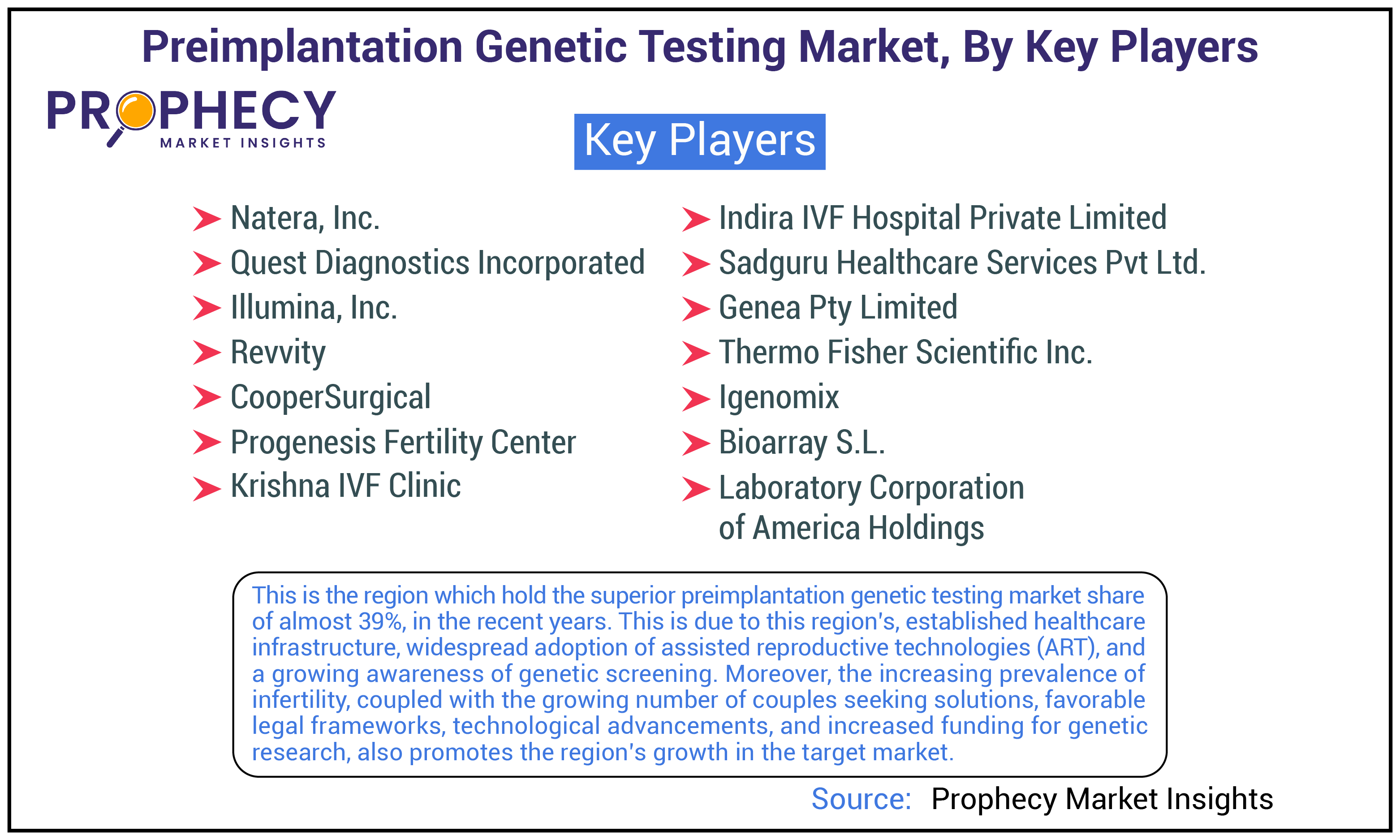
The companies operating in the target market are Natera, Inc., Quest Diagnostics Incorporated, Illumina, Inc., Revvity, CooperSurgical, and others. The key players are adopting strategies such as research and development, launching new products and services, strategic partnerships and collaborations, acquisitions, adopting advanced technologies, and expanding awareness and acceptance, for the diversification of the preimplantation genetic testing market.
Preimplantation Genetic Testing Market Companies:
- Natera, Inc.
- Quest Diagnostics Incorporated
- Illumina, Inc.
- Revvity
- CooperSurgical
- Agilent Technologies, Inc.
- Invitae Corporation
- Fulgent Genetics
- Diagnóstica Longwood SL
- Genea Pty Limited
- Laboratory Corporation of America Holdings
- Thermo Fisher Scientific Inc.
- Igenomix
- Bioarray S.L.
View an Additional List of Companies in the Preimplantation Genetic Testing Market
Preimplantation Genetic Testing Market Recent News
- In September 2024, preimplantation genetic testing (PGT), an IVF procedure in which the embryos were screened for genetic abnormalities, was a technique developed by researchers from Karolinska Institutet and Maastricht University that allowed the examination of embryos for all known genetic abnormalities with a single test. For parents at higher risk of hereditary illnesses, this new approach boosted the probability of a healthy kid by being faster and more precise than previous methods.
- In June 2024, the "Multicenter prospective study of concordance between embryo cell-free DNA and trophectoderm biopsies from 1,301 human blastocysts" study provided funding for Igenomix's first non-invasive preimplantation genetic embryo test, EMBRACE. Four continents' worth of in vitro fertilization facilities provided EMBRACE.
- In April 2024, The Prelude Network, Inception's clinical network and the largest network of fertility providers in North America, and Inception Fertility, which provides preimplantation genetic testing (PGT) services, announced the launch of "We Get You, So We Got You," an educational campaign that humanized the fertility experience by highlighting the loneliness faced by prospective parents navigating infertility in honor of National Infertility Awareness Week.
- In January 2024, the first whole genome sequencing service for specific disorders in preimplantation embryos to be made commercially available was announced by Orchid Health, a clinical preimplantation genetic testing (PGT) laboratory that does genetic screening. This study found medleys of common and uncommon gene variations linked to neurodevelopmental problems, obesity, and schizophrenia, and single-gene mutations that cause cystic fibrosis.
- In July 2023, two novel research techniques for preimplantation genetic testing-aneuploidy (PGT-A) based on next-generation sequencing were introduced by Thermo Fisher Scientific. This kind of testing was applied to intracytoplasmic sperm injection (ICSI) and in vitro fertilization (IVF). The first reproductive health assays for research use on the Ion Torrent Genexus Integrated Sequencer were the Ion ReproSeq PGT-A Kit and the Ion AmpliSeq Polyploidy Kit.
Analyst View:
The preimplantation genetic testing market is expanding due to a number of causes, including the rising incidence of infertility and delayed childbirth, heightened public awareness of genetic abnormalities, greater adoption of Assisted Reproductive Technologies (ART), and a growing emphasis on embryo quality. Furthermore, the expansion of PGT applications, the reduction of genetic diseases, and the rise in medical tourism for fertility treatment all contribute to the market expansion. The expansion of the target market is also influenced by advancements in genetic analysis methods and the creation of new PGT technologies, such as non-invasive PGT, which make PGT more widely available and efficient. Women also have children later in life, which raises the possibility of chromosomal abnormalities in the embryos, making PGT a crucial tool for ensuring healthy pregnancies.
More Related Reports
Cholesterol Testing Services Market
Genetic Testing Market
Genotyping Assay Market
Optogenetics Market
Food Safety Testing Market
Preimplantation Genetic Testing Market Company Profile
|
Company Name |
Natera, Inc. |
|
Headquarter |
Austin, Texas, United States |
|
CEO |
Mr. Steve Chapman |
|
Employee Count (2024) |
1001-5000 Employees |
Preimplantation Genetic Testing Market Highlights
FAQs
Preimplantation genetic testing market size was valued at USD 1.0 Billion in 2025 and is expected to reach USD 2.7 Billion by 2035 growing at a CAGR of 11.5%.
The market is segmented into component, procedure, technology, application, end user, and region.
The market is segmented by region North America, Asia Pacific, Europe, Latin America, and the Middle East & Africa. North America is expected to dominate the Market.
The key players operating in the Preimplantation Genetic Testing Market include Natera, Inc., Quest Diagnostics Incorporated, Illumina, Inc., Revvity, CooperSurgical, Agilent Technologies, Inc., Invitae Corporation, Fulgent Genetics, Diagnóstica Longwood SL, Genea Pty Limited, Laboratory Corporation of America Holdings, Thermo Fisher Scientific Inc., Igenomix, and Bioarray S.L.