Global Synthetic Leather Market Overview
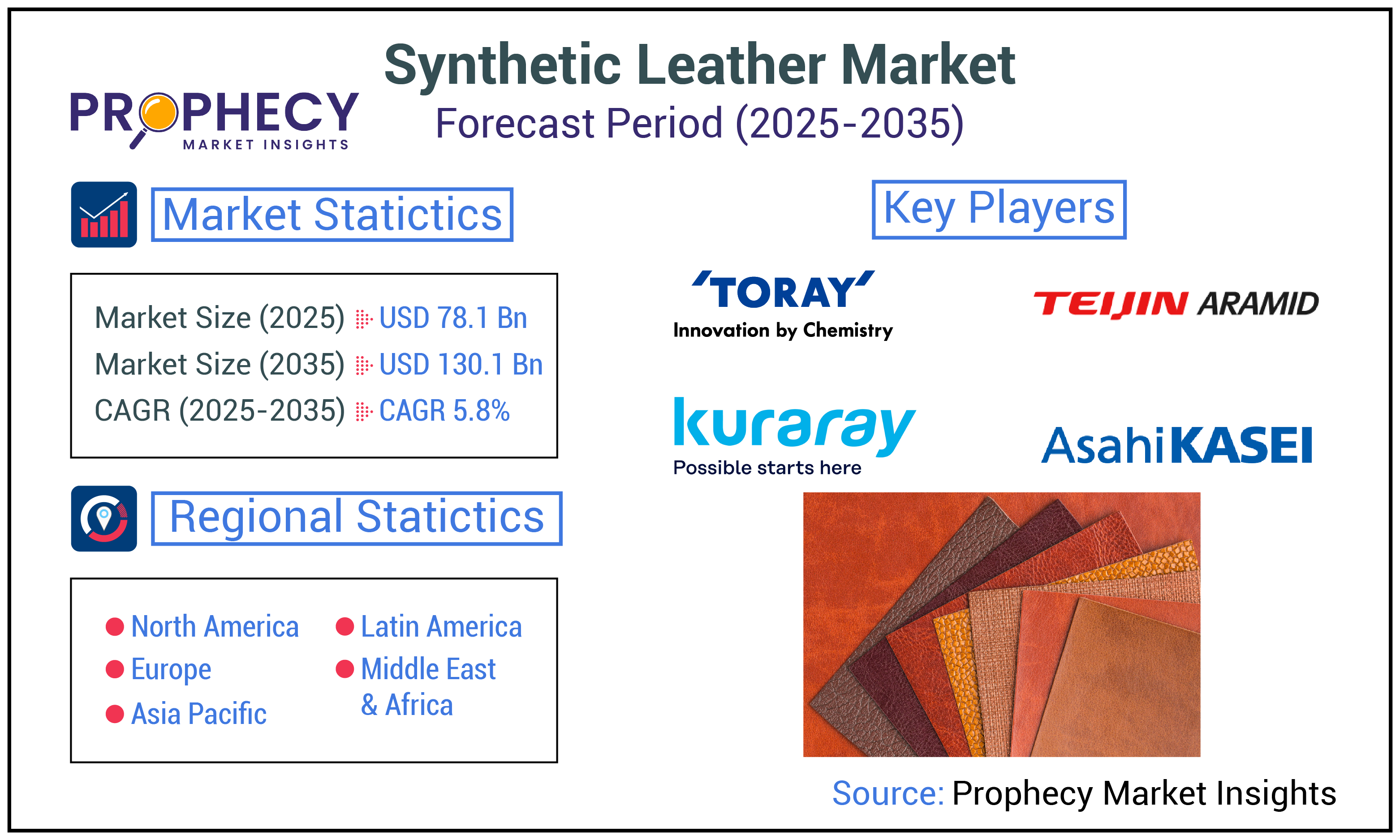
- By 2035, synthetic leather market size is contemplated to enlarge at a valuation of USD 130.1 Billion.
- In 2024, the synthetic leather market valuation was USD 73.1 Billion.
- Synthetic leather market is developing at a CAGR of 5.8%.
Synthetic leather or faux leather or artificial leather is an artificial material made of polymers either primarily polyurethane, or PU, or polyvinyl chloride, PVC that resembles the look and feel of actual leather. Synthetic leather provides a durable, lightweight, cost-effective alternate for consumers and manufacturers to product cruelty-free products. Synthetic leather continues to be in high demand in many industries, including footwear, fashion, furniture, automotive, and electronics, for its wide range of textures, colour, durability, and ease of maintenance.
The synthetic leather market is growing as demand increases for sustainable and cruelty-free alternatives, primarily in the fashion and upholstery sectors. As exposure of the environmental impacts of the fashion industry increases, the quality and performance of materials improve, and political and legislative support for sustainable products also increase, we are seeing consumers and manufacturers becoming aware of the areas of sustainable opportunity that synthetic leather, and other products, offer. Synthetic leather as an alternate material provides many benefits including; reduced costs compared to real leather, stain resistant, water repellent, and expanding growth in emerging markets in the automotive and footwear industries has improved both consumer and manufacturer demand, as well as legislative efforts to phase out support for animal products.
Going forward, advances in materials such as bio-based synthetic leather, recyclable synthetic leather will create openings to address indirect environmental factors. With innovation, in how synthetic leather can be made, as well as better political and social acceptance for consumers preferring ethical, vegan-friendly products, will undoubtedly support further growth. Significant opportunities also exist with synthetic leather in consumption of luxury goods and in the interiors of electric vehicles.
Recession Risk & Tariff Analysis:
- Declines in consumer spending on discretionary goods such as fashion, furnishings or cars can influence demand for synthetic leather during economic downturns. Demand may be impacted by fewer purchases/orders, longer project timelines, or shrinking budgets in discretionary categories. Many markets in many cases may face slowdowns in production while fighting price competition and margin compression across all levels of supply chains.
- Tariffs on inputs such as polyurethane, or PVC, or finished goods imports are also an example of what can increase production costs and complicate/speed up supply chains with a negative impact on producers and consumers in every market across the synthetic leather platform. Trade restrictions between sourcing and consuming countries will also lead to prices eventually rising through decreased international competitiveness, as well as force companies to rethink their sourcing and pricing strategies.
Impact of Generative AI on Synthetic Leather Market:
- Generative AI can help develop and prototype synthetic leather designs, patterns, and textures quickly that reflect consumers' evolving wants and needs. Through analyzing fashion trends and interior design trends, AI is transforming manufacturers' ability to create products that are customized and attractive, providing brand differentiation, and ultimately allowing for a reduction in time-to-market for new collections.
- Generative AI is facilitating effective production planning by forecasting demand, optimizing the potential use of materials, and reducing waste. Generative AI will support the refinement of manufacturing workflows, decrease energy consumption, and ensure product consistency often resulting in lower costs, and sustainable practices, in an industry that can have a large impact on the environment in synthetic leather.
Global Synthetic Leather Market Drivers & Restraints
Key Drivers:
Rising Demand for Sustainable and Cruelty-Free Alternatives is increasing market growth
A significant growth factor for synthetic leather, particularly in the last few years, is the worldwide movement towards animal-free products. As consumers become knowledgeable about animal rights and ethical fashion practices, brands are making the switch to synthetic leather. The combination of lower cost, improved quality, and versatility has attracted many consumers to synthetic leather for use specifically in the automotive, footwear, and fashion industries to promote sustainability and align with global goals while appealing to the changing consumer values towards responsible consumption.
- For instance, according to the UNEP – Sustainable Fashion Communication Playbook, 2023, The United Nations Environment Programme (UNEP) would prefer industries used sustainable alternatives to other animal-based materials to reduce environmental harm and our carbon footprint, and is supporting the shift to ethical production, such as synthetic leather.
Restraints:
Environmental Concerns Over Petrochemical-Based Materials is a major restraint
One of the main constraints in the synthetic leather market is their reliance on petrochemical-based materials. PVC and PU leather are not biodegradable and can release harmful toxins during production and end-of-life disposal. Environmental groups and regulations are beginning to analyze the footprint of these materials. In addition, the rising awareness of microplastic pollution, as well as the alternative interest in sustainability, has secured conviction for the consideration of the long-term sustainability of synthetic leather products, particularly in regions with stringent environmental compliance guidelines.
- Counterbalance Statements: Even with these environmental concerns, alternative innovations in bio-based synthetic leather using plant-based and recycled materials are beginning to take off. In general, they offer properties attributes comparable to existing, while providing a lower environmental impact. Bio-based synthetic leather allows manufacturers to meet their sustainability targets while maintaining product marketability and competitiveness in an eco-conscious consumer segment.
Opportunities & Trends:
Expansion through Eco?Innovations and Luxury Integration is an emerging opportunity
A potential opportunity that can be pursued is the creation of bio composed and recycled synthetic leathers. As consumers and brands are placing more value on sustainability, the demand for plant-derived and blended materials from post-consumer sources is growing.
Further, there is a trend to see premium synthetic leathers emerging in the luxury and automotive sectors where high-end leather looks are created with premium finishing and textures incorporated in synthetic leathers. The strategic way of promoting eco-innovation, along with luxury-grade designs, can help achieve greater market penetration, higher-value product developments, and shifting consumer values.
Global Synthetic Leather Market Segmentations & Regional Insights
By type, application and region are the divisions of the synthetic leather market.
By Type:
Based on type, the market is divided into PU, PVC, bio-based. The polyurethane (PU) held the largest synthetic leather market share. PU synthetic leather is the largest part of the market, due to its high flexible, breathable design, along with being a closer match to typical leather. Although PU synthetic leather is an environmental-related material, people have turned to PU synthetic leather due to combinations of benefits above when comparing to PVC which is rated far worst in environmental concerns. PU synthetic leather is used heavily in car interiors, shoes, and apparel.
The second dominant segment is polyvinyl chloride (PVC). PVC synthetic leather has high durability price; the benefits remain a high water-resistant synthetic leather product. The strength and low maintenance of PVC polymer plastics support their ongoing demand. The potential major issue of climate hindering growth is the use of plasticizers compared to other synthetics such as PU.
By Application:
Footwear, automotive, furnishing, clothing, wallets bags & purses are application of the synthetic leather market. Footwear is the dominant application segment in the synthetic leather market growth. The high demand can be attributed to the fashion industry's demand for cruelty-free and affordable materials. Synthetic leather, with its durability as well as water-resistant and leather-such as qualities, is appropriate for the many types of casual, formal, or athletic shoes consumers buy at lower prices.
The second-dominant segment is automotive. The next strongest application segment is automotive due to increased synthetic leather being used in car seat, interiors, and trim applications. Synthetic leather gives a luxurious look to interiors, it is also easy to clean, and there is resistance to wear and temperature changes. Additionally, as there are more electricity-powered vehicles with more eco-friendly interior designs, synthetic leather is often viewed as a better alternative than natural leather.
Regional Insights:
Geographically, the synthetic leather market is studied across North America, Europe, Asia Pacific, Latin America, and the Middle East & Africa.
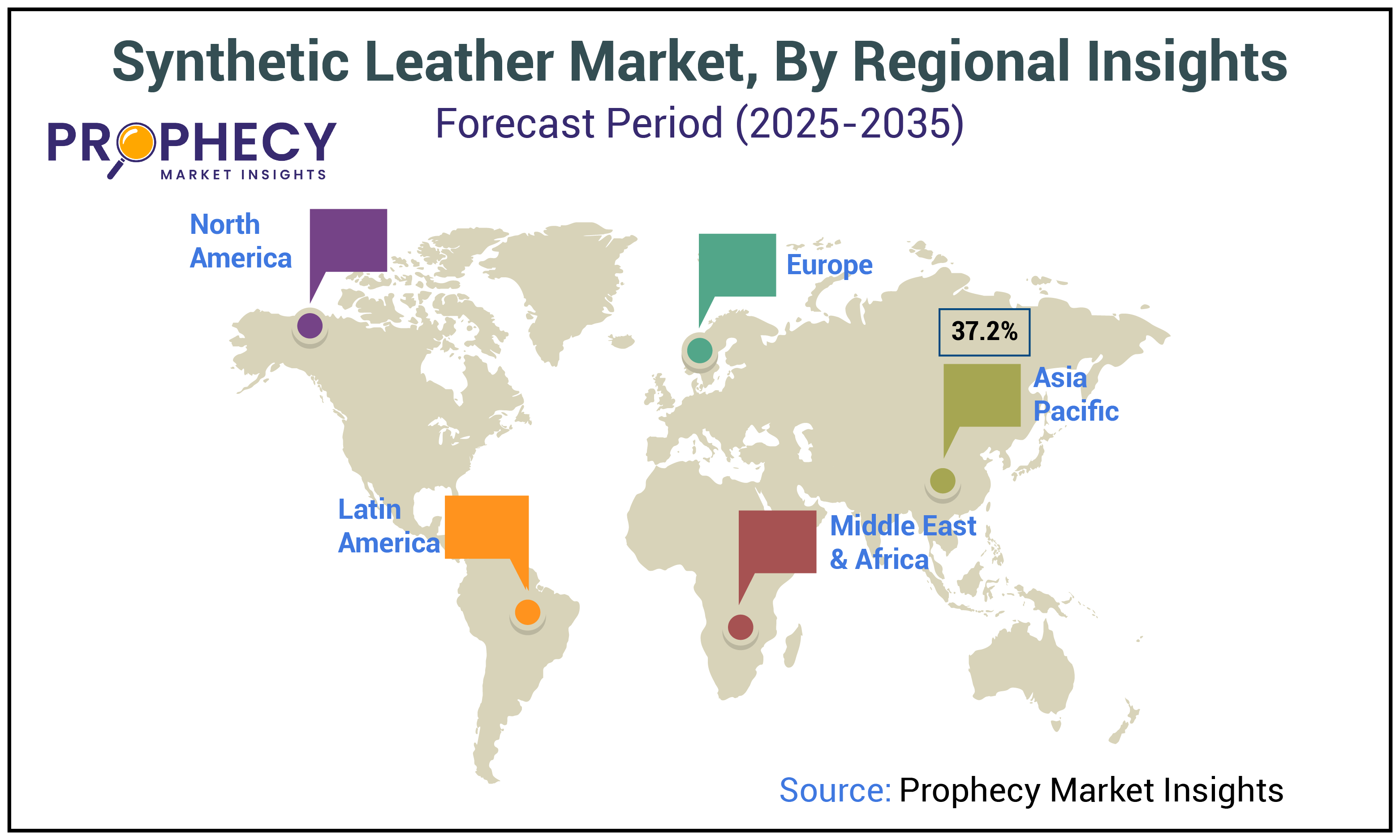
Asia Pacific: This region dominates the synthetic Leather market share. Asia-Pacific is the top market for synthetic leather due to its large production capacities, low manufacturing costs. The large footwear and fashion businesses in the region, along with supportive government policies, permit the largest consumption and export basis.
- China Synthetic Leather Market Insights:
The Asia-Pacific synthetic leather market is dominated by China, due to its production capabilities, low production cost, and developed supply chain. China is also the main exporter for synthetic leather involved in footwear, automotive and fashion. With government support, and the rapid industrialization China's position as a synthetic leather industry hub globally is increasingly strong.
Europe: This region has the second leading synthetic leather market size due to the increasing awareness of sustainability and preference for cruelty-free products. The environmental regulations in European countries have encouraged firms to adopt eco-friendly synthetic leather products. The high consumer purchasing power of countries in Western Europe contribute to growth at a market level.
- Germany Synthetic Leather Market Insights:
Germany is the leader in the synthetic leather market in Europe via the automobile market. Germany is also focused on sustainable production and invests substantially in environmentally sustainable alternatives including high-end leather alternatives, eco-friendly materials, and advanced fabrication processes. Germany's strict environmental standards allow more sustainable uses of synthetic leather products, whilst other industries and services are also moving toward advanced synthetic leather applications.
North America: This region market is in third position with healthy demand from the automotive and fashion sectors. Increasing preferences for vegan and sustainable materials in the U.S. and Canadian markets help expand the market potential. However, the higher labour and production costs for synthetic leather restrict North American firms from making domestic products, so these countries must rely on imports from Asia-Pacific suppliers.
- U.S. Synthetic Leather Market Insights:
The U.S. is the dominant market for synthetic leather in North America due to a rising demand for vegan fashion influences and high-end automotive interior. As a result of the above-mentioned issues consumers are concerned about looking for cruelty-free and sustainable products, resulting in new innovation via synthetic leather applications. New product launches have also spurred major brands to seek out bio-based alternatives as manufacturers and this trend continues to drive steady market growth and development of synthetic leather applications in the US.
Synthetic Leather Market Report Scope:
|
Attribute |
Details |
|
Market Size 2025 |
USD 78.1 Billion |
|
Projected Market Size 2035 |
USD 130.1 Billion |
|
CAGR Growth Rate |
5.8% (2025-2035) |
|
Base year for estimation |
2024 |
|
Forecast period |
2025 – 2035 |
|
Market representation |
Revenue in USD Billion & CAGR from 2025 to 2035 |
|
Regional scope |
North America - U.S. and Canada Europe – Germany, U.K., France, Russia, Italy, Spain, Netherlands, and Rest of Europe Asia Pacific – China, India, Japan, Australia, Indonesia, Malaysia, South Korea, and Rest of Asia-Pacific Latin America - Brazil, Mexico, Argentina, and Rest of Latin America Middle East & Africa – GCC, Israel, South Africa, and Rest of Middle East & Africa |
|
Report coverage |
Revenue forecast, company share, competitive landscape, growth factors, and trends |
Segmentation:
By Type:
- PU
- PVC
- Bio-based
By Application:
- Footwear
- Automotive
- Furnishing
- Clothing
- Wallets Bags & Purses
By Region:
- North America
- U.S.
- Canada
- Europe
- Germany
- U.K.
- France
- Russia
- Italy
- Spain
- Netherlands
- Rest of Europe
- Asia Pacific
- China
- India
- Japan
- Australia
- Indonesia
- Malaysia
- South Korea
- Rest of Asia Pacific
- Latin America
- Brazil
- Mexico
- Argentina
- Rest of Latin America
- Middle East & Africa
- GCC
- Israel
- South Africa
- Rest of Middle East & Africa
Global Synthetic Leather Market Competitive Landscape & Key Players
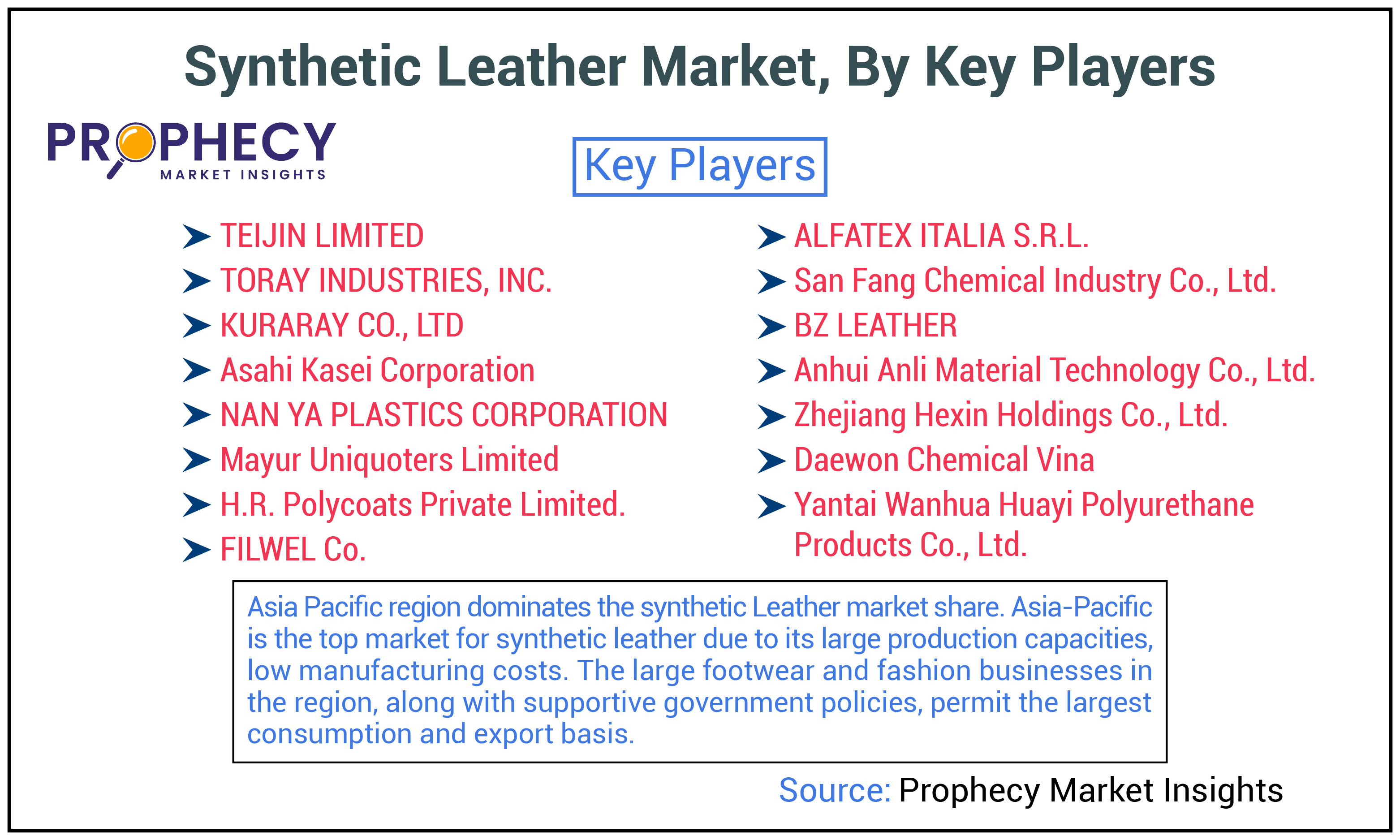
The prominent players operating in the market include, TEIJIN LIMITED, TORAY INDUSTRIES, INC., KURARAY CO., LTD, Asahi Kasei Corporation, NAN YA PLASTICS CORPORATION, Mayur Uniquoters Limited, H.R. Polycoats Private Limited., and others. Most Synthetic Leather companies compete on the basis of innovation, compliance, and sustainability solutions. Alliances and acquisitions, coupled with an increasing commitment to synthetic products, are helping shape the changing competitive landscape worldwide.
Synthetic Leather Market Companies:
- TEIJIN LIMITED
- TORAY INDUSTRIES, INC.
- KURARAY CO., LTD
- Asahi Kasei Corporation
- NAN YA PLASTICS CORPORATION
- Mayur Uniquoters Limited
- H.R. Polycoats Private Limited.
- FILWEL Co.
- ALFATEX ITALIA S.R.L.
- San Fang Chemical Industry Co., Ltd.
- BZ LEATHER
- Anhui Anli Material Technology Co., Ltd.
- Zhejiang Hexin Holdings Co., Ltd.
- Yantai Wanhua Huayi Polyurethane Products Co., Ltd.
- Daewon Chemical Vina
View an Additional List of Companies in the Synthetic Leather Market
Global Synthetic Leather Market Recent News
- In June 2023, Wanhua Chemical Group Co., Ltd. and Henkel Group signed a strategic cooperation letter for the next five years. Their cooperation offered a more diversified solution for consumer goods, household, and automobile customers.
- In May 2023, San Fang Chemical Industry announced it would develop a new synthetic leather for footwear, which is expected to be more breathable and comfortable than traditional synthetic leather.
Analyst View:
The synthetic leather market is seeing strong growth. This is attributed to the increasing demand for a cruelty-free, cost-effective and durable alternative to real leather. The analysts of this synthetic leather market observed a clear trend towards sustainability developments, which includes bio-based and recycled materials, particularly in the fashion and automotive sectors. Ongoing technological developments in texture improvement and eco-processes are changing the way we view products.
These market opportunities are supplemented with growing consumer acceptance and regulation surrounding vegan products. However, the restrictions of environmental concerns regarding synthetic leather with petrochemical-based alternatives and competition from natural leather alternatives will continue to influence the market. At the end of the day, the synthetic leather market is on a high growth trajectory, particularly through the lens of innovation and sustainability.
More Related Reports
Synthetic Paper Market
Synthetic Hormones Market
Synthetic Stem Cells Market
Synthetic Spider Silk Market
Synthetic Air Compressor Oil Market
Global Synthetic Leather Market Company Profile
|
Company Name |
TEIJIN LIMITED |
|
Headquarter |
Nakanoshima, Kita-ku, Osaka, Japan |
|
CEO |
Jun Suzuki |
|
Employee Count |
21,834 Employees |
Global Synthetic Leather Market Highlights
FAQs
Synthetic leather market size was valued at USD 78.1 Billion in 2025 and is expected to reach USD 130.1 Billion by 2035 growing at a CAGR of 5.8%.
Type, application, and region are the segmentation for the synthetic leather market.
North America, Asia Pacific, Europe, Latin America, and the Middle East & Africa. Asia Pacific is expected to dominate the market.
The prominent players operating in the market include, TEIJIN LIMITED, TORAY INDUSTRIES, INC., KURARAY CO., LTD, Asahi Kasei Corporation, NAN YA PLASTICS CORPORATION, Mayur Uniquoters Limited, H.R. Polycoats Private Limited., FILWEL Co., ALFATEX ITALIA S.R.L., San Fang Chemical Industry Co., Ltd., BZ LEATHER, Anhui Anli Material Technology Co., Ltd., Zhejiang Hexin Holdings Co., Ltd., Yantai Wanhua Huayi Polyurethane Products Co., Ltd., and Daewon Chemical Vina.