Global Printed Electronics Devices And Overview
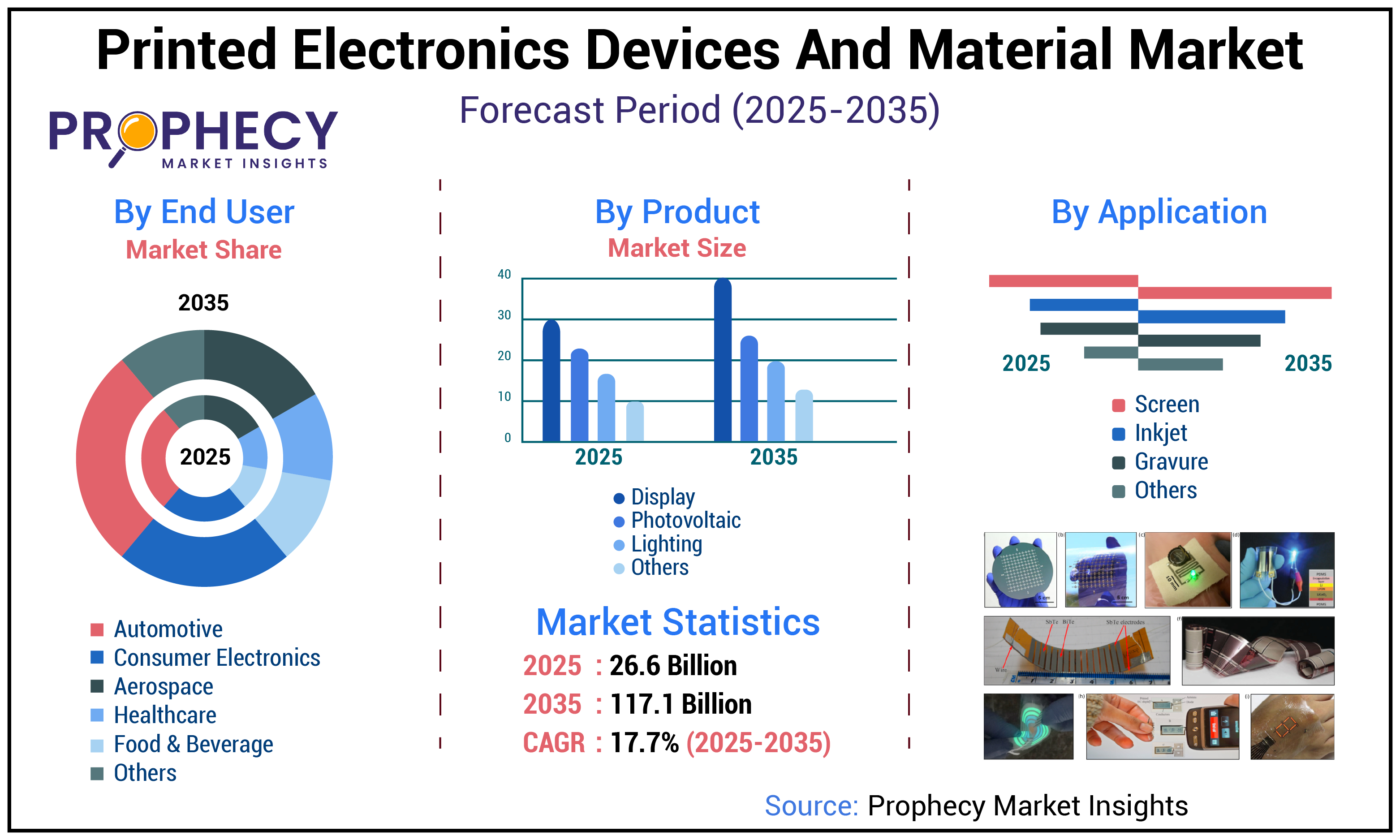
- Printed electronics devices and material market size is anticipated to expand at a valuation of USD 117.1 Billion, by 2035.
- In 2024, the market valuation was USD 22.5 Billion.
- Printed electronics devices and material market is developing at a CAGR of 17.7%.
Printed electronics involves using printing techniques to manufacture electronic devices such as circuits, displays, and sensors directly onto various substrates. These devices are created using functional inks (materials with electrical properties) that are deposited and patterned onto a substrate. The process allows for large-scale, cost-effective, and flexible production of electronics. It offers advantages such as, lower costs, design flexibility, and environmental benefits compared to traditional electronics.
The growth of the printed electronics devices and materials market is driven by several key factors, including the increasing demand for flexible electronics, the rise of IoT and wearable technology, and advancements in printing technologies. Other significant factors include the growing adoption of printed electronics in automotive and healthcare sectors, and the potential for cost-effective production.
The market’s expansion is also stimulated by technological advancements in printing processes, materials, and devices are leading to more efficient and reliable printed electronic devices, and the increasing integration of wearable technology and the rise of IoT are fueling demand for low-cost electronic production methods, which printed electronics can provide.
Impact of Generative AI on Printed Electronics Devices and Material Market:
- Through lowering development times, minimizing material utilization, and speeding up design innovation, generative AI is revolutionizing the market for printed electronics devices and materials. Smart wearables with improved functionality, effective sensor architectures, and intricate circuit layouts are all made possible by it.
- Manufacturers may reduce waste and increase product dependability by using generative AI to forecast performance and simulate material characteristics. Rapid customization and prototyping made possible by this technology reduces obstacles to entry and promotes the wider use of printed electronics in sectors including consumer electronics, healthcare, and the automobile industry.
Global Printed Electronics Devices And Drivers & Restraints
Key Drivers:
Increasing Benefits of Flexible Electronics is Stimulating the Market Augmentation
The printed electronics devices and material market is expanding due in large part to the growing advantages of flexible electronics. Innovative uses in wearables, medical devices, car interiors, and smart packaging are made possible by flexible electronics, which provide lightweight, pliable, and long-lasting substitutes for conventional rigid components. Its versatility on different surfaces improves usefulness and design flexibility. It also facilitates high-volume, low-cost manufacturing, which makes it perfect for marketplaces driven by consumers. The need for printed electronics is growing as a result of sectors looking for small and adaptable electronic solutions, which is driving market development.
- For instance, according to the facts stated by ResearchGate, since flexible electronics are lightweight, portable, disposable, and long-lasting, its development would be advantageous for almost every component in the consumer electronics sector. Consumer device components and the development of flexible gadgets on flexible substrates.
Restraints:
The Limited Durability of Printed Electronics Devices and Material is Obstructing the Market Expansion
The restricted performance and durability of printed components in comparison to conventional silicon-based electronics is a significant drawback of the printed electronics devices and material business. The usage of printed circuits in hard or high-performance environments is limited by its poorer conductivity, shorter lifespans, and less environmental resistance. Its adoption is hampered by this constraint in sectors such as heavy manufacturing and aircraft that need durable and reliable electronic solutions, where long operating life and dependability under pressure are essential.
- Counterbalance Statements: Manufacturers can invest in cutting-edge conductive inks, hybrid printing strategies, and protective encapsulating techniques to get around this. Without sacrificing the flexibility and design advantages of printed electronics, partnerships with research institutes may further speed materials science discovery, improving durability and broadening application areas in more demanding settings.
Opportunities & Trends:
Integration of Wearable Technology with Printed Electronics Devices and Material is Unlocking Growth Opportunities for the Upcoming Years
One of the main factors propelling the printed electronics devices and material market future growth is the combination of wearable technology with printed electronics products and materials. Printed electronics can supply the lightweight, flexible, and tiny electrical components that wearables require. Sensors, circuits, and batteries can be seamlessly embedded into flexible substrates thanks to printed electronics, which are used in anything from smart clothes and fitness trackers to health-monitoring patches.
The design diversity, gadget functionality, and user comfort are all improved by this connection. Innovation in this field is also being accelerated by the rising need for tailored technologies and remote health monitoring. The need for printed electronics will increase as wearables gain popularity, supporting the market's steady growth on a worldwide scale.
Global Printed Electronics Devices And Segmentations & Regional Insights
The printed electronics devices and material market is segmented into product type, application, end user, and region.
By Product Type:
On the premise of product type, the market is divided into display, photovoltaic, lighting, and others. The display segment is the product type which is leading the printed electronics devices and material market share. This is due to its widespread use in various applications, including mobile phones, tablets, and TVs, driving significant demand for printed organic displays and related materials.
The photovoltaic segment is the second leading product type in the Printed electronics devices and material market. This is due to the increasing global demand for solar energy and the use of printed electronics in creating more cost-effective and flexible solar cells.
By Application:
Dependent on application, the market is categorized into inkjet, screen, gravure, and others. The screen segment is the application which is dominating the Printed electronics devices and material market. This is due to its versatility, ability to print on various substrates (flexible and rigid), and the production of high-quality, durable outputs.
The inkjet printing segment is the second dominating application in the printed electronics devices and material market. This is due to its high precision and resolution, its ability to work with various substrates, and its growing demand across various industries.
By End User:
According to end user, the market is classified into consumer electronics, automotive, aerospace, healthcare, food & beverage, and others. The automotive segment is expected to rule over the printed electronics devices and material market. This is due to the fact that printed electronics are widely used in automotive applications for components such as displays, sensors, and thin-film solar cells, and in the interior for features such as seat heaters and defoggers.
Consumer electronics is the end user which is growing significantly, in the Printed electronics devices and material market. This is due to the increasing demand for flexible and innovative devices such as smartphones, TVs, and wearables.
Regional Insights:
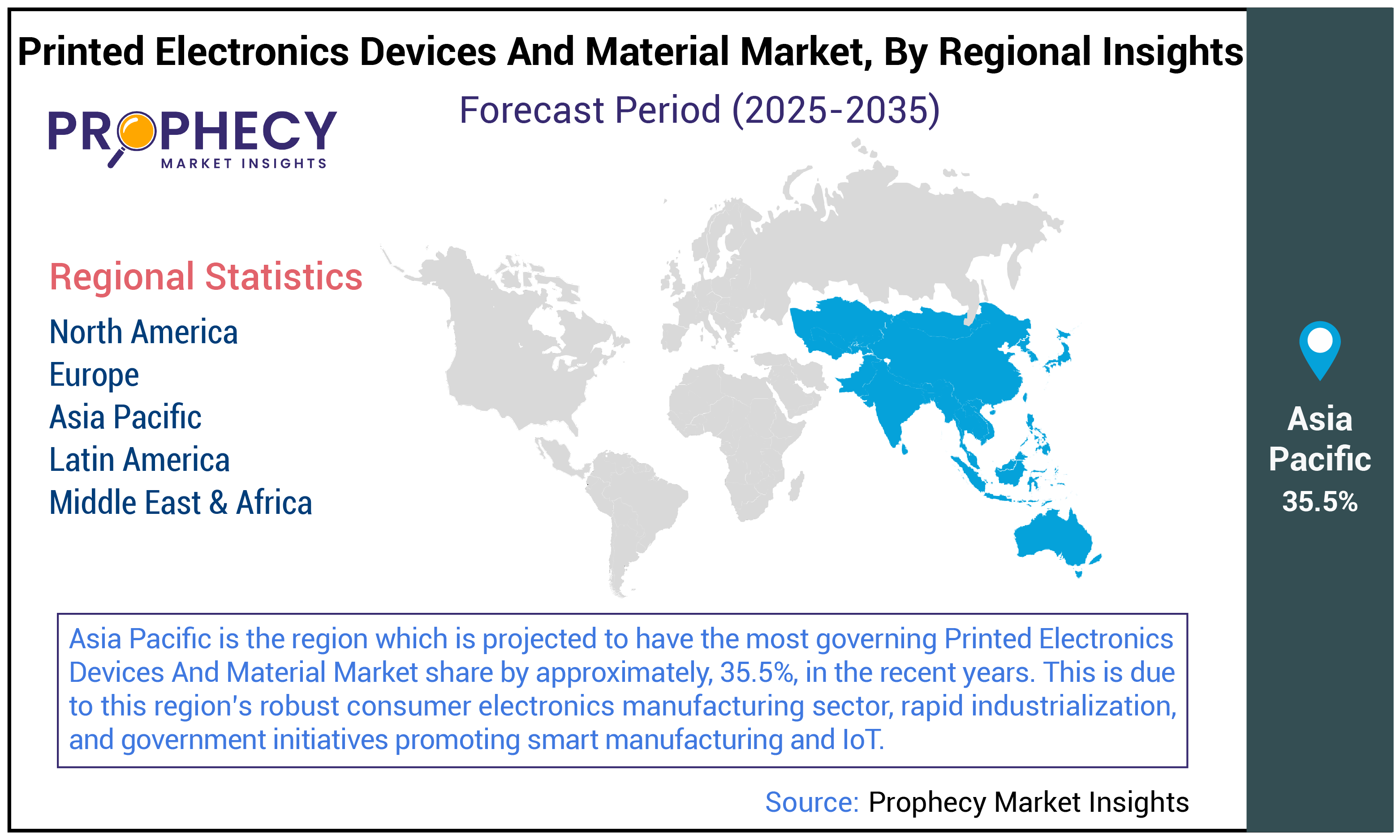
Geographically, the market is studied across North America, Europe, Asia Pacific, Latin America, and the Middle East & Africa.
Asia Pacific: This is the region which is projected to have the most governing printed electronics devices and material market share by approximately, 35.5%, in the recent years. This is due to this region’s robust consumer electronics manufacturing sector, rapid industrialization, and government initiatives promoting smart manufacturing and IoT. The region also benefits from a large supply chain, lower production costs, and a strong focus on R&D and innovation in key countries. Moreover, major players such as Samsung and LG, based in South Korea, are leaders in display technology, which also contributes to the demand for printed electronics.
- China Printed Electronics Devices and Material Market Insights:
The printed electronics devices and material market in China is the most superior market, in the recent years. This is due to China’s robust manufacturing capabilities and significant investments in the electronics and automotive sectors, its status as a major consumer electronics manufacturer and its expanding market in emerging areas such as electric vehicles, healthcare, and smart city initiatives, and government policies that promote high-tech industries and the increasing adoption of printed electronics in various sectors.
Europe: This is the region which has the fastest growing printed electronics devices and material market, during the forecast period, in the recent years. This is due to various factors, such as, this region’s significant growth in sectors such as automotive, healthcare, and consumer electronics, where printed electronics offer advantages such as lightweight and flexible solutions. The region's strong research, development, and commercialization efforts in printed electronics and the ability to print electronics onto various flexible substrates makes it suitable for applications such as wearable technology and displays.
- Germany Printed Electronics Devices and Material Market Insights:
The printed electronics devices and material market in Germany is with the fastest growth rate, during the forecast period, in the recent years. This is due to a combination of factors, such as, Germany’s strong economy, the presence of numerous small and medium-sized businesses, and a robust label and packaging industry that drives demand for printing services and equipment. In addition to this, the country's developed economy also drives exports of printing equipment and consumables, further fueling market expansion.
North America: The region which is experiencing consequent amount of growth, in the recent years, is North America. This is due to a variety of factors, such as, North America’s strong leadership in the industry, robust end-use industries, and the adoption of automation and Industry 4.0 practices. The presence of major technology companies and a focus on R&D for innovative materials also contribute to its position. In addition to this, printed electronics enable advancements in various industries, including healthcare, consumer electronics, and automotive, further fueling market demand.
- U.S. Printed Electronics Devices and Material Market Insights:
The printed electronics devices and material market in the U.S. is experiencing significant growth, in the recent years. This is due to a combination of factors, including a strong presence of leading technology companies such as DuPont and Jabil, robust end-use industries demanding printed electronics, and significant investments in research and development. Additionally, the adoption of automation and Industry 4.0 principles has enhanced efficiency and cost-effectiveness, further solidifying the U.S.'s position.
Printed Electronics Devices and Material Market Report Scope:
|
Attribute |
Details |
|
Market Size 2025 |
USD 26.6 Billion |
|
Projected Market Size 2035 |
USD 117.1 Billion |
|
CAGR Growth Rate |
17.7% (2025-2035) |
|
Base year for estimation |
2024 |
|
Forecast period |
2025 – 2035 |
|
Market representation |
Revenue in USD Billion & CAGR from 2025 to 2035 |
|
Regional scope |
North America - U.S. and Canada Europe – Germany, U.K., France, Russia, Italy, Spain, Netherlands, and Rest of Europe Asia Pacific – China, India, Japan, Australia, Indonesia, Malaysia, South Korea, and Rest of Asia-Pacific Latin America - Brazil, Mexico, Argentina, and Rest of Latin America Middle East & Africa – GCC, Israel, South Africa, and Rest of Middle East & Africa |
|
Report coverage |
Revenue forecast, company share, competitive landscape, growth factors, and trends |
Segmentation:
By Product Type:
- Display
- Photovoltaic
- Lighting
- Others
By Application:
- Inkjet
- Screen
- Gravure
- Others
By End User:
- Consumer Electronics
- Automotive
- Aerospace
- Healthcare
- Food & Beverage
- Others
By Region:
- North America
- U.S.
- Canada
- Europe
- Germany
- U.K.
- France
- Russia
- Italy
- Spain
- Netherlands
- Rest of Europe
- Asia Pacific
- China
- India
- Japan
- Australia
- Indonesia
- Malaysia
- South Korea
- Rest of Asia Pacific
- Latin America
- Brazil
- Mexico
- Argentina
- Rest of Latin America
- Middle East & Africa
- GCC
- Israel
- South Africa
- Rest of Middle East & Africa
Global Printed Electronics Devices And Competitive Landscape & Key Players
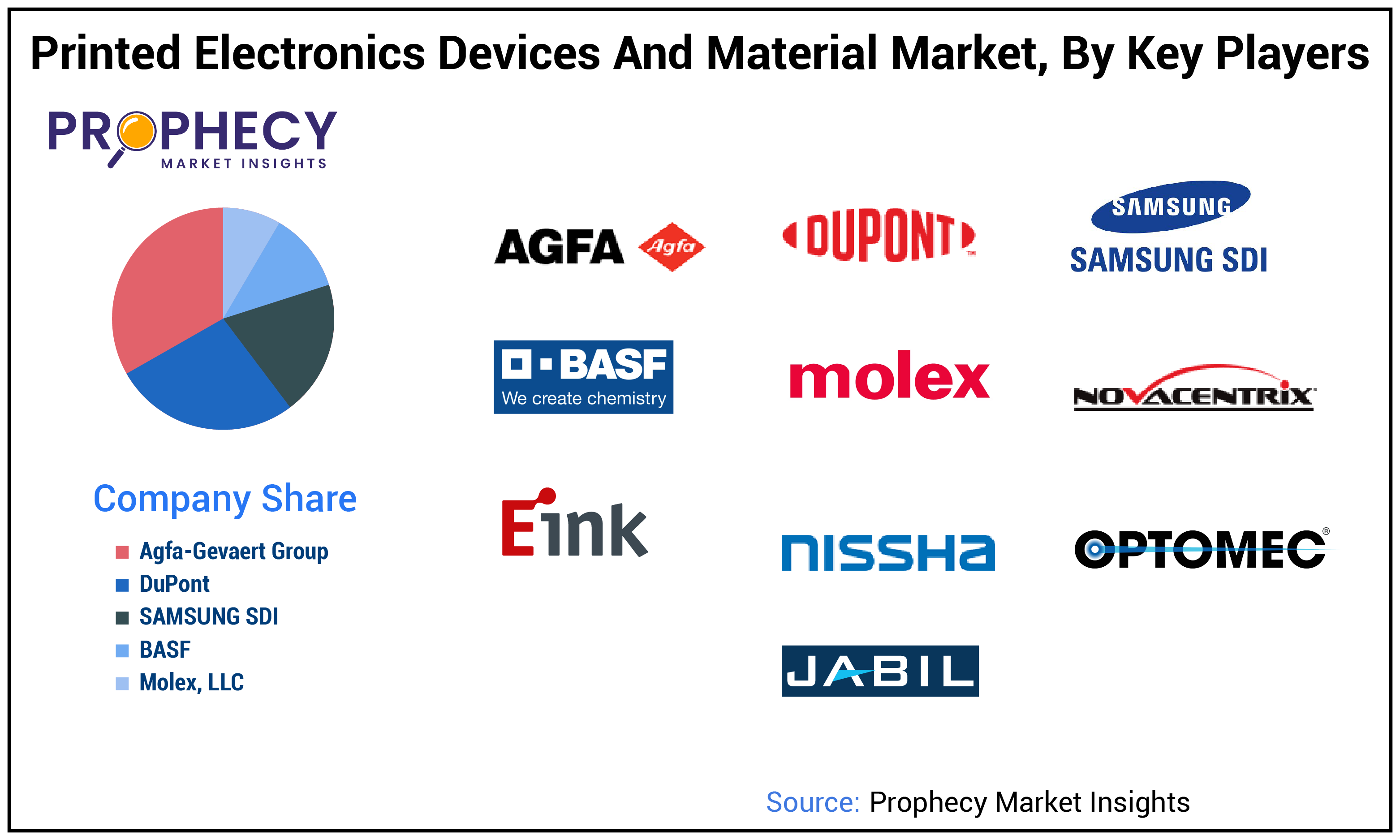
The key players operating in the market include, Agfa-Gevaert Group, DuPont, SAMSUNG SDI, and others. These key players are focusing on innovation, establishing strategic partnerships, and scaling production capabilities. Companies are also expanding into new markets, diversifying applications, and prioritizing sustainability to address environmental concerns, for driving Printed Electronics Devices and Material Market growth.
Printed Electronics Devices and Material Market Companies:
- Agfa-Gevaert Group
- DuPont
- SAMSUNG SDI
- BASF
- Molex, LLC
- NovaCentrix
- E INK HOLDINGS INC.
- Nissha Co., Ltd.
- Optomec, Inc.
- Jabil Inc.
- DuraTech Industries
- ISORG
View an Additional List of Companies in the Printed Electronics Devices and Material Market
Global Printed Electronics Devices And Recent News
- In October 2024, in order to expedite the production of electronics, an MIT team made significant progress toward completely 3D-printed active electronics by creating logic gates devoid of semiconductors that could be utilized for computing. Semiconductor devices that receive, store, and process electric impulses are often found in active electronics components. The sophisticated fabrication technology needed to make these components which need to be produced in a clean room is only broadly accessible in a small number of specialist manufacturing facilities.
- In August 2024, in partnership with Creative Materials, leading additive manufacturing and printed electronics solutions supplier nano3Dprint had introduced its ground-breaking Conductive Silver Ink Products. These cutting-edge inks were intended to transform the direct-write printed electronics market and are made to work with nano3Dprint's A2200, B3300, and MatDep Pro 3D printers. High conductivity, accurate printing, and adaptability were some of the main characteristics of nano3Dprint's Conductive Silver Ink.
- In January 2023, nine new product grades for the printed electronics sector are being introduced by Celanese MicromaxTM Conductive Inks at the IPC APEX EPXO. Short PowerTalks will be held at the Insulectro / Celanese MicromaxTM Conductive Inks booth number 534 to highlight the goods.
- In October 2021, BEYOLEX is a novel thermoset stretchable film for printed electronics that was introduced by Panasonic Industrial Devices Sales Company of America, a division of Panasonic Corporation of North America, through its Electronic Materials Division. Researchers from Panasonic's Electronic Materials laboratory in Kadoma, Osaka, Japan, created a unique non-silicone thermoset polymer chemistry that served as the basis for this innovative material.
Analyst View:
The printed electronics devices and material market is expanding due to a number of important factors, such as the growing need for flexible electronics, the emergence of wearable and Internet of Things technology, and improvements in printing processes. The expanding use of printed electronics in the automotive and healthcare industries, and the possibility of cost-effective manufacturing, are further important drivers.
Technological developments in printing techniques, materials, and devices are also driving the market's growth by producing printed electronic devices that are more dependable and efficient. Additionally, the growing integration of wearable technology and the emergence of the Internet of Things are driving demand for low-cost electronic production methods, which printed electronics can supply.
More Related Reports
Implantable Drug Device Market
Printed Electronics Market
3D Printed Service Market
Consumer Electronics Market
Electronic Component Testers Market
Global Printed Electronics Devices And Company Profile
|
Company Name |
Agfa-Gevaert Group |
|
Headquarter |
Mortsel, Belgium |
|
CEO |
Mr. Pascal Juéry |
|
Employee Count (2024) |
12,000 Employees |
Global Printed Electronics Devices And Highlights
FAQs
Printed electronics devices and material market size was valued at USD 26.6 Billion in 2025 and is expected to reach USD 117.1 Billion by 2035 growing at a CAGR of 17.7%.
Product type, application, end user, and region are the segmentation for the printed electronics devices and material market.
North America, Asia Pacific, Europe, Latin America, and the Middle East & Africa. Asia Pacific is expected to dominate the market.
The key players operating in the Printed Electronics Devices and Material Market include Agfa-Gevaert Group, DuPont, SAMSUNG SDI, Optomec, Inc., BASF, Molex, LLC, NovaCentrix, E INK HOLDINGS INC., Nissha Co., Ltd., Jabil Inc., DuraTech Industries, and ISORG.