Global Preventive Vaccines Market By Overview
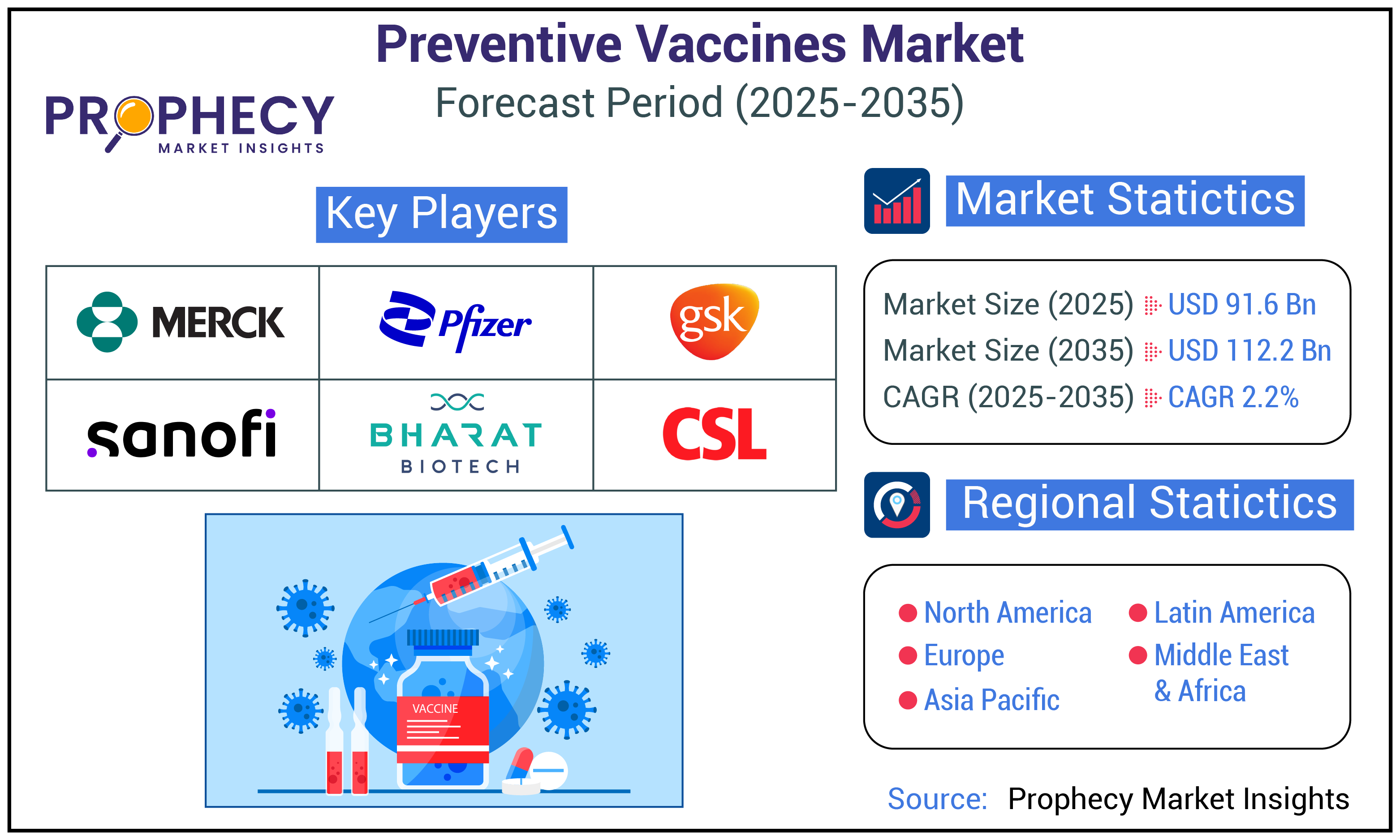
- Preventive vaccines market size is anticipated to reach a valuation of USD 112.2 Billion, by 2035.
- The target market valuation was USD 89.9 Billion, in 2024.
- Preventive vaccines market is projected to expand at a CAGR 2.2%.
The goal of preventive vaccines is to boost the immune system's capacity to identify and combat certain infections (viruses or bacteria) before it causes sickness, hence averting disease. The preventive vaccines market growth is driven by its importance in protection against diseases, its ability to reduce severity of illness, its cost-effectiveness, its ability to reduce antibiotic resistance, it leads to eradication of disease, and it benefits individuals of all ages, from infants to older adults.
The increasing prevalence of infectious diseases, rising geriatric population, rise in government immunization programs and policies, technological advancements in vaccine development, increased funding and investment on research and development, rise in emerging infectious diseases, expansion of cold chain infrastructure, and the growing adoption of combination vaccines are factors contributing in driving the preventive vaccines market expansion.
The advancements in vaccine technology, development of personalized and therapeutic vaccines, integration of artificial intelligence and big data in vaccine development, expansion of universal immunization programs, and strong investment and partnerships between pharma companies, governments, and non-profits are all factors further contributing in driving the preventive vaccines market growth.
Impact of Generative AI on Preventive Vaccines Market:
By improving clinical trial efficiency, anticipating immune reactions, and optimizing antigen design, generative AI speeds up the creation of vaccines. It lowers the expenses for research and development, expedites the pandemic response, and facilitates the development of customized vaccines. By increasing accuracy and enhancing vaccination effectiveness and safety, AI-driven medication development eventually propels innovation and market expansion for preventative vaccines.
Global Preventive Vaccines Market By Drivers & Restraints
Key Drivers:
Rising Aging Population is stimulating the Market Augmentation
The rising aging population drives preventive vaccines market growth as older adults are more susceptible to infectious diseases due to weakened immune systems, and vaccines are crucial for preventing these diseases and promoting healthy aging, thus increasing demand for vaccines. In addition to this, there is an increased focus on healthy aging, and older adults are more probable to experience severe complications and higher healthcare costs from infectious diseases such as, influenza, pneumonia, and shingles, thereby further contributing in the preventive vaccines market growth.
- For instance, in October 2024, according to the data published by WHO, One in six individuals worldwide will be 60 years of age or older by 2030. At this point, there will be 1.4 billion people over the age of 60, up from 1 billion in 2020. The number of individuals in the world who are 60 years of age or older is expected to increase to 2.1 billion by 2050. Between 2020 and 2050, the population of people 80 years of age or older is predicted to treble, reaching 426 million.
Increasing Prevalence of Infectious Diseases is expected to pitch the Market Growth
The preventive vaccines market is growing as a result of the increased demand for preventative vaccinations brought on by the rising incidence of infectious illnesses. Regular flu, COVID-19, and new disease outbreaks force governments and healthcare systems to increase vaccination coverage. Increased disease burden speeds up research and development expenditures, which in turn spurs quicker vaccine developments and worldwide immunization campaigns, guaranteeing sustained Preventive vaccines market growth.
- For instance, according to the data published by WHO, pathogenic microorganisms such as bacteria, viruses, parasites, or fungus are the source of infectious illnesses, which can be transmitted from one person to another either directly or indirectly. These illnesses can be divided into three groups: those that result in high death rates; those that impose significant loads of handicap on communities; and those that, due to its sudden and swift spread, may have major worldwide effects.
Restraints:
The Adverse Effects caused by Preventive Vaccines is limiting the Market Growth
The possibility of negative responses, such as moderate side effects such as fever or, in rare instances, severe allergic reactions, is one drawback of prophylactic vaccinations. Public trust is further undermined by disinformation and vaccine hesitancy, which lowers vaccination rates and makes people more vulnerable to diseases that can be prevented, which might result in outbreaks and increased medical expenses.
- Counterbalance Statements: Vaccine trust may be raised by correcting disinformation, maintaining strict safety monitoring, and raising public understanding through open communication. While governments improve pharmacovigilance mechanisms to properly detect and treat adverse responses, healthcare practitioners should inform patients about the advantages and uncommon dangers.
Opportunities & Trends:
Integration of Advanced Technologies can Fuel the Market Expansion in the Future
The integration of advanced technologies, such as, mRNA and AI, into preventive vaccine development and manufacturing accelerates the process, broadens the scope of diseases targeted, and enhances vaccine efficacy, ultimately fuels the market growth by enabling faster responses to emerging threats and improving global health outcomes. Additionally, the increasing government support, increasing investment in vaccine research by pharmaceutical industry, and the importance of rapid vaccine development and deployment is also contributing in market growth.
- For instance, in September 2024, according to the data published by Elsevier, AI speeds up vaccine development by simplifying immunogen design and antigen selection. Machine learning evaluates immunogenicity and predicts antigenic epitopes. Molecular dynamics and generative models improve immunogen coverage and stability.
Global Preventive Vaccines Market By Segmentations & Regional Insights
The preventive vaccines market is segmented into vaccine type, disease type, distribution channel, and region.
By Vaccine Type:
Based on vaccine type, the market is divided into live/attenuated vaccines, inactivated vaccines, subunit vaccines, toxoid vaccines, conjugate vaccines, recombinant vector vaccines, and DNA vaccines. The conjugate vaccines are attributed to dominate the preventive vaccines market share. This is due to its high efficacy in eliciting strong and long-lasting immune responses, particularly against bacterial infections such as pneumococcal and meningococcal diseases, and its ability to induce immunologic memory, which is crucial for robust booster responses.
The live/attenuated vaccines are the second most dominating segment of the target market. This is due to its ability to elicit strong, long-lasting, and broad immune responses, often with fewer doses than other vaccine types, and its use in preventing a wide range of diseases.
By Disease Type:
By disease type, the market is categorized into pneumococcal, poliovirus, hepatitis, influenza, measles, mumps and rubella (MMR), varicella, human papilloma virus, and others. The pneumococcal segment is expected to rule over the market. This is due to its effectiveness in preventing infections caused by multiple strains of Streptococcus pneumoniae.
The hepatitis segment is the fastest growing segment in the preventive vaccines market. This is due to the global need for prevention and treatment for hepatitis B and C, which are significant health concerns.
By Distribution Channel:
According to distribution channel, the market is bifurcated into public and private. The public distribution channel is leading the preventive vaccines market growth. This is due to government initiatives and widespread access to public health facilities. In addition to this, the rising mass vaccination campaigns, national and international vaccine initiatives, significant funding for vaccine procurement, and accessibility of public health institutions, also contribute in the segment’s growth.
The private distribution channel is the segment growing with the highest CAGR in the target market. This is due to its accessibility and convenience, comprehensive healthcare services, employer-sponsored programs, targeted immunization initiatives, and its collaboration with public health systems.
Regional Insights:
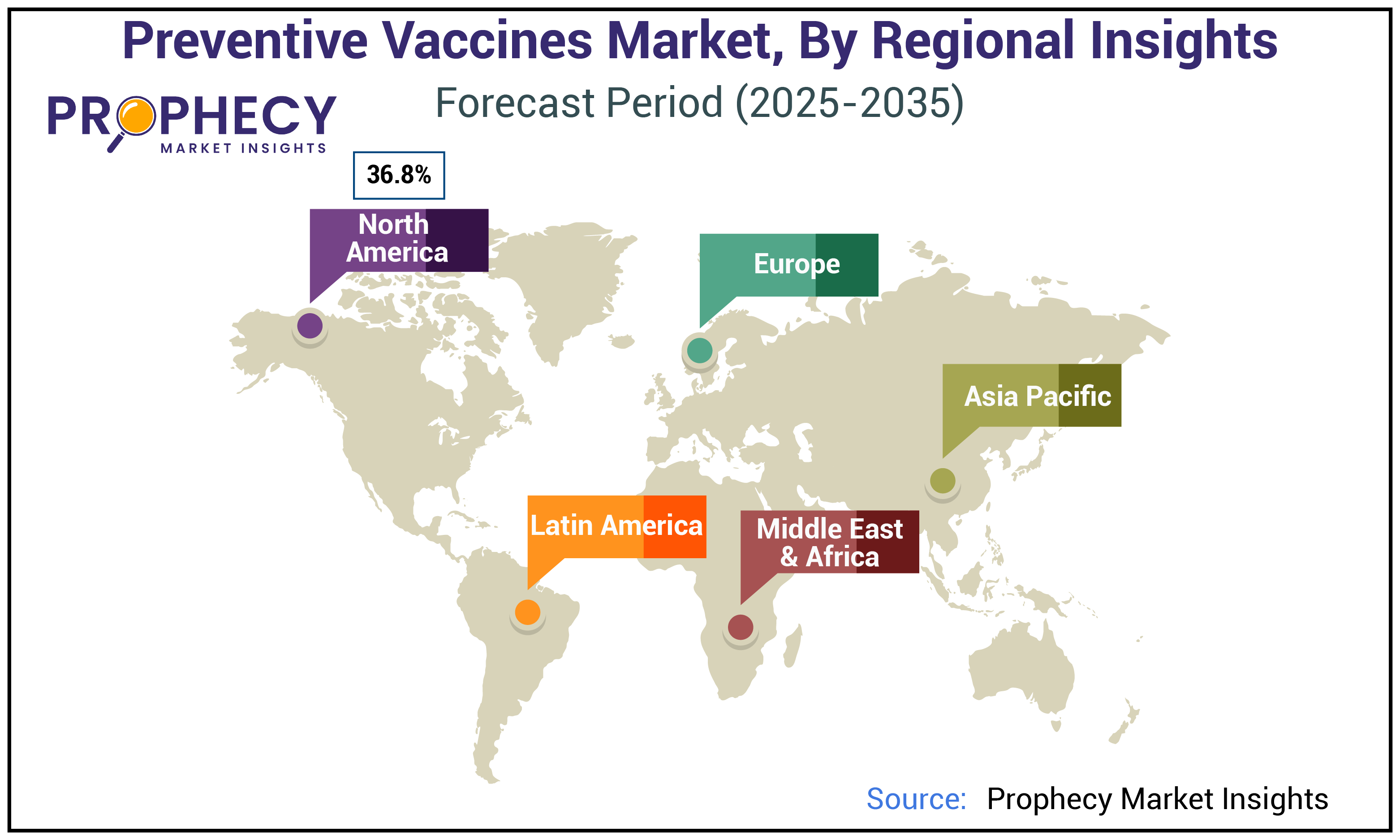
Geographically, the market is analyzed across North America, Europe, Asia Pacific, Latin America, and the Middle East & Africa.
North America: The region which holds the largest preventive vaccines market with an estimated share of approximately 36.8% is North America. This is due to this region’s advanced healthcare infrastructure, such as accessible medical facilities, and a focus on preventive care, robust regulatory frameworks, proactive public health initiatives, government support for vaccination programs and initiatives, high health literacy, and presence of major pharmaceutical players.
- U.S. Preventive Vaccines Market Insights:
The preventive vaccines market in the U.S. is the most dominating market in this region, in the recent years. This is due to this country’s advanced and robust healthcare infrastructure, the heavy investments in vaccine research and development, presence of major pharmaceutical companies, rising government support for vaccination programs and initiatives, and a high healthcare spending among the consumers.
Europe: This is the region which has the fastest growing preventive vaccines market, during the forecast period. This is due to this region’s established healthcare infrastructure that facilitate efficient vaccine distribution and administration, comprehensive immunization programs, which helps in reducing vaccine-preventable diseases, robust vaccine manufacturing, and public health policies which enhances vaccine uptake and public health outcomes.
- Germany Preventive Vaccines Market Insights:
In the recent years the Germany preventive vaccines market is growing with the highest growth rate, during the forecast period. This is due to this country’s strong pharmaceutical industry with companies actively working on innovative vaccine solutions, a high value in absolute terms of expenditure on preventive healthcare, including vaccines, and it has a mature market for preventive vaccines, emphasizing vaccination as a key component of public health strategies.
Asia Pacific: This is the region experiencing substantial amount of market growth in the recent years, during the forecast period. This is due to this region’s large and growing population which account for significant portion of the world’s population, robust government policies and programs which enhance vaccine coverage, its significant vaccine manufacturing capability, its public-private partnerships, and an increasing focus on pediatric vaccination.
- Japan Preventive Vaccines Market Insights:
The Japan preventive vaccines market is experiencing rapid growth in the recent years. This is due to this country’s increasing population, a robust healthcare system with high spending, which contributes to a larger demand for vaccines, rising focus on precision medicine which plays crucial role in developing vaccines for rare diseases, rising demand for better healthcare services, improved affordability of healthcare, and greater awareness of immunization benefits.
Preventive Vaccines Market Report Scope:
|
Attribute |
Details |
|
Market Size 2025 |
USD 91.6 Billion |
|
Projected Market Size 2035 |
USD 112.2 Billion |
|
CAGR Growth Rate |
2.2% (2025-2035) |
|
Base year for estimation |
2024 |
|
Forecast period |
2025 – 2035 |
|
Market representation |
Revenue in USD Billion & CAGR from 2025 to 2035 |
|
Regional scope |
North America - U.S. and Canada Europe – Germany, U.K., France, Russia, Italy, Spain, Netherlands, and Rest of Europe Asia Pacific – China, India, Japan, Australia, Indonesia, Malaysia, South Korea, and Rest of Asia-Pacific Latin America - Brazil, Mexico, Argentina, and Rest of Latin America Middle East & Africa – GCC, Israel, South Africa, and Rest of Middle East & Africa |
|
Report coverage |
Revenue forecast, company share, competitive landscape, growth factors, and trends |
Segmentation:
By Vaccine Type:
- Live/Attenuated Vaccine
- Inactivated Vaccine
- Subunit Vaccines
- Toxoid Vaccines
- Conjugate Vaccines
- Recombinant Vector Vaccines
- DNA Vaccines
By Disease Type:
- Pneumococcal
- Poliovirus
- Hepatitis
- Influenza
- Measles, Mumps and Rubella (MMR)
- Varicella
- Human Papilloma Virus
- Others
By Distribution Channel:
- Public
- Private
By Region:
- North America
- U.S.
- Canada
- Europe
- Germany
- U.K.
- France
- Russia
- Italy
- Spain
- Netherlands
- Rest of Europe
- Asia Pacific
- China
- India
- Japan
- Australia
- Indonesia
- Malaysia
- South Korea
- Rest of Asia Pacific
- Latin America
- Brazil
- Mexico
- Argentina
- Rest of Latin America
- Middle East & Africa
- GCC
- Israel
- South Africa
- Rest of Middle East & Africa
Global Preventive Vaccines Market By Competitive Landscape & Key Players
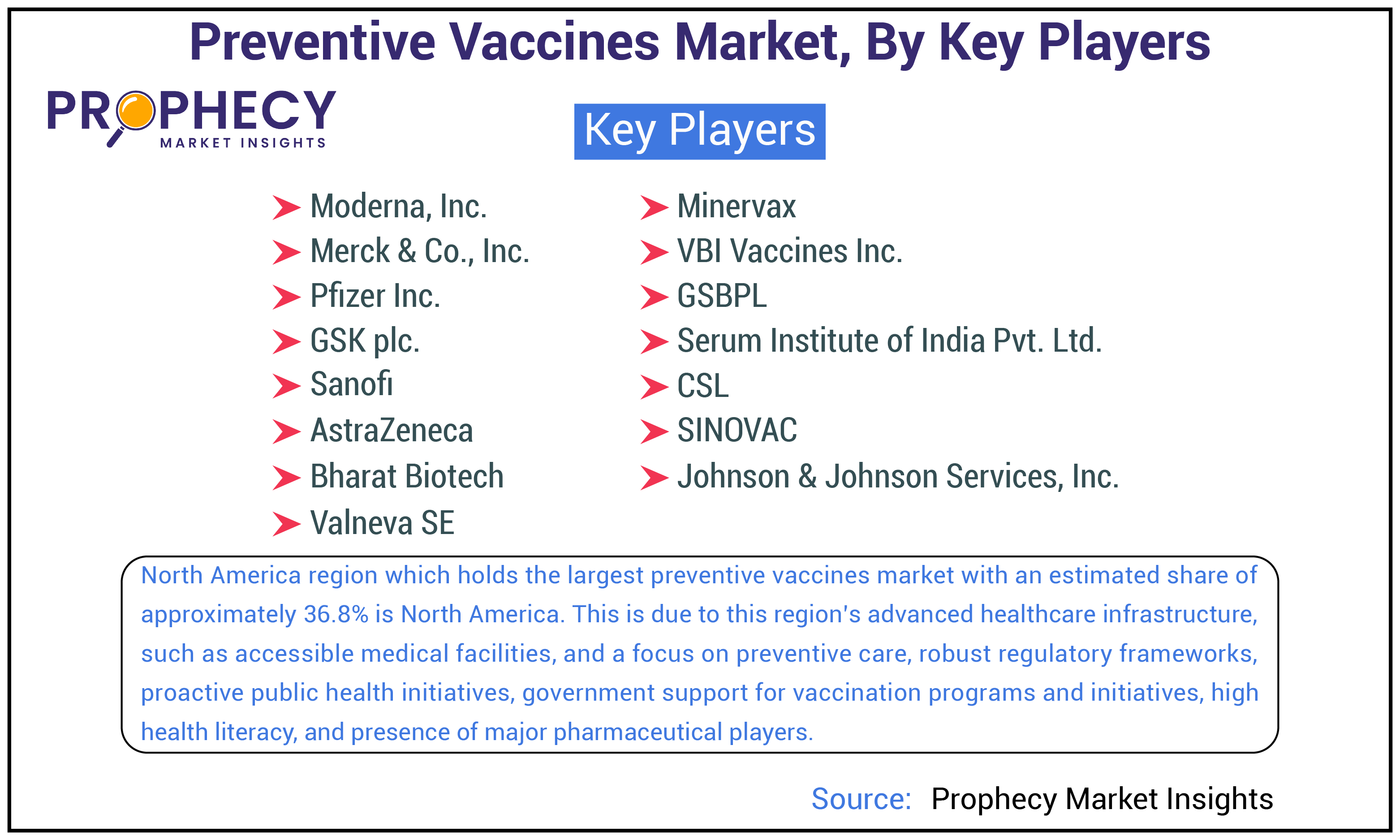
The key players operating in the preventive vaccines market include, Moderna, Inc., Merck & Co., Inc., Pfizer Inc., and others. These key players are adopting strategies, such as, increasing investments on research and development, strategic partnerships and collaborations, digital and AI-driven market strategies, and strengthening the cold chain and supply chain logistics, for driving Preventive Vaccines Market growth.
Preventive Vaccines Market Companies:
- Moderna, Inc.
- Merck & Co., Inc.
- Pfizer Inc.
- GSK plc.
- Sanofi
- AstraZeneca
- Bharat Biotech
- Valneva SE
- Minervax
- VBI Vaccines Inc.
- GSBPL
- Serum Institute of India Pvt. Ltd.
- CSL
- SINOVAC
- Johnson & Johnson Services, Inc.
View an Additional List of Companies in the Preventive Vaccines Market
Global Preventive Vaccines Market By Recent News
- In June 2024, in a recent announcement, the Vaccine Alliance's lower-income nations might seek to implement four more vaccines the hepatitis B birth dose, the multivalent meningococcal conjugate, the human rabies vaccine for post-exposure prophylaxis, and the preventative Ebola vaccine. Before the COVID-19 pandemic, the lack of adequate goods (multivalent meningococcal conjugate), or the need for relevant policy recommendations (preventive Ebola), these four vaccination programs were authorized by the Gavi Board and put on hold.
- In June 2024, Merck announced that CAPVAXIVE (Pneumococcal 21-valent Conjugate Vaccine) has been approved by the U.S. Food and Drug Administration (FDA) for active immunization against Streptococcus pneumoniae serotypes that cause invasive disease and active immunization against S. pneumoniae serotypes that cause pneumonia in people aged 18 and up.
- In October 2023, a novel vaccination called R21/Matrix-M was suggested by the World Health Organization (WHO) to prevent childhood malaria. The WHO Director-General approved the suggestion at its normal biannual meeting, which followed recommendations from the Malaria Policy Advisory Group (MPAG) and the WHO Strategic Advisory Group of Experts on Immunization (SAGE).
- In August 2023, The U.S. Food and Drug Administration (FDA) had approved Pfizer Inc.'s bivalent RSV prefusion F (RSVpreF) vaccine, ABRYSVO (Respiratory Syncytial Virus Vaccine), to prevent LRTD and severe LRTD caused by RSV in infants from birth to six months of age by actively immunizing pregnant women between 32 and 36 weeks gestation. Two preF proteins were chosen to maximize protection against RSV A and B strains in the unadjuvanted ABRYSVO, which was found to be both safe and efficacious.
- In February 2022, PreHevbrio [Hepatitis B Vaccine (Recombinant)] has been added to the list of recommended products for prophylactic adult vaccination against hepatitis B (HBV) infection, according to the Centers for Disease Control and Prevention's (CDC) Advisory Committee on Immunization Practices (ACIP) meeting. This announcement was made by VBI Vaccines Inc., a biopharmaceutical company motivated by immunology in the pursuit of potent disease prevention and treatment.
Analyst View:
The preventive vaccines market is expanding due to a number of factors, including the rise in geriatric populations, the prevalence of infectious diseases, government immunization programs and policies, technological advancements in vaccine development, increased funding and investment on research and development, the rise in emerging infectious diseases, the expansion of cold chain infrastructure, and the growing adoption of combination vaccines. The target market is also growing as a result of improvements in vaccine technology, the creation of therapeutic and personalized vaccines, the use of big data and artificial intelligence in vaccine development, the expansion of universal immunization programs, and robust collaborations and investments between pharmaceutical companies, governments, and non-profit organizations.
More Related Reports
Typhoid Fever Vaccines Market
Preventive Asthma Drugs Market
Foot and Mouth Disease Vaccine Market
Mono Vaccines Market
Travel Vaccines Market
Global Preventive Vaccines Market By Company Profile
|
Company Name |
Moderna, Inc. |
|
Headquarter |
Massachusetts, United States |
|
CEO |
Mr. Stéphane Bancel |
|
Employee Count (2024) |
5,800 Employees |
Global Preventive Vaccines Market By Highlights
FAQs
Preventive vaccines market size was valued at USD 91.6 Billion in 2025 and is expected to reach USD 112.2 Billion by 2035 growing at a CAGR of 2.2%.
Vaccine type, disease type, distribution channel, and region are the segmentation for the target market.
North America, Asia Pacific, Europe, Latin America, and the Middle East & Africa. North America is expected to dominate the market.
The key players operating in the Preventive Vaccines Market include Moderna, Inc., Merck & Co., Inc., Pfizer Inc., Minervax, GSK plc., AstraZeneca, Bharat Biotech, Valneva SE, VBI Vaccines Inc., GSBPL, Serum Institute of India Pvt. Ltd., CSL, SINOVAC, and Johnson & Johnson Services, Inc.