Global Opthalmic Drugs Market By Overview
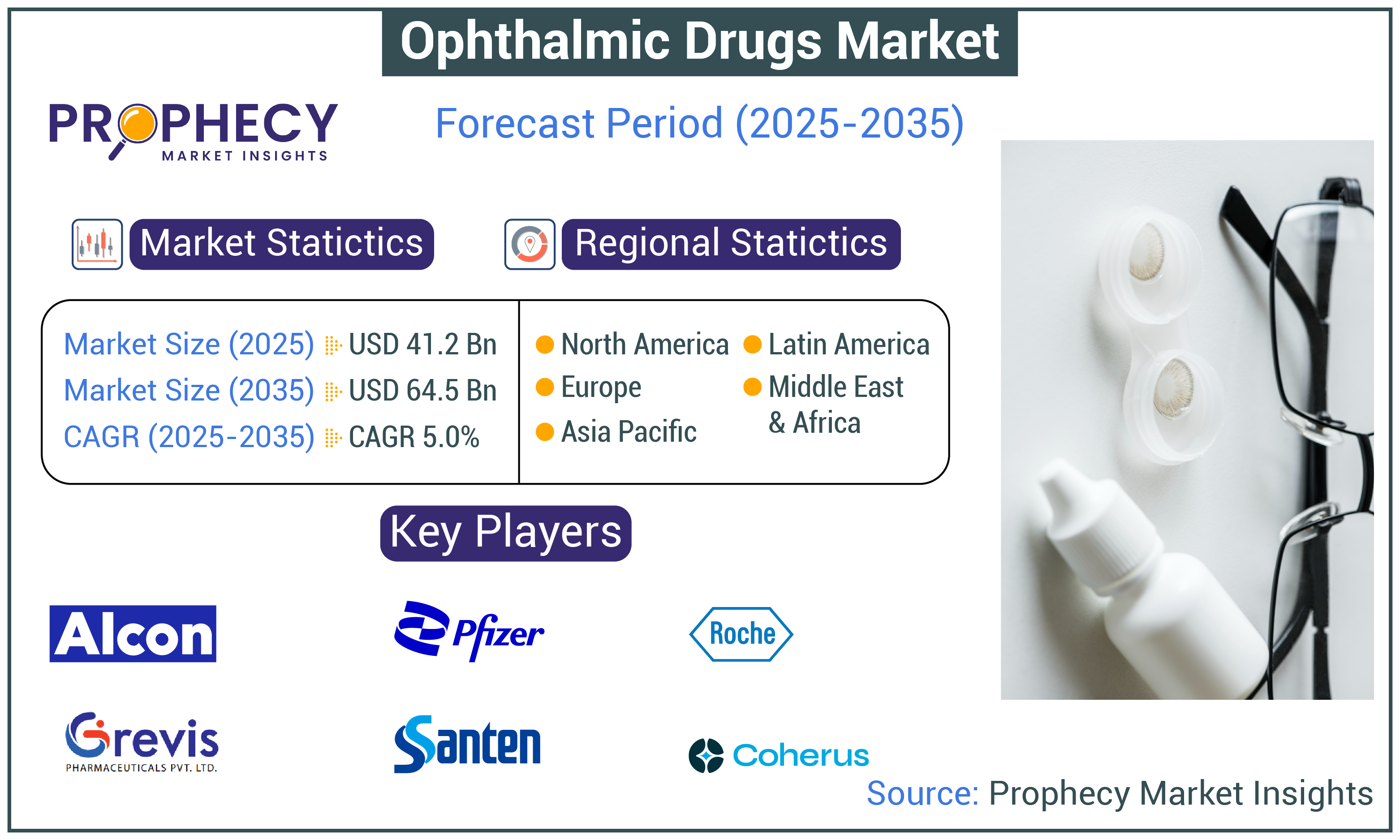
- Ophthalmic drugs market size is expected to expand at a rate of USD 64.5 Billion, by 2035.
- In 2024, the ophthalmic drugs market valuation was USD 40.0 Billion.
- The ophthalmic drugs market is growing at a CAGR 5.0%.
Ophthalmic drugs are medicinal products designed especially to treat disorders affecting the eyes, such as glaucoma, infections, dry eyes, and inflammation. It minimizes systemic adverse effects while providing localized therapy and is available as eye drops, ointments, or gels. Ophthalmic drugs are used to treat infections, manage glaucoma, relieves dry eye, helps in pain relief and inflammation, aids in dilating or constricting pupils. It can additionally be used to lubricate the eyes and treat conditions, such as, corneal ulcers and eye allergies, further contributing in market growth.
The increasing prevalence of eye diseases, such as, glaucoma, macular degeneration, diabetic retinopathy, and dry eye syndrome, a rapid rise in the aging population, and increased healthcare spending and investments in eye care, are factors leading to the ophthalmic drugs market growth.
The market’s expansion is also stimulated by innovations focusing on sustained release, gene therapy, and targeted drug delivery, aiming for reduced treatment burden and potentially curative treatments for various eye diseases. These factors also contribute in driving the ophthalmic drugs market expansion.
Impact of Generative AI on Ophthalmic Drugs Market:
Generative AI has the potential to revolutionize patient care and ophthalmic drug development, influencing fields such as image analysis, tailored therapy, and drug discovery while also bringing up ethical issues with algorithmic bias and data privacy, thereby further contributing in the ophthalmic drugs market augmentation.
Global Opthalmic Drugs Market By Drivers & Restraints
Key Drivers:
Rising Aging Population is stimulating the Market Augmentation
The rising aging population is stimulating the ophthalmic drugs market augmentation due to the increased prevalence of age-related eye diseases, such as, glaucoma, macular degeneration, and cataracts, and specific drug treatments needed for these age related diseases. Moreover, the growing awareness about eye health and the importance of early detection and treatment, also contribute significantly to the market growth.
- For instance, in October 2024, according to the data published by WHO, by 2030, 1 in 6 people in the world will be aged 60 years or over. At this time the share of the population aged 60 years and over will increase from 1 billion in 2020 to 1.4 billion. By 2050, the world’s population of people aged 60 years and older will double (2.1 billion). The number of persons aged 80 years or older is expected to triple between 2020 and 2050 to reach 426 million.
Restraints:
Poor Bioavailability of Ophthalmic Drugs is limiting the Market Expansion
The ophthalmic drugs market is hindered by low drug bioavailability as restricted absorption and tear drainage lessen the efficiency of treatment. The need for frequent dosage results in non-compliance from patients. Furthermore, formulation stability may be an issue that impacts shelf life.
- Counterbalance Statements: Bioavailability can be improved by creating sophisticated drug delivery systems, such as nanocarriers or sustained-release implants. Enhancing formulations with mucoadhesive compounds may potentially increase the efficacy and retention of drugs.
Opportunities & Trends:
Integration of Gene Therapy with Ophthalmic Drugs Fuel the Market Growth in the Future
The ophthalmic drugs market is expected to rise due to gene therapy, which provides long-term, potentially curative therapies for genetic eye conditions such Leber's congenital amaurosis and retinitis pigmentosa. It makes it possible to target disease-causing genes precisely, which lessens the need for frequent medication delivery. Market potential are increased by developments in CRISPR technology and viral vectors, which also improve therapeutic efficacy.
- For instance, in December 2024, according to the data published by NCBI, with mutations in over 250 genes identified as causative for inherited eye diseases, the potential scope for gene therapy interventions is enormous. As of 2022, a total of 159 clinical trials focused on gene therapy for eye diseases were performed; 96% of these studies targeted retinal and optic nerve diseases, 2% targeted glaucoma, and the remaining 2% targeted corneal diseases and uveitis.
Global Opthalmic Drugs Market By Segmentations & Regional Insights
The Ophthalmic Drugs Market is segmented into product type, drug type, disease indication, route of administration, dosage form, therapeutic class, distribution channel, and region.
By Product Type:
By product type the market is bifurcated into prescription drugs and over the counter drugs. The prescription drugs are holding the upper hand in the ophthalmic drugs market share. This is due to the rising cost of healthcare and the encouragement of both public and private authorities to boost prescription medicine sales.
The over the counter drugs is experiencing significant growth due to increased consumer preference for self-medication, particularly for common eye conditions, easy access, and affordable cost-effective options.
By Drug Type:
Based on drug type, the market is divided into branded drugs and generic drugs. The branded ophthalmic drugs are expected to rule over the ophthalmic drugs market share. This dominance is ascribed to pharmaceutical firms' ongoing development of revolutionary medications and treatments for illnesses such as glaucoma and dry eye, which frequently call for creative solutions that go beyond short-term symptom alleviation.
The generic drugs are the second dominating drug type due to its lower cost, which makes it more accessible for both patients and healthcare providers.
By Disease Indication:
Under disease indication, the market is sub-segmented into dry eye, glaucoma, infection/inflammation, retinal disorders, and others. The retinal disorders segment is anticipated to assert dominance on the market. This is due to the rising incidence of retinal disorders such as, diabetic retinopathy, macular degeneration, and diabetic macular edema, increasing awareness of these conditions, and a growing geriatric population.
Glaucoma is the fastest growing segment of the target market as there is an increasing prevalence of glaucoma and it is the second leading cause for blindness globally.
By Route of Administration:
Dependent on route of administration, the market is catalogued into topical, local ocular, and systemic. The topical route of administration holds the largest ophthalmic drugs market share as it is easy to self-administer and is effective in treating eye disorders. Additionally, it is a non-invasive and patient-friendly method for delivering medication directly to the eye surface.
The local ocular route of administration is the fastest growing segment as it also delivers drugs directly to the eye to treat specific locations affected by certain disorders.
By Dosage Form:
On the basis of dosage form, the market is classified into gels, eye solutions and suspension, capsules and tablets, eye drops, and others. The eye drops segment is attributed to rule over the ophthalmic drugs market growth. Its broad usage in treating a variety of ocular disorders, such as acute allergies, corneal ulcers, and glaucoma, is what accounts for the segment’s supremacy. As eye drops are simple to use, have a quick start of action, and effectively transport medication to the afflicted region, both patients and healthcare professionals frequently favor it.
By Therapeutic Class:
According to therapeutic class, the market is pigeonholed into anti-inflammatory drugs, anti-infective drugs, anti-glaucoma drugs, anti-allergy drugs, anti-VEGF agents, and others. Anti-VEGF agents is dominating the ophthalmic drugs market size. This is due to the increasing prevalence of eye diseases such as diabetic retinopathy and age-related macular degeneration.
By Distribution Channel:
On the foundation of distribution channel, the market is classified into hospital pharmacies, online pharmacies, and independent pharmacies and drug stores. The hospital pharmacies segment is projected to influence the market due to its direct integration with healthcare facilities, which guarantees prompt patient treatment and quick access to prescription ocular drugs.
Regional Insights:
Geographically, the market is studied across North America, Europe, Asia Pacific, Latin America, and the Middle East & Africa.
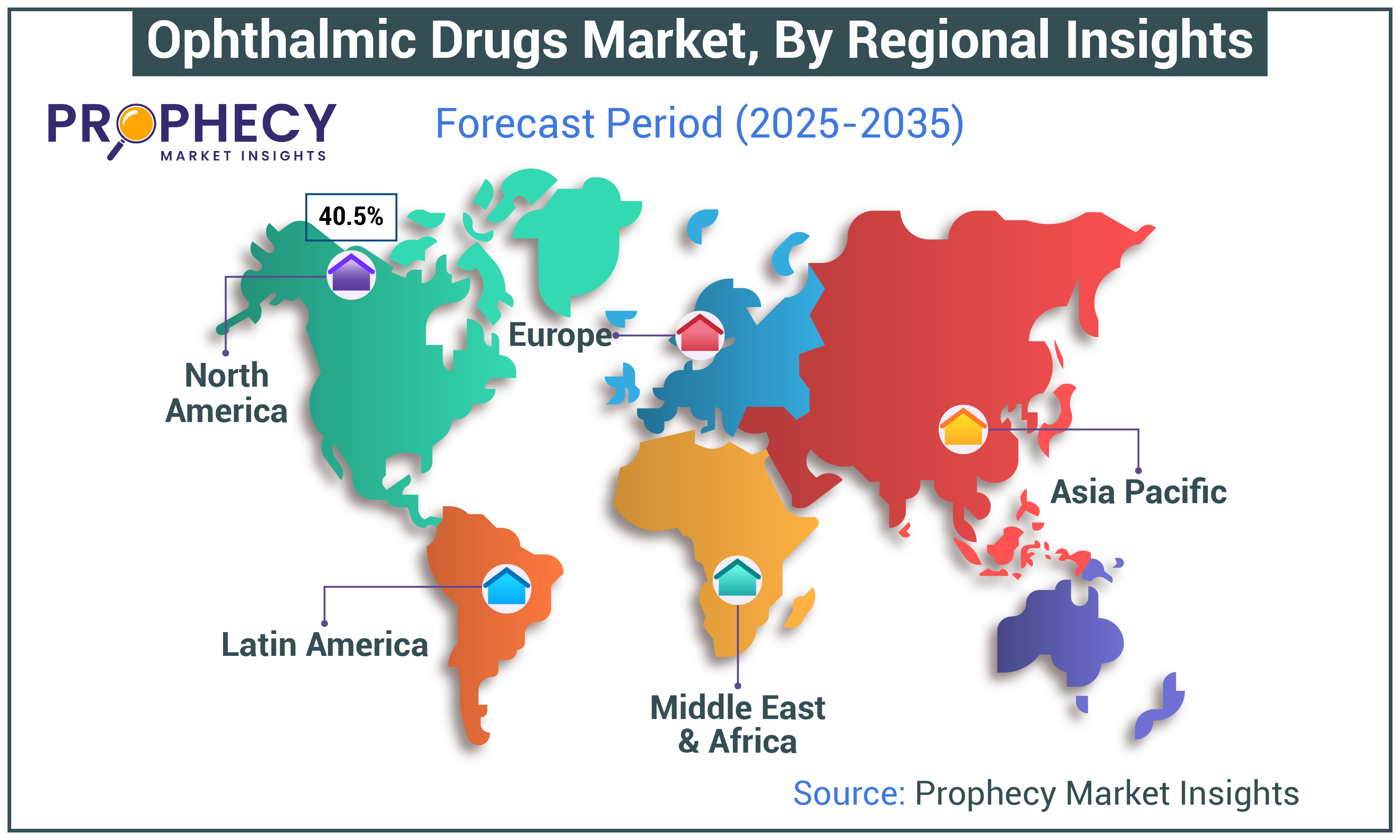
North America: This is the region which holds the largest ophthalmic drugs market share by 40.5%. This is due to its high prevalence of eye diseases, rising aging population, strong healthcare infrastructure, significant research and development activities, favorable government initiatives, increased awareness about eye health and the availability of effective treatments, and the presence of major market players in this region.
- U.S. Ophthalmic Drugs Market Insights:
The Ophthalmic Drugs Market in the U.S. has experienced significant growth in recent years and is projected to continue expanding. Several factors contribute to the demand this market in this country, this includes, its robust healthcare infrastructure, high prevalence of eye-related disorders, and the presence of major companies in this country.
Europe: This is the region where the ophthalmic drugs market grows with the fastest growth rate, during the forecast period. This is due to a variety of factors such as, an increasing geriatric population, increasing prevalence of eye diseases, strong healthcare infrastructure, and robust research and development activities in this region.
- Germany Ophthalmic Drugs Market Insights:
The ophthalmic drugs market in Germany is growing significantly in the recent years. This growth is attributed to factors such as, an increasing aging population, advanced healthcare infrastructure of the country, high healthcare spending due to the growing prevalence of eye diseases, and increasing research and development activities.
Asia Pacific: This region experienced considerate amount of ophthalmic drugs market growth in the recent years. The growth of this region were driven by various factors, these included, the high prevalence of vision impairment, the rising healthcare expenditure, rising aging population, adoption of advanced technologies, and the presence of key pharmaceutical companies in this region.
- Japan Ophthalmic Drugs Market Insights:
The ophthalmic drugs market in Japan is growing with the highest CAGR, during the forecast period. This is due to its rising aging population, prevalence of eye conditions, advanced healthcare infrastructure, high healthcare spending, technological advancements in the field of ophthalmic drugs, and the presence of key pharmaceutical companies in this country.
Ophthalmic Drugs Market Report Scope:
|
Attribute |
Details |
|
Market Size 2025 |
USD 41.2 Billion |
|
Projected Market Size 2035 |
USD 64.5 Billion |
|
CAGR Growth Rate |
5.0% (2025-2035) |
|
Base year for estimation |
2024 |
|
Forecast period |
2025 – 2035 |
|
Market representation |
Revenue in USD Billion & CAGR from 2025 to 2035 |
|
Regional scope |
North America - U.S. and Canada Europe – Germany, U.K., France, Russia, Italy, Spain, Netherlands, and Rest of Europe Asia Pacific – China, India, Japan, Australia, Indonesia, Malaysia, South Korea, and Rest of Asia-Pacific Latin America - Brazil, Mexico, Argentina, and Rest of Latin America Middle East & Africa – GCC, Israel, South Africa, and Rest of Middle East & Africa |
|
Report coverage |
Revenue forecast, company share, competitive landscape, growth factors, and trends |
Segmentation:
By Product Type:
- Prescription Drugs
- Over The Counter Drugs
By Drug Type:
- Branded Drugs
- Generic Drugs
By Disease Indication:
- Dry Eye
- Glaucoma
- Infection/Inflammation
- Retinal Disorders
- Others
By Route of Administration:
- Topical
- Local Ocular
- Systemic
By Dosage Form:
- Gels
- Eye Solutions & Suspensions
- Capsules and Tablets
- Eye Drops
- Ointments
- Others
By Therapeutic Class:
- Anti-inflammatory Drugs
- Anti-infective Drugs
- Anti-glaucoma Drugs
- Anti-allergy Drugs
- Anti-VEGF Agents
- Others
By Distribution Channel:
- Hospital Pharmacies
- Online Pharmacies
- Independent Pharmacies
- Others
By Region:
- North America
- U.S.
- Canada
- Europe
- Germany
- U.K.
- France
- Russia
- Italy
- Spain
- Netherlands
- Rest of Europe
- Asia Pacific
- China
- India
- Japan
- Australia
- Indonesia
- Malaysia
- South Korea
- Rest of Asia Pacific
- Latin America
- Brazil
- Mexico
- Argentina
- Rest of Latin America
- Middle East & Africa
- GCC
- Israel
- South Africa
- Rest of Middle East & Africa
Global Opthalmic Drugs Market By Competitive Landscape & Key Players
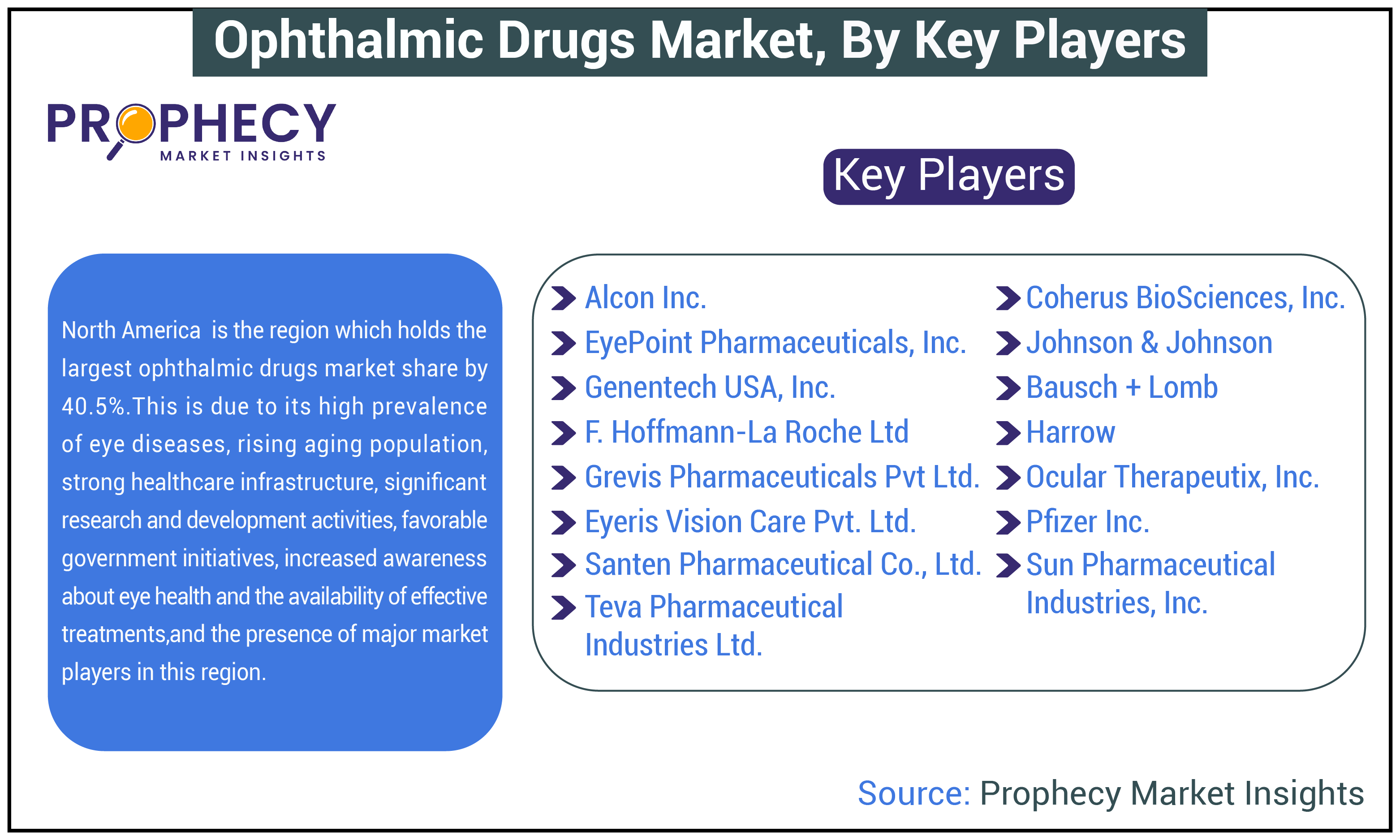
The key players operating in the market include, Alcon Inc., Bausch + Lomb, Pfizer Inc., and others. These key players are focusing on innovative drug delivery systems, targeted therapies and specialized areas, leveraging advancements in gene therapy, combating the rise of age-related eye diseases, and expanding the distribution channels, for driving ophthalmic drugs market growth.
Ophthalmic Drugs Market Companies:
- Alcon Inc.
- Bausch + Lomb
- Pfizer Inc.
- F. Hoffmann-La Roche Ltd
- Grevis Pharmaceuticals Pvt Ltd.
- Eyeris Vision Care Pvt. Ltd.
- Santen Pharmaceutical Co., Ltd.
- Genentech USA, Inc.
- Sun Pharmaceutical Industries, Inc.
- Coherus BioSciences, Inc.
- Johnson & Johnson
- Teva Pharmaceutical Industries Ltd.
- Harrow
- Ocular Therapeutix, Inc.
- EyePoint Pharmaceuticals, Inc.
View an Additional List of Companies in the Ophthalmic Drugs Market
Global Opthalmic Drugs Market By Recent News
- In February 2025, Glenmark Pharmaceuticals Inc. USA had launched Latanoprost Ophthalmic Solution, a 0.005% (0.05 mg/mL) ophthalmic solution. This product was bioequivalent and therapeutically equivalent to the reference listed drug, Xalatan Ophthalmic Solution. This addition highlighted the company’s commitment to meeting market needs and providing quality solutions for its customers.
- In April 2024, Viatris Inc., a global healthcare company, announced the U.S. commercial launch of RYZUMVI (phentolamine ophthalmic solution) 0.75% for the treatment of pharmacologically-induced mydriasis produced by adrenergic agonists (e.g., phenylephrine) or parasympatholytic (e.g., tropicamide) agents in the United States. RYZUMVI was the only U.S. commercially available FDA-approved eye drop to reverse dilation.
- In January 2024, Amneal Pharmaceuticals, Inc. announced the approval and launch of fluorometholone ophthalmic suspension. The product received 180-day competitive generic therapy (CGT) exclusivity from the U.S. Food and Drug Administration, a status that applied to first-marketed generics of key medicines. FML suspension was indicated for the treatment of corticosteroid-responsive inflammation of the palpebral and bulbar conjunctiva, cornea and anterior segment of the globe.
- In October 2023, Orasis Pharmaceuticals, an emerging ophthalmic pharmaceutical company focused on reshaping vision possibilities, announced that the U.S. Food and Drug Administration (FDA) had approved QLOSI (pilocarpine hydrochloride ophthalmic solution) 0.4% for the treatment of presbyopia in adults. QLOSI was expected to be commercially available in the U.S. in the first half of 2024.
- In March 2021, Teva Pharmaceuticals USA, Inc., announced its launch of the first available generic version of AZOPT (brinzolamide ophthalmic suspension) 1%, approved by the US Food and Drug Administration to treat high pressure inside the eye due to ocular hypertension and open-angle glaucoma. Brinzolamide ophthalmic suspension 1% worked by decreasing the amount of fluid within the eye.
Analyst View:
The rising prevalence of eye diseases, such as, glaucoma, macular degeneration, diabetic retinopathy and dry eye syndrome, the rising aging population globally, innovations in drug delivery systems, increased awareness and diagnosis about eye diseases, rising healthcare spending, growth of emerging economies, and the launch of novel ophthalmic drugs drives growth to the ophthalmic drugs market.
More Related Reports
Ophthalmic Lenses Market
Ophthalmic Loupes Market
Dementia Drugs Market
Metabolism Drugs Market
Psoriasis Drugs Market
Global Opthalmic Drugs Market By Company Profile
|
Company Name |
Alcon Inc. |
|
Headquarter |
Geneva, Switzerland |
|
CEO |
Mr. David J. Endicott |
|
Employee Count (2024) |
25,000 Employees |
Global Opthalmic Drugs Market By Highlights
FAQs
Ophthalmic drugs market size was valued at USD 41.2 Billion in 2025 and is expected to reach USD 64.5 Billion by 2035 growing at a CAGR of 5.0%.
Product type, drug type, disease indication, route of administration, dosage form, therapeutic class, distribution channel, and region are the segmentation for the target market.
North America, Asia Pacific, Europe, Latin America, and the Middle East & Africa. North America is expected to dominate the market.
The key players operating in the Ophthalmic drugs market include Alcon Inc., Bausch + Lomb, Pfizer Inc., Sun Pharmaceutical Industries, Inc., F. Hoffmann-La Roche Ltd, Eyeris Vision Care Pvt. Ltd., Santen Pharmaceutical Co., Ltd., Genentech USA, Inc., Coherus BioSciences, Inc., Johnson & Johnson, Teva Pharmaceutical Industries Ltd., Harrow, Ocular Therapeutix, Inc., and EyePoint Pharmaceuticals, Inc.