Global Molecular Diagnostics Market By Overview
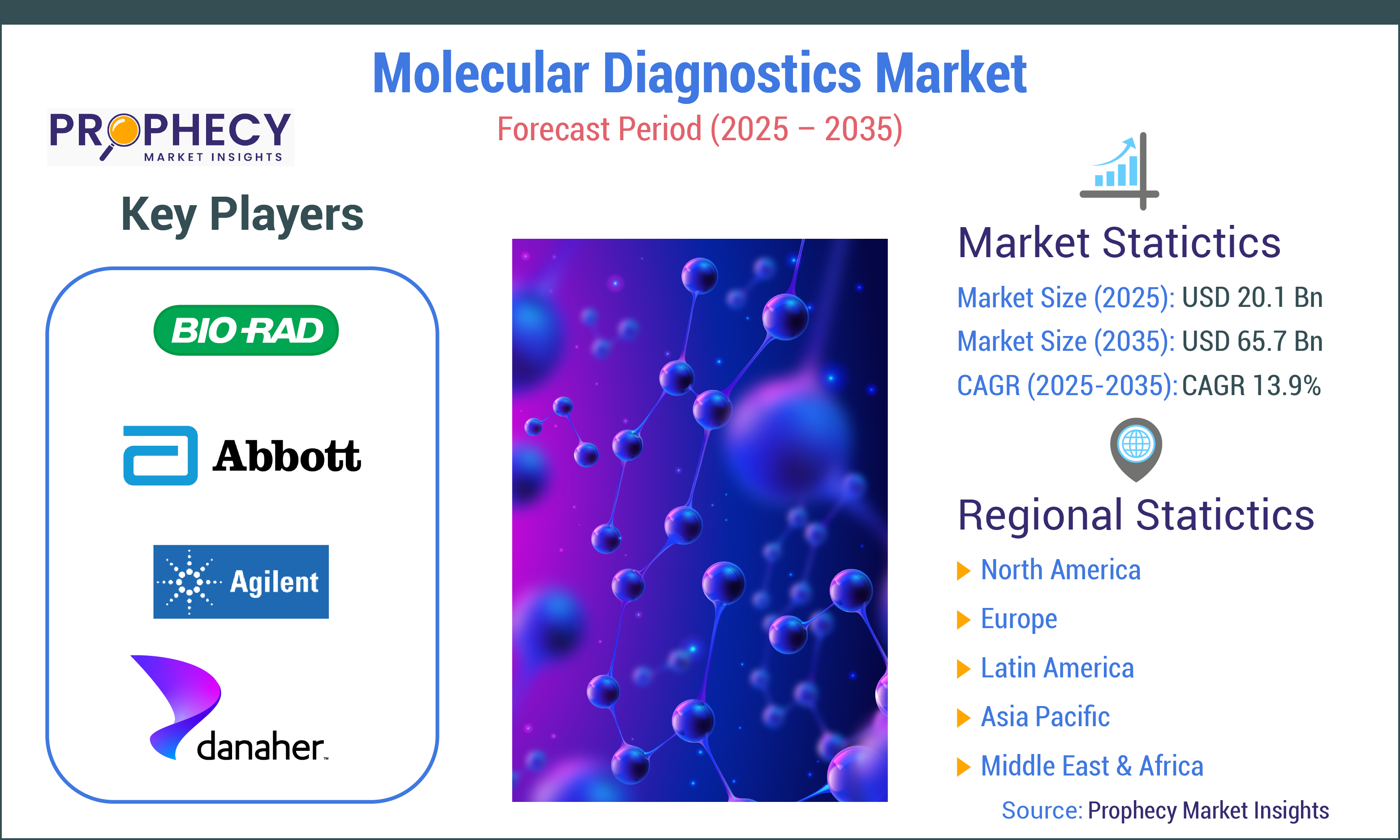
- By 2035, the molecular diagnostics market size is contemplated to enlarge at a valuation of USD 65.7 Billion.
- In 2024, the molecular diagnostics market valuation was USD 17.5 Billion.
- Molecular diagnostics market is developing at a CAGR of 13.9%.
Molecular diagnostics involves the detection and study of genetic material such as DNA or RNA to diagnose and monitor ailments. It allows for accurate identification of infections, genetic conditions, and cancer at the molecular level, which aids in targeted treatment strategies.
The molecular diagnostics market is expanding due to there is a rise in infectious diseases and chronic conditions, which leads to a greater need for rapid and precise testing. Furthermore, the globally aging population, which is at higher risk to get cancer, heart disease, and brain disorders, needs early detection. The transition in clinical settings receives accelerated support from higher government funding and advantageous reimbursement plans and developments in personalized medicine as well as willingness for disease outbreaks. The market receives support from expanded access to molecular testing in local clinics and home testing alternatives. The public's increased awareness about early detection combined with preventative care leads to more frequent screening practices.
The molecular diagnostics market is growing fast due to of new trends and opportunities. A key trend is moving testing away from labs to where patients are, making it quicker and easier to get results. Moreover, using AI and big data is making tests more accurate and easier to understand, especially for advanced methods such as digital PCR and sequencing.
Recession Risk & Tariff Analysis:
- The molecular diagnostics market faces major obstacles from recession dangers and tariff changes. Economic recessions trigger healthcare budget reductions which postpone diagnostic spending and reduce patient ability to use advanced testing in areas with financial constraints.
- Medical device and diagnostic reagent import tariffs generate higher production expenses which disrupt worldwide supply networks particularly for companies relying on foreign components or materials. Organizations are trying to deal with these risks by making goods locally, using different supply chains, and pushing for good trade and health policy.
Impact of Generative AI on Molecular Diagnostics Market:
- Generative artificial intelligence stands ready to cause major changes in molecular diagnostics through faster innovation processes and enhanced testing precision together with optimized operational systems. Generative AI produces synthetic biological data and simulates molecular interactions to shorten both development and test validation times for diagnostic methods.
- Through better genomic data interpretation, the technology helps discover unusual mutations while advancing the effectiveness of individualized medical treatments. Healthcare facilities benefit from AI-powered automation as it makes their operations more efficient while minimizing errors and providing immediate support for decision processes.
Global Molecular Diagnostics Market By Drivers & Restraints
Key Drivers:
Antimicrobial Stewardship Programs Push Market Growth
World Health Organization (WHO) together with other organizations drives antimicrobial stewardship programs (ASPs) to fight the increasing problem of antimicrobial resistance (AMR). The programs exist to help medical professionals prescribe antibiotics correctly through proper dosage recommendations and treatment duration guidelines. Through these programs ASPs achieve better patient results and decrease negative reactions and reduce the expansion of drug-resistant infections.
- For Instance, in March 2025, The WHO launched a new Antimicrobial Stewardship Coaching Programme to provide doctors in Central Asia and Eastern Europe individualized online coaching from stewardship specialists through data-based methods and case-based education and direct support for improving hospital antibiotic management.
Restraints:
Complexity of Infection Control Disrupts Market Growth
Healthcare facilities encounter major difficulties when managing infection control as this complex process requires numerous procedures and protocols and compliance standards. Every component demands continuous implementation together with departmental coordination among staff members across various organizational levels from hand hygiene to sterilization to isolation protocols and environmental cleaning.
- Counterbalance Statements: Infection control technologies alongside standardized protocols and growing awareness have led to improved implementation throughout healthcare facilities despite various difficulties. The implementation of digital tools including automated monitoring systems together with real-time data analytics enables rapid identification of risk areas for improved compliance monitoring.
Opportunities & Trends:
Automation Enhances Infection Prevention in Healthcare Settings
Infection prevention robots transform healthcare facilities by performing essential functions including surface disinfection and air purification and waste management. Advanced technologies including UV-C light and hydrogen peroxide vapor and AI-based navigation enable these robots to perform complete sanitation of high-contact surfaces while minimizing human mistakes during standard cleaning methods.
- For Instance, Pohang University of Science and Technology (POSTECH) unveiled an intelligent robot capable of wiping and UV-C disinfection, demonstrating effective bacterial reduction during real-world trials at Pohang St. Mary’s Hospital. Hospitals and research centers are using autonomous robots with UV-C light and better navigation to control infections.
Global Molecular Diagnostics Market By Segmentations & Regional Insights
Product type, technology, sample type, test location, application, end user, and region are the divisions of the molecular diagnostics market.
By Product Type:
Instruments and Systems, reagents and kits, software, and others are product type on which molecular diagnostics market is segmented. The reagents and kits as the leading product category that dominates the molecular diagnostics market share. Each diagnostic test requires these consumable products for PCR and sequencing and hybridization assays which results in ongoing continuous consumption of these products.
The instruments and systems segment stand as the second most important product category in the molecular diagnostics market. The backbone of molecular testing depends on PCR machines together with next-generation sequencing platforms and automated analyzers that form the essential components for laboratory operations.
By Technology:
Based on the technology, the molecular diagnostics market is divided into polymerase chain reaction (PCR) , in situ hybridization (ISH), isothermal nucleic acid amplification technology (INAAT), Chips and microarrays, mass spectrometry, sequencing, others. PCR remains the leading technology of molecular diagnostics among the various methods used in this field. PCR serves as the main tool for identifying genetic changes and infectious diseases and cancer markers since it provides excellent sensitivity along with high specificity at rapid speed.
The positions next-generation sequencing (NGS) is second most important technology in the sequencing domain. Through its ability to analyze genetic material at a high throughput level sequencing proves essential for cancer genomics and rare disease diagnosis and personalized medicine applications
By Sample Type:
Blood, urine, plasma, and others are sample type of the molecular diagnostics market. Molecular diagnostic procedures primarily use blood as their main sample type. The diagnostic community selects blood samples as their primary choice due to these samples contain abundant genetic material such as DNA and RNA along with circulating biomarkers.
The second dominant sample type in the molecular diagnostics market is urine. Urine is a non-invasive, easily collectible sample that offers a convenient alternative to blood, particularly for screening infectious diseases, urological cancers, and certain genetic conditions.
By Test Location:
On the test location, molecular diagnostics market is categorized into point of care, self-test or OTC, central laboratories. Central laboratories stand as the principal testing environment within the molecular diagnostics market share. The combination of modern laboratory facilities and sophisticated instruments together with expert staff allows these locations to conduct precise extensive diagnostic testing.
The molecular diagnostics market identifies point-of-care (POC) testing as its second most important testing site. Medical professionals use POC testing to deliver quick results directly at locations including clinics and emergency rooms and outpatient facilities which supports prompt healthcare decisions.
By Application:
Oncology, pharmacogenomics, genetic testing, neurological disease, cardiovascular disease, others are application of the molecular diagnostics market. The oncology has largest molecular diagnostics market share. The increasing worldwide cancer rates have created high demand for advanced diagnostic tools which identify genetic mutations along with tumor markers and specific cancer-related biomarkers.
Genetic testing stands as the second leading application which dominates the molecular diagnostics market. The segment is growing at an accelerated pace as people know more about inherited disorders while carrier screening and prenatal testing are becoming more popular along with direct-to-consumer genetic test availability.
By End User:
The molecular diagnostics market on the account of end user are categorized into hospitals & clinics, diagnostic laboratories, academic & research institutes, pharmaceutical & biotechnology companies, others. The primary consumers of molecular diagnostics technology consist of hospitals and clinics which serve as the main end users. The healthcare facilities function as initial contact points that require diagnostic testing to detect diseases at early stages and to establish treatment courses and track patient progress.
Diagnostic laboratories represent the main second most important end users within the molecular diagnostics market. The laboratories conduct numerous tests by using cutting-edge technologies while providing centralized services that serve hospitals along with clinics and private medical practices.
Regional Insights:
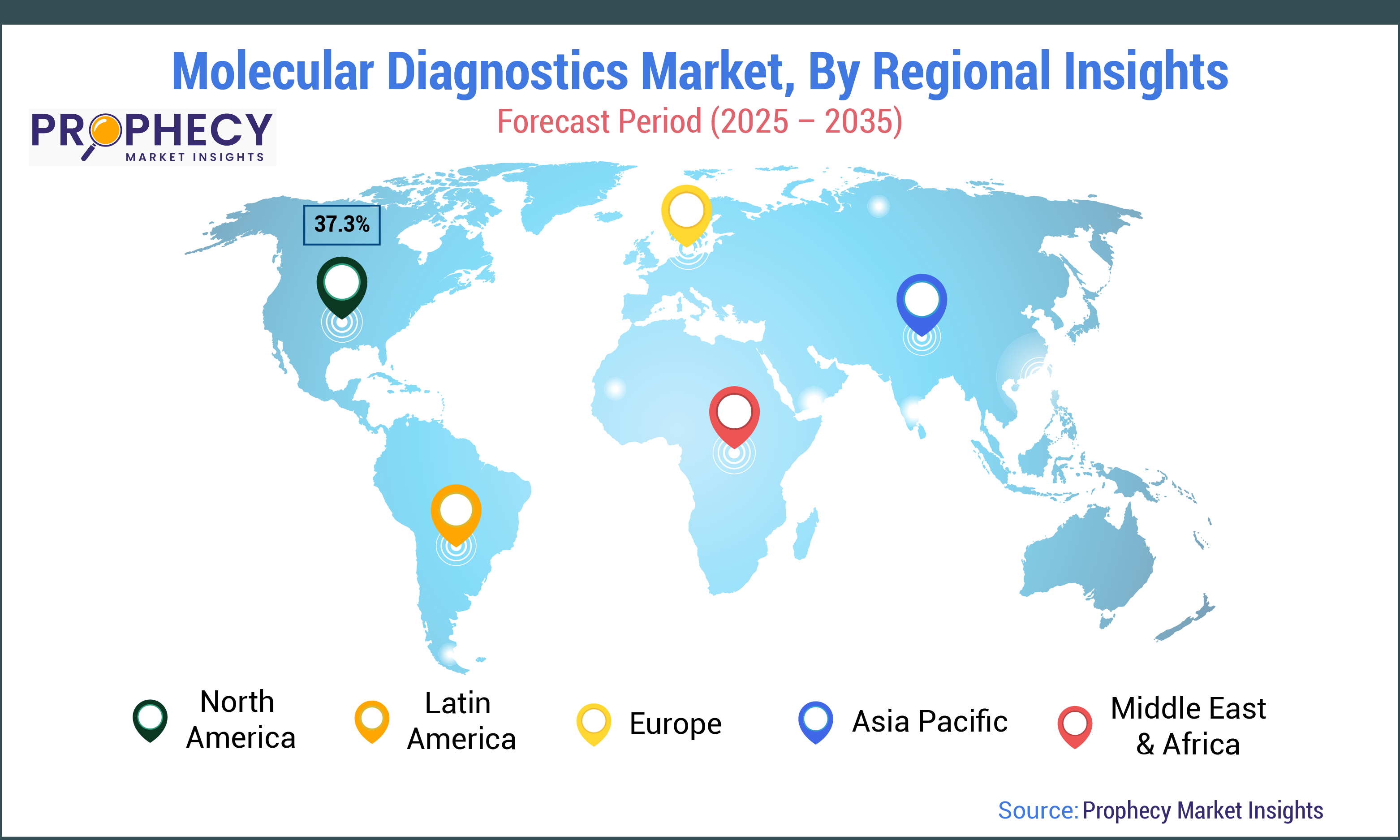
Geographically, the molecular diagnostics market is studied across North America, Europe, Asia Pacific, Latin America, and the Middle East & Africa.
North America: The molecular diagnostics market finds its leading position in North America due to advanced medical facilities together with substantial healthcare investment and numerous diagnostic companies that lead the industry. Early technology adoption along with broad molecular test availability and strong diagnostic innovation regulatory frameworks make this region prosperous.
- U.S. Molecular Diagnostics Market Insights:
The North American molecular diagnostics market experiences its leading position from the U.S. as its dominant country. Its dominant position results from advanced healthcare infrastructure together with high R&D investment and major diagnostic and biotechnology company presence.
Europe: The molecular diagnostics market experiences its second-largest regional market presence in Europe due to its robust healthcare infrastructure together with government research funding and rising interest in precise medical approaches. Germany along with the U.K. and France drive forward the use of cutting-edge diagnostic tools which focus on cancer detection as well as infection analysis and genetic assessments.
- Germany Molecular Diagnostics Market Insights:
The Europe molecular diagnostics market is primarily controlled by Germany as its leading country. The country's leading position stems from its established healthcare infrastructure and substantial biomedical research funding together with strong requirements for cutting-edge diagnostic technologies in medical facilities.
Asia Pacific: The molecular diagnostics market experiences its most rapid expansion in Asia Pacific due to rising healthcare facilities and better healthcare knowledge and increased funding for diagnosis tools. China, Japan and India stand as primary drivers for this market expansion.
- China Molecular Diagnostics Market Insights:
The Asia Pacific molecular diagnostics market exists under China's leadership due to the country's large population base and increasing healthcare spending and its government-backed initiatives to advance biotechnology and healthcare solutions throughout the region.
Molecular Diagnostics Market Report Scope:
|
Attribute |
Details |
|
Market Size 2025 |
USD 20.1 Billion |
|
Projected Market Size 2035 |
USD 65.7 Billion |
|
CAGR Growth Rate |
13.9% (2025-2035) |
|
Base year for estimation |
2024 |
|
Forecast period |
2025 – 2035 |
|
Market representation |
Revenue in USD Billion & CAGR from 2025 to 2035 |
|
Regional scope |
North America - U.S. and Canada Europe – Germany, U.K., France, Russia, Italy, Spain, Netherlands, and Rest of Europe Asia Pacific – China, India, Japan, Australia, Indonesia, Malaysia, South Korea, and Rest of Asia-Pacific Latin America - Brazil, Mexico, Argentina, and Rest of Latin America Middle East & Africa – GCC, Israel, South Africa, and Rest of Middle East & Africa |
|
Report coverage |
Revenue forecast, company share, competitive landscape, growth factors, and trends |
Segmentation:
By Product Type:
- Instruments and Systems
- Reagents and Kits
- Software
- Others
By Technology:
- Polymerase chain reaction (PCR)
- In Situ Hybridization (ISH)
- Isothermal Nucleic Acid Amplification Technology (INAAT)
- Chips and Microarrays
- Mass Spectrometry
- Sequencing
- Others
By Sample Type:
- Blood
- Urine
- Plasma
- Others
By Test Location:
- Point of care
- Self-test or OTC
- Central laboratories
By Application:
- Oncology
- Pharmacogenomics
- Genetic Testing
- Neurological Disease
- Cardiovascular Disease
- Others
By End User:
- Hospitals & Clinics
- Diagnostic Laboratories
- Academic & Research Institutes
- Pharmaceutical & Biotechnology Companies
- Others
By Region:
- North America
- U.S.
- Canada
- Europe
- Germany
- U.K.
- France
- Russia
- Italy
- Spain
- Netherlands
- Rest of Europe
- Asia Pacific
- China
- India
- Japan
- Australia
- Indonesia
- Malaysia
- South Korea
- Rest of Asia Pacific
- Latin America
- Brazil
- Mexico
- Argentina
- Rest of Latin America
- Middle East & Africa
- GCC
- Israel
- South Africa
- Rest of Middle East & Africa
Global Molecular Diagnostics Market By Competitive Landscape & Key Players
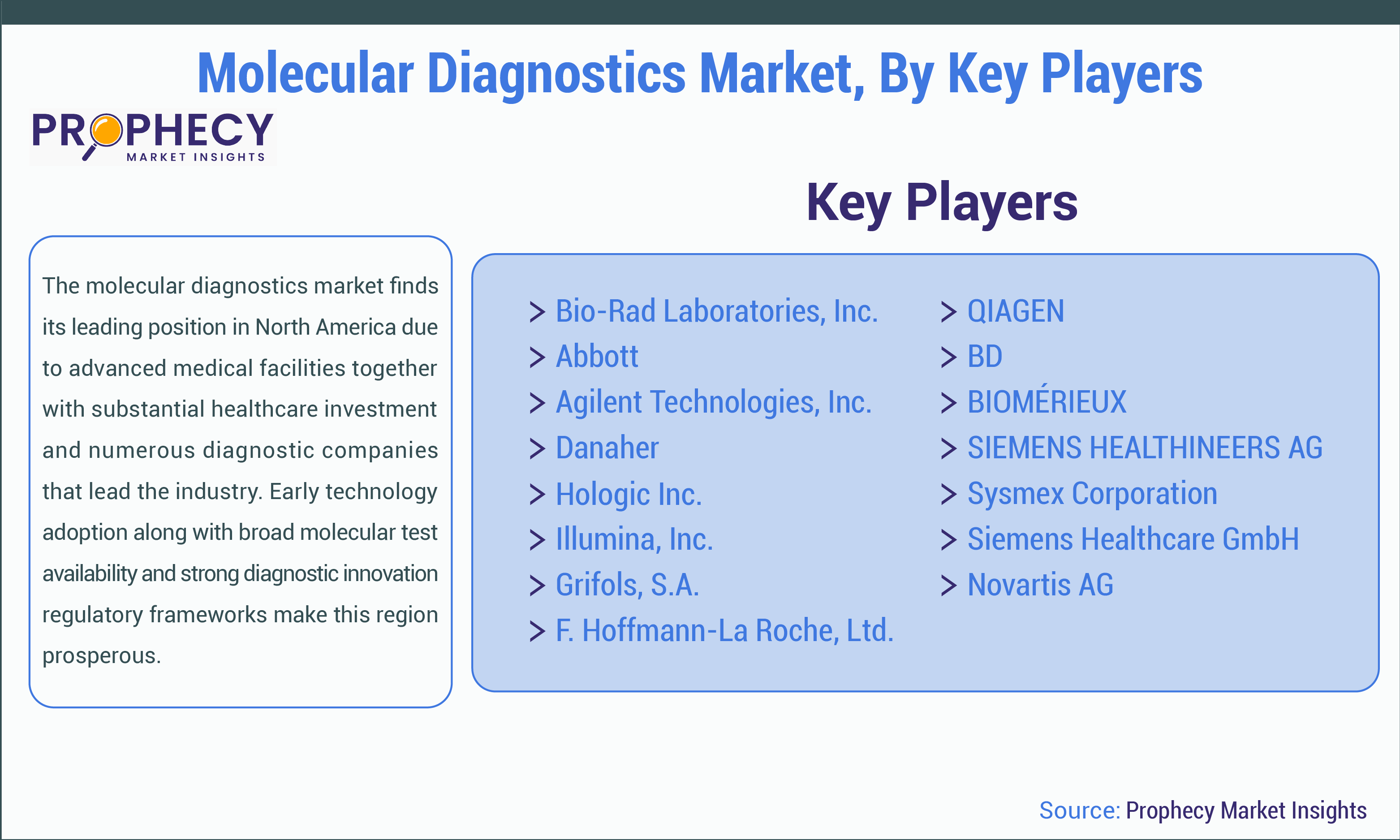
Companies specializing in infection control and diagnostics have common objectives for better patient safety through advanced, precise, and readily accessible solutions. These companies are increasingly focused on sustainability by creating products that are better for the environment and reducing waste in healthcare. The key players operating in the molecular diagnostics market include, Bio-Rad Laboratories, Inc., Abbott, QIAGEN, Hologic Inc., Illumina, Inc., and others.
Molecular Diagnostics Market Companies:
- Bio-Rad Laboratories, Inc.
- Abbott
- Agilent Technologies, Inc.
- Danaher
- Hologic Inc.
- Illumina, Inc.
- Grifols, S.A.
- F. Hoffmann-La Roche, Ltd.
- QIAGEN
- BD
- BIOMÉRIEUX
- SIEMENS HEALTHINEERS AG
- Sysmex Corporation
- Siemens Healthcare GmbH
- Novartis AG
View an Additional List of Companies in the Molecular Diagnostics Market
Global Molecular Diagnostics Market By Recent News
- In August 2024, Sysmex Corporation expanded its strategic alliance with QIAGEN to enhance genetic testing, focusing on research, development, production, clinical trials, and global sales marketing.
- In January 2023, QIAGEN introduced the launch of its EZ2 Connect MDx platform, aimed at enhancing its automation capabilities for sample processing. The platform will be compatible with dPCR, PCR, and other downstream applications.
- In February 2023, BD received FDA Emergency Use Authorization for a molecular diagnostic test that detects COVID-19, influenza A/B, and RSV. The test, for use with the BD MAX System, provides results in under two hours from a single nasal or nasopharyngeal swab, improving testing efficiency during respiratory virus seasons.
Analyst View:
The molecular diagnostics field experiences transformation through artificial intelligence and liquid biopsies and decentralization according to experts in the field. The implementation of AI-based systems improves data processing while enhancing precision in digital PCR and CRISPR diagnostics. The market projections show that liquid biopsy applications which include blood-based MRD testing will increase their value from USD 2.2 billion in 2023 to reach more than USD 6 billion by early 2030s.
More Related Reports
Veterinary Molecular Diagnostics Market
Molecular Imaging Market
Molecular Sieve Market
Molecular Imaging Market
P-o-c Molecular Diagnostic Market
Global Molecular Diagnostics Market By Company Profile
|
Company Name |
QIAGEN |
|
Headquarter |
Hilden, Germany |
|
CEO |
Thierry Bernard |
|
Employee Count |
5967 Employees |
Global Molecular Diagnostics Market By Highlights
FAQs
Molecular diagnostics market size was valued at USD 20.1 Billion in 2025 and is expected to reach USD 65.7 Billion by 2035 growing at a CAGR of 13.9%.
Product type, technology, sample type, test location, application, end user, and region are the segmentation for the target market.
North America, Asia Pacific, Europe, Latin America, and the Middle East & Africa. North America is expected to dominate the market.
The key players operating the molecular diagnostics market include Bio-Rad Laboratories, Inc., Abbott, Agilent Technologies, Inc., Danaher, Hologic Inc., Illumina, Inc., Grifols, S.A., F. HOFFMANN-LA ROCHE, LTD., QIAGEN, BD, BIOMÉRIEUX, SIEMENS HEALTHINEERS AG, Sysmex Corporation, Siemens Healthcare GmbH, Novartis AG.