Global Lung Cancer Treatment Drugs Overview
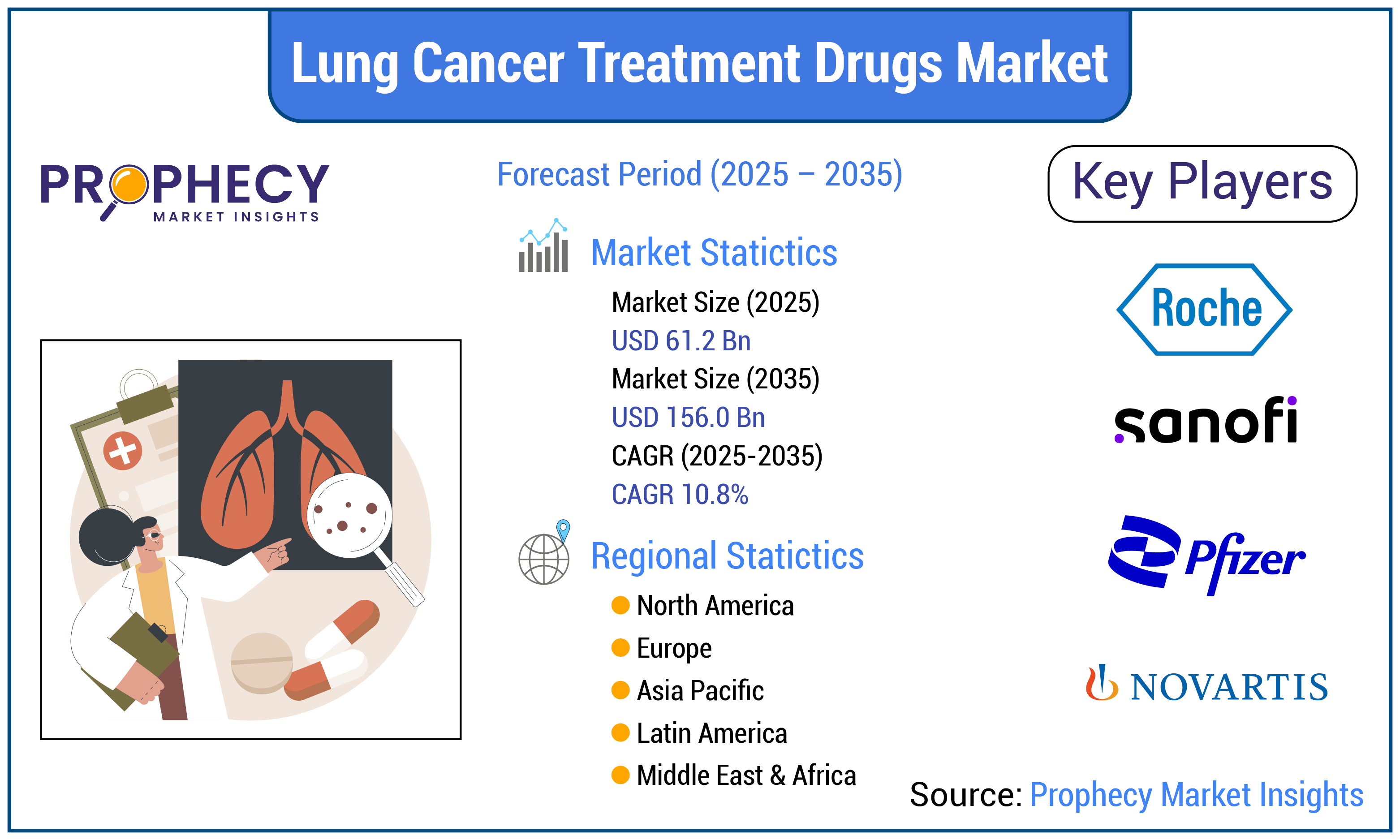
- By 2035, the lung cancer treatment drugs market is expected to increase at a rate of USD 156.0 Billion.
- In 2024, the lung cancer treatment drugs market for lung cancer treatment drugs market was valued at USD 56.2 Billion.
- Lung cancer treatment drugs market is expanding at a 10.8%CAGR.
Lung cancer treatment drugs is the combination of therapies and drugs are used on type, stage, and genetic mutations of lung cancer. Lung cancer treatment includes, chemotherapy, immunotherapy, targeted therapy, radiation therapy and others, which are used on stage of cancer. These drugs vary based on the type and stage of lung cancer, and the molecular profile of the cancer. The primary types of lung cancer are non-small cell lung cancer (NSCLC) and small cell lung cancer (SCLC), these stages require different types of drugs. The advancements in personalized medicine, new drugs and therapies are continuing to improve patient outcomes making it easy for early detection and treatment.
The rising incidence of lung cancer, increases demand for advanced treatment drugs, is anticipated to drive target market growth. The growing drug development & approval procedures and increasing research & development in lung cancer, is projected to growth of lung cancer treatment drugs market. Improvement in early detection of lung cancer through advanced diagnostic technologies, government initiatives for better treatment development and gaining global population, is expected to pitch lung cancer treatment drugs market growth.
Increasing focus on combination therapies, to deliver effective treatment against cancer, development of new immune checkpoint inhibitors, and rising demand for personalized treatments, is expected to create new opportunities for lung cancer treatment drugs market. The development of new oral drugs, adoption of digital health technologies, and expanding coverage of cancer treatments, is expected to fuel target market growth.
Impact of AI in Lung Cancer Treatment Drugs:
Artificial Intelligence (AI) has the potential to improve lung cancer diagnosis, treatment and management by offering faster, accurate treatment plans. AI tools can identify early signs of lung cancer, and analyze patient genetic data to predict higher risk of developing lung cancer, which aim to enhance patient outcomes. AI can identify genetic mutation and biomarkers of lung cancer patient, which recommend the most effective treatment options, such as targeted therapies and immunotherapies.
Global Lung Cancer Treatment Drugs Drivers & Restraints
Key Drivers of Target Market:
Growing Drug Development and Approval Process is Predictable to Market Growth
The growing research, regulatory pathways and new development of therapies are responsible for the increasing demand for innovative drug development. Drug development for lung cancer is crucial, as it is highly aggressive cancer with poor prognosis and limited treatment options. To improve drug development, researchers are identifying biomarkers that respond to specific therapies and allows for the targeted therapy strategies. Government agencies and privet organization are highly investing to support development of novel drug for lung cancer and regulatory agencies such as FDA approving clinical trials of drugs & therapies, resulting to drive lung cancer treatment drugs market growth.
Rising Prevalence of Lung Cancer is projected to Growth of Target Market
Lung cancer remains one of the most common and deadly cancers globally. Smoking, air pollution, ageing populations, and genetic factors are contributing to rise in lung cancer prevalence. The growing number of lung cancer cases rises the demand for treatment options, including chemotherapy, targeted therapies, immunotherapies, and other drug-based interventions. Prolonged exposure to environmental pollutants, such as particulate matter and industrial emissions, can increase the risk of lung cancer. The advancement in early and accurate diagnosis of lung cancer at early stages, creates a demand for new treatment options. Public health initiatives and screening programs have significantly raised awareness about the risks of lung cancer and the importance of early detection. As the rising prevalence of lung cancer, growing awareness about early detection of cancer, and advancement in diagnostic of early stage cancer, is expected to propel lung cancer treatment drugs market growth.
- For instance, according to data published by American Cancer Society, in 2025, the lung cancer in the U.S. was estimated about 13% of all lung cancers are small cell lung cancer (SCLC), and about 87% are non-small cell lung cancer (NSCLC). 226,650 new cases of lung cancer were found, in which 110,680 in men and 115,970 in women. About 124,730 deaths from lung cancer, in which 64,190 in men and 60,540 in women. The risk of development of lung cancer is about 1 in 17 for women, and 1 in 18 for men.
Restraints:
Adverse Side Effects and Drug Resistance is Limiting Market Growth
The use of new therapies such as immunotherapies, targeted therapies, and antibody-drug conjugates is associated with adverse side effects, as fatigue, nausea, and immune-based complications. Drug resistance limits the effects of treatment, making minimal impact of therapies on tumor, leads to reducing the long-term efficacy of treatment.
- Counterbalance Statements: Researchers and pharmaceutical companies are focuses on innovation of combination therapies to minimize side effects and improve efficacy of treatment. Developing next-generation drugs to address specific resistance mutations and advancement in biomarkers to detect side effects, leading to lung cancer treatment drugs market growth.
Opportunities & Market Trends:
Increasing Research and Development in Cancer Propels Market Growth
Increasing research and development in cancer helps to advancement in sciences and technology, with surge in R&D investment is propelled target market growth. Researchers are focusing on targeted therapies, immunotherapies, and advancement in early detection tools. Research on development of next-generation drugs that can target drug resistance pathways, by enhancing treatment plans and improving long-term patient outcomes. Researchers are focusing on development of new drugs, based on mutation and biomarker, to treat with targeted therapies, or immunotherapies to improve patient outcomes, resulting to drive lung cancer treatment drugs market size.
Global Lung Cancer Treatment Drugs Segmentations & Regional Insights
The lung cancer treatment drugs market is segmented into, cancer type, treatment type, route of administration, distribution channel, and region.
By Treatment Type:
By treatment type, lung cancer treatment drugs market is segmented into targeted therapy, chemotherapy, immunotherapy, radiation therapy, others. Targeted therapy dominates in target lung cancer treatment drugs market share, as it is widely used in lung cancer treatment, particularly for NSCLC. Targeted therapies help to identify genetic mutations and biomarker in patient’s tumor and improves efficacy by minimizing effects of treatment, leading to growth of segment in lung cancer treatment drugs market growth.
Chemotherapy is second most leading segment in market. It is widely used in treatment for SCLC, due to its effectiveness in aggressive cancer types and its long-standing role in lung cancer treatment regimens, resulting to boost growth of segment in lung cancer treatment drugs market share.
By Cancer Type:
Based on cancer type, lung cancer treatment drugs market is categorized into non-small cell lung cancer (NSCLC), and small cell lung cancer (SCLC). NSCLC segment holds the largest lung cancer treatment drugs market share, due to increasing prevalence of NSCLC globally, leads to demand for effective treatment for lung cancer. The advancement in personalized medicine, and growing investment R&D of NSCLC specific drugs, resulting to drive lung cancer treatment drugs market growth in NSCLC segment.
SCLC is fastest growing segment in market, due to its aggressive nature. The rising prevalence of SCLC, advancement in immunotherapy to treat cancer, and ongoing need foe effective treatments, is expected to propel segment’s expansion in lung cancer treatment drugs market share.
By Route of Administration:
By route of administration, lung cancer treatment drugs market is classified into oral, parental. The parental route of administration segment dominates the lung cancer treatment drugs market, as it has ability to deliver drugs directly into the bloodstream, bypassing in digestive system and ensures the rapid absorption and distribution throughout the body. Parental administration helps to efficient drug delivering using chemotherapy, immunotherapy and targeted therapy agents, resulting to propel segment’s growth in lung cancer treatment market share.
Parenteral is second dominating segment in market. Many immunotherapy drugs are administered intravenously for the NSCLC treatment. Chemotherapy drugs are also administrated intravenous route for aggressive cancer such as SCLC. Parenteral treatments are aimed to maintain importance of more aggressive or advanced cancer cases, is anticipated to drive segment’s expansion in lung cancer treatment drugs market size.
By Distribution Channel:
Lung cancer treatment drugs market by distribution channel divided into hospital pharmacy, retail pharmacy, and online pharmacy. The hospital pharmacy segment dominates in lung cancer treatment market share due to, lung cancer requires close monitoring and expert medication management to ensure patient safety and optimize treatment outcomes. Hospital pharmacy includes, careful dose adjustments, monitoring side effects and provide supportive care medication, leading to growth of lung cancer treatment drugs market size.
Regional Insights:
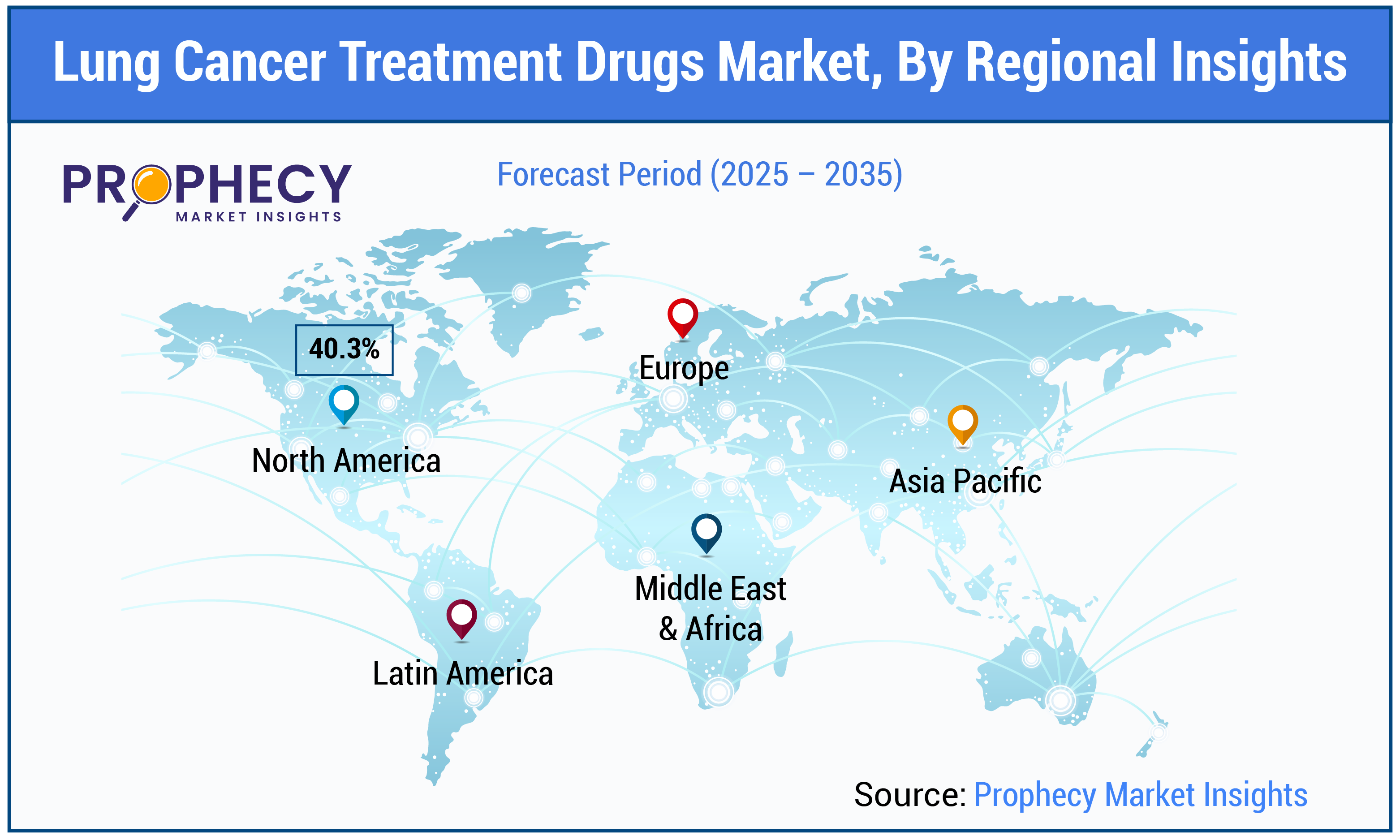
Geographically, the market is studied across North America, Europe, Asia Pacific, Latin America, and the Middle East & Africa.
North America: This region hold the largest lung cancer treatment drugs market share accounted for 40.3% of global share due to high prevalence of smoking and exposure to carcinogens in the region. Government rising funding for research and development activities, increasing healthcare infrastructure, growing therapeutic industry and rising awareness in public about health, resulting to drive lung cancer treatment drugs market share.
- U.S. Lung Cancer Treatment Drugs Market Insights:
The lung cancer treatment drugs market is dominated by U.S. country in North America region. The U.S. has the highest number of lung cancer cases, it is a global leader in oncology research, particularly in the field of targeted therapies and immunotherapies, FDA is continuously approving new lung cancer treatments, and extensive healthcare infrastructure, is projected to boost lung cancer treatment drugs market size.
Asia Pacific: This region is the expected as fastest growing region for the target market, due to increasing consumption of tobacco and growing air pollution levels in this region. Increase in healthcare expenditure, rising awareness about early diagnosis and treatment options are responsible for the lung cancer treatment drugs market growth in upcoming years.
- China Lung Cancer Treatment Drugs Market Insights:
China is the governing country in Asia for the lung cancer treatment drugs market. The target market share is attributed by, China is rapidly adopting targeted therapies and immunotherapies for lung cancer treatment, high incidence of NSCLC, growing demand for innovative therapies, and increasing focus on oncology research.
Europe: In the lung cancer treatment drugs market Europe holds a significant position. The market growth is driven by, high prevalence of lung cancer, rising aging population, growing adoption of targeted therapies, advanced healthcare infrastructure, high healthcare expenditure, and a growing focus on cancer treatment and research.
- Germany Lung Cancer Treatment Drugs Market Insights:
Germany is the dominant country in Europe for the lung cancer treatment drugs market. Germany has largest healthcare system in Europe, high lung cancer incidence, increasing adoption of targeted therapies, immunotherapies, and presence of major pharmaceutical, biotechnology firms, is expected to fuel lung cancer treatment drugs market share.
Lung Cancer Treatment Drugs Market Report Scope:
|
Attribute |
Details |
|
Market Size 2025 |
USD 61.2 Billion |
|
Projected Market Size 2035 |
USD 156.0 Billion |
|
CAGR Growth Rate |
10.8% (2025-2035) |
|
Base year for estimation |
2024 |
|
Forecast period |
2025 – 2035 |
|
Market representation |
Revenue in USD Billion & CAGR from 2025 to 2035 |
|
Regional scope |
North America - U.S., and Canada Europe – Germany, U.K., France, Russia, Italy, Spain, Netherlands, and Rest of Europe Asia Pacific – China, India Japan, Australia Indonesia Malaysia, South Korea, and Rest of Asia-Pacific Latin America - Brazil, Mexico, Argentina, Rest of Latin America Middle East & Africa – GCC, Israel South Africa, and Rest of Middle East & Africa |
|
Report coverage |
Revenue forecast, company share, competitive landscape, growth factors, and trends |
Segmentation:
By Treatment Type:
- Targeted Therapy
- Afatinib
- Bevacizumab
- Osimertinib
- Chemotherapy
- Cisplatin
- Paclitaxel
- Docetaxel
- Others
- Immunotherapy
- Durvalumab
- Atezolizumab
- Novolumab
- Others
- Radiation Therapy
- Others
By Cancer Type:
- Non-small Cell Lung Cancer (NSCLC)
- Small Cell Lung Cancer (SCLC)
By Route of Administration:
- Oral
- Parental
By Distribution Chanel:
- Hospital Pharmacy
- Retail Pharmacy
- Online Pharmacy
By Region:
- North America
- U.S.
- Canada
- Europe
- Germany
- U.K.
- France
- Russia
- Italy
- Spain
- Netherlands
- Rest of Europe
- Asia Pacific
- China
- India
- Japan
- Australia
- Indonesia
- Malaysia
- South Korea
- Rest of Asia Pacific
- Latin America
- Brazil
- Mexico
- Argentina
- Rest of Latin America
- Middle East & Africa
- GCC
- Israel
- South Africa
- Rest of Middle East & Africa
Global Lung Cancer Treatment Drugs Competitive Landscape & Key Players
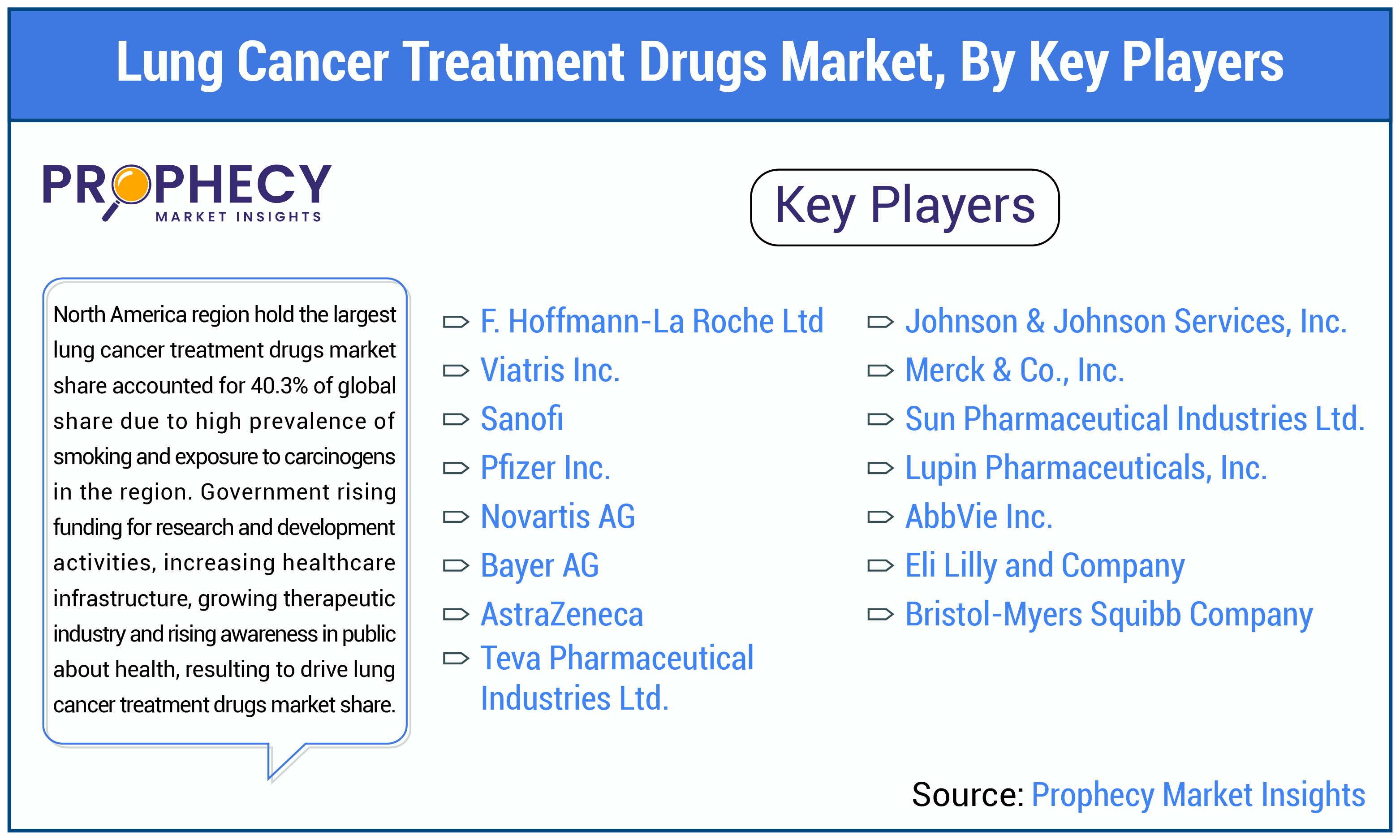
The key players operating in the lung cancer treatment drugs market include F. Hoffmann-La Roche Ltd, Viatris Inc, Teva Pharmaceutical Industries Ltd. and others. These key players are focusing on improving on research and development, innovative strategies, new drug development, through strategic partnerships and acquisitions to enhance lung cancer treatment drugs through collaborations.
Lung cancer treatment drugs market Companies:
- F. Hoffmann-La Roche Ltd
- Viatris Inc.
- Teva Pharmaceutical Industries Ltd.
- Sanofi
- Pfizer Inc.
- Novartis AG
- Bayer AG
- Johnson & Johnson Services, Inc.
- AstraZeneca
- Merck & Co., Inc.
- Sun Pharmaceutical Industries Ltd.
- Lupin Pharmaceuticals, Inc.
- AbbVie Inc.
- Eli Lilly and Company
- Bristol-Myers Squibb Company
View an Additional List of Companies in the Lung cancer treatment drugs market
Global Lung Cancer Treatment Drugs Recent News
- In January 2025, Zai Lab Limited got approval from U.S. Food and Drug Administration (FDA) for Orphan Drug Designation, known as ZL-1310 drug. ZL-1310 described as a first-in-class DLL3 antibody-drug conjugate, which represent new treatment option for small cell lung cancer patients. Zai Lab advanced the clinical development of ZL-1310 in multiple lines of therapy for SCLC and enhanced potential for cancer drugs.
- In January 2025, AstraZenca recived approval from National Institute for Health and Care Excellence (NICE) for the treatment of lung cancer in England and Wales. NICE approved AstraZenca’s Imfinzi (durvalumab) and Tagrisso (osimertinib) drug, as an adjuvant treatment for lung cancer, addressing both SCLC and NSCLC, by improved overall-survial and progression-free survival. Imfinzi drug used with combination with etoposide and platinum-based chemotherapy for SCLC patients. Tagrisso recommended as an adjuvant treatment option after complete tumor resection in adult patients with stage IB-IIIA NSCLC.
- In January 2025, SN BioScience received Investigational New Drug (IND) clearance from the U.S. Food and Drug administration (FDA) for SNB-101 to Phase 1b/2 clinical trial. This drug aimed to treat patients diagnosed with Extensive Stage Lung Cancer Treatment Drugs (ES-SCLC). The trial was concentrated on dose escalation and optimization to improve efficacy and safety. SN BioScience aimed to establish its treatment as a second- or third-line option for patients resistant to existing therapies, with combination with immune-oncology agents.
- In August 2024, The FDA approved a new initial treatment for advanced non-small cell lung cancer after phase III clinical trials results. The chemotherapy-free combination of new drug, known as Lazcluze-Rybrevant therapy, aimed to treat patients with stage III or stage IV of NSCLC cancer. This new treatment targets cancerous cell and identify mutation in non-small cell lung cancer.
- In June 2021, Researchers at University School of Medicine in St. Louis, developed a new drug for non-small cell lung cancer. The FDA approved new drug Sotorasib was aimed to reduce tumor size and improved survival rate of patient with lung tumors caused by specific DNA mutation in KRAS gene. The phase II clinical trial of drug showed that, sotorasib effectively reduced tumor size in NSCLC patients by suppressing KRAS mutation.
Analyst View:
Lung cancer treatment drugs market is significantly driven by focusing on developing advanced therapies, as the targeted therapies and immunotherapies to offer more precise treatment with minimized side effects as compared to tradition therapy. The increasing prevalence of lung cancer, rises the demand for personalized treatment plans, and growing investment in drug development, leading to drive target market growth.
More Related Reports
Cancer Therapy Market
Cancer Diagnostics Market
Lung Cancer Diagnostic Test Market
Small Cell Lung Cancer Market
Lung Cancer Market
Global Lung Cancer Treatment Drugs Company Profile
|
Company Name |
Novartis AG |
|
Headquarter |
Basel, Switzerland |
|
CEO |
Vas Narasimhan |
|
Employee Count (2024) |
75,883 employees |
Global Lung Cancer Treatment Drugs Highlights
FAQs
Lung cancer treatment drugs market size was valued at USD 61.2 Billion in 2025 and is expected to reach USD 156.0 Billion by 2035 growing at a CAGR of 10.8%.
Treatment type, cancer type, route of administration, distribution channel and region are the segmentation for the target market.
North America, Asia Pacific, Europe, Latin America, the Middle East, and Africa. North America is expected to dominate the market.
The key players operating the lung cancer treatment drugs market include F. Hoffmann-La Roche Ltd , Viatris Inc., Teva Pharmaceutical Industries Ltd., Sanofi, Pfizer Inc., Novartis AG, Bayer AG, Johnson & Johnson Services, Inc., AstraZeneca, Merck & Co., Inc., Sun Pharmaceutical Industries Ltd., Lupin Pharmaceuticals, Inc, AbbVie Inc., Eli Lilly, Bristol-Myers Squibb.