Global Kombucha Market By Type Overview
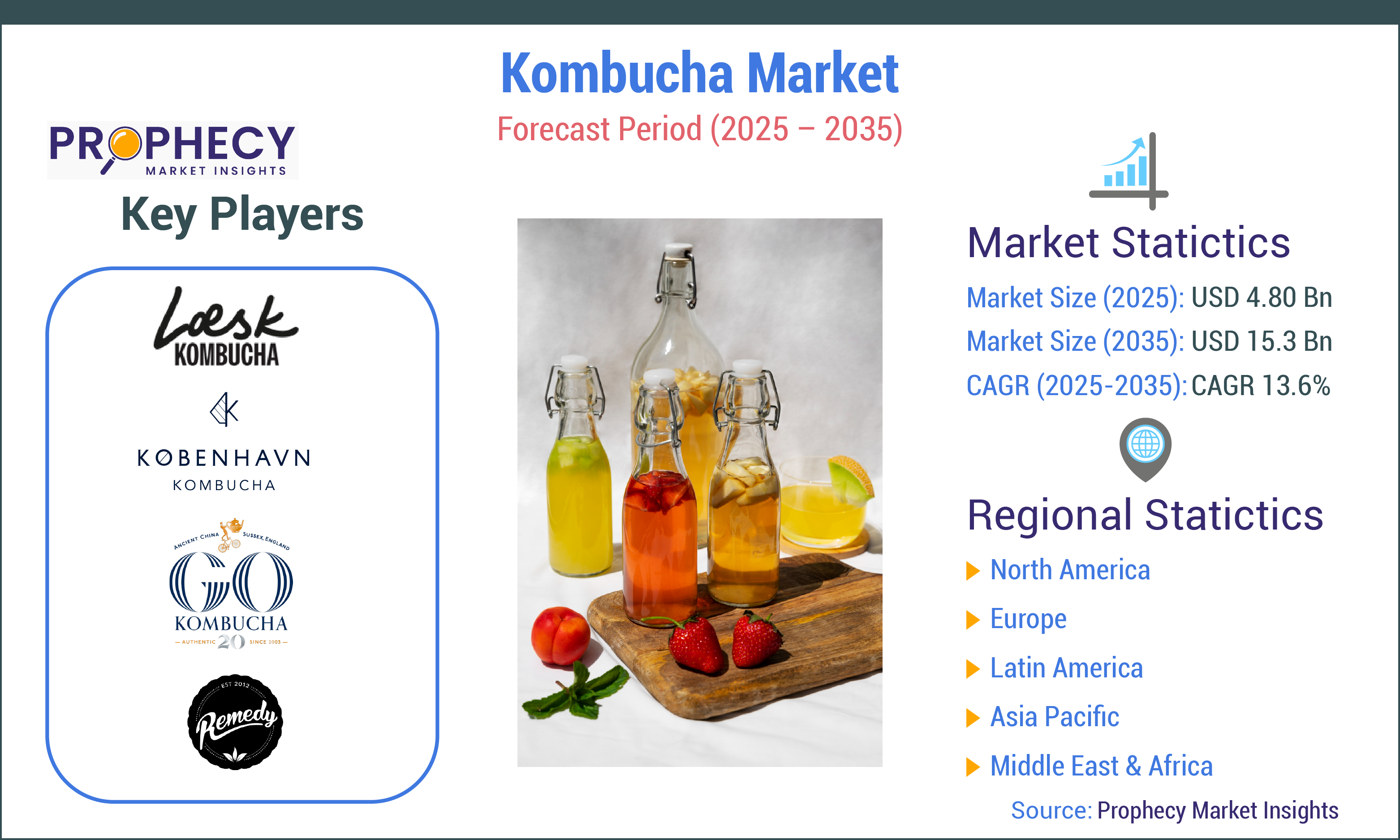
- By 2035, the kombucha market size is contemplated to enlarge at a valuation of USD 15.3 Billion.
- In 2024, the kombucha market valuation was USD 4.7 Billion.
- Kombucha market is developing at a CAGR of 13.6%.
Kombucha is a fermented tea drink. It's made by letting sweetened black or green tea mix with a special blend of bacteria and yeast called a SCOBY. It usually has a little fizz to it and people often enjoy it because they think it's good for them, such as helping with digestion and strengthening the immune system.
The Kombucha Market grows with increasing natural and organic product demand especially for gut health, immune support and detoxification. This drink's focus on being low in sugar, natural, and organic has made it a go-to choice for those looking for a better alternative to fizzy sodas, particularly attracting health-focused millennials and Gen Z. Its popularity keeps growing thanks to creative new flavors like botanical and spiced infusions, plus improvements in eco-friendly packaging and convenient online shopping options that make it even more accessible.
Kombucha Market is witnessing several key opportunities and trends. We're seeing more kombucha get a functional boost, with brands mixing in adaptogens, nootropics, and superfoods to appeal to people focused on wellness. There's also a growing chance to tap into the market for "hard kombucha" alcoholic versions that target consumers looking for better and healthy alternative drinks.
Key Indicators:
- For instance, the Food and Health Survey of 2022 reported the nutrients consumed to enhance digestive and gut health included a 16% share of fermented beverages such as kombucha.
Recession Risk & Tariff Analysis:
- The kombucha market is witnessing a steady growth will many challenges. Major economic issues, such as the possibility of a recession or changes in trade rules, could pose challenges. If the economy takes a downturn, consumers might cut purchase on spending for premium health drinks such kombucha, shifting towards cheaper substitutes instead. This shift could definitely hit kombucha sales, especially in developed countries.
- Kombucha makers who use imported ingredients like tea, sugar, glass bottles, or organic flavorings might face trouble with changing tariffs and trade regulations. This is especially true when dealing with countries such as the U.S., China, and the European Union.
Impact of Generative AI on Kombucha Market:
- Generative AI is revolutionizing the kombucha market, influencing everything from products to marketing and how brands connect with customers. Companies are using AI tools to study consumer needs, track trends on social media, and analyze flavor data. This helps companies quickly come up with innovative, custom kombucha flavors that match the consumer’s demand.
- Moreover, AI-powered chatbots and virtual assistants are stepping up customer service and the online shopping experience, particularly when companies deal directly with customers. As more businesses start using AI, those in the kombucha industry can implement for efficient supply chain operations, prediction analysis for production, and help the brand stand out in a really competitive wellness drinks market.
Global Kombucha Market By Type Drivers & Restraints
Key Drivers:
Rising Health Consciousness Fuels Surge in Kombucha Demand
The Kombucha Market is growing significantly as large consumers are choosing functional beverages drinks that offer health benefits. This trend has definitely made drinks such kombucha more popular, increasing both interest and demand. The rising trend of clean-label and organic foods is helping kombucha become even more popular. Plus, since it's now easier to find in regular stores and online, it has become more accessible in developing regions.
- For Instance, according to the Institute of Food Technologists (IFT) 2017, functional beverages held 76.4% market share in the overall beverage sector in the U.S. Probiotic drinks are generally made using fermented milk such as yogurt and kefir.
Restraints:
Regulatory Scrutiny Increases on Alcohol Content and Nutritional Shifts
Multiple organizations are monitoring alcohol ratio used in different drinks, due to it's a public health concern. One major issue is that drinks with high alcohol levels can mess with medications that some people are taking. Also, the alcohol level might shift slightly between the production of drink and final stage of purchase this can happen due to secondary fermentation during transport. Furthermore, adding flavors to the drink can also alter nutritional value of the drink.
- Counterbalance Statements: Improvements in process of fermentation is managed and product safety during shipping help prevent alcohol levels from rising unexpectedly on the way to customers. Additionally, when flavors are added, they often use natural ingredients that have a minimal effect, helping to keep or even boost the drink's benefits without sacrificing its health advantages.
Opportunities & Trends:
Health-Conscious Youth and Flavor Innovation Drive Market Growth
The growing demand for refreshing drinks, especially those you can grab and go, is really pushing this change forward. People, particularly younger generations such as millennials and Gen Z, are all about healthier living these days. This means they're increasingly opting for drinks that have low to no alcohol or are simply better for them than traditional alcoholic beverages. Plus, with all the new and exciting flavor options hitting the market on global scale, the industry is growing significantly in forecast period.
- For instance, according to the World Health Organization (WHO), nearly 3 million deaths occur every year as a result of harmful alcohol consumption, representing 5.3% of all deaths, which has shifted consumer preferences towards fermented tea and other low or non-alcoholic drinks around the world.
Global Kombucha Market By Type Segmentations & Regional Insights
Product type, packaging type, distribution channel, and region are the divisions of the kombucha market.
By Product Type:
Natural and flavored, are product type on which kombucha market is segmented. The flavored product types are leading the segment in kombucha market share as large consumption by consumers for trying out new and innovative drinks. This trend is beneficial for manufacturers, as it gives them a chance to add natural flavorings and botanicals. Growth is increasing as consumers are becoming more aware of the potential downsides of synthetic flavors.
Natural kombucha is a popular choice, coming in at second place and capturing about 22–35% of the market according to consumer data. This popularity really shows the strong support from consumers who are purists and health-conscious folks. Consumers appreciate the genuine probiotic benefits, prefer ingredients that are straightforward and clean, and truly enjoy the taste of authentic fermentation.
By Packaging Type:
On the basis of packaging type, kombucha market is categorized into glass bottles, cans, plastic bottles and others. Glass bottles are the go-to packaging for kombucha market share these days, and stands dominant in packaging segment. They're seen as the top choice due to high quality, are safe for health, and are sustainable. Manufacturers prefer glass does a better job of keeping the drink's live cultures and natural flavors intact, which is why so many health-focused buyers lean towards this option.
Cans have secured the second most significant spot in the kombucha packaging market. This is largely due to consumers are increasingly looking for drinks that are portable, convenient, and has longer shelf life. The fact that cans are lightweight and can be recycled makes them very attractive to consumers who are often on the move, as well as sustainable.
By Distribution Channel:
The kombucha market on the account of distribution channel is categorized into supermarkets/ hypermarkets, convenience stores, health stores, and online retails. The supermarkets and hypermarkets are leading the distribution channel segment in kombucha market share due to huge stores offer substantial product place, making kombucha easy to spot and available. Since they're so accessible and often place kombucha near everyday groceries, it's simple for shoppers to grab a bottle, sometimes on a whim.
Health stores are the second most popular place to buy kombucha, particularly for shoppers who prioritize organic, natural, and wellness-focused products. These stores stand out because they often have staff who know a lot about the products, they display items strategically, and they carefully choose what to stock. All of this helps build customer trust and create a strong consumer base.
Regional Insights:
Geographically, the kombucha market is studied across North America, Europe, Asia Pacific, Latin America, and the Middle East & Africa.
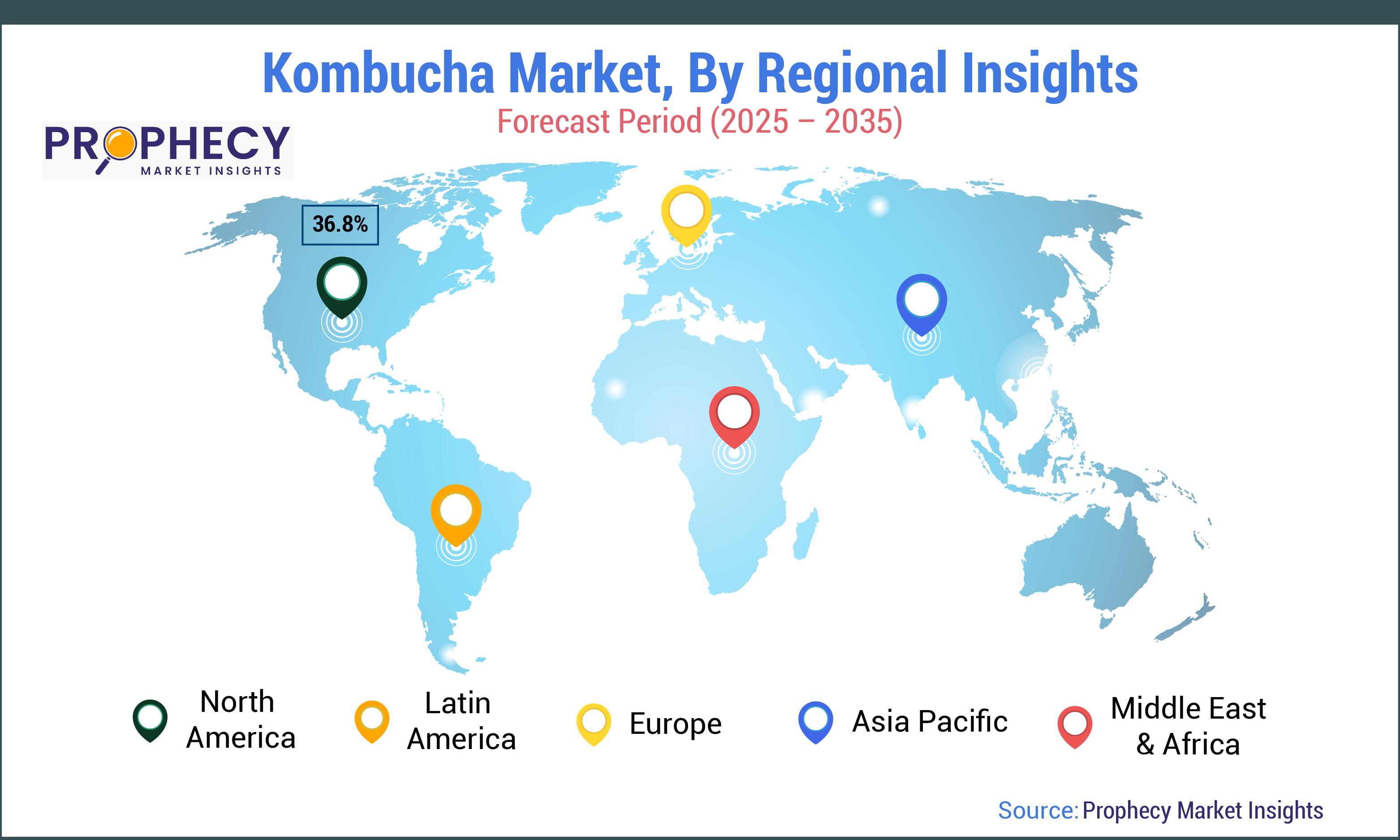
North America: This region is currently leading the way in the kombucha market and is expected to keep its leading position in forecast period. This is largely due to the drink's rising popularity among consumers. In the U.S. and Canada, people are becoming more health-conscious, and they're increasingly seeing kombucha as a healthier choice compared to traditional soft drinks and sodas. These factors are really driving the market's growth in the region.
- U.S. Kombucha Market Insights:
U.S. is the clear dominant region in the kombucha market. This region leads the kombucha market, grabbing most of the sales and consumption. Their top spot is reasonably strong culture focused on health and wellness, kombucha being easy to find at big stores, and consumers being well-informed about probiotics and functional drinks.
Europe: This is the second dominant region for global kombucha market it looks like Europe is set to become the second-biggest player in the market. This is largely due to people in the region are increasingly consuming probiotic drinks and other functional beverages, which has really driven up demand. Countries such as the U.K. and Russia are leading the charge as consumers there are really starting to embrace these drinks, often seeing them as a kind of 'adult soft drink'.
- Germany Kombucha Market Insights:
Germany is the Kombucha Market leader in Europe due Germans have a huge appetite for organic, natural drinks that also offer health benefits. The country’s well-established health food stores, people’s strong understanding of probiotics, and their preference
Asia Pacific: The kombucha market in Asia-Pacific is witnessing rapid growth due to growing health consciousness, urbanization, and rising disposable incomes in countries such as China, Japan, Australia, and India. Moreover, with more stores popping up and online shopping options expanding, kombucha is more accessible to consumers. This combination is fueling the market's expected rapid growth of over 10% each year, all the way up to 2030.
- China Kombucha Market Insights:
China leads the Asia-Pacific kombucha market, making large scale market share globally. This is largely due to its growing number of health-aware people, the increasing desire for functional drinks, and the country's robust retail and e-commerce networks.
Kombucha Market Report Scope:
|
Attribute |
Details |
|
Market Size 2025 |
USD 4.80 Billion |
|
Projected Market Size 2035 |
USD 15.3 Billion |
|
CAGR Growth Rate |
13.6% (2025-2035) |
|
Base year for estimation |
2024 |
|
Forecast period |
2025 – 2035 |
|
Market representation |
Revenue in USD Billion & CAGR from 2025 to 2035 |
|
Regional scope |
North America - U.S. and Canada Europe – Germany, U.K., France, Russia, Italy, Spain, Netherlands, and Rest of Europe Asia Pacific – China, India, Japan, Australia, Indonesia, Malaysia, South Korea, and Rest of Asia-Pacific Latin America - Brazil, Mexico, Argentina, and Rest of Latin America Middle East & Africa – GCC, Israel, South Africa, and Rest of Middle East & Africa |
|
Report coverage |
Revenue forecast, company share, competitive landscape, growth factors, and trends |
Segmentation:
By Product Type:
- Natural
- Flavored
By Packaging Type:
- Glass Bottles
- Cans
- Plastic bottles
- Others
By Distribution Channel:
- Supermarkets/ Hypermarkets
- Convenience Stores
- Health Stores
- Online Retails
By Region:
- North America
- U.S.
- Canada
- Europe
- Germany
- U.K.
- France
- Russia
- Italy
- Spain
- Netherlands
- Rest of Europe
- Asia Pacific
- China
- India
- Japan
- Australia
- Indonesia
- Malaysia
- South Korea
- Rest of Asia Pacific
- Latin America
- Brazil
- Mexico
- Argentina
- Rest of Latin America
- Middle East & Africa
- GCC
- Israel
- South Africa
- Rest of Middle East & Africa
Global Kombucha Market By Type Competitive Landscape & Key Players
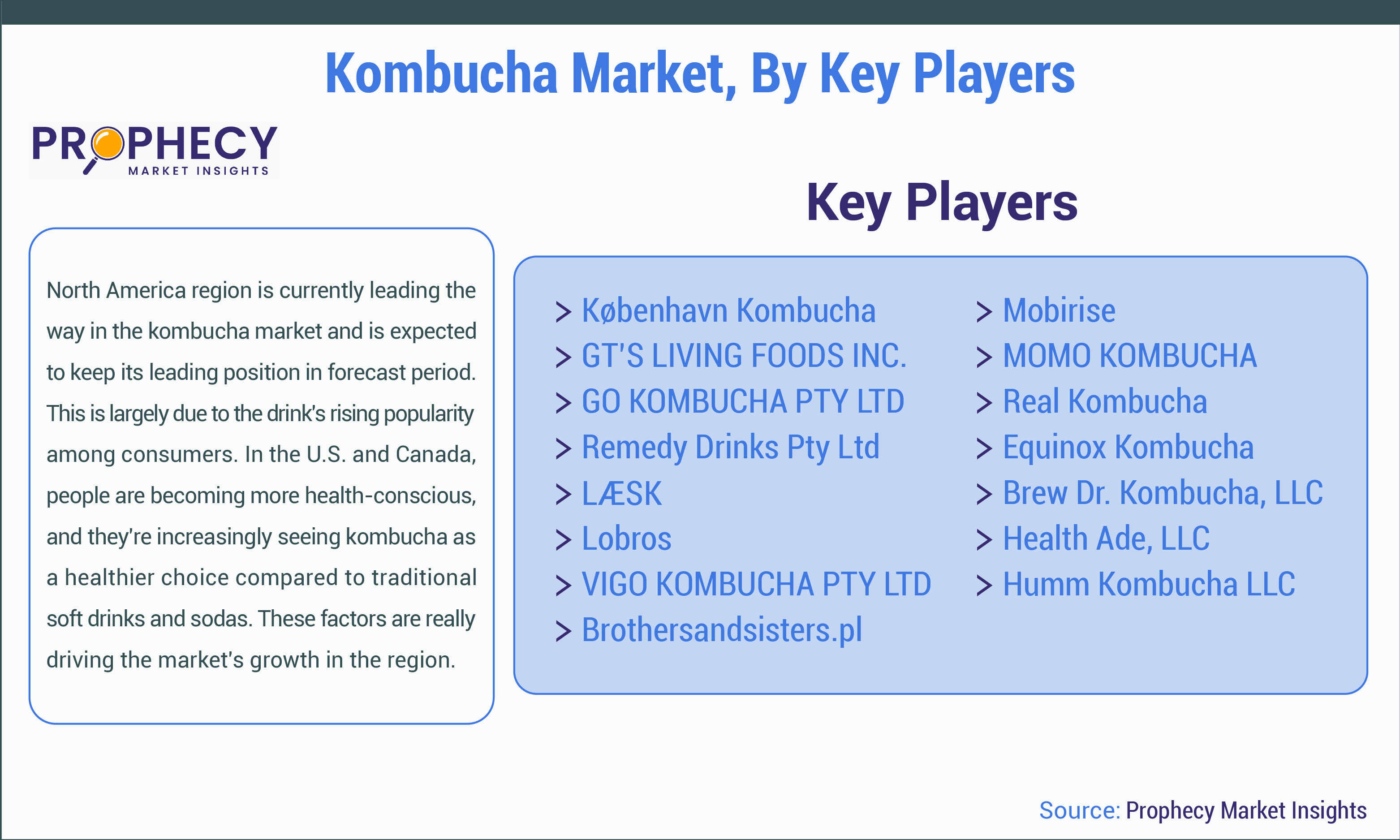
The key players operating in the kombucha market include, København Kombucha, GT’S LIVING FOODS INC., Mobirise, LÆSK, Lobros, and others. Major kombucha companies are working on growing their offerings by introducing creative, health-oriented flavors and beneficial ingredients. They're also concentrating on making their packaging and manufacturing processes more eco-friendly to meet environmental targets.
Kombucha Market Companies:
- København Kombucha
- GT’S LIVING FOODS INC.
- GO KOMBUCHA PTY LTD
- Remedy Drinks Pty Ltd
- LÆSK
- Lobros
- VIGO KOMBUCHA PTY LTD
- Brothersandsisters.pl
- Mobirise
- MOMO KOMBUCHA
- Real Kombucha
- Equinox Kombucha
- Brew Dr. Kombucha, LLC
- Health?Ade, LLC
- Humm Kombucha LLC
View an Additional List of Companies in the Kombucha Market
Global Kombucha Market By Type Recent News
- In January 2024, Lobros introduced a limited-edition Purple Grape flavored kombucha, which aims to evoke nostalgia by offering a familiar taste from childhood in a modern and healthier format. This new beverage has an organic infusion that enhances the classic purple grape flavor with a refreshing fizz, making it not only enjoyable but also beneficial for gut health.
- In May 2021, two flavors of fermented kombucha tea were introduced by Qumba Kombucha, a US-based company in the market. The different flavors of Kombucha include Qumba Hibiscus Blood Orange Kombucha Powder and Qumba Gingerberry Kombucha Powder. These products do not contain artificial sweeteners.
- In April 2021, US-based Harris Tea Company announced the complete acquisition of Tetley Harris Food Group shares, which was formerly a part of Tata Consumers Product company. The company's product portfolio includes wonder drink Kombucha, Southern Breeze, Ready Sweet, Newman's Organics, and Red Rose. The company aims to provide integrated end-to-end services to its clients.
Analyst View:
the kombucha market as a consistently expanding part of the bigger functional beverage world. This growth is fueled by more people getting interested in health, wellness, and drinks packed with probiotics. Growth continues to be boosted by making products more widely available through modern retail stores and online channels, alongside increasing demand from younger, health-aware groups of people. Analyst also highlight that new ideas in flavors and packaging are key strategies companies are employing to stand out in a market that's getting more competitive.
More Related Reports
Flavor Systems Market
Natural Food Flavor Market
Food and Beverage Flavors Market
Beverage Flavoring Systems Market
Food Flavor Market
Global Kombucha Market By Type Company Profile
|
Company Name |
Lobros |
|
Headquarter |
Dundalk, Ireland |
|
CEO |
Didi Lo |
|
Employee Count |
13,707 Employees |
Global Kombucha Market By Type Highlights
FAQs
Kombucha market size was valued at USD 4.80 Billion in 2025 and is expected to reach USD 15.3 Billion by 2035 growing at a CAGR of 13.6%.
Product type, packaging type, distribution channel, and region are the segmentation for the target market.
North America, Asia Pacific, Europe, Latin America, and the Middle East & Africa. North America is expected to dominate the market.
The key players operating the kombucha market include København Kombucha, GT’S LIVING FOODS INC., Dabur India Ltd., REMEDY DRINKS PTY LTD, LÆSK, Lobros, VIGO KOMBUCHA PTY LTD, Brothersandsisters.pl, Mobirise, MOMO KOMBUCHA, Real Kombucha, Equinox Kombucha, Brew Dr. Kombucha, LLC , Health?Ade, LLC, and Humm Kombucha LLC.