Global High Frequency XRay Generators Overview
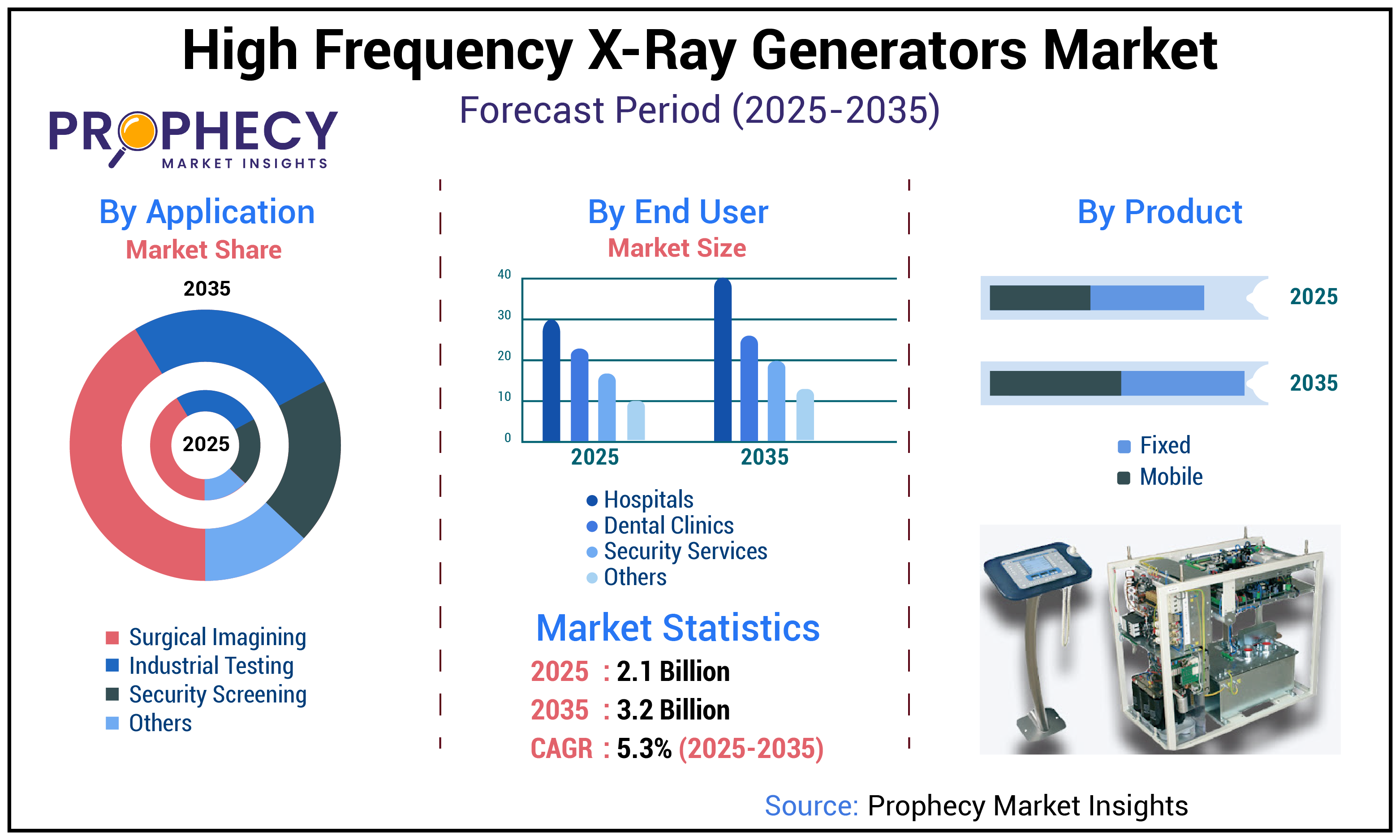
- By 2035, the high frequency x-ray generators market size is contemplated to enlarge at a valuation of USD 3.2 Billion.
- In 2024, the high frequency x-ray generators market valuation was USD 2.0 Billion.
- High frequency x-ray generators market is developing at a CAGR of 5.3%.
A high-frequency X-ray generator is an advanced device which converts electrical power into the high-voltage energy needed to produce X-rays. The high-frequency X-ray generator operates at 20–100 kHz, which in turn efficiently converts power, produces sharper images, and also reduces patient exposure to radiation. Such systems are most commonly seen in medical imaging, industrial inspection and research applications.
The high-frequency X-ray generator market is witnessing strong growth as healthcare facilities increasingly demand precise imaging, energy-efficient systems, and consistent diagnostic performance. They can provide steady performance and they consume less power and have better picture resolution which makes them optimal alternatives to old low-frequency units. Besides, the trend towards investment in healthcare infrastructure and the transition towards digital imaging systems is on a rise across the global map.
The high-frequency X-ray generator market will continue to expand as AI-driven imaging, portable diagnostic devices, and cost-effective hybrid systems enter mainstream use. Emerging economies are also offering lucrative business opportunities due to better access to healthcare and the fact that due to constant R&D efforts, costs are lowered and devices are becoming more portable. Additional features that could be included in the future are connectivity with clouds and automated imaging processes, which would enable the invention to be applicable in a wider clinical context and to perform diagnosis more quickly.
Impact of Generative AI on High Frequency X-Ray Generator Market:
- Generative AI is transforming medical imaging by enabling synthetic image generation, noise reduction, and cross-modality synthesis (e.g., converting MRI to CT visuals), all of which improve image clarity and diagnostic precision especially valuable in systems such as high-frequency X-ray generators. Through the addition of realistic synthetic images to datasets, generative models are also used to train AI tools on rare or otherwise underrepresented features, thus enabling more robust development of high-frequency imaging products as well.
Global High Frequency XRay Generators Drivers & Restraints
Key Drivers:
Surge in Radiation Exposure Spurs Shift toward Advanced High-Frequency X-Ray Systems
The high-frequency X-ray generator market is growing as medical facilities increasingly adopt advanced imaging to diagnose and monitor diseases. In the last three decades, there is an immense increase in patient exposure to ionizing radiations due to traditional imaging techniques. High-frequency X-ray generators address this need as they provide high-quality images at lower radiation doses, with a consistent output, which in turn improves diagnostic accuracy, plus reduces repeated scans as well as improved patient safety.
- For Instance, according to the International Journal of Medical Sciences states that annual per capita radiation exposure due to medical imaging has increased by six folds over the past decades. This increase the cancer risks for the long term and even low-dose exposure has been found to cause a significant number of cancer cases for big populations up to 2% on average. High-frequency X-ray generator market is overcoming these risks by reducing radiation exposure, and increasing clarity of the images.
Restraints:
Energy Inefficiency and Excess Heat Restrain High-Frequency X-Ray Generator Adoption
Energy inefficiency and excessive heat generation limit the performance of high-frequency X-ray generators. Less than 1% of the input energy is converted into useful X-rays, resulting in 99% of the energy dissipating as heat, causing a shorter lifespan of the X-ray tube and also straining key components. At high frequencies, metal seals and magnetic elements lose energy, requiring additional power to maintain performance. Such inefficiencies drive up the cost of operations and maintenance and cause challenges to raise frequencies as it will result into breaking down of the equipment.
- Counterbalance Statements: Recent advances in material science and thermal engineering are progressively creating solutions to these problems. Better sealing methods, newer cooling systems, and the development of non-magnetic or low loss magnetic alloys are facilitating improved heat dissipation and reducing magnetic losses. As these developments proceed, they are predicted to reduce technical limitations, in turn facilitating the further development of high-frequency X-ray generators.
Opportunities & Trends:
Expanding Applications Drive New Opportunities in High-Frequency X-Ray Generator Market
The high-frequency X-ray generator market is expanding as adoption rises beyond medicine into security screening, quality assurance, and non-destructive testing (NDT). These systems are used in manufacturing, electronics, automotive, and aerospace industries to provide high-resolution image to find defects that are otherwise hidden, airports and borders security agencies use them to screen cargo and luggage. Due to the modernization of hospitals and clinics, the demand in next generation high-frequency X-ray technology will constantly increase.
For instance, IONICS high frequency X-ray source, which has an input frequency of 20 kHz and an output frequency of 25 kHz and a performance of 160 kV/200 W and provides a crystal clear to detect any concealed threats in luggage and cargo. Their implementation improves the aviation safety, as well as simplifies the threat detection workflow at the security checkpoints.
Global High Frequency XRay Generators Segmentations & Regional Insights
Product, power output, technology, application, end user and region are the divisions of the high frequency X-ray generators market.
By Product:
Based on product types, the high-frequency X-ray generator market is segmented into fixed (stationary), and mobile. The fixed systems lead the high-frequency X-ray generator market share and take approximately 60% of market share making it the most mature segment. These generators are used regularly in hospitals, diagnostic centers and more specialized clinics since they offer steady high-powered imaging performance suited to in-department work.
mobile high-frequency X-ray generator is the second most dominant in the market and it is also growing fast due to demand for flexible imaging solutions. Their compact form factor and mobility help eliminate delays and facilitate prompt clinical decisions where they’re needed most.
By Power Output:
Based on power output, the high-frequency X-ray generator market is segmented into low, medium, and high power output systems. Medium-power (60–100 kVp) X-ray generators have held a dominant position in the high-frequency x-ray generator market share by virtue of their wide usage in chest and abdominal radiography as well as routine radiography. They provide a balanced combination of image detail and contrast, making them ideal for imaging both bone and soft tissue in average-sized patients. This flexibility guarantees standard performance in various clinical practices.
The next is the low-power (40–60 kVp) high-frequency X-ray generator market, which is especially used for small body part studies and pediatrics. The Journal of Medical Radiation Science reports that such systems are already capable of reducing the dose by up to 83 percent without sacrificing the image quality. High-efficiency detectors further enhance soft-tissue detail at lower doses, improving patient safety.
By Technology:
Based on technology, the high-frequency X-ray generator market is segmented into alternating current and direct current based systems The high-frequency X-ray generator market share is led by direct current-based systems, which use inverter-driven circuits to deliver a near-constant voltage to the X-ray tube. Also known as constant potential output, this technology offers a steady beam with little or zero voltage ripple that reduces exposure times, delivers high-quality images, reduces radiation doses, and produces lighter and compact systems.
Alternating current based systems rank as the second most common technology, operating on 50–60 Hz mains power to produce a pulsating waveform. They are less efficient at imaging, since X-rays are only produced during the positive half-cycle portion of the alternating current, and produce a more uneven beam intensity and higher ripple voltage.
By Application:
Based on application, high-frequency X-ray generators are segmented into surgical imaging, industrial inspection, security screening and others. In the high-frequency X-ray generator market, surgical imaging holds the leading share as hospitals increasingly adopt image-guided systems for modern operating environments. High frequency X-ray generators are incorporated into fluoroscopy and image-guided radiation therapy (IGRT) systems, which provide real-time high-resolution imaging in orthopedics, cardiovascular, and minimally invasive surgical procedures.
The second position is held by the industrial sector, with the aerospace, automotive, electronics, and manufacturing industries utilizing high frequency X-ray generators in the field of non-destructive testing. They also detect internal flaws in welds and castings, as well as in more complex parts, such as cracks, voids, and inclusions, thereby enhancing product reliability and safety.
By End User:
Hospitals and diagnostic centers, specialized clinics, veterinary clinics, industrial facilities, security agencies, and research institutes are the different segments of the high-frequency X-ray generator market. Hospitals and diagnostic imaging centers possess the highest high-frequency X-ray generator market share owing to their frequent use in low dose radiographic images in emergency rooms, general radiology, and specialized services such as pulmonology and orthopedics.
The second-largest end-user category is the specialized clinic since the clinics are increasingly equipped with high-frequency X-ray generators in order to offer cutting-edge diagnostic services without involving bulky hospital setup. Such systems are useful in dental, orthopedic, and outpatient care issues where the quality of imagery, portability, and speed of patient throughput are critical to competitive patient service.
Regional Insights:
Geographically, the high frequency X-ray generators market is studied across North America, Europe, and Asia Pacific.
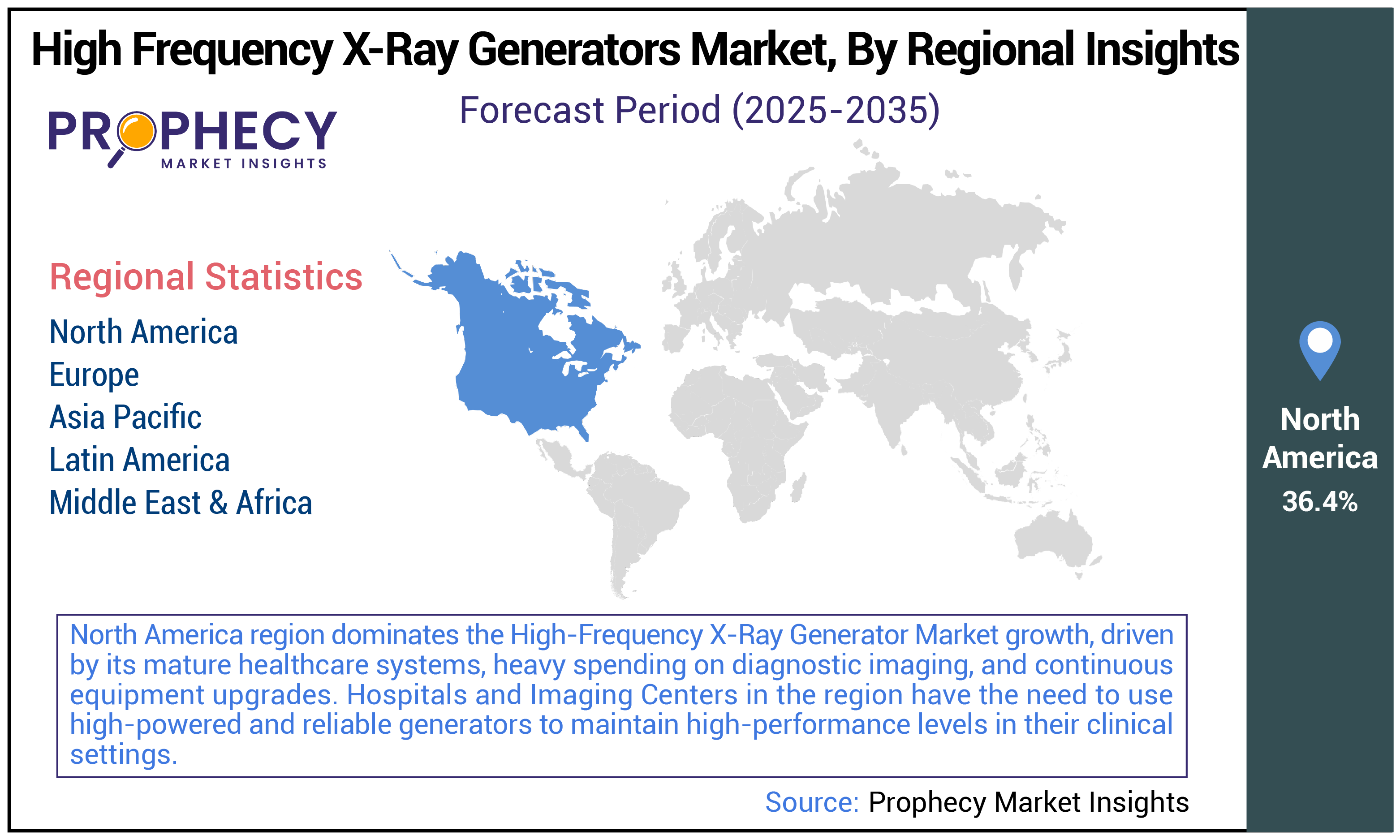
North America: This region dominates the high-frequency X-ray generator market growth, driven by its mature healthcare systems, heavy spending on diagnostic imaging, and continuous equipment upgrades. Hospitals and Imaging Centers in the region have the need to use high-powered and reliable generators to maintain high-performance levels in their clinical settings. The rising demand in digital radiography and screening is another factor that reinforces the position of North America as a leader in the market.
- U.S. High Frequency X-ray Generators Market Insights:
The U.S. dominates the regional high-frequency X-ray generator market with a significant installed base, high-tech research labs, with a major companies making and producing high quality medical equipment as well. Strong reimbursement frameworks and rapid technology adoption ensure consistent revenue growth and make the U.S. the global benchmark for premium high frequency X-ray system adoption.
Asia Pacific: The high-frequency X-ray generator market is growing swiftly in the Asia Pacific region due to increased healthcare investments, growing diagnostic infrastructure, and the quantity of patients requiring medical imaging. High rates of modernization of hospitals and government screening initiatives contribute to increasing adoption rates even in developing nations.
- China High Frequency X-ray Generators Market Insights:
China is a dominant player in the Asia Pacific high frequency X-ray generators market holding close to 60 percent of production as well as exports. Manufacturers produce and distribute both domestically and globally and government initiatives to reinforce healthcare infrastructure in China makes it the most influential global hub regarding high frequency X-ray technology in the region.
Europe: This region holds a solid position in the high-frequency X-ray generator market size, supported by stringent quality standards, early adoption of digital imaging, and rising demand for high-precision diagnostic tools. Western Europe is an established economy, with solid sources of healthcare funds and well-formed procurement systems yielding a stable demand of advanced high frequency generators.
- Germany High Frequency X-ray Generators Market Insights:
Germany leads Europe’s high-frequency X-ray generator market with its strong manufacturing base, advanced medical technology sector, and continuous hospital modernization programs. German engineering expertise and export strength make it a key supplier of high frequency X-ray systems to the broader European Union region and international markets.
High Frequency X-ray Generators Market Report Scope:
|
Attribute |
Details |
|
Market Size 2025 |
USD 2.1 Billion |
|
Projected Market Size 2035 |
USD 3.2 Billion |
|
CAGR Growth Rate |
5.3% (2025-2035) |
|
Base year for estimation |
2024 |
|
Forecast period |
2025 – 2035 |
|
Market representation |
Revenue in USD Billion & CAGR from 2025 to 2035 |
|
Regional scope |
North America - U.S. and Canada Europe – Germany, U.K., France, Russia, Italy, Spain, Netherlands, and Rest of Europe Asia Pacific – China, India, Japan, Australia, Indonesia, Malaysia, South Korea, and Rest of Asia-Pacific Latin America - Brazil, Mexico, Argentina, and Rest of Latin America Middle East & Africa – GCC, Israel, South Africa, and Rest of Middle East & Africa |
|
Report coverage |
Revenue forecast, company share, competitive landscape, growth factors, and trends |
Segmentation:
By Product:
- Fixed
- Mobile
By Power Output:
- Low Power Output (40–60 kVp)
- Medium Power Output (60–100 kVp)
- High Power Output (100-125 kVp)
By Technology:
- Alternating Current
- Direct Current
By Application:
- Surgical Imagining
- Industrial Testing
- Security Screening
- Others
By End User:
- Hospitals
- Dental Clinics
- Security Services
- Others
By Region:
- North America
- U.S.
- Canada
- Europe
- Germany
- U.K.
- France
- Russia
- Italy
- Spain
- Netherlands
- Rest of Europe
- Asia Pacific
- China
- India
- Japan
- Australia
- Indonesia
- Malaysia
- South Korea
- Rest of Asia Pacific
- Latin America
- Brazil
- Mexico
- Argentina
- Rest of Latin America
- Middle East & Africa
- GCC
- Israel
- South Africa
- Rest of Middle East & Africa
Global High Frequency XRay Generators Competitive Landscape & Key Players
Companies in the high frequency X-ray generators market can accelerate growth by investing in R&D to deliver compact, energy-efficient systems with superior image quality. Diversification of product lines to suit point-of-care and mobile diagnostics, reinforcement of association with hospitals and distribution networks, effective adoption of state regulations on radiation safety will boost adoption.
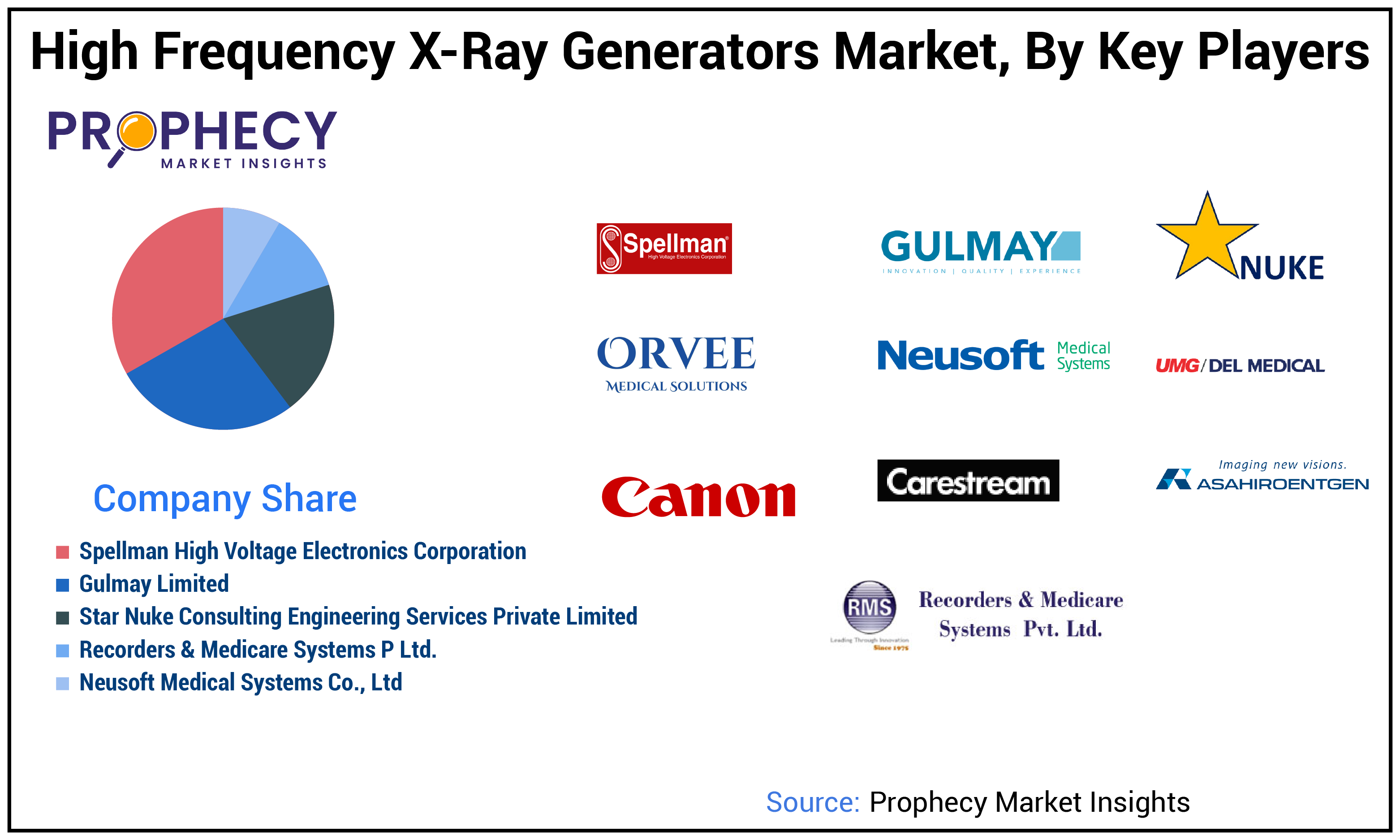
Furthermore, prioritizing cost-effective products targeting the emerging markets can pave the way to new streams and growing global market share. The key players operating in the high frequency X-ray generators market include, Varian, A Siemens Healthier Company, Gulmay Limited, IONICS, Spellman High Voltage Electronics Corporation and others.
High Frequency X-Ray Generators Market Companies:
- Spellman High Voltage Electronics Corporation
- Gulmay Limited
- Star Nuke Consulting Engineering Services Private Limited
- Recorders & Medicare Systems P Ltd.
- Neusoft Medical Systems Co., Ltd
- Orvee Medical Solutions Private Limited
- CANON MEDICAL SYSTEMS CORPORATIONBPL Medical Technologies
- Asahi Roentge Inc. Co. LTD
- UMG/DEL MEDICAL
- Varian, A Siemens Healthineers Company
- IONICS
- Carestream Health
- MinXray, Inc.
- DRGEM Corporation
- BPL Medical Technologies
View an Additional List of Companies in the High Frequency X-Ray Generators Market
Global High Frequency XRay Generators Recent News
- In February 2024: The United Imaging, a company engaging in manufacturing imaging equipment, partnered with Al Mana Group in three years in Saudi Arabia. Al Mana Hospital will be marketed under this agreement as a training centre and centre of strategy towards digital mobile X-rays deployment across Saudi Arabia and the rest of Middle East as a means of enhancing coverage of advanced radiography solutions in this part of the world.
- In August 2024: Records and Medicare Systems Pvt. Ltd. (RMS), a company based in India that deals in biomedical technology, has introduced an innovative type of mobile X-ray equipment, the HFX5 that is known as RADX in the Medicall Expo. The device unites an advanced high-frequency high-voltage X-ray generator with an extends a history of high image acquisition quality, efficiency, and safety in low skin dose protection, reflecting RMS commitment to a leadership position in advancing efficiency and safety in diagnostic tests in remote and point-of-care applications.
- In 2023: GE Healthcare introduced Vscan Air SL clip-on ultrasound scanner, which provides precise cardiac and vascular evaluation. These portable, wireless or wearable devices offer quicker data analysis, real-time sharing of images and videos, and remote consultation services that help healthcare providers diagnose conditions such as heart failure, coronary artery disease, and pleural or pulmonary diseases in a faster and more accurate manner.
Analyst View:
The high frequency X-ray generators industry is considered to record stable growth in the coming years as more medical institutions around the globe look to keep pace with innovative diagnostic and imaging solutions. Increasing use of radiography, CT scans, and other ionizing radiology methods is driving the growth in the demand of compact, energy efficient, and high-performance of X-ray generators.
The constant innovation aiming at enhancing image sharpness, decreasing radiation exposure and ensuring patient safety are also driving market growth. As research institutions, diagnostic centers, and hospitals continue to prioritize faster and more accurate diagnostics, high frequency X-ray generators will remains an essential component in medical imaging systems.
More Related Reports
High Power Charger for Electric Vehicle Market
High Content Screening Market
High-Temperature Gasket Materials Market
High Performance Composites Market
High Strength Steel Market
Global High Frequency XRay Generators Company Profile
|
Company Name |
Spellman High Voltage Electronics Corporation |
|
Headquarter |
New York, United States |
|
CEO |
Loren Skeist |
|
Employee Count |
2,100 Employees |
Global High Frequency XRay Generators Highlights
FAQs
High frequency X-ray generator market size was valued at USD 2.1 Billion in 2025 and is expected to reach USD 3.2 Billion by 2035 growing at a CAGR of 5.3%.
Product, power output, technology, application, end user industry, and region are the segmentation for the target market.
North America, Asia Pacific, Europe, Latin America and Middle East & Africa. North America is expected to dominate the market.
The key players operating the high frequency X-ray generators market include Spellman High Voltage Electronics Corporation, Gulmay Limited, Star Nuke Consulting Engineering Services Private Limited, Recorders & Medicare Systems Pvt Ltd, Neusoft Medical Systems Co., Ltd, ORVEE MEDICAL SOLUTIONS PRIVATE LIMITED, CANON MEDICAL SYSTEMS CORPORATION, BPL Medical Technologies, Asahi Roentge Inc. Co. LTD, DRGEM Corporation, UMG/DEL MEDICAL, Varian, A Siemens Healthineers Company, IONICS, Carestream Health, and MinXray, Inc.