Global Energy Drink Market By Overview
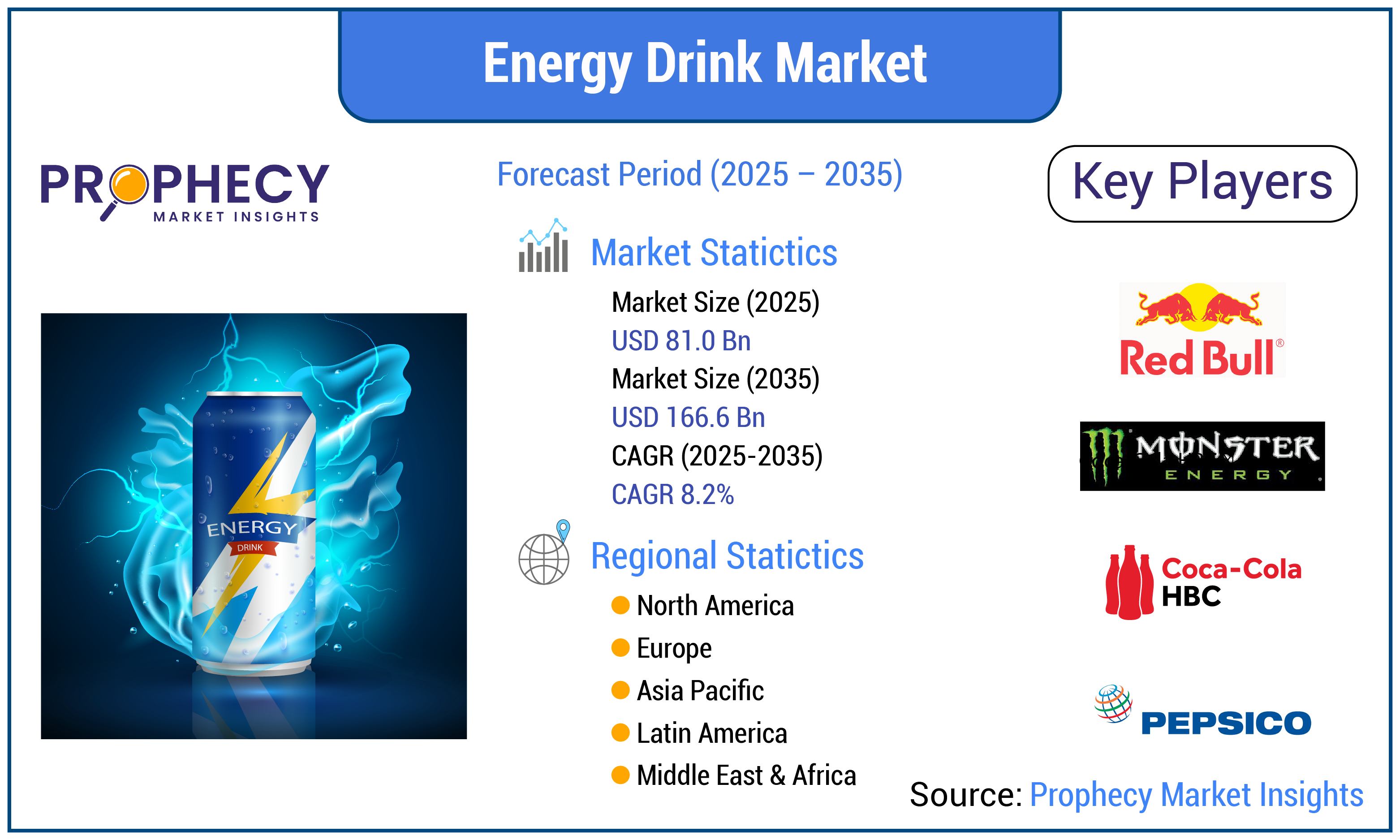
- Energy drink market size is anticipated to develop to USD 166.6 Billion, by 2035.
- The valuation of the target market accounted for USD 75.8 Billion in 2024.
- Energy drink market size is expanding at a CAGR of 8.2%.
An energy drink is a type of beverage specifically formulated to boost mental alertness, physical performance, and energy levels. These drinks typically contain high levels of caffeine, sugar, and other stimulants such as taurine, guarana, B vitamins, and ginseng. Energy drinks are especially popular among young adults, students, and athletes, and are often consumed before exams, workouts, or long periods of work. Energy drinks are aimed to provide a quick and intense burst of energy and mental focus, often within minutes of consumption.
The growing demand for energy solution, due to fast-paced lifestyles, growing focus on youth-oriented marketing, lifestyle trends, and growing popularity of fitness gyms has boosted demand for energy-boosting products, resulting to propel energy drinks market growth, Innovation in product formulation, expansion of distribution channels is anticipated to drive energy drinks market growth.
Growth in emerging markets, growing focus on health-conscious product lines, and consumer looking for multifunctional beverages, can create future opportunities for energy drinks market growth. Rapid growth e-commerce, online grocery shopping, and brands offering recyclable packaging or carbon-natural production is projected to boost energy drink market growth.
Recession Risk and Tarriff Analysis on Energy Drink Market:
- During a recession, consumer spending decline, especially on non-essential items such as premium beverages. Energy drinks, often priced higher than regular soft drinks, may see reduced demand as consumers shift toward cheaper alternatives such as coffee or water.
- Tariffs on imported ingredients, such as caffeine extracts, packaging materials, or sugar or finished beverages can increase production costs for energy drink manufacturers. This is especially relevant for companies that source materials globally or export to international markets.
Impact of Generative AI on Energy Drink Market:
- AI tools can analyze large datasets based on consumer preferences, ingredient trends, and nutritional needs to help brands develop unique and targeted energy drink formulas faster than traditional R&D methods. This allows companies to launch healthier, functional, or customized drinks aligned with evolving market demands, such as sugar-free or natural ingredient-based products.
- Brands can use AI to test and optimize campaigns across platforms, modifying messages by region, demographic, or time of day. AI-generated visuals, social media posts, and chatbot-driven customer interactions enhance brand presence by reducing costs and time.
Global Energy Drink Market By Drivers & Restraints
Key Drivers:
Rapid Growth in Online Grocery Shopping can Stimulate Market Augmentation
As more consumers hold the convenience of online purchasing groceries and beverages, energy drinks have become an increasingly popular category within e-commerce platforms. Online grocery shopping offers unparalleled convenience, allowing consumers to purchase energy drinks from the comfort of their homes. This convenience is especially attractive for busy individuals which may not have time to visit physical stores. Consumers can easily browse through a wide variety of energy drinks, compare prices, and select specific brands or flavors. The ability to shop at any time, whether during work hours or late at night, makes energy drinks more accessible to a broader demographic. In regions or areas in which physical stores might have limited stock or a narrow selection of energy drinks, online platforms allow customers in rural or underserved areas to access their preferred products. The rise of direct-to-consumer (DTC) sales via brand websites is driving energy drink market growth.
- For Instance, according to the data published by GWI, 59% of grocery shoppers prefer online shopping. U.S. online grocery purchase is growing at 23% from 2020, where 89% of shopper are reaching for privet-label products to stretch their grocery budgets. 35% of online grocery shopper are in high-income category. 61% are kids, and 47% of parents that have kids aged 3-11, prefer to quick, easy, and stress-free grocery solutions. 59% are married, and 67% of urban areas lived people prefer online grocery shopping. 35% of food shoppers in APAC regularly use coupons, showing that price incentives are a key factor in driving repeat purchases.
Restraints:
Market Hindered by Health Concerns and Regulatory Pressure
Many energy drinks contain high levels of caffeine and sugar, which can lead to health issues such as heart palpitations, insomnia, and obesity. These concerns have prompted regulatory scrutiny and limits for marketing restrictions, particularly targeting youth, resulting to delay target market growth.
- Counterbalance Statements: Brands are actively introducing low-sugar, natural, and organic variants, and clearly labeling caffeine content to maintain consumer trust and comply with regulations. There's a growing segment of functional and health-conscious energy drinks that align with wellness trends, which responsible to attract young adult and fitness enthusiast consumer.
Opportunities & Trends:
Innovation in Energy Drinks Alternatives will Create Significant Opportunities
Traditional energy drinks, often criticized for their high sugar and caffeine content, are being replaced or supplemented by health-focused alternatives that offer natural ingredients, functional benefits, and cleaner labels. Thus, the continuous innovation in combined antioxidant-rich plant extracts, fruit juices and moderate caffeine from cold brew coffee to deliver energy in healthier form. This innovation attracts wellness-conscious consumers and open new doors for organic product buyers, vegan consumers and fitness enthusiasts. As companies invest in research, ingredient development, and unique formulations, the ability to stand out with differentiated, science-backed alternatives becomes a competitive advantage fueling product expansion, resulting to propel energy drinks market size.
- For instance, according to article published by ResearchGate, in April2024, this article states that, commercial energy drinks contain high caffeine and sugar, which are associated with several health concerns, such as increased heart rate, elevated blood pressure, insulin resistance, obesity, and sleep disturbances when consumed in excess. Thus, scientists aimed to create an alternative type of energy drink using natural ingredients with lower caffeine and sugar content, by innovating spruce sprout brew-based energy drinks. Three commercial energy drinks combined with the newly formulated energy drinks, which contributes natural sweetness and nutrient. This alternative includes SCB, SCBo, and SCBaa. All drinks were tested for key quality indicators such as Vitamin C, titratable acidity, pH, soluble solids, color, total phenolic content, and anti-radical (antioxidant) activity using DPPH assay.
Global Energy Drink Market By Segmentations & Regional Insights
The energy drink market is segmented into product, drink type, packaging, consumer type, distribution channel, and region.
By Product:
Based on product, the market is divided into alcoholic, and non-alcoholic. Non-alcoholic is most superior segment in the market. These drinks are primarily targeted at individuals seeking an energy boost, enhanced alertness, or focus without the inclusion of alcohol. It is popular in demographic, including students, young professionals, athletes, and fitness enthusiasts. The demand is further fueled by the wide variety of options available, such as sugar-free, functional, health-conscious formulations and organic or natural energy drink is estimated to impel energy drinks market size.
Alcoholic energy drink is fastest growing segment in the market. These beverages, which combine alcohol with caffeine or other stimulants, are generally marketed to a specific demographic mainly young adults seeking a party or nightlife experience, is predicted to drive energy drink market share in following segment.
By Drink Type:
On the basis of drink type, the market is segmented into, energy shots, natural/organic energy drinks, sugar-free or low-calories energy drinks, and others. Sugar-free or low-calorie energy drinks is most dominating segment in the market, due to growing consumer awareness of the health risks associated with high sugar intake, such as obesity and diabetes. Many consumers, especially fitness-focused individuals and young professionals, prefer these drinks for their energy boost without the added calories, is expected to pitch segment’s development in energy drinks market share.
Natural/organic energy drinks is second dominating segment in the market. These beverages appeal to health-conscious consumers which seek cleaner labels, natural caffeine sources, and organic certifications. With increasing demand for wellness-oriented products, this segment is experiencing strong growth and is expected to continue expanding in the energy drinks market size in coming years.
By Flavor:
By flavor market is segmented into berries, mocha, pomegranate, apple, mint, cola, chocolate, and others. Berry flavor holds the dominant position among the various segments. This popularity is largely attributed to its wide consumer appeal, refreshing taste, and its compatibility with functional ingredients such as vitamins and caffeine. Younger demographics and health-conscious consumers tend to settle toward fruit-based flavors, resulting to boost segment’s expansion in energy drink market share.
By Packaging:
On the basis of packaging, the market is classified into glass bottles, metal cans, and others. Metal cans lead the market due to their durability, convenience, and strong appeal for on-the-go consumption. This are lightweight, recyclable, and preserve the carbonation and freshness of the drink better than most alternatives. Metal cans are also favored for branding and marketing, as their surface allows for bold, eye-catching designs that attract younger consumers, is projected to fuel growth of segment in energy drinks market share.
By Consumer Type:
By consumer type, energy drink market is divided into, teenagers, younger adults, fitness enthusiasts, and others. Younger adults hold the largest energy drinks market share. It often drawn to the stimulating effects of energy drinks for enhanced alertness, focus, and physical performance, such as studying, working, and partying. Brands have targeted this demographic with bold marketing strategies, associating their products with high-energy lifestyles, extreme sports, and social events, resulting to boost segment’s development in energy drinks market size.
By Distribution Channel:
Under distribution channel, the market is categorized into supermarkets, online retail, health & fitness stores, and others. The market is dominated by supermarkets segment. These retail outlets offer wide visibility and accessibility to consumers, which can easily purchase energy drinks while doing their regular grocery shopping. The convenience of placing energy drinks with other beverages makes supermarkets a preferred point of sale for both mainstream and premium energy drink brands, is anticipated to drive growth of segment in energy drinks market share.
Regional Insights:
Geographically, the market is studied across North America, Europe, Asia Pacific, Latin America, and the Middle East & Africa.
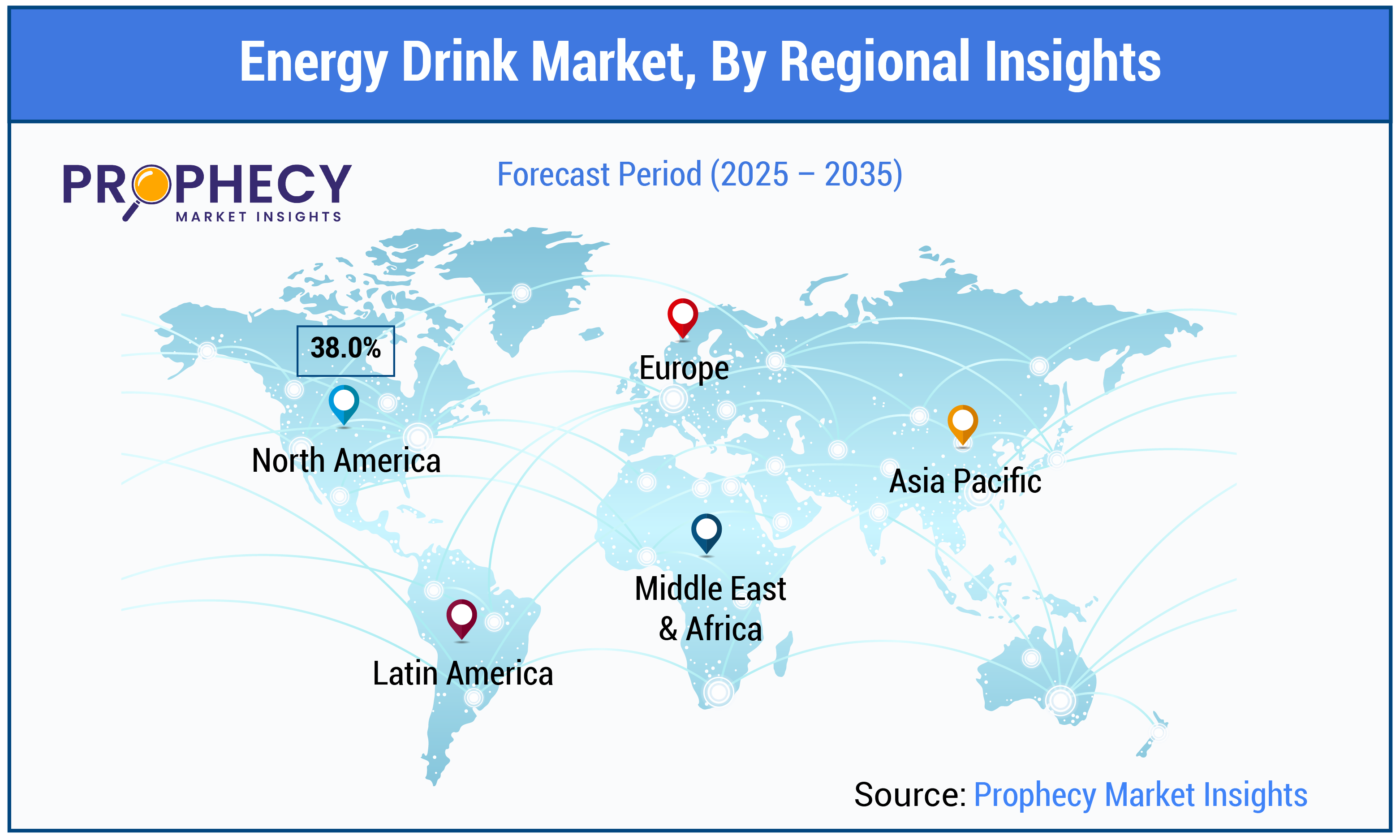
North America: This region holds the most dominant region, with approximately 38% of market share. This is due to high consumer demand, widespread consumption, and the presence of major energy drink brands. The region's robust distribution networks, with strong marketing campaigns targeting younger adults, professionals, and fitness enthusiasts, contribute to its dominant position. The popularity of energy drinks in sports and extreme activities, is responsible for the energy drinks market growth.
- U.S. Energy Drink Market Insights:
In North America, the U.S. is the dominant country in the market. It is home to major energy drink brands, and the popularity of energy drinks is driven by a large consumer base, including younger adults, professionals, and fitness enthusiasts. The U.S. also has a robust distribution network, making energy drinks widely accessible, is accountable for the target market growth.
Europe: This is the second-largest market for energy drinks. The European market is characterized by a growing demand for health-conscious energy drinks, including natural, organic, and low-calorie variants. As consumer interest in fitness, wellness, and performance-enhancing beverages continues to rise, Europe presents significant growth opportunities, especially in niche markets, contributing to fuel energy drinks market size.
- U.K. Energy Drink Market Insights:
The U.K. is the leading country for energy drinks in Europe. The U.K. has a strong demand for both traditional and health-conscious energy drinks, with a growing trend toward sugar-free, low-calorie, and natural options. The high consumer awareness and significant young demographic, is attributed to develop energy drinks market share.
Asia Pacific: This region is experiencing significant growth in the energy drink market, driven by rapid urbanization, rising disposable incomes, and changing lifestyles. The increasing demand for energy drinks, especially among younger adults and professionals seeking quick energy boosts for work, study, and social activities. The growing interest in fitness and sports has contributed to the rise of energy drinks in the region, resulting to impel energy drinks market share.
- China Energy Drink Market Insights:
China is the dominant country in the Asia-Pacific region market. The country’s rapid urbanization, growing middle class, and increasing interest in fitness have contributed to the rise of energy drinks. While the market is still developing, the demand for energy drinks is increasing, particularly among young adults and professionals in major cities, is expected to boost energy drink market size.
Energy Drink Market Report Scope:
|
Attribute |
Details |
|
Market Size 2025 |
USD 81.0 Billion |
|
Projected Market Size 2035 |
USD 166.6 Billion |
|
CAGR Growth Rate |
8.2% (2025-2035) |
|
Base year for estimation |
2024 |
|
Forecast period |
2025 – 2035 |
|
Market representation |
Revenue in USD Billion & CAGR from 2025 to 2035 |
|
Regional scope |
North America - U.S. and Canada Europe – Germany, U.K., France, Russia, Italy, Spain, Netherlands, and Rest of Europe Asia Pacific – China, India, Japan, Australia, Indonesia, Malaysia, South Korea, and Rest of Asia-Pacific Latin America - Brazil, Mexico, Argentina, and Rest of Latin America Middle East & Africa – GCC, Israel, South Africa, and Rest of Middle East & Africa |
|
Report coverage |
Revenue forecast, company share, competitive landscape, growth factors, and trends |
Segmentation:
By Product:
- Alcoholic
- Non-alcoholic
By Drink Type:
- Energy Shots
- Natural/Organic Energy Drinks
- Sugar-free or Low-calories Energy Drinks
- Others
By Flavor:
- Berries
- Mocha
- Pomegranate
- Apple
- Mint
- Cola
- Chocolate
- Others
By Packaging:
- Glass Bottles
- Metal Cans
- Others
By Consumer Type:
- Teenagers
- Younger Adults
- Fitness Enthusiasts
- Others
By Distribution Channel:
- Supermarkets
- Online Retail
- Health & Fitness Stores
- Others
By Region:
- North America
- U.S.
- Canada
- Europe
- Germany
- U.K.
- France
- Russia
- Italy
- Spain
- Netherlands
- Rest of Europe
- Asia Pacific
- China
- India
- Japan
- Australia
- Indonesia
- Malaysia
- South Korea
- Rest of Asia Pacific
- Latin America
- Brazil
- Mexico
- Argentina
- Rest of Latin America
- Middle East & Africa
- GCC
- Israel
- South Africa
- Rest of Middle East & Africa
Global Energy Drink Market By Competitive Landscape & Key Players
The main key players operating in the energy drink market are, Red Bull, Monster Energy Company, Coca-Cola HBC., and others. These companies are constantly innovating, expanding their product portfolios, and optimizing production processes to meet the evolving demands of consumers, through their collaboration or partnerships. Companies are introducing new products with natural sources of caffeine, such as green tea, coffee bean extract, and guarana, and incorporating ingredients such as vitamins, electrolytes, and adaptogens for added health benefits, through their acquisition, is anticipated to drive energy drink market growth.
Energy Drink Market Companies:
- Red Bull
- Monster Energy Company
- Coca-Cola HBC.
- PepsiCo
- CELSIUS
- AriZona Beverages USA
- Alani Nu, LLC.
- BANG Beverage Company LLC.
- Ocean Beverages
- Pepsi Energy Co.
- Reign Beverage Company LLC
- NOS Energy Company
- Energy Beverages LLC
- Living Essentials Marketing, LLC.
- G FUEL
- Prime Hydration LLC
View an Additional List of Companies in the Energy Drink Market
Global Energy Drink Market By Recent News
- In April 2025, Heineken acquired stake in U.K. energy-dinks business, known as Tenzing. This acquisition aimed to develop and stretch next to the beer and cider categories of Heineken Business. It was first Heineken UK’s investment into the rapidly growing energy drinks market, and focused to help growth of Tenzing brand.
- In April 2024, GURU Organic Energy Corp. launched its new Peach Mango Punch energy drink to retailers in Canada, with is national marketing campaign. The Peach Mango Punch to Canadian retailers was supported by GURU's 3600 national marketing campaign, which include in-store promotions and activations, combined with high-impact in-store displays, digital, social media or influencer engagement, university campus activities, and special events in urban centers. GURU Peach Mango Punch was natural energy drink which has 50 calories per packed with flavor.
- In March 2024, Red Bull expanded its portfolio in the sports and energy drink category with it 2024 summer edition. This includes energy drinks with flavor of Caruba, elderflower, melon and pineapple. The refreshing mix of watermelon juice, pineapple juice, jalapeno slices, basil, and the pick me up of Red Bull Energy Drink which aimed to make for a delicious concoction for any summer adventure.
- IN January 2024, CELSIUS Holdings, Inc. collaborated to PepsiCo to expand distribution agreement in Canada, U.K. and Ireland. CELSIUS was a new market and aimed to provide energy drink to more consumers to help them to achieve their goals. It is focused on evolving new portfolio and offer more choice of great testing drinks to consumers.
Analyst View:
The energy drink market is driven by several factors including changing consumer preferences, increasing demand for functional beverages, and innovation in product offerings. The significant shift towards healthier, more functional energy drinks, rise of sugar-free, low-calories, natural, organic energy drinks, and rise f e-commerce digital sale platforms, is anticipated to drive energy drink market share.
More Related Reports
Energy-Based Aesthetic Devices Market
Renewable Energy Storage Market
Bioenergy Market
Ambient Energy Harvester Market
Waste to Energy Market
Global Energy Drink Market By Company Profile
|
Company Name |
Monster Energy Company |
|
Headquarter |
Corona, California |
|
CEO |
Hilton H. Schlosberg |
|
Employee Count |
6,003 Employees |
Global Energy Drink Market By Highlights
FAQs
Energy drink market size was valued at USD 81.0 Billion in 2025 and is expected to reach USD 166.6Billion by 2035 growing at a CAGR of 8.2%.
Product, drink type, flavor, packaging, consumer type, distribution channel, and region are the segmentation for the target market.
North America, Asia Pacific, Europe, Latin America, and the Middle East & Africa. North America is expected to dominate the market.
The key players operating in the energy drink market include Red Bull, Monster Energy Company, Coca-Cola HBC, PepsiCo, CELSIUS, AriZona Beverages USA, Alani Nu, LLC, BANG Beverage Company LLC, Ocean Beverages, Pepsi Energy Co., Reign Beverage Company LLC, NOS Energy Company, Energy Beverages LLC, Living Essentials Marketing, LLC, G FUEL, and Prime Hydration LLC.