Global Endoscopic Spinal Surgery Market Overview
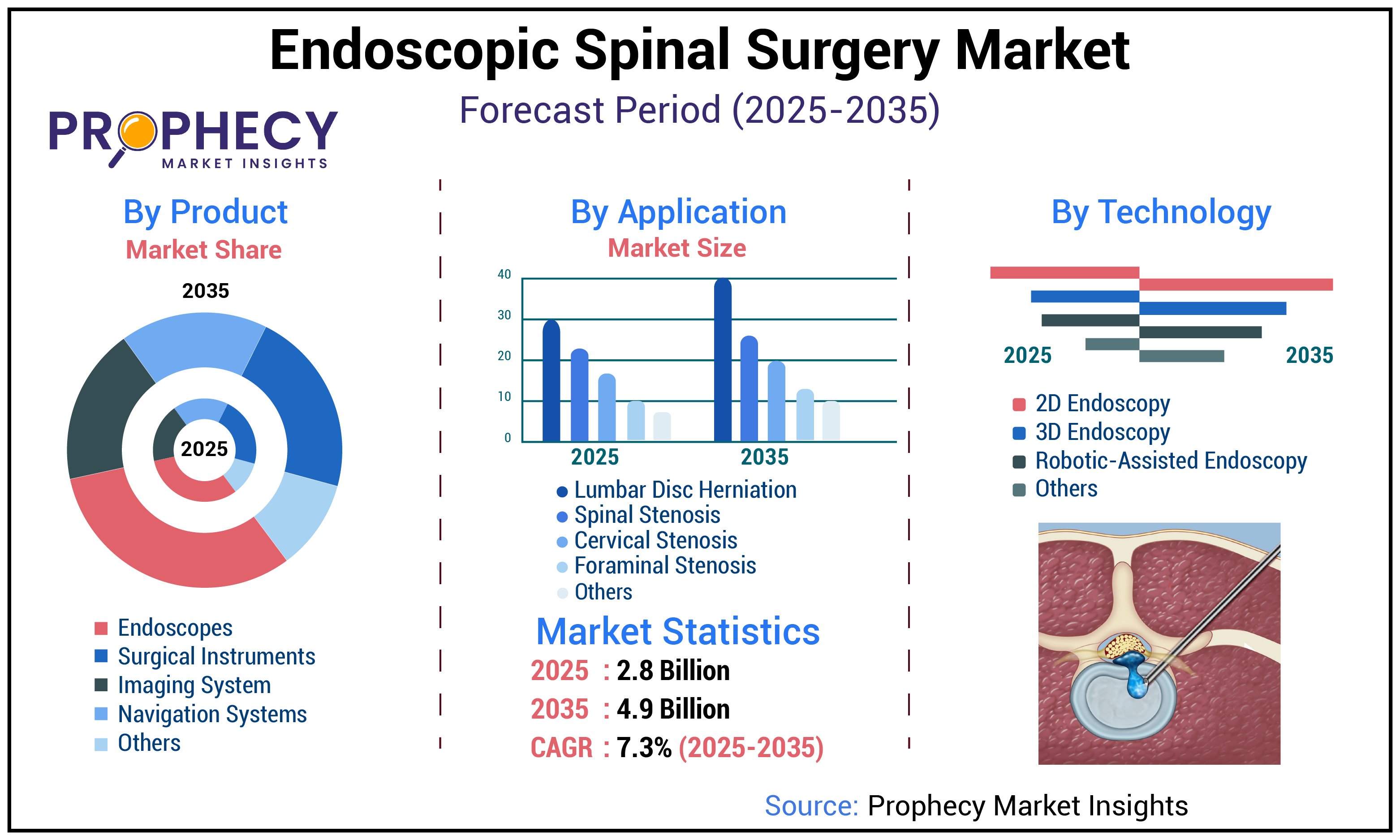
- By 2035, the endoscopic spinal surgery market size is contemplated to enlarge at a valuation of USD 4.9 Billion.
- In 2024, the endoscopic spinal surgery market valuation was USD 2.6 Billion.
- Endoscopic spinal surgery market is developing at a CAGR of 7.3%.
Endoscopic spine surgery is a less intrusive procedure that involves the use of a small camera and specialized instruments that are inserted through small incisions to operate on spinal conditions. As opposed to other open surgery that needs bigger incisions and involves the disruption of more tissues, the method minimizes damage on muscles and soft tissues and can reduce pain and improve healing rates. It is usually applied to disc protrusions, nerve impingement, and narrowing of the spine.
The endoscopic spinal surgery is becoming popular among patients and physicians due to its advantages. Advances in imaging devices and precision surgical tools have enhanced safety and accuracy and increased applications of surgery to other spine problems. Simultaneously, the emergence of higher incidences of spinal disorders due to an aging population and a lifestyles inactivity has triggered demand of treatments able to facilitate recovery within a shorter period.
The prospects of endoscopic spinal surgery are bright, with such advancements as robotic assistance, augmented reality navigation, and improved visualization making the procedures even more accurate. With investment in healthcare infrastructure and training of surgeons, these methods will become more widely spread. As research and technology continue to evolve, endoscopic spinal surgery will assume a central role in the modern care of the spine.
Recession Risk & Tariff Analysis:
- The endoscopic spinal surgery is presented by both the opportunities and risks of recession as healthcare spending decreases, investments in new technologies remain postponed, and budget tightening is the reality in developing countries, which might lead to a lack of demand in a minimally invasive surgical alternative.
- Endoscopic spinal surgery has been dependent on high-tech medical equipment that is acquired mostly by international countries. Tariffs or other import duties on these components may be also more expensive, understating increments in machine price, indirectly raising procedure costs. There is the risk of trade tensions influencing supply chains which can lead to regional disparities in access and adoption rates.
Impact of Generative AI on Endoscopic Spinal Surgery Market:
- Endoscopic spinal surgery can be transformed through the use of generative AI and artificial intelligence, which will improve all stages of therapy. AI can analyze medical imaging and patient history pre-surgery and optimize surgical plans and patient outcomes, making it possible to achieve personalized approaches that increase success rates.
- In the surgical setting, computer vision and robotics using AI technology help guide surgeons through procedures in the real-time, screening risks, and providing augmented reality overlays that allow increases precision and shorten operative times. In the future, the technologies will transform spine surgical training by using AI simulations and enhance postoperative recovery by using data-based therapy regimes, and allow spine surgery to become safer, smarter, and patient-specific.
Global Endoscopic Spinal Surgery Market Drivers & Restraints
Key Drivers:
Rising Demand and Innovation Propel Endoscopic Spinal Surgery Forward
The rising prevalence of spinal disorders, including herniated discs, spinal stenosis, and degenerative disc disease among the elderly population in the global population contributes to the growth of endoscopic spinal surgery. The conditions lead to chronic pain and difficulties with mobility, and effective and minimally invasive surgical intervention is in high demand. Additionally, the incorporation of the 3D imaging, robotic-assisted navigation, and AI-powered surgical equipment have substantially increased surgical accuracy, minimized surgical complications and accelerated patient recoveries.
- For instance, companies such as Medtronic have partnered with ambulatory surgical centers across the U.S. to expand access to these less invasive surgeries, resulting in a 23% adoption boost in regions where they operate, highlighting how innovation and partnerships drive market growth.
Restraints:
Sterilization Challenges and Infection Risks Slow Adoption of Endoscopic Spinal Surgery
The sterilization of endoscopic spinal surgery instruments and prevention of infections is a major limiting aspect of the endoscopic spinal surgery market. Endoscopic surgery entails the use of advanced, delicate equipment and endoscopes that should be thoroughly sterilized to avoid post-surgical infections. Reports on healthcare premises raise the issue of infections associated with improper sterilization of endoscopic equipment that may cause complications and have a negative impact on the safety of patients. It means that this challenge can make smaller or resource-constrained hospitals unable to embrace endoscopic spinal surgery in full.
- Counterbalance: These issues are being solved with advancing technology in the field of sterilization and standardization of procedural issues. Cleaning and sterilizing equipment installed inside the endoscope and automating it is also becoming more available, removing human error. Furthermore, professional societies and regulatory bodies are increasing both training and certification programs with an emphasis on endoscope reprocessing.
Opportunities & Trends:
Future Market Prospects could be explored by Technological Advancements
The commercialization of minimally invasive procedures into urban centers abroad and the integration of advanced technology through tools and equipment are two aspects that have spurred the market of endoscopic spinal surgery. Hospitals in developing countries are quickly adopting new surgical facilities and this is increasing the demand of the surgery that is associated with quick recovery and reduced problems. At the same time, 3D visualization, robotics, and AI are changing surgical accuracy as AI can support preoperative planning and robotics can support real-time performance.
- For instance, in July 2024 Researchers successfully developed and tested a new high-precision spine surgery system combining image-guidance and robotics. The hybrid technology achieved near-perfect screw placement (84-90% rated excellent in tests) while drastically reducing radiation exposure - requiring just 3 X-ray images per screw on average.
Global Endoscopic Spinal Surgery Market Segmentations & Regional Insights
Product, technology, procedure, application and end user and region are the divisions of the endoscopic spinal surgery market.
By Product:
The market for endoscopic spinal surgery is segmented into endoscopes, surgical instruments, imaging systems, navigation systems and others. Among these, the endoscopes have the largest endoscopic spinal surgery market share currently as they are the main visualization equipment that are essential in every endoscopic spine procedure. It is through these tools that surgeons can reach and visualize deep spinal structures with little tissue disruption, which is the focus of the minimally invasive nature of endoscopic surgery.
Surgical tools constitute the second-largest market segment which includes specialized products namely, forceps, graspers, dissectors and cannulas tailored explicitly to spinal navigation and manipulation of the tissue. They are highly accurate and ergonomically designed and assist in improving surgical control and reducing the potential trauma in the surrounding tissue.
By Technology Type:
Based on the technology type, the endoscopic spinal surgery market is divided into 2D endoscopy, 3D endoscopy, robotic-assisted endoscopy and others. The highest endoscopic spinal surgery market share is occupied by 2D endoscopy due to the fact that it is economically affordable, readily available and has extensive history of clinical applications. Hospitals and surgeons are already conversant with its workflow hence, adoption is rapid and no much training is required.
3D endoscopy is second most dominant for the endoscopic spinal surgery market as it offers a better perception of depth and surgical insights as opposed to 2D systems. It is becoming more popular at sophisticated spinal surgery despite the increased cost.
By Procedure:
According to the application, the endoscopic spinal surgery market is divided into transforaminal endoscopic lumbar discectomy, interlaminar endoscopic lumbar discectomy, posterior foraminotomy, cervical discectomy, visualized rhizotomy, others. Currently, transforaminal endoscopic lumbar discectomy (TELD) is the most common type of minimally invasive spine surgery, mainly due to it effectively treats slipped discs in the lower back with less damage to surrounding tissues and quicker recovery times. Meanwhile, interlaminar endoscopic methods are becoming increasingly popular for treating more severe or centrally located disc problems.
By Application:
According to the application, the endoscopic spinal surgery market is divided into lumbar disc herniation, cervical stenosis, spinal stenosis, foraminal stenosis, and others. The most traditional application is lumbar disk herniation because it is one of the most frequent diseases of the spine that needed surgical operations. Its predominance is motivated by the fact that it has high patient prevalence with good outcome in minimally invasive endoscopic strategies.
Spinal stenosis takes second place as it is increasingly noticed in older people. The advantages of endoscopic surgery over traditional open are the shorter recuperation period and weaker after-operation pain.
By End User Industry:
Hospitals, ambulatory surgical centers, specialty clinics, emergency medical services and others are end user industry on which endoscopic spinal surgery market is categorized. The hospitals have the largest endoscopic spinal surgery market share over the other health care facilities since they have the most advanced infrastructure, comprehensive surgical suites, and multidisciplinary units to perform elaborate endoscopic spine procedures.
The second leading segment is ambulatory surgical centers in terms of their cost effectiveness and quicker turnaround of the patients. This trend towards minimally invasive endoscopic procedures augers well with the ambulatory surgical centers, which makes them gain advancement in the market.
Regional Insights:
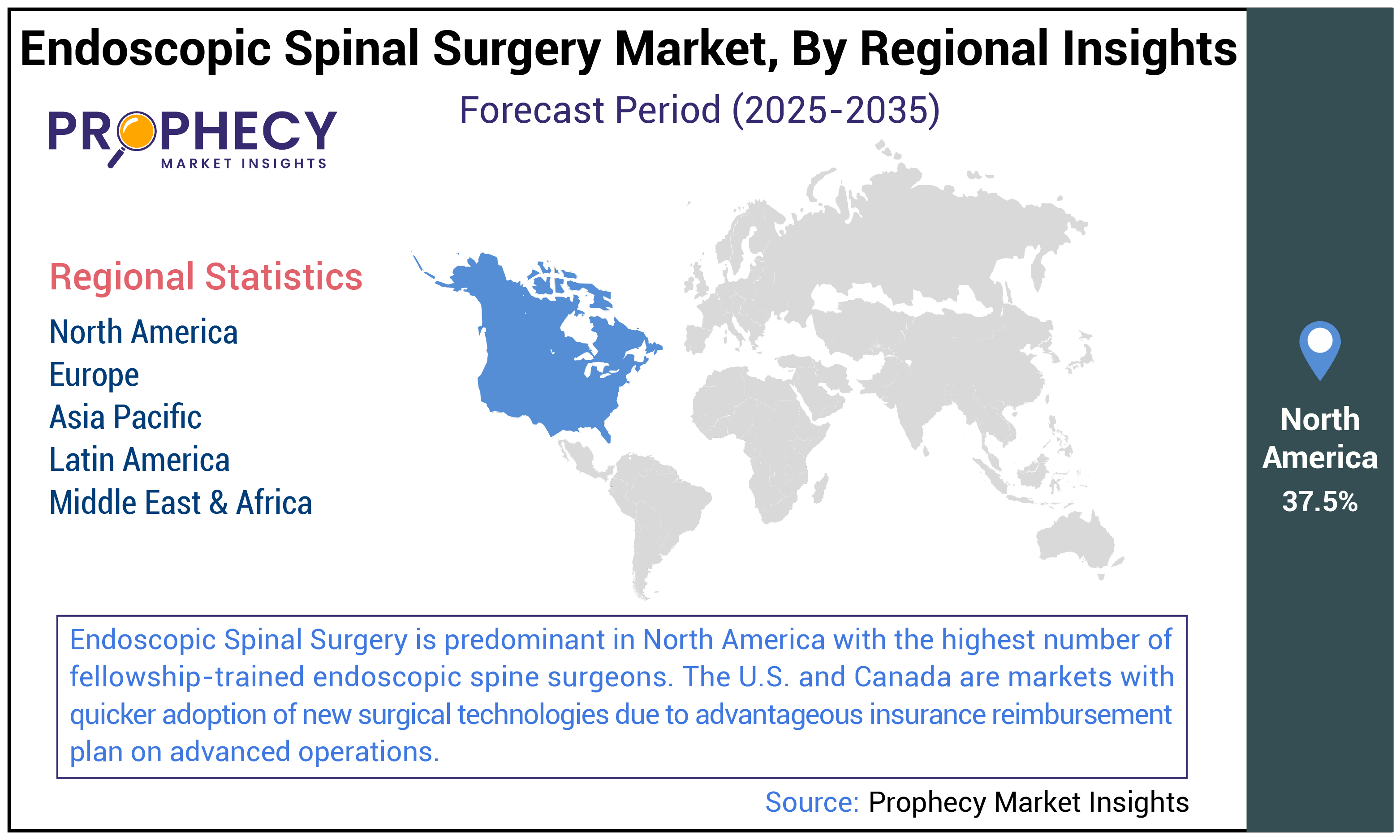
Geographically, the endoscopic spinal surgery market is studied across North America, Europe, Asia Pacific, Latin America, and the Middle East & Africa.
North America: Endoscopic spinal surgery is predominant in North America with the highest number of fellowship-trained endoscopic spine surgeons. The U.S. and Canada are markets with quicker adoption of new surgical technologies due to advantageous insurance reimbursement plan on advanced operations. Additionally, North American-based medical device companies tend to release new systems and innovations in this region first, giving them a 12- to 18-month technological first-in advantage over other markets.
- U.S. Endoscopic Spinal Surgery Market Insights:
The U.S. has become the dominant country in endoscopic spinal surgery market. It holds the highest market share in the region due to its well-developed healthcare sector, the wide use of minimally invasive methods. The U.S. benefits from wide-scale Medicare reimbursement increase, thereby justifying more than 550.000 endoscopic spinal procedures per annum. Moreover, federal subsidies of outpatient interventions and investment in the training of surgeons are other catalysts that stimulate growth.
Europe: This is the second biggest marketplace to make use of endoscopic spine surgery because it has a mature healthcare infrastructure, an ageing population, and an early adopters of the minimally invasive technologies. Other countries such as Germany, France and U.K. have focused on modernization and swift recovery of the surgery. Favorable reimbursement practices, experienced experts, and highly regulatory emphasis on patient outcomes also aids in the expansion in the region.
- Germany Endoscopic Spinal Surgery Market Insights:
Europe is led by Germany in the endoscopic spinal surgery segment due to the large aging population base (18.09 million aged 65+ in 2022) and high incidences of spinal injuries as the prevalence of all fractures over a lifetime results in 45% in men and 31% in females. All these factors, together with favorable healthcare policies result in high demand of less invasive procedures.
Asia Pacific: This region has marked the highest growth rate in the endoscopic spinal surgery market due to rising healthcare expenditure and investments, growth in adoption of low-invasive procedures and the availability of superior medical equipment. Affordable care systems and the development of a medical tourist market in the region promote the market growth and make the region one of the largest sources of future expansion in this sector.
- China Endoscopic Spinal Surgery Market Insights:
China is the most dominant market in Asia-Pacific region mainly due to its enormous population size and its rapidity of growth in the region as well as the increasing cases of spinal disorders that have been associated with lifestyle-related changes such as change in work patterns inclusive of sedentary lifestyle and increased occurrence of obesity.
Endoscopic Spinal SurgeryMarket Report Scope:
|
Attribute |
Details |
|
Market Size 2025 |
USD 2.8 Billion |
|
Projected Market Size 2035 |
USD 4.9 Billion |
|
CAGR Growth Rate |
7.3% (2025-2035) |
|
Base year for estimation |
2024 |
|
Forecast period |
2025 – 2035 |
|
Market representation |
Revenue in USD Billion & CAGR from 2025 to 2035 |
|
Regional scope |
North America - U.S. and Canada Europe – Germany, U.K., France, Russia, Italy, Spain, Netherlands, and Rest of Europe Asia Pacific – China, India, Japan, Australia, Indonesia, Malaysia, South Korea, and Rest of Asia-Pacific Latin America - Brazil, Mexico, Argentina, and Rest of Latin America Middle East & Africa – GCC, Israel, South Africa, and Rest of Middle East & Africa |
|
Report coverage |
Revenue forecast, company share, competitive landscape, growth factors, and trends |
Segmentation:
By Product:
- Endoscopes
- Surgical Instruments
- Imaging System
- Navigation Systems
- Others
By Technology Type:
- 2D Endoscopy
- 3D Endoscopy
- Robotic-Assisted Endoscopy
- Others
By Procedure:
- Transforaminal Endoscopic Lumbar Discectomy
- Interlaminar Endoscopic Lumbar Discectomy
- Posterior Foraminotomy
- Cervical Discectomy
- Visualized Rhizotomy
- Others
By Application:
- Lumbar Disc Herniation
- Cervical Stenosis
- Spinal Stenosis
- Foraminal Stenosis
- Others
By End User Industry:
- Hospitals
- Ambulatory surgical centers
- Specialty clinics
- Emergency medical services
- Others
By Region:
- North America
- U.S.
- Canada
- Europe
- Germany
- U.K.
- France
- Russia
- Italy
- Spain
- Netherlands
- Rest of Europe
- Asia Pacific
- China
- India
- Japan
- Australia
- Indonesia
- Malaysia
- South Korea
- Rest of Asia Pacific
- Latin America
- Brazil
- Mexico
- Argentina
- Rest of Latin America
- Middle East & Africa
- GCC
- Israel
- South Africa
- Rest of Middle East & Africa
Global Endoscopic Spinal Surgery Market Competitive Landscape & Key Players
Medical manufacturing companies and spine surgeons should collaborate to combine efforts to develop solutions that are reflective of the clinical requirement. The companies should engage the physicians early in the process of designing, testing, and validating products, and this may led to the decrease in the complexity of these instruments, increase visualization accuracy, and the time spent in operating instruments.
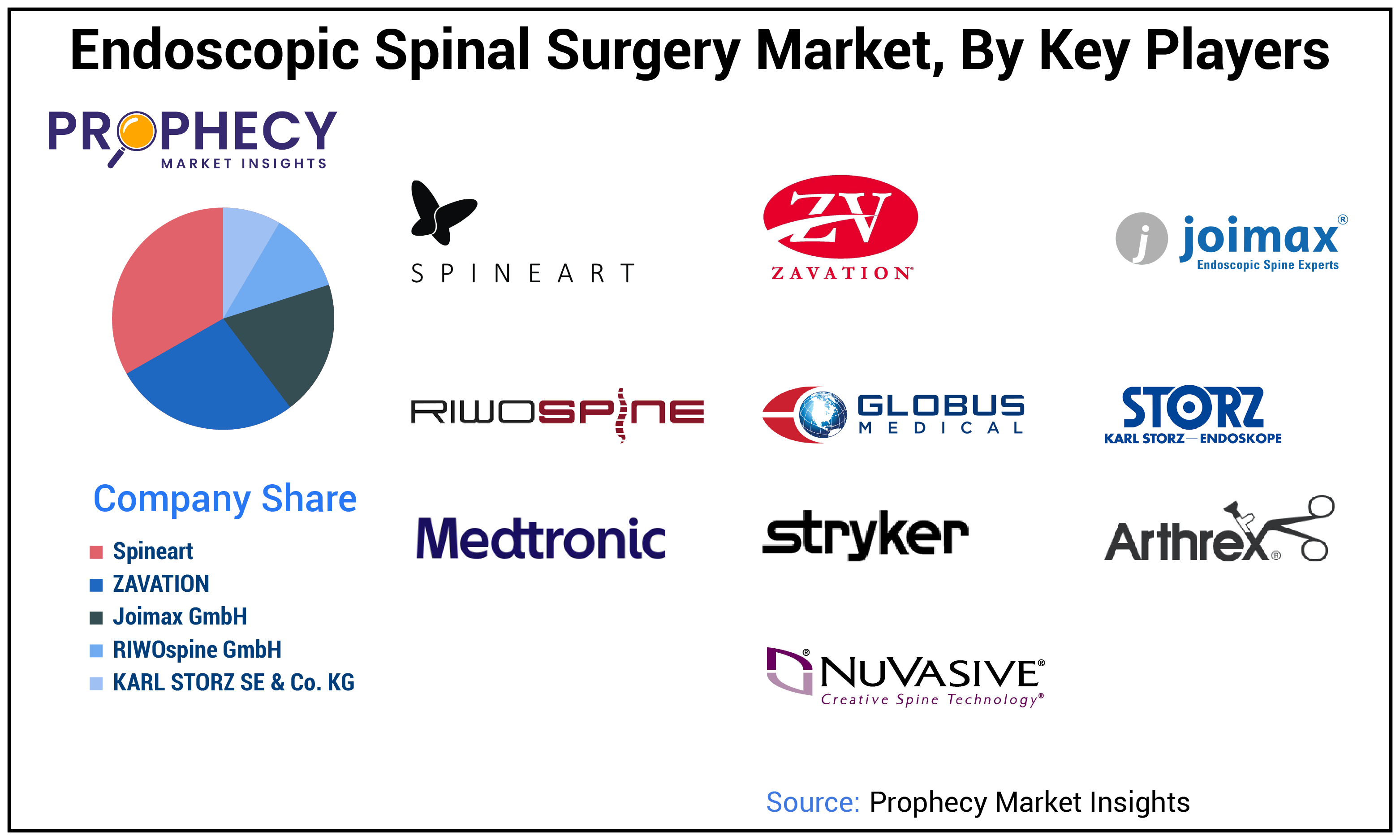
This can be achieved through joint developmental programs, surgeon advisory boards and real-world case studies. The key players operating in the endoscopic spinal surgery market include, ZAVATION, Joimax GmbH, RIWOspine GmbH, KARL STORZ SE & Co. KG, SeaSpine Holdings Corporation and others.
Endoscopic Spinal Surgery Market Companies:
- Spineart
- ZAVATION
- Joimax GmbH
- RIWOspine GmbH
- KARL STORZ SE & Co. KG
- Globus Medical
- Medtronic
- DePuy Synthes
- Arthrex
- Stryker
- Surglasses, LLC
- Alphatec Spine
- MAXMORESPINE
- SeaSpine Holdings Corporation
- NuVasive, Inc
View an Additional List of Companies in the Endoscopic Spinal Surgery Market
Global Endoscopic Spinal Surgery Market Recent News
- In 2025, Dr. Andrew Chung performed a pioneering spinal procedure referred to as the biportal endoscopic spinal fusion. It is a combination of two technologies: a robotically guided expandable implant that expands inside of the spine and precision. Faster recovery and less tissue damage are of benefit to patients when compared to traditional methods. The development is a game changer in creating new standards of an injection-based spine surgery.
- In 2023, Elliquence introduced its endoscopic spine systems, featuring two key tools: a precision radiofrequency generator (Surgi-Max Ultra) and a directional handpiece for controlled tissue treatment. Innovations as such helps surgeons perform delicate spine procedures through tiny incisions using transforaminal or interlaminar approaches, improving accuracy and at the same time speeding up patient recovery.
Analyst View:
Endoscopic spinal surgery market is showing a stable growth due to new developments in minimally invasive procedures and increase in spinal disorders. Surgeons are increasingly using technologies, which include 2D, 3D and robot-assisted endoscopy to increase surgical accuracy and patient outcomes. Increasing awareness, better healthcare infrastructure and the concentrations on faster recovery are additional factors to support market growth. Additionally, AI in navigation and imaging systems is possibly to make the processes more efficient, increase accuracy during diagnosis, and lead to the popularization of those methods.
More Related Reports
Spinal Surgery Devices Market
Endoscopic Mucosal Resection Market
Endoscopy Devices Market
Endoscopic Tool Market
Spinal Muscular Atrophy Market
Global Endoscopic Spinal Surgery Market Company Profile
|
Company Name |
NuVasive, Inc |
|
Headquarter |
San Diego, California. |
|
CEO |
J. Christopher Barry |
|
Employee Count |
2,900 Employees |
Global Endoscopic Spinal Surgery Market Highlights
FAQs
Endoscopic spinal surgery market size was valued at USD 2.8 Billion in 2025 and is expected to reach USD 4.9 Billion by 2035 growing at a CAGR of 7.3%.
By product, technology, procedure, application and end user, and region are the segmentation for the target market.
North America, Asia Pacific, Europe, Latin America, and the Middle East& Africa. North America is expected to dominate the market.
The key players operating the endoscopic spinal surgery market include Spineart, ZAVATION, Joimax GmbH, RIWOspine GmbH, KARL STORZ SE & Co. KG, Globus Medical, Medtronic, DePuy Synthes, Arthrex, Stryker, Surglasses, LLC, Alphatec Spine, MAXMORESPINE, SeaSpine Holdings Corporation, and NuVasive, Inc.