Global Cosmetic Packaging Market By Overview
- By 2035, cosmetic packaging market size is contemplated to enlarge at a valuation of USD 107.55 Billion.
- In 2024, the cosmetic packaging market valuation was USD 58.6 Billion.
- Cosmetic packaging market is developing at a CAGR of 5.3%.
Cosmetic packaging consists of the different containers, materials, and designs that encase and protect beauty products such as skin care, hair care, make-up, and fragrances. Cosmetic packaging provides product safety, branding, and consumer appeal. Properly packaged products allow products to last longer, improve the consumer experience, and depict the brand identity and quality.
The growth of the cosmetic packaging market is a result of more people becoming knowledgeable of conscious beauty practices, increasing disposable income, and the growth of skincare and personal care products. The growth is also fueled by the significant increase of beauty available online, the increasing use of more sustainable packaging options, and the numbers of higher-end product launches. In addition, the growing popularity of travel size cosmetics and trends towards customizing are pushing the envelope of cosmetic packaging, design, materials, and functionality for brands while creating stable demand across global markets.
With the increased awareness of the importance between consumption, waste, and the environment, consumers will be looking for brands offering recyclable packaging and refillable packaging systems. Emerging markets such as South America and digital retail opportunities will provide new opportunities for personalization and innovation in all aspects of packaging.
Recession Risk & Tariff Analysis:
- When economies go sour, consumers usually cut back on their spending on discretionary goods, as cosmetics, which can greatly affect product sales, indirectly impacting packaging demand. Brands may consider cost-cutting measures that use the least expensive packaging. Smaller players in the packaging space may find they are strapped for cash and unable to invest in providing quality service, timely innovation, or buying the right materials to ensure price stability in the packaging space.
- Tariffs on imported packaging items, such as plastics, metals, or glass can add to production costs for cosmetic packaging manufacturers. Trade restriction or bans between primary markets might disrupt supply chains, especially when it comes to the clothing and cosmetics packaging categories as well as the actual sourcing of paper or recyclable products within local markets.
Impact of Generative AI on Cosmetic Packaging Market:
- Generative AI is helping enable rapid design of innovative, visually appealing packaging designs that are informed by brand identity and consumer preferences. Generative AI provides companies with a simple way to challenge packaging design conventions and to efficiently build and compare hundreds of unique design variants, eliminating development time and limiting associated costs.
- Generative AI's ability to analyze large amounts of customer data, can help brands deliver customized packaging experiences that can include personalized product labels or smart packaging technologies. AI capabilities to personalize packaging will also help real-time decision making or adjustments to packaging informed by the company's analytics on trends, demographics, and purchasing behavior, to lead or anticipate market trends.
Global Cosmetic Packaging Market By Drivers & Restraints
Key Drivers:
Rising Demand for Sustainable and Eco-Friendly Packaging is Driving Growth
The increasing consumer demand for sustainable, biodegradable, and recyclable packaging solutions is one of the major contributors to the continual growth of the cosmetic packaging market. Consumers are making green choices when they purchase cosmetic products, so brands are also adopting eco-friendly packaging to conform with those same values. This also creates opportunity for innovative materials, such as bio-plastics, refillable containers, and compostable packaging. More regulations from local and federal governments, as well as international environmental groups, are creating opportunities to lessen the impact on the environment by demanding that companies transition to better practices which creates opportunities that increases supply and demand in the cosmetic industry packaging for the future.
- For instance, according to data published by Environmental Protection Agency in 2019, packaging material was one of the largest recovered material categories, approximately 96?million tons, most of which ended up in a landfill. Of this total packaging waste, only 39% was recycled. We need to find ways to close this recycling gap, which is why not only is there demand in the market for recyclable packaging, but also mono-material packaging for cosmetics that adhere to changing policies on sustainability.
Restraints:
High Cost of Sustainable and Premium Packaging Materials Hinders Growth
Eco-friendly, biodegradable, or premium-quality materials are costly and thus one of the key restraints in the cosmetic packaging market. These alternatives may involve advanced manufacturing processes, higher sourcing costs, and the expenses associated with having to meet tougher regulations or standards. Such costs may be a scaling limitation for small and medium-sized cosmetic brands, therefore making it difficult for them to price their products competitively. Moreover, this change from conventional plastics to sustainable options involves building capacity, augmenting capital investment, and thereby reducing adoption, especially in highly price-sensitive markets or in emerging economies.
- Counterbalance Statements: While costs are high, the growth in consumer willingness to pay for sustainable and premium packaging has motivated brands to invest in sustainable packaging solutions. Cost is getting better due to technological advantages and improved sources of materials; hence sustainable packaging gets easier and gives companies ways to pursue profitability while achieving environmental goals.
Opportunities & Trends:
Smart and Interactive Packaging Solutions is the Ongoing Trend
- Smart and interactive packaging technology offerings comprise a high-potential area and trend in the cosmetic packaging market. Through QR codes, NFC tags, or augmented reality-based experiences, brands offer enhanced consumer engagement experiences, greater transparency in product presentation, and personalization in product design. These are also customer loyalty builders while providing brands with necessary customer data. In an industry where digital connectivity will become the norm, tech-packaging will yield that competitive advantage that fits the changing dynamics of consumer expectation.
Global Cosmetic Packaging Market By Segmentations & Regional Insights
Material, packaging, application and region are the divisions of the cosmetic packaging market.
By Material:
Based on Material, the cosmetic packaging market is divided into plastic, glass, metal, paper & paperboard, others. Plastic dominates cosmetic packing market share due to its versatility, light weight, and cost effectiveness. Plastic can support a large variety of product designs and shapes leading to mass-market potential with many skincare, hair care and makeup products. Exciting innovations in recyclable plastics are the driving force for purpose and longevity and continued dominance in sustainable packaging trends.
Glass is the second biggest category for cosmetic packaging particularly prized for its premium quality and chemical stability. Glass is widely used in perfumes, serums and high-end skin care products as it can be recycled which typifies eco-friendly. The premium position glass has on a brand, through perceived quality helps high-end brands positioning with organic cosmetics which was more recent.
By Packaging:
Based on the packaging, the cosmetic packaging market is divided into bottles, tubes, jars, pumps & dispensers, sticks, roll-ons. Bottles are to the largest extent used in cosmetic packaging mostly due to their use in all most all done is skincare, haircare and fragrance product categories. They are versatile, can be made in any volume, and can have dispensing attributes that best fit the product. Bottles allow for a great amount of branding, and are desirable as their features appeal to consumers.
Tubes rank second as they are often used for creams, lotions, and gels. They are flexible, portable, and easy to use. They provide controlled dispensing, minimize product waste, assist with hygienic delivery of products, and are light. They are inexpensive, and track very well for both mass-market and premium cosmetics.
By Application:
Skincare, haircare, eyecare, others are application of the cosmetic packaging market. Skincare, which includes moisturizers, serums, sunscreens, and anti-aging products, accounts for the largest cosmetic packaging market share based on demand. Ongoing demand is fueled by growing consumer attention to skin health and daily use of varying products and brands. Likewise, innovation in packaging such as jars, tubes, and pump systems increases product and packaging usability, access, protection, and overall experience.
Haircare is in second position and benefits from sustained, strong demand for shampoos, conditioners, oils, and other styling products. Consumers are regularly health conscious regarding hair and grooming. In addition, many consumers spend on herbal, specialized, and even clinical treatments which will drive packaging needs. Various forms of rigid plastic bottles and dispensers are overall the selection favored by customers because of their durability, functionality and ease of application.
Regional Insights:
Geographically, the cosmetic packaging market is studied across North America, Europe, Asia Pacific, Latin America, and the Middle East & Africa.
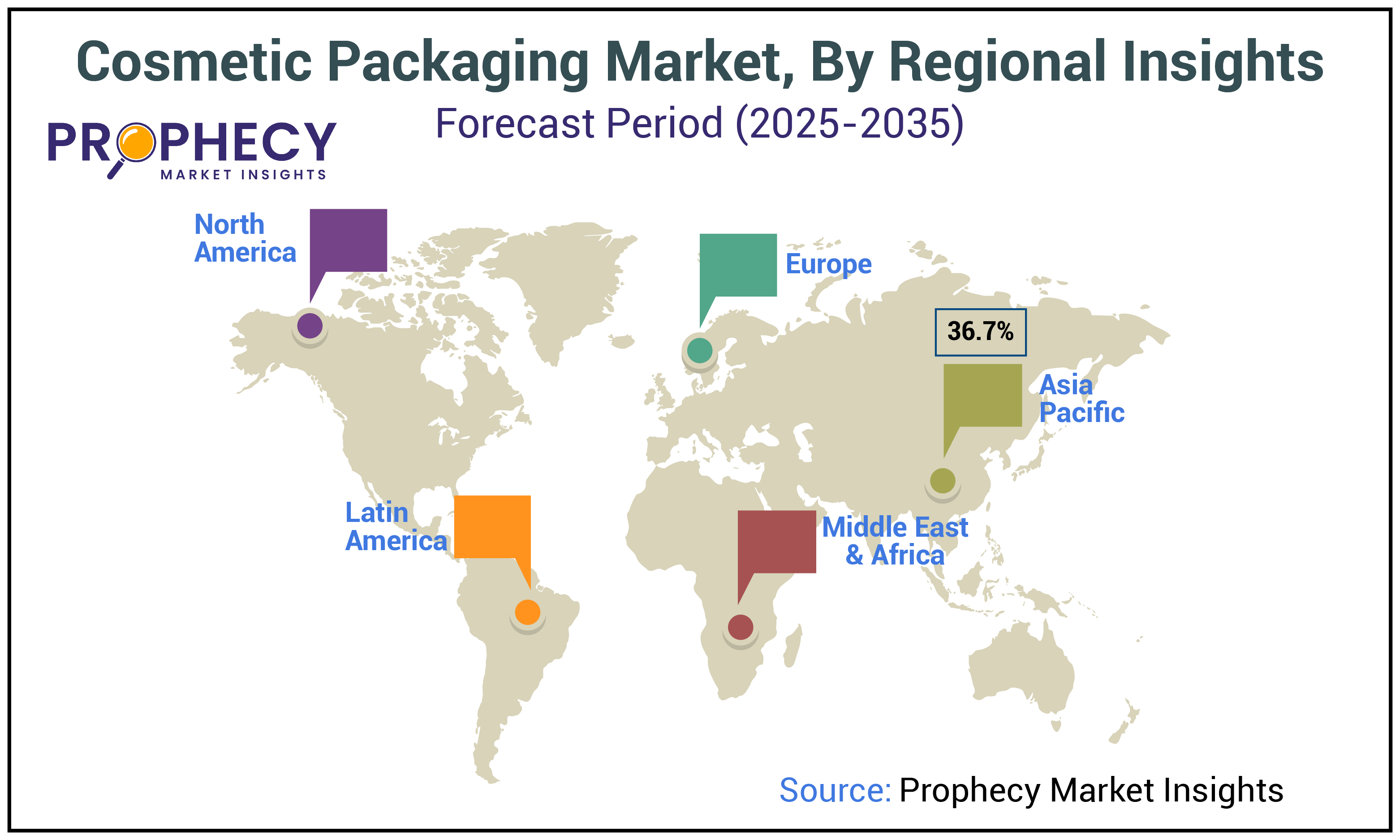
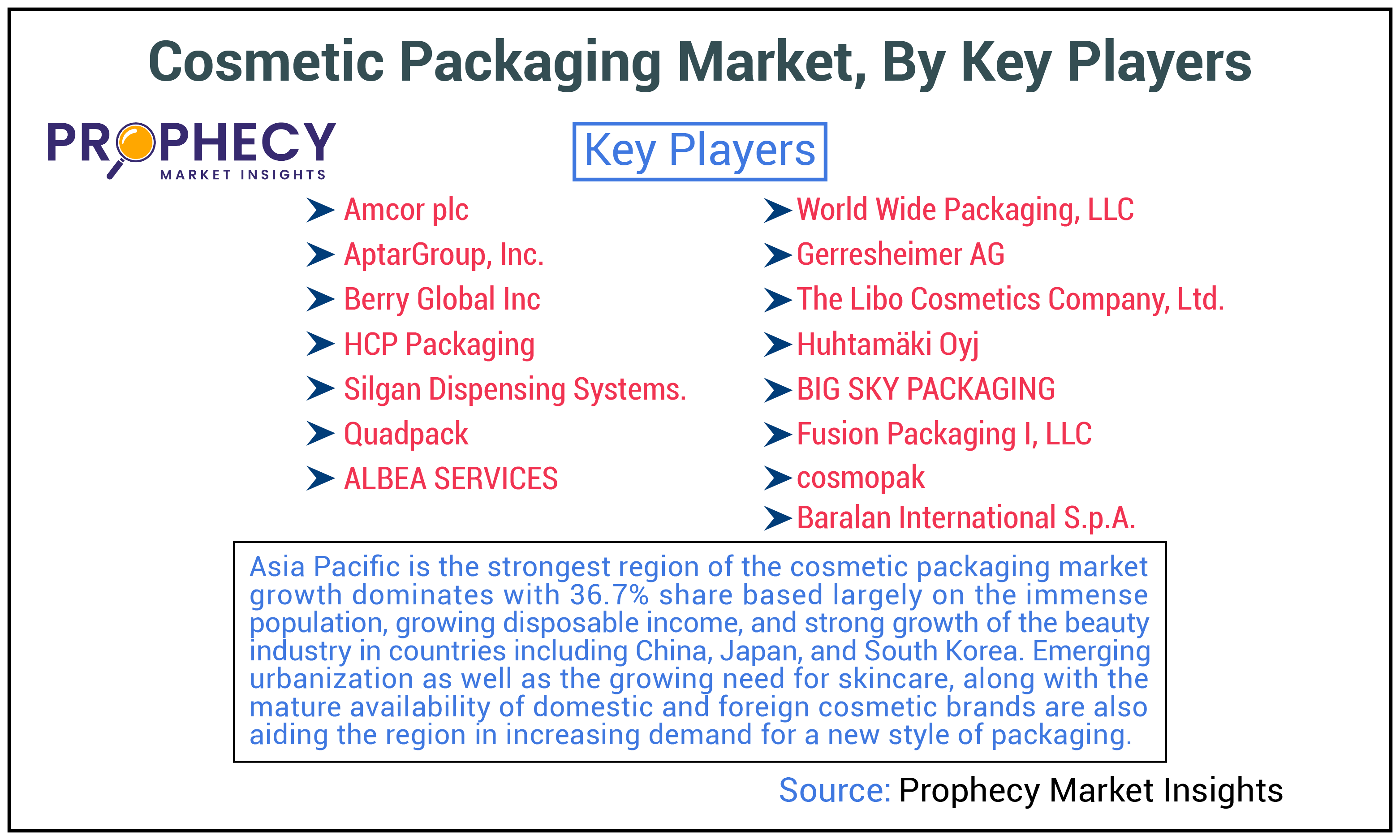
Asia Pacific: This is the strongest region of the cosmetic packaging market growth dominates with 36.7% share based largely on the immense population, growing disposable income, and strong growth of the beauty industry in countries including China, Japan, and South Korea. Emerging urbanization as well as the growing need for skincare, along with the mature availability of domestic and foreign cosmetic brands are also aiding the region in increasing demand for a new style of packaging.
- China Cosmetic Packaging Market Insights:
China has the largest share of the Asia Pacific cosmetic packaging market driven by an expanding consumer base, increasing disposable incomes and demand for skincare and beauty products. With rapid urbanization, increasing consumer access to products through social media, and more attractive local manufacturing capabilities, consumption has been high in China in recent years.
Europe: This is the second biggest region and is driven by a sustainable cosmetics industry and high demand for high-end beauty products, aided also by consumer preference for premium and sustainable products. A preference for eco-friendly packaging and strict regulation surrounding the use of materials encourages packaging developments and innovations. France, Germany, and the UK are delivering packaging developments and alternative products further grow the market.
- France Cosmetic Packaging Market Insights:
France has the largest share of the European cosmetic packaging market, largely since the country is home to more than a dozen internationally recognized and popular luxury beauty brands. France is strong in its heritage in the market of perfumery and skincare, consumer expectations for aesthetic sophistication and performance is also abnormally higher when comparing to lower-end brands.
North America: This is the third largest region owed to the established cosmetics industry in combination with growing consumer demand for tailored skincare and wellness products. Furthermore, consumers are looking for more cosmetic products that are high quality, functional, and recyclable, therefore driving packaging innovation. The presence of many of the top beauty brands in North America and the burgeoning e-commerce market also drives demand for visually appealing, durable, and convenient packaging solutions.
- U.S. Cosmetic Packaging Market Insights:
The U.S. is the dominate player across the North America cosmetic packaging market with a broad-based beauty consumer market and continuous demand for functional, innovative packaging. High levels of investment into research, major retail store coverage and the constant rise in the popularity of clean beauty has bolster U.S packaging progress and advancements of sustainable and customized design as well.
Cosmetic Packaging Market Report Scope:
|
Attribute |
Details |
|
Market Size 2025 |
USD 61.2 Billion |
|
Projected Market Size 2035 |
USD 107.55 Billion |
|
CAGR Growth Rate |
5.3% (2025-2035) |
|
Base year for estimation |
2024 |
|
Forecast period |
2025 – 2035 |
|
Market representation |
Revenue in USD Billion & CAGR from 2025 to 2035 |
|
Regional scope |
North America - U.S. and Canada Europe – Germany, U.K., France, Russia, Italy, Spain, Netherlands, and Rest of Europe Asia Pacific – China, India, Japan, Australia, Indonesia, Malaysia, South Korea, and Rest of Asia-Pacific Latin America - Brazil, Mexico, Argentina, and Rest of Latin America Middle East & Africa – GCC, Israel, South Africa, and Rest of Middle East & Africa |
|
Report coverage |
Revenue forecast, company share, competitive landscape, growth factors, and trends |
Segmentation:
By Material:
- Plastic
- Polyethylene
- Polypropylene
- PET
- Glass
- Metal
- Paper & Paperboard
- Others
By Packaging:
- Bottles
- Tubes
- Jars
- Pumps & Dispensers
- Sticks
- Roll-ons
By Application:
- Pharmaceuticals
- Medical Devices
- Others
By Region:
- North America
- U.S.
- Canada
- Europe
- Germany
- U.K.
- France
- Russia
- Italy
- Spain
- Netherlands
- Rest of Europe
- Asia Pacific
- China
- India
- Japan
- Australia
- Indonesia
- Malaysia
- South Korea
- Rest of Asia Pacific
- Latin America
- Brazil
- Mexico
- Argentina
- Rest of Latin America
- Middle East & Africa
- GCC
- Israel
- South Africa
- Rest of Middle East & Africa
Global Cosmetic Packaging Market By Competitive Landscape & Key Players
The prominent players operating in the market include, Amcor plc, AptarGroup, Inc., Berry Global Inc, HCP Packaging, Silgan Dispensing Systems., Quadpack, ALBEA SERVICES, World Wide Packaging, LLC, and others. In order to increase their market share, businesses in the fiercely competitive cosmetic packaging sector prioritize innovation, sustainability, and personalization. While smaller businesses use eco-friendly solutions to target specific markets, larger players take advantage of their worldwide reach and cutting-edge technologies. The main strategies promoting competition and market expansion are strategic alliances, acquisitions, and product diversity.
Cosmetic Packaging Market Companies:
- Amcor plc
- AptarGroup, Inc.
- Berry Global Inc
- HCP Packaging
- Silgan Dispensing Systems.
- Quadpack
- ALBEA SERVICES
- World Wide Packaging, LLC
- Gerresheimer AG
- The Libo Cosmetics Company, Ltd.
- Huhtamäki Oyj
- BIG SKY PACKAGING
- Fusion Packaging I, LLC
- cosmopak
- Baralan International S.p.A.
View an Additional List of Companies in the Cosmetic Packaging Market
Global Cosmetic Packaging Market By Recent News
- In April 2024, GEKA unveiled a groundbreaking recycled polypropylene (PP) material designed for cosmetic packaging applications. This newly engineered post-consumer-recycled (PCR) pp will meet demanding formulation requirements for vital cosmetic packaging.
- In May 2024, Cosmopak, a leading manufacturer in the beauty industry, launched its new “Waves of Beauty” collection. The new offering features creative and eco-forward packaging options and accessories. Cosmopak hopes to intrigue and inspire its customers with its newest collection that captures the up to date trends and showcases the extensive manufacturing capability.
Analyst View:
A growing beauty consciousness, sustainable packaging requirements are the ultimate forces behind strong growth in the cosmetic packaging industry. Evolution in type of cosmetic product is seen. Product development is being influenced by trends such as green packaging, and personalized packaging. Opportunities are arising along biodegradable materials, digital aspects of packaging, and growth in e-commerce channels. In contrast, the restraints come in the form of high costs of sustainable packaging materials, compliance with regulations, and supply chain disruptions. So, market players are working on finding that perfect trifecta balance between aesthetic, functional, and sustainable to keep pace with emerging consumer trends and expectations while gaining competitive advantage in their ever-expanding and fast-paced industry environment.
More Related Reports
Natural and Organic Cosmetics Market
Cosmetics Market
Cosmetics and Perfumery Glass Bottles Market
Halal Cosmetics Market
Cosmetic Tubes Market
Global Cosmetic Packaging Market By Company Profile
|
Company Name |
Amcor plc |
|
Headquarter |
Zürich, Switzerland |
|
CEO |
Peter Konieczny |
|
Employee Count |
41,000 Employees |
Global Cosmetic Packaging Market By Highlights
FAQs
Cosmetic packaging market size was valued at USD 61.2 Billion in 2025 and is expected to reach USD 107.55 Billion by 2035 growing at a CAGR of 5.3%.
Material, Packaging, Application, and region are the segmentation for the target market.
North America, Asia Pacific, Europe, Latin America, and the Middle East & Africa. Asia-Pacific is expected to dominate the market
The prominent players operating in the market include, Amcor plc, AptarGroup, Inc., Berry Global Inc, HCP Packaging, Silgan Dispensing Systems., Quadpack, ALBEA SERVICES, World Wide Packaging, LLC, Gerresheimer AG, The Libo Cosmetics Company, Ltd., Huhtamäki Oyj, BIG SKY PACKAGING, Fusion Packaging I, LLC, cosmopak, and Baralan International S.p.A