Butyl Rubber Market Overview
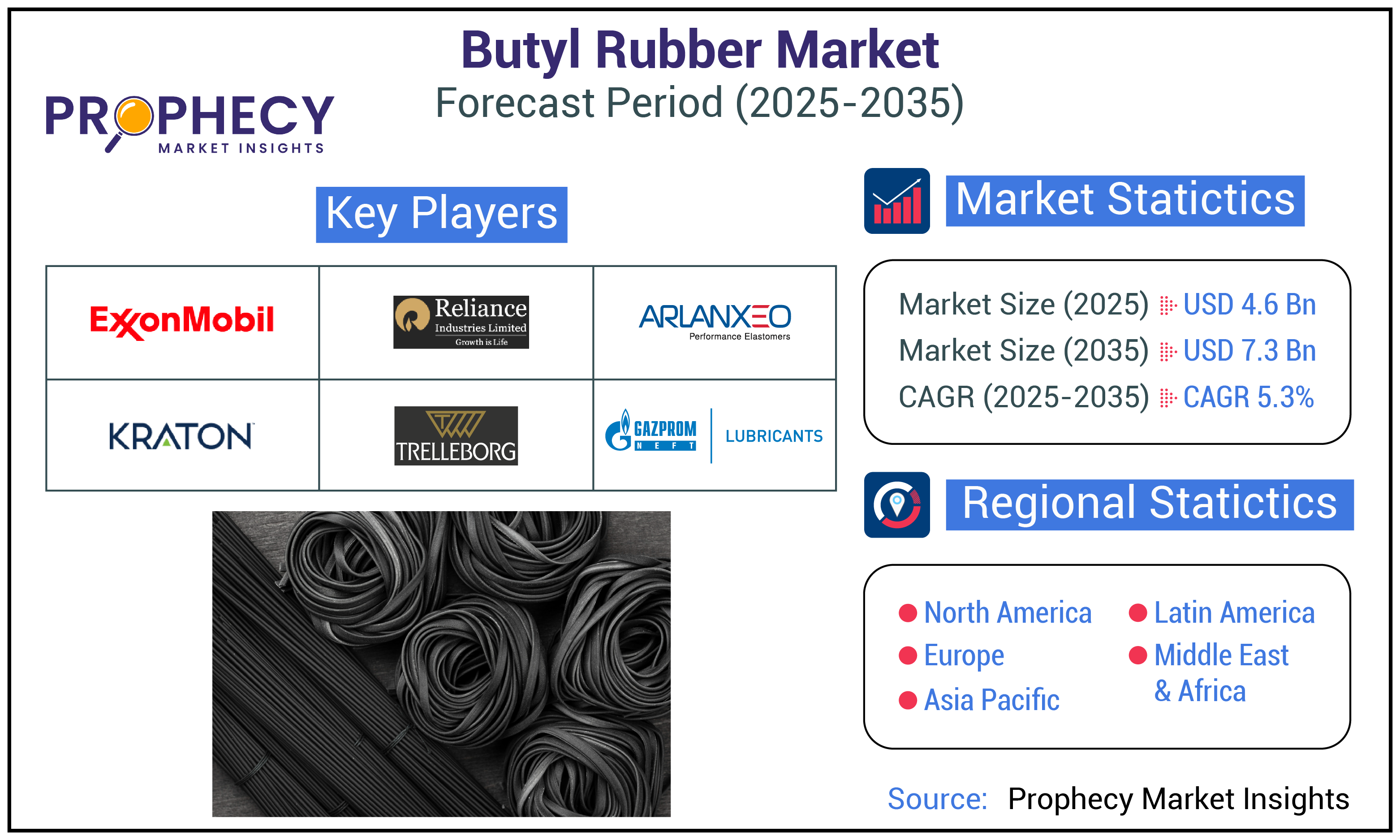
- Butyl rubber market size is expected to expand at a rate of USD 7.3 Billion, by 2035.
- In 2024, the target market valuation was USD 4.4 Billion.
- Butyl rubber market is growing at a CAGR of 5.3%.
Butyl rubber (IIR), is a synthetic rubber produced by copolymerizing isobutylene with small amounts of isoprene. Valued for its chemical inertness, impermeability to gases, and weatherability, butyl rubber is employed in the inner linings of automobile tires and in other specialty applications. Its advantages include excellent air impermeability, making it ideal for applications such as inner tubes and balloons. It also exhibits good chemical resistance to acids, bases, and oils, and durability against abrasion, cracking, and weathering.
The butyl rubber market is experiencing growth due to increased demand from the automotive industry, particularly in tire manufacturing, and the growing healthcare sector, the increasing urbanization and more people purchase vehicles, rapid industrial development in emerging economies, particularly in Asia-Pacific, and the shifting consumer preference for high-performance tires and other durable products.
The market’s augmentation is also stimulated by increased investment in healthcare facilities and growing health awareness contribute to the demand for medical products, including those utilizing butyl rubber, new applications and advancements in the use of butyl rubber in various industries, and the increasing competitive nature of butyl rubber with manufacturers focusing on innovation and cost-effectiveness.
Recession Risk and Tariff Analysis:
- Oversupply, dropping feedstock prices, and dwindling demand from the tire and automobile industries pose recession threats to the butyl rubber industry. Further exacerbating market instability are economic concerns, such as possible policy changes and decreased consumer spending. Together, these elements lead to a pessimistic view for the butyl rubber sector.
- Global trade flows are impacted by import taxes that differ greatly by location, according to tariff studies on the butyl rubber market. While lower tariffs in industrialized markets promote imports, high tariffs in emerging economies safeguard native manufacturers. These differences have an impact on supply chain choices, price, and competitiveness in the butyl rubber sector.
Impact of Generative AI on Butyl Rubber Market:
- By improving product innovation, demand forecasting, and supply chain optimisation, generative AI is revolutionizing the butyl rubber industry. Manufacturers may mimic novel formulas, increase manufacturing efficiency, and lower R&D expenses with AI-driven models.
- Deeper insights into pricing strategies and customer patterns are provided by generative AI in market analysis. Through inventory optimisation and disruption prediction, it also simplifies logistics. In the changing butyl rubber industrial environment, generative AI integration often leads to better decision-making and competitive advantage.
Butyl Rubber Market Drivers & Restraints
Key Drivers:
Rising Urbanization is Expected to Pitch the Market Expansion
Growing urbanization skyrockets the butyl rubber market growth by raising demand for infrastructure, building, and automotive goods. As cities increase, so does the need for automobiles, long-lasting construction materials, and waterproofing solutions all of which heavily rely on butyl rubber due to its ability to retain air, insulate, and seal. The demand for consumer products and packaging is also fueled by urban lives, which increases the use of butyl rubber. Particularly in emerging nations where urbanization and infrastructural modernization are occurring at a rapid pace, this tendency strongly encourages market expansion.
- For instance, according to the data published by World Bank Group, in order to fulfill the World Bank's purpose of eradicating poverty and promoting shared prosperity on a habitable world, more livable cities must be built. Currently, 4.4 billion people, or more than half of the world's population, reside in urban areas. This trend is predicted to continue, with nearly seven out of ten people living in cities by 2050, when the urban population is predicted to more than quadruple.
Restraints:
The Limited Biodegradability of Butyl Rubber is Limiting the Market Expansion
The butyl rubber market has several drawbacks, including poor biodegradability, which raises environmental issues. Butyl rubber is resistant to natural deterioration, therefore disposing of it adds to the accumulation of trash over time. Sustainability objectives are impacted by this environmental persistence, which also attracts more stringent regulatory scrutiny. The market's expansion is hampered by the increased focus on environmentally friendly materials, particularly in areas with strict environmental regulations. Additionally, over time, a poor public view of non-biodegradable materials may harm a brand's reputation and lower market demand.
- Counterbalance Statements: Businesses might spend money on research to create recyclable or environmentally friendly butyl rubber substitutes in order to solve this problem. Sustainability may be increased by supporting recycling initiatives, implementing green manufacturing techniques, and working with environmental organizations. Another way to lessen the influence on the environment is to educate stakeholders and customers about proper reuse and disposal practices.
Opportunities & Trends:
Advancements in Butyl Rubber is Opening Up Growth Opportunities for the Impending Years
Improvements in butyl rubber's impermeability, heat resistance, and formulations for certain uses are some of the main factors propelling the market's future expansion. Advances in halogenated butyl rubber increase its application in the tire, automotive, and pharmaceutical sectors. Research into recyclable and sustainable versions also promotes environmental compliance and increases uptake. Butyl rubber is becoming increasingly appealing to sectors looking for eco-friendly, long-lasting, and efficient materials as a result of these technical advancements that increase performance, prolong product life, and open up new application areas.
- For instance, according to the data published by ResearchGate, low-temperature polymerization (−50 to −105 °C) of IB and IP in a slurry or solution method yields commercial high-molecular-weight butyl rubber. 2–4. Co-initiator AlCl3 starts the slurry process, which operates in the temperature range of -105 to -85 °C in an industrial setting. The solution process is started by alkyl aluminium chloride and operates at a relatively high temperature (between 90 and 50 °C). By creating several kinds of starting systems, developments are underway to replace the expensive cryogenic temperatures and chlorinating solvents used in the polymerization process.
Butyl Rubber Market Segmentations & Regional Insights
The butyl rubber market is segmented into product type, application, end-user, and region.
By Product Type:
Dependent upon product type, the market is sub-segmented into chlorinated butyl rubber, regular butyl rubber, halogenated butyl rubber, brominated butyl rubber, and others. The chlorinated butyl rubber segment is holding the superior position in the butyl rubber market share. This is due to its enhanced properties, particularly its improved resistance to ozone, heat, and weathering, which are crucial for tire manufacturing and other applications. These properties ensure better safety, durability, and performance of products such as tires and inner liners.
The brominated butyl rubber segment is the second superior product type, in the target market. This is due to its increasing demand in the automotive and medical/pharmaceutical industries, where it provides exceptional properties such as resistance to varying temperatures, mechanical stress, and ozone exposure.
By Application:
On the basis of application, the market is divided into adhesives, tires and tubes, tubeless tire liners, medicine bottles, mechanical goods, and others. The tire and tubes segment are dominating the butyl rubber market share. This is due to the extensive use of butyl rubber in tire manufacturing, especially for inner tubes and liners. Butyl rubber's excellent air retention, flexibility, and resistance to gases and moisture make it ideal for this application
The adhesives segment is the second dominating application, in the butyl rubber market. This is due to the material's unique properties, including excellent resistance to sunlight, weather, heat, and aging. These properties make butyl rubber ideal for various applications in industries such as building and construction, automotive, and paper/packaging.
By End-User:
Contingent to end-user, the market is categorized into automotive industry, pharmaceutical industry, consumer products, rubber industries, construction industries, and others. The automotive industry segment is the leading end-user, in the butyl rubber market. This is due to its extensive use in tire manufacturing and related applications. Butyl rubber's unique properties, such as low air permeability, high resistance to heat and chemicals, and durability, make it ideal for tire inner tubes, seals, and other automotive components.
The pharmaceutical industry segment is the second leading segment, in the target market. This is due to its extensive use in tire manufacturing and related applications. Butyl rubber's unique properties, such as low air permeability, high resistance to heat and chemicals, and durability, make it ideal for tire inner tubes, seals, and other automotive components.
Regional Insights:
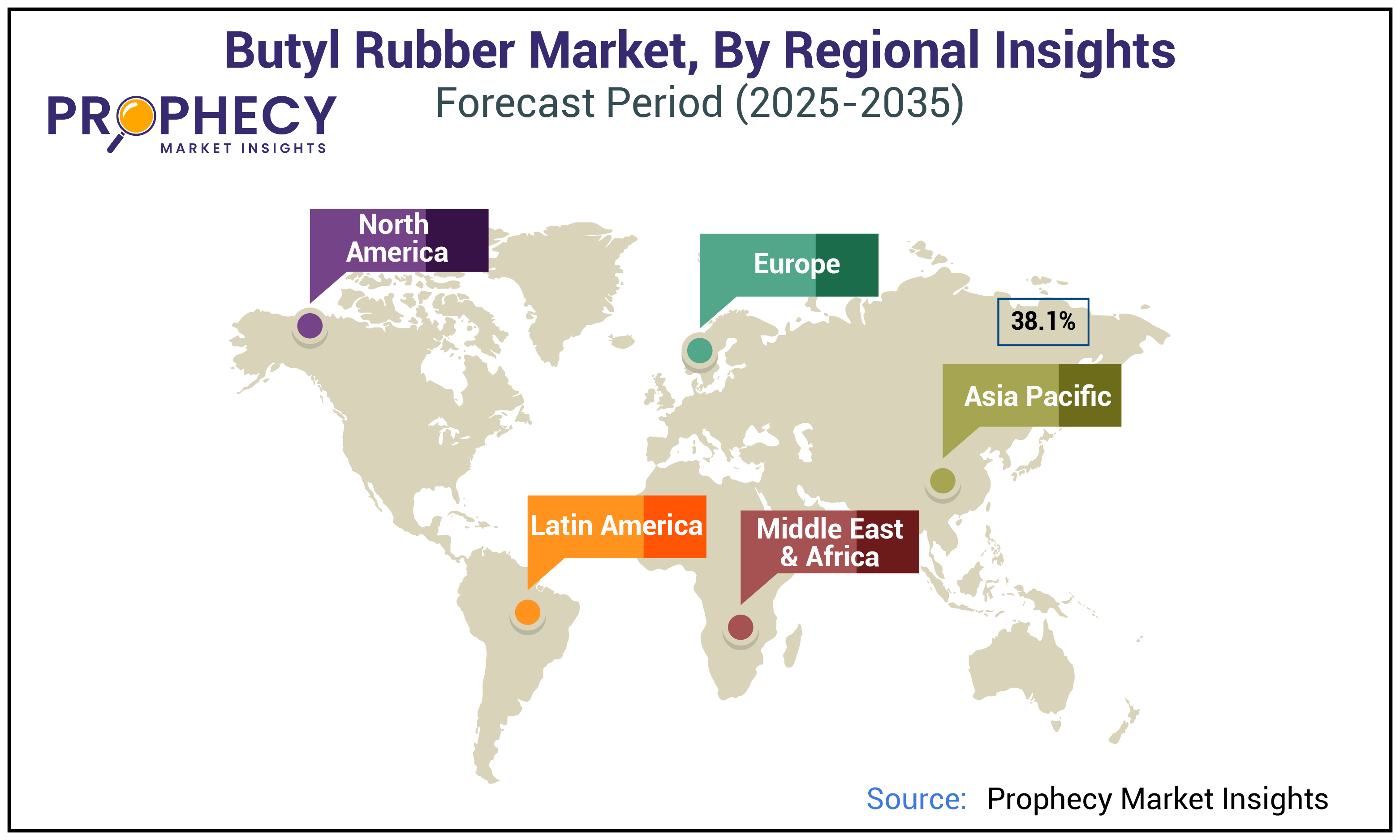
Geographically, the market is analyzed across North America, Europe, Asia Pacific, Latin America, and the Middle East & Africa.
Asia Pacific: This is the region which has the most ruling butyl rubber market size with an estimated share of approximately, 38.1%, in the recent years. This is due to a combination of factors, such as, this region’s rapid industrialization and a surge in the automotive industry, the countries in this region, are major tire manufacturers globally, the growing construction and other industries also contribute in the demand for butyl rubber, major global manufacturing hub, plays a significant role, and the high volatility of natural rubber prices has also encouraged the use of butyl rubber.
- China Butyl Rubber Market Insights:
The butyl rubber market in China is the most governing market, in the recent years. This is due to this country’s major producer of butyl rubber, with a significant production capacity, thriving automotive industry, with numerous manufacturing plants, high consumption of butyl rubber is coupled with significant export volumes, ongoing industrialization and urbanization in China, coupled with increasing automotive production, and a prominent presence of major butyl rubber manufacturers and producers, including China Petrochemical Corporation and other companies.
North America: This is the region which has the butyl rubber market growing with the fastest growth rate during the forecast period, in the recent years. This is due to a confluence of factors, such as, this region’s strong healthcare sector and pharmaceutical research investments, widely used in tires due to its excellent air retention and durability. The well-established automotive industry, the use of butyl rubber in construction and industrial applications, such as adhesives, sealants, and roofing membranes, and strict government regulations focusing on the use of high-standard materials in automobiles and other sectors, coupled with infrastructure development projects.
- U.S. Butyl Rubber Market Insights:
The butyl rubber market in U.S. is the fastest growing market, during the forecast period, in the recent years. This is due to this country’s home to major automobile manufacturers and has a highly developed automotive supply chain, increasing focus on electric and hybrid vehicles, requiring advanced materials for better efficiency and performance, its wide use in the U.S. in construction, healthcare, and other industries for products such as sealants, adhesives, roofing membranes, and pharmaceutical closures, and a well-developed industrial infrastructure.
Europe: This is the region which has the butyl rubber market experiencing considerate amount of growth, in the recent years. This is due to a number of factors, such as, this region’s robust automotive industry, strict regulations, and a growing demand for sustainable construction materials. The automotive sector heavily relies on butyl rubber for tire production, and in seals, gaskets, and other components. Additionally, European governments are implementing stricter noise and emission standards, which are pushing automakers to seek out innovative materials such as butyl rubber for noise and vibration control.
- Germany Butyl Rubber Market Insights:
The butyl rubber market in Germany is the market which is experiencing significant amount of growth, in the recent years. This is due to this country’s strong automotive and manufacturing industries, strong manufacturing sector utilizes butyl rubber for a wide range of applications, including industrial products and machinery, advanced healthcare infrastructure and pharmaceutical research drive demand for butyl rubber in seals, closures, and other applications, and the government's focus on infrastructure development and the automotive industry.
Butyl Rubber Market Report Scope:
|
Attribute |
Details |
|
Market Size 2025 |
USD 4.6 Billion |
|
Projected Market Size 2035 |
USD 7.3 Billion |
|
CAGR Growth Rate |
5.3% (2025-2035) |
|
Base year for estimation |
2024 |
|
Forecast period |
2025 – 2035 |
|
Market representation |
Revenue in USD Billion & CAGR from 2025 to 2035 |
|
Regional scope |
North America - U.S. and Canada Europe – Germany, U.K., France, Russia, Italy, Spain, Netherlands, and Rest of Europe Asia Pacific – China, India, Japan, Australia, Indonesia, Malaysia, South Korea, and Rest of Asia-Pacific Latin America - Brazil, Mexico, Argentina, and Rest of Latin America Middle East & Africa – GCC, Israel, South Africa, and Rest of Middle East & Africa |
|
Report coverage |
Revenue forecast, company share, competitive landscape, growth factors, and trends |
Segmentation:
By Product Type:
- Chlorinated Butyl Rubber
- Regular Butyl Rubber
- Halogenated Butyl Rubber
- Brominated Butyl Rubber
- Others
By Application:
- Adhesives
- Tire and Tubes
- Tubeless Tire Liners
- Medicine Bottles
- Mechanical Goods
- Others
By End-User:
- Automotive Industry
- Pharmaceutical Industry
- Consumer Products
- Rubber Industries
- Construction Industries
- Others
By Region:
- North America
- U.S.
- Canada
- Europe
- Germany
- U.K.
- France
- Russia
- Italy
- Spain
- Netherlands
- Rest of Europe
- Asia Pacific
- China
- India
- Japan
- Australia
- Indonesia
- Malaysia
- South Korea
- Rest of Asia Pacific
- Latin America
- Brazil
- Mexico
- Argentina
- Rest of Latin America
- Middle East & Africa
- GCC
- Israel
- South Africa
- Rest of Middle East & Africa
Butyl Rubber Market Competitive Landscape & Key Players
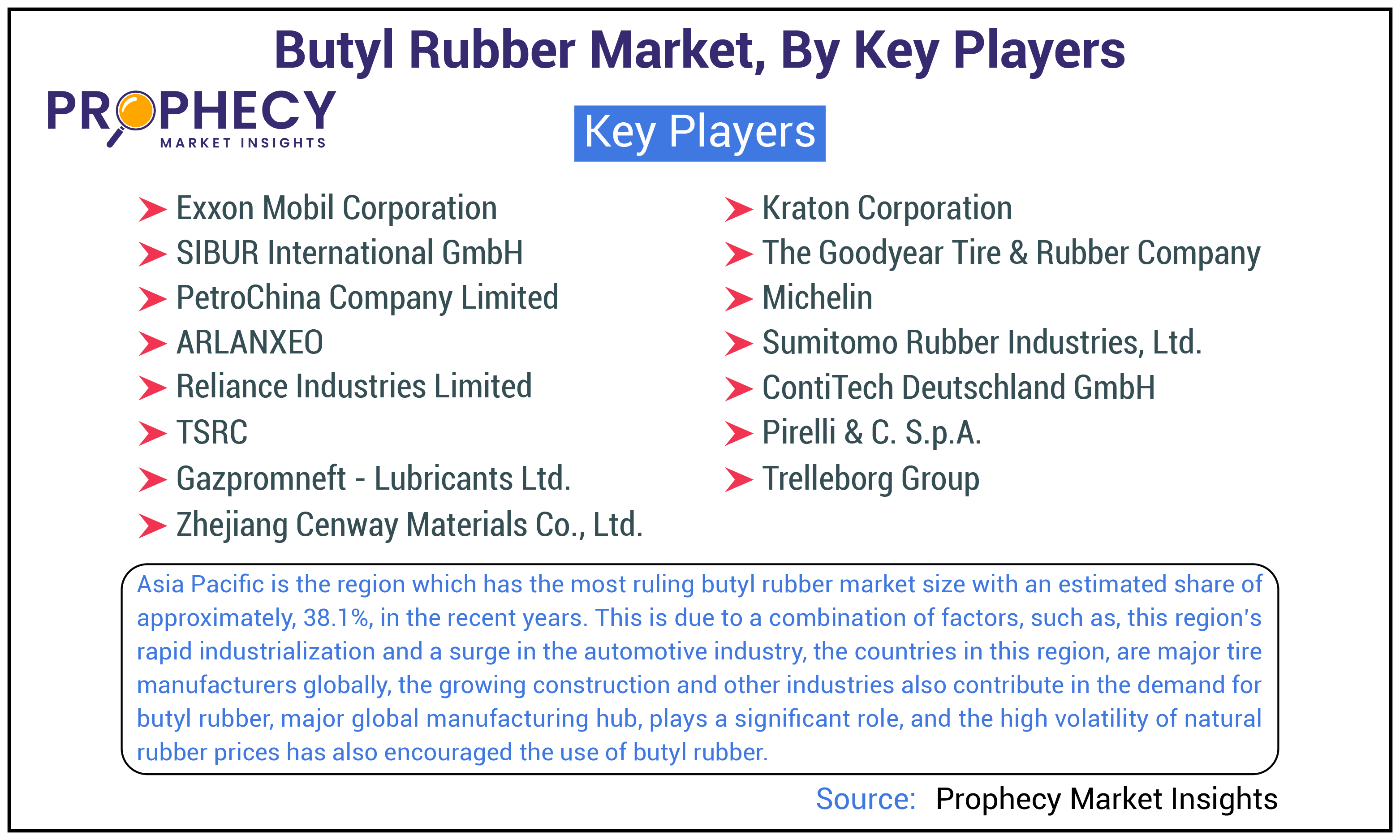
The prominent players operating in the market include, Exxon Mobil Corporation, SIBUR International GmbH, PetroChina Company Limited, and others. These key players are focusing leveraging technological advancements, embracing sustainability and circular economy, expanding into new markets and applications, collaborating with other stakeholders, addressing challenges and restraints, capitalizing on Government policies and regulations, and enhancing digital transformation, for driving butyl rubber market growth.
Butyl Rubber Market Companies:
- Exxon Mobil Corporation
- SIBUR International GmbH
- PetroChina Company Limited
- ARLANXEO
- Reliance Industries Limited
- TSRC
- Gazpromneft - Lubricants Ltd.
- Zhejiang Cenway Materials Co., Ltd.
- Kraton Corporation
- The Goodyear Tire & Rubber Company
- Michelin
- Sumitomo Rubber Industries, Ltd.
- ContiTech Deutschland GmbH
- Pirelli & C. S.p.A.
- Trelleborg Group
View an Additional List of Companies in the Butyl Rubber Market
Butyl Rubber Market Recent News
- In September 2024, regarding halogenated butyl rubber imports from Canada, Japan, and India, China initiated an anti-dumping inquiry. Zhejiang Cenway New Materials Co., Ltd. submitted materials for the investigation on behalf of the local industry in July, and the Ministry of Commerce stated in a statement that it made its decision in compliance with the nation's anti-dumping law. Imported halogenated butyl rubber from these nations will be investigated by the anti-dumping inquiry.
- In December 2023, Nizhnekamskneftekhim, a significant player in Russian petrochemicals, upgraded its halobutyl rubber (HBR) capabilities by one-third, from 150 to 200 kt. Nizhnekamskneftekhim has the greatest halobutyl rubber manufacturing capacity in the world, while Sibur produces 25% of the world's butyl rubber and HBR. Six new HBR manufacturing units were erected and sixteen were renovated as part of the RUB 8 billion improvement project.
Analyst View:
The butyl rubber market is expanding as a result of the automotive industry's increased demand, especially for tires, the expanding healthcare sector, rising urbanization and the number of people buying cars, the fast industrial development of emerging economies, especially in Asia-Pacific, and changing consumer preferences for durable goods including high-performance tires. The market's expansion is also fueled by rising health consciousness and increased investment in healthcare facilities, which raise demand for medical products including those made of butyl rubber new uses and developments of butyl rubber in a variety of industries, and the fact that butyl rubber is becoming more and more competitive, with producers concentrating on cost-effectiveness and innovation.
More Related Reports
Rubber Gloves Market
Methyl Butynol Market
Butyl Rubber Closure Market
N-tert-butyl-benzothiazole Sulfonamide Market
Butyl Glycol Market
Butyl Rubber Market Company Profile
|
Company Name |
Exxon Mobil Corporation |
|
Headquarter |
Houston, Texas, United States |
|
CEO |
Mr. Darren Wayne Woods |
|
Employee Count (2024) |
60,900 Employees |
Butyl Rubber Market Highlights
FAQs
Butyl rubber market size was valued at USD 4.6 Billion in 2025 and is expected to reach USD 7.3 Billion by 2035 growing at a CAGR of 5.3%.
Product type, application, end-user, and region are the segmentation for the target market.
North America, Asia Pacific, Europe, Latin America, and the Middle East & Africa. Asia Pacific is expected to dominate the market.
The key players operating in the butyl rubber market include Exxon Mobil Corporation, SIBUR International GmbH, PetroChina Company Limited, Kraton Corporation, ARLANXEO, Reliance Industries Limited, TSRC, Gazpromneft - Lubricants Ltd., Zhejiang Cenway Materials Co., Ltd., The Goodyear Tire & Rubber Company, Michelin, Sumitomo Rubber Industries, Ltd., ContiTech Deutschland GmbH, Pirelli & C. S.p.A. , and Trelleborg Group.